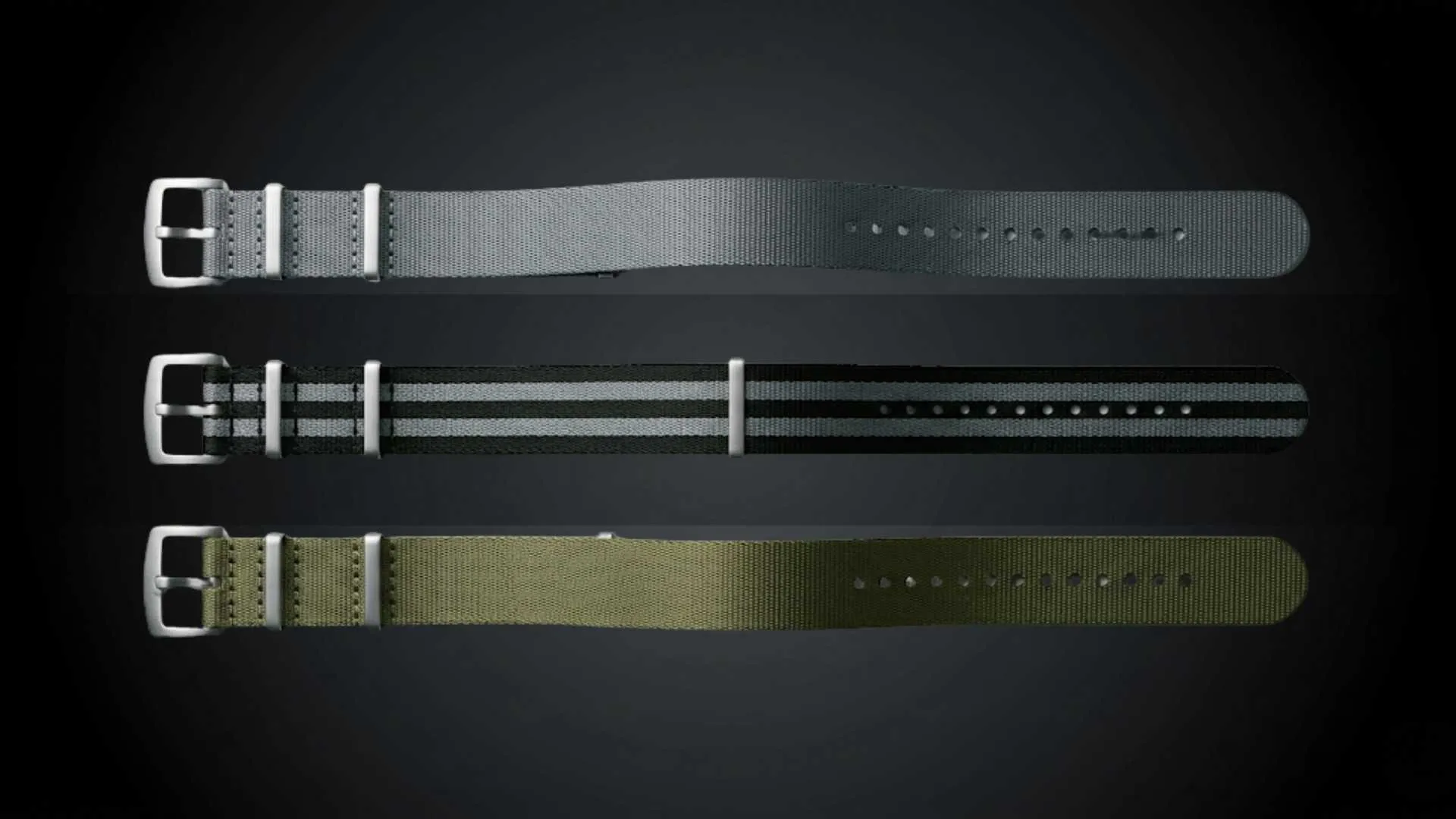

A Zulu watch strap is a single-pass nylon strap with thick, oval-shaped hardware. Solid oval rings set it apart from every other nylon strap, including the NATO. If you know those two things, you can identify a Zulu correctly every time.
If you’ve searched for a Zulu strap and landed on a NATO product page, you’re not alone. The two get mixed up constantly by buyers, sellers, and across watch communities.
This guide covers how a Zulu is built, where the name came from, and who it’s actually made for. If you want to know which one fits your watch, keep reading.
What Makes a Zulu Strap a Zulu
Three things define a Zulu: the single-pass threading, the hardware, and the nylon. Each one affects how the strap fits, feels, and holds up over time.
How Does the Single-Pass Design Work?

A Zulu strap is one continuous piece of nylon that threads through both spring bars, placing a single layer between the case back and your wrist. Because there’s only one layer, the watch sits closer to your wrist. On a thick dive watch, that difference is noticeable. Less material under the case also means less heat buildup during long wear.
If one spring bar fails, the watch stays on the strap. That’s a real advantage on a dive watch or field watch used in rough conditions.
How Is Zulu Hardware Different?

Zulu straps use thick oval rings and a solid buckle, usually in 316L stainless steel, a corrosion-resistant grade used in marine and medical equipment. That oval shape is the fastest way to tell a Zulu apart from a NATO, which uses flat rectangular keepers. Oval and heavy means Zulu. Flat and narrow means NATO.
Rounded hardware snags less on wetsuits, cuffs, and gear. The 316L steel outlasts plated brass, which is common on budget straps and shows visible wear within months.
What Kind of Nylon Does a Zulu Strap Use?
Zulu nylon is thicker and more loosely woven than NATO nylon, which makes a new strap feel stiff at first. That stiffness is not a defect. It softens with regular wear, usually within a few weeks. Most complaints about Zulu comfort come from people who tried one new and put it away before the break-in happened.
3-Ring vs 5-Ring Zulu Strap: What’s the Difference?
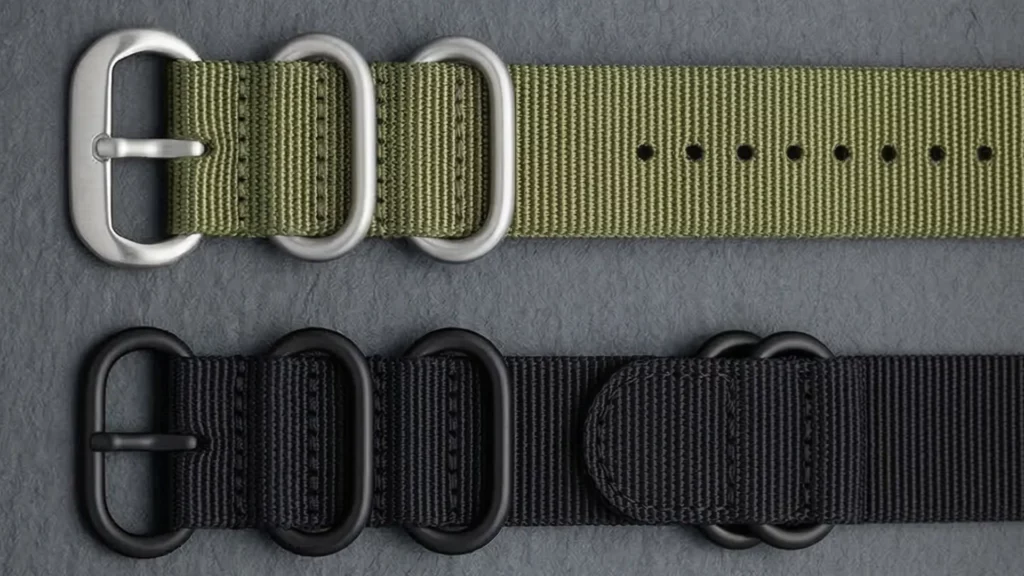
The two Zulu versions share the same oval hardware. The only difference is how many nylon layers sit under the watch case.
What Is a 3-Ring Zulu?
A 3-ring Zulu has one buckle ring and two keepers, with a single layer of nylon running under the case and no retaining flap. It sits closer to the wrist, has less hardware on the strap tail, and looks cleaner overall. This is the right choice if you want a minimal, low-profile fit on a sport or tool watch.
What Is a 5-Ring Zulu?
A 5-ring Zulu adds a rear retaining flap under the watch case, held in place by two extra rings. This keeps the case from shifting if a spring bar fails, the same way a NATO works.
The hardware stays the same: thick, oval, and solid. It’s the better choice for a dive watch worn regularly in the water. The oval hardware is still the fastest way to tell a 5-ring Zulu from a NATO.
Oval and thick means Zulu. Flat and rectangular means NATO. That doesn’t change between variants.
| Feature | 3-Ring Zulu | 5-Ring Zulu |
| Layers Under Watch | Single pass only | Single pass + rear retaining flap |
| Hardware Style | Oval, thick rings | Oval, thick rings |
| Ring Count | Buckle + 2 keepers | Buckle + 4 rings |
| Looks Like NATO? | No | Somewhat |
Zulu Watch Strap Background
The name most likely comes from military timekeeping, where “Zulu time” is the military term for UTC/GMT, the global time standard used across all branches. Soldiers and sailors used “Zulu” as a daily time reference. The strap name followed from common usage, not any official designation.
The Zulu style predates the 1973 British Ministry of Defence NATO strap specification. It is not a copy of NATO. Single-pass nylon straps with rounded hardware were already in use by the US military in the 1960s.
No official document designates a strap as “Zulu.” The term became a product category through commercial makers. Maratac, a US-based military gear brand, made it the collector reference point in the early 2000s.
Zulu Watch Strap vs NATO Key Differences
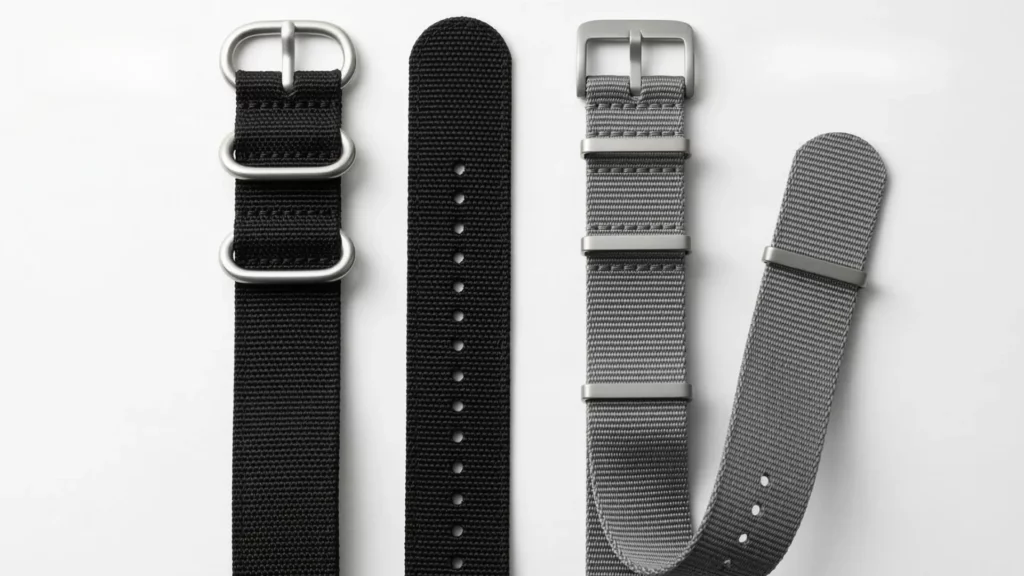
A Zulu and a NATO are both nylon pass-through straps, but they differ in hardware shape, layer count under the case, and nylon thickness.
| Feature | Zulu | NATO |
| Layers Under Watch | 1 (single-pass) | 2 (double-layer) |
| Hardware Shape | Oval, thick | Rectangular, slim |
| Nylon Thickness | Thicker | Thinner |
| Official Standard | None | DEF STAN 66-15 (1973) |
| Best For | Tool watches, divers, everyday wear | Slim watches, casual-formal use |
NATO’s double layer stops the case from sliding along the strap. The Zulu solves the same problem with one layer, which reduces bulk under thicker watch cases.
Retailers mislabel these constantly. Don’t rely on the product title. Check the hardware. Oval rings mean Zulu. Flat rectangular keepers mean NATO.
What to Check Before Buying a Zulu Strap

Not all Zulu straps are built the same. Two straps can both carry the “Zulu” label and perform very differently.
Hardware grade: Look for 316L stainless steel on the rings and buckle. It resists corrosion and holds up in saltwater. Plated brass looks similar when new but shows wear within months. If the hardware material isn’t listed on the product page, assume it’s plated brass.
Nylon construction: Tightly woven nylon holds its shape longer and resists fraying at the edges. Check the stitching at the buckle attachment point. Loose or uneven stitching is the first thing to fail on a cheap strap.
Strap width: Zulu straps come in widths from 18mm to 24mm. Match the width to your lug width exactly. A strap that’s too narrow sits loosely between the lugs. A strap that’s too wide won’t fit at all.
Hole finish: Laser-cut holes keep their shape over time. Punched holes stretch with regular use, which makes buckling inconsistent.
Who Should Actually Wear a Zulu Strap?

A Zulu strap suits tool watches, dive watches, and field watches with a lug width between 18mm and 24mm. The oval hardware matches the weight and purpose of those case styles. Slim dress watches look off with heavy oval hardware.
- Divers and water sports wearers: The single-pass nylon and 316L hardware hold up to repeated saltwater exposure. The strap dries fully between uses.
- Field watch and military-style watch wearers: The oval hardware and thick nylon match the visual weight of field watch cases. A Zulu on a 40mm field watch looks intentional. A NATO on the same watch looks undersized by comparison.
- Daily wearers who want easy swaps: No tools needed to change a Zulu. It threads through the spring bars directly. For someone who rotates straps regularly, that matters.
- Dress watch and formal wear: A Zulu is the wrong call here. The heavy oval hardware draws attention to a slim case and looks out of place with formal outfits. A leather strap or a slim NATO is the better option.
Final Thoughts on What Is a Zulu Watch Strap
A Zulu watch strap is a single-pass nylon strap with thick oval rings and solid hardware. The 3-ring version sits lower on the wrist. The 5-ring adds a retaining flap for extra security on dive watches. Both work best on sport, tool, and field watches between 18mm and 24mm lug width.
Before buying, confirm your lug width and check the hardware grade. Zulu straps fit on the same spring bars as a NATO, so no hardware change is needed if you’re switching. Give the strap at least two weeks before deciding if it’s comfortable. Most people give up too early.