
Shopping for one reliable daily tool watch tends to surface the same two names again and again: the Omega Speedmaster and the Tudor Black Bay. Both come from Swiss brands with deep histories, and both were built as tools first, not jewelry.
Omega built the Speedmaster as a chronograph for measuring time. Tudor built the Black Bay as a dive watch for water resistance and durability. Those different starting points are why the two feel and function so differently on the wrist.
This guide breaks down where they really differ: dial layout, bezel, case proportions, and how each one behaves on the secondary market. By the end you will know which one fits the way you live.
Omega Speedmaster: A Quick History
Related Models from Majestix
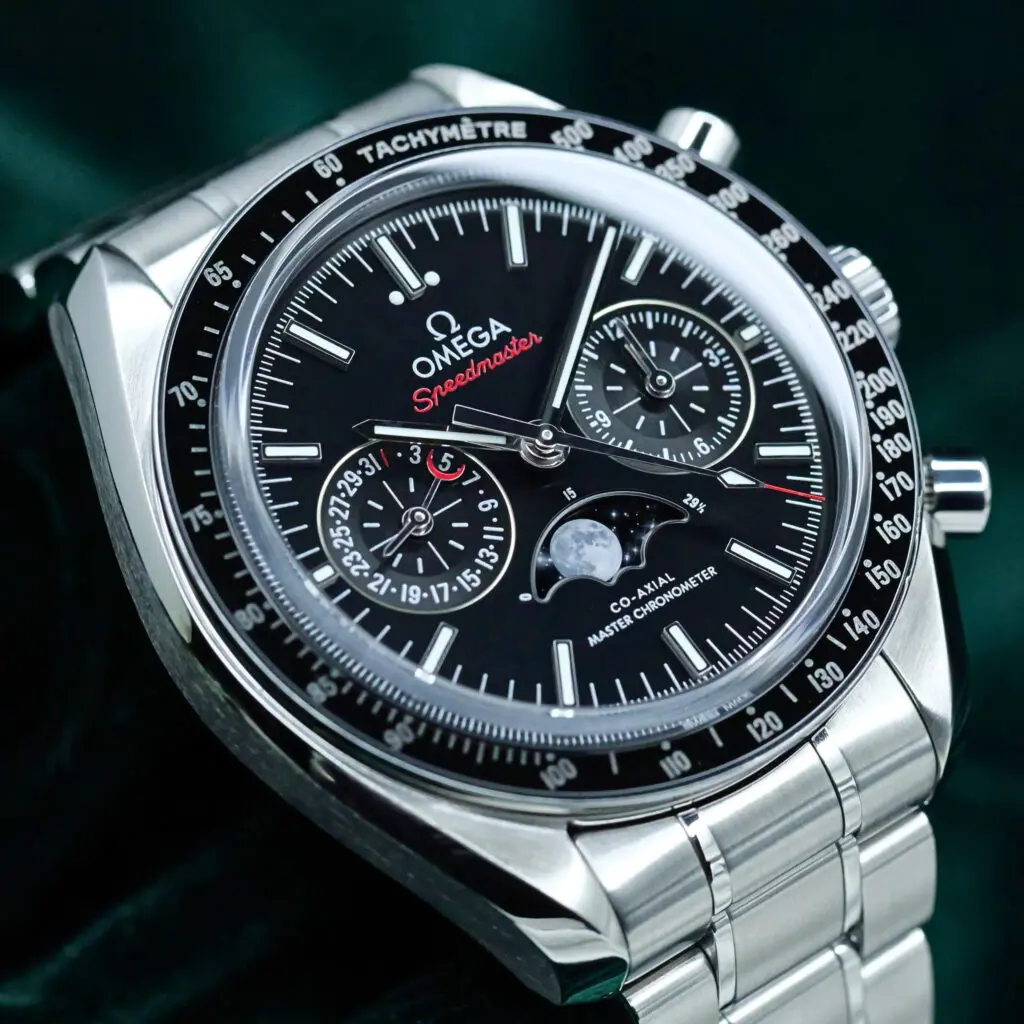
Omega Speedmaster Moonphase Black Dial Stainless Steel 44.25mm MINT CONDITION COMPLETE SET 304.30.44.52.01.001
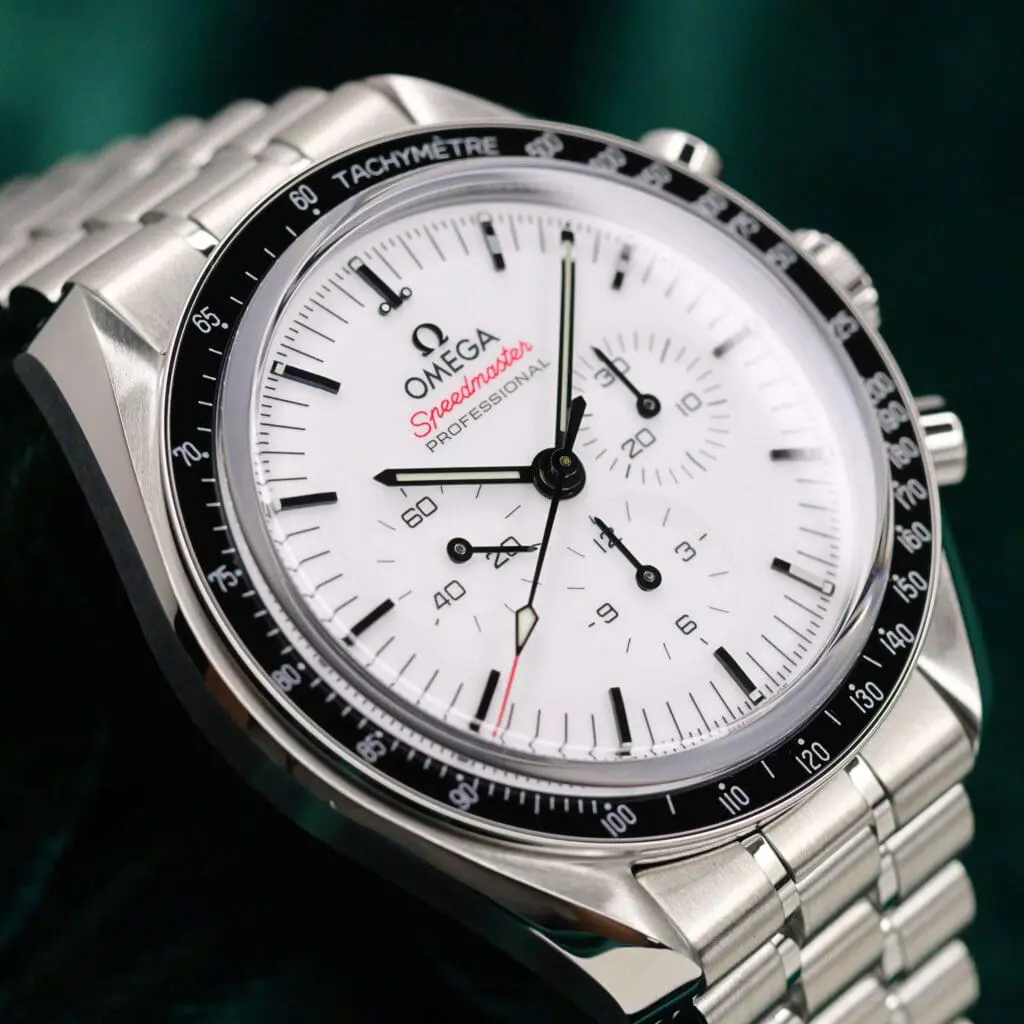
2026 NEW UNWORN Omega Speedmaster Moonwatch Professional White Dial Stainless Steel 42mm COMPLETE SET 310.30.42.50.04.001
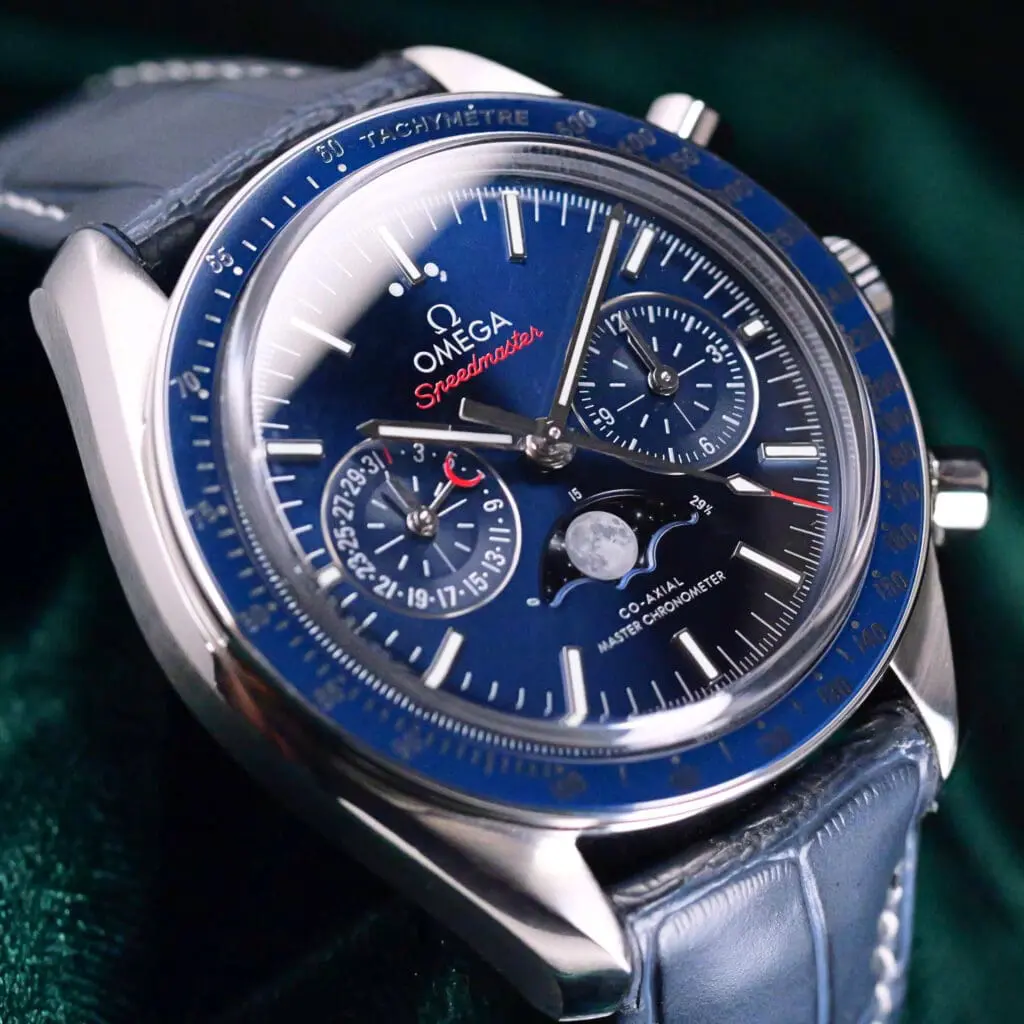
Omega Speedmaster Moonphase Blue Dial Blue Leather Strap Stainless Steel 44.25mm MINT CONDITION COMPLETE SET 304.33.44.52.03.001
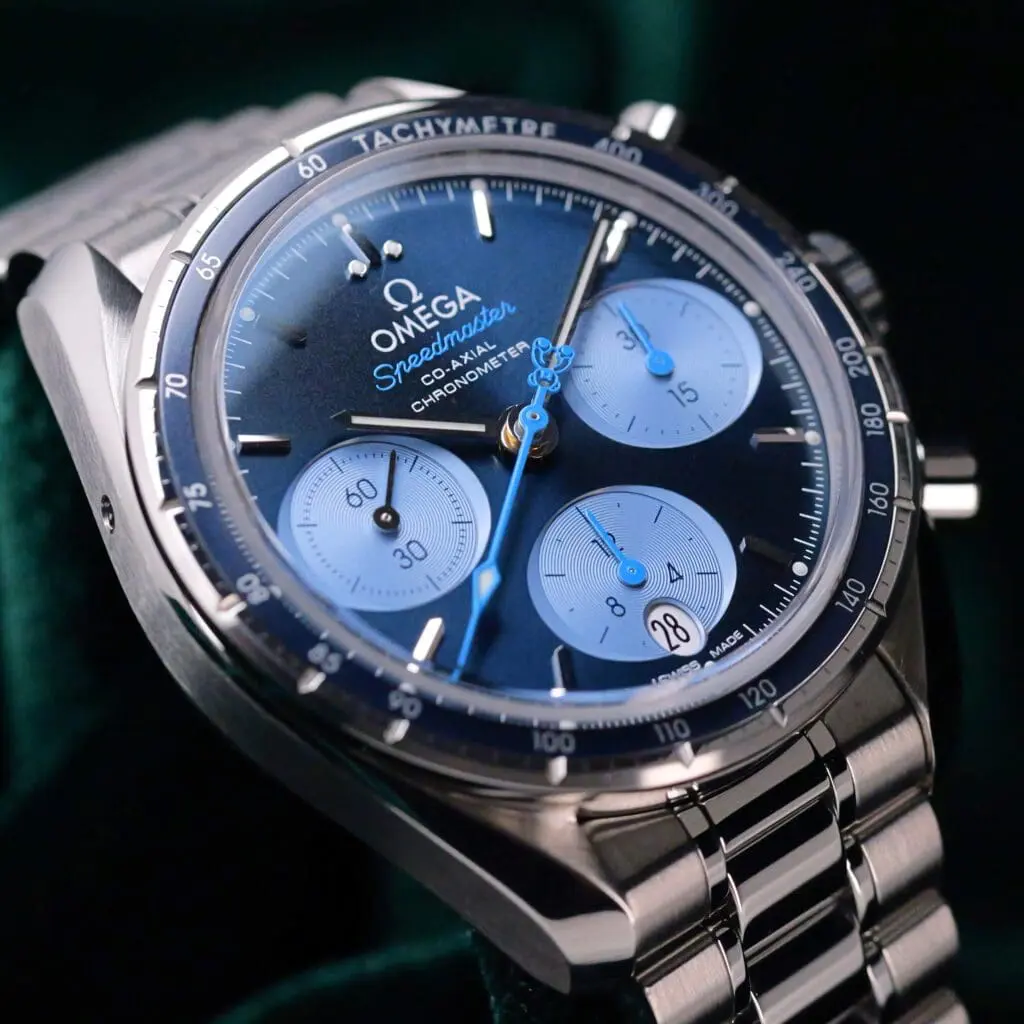
Omega Speedmaster "Orbis Edition" 38mm Blue Dial Blue Bezel Stainless Steel Bracelet MINT COMPLETE SET 324.30.38.50.03.002
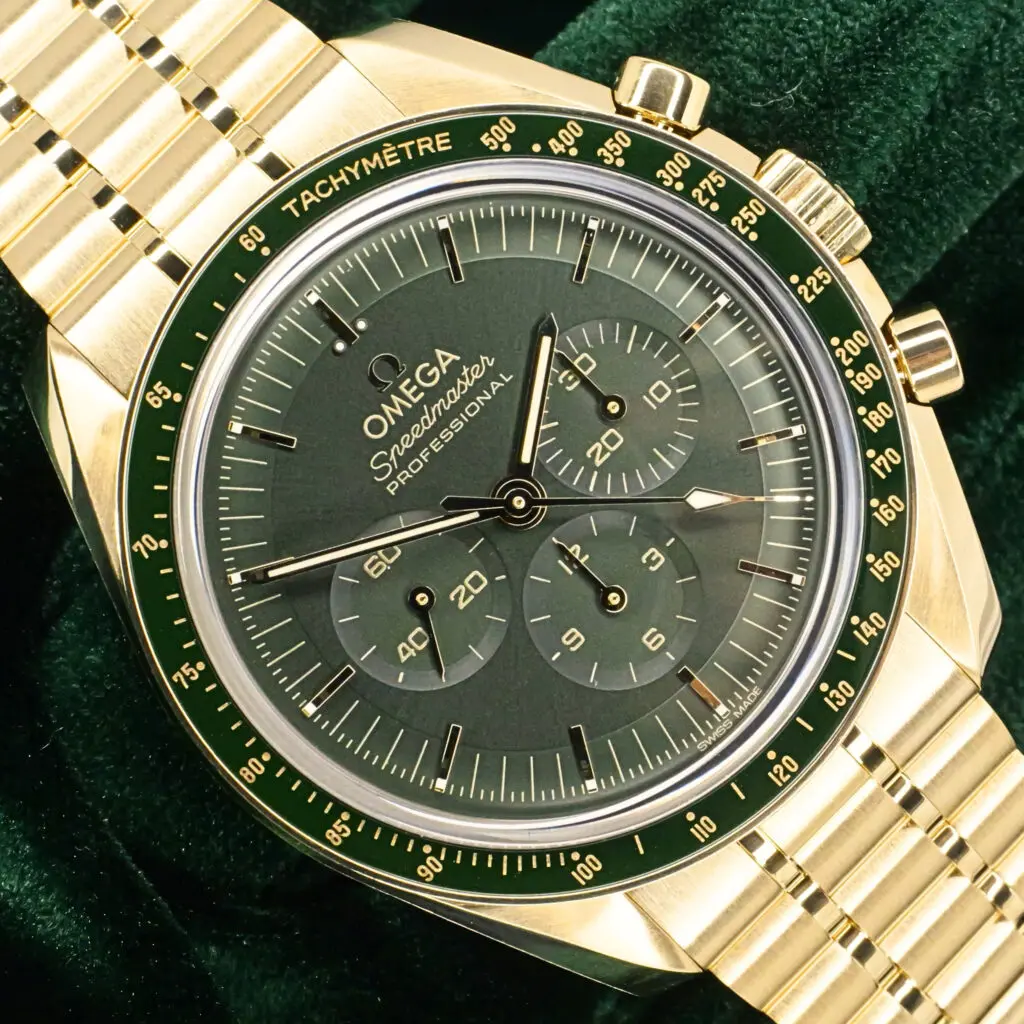
Omega Speedmaster Professional Moonwatch "Moonshine" Green Dial 18K Yellow Gold 42mm MINT CONDITION COMPLETE SET 310.60.42.50.10.001
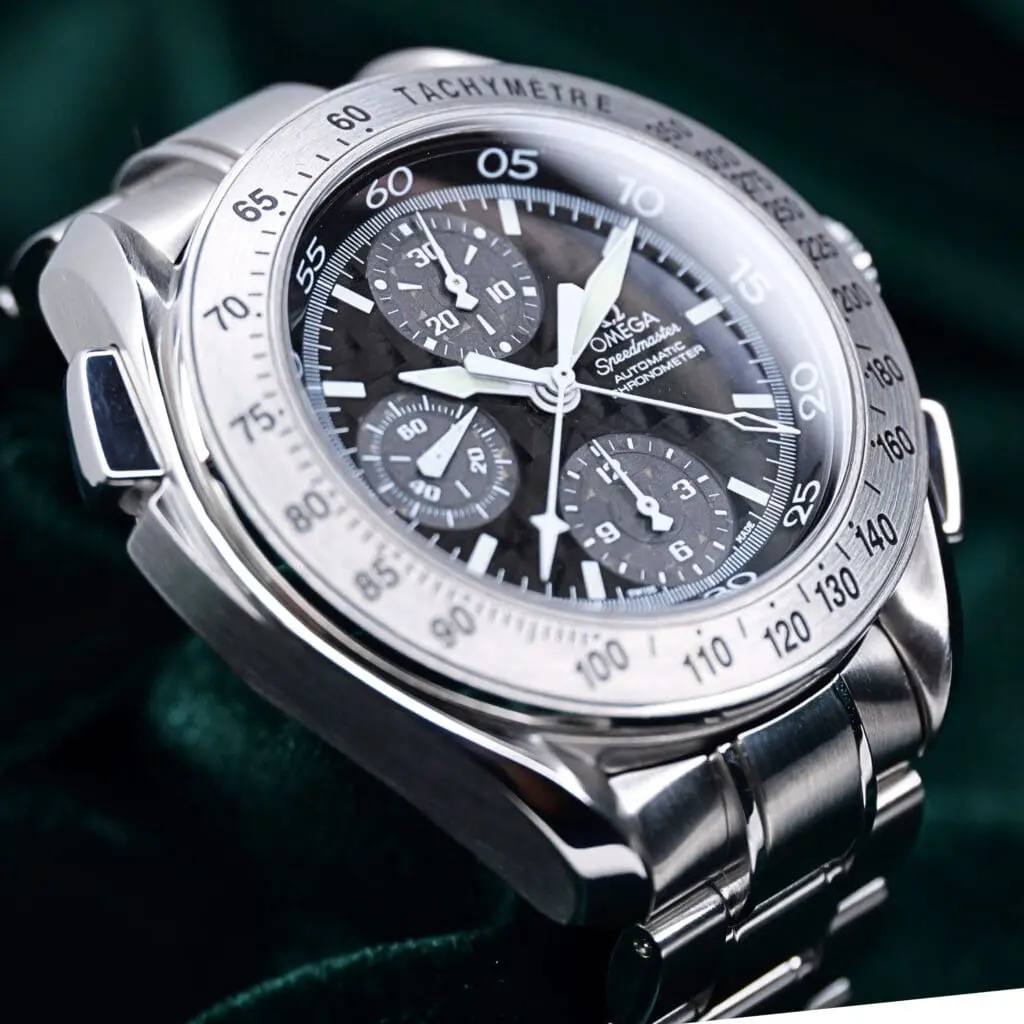
Omega Speedmaster Split-Seconds "Rattrapante" Black Carbon Fiber Dial Stainless Steel 42mm MINT CONDITION 3540.50
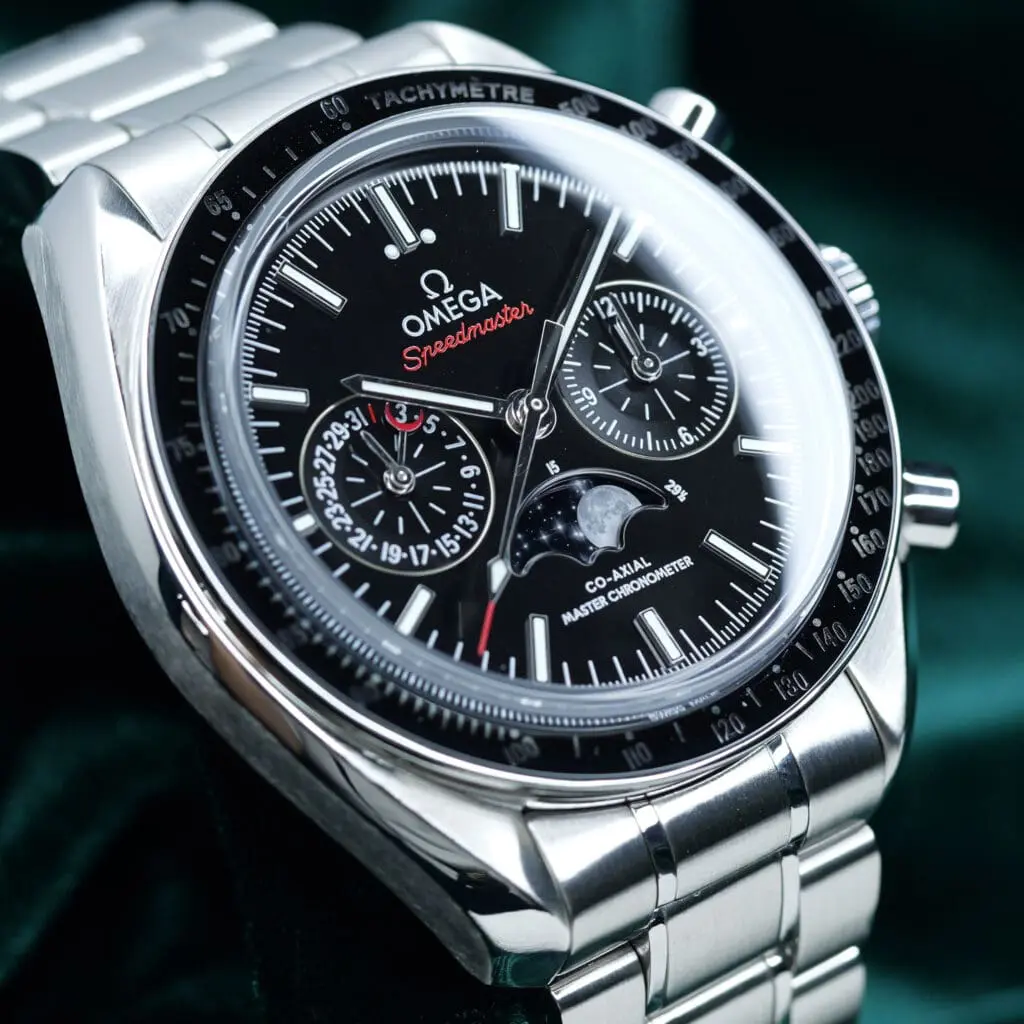
Omega Speedmaster Moonphase Co-Axial Master Chronometer Chronograph Black Dial Stainless Steel 44.25mm MINT CONDITION COMPLETE SET 304.30.44.52.01.001
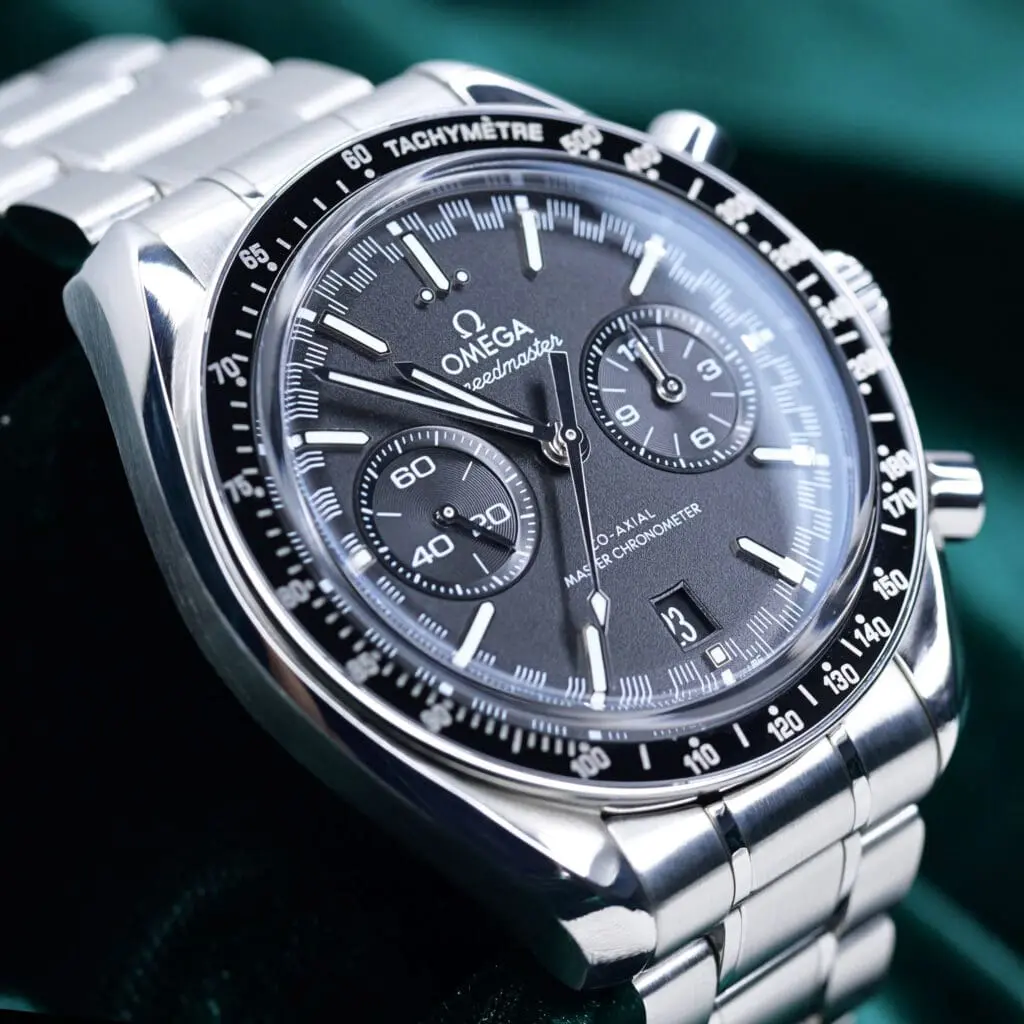
Omega Speedmaster Racing Co-Axial Master Chronometer Black Dial Stainless Steel 44.25mm MINT CONDITION COMPLETE SET 329.30.44.51.01.001
Omega introduced the Speedmaster in 1957 as part of its early professional line. Racing drivers needed a chronograph they could read fast while timing laps, so Omega moved the tachymeter scale onto the bezel and kept the dial clear. That one change made the watch far easier to read during quick timing work.
NASA approved the Speedmaster for crewed missions in 1965 after a brutal qualification test. Astronauts wore it through the Apollo program and on the lunar surface, and those missions created the Moonwatch identity collectors still chase today.
Day to day, a Speedmaster rewards people who like a hands-on watch. Its manual-wind movement means you interact with it every morning, and the slim case keeps it comfortable under a cuff.
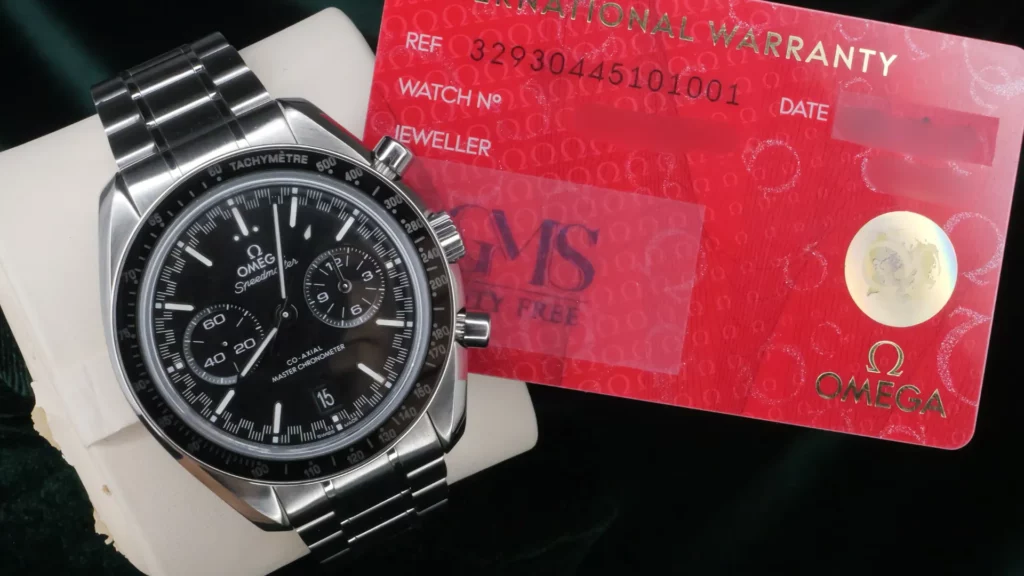
Small details shift between generations. Dial text changes across rTudor eferences, bracelets get reworked, and case finishing varies enough to change how a version wears. What stays constant is the look: three subdials and a tachymeter bezel. Current models run the Caliber 3861, which sharpens accuracy without touching the familiar layout.
Tudor Black Bay: A Quick History
Related Models from Majestix
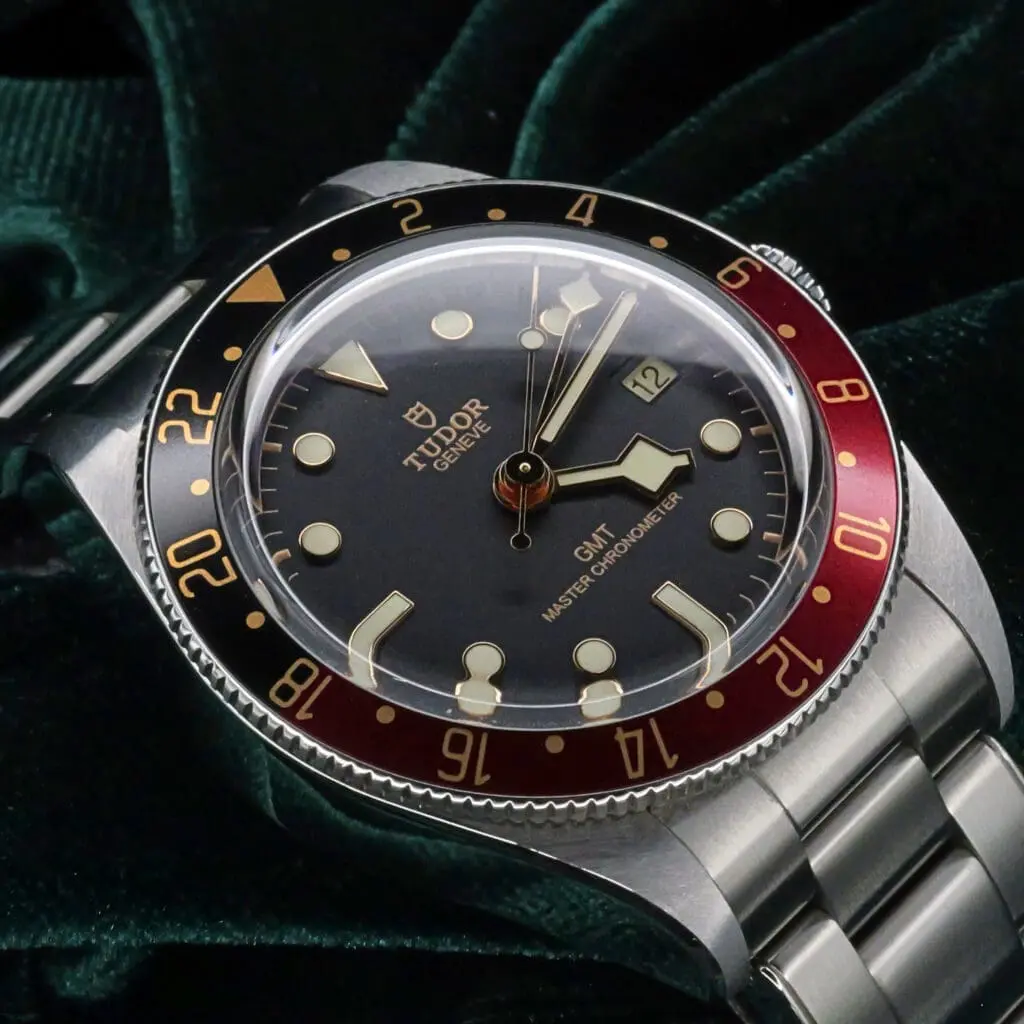
Tudor Black Bay 58 GMT "Coke" Black Dial Black/Burgundy Bezel Stainless Steel MINT CONDITION COMPLETE SET M7939G1A0NRU-0001
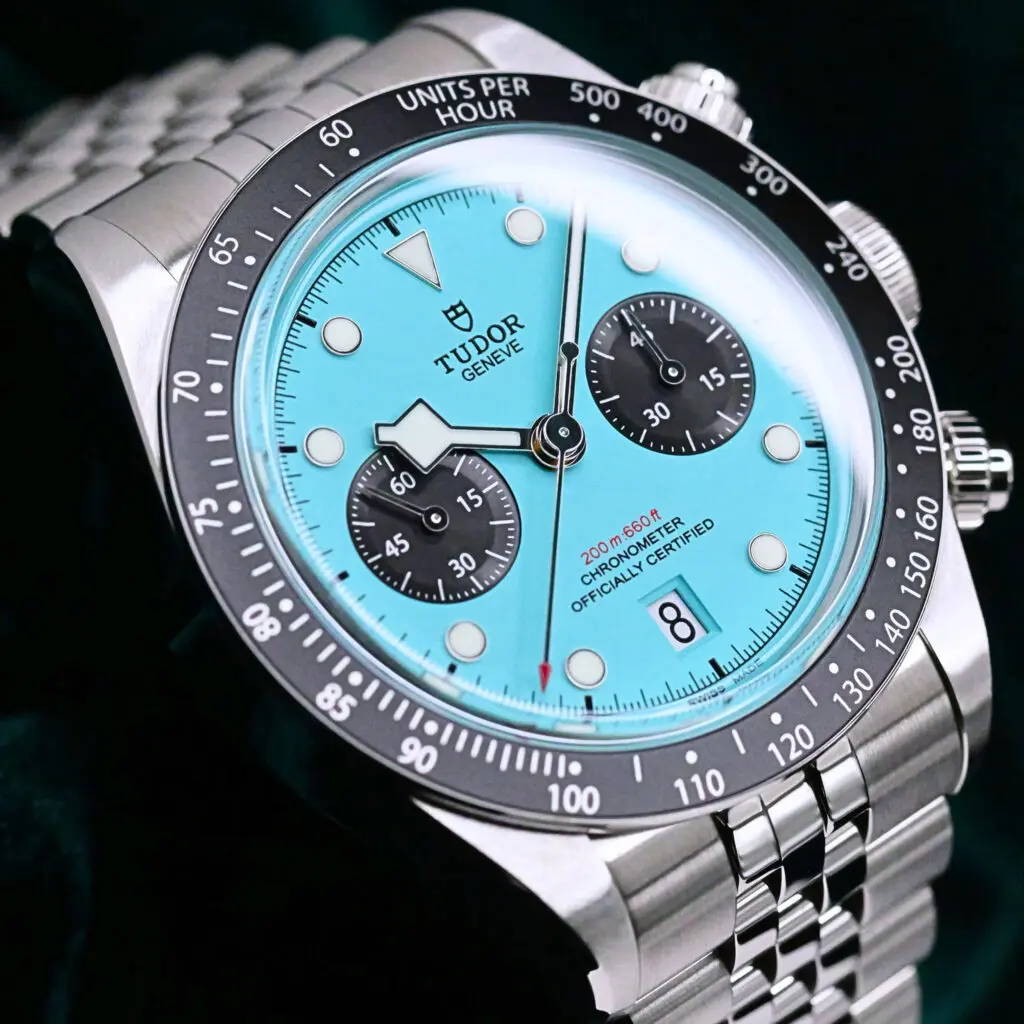
2025 Tudor Black Bay Chrono "Flamingo Blue" Turquoise Dial Black Bezel Stainless Steel 41mm MINT CONDITION COMPLETE SET 79360N-0024
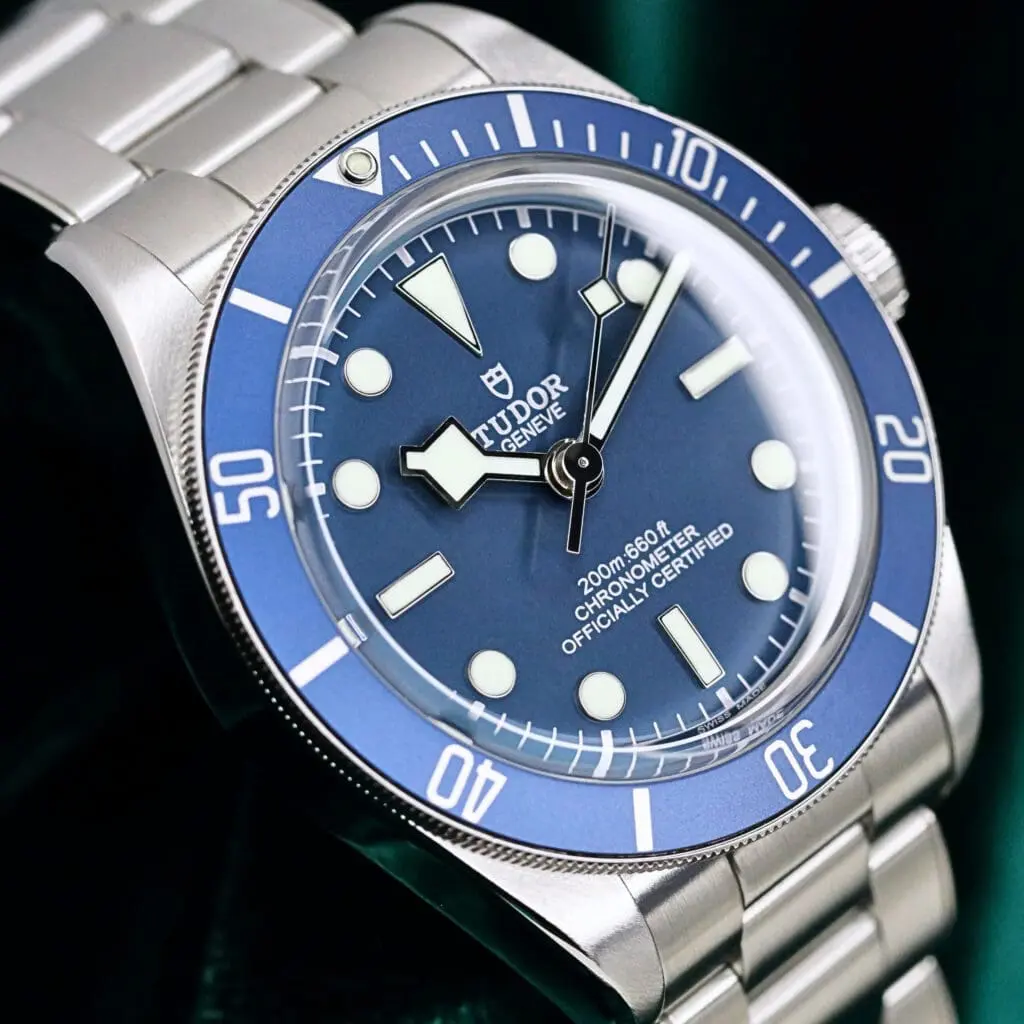
Tudor Black Bay 58 Blue Dial Stainless Steel 39mm MINT CONDITION COMPLETE SET 79030B
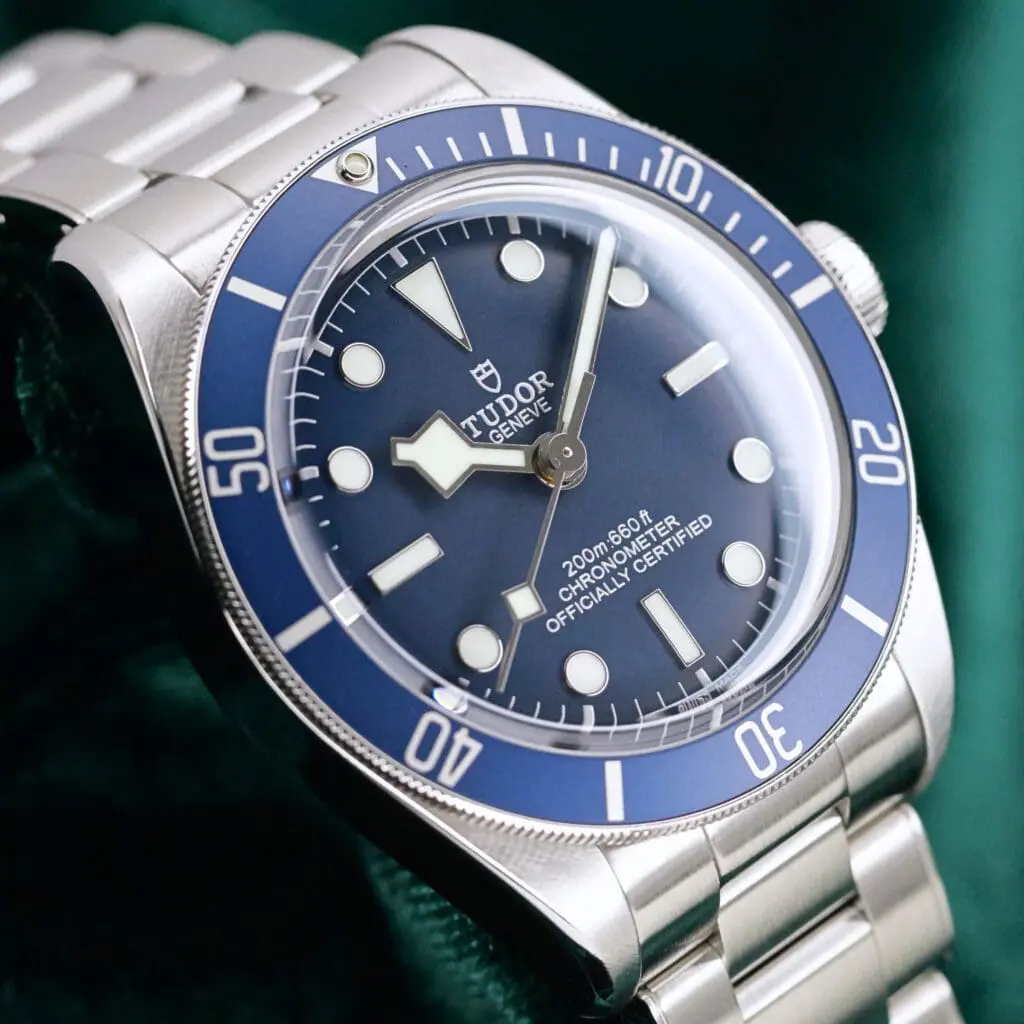
Tudor Black Bay 58 Blue Dial Stainless Steel 39mm MINT CONDITION COMPLETE SET 79030B-0001
Tudor launched the Black Bay in 2012 as a return to its dive watch roots. Rather than reissue one old reference, designers pulled details from several vintage Tudor Submariners and combined them into something new. That gave the watch a clear link to Tudor’s past while keeping it modern.
Because of that, the Black Bay pulls in buyers who want visible heritage in a sports watch they can wear hard. Plenty of owners grew up seeing vintage Submariners, and the snowflake hands and domed dial tap straight into that memory.

This watch also reset Tudor’s place in the market. Later versions brought in-house movements and a 70-hour power reserve across the line, and build quality climbed as the collection grew into new sizes and materials. Through all of it, Tudor kept the look consistent enough that a Black Bay reads as a Black Bay at a glance.
Speedmaster vs Black Bay: Most Notable Differences

Speedmaster and Black Bay were built for different jobs, which is why their layout, construction, and market behavior split the way they do. Here are the four differences that matter most when you are choosing between them.
1. Dial Layout
Speedmaster runs a chronograph display with three subdials tracking elapsed seconds, minutes, and hours, plus a central chronograph hand sitting over the main time. All that information gives the dial a technical, instrument feel. If you have never owned one, running the chronograph takes a minute to learn.
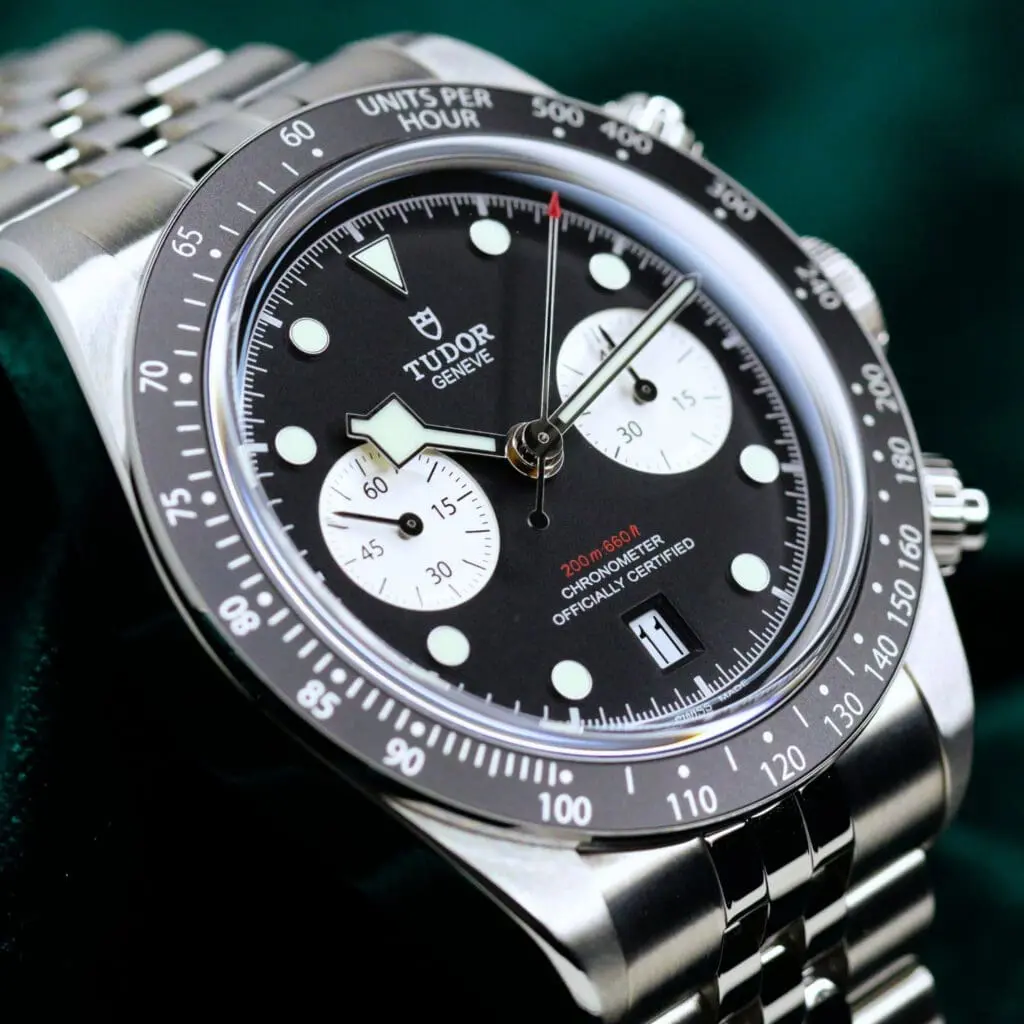
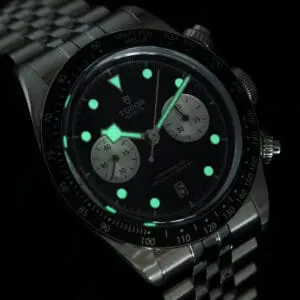
Black Bay keeps it simple. Three hands, big hour markers, no timing registers. Wide snowflake hands and strong lume make it fast to read, and with less on the dial the time jumps out at a glance.
2. Bezel Type
Speedmaster wears a fixed tachymeter bezel. Its numbers pair with the chronograph to work out average speed over a known distance, and it does not rotate because it is a calculation scale, not a timer. If that sounds abstract, how to read a tachymeter makes it click in a couple of minutes.
Black Bay uses a unidirectional rotating bezel with a 60-minute scale. You line the marker up to a start point and read elapsed minutes off it, and deep grooves on the edge keep it grippy even with wet hands. New to it? Here’s how a dive bezel works in practice.
3. Case Proportions
Speedmaster measures 42 mm across and about 13.2 mm thick, with a 47.5 mm lug-to-lug. Its asymmetrical case carries crown and pusher guards on the right side to protect the chronograph pushers and crown.
Black Bay comes in at 41 mm wide and roughly 13.6 mm thick. A bigger screw-down crown and a thicker bezel give it a chunkier profile, and even with the smaller diameter it often wears more solid and compact than the Speedmaster.

4. Price and Market Behavior
Speedmaster pricing swings hard depending on the model. Standard mechanical chronographs hold steady value, while anything outside that core can sit much lower. A Speedmaster LCD Ref. 186.009, for example, trades around $650 because its quartz digital display has little collector pull.
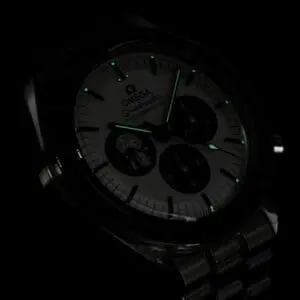
Story-driven editions flip that. As of 2026, the Silver Snoopy Ref. 311.32.42.30.04.003 sells near $40,000 on the secondary market against a roughly $7,350 retail, driven almost entirely by its Apollo 13 history and limited run of 1,970 pieces. Space-themed and unusual-dial editions are where the big premiums live.


Black Bay pricing is calmer because the line is built around modern dive watches people buy to wear. An entry-level Black Bay 32 Ref. 79580 trades around $1,800 against a roughly $3,100 retail, the kind of discount that is normal for steel sports watches bought as daily pieces.
Material is what moves the top end. A solid-gold Black Bay 58 18K Ref. 79018V retails near $39,400 but trades closer to $9,800 on the secondary market as of 2026, a steep drop that comes with most gold sports watches. Across the line, Black Bay value tracks practicality and material far more than rarity.
If you are weighing a specific reference and want eyes on the actual watch before you commit, we can send tour videos and condition notes on the pieces we have in stock. More on that further down.
Notable Omega Speedmaster References
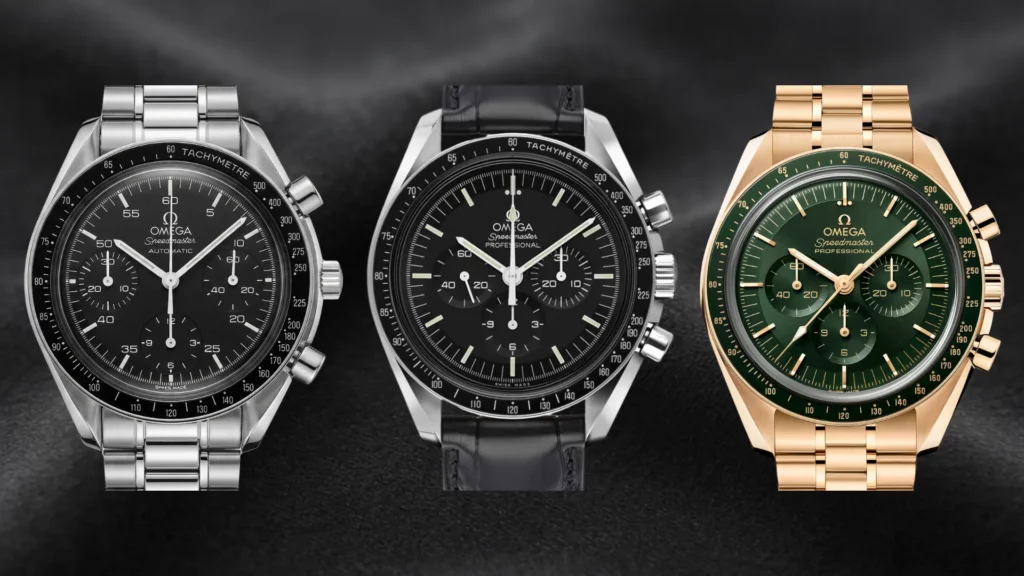
A few references shape how most buyers understand the Omega Speedmaster. Some stay close to the classic Moonwatch format, while others change the size or movement enough to feel different on the wrist. Below are three well-known references that map the main paths within the line.
Our full Omega Speedmaster buying guide covers the wider lineup if you want the complete picture.
Speedmaster Professional Moonwatch Ref. 311.30.42.30.01.005
Ref. 311.30.42.30.01.005 holds the traditional Moonwatch identity with its Hesalite crystal and hand-wound Caliber 1861. Hesalite softens the look of the black dial and kills the hard glare you get off sapphire. A solid steel caseback keeps it tool-focused, and the daily wind gives you that hands-on contact enthusiasts like.
One owner-level note: Hesalite scratches more easily than sapphire, but most marks buff straight out with a dab of Polywatch and a few minutes of rubbing, which is why long-time owners stay relaxed about it.
| Specification | Detail |
| Case Size | 42 mm |
| Movement | Omega Caliber 1861, manual wind |
| Crystal | Hesalite |
| Caseback | Solid |
| Water Resistance | 50 m |
| Bezel | Fixed tachymeter |
| Price Range | Around $4,500 to $6,500 |
Speedmaster Professional Moonwatch Ref. 310.30.42.50.01.001
Ref. 310.30.42.50.01.001 looks like the classic Moonwatch but runs the Caliber 3861 Master Chronometer inside. That means better accuracy and far stronger resistance to the magnetism thrown off by everyday electronics. Same face, more modern engine.
| Specification | Detail |
| Case Size | 42 mm |
| Movement | Omega Caliber 3861, manual wind |
| Crystal | Hesalite |
| Caseback | Solid |
| Water Resistance | 50 m |
| Bezel | Fixed tachymeter |
| Price Range | Around $6,000 to $7,800 |
Speedmaster Reduced Ref. 3510.50
Ref. 3510.50, nicknamed the Reduced, runs a compact 39 mm case and an automatic chronograph movement, which makes it far easier to live with than the full Moonwatch. Smaller wrists get a better fit, and the subdials and tachymeter bezel still read as pure Speedmaster.
If you are weighing it against the hand-wound original, our Reduced vs Professional breakdown covers the differences in detail.
| Specification | Detail |
| Case Size | 39 mm |
| Movement | Omega Caliber 3220, automatic |
| Crystal | Hesalite (acrylic) |
| Caseback | Closed |
| Water Resistance | 30 m |
| Bezel | Fixed tachymeter |
| Price Range | Around $2,700 to $3,900 |
Notable Tudor Black Bay References

A few references define how most people understand the Tudor Black Bay line. Some lean into smaller, vintage-style proportions, while others go for a broader case or an added travel function. Below are three well-known references that show the collection’s main directions, and our Tudor Black Bay buying guide walks through the full family.
Black Bay Fifty-Eight Ref. M79030N
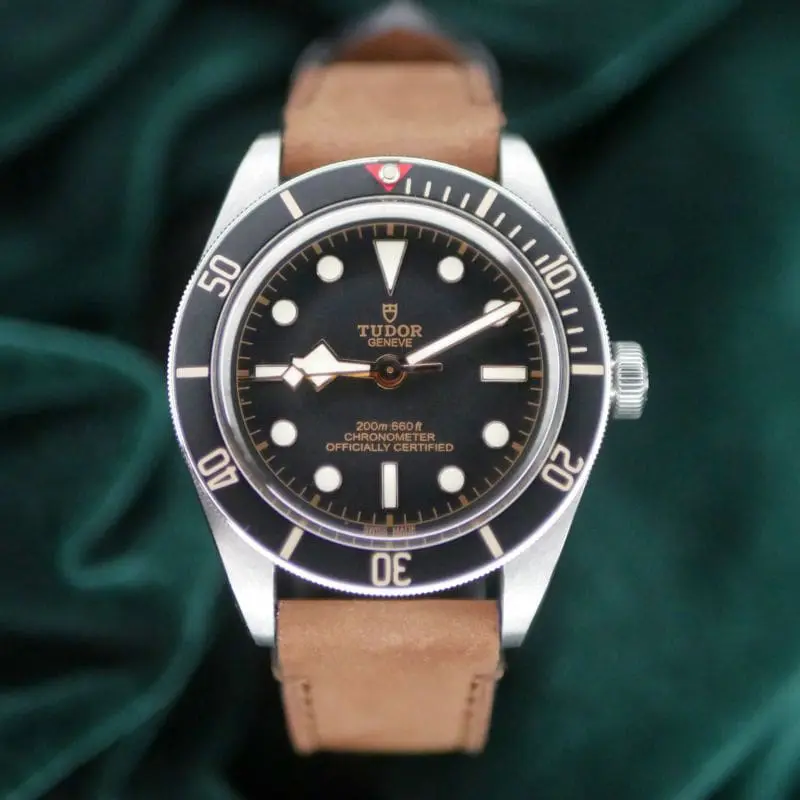
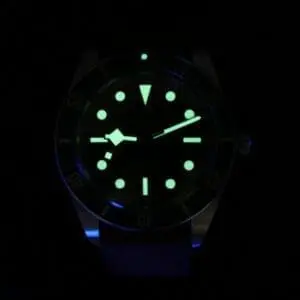
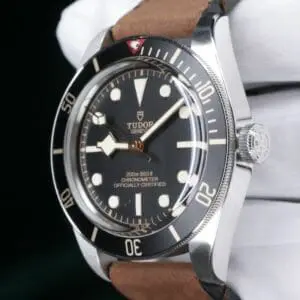
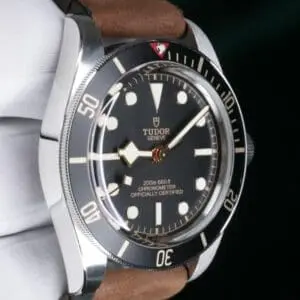
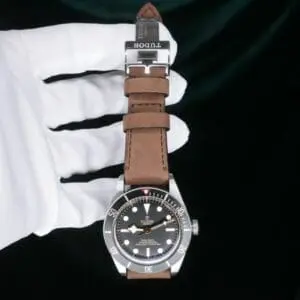
Ref. M79030N is the one people point to for its 39 mm case and slim profile. Smaller dimensions keep it close to the wrist and light through the day, while gilt accents and a black bezel give it a warm, restrained vintage tone.
A detail owners keep mentioning: the gilt dial has a faint speckled sparkle in person that camera photos flatten completely, so it tends to look better in the metal than online.
| Specification | Detail |
| Case Size | 39 mm |
| Movement | Tudor Manufacture Calibre MT5402, automatic |
| Crystal | Domed sapphire |
| Water Resistance | 200 m |
| Bezel | Unidirectional steel, black aluminum insert |
| Power Reserve | 70 hours |
| Price Range | Around $2,800 to $3,800 |
Black Bay Ref. M79230N
Ref. M79230N set the modern Black Bay template with its 41 mm case, MT5602 movement, and clean no-date dial. A bigger case adds wrist presence, and the oversized crown and snowflake hands make it read as a Black Bay from across a room.
| Specification | Detail |
| Case Size | 41 mm |
| Movement | Tudor Manufacture Calibre MT5602, automatic |
| Crystal | Domed sapphire |
| Water Resistance | 200 m |
| Bezel | Unidirectional dive bezel |
| Power Reserve | 70 hours |
| Price Range | Around $2,600 to $3,600 |
Black Bay GMT Ref. M79830RB
Ref. M79830RB stands apart with its blue and burgundy 24-hour bezel and true GMT function. An extra hand and the bezel scale make the dial busier, though it stays legible. From the side you notice the height, since the GMT movement adds bulk, which gives it a denser, more travel-ready feel.
| Specification | Detail |
| Case Size | 41 mm |
| Movement | Tudor Manufacture Calibre MT5652, automatic GMT |
| Crystal | Domed sapphire |
| Water Resistance | 200 m |
| Bezel | Bidirectional 24-hour, blue and burgundy |
| Power Reserve | 70 hours |
| Price Range | Around $2,900 to $5,100 |
Speedmaster vs Black Bay: Which Watch Should You Choose?
Picking between them gets easier once you think about how each watch performs in normal use. Both carry real tool watch credentials, but they were built for different jobs from day one. Here is how each one lines up.
Choose the Omega Speedmaster if:
- You want a chronograph and will put the pushers to real use for timing.
- The Moonwatch history matters to you and you want it on your wrist.
- You like manual winding and do not mind a daily wind.
- You prefer a busy, instrument-style dial over a clean dive layout.
- You want strong collector recognition and a deep, well-documented parts network.
- You spend most of your time in dry, everyday wear rather than around water.
Choose the Tudor Black Bay if:
- You want a no-fuss daily sports watch that shrugs off water.
- You prefer a rotating bezel, a clean dial, and fast at-a-glance reading.
- You want a lower entry price without giving up a recognizable name.
- You like the snowflake hands and the vintage dive watch look.
- You want several case sizes inside one family.
- You want an automatic that is easy to wear, travel with, and use every day.
If you are torn, here is the honest pattern we see: people who buy the Speedmaster for the history tend to keep it forever, while people who buy it expecting an everyday beater often drift toward something easier. The Black Bay is the safer pick if you just want one watch you can wear without thinking. The Speedmaster is the better pick if you want a watch you think about.
Where to Buy Authentic Watches Online
999+ Timepieces Available
Explore Our Timepieces
Authenticated, unworn, and ready to ship worldwide.
Rolex · Audemars Piguet · Patek Philippe · Omega · Cartier · Richard Mille · Hublot · Tudor
Newly Listed

Vacheron Constantin Overseas Perpetual Calendar Ultra-Thin Silver Dial 18K Rose Gold Bracelet 41.5mm MINT CONDITION COMPLETE SET 4300V/120R-B064
$115,385.00
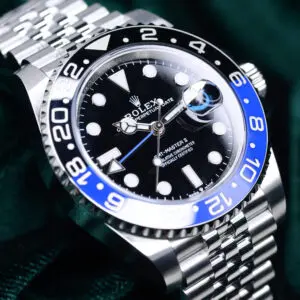
2026 Rolex GMT-Master II “Batgirl” Black Dial Blue Black Ceramic Bezel Jubilee Bracelet Stainless Steel 40mm MINT CONDITION COMPLETE SET 126710BLNR
$22,034.00
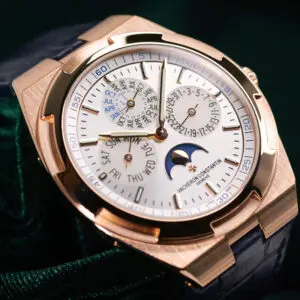
Vacheron Constantin Overseas Perpetual Calendar Ultra-Thin Silver Dial Blue Leather Strap 18K Rose Gold 41.5mm MINT CONDITION COMPLETE SET 4300V/120R-B064
$115,385.00
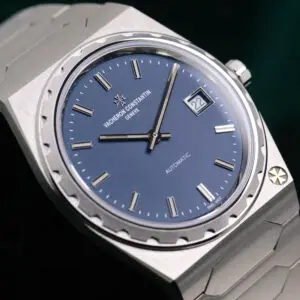
2026 NEW UNWORN Vacheron Constantin Historiques 222 Blue Dial Stainless Steel 37mm COMPLETE SET 4200H/222A-B934
$58,795.00
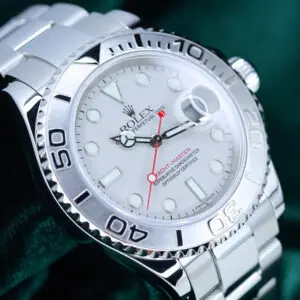
Rolex Yacht-Master Rolesium Platinum Dial Platinum Bezel Oyster Stainless Steel 40mm MINT CONDITION COMPLETE SET 16622
$14,690.00

Audemars Piguet Royal Oak Offshore Chronograph “Vampire” Black Dial Red Accents Black Ceramic Bezel Stainless Steel 42mm MINT CONDITION 26470SO.OO.A002CA.01
$34,649.00
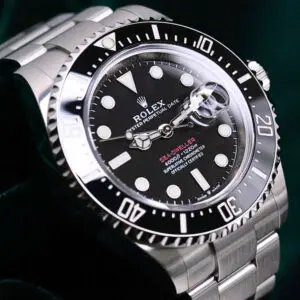
Rolex Sea-Dweller "Red Letter" Black Dial Black Cerachrom Bezel Oyster Bracelet Stainless Steel 43mm MINT CONDITION COMPLETE SET 126600
$13,120.00
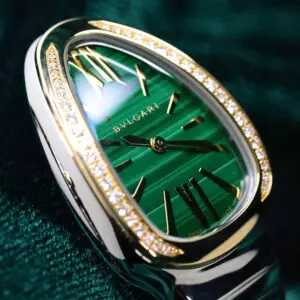
2026 NEW UNWORN Bvlgari Serpenti Tubogas Studs Capsule Limited Edition Green Dial Diamond Bezel Steel & 18k Yellow Gold 35mm COMPLETE SET 104360
$24,255.00
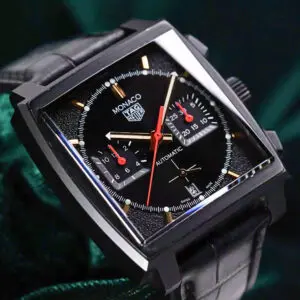
Tag Heuer Monaco Chronograph “Dark Lord” Special Edition Black Dial Black Leather Strap DLC Titanium 39mm MINT CONDITION COMPLETE SET CBL2180.FC6497
$8,135.00
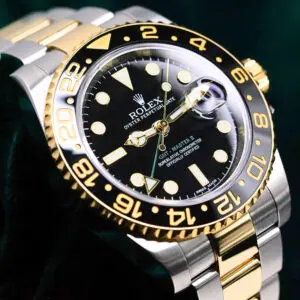
Rolex GMT-Master II “Green Arrow” Black Dial Black Ceramic Bezel Oyster Bracelet Two-Tone 18K Yellow Gold Stainless Steel 40mm MINT CONDITION COMPLETE SET 116713LN
$15,740.00
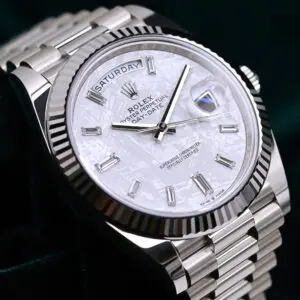
Rolex Day-Date Meteorite Baguette Diamond Dial Fluted Bezel President 18K White Gold 40mm MINT CONDITION COMPLETE SET 228239
$78,629.00
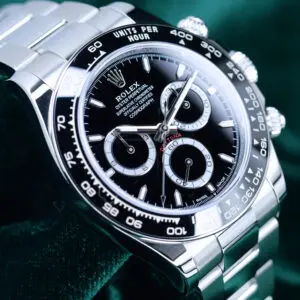
2026 Rolex Cosmograph Daytona Black Dial Black Ceramic Bezel Oyster Bracelet Stainless Steel 40mm MINT CONDITION COMPLETE SET 126500LN
$33,594.00
A handful of legitimate channels exist for buying a pre-owned Speedmaster or Black Bay. Chrono24 aggregates dealer and private listings worldwide with buyer protection on eligible orders, and it pays to know what to check before buying on Chrono24. eBay covers both sides through its Authenticity Guarantee program, which inspects qualifying watches before they reach you.
Grailzee runs enthusiast-focused watch auctions if you would rather bid than buy outright. Watch forums like WatchUSeek and the dedicated Omega and Tudor sub-forums are also worth a look, since private sales there often come with full ownership history.
We also buy, sell, and trade luxury watches, and the reason clients come to us instead of a faceless listing is the conversation that happens first. Before you commit, we walk you through layered communication: tour videos of the exact watch you are considering, honest condition notes, and a real person who has handled the piece answering your questions.
That approach is reflected in our 4.9-star Google rating, which comes from buyers who wanted to understand a watch fully before sending money.
If you are still deciding between the Speedmaster and the Black Bay, reach out and we can talk through which one suits your wrist and your routine, then help you source the right one when you are ready.
Final Thoughts on Speedmaster vs Black Bay
Choosing between the Speedmaster and the Black Bay comes down to how the watch fits your daily life, not which one wins on paper. A Speedmaster is the hands-on chronograph with the space history; a Black Bay is the easy-wearing diver that takes water in stride. Match the watch to your routine and you will still be reaching for it years later.
Two things worth keeping in mind. Budget for a service every five to seven years on either piece, and try both on before deciding, because the Speedmaster’s flatter case and the Black Bay’s thicker, domed profile wear very differently on the same wrist.