
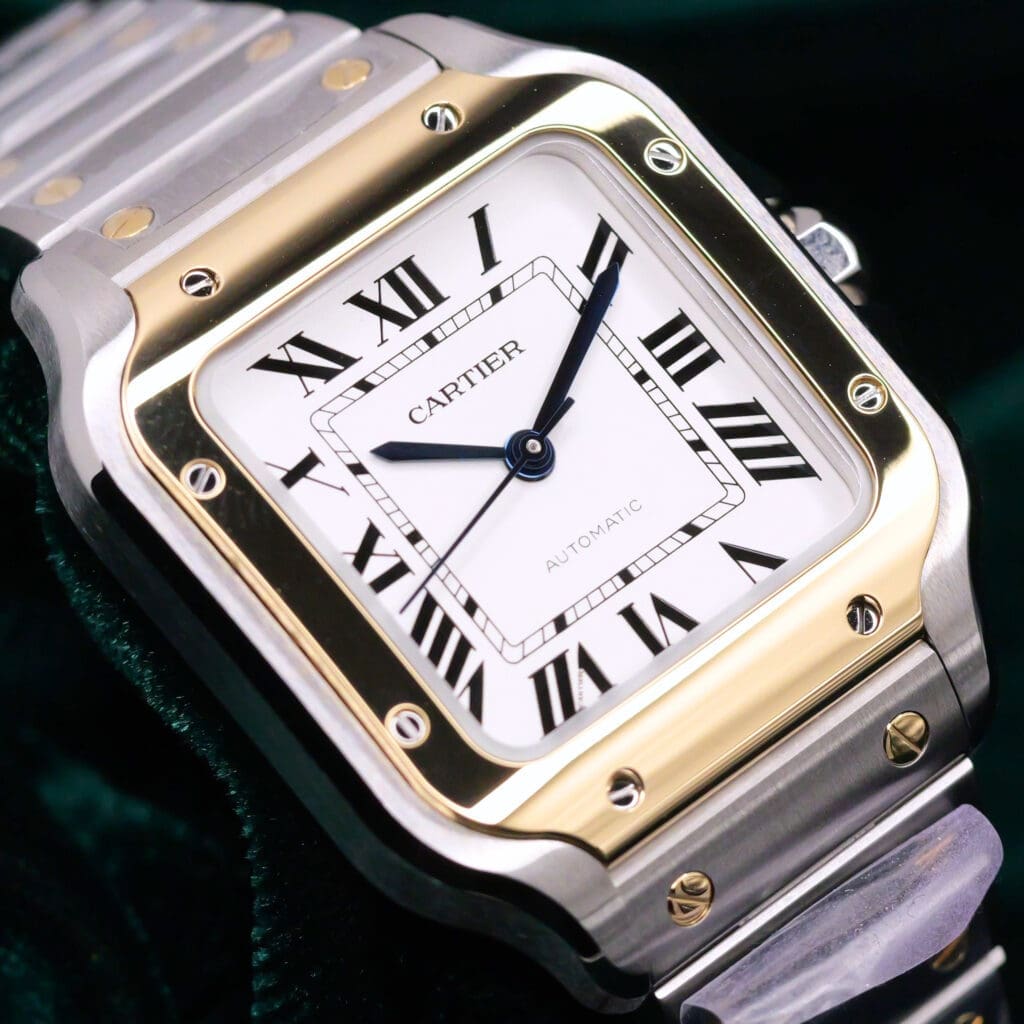
Two square cases. The same screws, the same Roman numerals, the same sapphire cabochon crown. Put a Santos and a Panthère side by side and the family resemblance is obvious. The Panthère borrowed its design language from the Santos when it launched in 1983.
But they feel nothing alike on the wrist. The Santos is a proper watch built around a mechanical movement and daily use. The Panthère is a jewelry piece built around its bracelet. If you’re cross-shopping the Cartier Santos vs Panthère, those two ideas pull in very different directions.
One thing changed the math recently. In 2025 Cartier added a small 27mm Santos, so the size gap that used to separate these two lines is narrower than it was. This guide covers movement, bracelet, case, water resistance, wrist fit, and dial legibility, so you can see which one suits you.
Santos de Cartier Background

Santos de Cartier has a specific origin. In 1904, Louis Cartier built a wristwatch for his friend Alberto Santos-Dumont, a Brazilian aviator who wanted to check the time mid-flight without taking his hands off the controls. That brief explains almost everything about the watch.
The current Santos de Cartier, relaunched in 2018, keeps that functional identity. It has 100m water resistance, an in-house automatic movement (Caliber 1847 MC) on the steel models, and a bracelet built for real daily use. The 2018 redesign added the QuickSwitch strap-swap system and SmartLink bracelet adjustment, both tool-free.
Collectors focus on post-2018 references. The case-to-bracelet integration is cleaner, the movement is fully in-house, and the size range now runs from a 2025 small model up to large. The two-tone steel and yellow gold version, with gold screws on the bezel and bracelet, is the look most people picture when they think Santos.

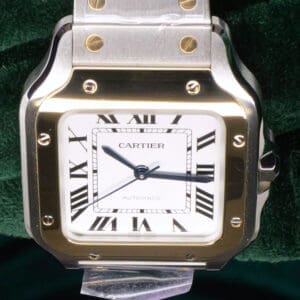
Most popular references of the Santos de Cartier:
- WSSA0082 (Small, Steel, Quartz, added 2025)
- WSSA0029 (Medium, Steel, Automatic)
- WSSA0030 (Large, Steel, Blue Dial) / WSSA0062 (Large, Steel, Green Dial)
- W2SA0006 (Large, Two-Tone 18K)
- Santos-Dumont (Dress sub-line, manual wind, 30m WR)
- Santos de Cartier Skeleton (Caliber 9611 MC)
Panthère de Cartier Background

The Panthère came from a different corner of Cartier. Jeanne Toussaint, the maison’s creative director, was known internally as “La Panthère,” and the panther motif ran through Cartier’s jewelry for decades before it became a watch. When the Panthère launched in 1983, Cartier positioned it as a jewelry-first timepiece where the bracelet was the main event.
That five-row brick-link bracelet is still what the Panthère is about. It flexes with the wrist at every angle, more like a fabric cuff than a normal watch band. The case is only about 6mm thick and tapers into the bracelet with almost no visual break. On the wrist, the watch disappears into the band.
The Panthère was discontinued in 2004 and relaunched in 2017. The current line covers small, medium, and, as of 2024, large (31×42mm), a size added to make it work on bigger wrists. Standard configurations run quartz.
For a buyer who wants something that sits between jewelry and a watch, this is the clearest jewelry-watch in Cartier’s catalog. If a Rolex is also on your list, our Panthère vs Rolex Lady-Datejust comparison covers how the two stack up.
Most popular references of the Panthère de Cartier:
- WSPN0006 (Small, Steel, Quartz, Discontinued)
- WSPN0013 (Small, Steel, Quartz, Current)
- WSPN0007 (Medium, Steel, Quartz, Current)
- W2PN0007 (Medium, Two-Tone Steel/Yellow Gold)
- WSPN0016 (Large, Steel, 31×42mm, added 2024)
- WGPN0008 (Small, 18K Yellow Gold)
Santos vs Panthère: Most Notable Differences
These two watches share a look but split on almost every spec that affects real ownership. The six below are the ones that will decide it for you.
1. Movement
The steel Santos de Cartier runs on Caliber 1847 MC, an in-house automatic with a 42-hour power reserve and a 4Hz beat. It winds itself off your wrist. No battery, no replacements. The medium and large steel references all use this caliber, and the complications (chronograph, skeleton, dual-time) use their own in-house movements.
Here’s the wrinkle worth knowing in 2026. The new small 27mm Santos from 2025 runs quartz, not the automatic. So the old shorthand of “Santos means mechanical” holds for the medium and large, but not for that smallest model.
The Panthère runs quartz across its standard steel and two-tone models. A few precious-metal versions have used an ultra-thin automatic, but that’s a narrow slice at the top of the range. Quartz is lower-maintenance day to day, though it’s worth knowing whether quartz watches still need servicing before you assume it’s zero upkeep.
For most buyers, quartz is what you get, and that’s the cleanest functional split between the lines: the medium Santos gives you a self-winding movement at the steel entry price, and the Panthère does not.
2. Bracelet
The Santos bracelet is built from rigid screw-link segments. The screws on the bracelet match the screws on the bezel, so the whole thing reads as one object instead of a case sitting on a band. It sits firm and structured.
SmartLink lets you add or remove half-links without tools, and QuickSwitch swaps the bracelet for a leather strap in seconds, also without tools. You can dress it up or down without a trip to the watchmaker.
The Panthère bracelet is a different idea. The five rows of rectangular links flex forward, backward, and side to side, so in daily wear it moves like a fabric cuff. That drape is intentional and it’s the whole point of the watch.
But there’s no tool-free adjustment. Resizing means taking links out the traditional way, ideally by a professional, and stretched or missing links are one of the most common problems on pre-owned examples.
3. Case
The Santos de Cartier medium sits at about 8.3mm thick. It has defined lugs that flow into the bracelet, and the case rides slightly raised off the wrist. It reads as a watch with real presence.
The Panthère medium is about 6mm thick. Those couple of millimeters change the feel completely. The case tapers into the bracelet and the whole thing sits flush against the skin. A 6mm profile slides under a dress-shirt cuff without bunching. If you want a watch that disappears into the wrist rather than sits on top of it, this gap matters more than anything else on the list.
Related Models from Majestix
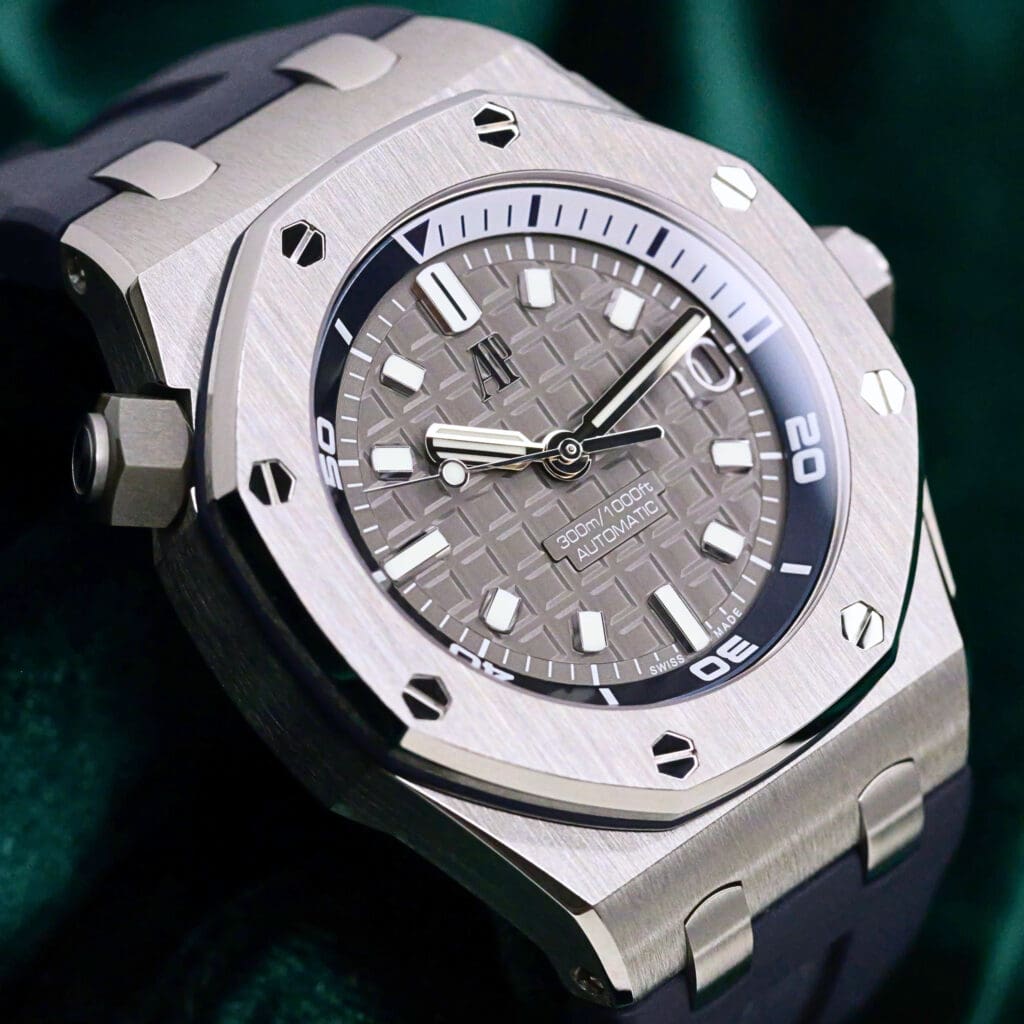
Audemars Piguet Royal Oak Offshore Diver Grey Dial Blue Rubber Strap Stainless Steel 42mm MINT CONDITION COMPLETE SET 15720ST.OO.A009CA.01
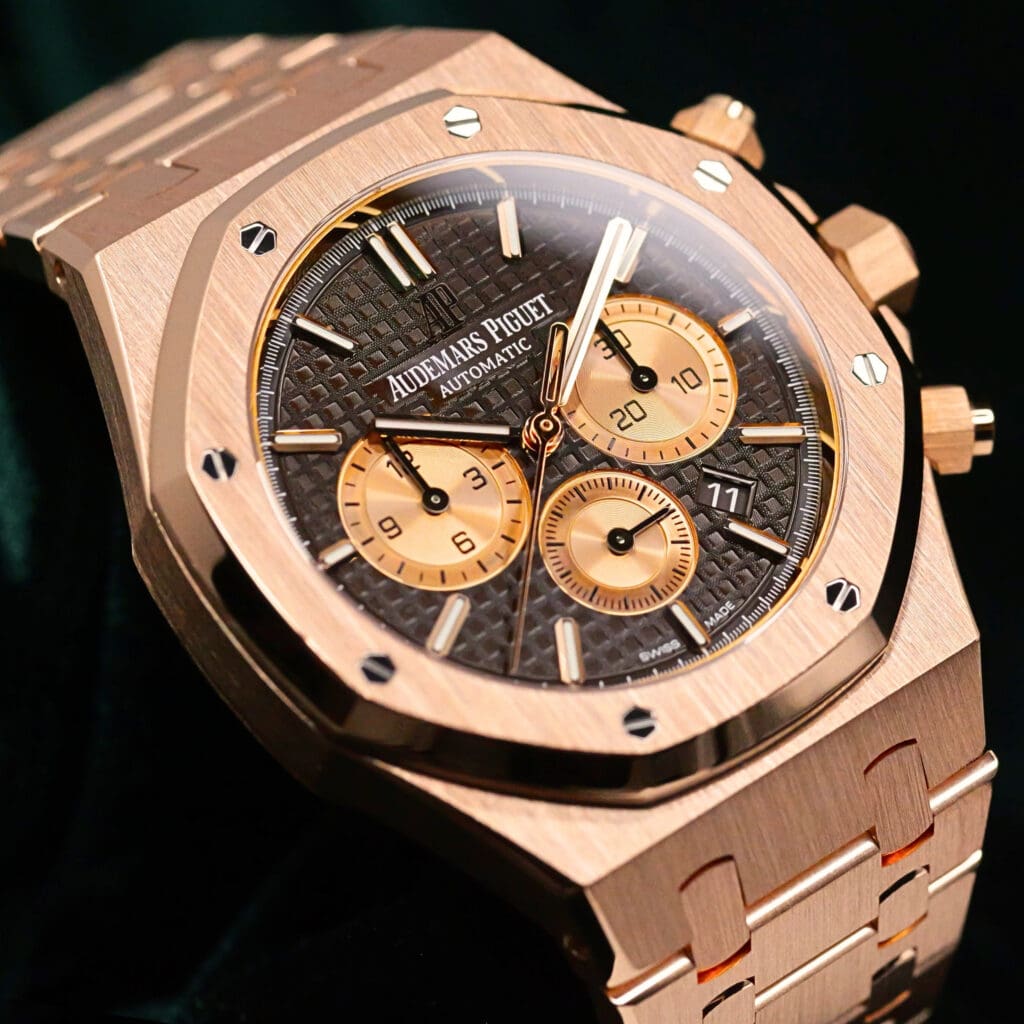
Audemars Piguet Royal Oak Chronograph Chocolate Brown Dial 18K Rose Gold Bracelet 41mm MINT CONDITION COMPLETE SET 26331OR.OO.1220OR.02
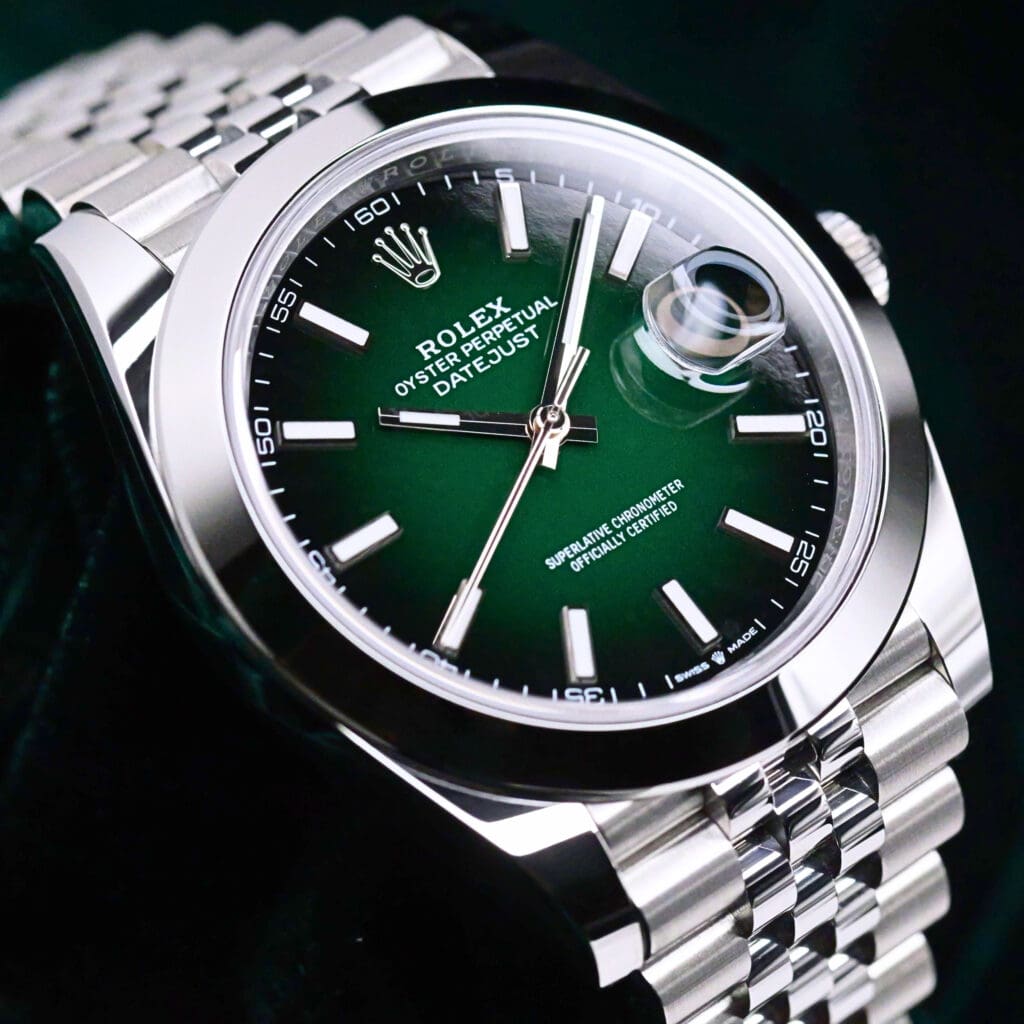
2026 Rolex Datejust Green Ombre Dial Smooth Bezel Jubilee Bracelet Stainless Steel 41mm MINT CONDITION COMPLETE SET 126300

Rolex GMT-Master II "Pepsi" Blue Dial Blue Red Ceramic Bezel Oyster Bracelet 18K White Gold 40mm MINT CONDITION COMPLETE SET 126719BLRO

Patek Philippe Aquanaut Chronograph Black Dial Black Rubber Strap Stainless Steel 42mm MINT CONDITION COMPLETE SET 5968A
Rolex Cosmograph Daytona "Reverse Panda" Black Dial Black Ceramic Bezel Oyster Bracelet Stainless Steel 40mm MINT CONDITION COMPLETE SET 126500LN
4. Water Resistance
The Santos de Cartier is rated to 100m (10 bar). It handles rain, swimming, and light water without a second thought, and that rating reflects its build as a sports-dress watch.
The Panthère is rated to 30m (3 bar). That covers handwashing and light rain, but not swimming or submersion. The low number fits its jewelry-watch role, but it’s a real limit to know before you buy.
5. Size and Fit
This is where the two lines used to be furthest apart, and where 2025 closed the gap. If you’re not sure where you land, matching case size to your wrist is the first thing to sort out.
The Santos comes in medium (35.1×41.9mm) and large (39.8×47.5mm), and now a small (27×34.5mm) added in 2025. The medium suits wrists from roughly 15 to 17cm, the large fits 17cm and up, and the new small opens the door for wrists that once had to look elsewhere in the Santos line.
The Panthère covers small (~22×30mm), medium (~27×37mm), and large (~31×42mm), with the large added in 2024. Both lines read as unisex, though the smaller Panthères lean delicate. For wrists under 15cm, the Panthère still has the widest spread of options, but the small Santos now competes for the same buyer in a way it couldn’t before.
6. Dial Legibility
Both dials use Roman numerals, a railroad minute track, and sword-shaped hands, so the core dial language is shared. The gap is in low light. Modern steel Santos references carry Super-LumiNova on the hands and markers, so they stay readable in dim light or at night.
The standard Panthère has no lume anywhere, so the hands blend into the dial after dark. For a jewelry watch worn mostly in well-lit rooms that’s expected, but it’s worth confirming before you commit.
If you already know which size and feel you want but you’re stuck on the details, that’s the point where a quick back-and-forth helps. We’re happy to talk either line through with you before you spend a cent.
Price and Market Demand

Price here isn’t just what each watch costs. It tells you how each line behaves once you own it, and whether it holds up if you ever sell.
One number frames the whole section. In 2026 the Panthère has been the strongest performer in Cartier’s catalog, up roughly 11.9% over the past year and holding value better than any other Cartier line, according to WatchCharts.
The Santos is steadier and more predictable. Neither is a growth asset, but the Panthère’s discontinued steel models are the closest thing to one here.
Related Models from Majestix
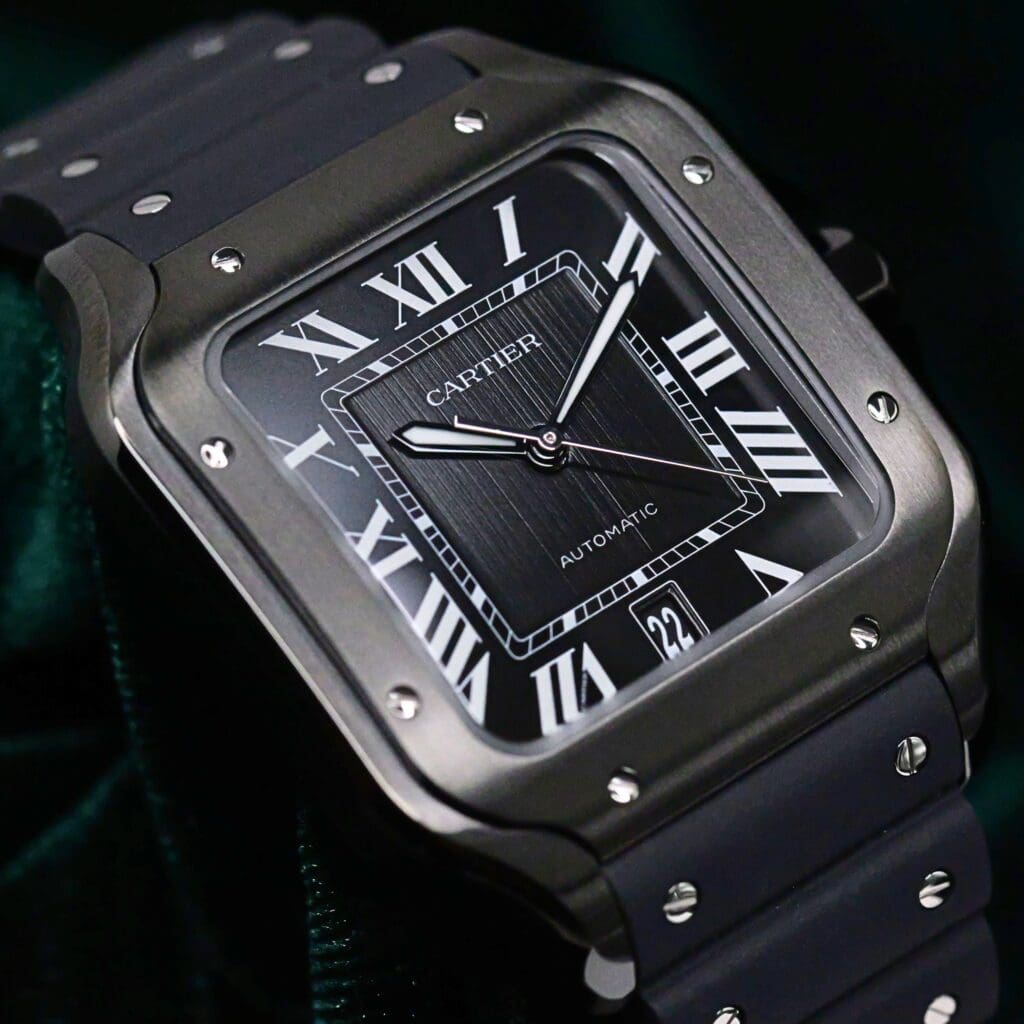
2026 Cartier Santos De Cartier Black Dial Black ADLC Stainless Steel Black Rubber Strap 39.8mm MINT CONDITION COMPLETE SET WSSA0039
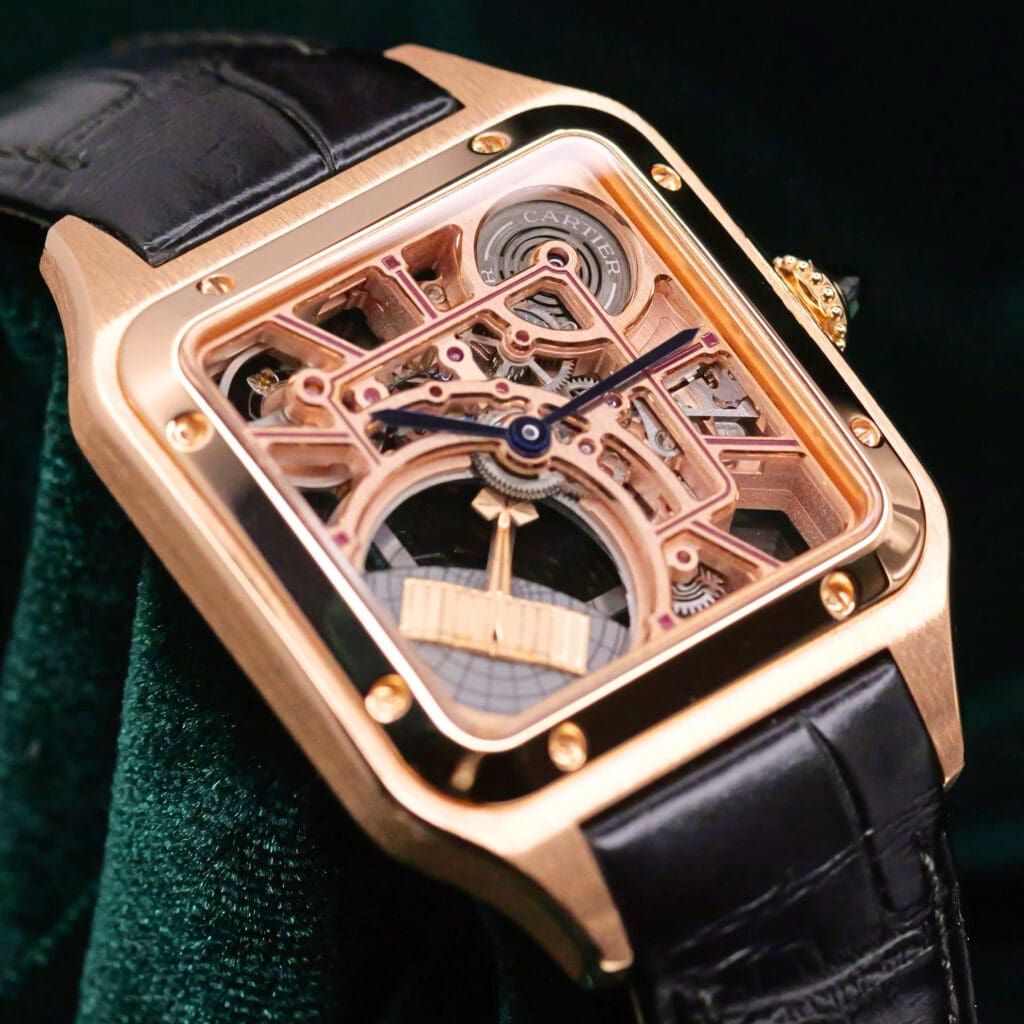
Cartier Santos-Dumont Micro-Rotor Skeleton Dial Black Alligator Strap 18k Rose Gold 43.5 x 31mm MINT CONDITION COMPLETE SET WHSA0030

Cartier Santos-Dumont Micro-Rotor Skeleton Dial 18K Rose Gold Burgundy Alligator Strap 31mm MINT CONDITION COMPLETE SET WHSA0030

Cartier Santos Green Dial Stainless Steel 39.8mm MINT CONDITION COMPLETE SET WSSA0062
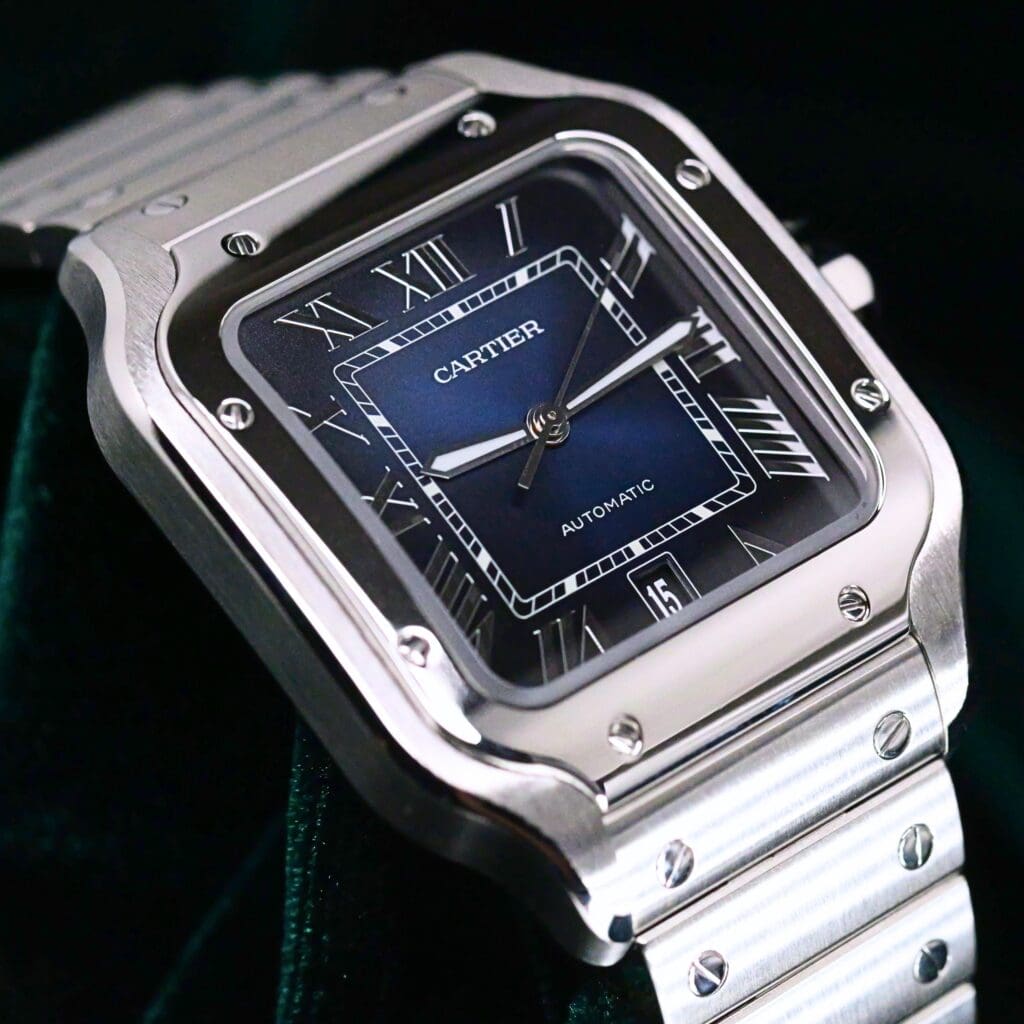
Cartier Santos de Cartier Large Blue Dial Stainless Steel 39.8mm MINT CONDITION COMPLETE SET WSSA0030

2026 NEW UNWORN Cartier Santos De Cartier White Dial 18K Rose Gold Blue Leather Strap 39.8mm COMPLETE SET WGSA0019
Santos de Cartier Pricing
The Santos sits in a stable, readable part of the market. The entry steel WSSA0029 retails around $7,500, and pre-owned examples trade in the high-$5,000s to around $7,000 depending on condition and completeness, with a WatchCharts market value near $6,800.
The new small WSSA0082 lists around $6,700 retail. Larger steel configurations run a little higher, and two-tone models push into the $9,500 to $12,000 range.
The WSSA0029 holds value well for a steel dress-sports watch, and full sets carry a clear premium. Box, papers, and the extra strap all add real money on resale, so buying complete is worth it if you ever plan to move it on.
Panthère de Cartier Pricing
The Panthère splits by reference. Current steel models like the medium WSPN0007 and small WSPN0013 retail around $5,000, and the small in particular trades close to retail on the secondary market, which is unusual for a quartz watch. Pre-owned steel runs roughly $4,300 to $5,500.
Two-tone models move up to a $9,500 to $14,000 retail bracket, and solid gold starts above $14,000 and ranges widely by condition. The interesting money is in discontinued steel. The old small steel WSPN0006 is up about 31.8% over five years and sells fast, a median of 7.5 days as of late 2025, per WatchCharts. That’s real demand from fixed supply, not hype.
Notable Santos de Cartier References
The Santos line spans sizes, finishes, and movement types. These five cover most of what a cross-shopper is deciding between, and our full Cartier Santos buying guide breaks down the rest of the lineup.
1. Santos de Cartier Small Steel (WSSA0082)
The reference that changed the size conversation. Added in 2025 at 27×34.5mm and about 7mm thick, it finally gives smaller wrists a true Santos option, and it now sits comfortably among the best luxury watches for a small wrist.
It runs quartz rather than the automatic, which keeps it slim, and it ships with a steel bracelet plus a second leather strap on the QuickSwitch system.
For a buyer weighing this against a Panthère, this is the head-to-head that didn’t exist two years ago. Same square case and screws, similar footprint, but with the Santos bezel and a more structured wrist feel.
- Case: 27×34.5mm, stainless steel
- Movement: Quartz
- Water resistance: 30m
- Typical secondary range: ~$5,000–$6,000 (early data; limited sales so far)
2. Santos de Cartier Medium Steel (WSSA0029)
The benchmark Santos. At 35.1×41.9mm it sits cleanly on wrists from about 15 to 17cm, and it’s the most traded Santos reference on the secondary market. The white dial with blued sword hands is the classic look, and it’s the one most people mean when they say “Santos.”
- Case: 35.1×41.9mm, stainless steel
- Movement: Caliber 1847 MC, automatic, 42-hour power reserve
- Water resistance: 100m
- Bracelet: SmartLink steel with QuickSwitch
- Typical secondary range: ~$5,900–$7,000
3. Santos de Cartier Large, Blue or Green Dial (WSSA0030 / WSSA0062)
The color-dial large models drew the most attention after the 2018 relaunch. The sunray blue and green dials add depth, and the large case (39.8×47.5mm) fits wrists from about 17cm up.
- Case: 39.8×47.5mm, stainless steel
- Movement: Caliber 1847 MC, automatic
- Water resistance: 100m
- Typical secondary range: ~$5,500–$7,500
4. Santos de Cartier Large Two-Tone
Gold screws on the bracelet and bezel against a steel case. This was the configuration tied to the watch’s 1980s moment, and it’s still the most visually iconic Santos.
- Case: 39.8×47.5mm, steel with yellow gold bezel and accents
- Movement: Caliber 1847 MC, automatic
- Typical secondary range: ~$7,500–$11,000
5. Santos de Cartier Skeleton
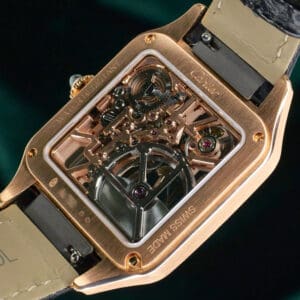


Roman-numeral bridges replace the dial entirely. Caliber 9611 MC runs without a dial surface, which makes this the most distinct Santos in the current lineup and a very different buy from the steel entry models.
- Case: 39.8×47.5mm, stainless steel
- Movement: Caliber 9611 MC, manual wind
- Typical secondary range: ~$18,000–$30,000+
Notable Panthère de Cartier References

The Panthère rewards knowing which size fits your wrist and which metal tier fits your budget. These five cover the options that matter most, and our full Cartier Panthère buying guide walks through the wider lineup.
1. Panthère de Cartier Medium Steel (WSPN0007)
The most accessible entry into the current line. At 27×37mm and about 6mm thick, it fits wrists from roughly 14 to 16cm, and it’s the most traded Panthère on the secondary market, with a WatchCharts value in the mid-$4,000s. It’s light enough that you forget you’re wearing it.
The bracelet is what most buyers respond to first. The five-row brick structure drapes in a way no other steel watch at this price replicates. It doesn’t feel like a watch bracelet. It feels like a piece of jewelry with a dial attached.
- Case: 27×37mm, stainless steel, ~6mm thick
- Movement: Quartz
- Water resistance: 30m
- Bracelet: Five-row brick link, integrated clasp
- Typical secondary range: ~$4,300–$5,000
2. Panthère de Cartier Small Steel (WSPN0006, Discontinued)
Fixed supply has made this one perform. The small steel (about 22×30mm) is out of production, and its five-year climb and quick sell-through are covered in the pricing section above. Its market value has settled into the low-$4,000s.
For wrists under 15cm this is the Panthère that fits most naturally. The tiny square case sits so close to the bracelet that it reads almost entirely as jewelry. If you’d rather buy new, the current small steel WSPN0013 covers the same size at around $5,000.
- Case: ~22×30mm, stainless steel
- Movement: Quartz
- Water resistance: 30m
- Typical secondary range: ~$3,800–$4,600
3. Panthère de Cartier Medium Two-Tone (W2PN0007)

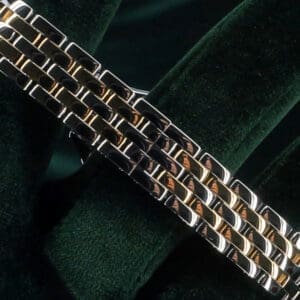
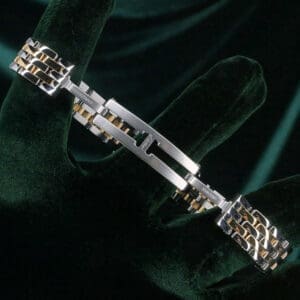
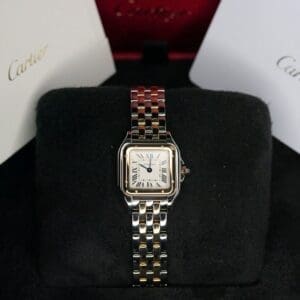
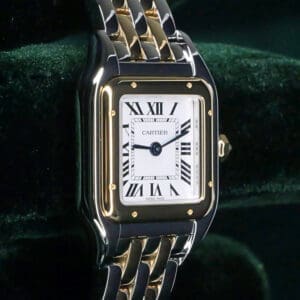
The most complete expression of the Panthère’s character. Steel and 18K yellow gold on alternating links gives the bracelet a warmer look than full steel, and it’s the version most people picture when they think of the Panthère as jewelry.
Two-tone also tends to hold value better than all-steel. The buyer pool is smaller but more committed, which keeps prices steady.
- Case: ~27×37mm, steel and 18K yellow gold
- Movement: Quartz
- Water resistance: 30m
- Typical secondary range: ~$6,000–$8,500 (retail ~$10,000)
4. Panthère de Cartier Large Steel (WSPN0016)
The reference that changed who the Panthère is for. At 31×42mm it’s the first Panthère that fits a larger wrist without reading undersized, added in 2024. The profile still holds around 6.7mm and the bracelet drapes the same way.
On a 16 to 18cm wrist, this is the Panthère that lands with the most impact without the proportions fighting you. It’s also the closest the line gets to a Santos footprint.
- Case: 31×42mm, stainless steel
- Movement: Quartz
- Water resistance: 30m
- Typical secondary range: ~$5,500–$7,000
5. Panthère de Cartier Small Yellow Gold (WGPN0008)
All gold, no steel. The small yellow gold Panthère (about 22×30mm in 18K) is where the jewelry-watch idea is fully realized. Case, bracelet, and crown are entirely gold, and at this level it competes with fine jewelry more than with other watches.
Secondary prices here swing on bracelet condition, provenance, and link count. Full sets with papers command a clear premium.
- Case: ~22×30mm, 18K yellow gold
- Movement: Quartz
- Water resistance: 30m
- Typical secondary range: ~$9,000–$14,000+
Where to Buy Authentic Watches Online
A few online channels are safe places to buy either watch. Chrono24 is the largest marketplace for both, with an escrow option and a wide spread of listings you can price-check against each other; if it’s new to you, here’s what to check when buying on Chrono24.
eBay covers the same ground and its Authenticity Guarantee program has a third party inspect eligible watches before they reach you.
WatchCharts is where to sanity-check pricing before you commit, since it aggregates listings and shows what each reference trades for.
We also buy, sell, and trade luxury watches, and the reason clients come to us instead of a big listing page is what happens before the sale. You get a proper back-and-forth first: tour videos of the exact watch, close-up condition notes, and a real conversation with someone who has the piece in hand.
On a Panthère especially, where bracelet condition makes or breaks the deal, that’s the difference between guessing off stock photos and knowing what you’re getting.
That approach is reflected in our 4.9-star Google rating. You can browse our current collection to see what’s in stock, and if you’re weighing a specific Santos or Panthère and want that kind of walkthrough before you decide, reach out and we’ll line up options that fit your wrist and budget.
Which Cartier Should You Choose?
Both sit in Cartier’s wider catalog and share a look, but they answer different questions. The right pick depends on what you want from the watch.
Choose the Santos de Cartier if:
- A self-winding automatic matters to you (on the medium or large steel; the small runs quartz)
- You want 100m water resistance for real daily use
- Tool-free swaps between the bracelet and a leather strap are useful to you
- You check your watch in dim or low-light settings
- You want a watch with more wrist presence
- You’d rather have the easier resale if you plan to sell later
Choose the Panthère de Cartier if:
- A 6mm profile that slips under a cuff is the priority
- Movement type doesn’t matter to you and quartz is fine
- You wear it mostly in formal, fashion, or evening settings
- The bracelet drape and jewelry feel outweigh strap versatility
- Your wrist is small and you want the widest spread of proportions
- You’re targeting discontinued steel references for value
The tie-breaker is simple. If you want a watch first and jewelry second, take the Santos. If you want jewelry that happens to tell time, take the Panthère.
999+ Timepieces Available
Explore Our Timepieces
Authenticated, unworn, and ready to ship worldwide.
Rolex · Audemars Piguet · Patek Philippe · Omega · Cartier · Richard Mille · Hublot · Tudor
Newly Listed
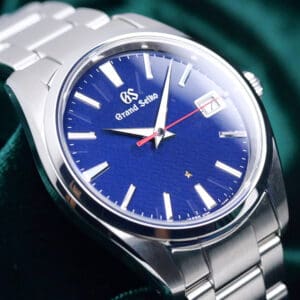
Grand Seiko Heritage 60th Anniversary Limited Edition Blue Dial Stainless Steel 40mm MINT CONDITION COMPLETE SET SBGP007G
$4,268.00
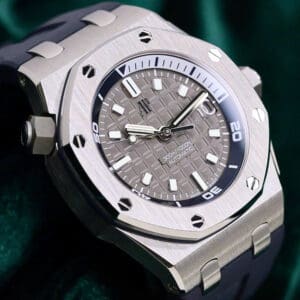
Audemars Piguet Royal Oak Offshore Diver Grey Dial Blue Rubber Strap Stainless Steel 42mm MINT CONDITION COMPLETE SET 15720ST.OO.A009CA.01
$27,788.00
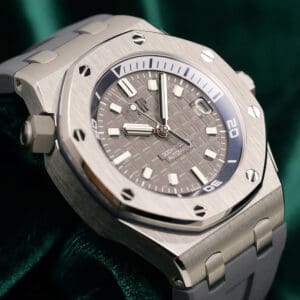
Audemars Piguet Royal Oak Offshore Diver Grey Dial Blue Inner Bezel Grey Rubber Strap Stainless Steel 42mm MINT CONDITION COMPLETE SET 15720ST.OO.A009CA.01
$27,788.00
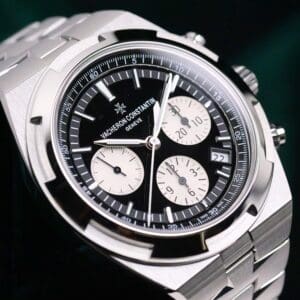
Vacheron Constantin Overseas Chronograph "Reverse Panda" Black Dial Silver Subdials Stainless Steel 42.5mm MINT CONDITION COMPLETE SET 5500V/110A-B481
$34,095.00

Rolex Sky-Dweller Black Dial 18K White Gold Fluted Bezel Oyster Bracelet Stainless Steel 42mm MINT CONDITION COMPLETE SET 336934-0007
$21,945.00

2026 Rolex Datejust Green Ombre Dial Smooth Bezel Jubilee Bracelet Stainless Steel 41mm MINT CONDITION COMPLETE SET 126300
$16,480.00

2026 NEW UNWORN Cartier Santos-Dumont Silver Dial Platinum Mesh Bracelet Platinum 31mm COMPLETE SET WGSA0124
$64,790.00

2026 Tudor Black Bay 58 Black Dial Jubilee Bracelet Stainless Steel 39mm MINT CONDITION COMPLETE SET 7939A1A0NU
$5,717.00

NEW UNWORN Rolex Submariner Date “Sub Date” Black Dial Black Ceramic Bezel Oyster Bracelet Stainless Steel 41mm COMPLETE SET 126610LN
$15,595.00
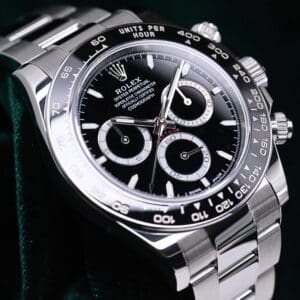
Rolex Cosmograph Daytona "Reverse Panda" Black Dial Black Ceramic Bezel Oyster Bracelet Stainless Steel 40mm MINT CONDITION COMPLETE SET 126500LN
$32,009.00
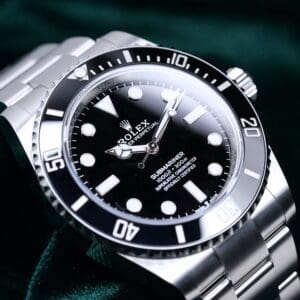
2026 NEW UNWORN Rolex Submariner No Date Black Dial Black Ceramic Bezel Oyster Bracelet Stainless Steel 41mm COMPLETE SET 124060
$15,219.00
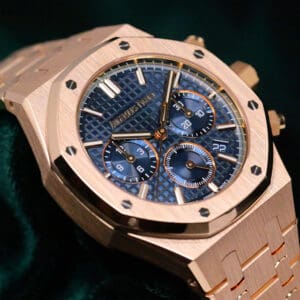
Audemars Piguet Royal Oak Selfwinding Chronograph Bleu Nuit Nuage 50 Blue Dial Bracelet 18k Rose Gold 38mm MINT CONDITION COMPLETE SET 26715OR.OO.1356OR.01
$104,942.00
Final Thoughts on Cartier Santos vs Panthère
The Cartier Santos vs Panthère choice comes down to how you want the watch to live on your wrist. One is built to be worn hard and half-forgotten. The other is built to be noticed. Most people know within a year they chose right, because it matched how they dress, not how they thought they would.
Two things to carry with you. The 2025 small Santos means the Panthère is no longer your only route to a smaller square Cartier, so keep both in play.
And whichever way you lean, buy on bracelet condition first (it helps to know how watch condition is graded), then try them on if you can. The Santos sits firm, the Panthère drapes, and that usually decides it faster than any spec sheet.