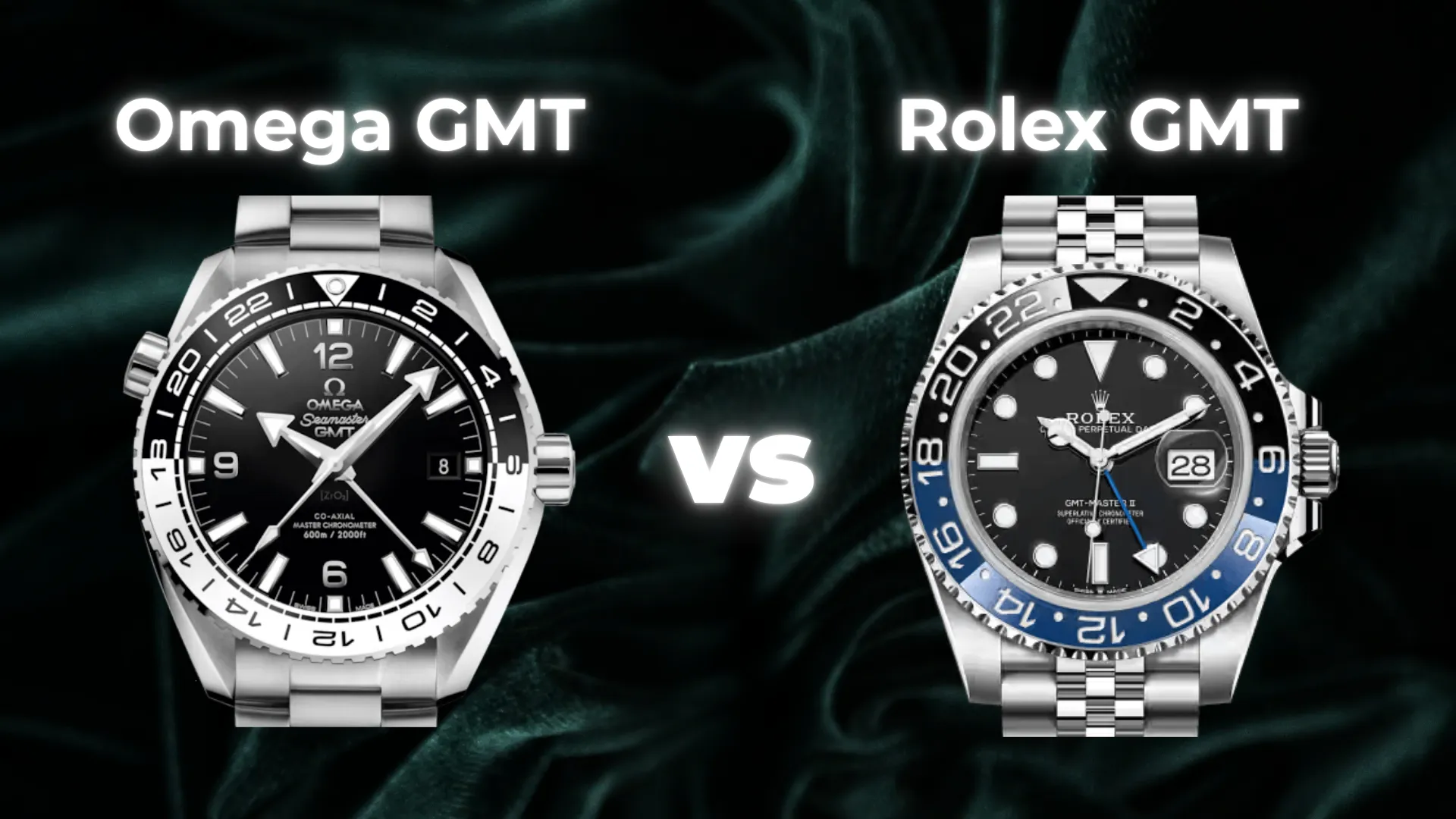
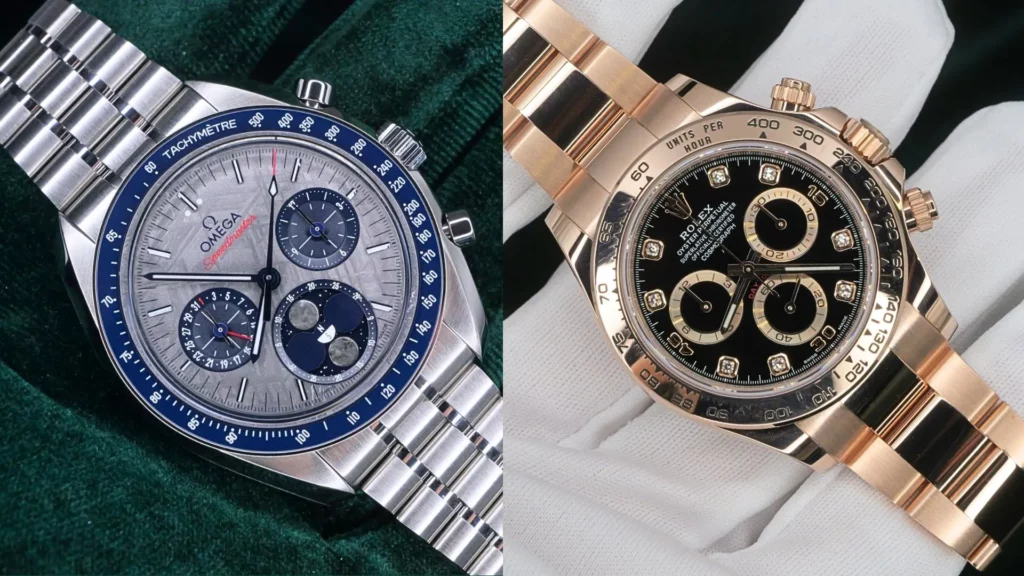
Collectors and watch enthusiasts often find themselves debating omega speedmaster vs rolex. Omega’s Speedmaster is celebrated for its historic connection to space exploration, while Rolex is widely recognized as the most prestigious watch brand in the world, with a lineup covering everything from dive watches to dress chronographs.
Choosing between the two can feel overwhelming because they represent fundamentally different things. Omega offers a specific, deeply documented legacy tied to NASA and human spaceflight in one chronograph. Rolex offers a broad portfolio of iconic models, each with its own heritage, audience, and technical character.
This guide breaks down what makes each compelling, where they differ, and how the 2026 market changed the math, so you can decide which direction fits you.
Omega Speedmaster Overview
Related Models from Majestix

Omega Speedmaster 38 Orbis Edition Blue Dial Stainless Steel 38mm MINT CONDITION COMPLETE SET 324.30.38.50.03.002
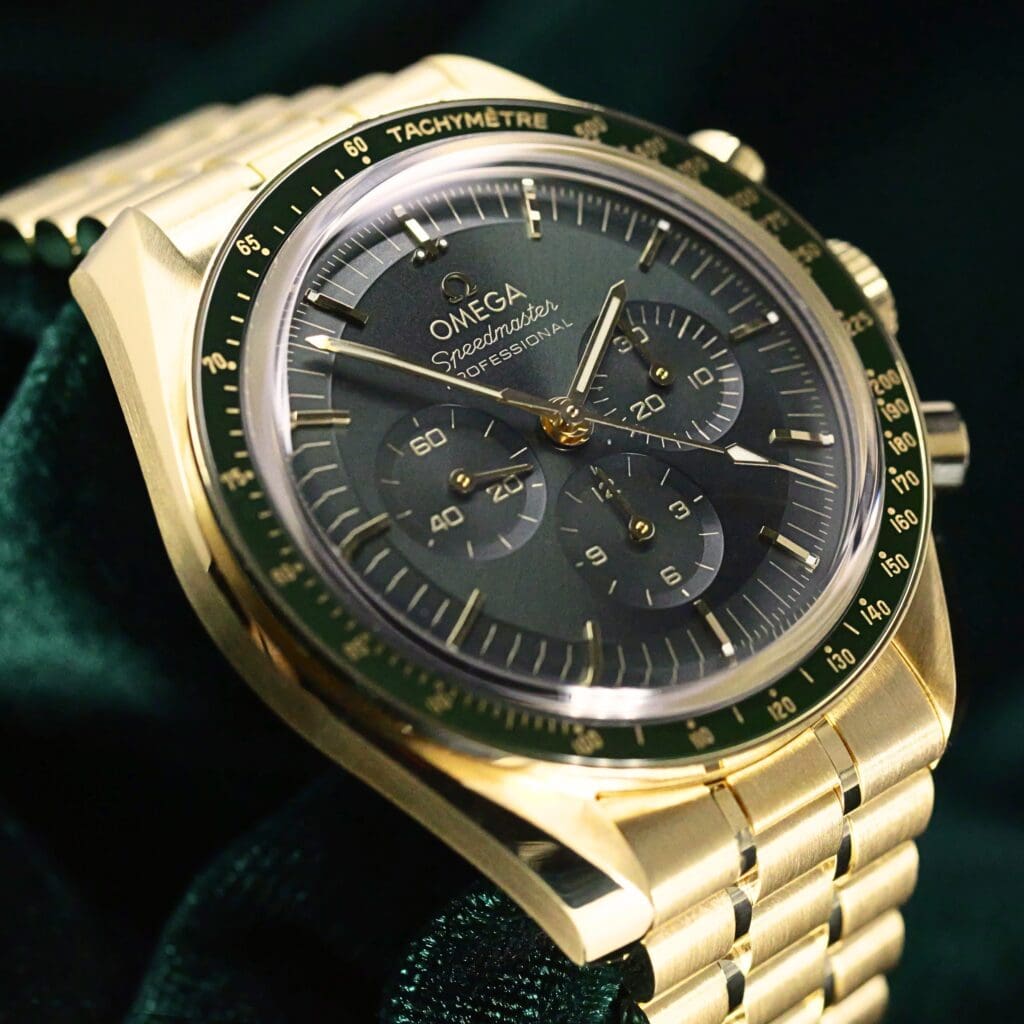
Omega Speedmaster Professional Moonwatch "Moonshine" Green Dial 18K Yellow Gold 42mm MINT CONDITION COMPLETE SET 310.60.42.50.10.001
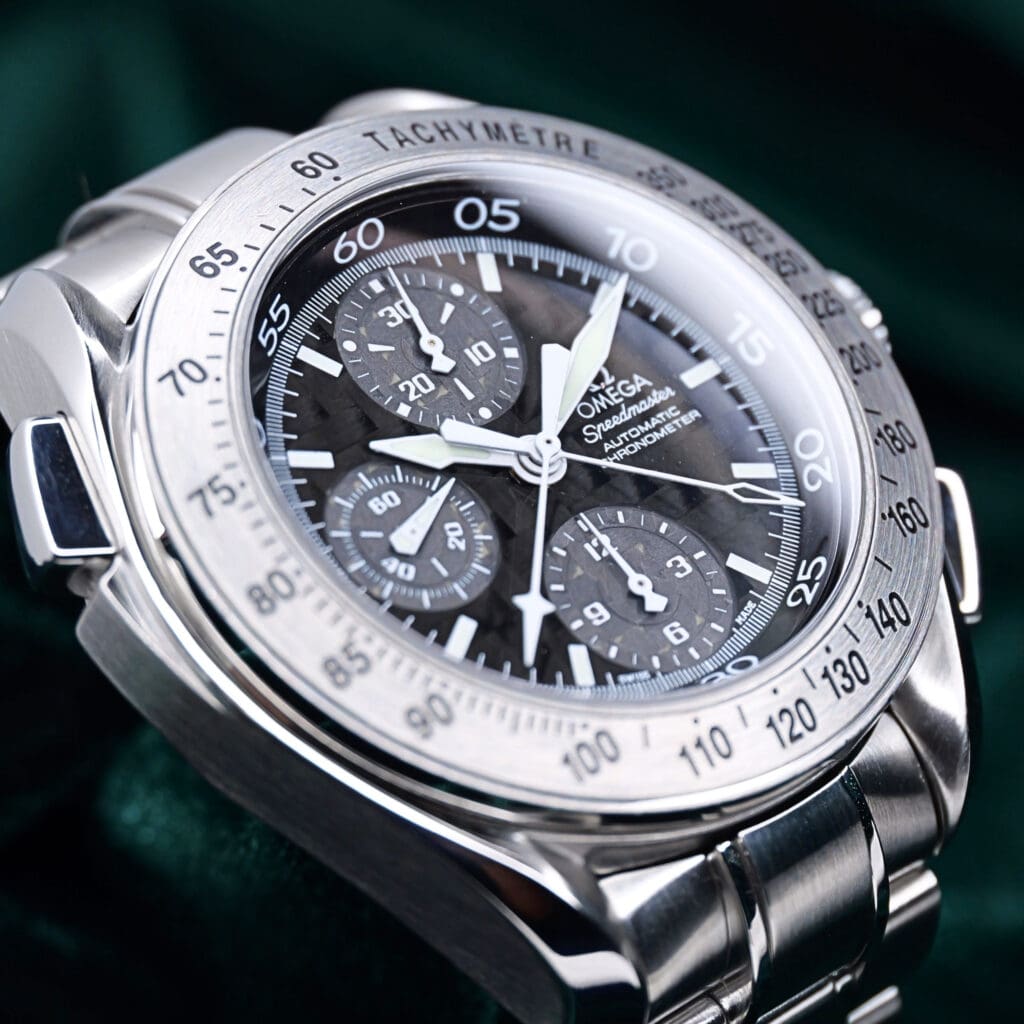
Omega Speedmaster Split-Seconds "Rattrapante" Black Carbon Fiber Dial Stainless Steel 42mm Mint Condition 3540.50
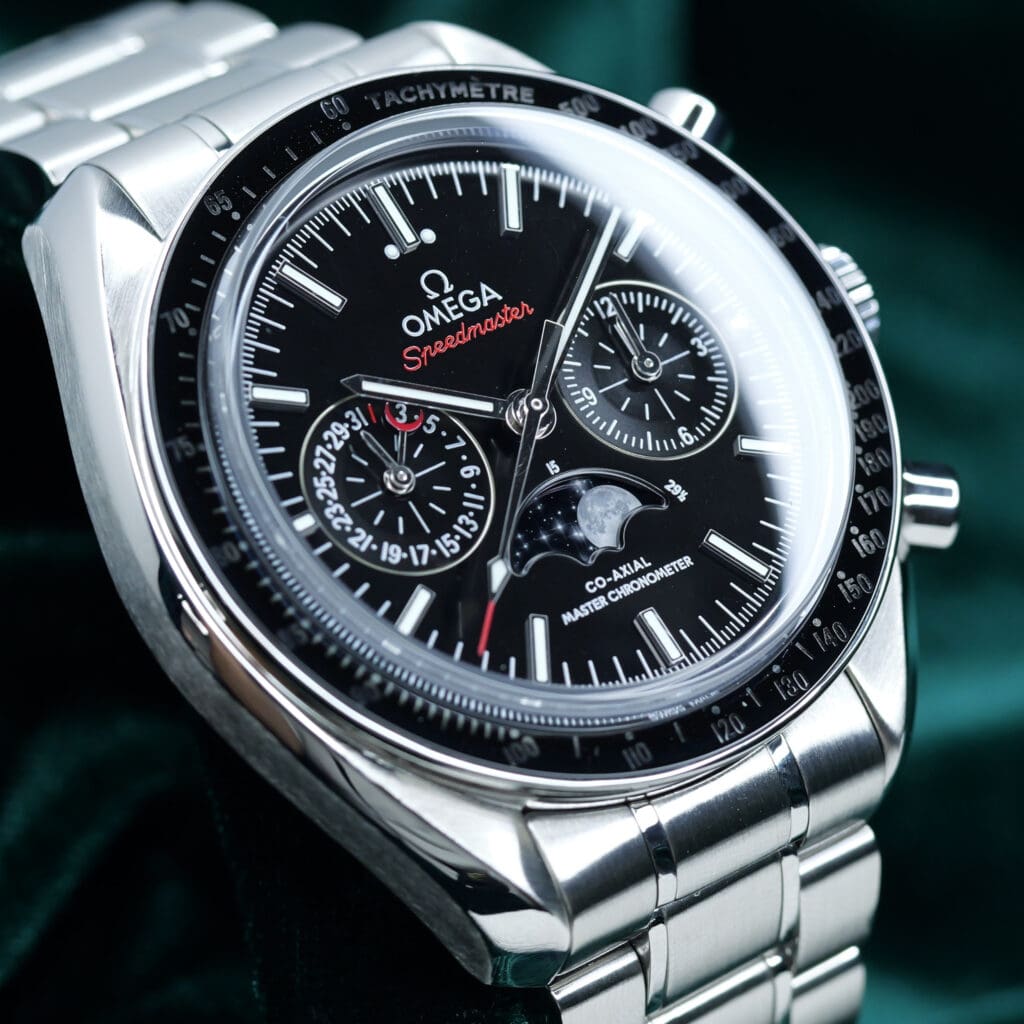
Omega Speedmaster Moonphase Co-Axial Master Chronometer Chronograph Black Dial Stainless Steel 44.25mm MINT CONDITION COMPLETE SET 304.30.44.52.01.001
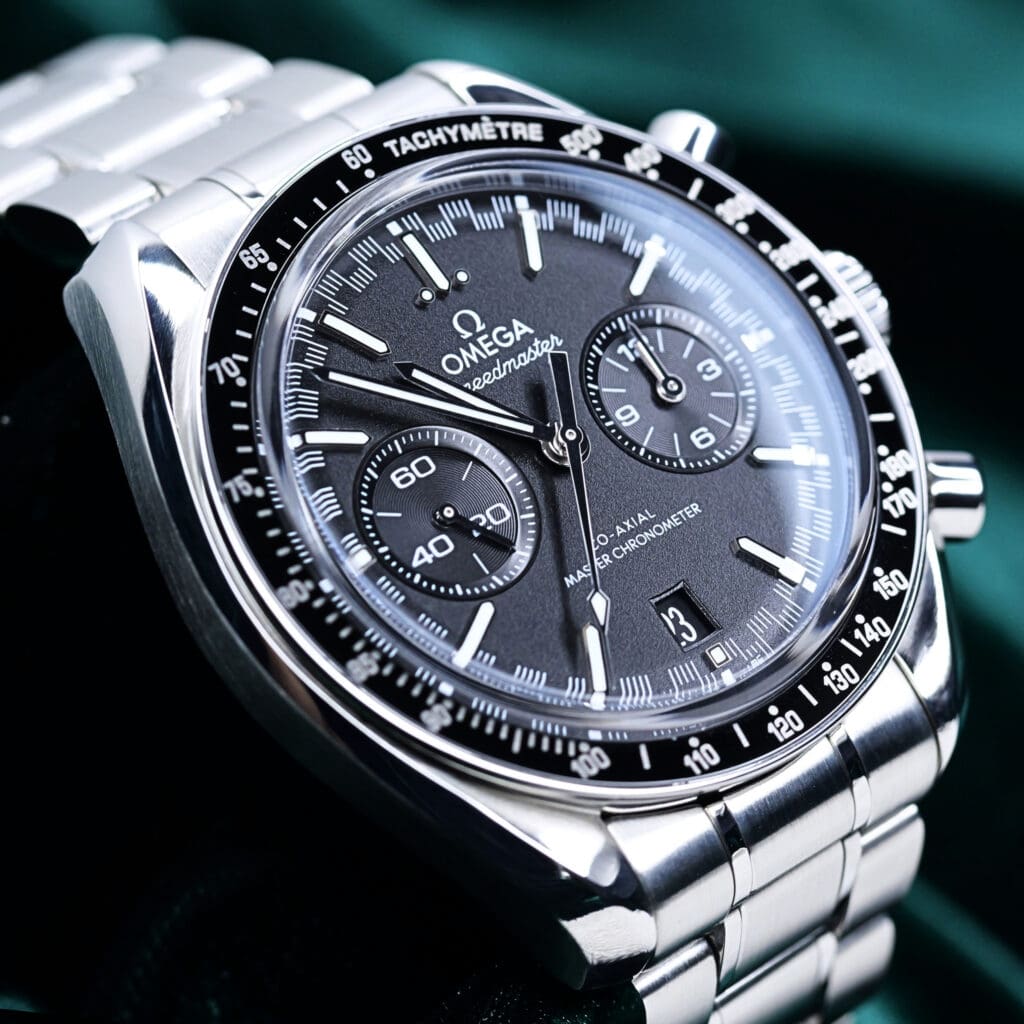
Omega Speedmaster Racing Co-Axial Master Chronometer Black Dial Stainless Steel 44.25mm MINT CONDITION COMPLETE SET 329.30.44.51.01.001
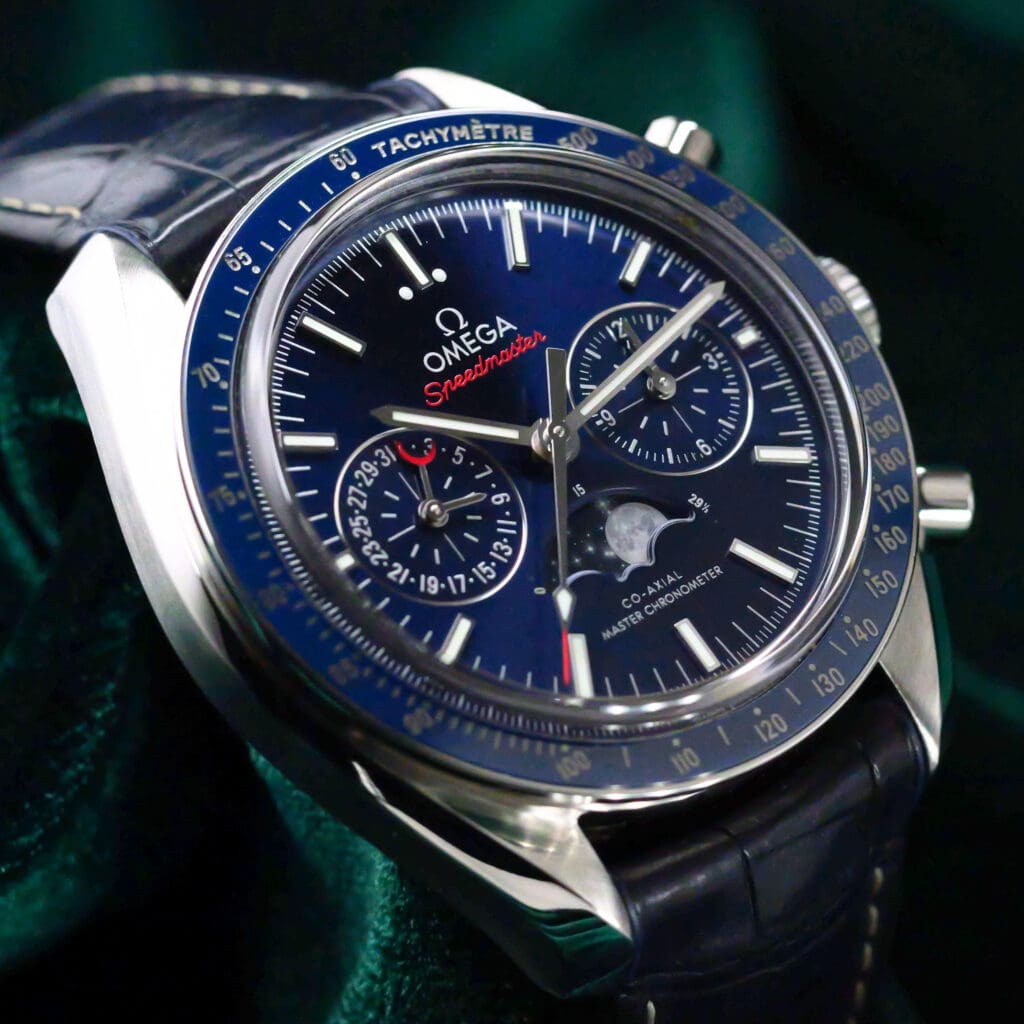
Omega Speedmaster Moonphase Blue Dial Blue Ceramic Bezel Blue Leather Strap Stainless Steel 44.25mm MINT CONDITION COMPLETE SET 304.33.44.52.03.001
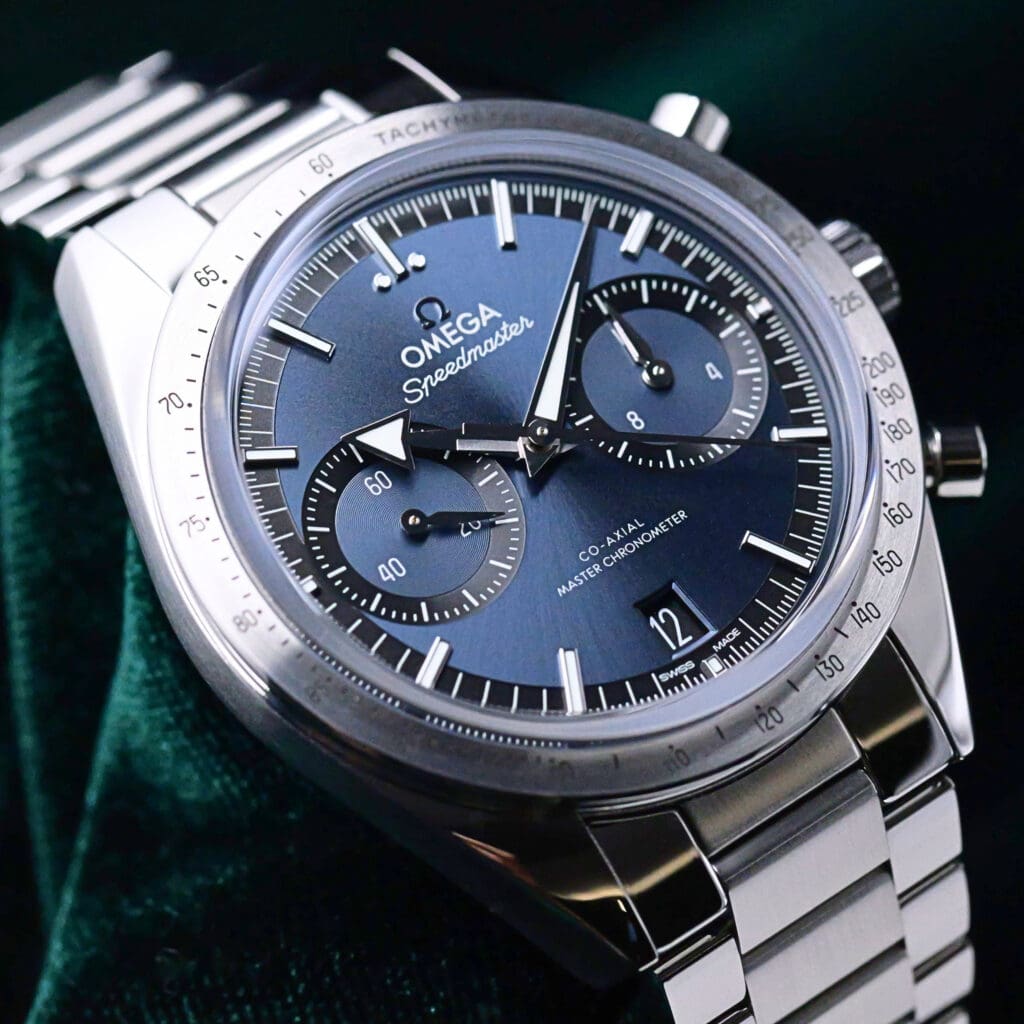
Omega Speedmaster '57 Blue Dial Stainless Steel 40.5mm MINT CONDITION COMPLETE SET 332.10.41.51.03.001
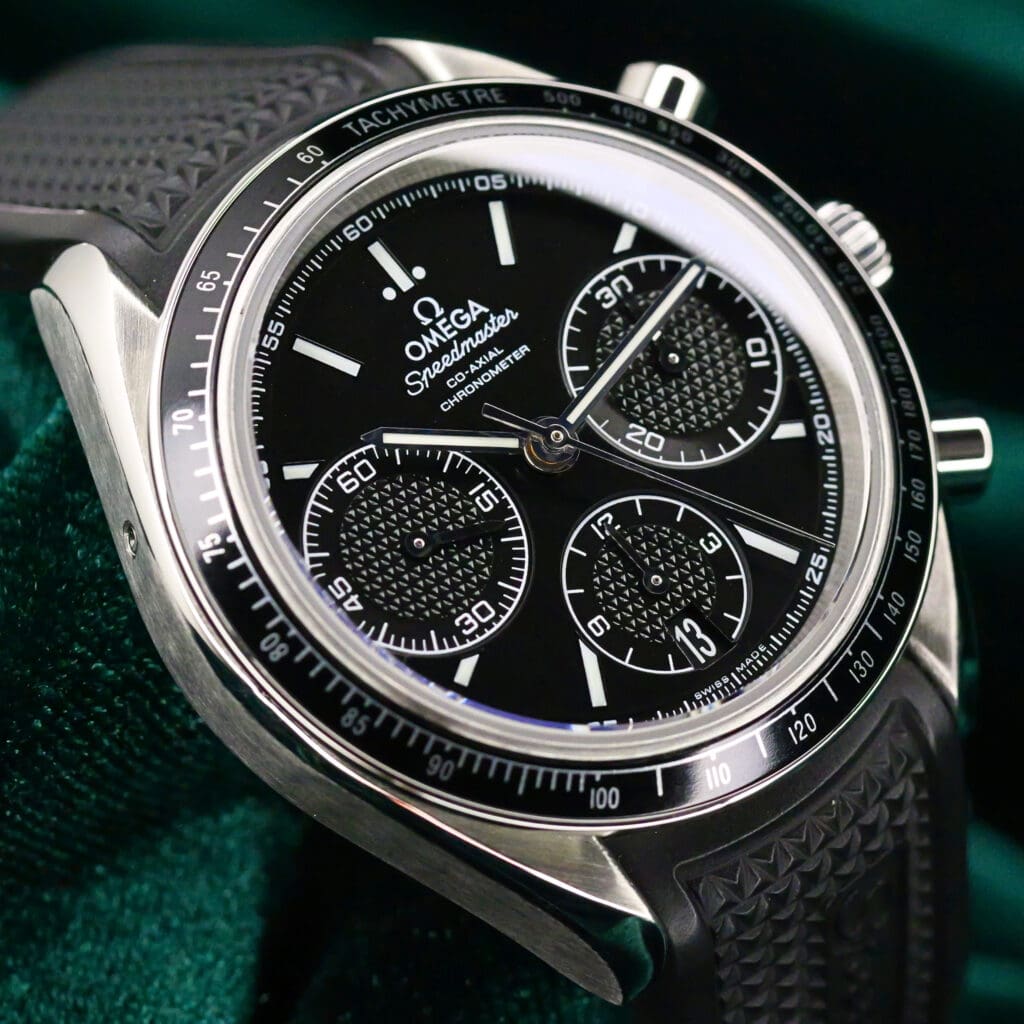
Omega Speedmaster Racing Black Dial Black Rubber Strap 40mm MINT CONDITION COMPLETE SET 326.32.40.50.01.001
Omega’s Speedmaster has been a cornerstone of professional chronographs since its 1957 debut. Originally designed for pilots, engineers, and motorsport professionals, it pairs precision timing with construction rugged enough for extreme environments.
Omega built the watch around a manual-wind movement that can shrug off shocks, dramatic temperature swings, and the hard vacuum of space.
NASA put the watch through brutal qualification testing, and it was the only chronograph to pass every requirement. Its résumé spans multiple Apollo missions, and it stayed on NASA’s qualified equipment list for decades after the moon landings.
Collectors prize it for that historical depth, the wide range of references across its production history, and the remarkable continuity of a core design that has held for nearly 70 years.
Iconic touches include the tachymeter bezel, a three-subdial chronograph layout, and a highly legible dial built around function over decoration. Its asymmetrical case, with crown guards flanking the chronograph pushers, adds both protection and visual character.


Many Moonwatch references use hesalite crystal, chosen for its shatter-resistant behavior in zero-gravity conditions rather than its scratch resistance.
Current production runs the hand-wound caliber 3861, which delivers strong finishing and a direct mechanical connection enthusiasts value. Omega also drops limited editions tied to space missions and anniversaries, adding a collectibility layer beyond the standard lineup.
On the wrist it transitions well across dress codes too, giving it a daily versatility few purpose-built tool watches can match.

Most Popular Omega Speedmaster References
A handful of references carry most of the Speedmaster’s demand. Here are the ones buyers ask about most, from the current Moonwatch to the limited editions that drive collector interest. If you are mapping the family before committing, our full Speedmaster buying guide walks through the lineup.
- Omega Speedmaster Professional Moonwatch Ref. 311.30.42.30.01.006
- Omega Speedmaster Moonwatch Professional “Reverse Panda” Ref. 310.30.42.50.01.004
- Omega Speedmaster “Silver Snoopy Award” Ref. 310.32.42.50.02.001
- Omega Speedmaster Dark Side of the Moon Ref. 311.92.44.30.01.001
- Omega Speedmaster ’57 Ref. 331.22.42.51.01.001
Rolex Overview
Browse Our Rolex Collection
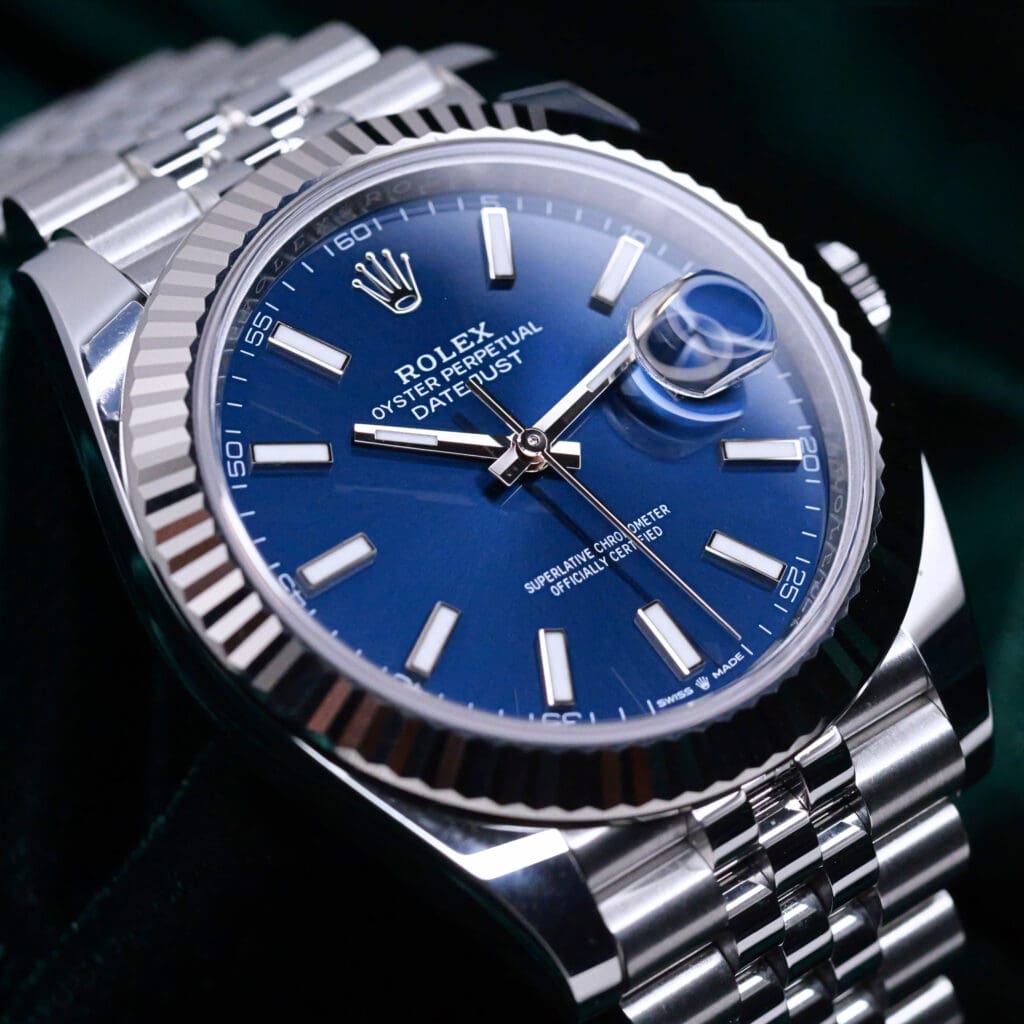
2026 NEW UNWORN Rolex Datejust 41 Blue Dial Fluted Bezel Jubilee Bracelet Stainless Steel 41mm . COMPLETE SET 126334-0002
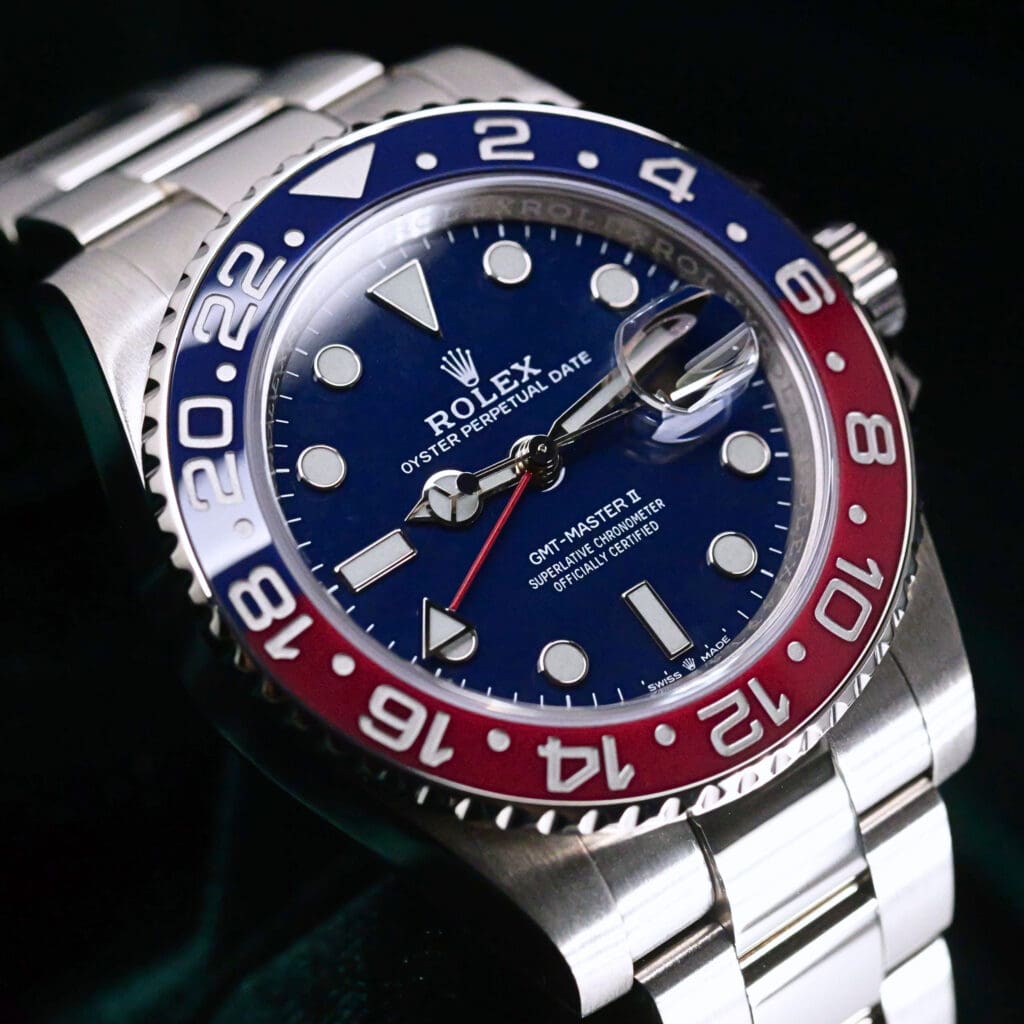
Rolex GMT-Master II "Pepsi" Blue Dial Red Blue Bezel 18K White Gold Oyster Bracelet 40mm MINT CONDITION COMPLETE SET 126719BLRO
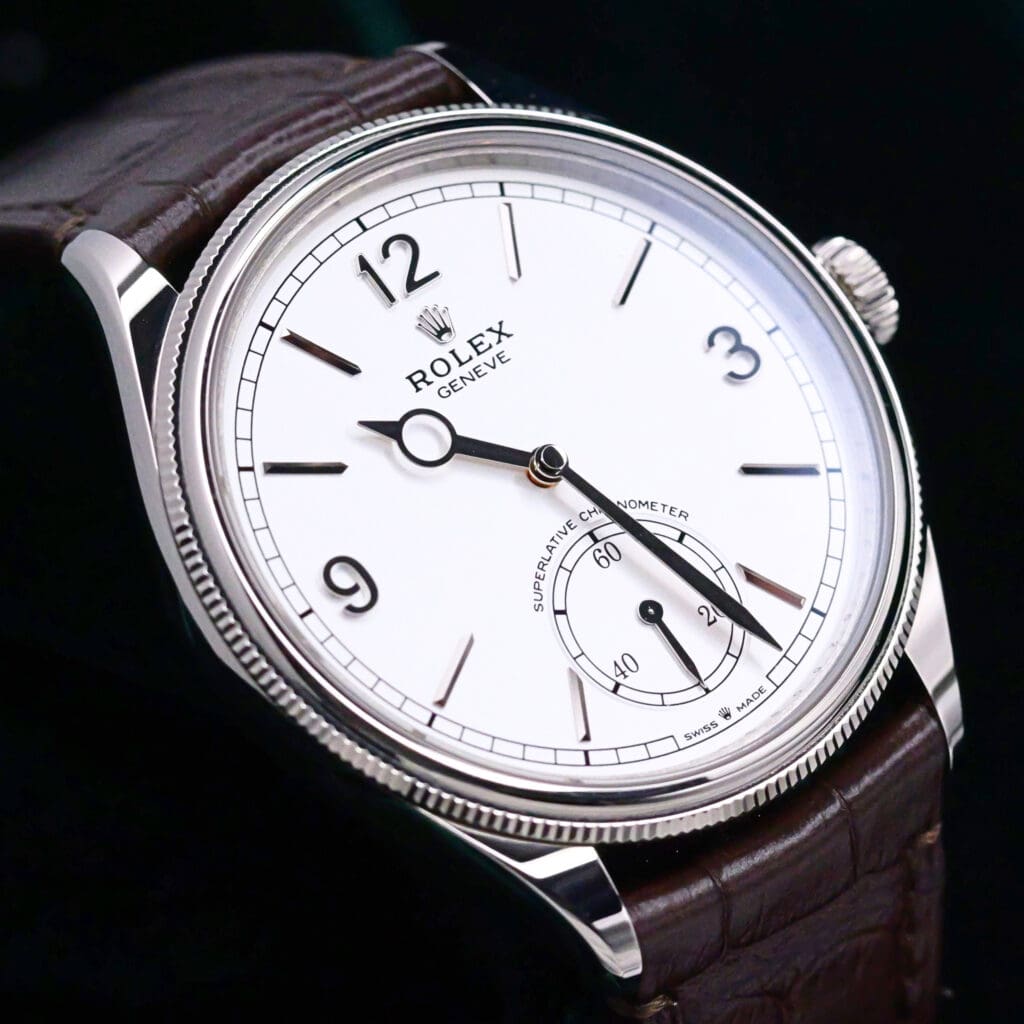
2025 Rolex 1908 White Dial 18K White Gold Brown Alligator Leather Strap 39mm MINT CONDITION COMPLETE SET 52509
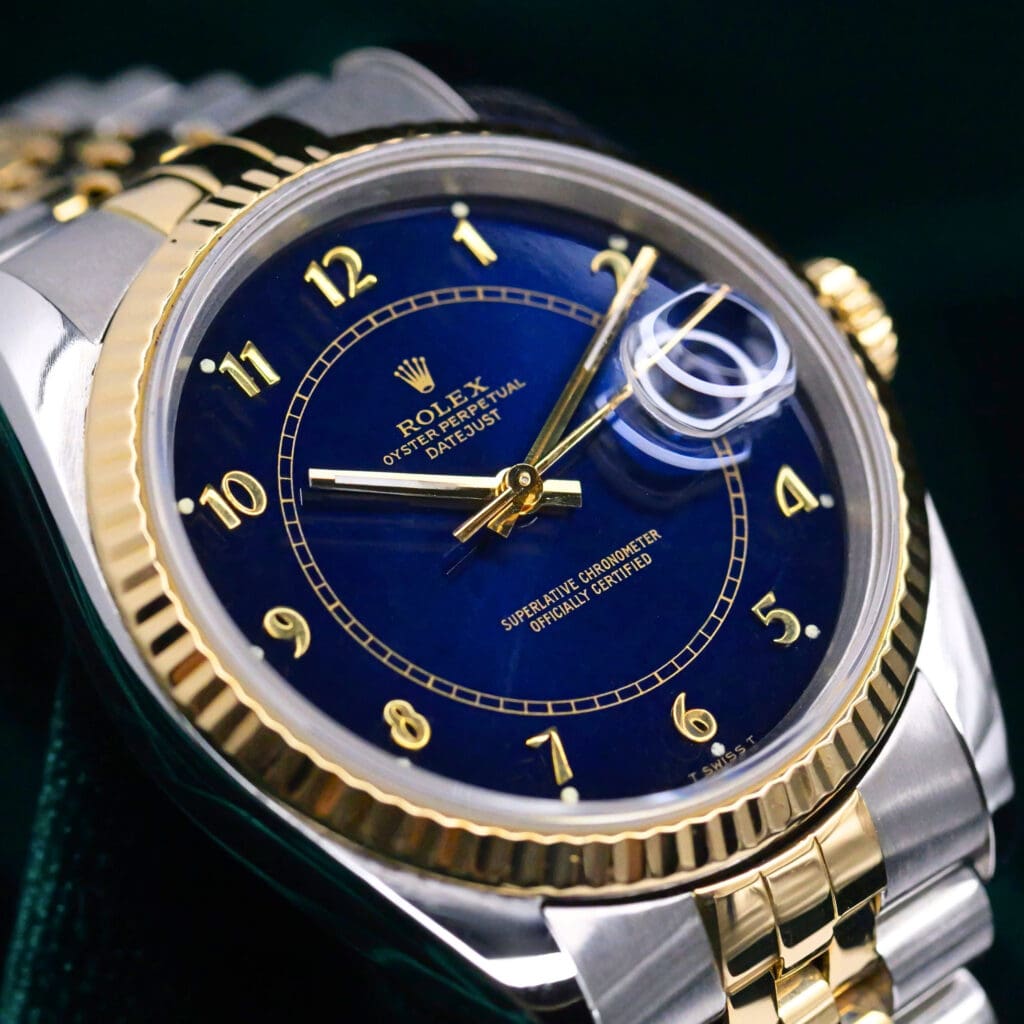
Rolex Datejust Blue Arabic Numeral Refinished Dial Fluted Bezel Jubilee Bracelet 18k Yellow Gold Stainless Steel 36mm MINT CONDITION 16233
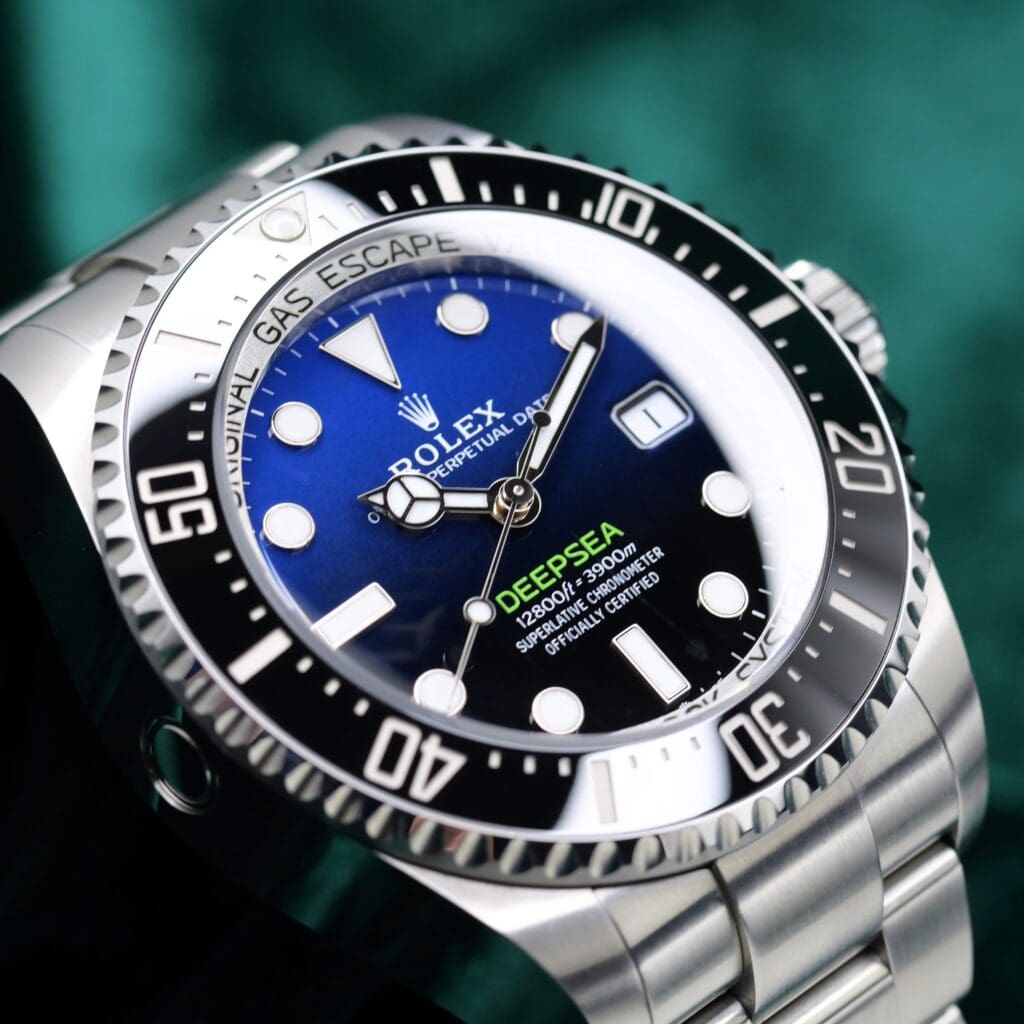
2025 MINT Rolex 136660-0005 Deepsea James Cameron Blue Black Dial Black Ceramic Bezel Stainless Steel 44MM Complete Set 136660
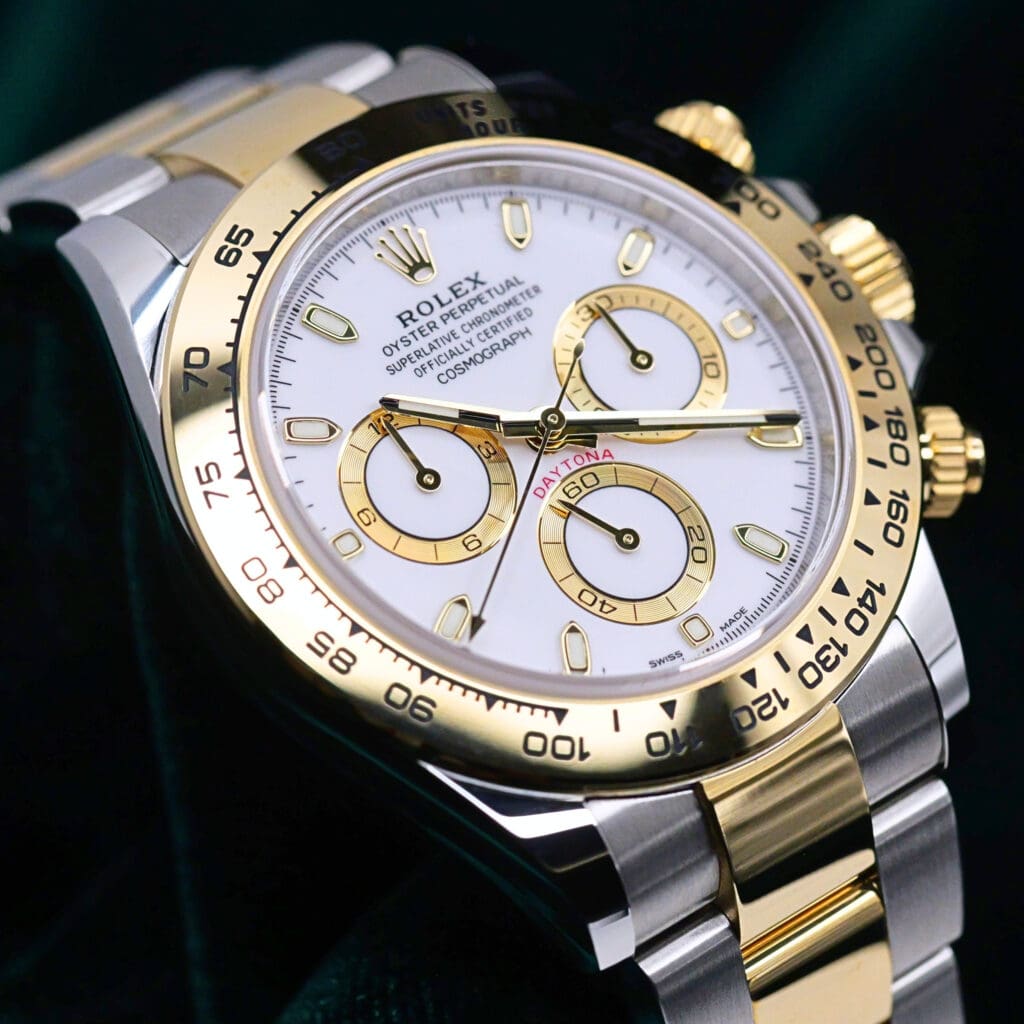
Rolex Cosmograph Daytona White Dial Gold Subdials Oyster Bracelet Two-Tone 18K Yellow Gold Stainless Steel 40mm MINT CONDITION COMPLETE SET 116503
Rolex is the most recognized watch brand in the world, with a portfolio that has defined entire categories of watchmaking. Founded in 1905 and based in Geneva, Rolex produces a focused lineup of models, each refined over decades rather than redesigned from scratch.
That approach yields a collection where almost every core reference has been around for decades and stays instantly identifiable.
That reputation rests on in-house manufacturing, strict quality control, and deliberate supply management. Rolex makes its own movements, cases, bracelets, and dials, which gives it full control over every component.
Every watch earns COSC chronometer certification, then clears an additional round of in-house testing before getting the Superlative Chronometer designation.
Rolex’s lineup covers a wide range of jobs. Submariner and Sea-Dweller models serve divers and water enthusiasts, the GMT-Master II is built for frequent travelers, and the Explorer targets outdoor adventurers.
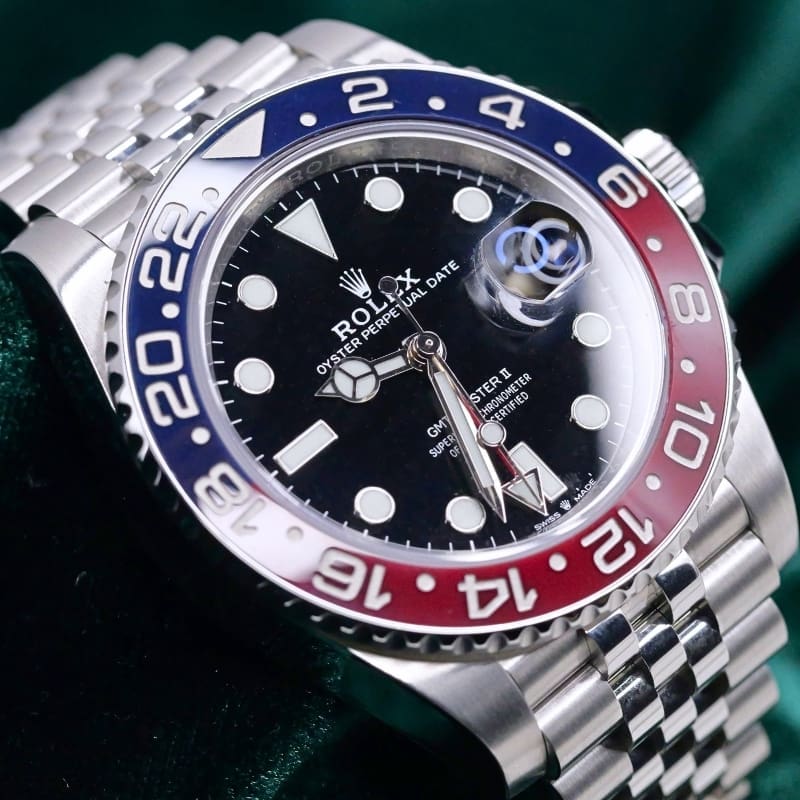
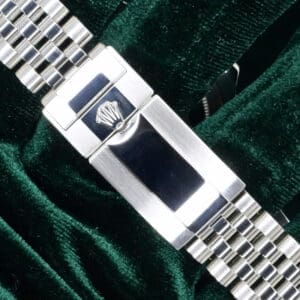
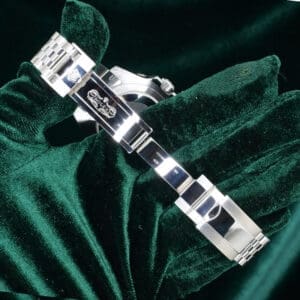
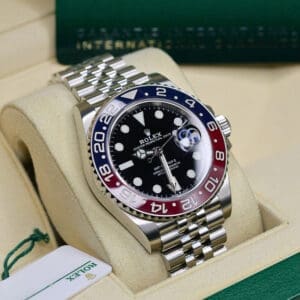
Datejust and Day-Date models cover dress duty with heavy brand recognition, while the Cosmograph Daytona is Rolex’s dedicated chronograph, built for motorsport timing. Each model has its own character, but all share one build philosophy: durable, reliable, refined.
Rolex has tied itself to achievement across sport, exploration, and culture. From the summit of Everest to the deepest ocean trenches, its watches show up at defining human milestones.
Brand recognition sits near 100% globally, which makes a Rolex instantly readable as a symbol of success no matter where it is worn.
A quick note on timing: 2026 marks the 100th anniversary of the waterproof Oyster case, patented in 1926, and Rolex built its entire Watches and Wonders 2026 release of 58 new references around that centenary.

Most Popular Rolex References
Rolex demand concentrates in a handful of sport and dress icons. These are the references buyers chase most, with one notable 2026 change at the top of the list. Our Rolex buying guide covers how the full lineup fits together.
- Rolex Submariner Ref. 126610LN
- Rolex GMT-Master II “Pepsi” Ref. 126710BLRO (discontinued April 2026)
- Rolex Cosmograph Daytona Ref. 126500LN
- Rolex Datejust Ref. 126300
- Rolex Explorer Ref. 124270
- Rolex Day-Date Ref. 228238
On April 14, 2026, at Watches and Wonders, Rolex quietly pulled the GMT-Master II Pepsi from its catalog with no Coke replacement. Steel buyers now choose from the Batman, Batgirl, Bruce Wayne, and Sprite, while the retired Pepsi has jumped to roughly $24,000 to $30,000 on the secondary market. Our Rolex Pepsi buying guide covers what that means if you are hunting one now.



Omega Speedmaster vs Rolex: Most Notable Differences
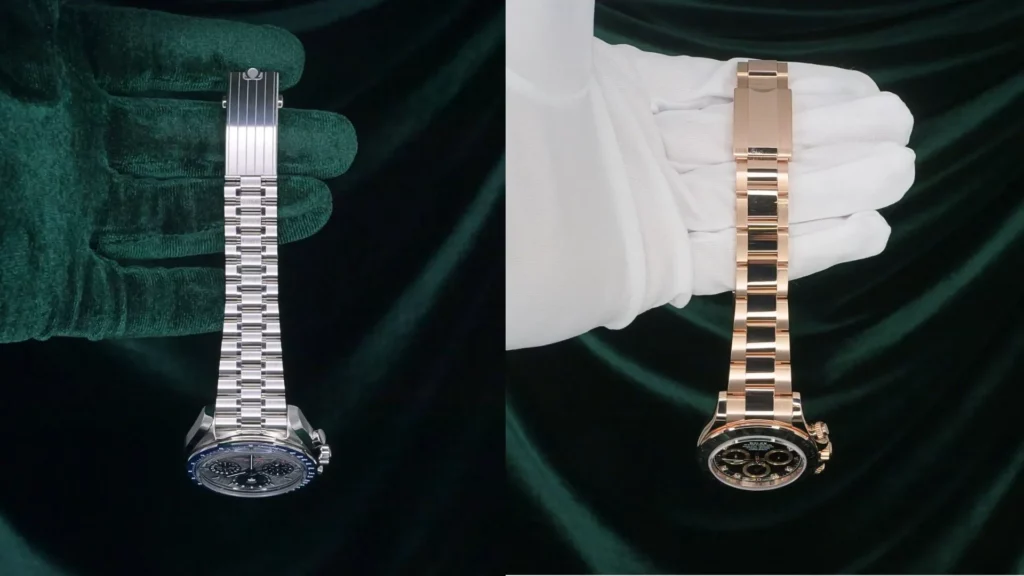
Put side by side, the Omega Speedmaster and a Rolex differ in purpose, design, and performance. Walking through those differences makes it easier to choose the watch that fits your lifestyle.
1. Product Focus
Omega’s Speedmaster is a single model line with one main job: chronograph timing. Every reference shares the same core layout, three sub-dials, a tachymeter bezel, and a case that has stayed close to its 1957 original. Variation comes down to reference, movement generation, crystal choice, and limited-edition themes.
Rolex is a multi-model brand covering dive watches, travel watches, dress watches, sport watches, and a dedicated chronograph. A Rolex buyer first decides which model fits, then picks a reference within that line. This gives Rolex broader reach, but it also means no single Rolex parallels the Speedmaster in every dimension.
2. Movement Architecture
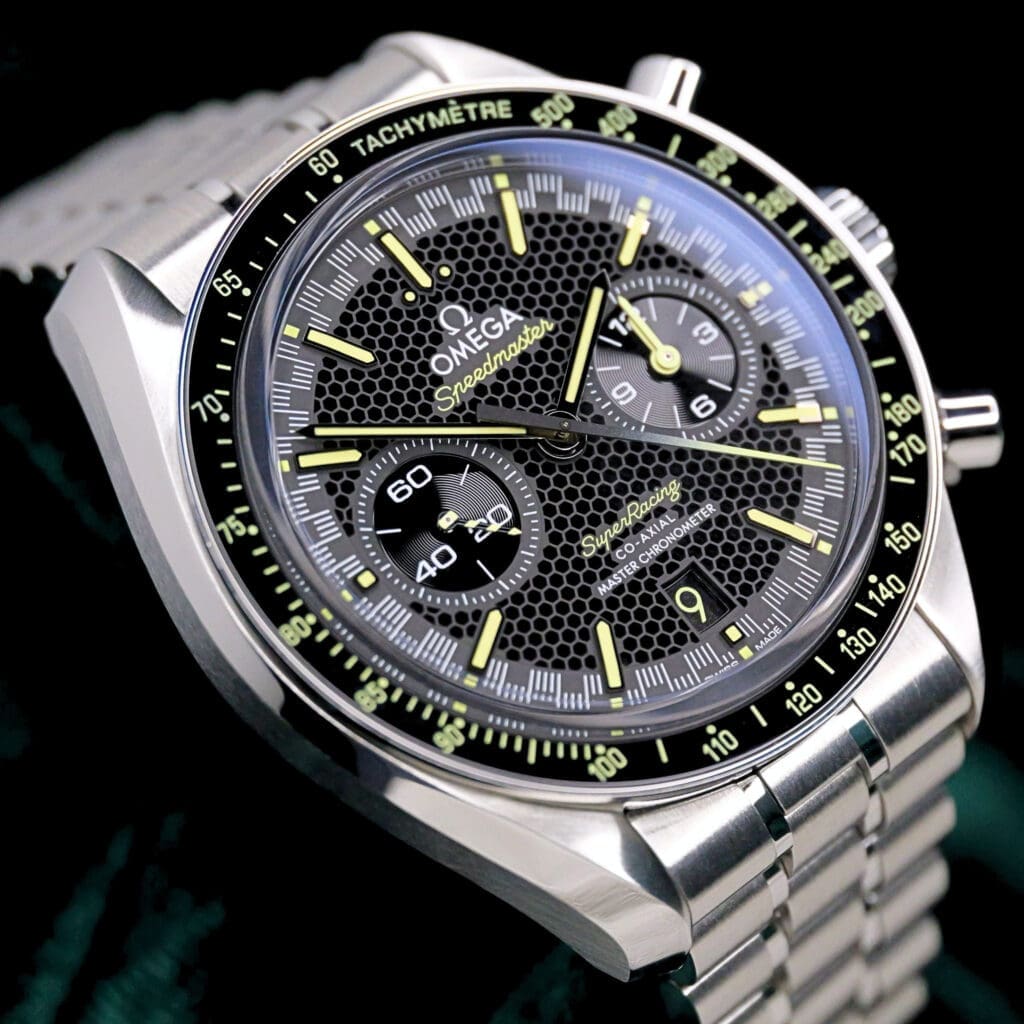
Omega’s Moonwatch runs a manual-wind movement, the caliber 3861 in current production. You wind the crown daily, or every couple of days, to keep it going. That is a deliberate nod to the original NASA spec, which favored manual winding for mechanical simplicity and field repairability.
Rolex produces only automatic, self-winding movements across its current lineup. A rotor feeds energy from your wrist motion into the mainspring, so the watch keeps running without any winding routine during regular wear. For most daily wearers, that is simply less to think about.
Omega’s Speedmaster Racing, a separate reference in the collection, does use an automatic movement, but the flagship Moonwatch stays manual-wind.


3. Power Reserve
Omega’s caliber 3861 delivers about 50 hours of power reserve on a full wind. Leave it unworn past two days and it stops, then needs resetting. Its predecessor, the caliber 1861 found in many pre-2021 references, offered a similar reserve.
Rolex power reserves vary by caliber and model. Most current sport and dress watches run between 48 and 72 hours, with sport models on the caliber 3235 reaching around 70 hours. Across the lineup, Rolex reserves are generally comparable to or longer than the Speedmaster.
4. Accuracy Certification
Omega’s caliber 3861 carries METAS Master Chronometer certification, tested both in and out of the case, across six positions, and at multiple temperatures. Its certified accuracy range runs 0 to +5 seconds per day.
Rolex certifies every movement as a Superlative Chronometer, guaranteeing accuracy of -2 to +2 seconds per day once cased. That is a tighter stated tolerance than the METAS figure, though testing conditions differ between the two bodies. Both sit well above the standard COSC threshold of -4 to +6 seconds per day.
5. Magnetic Resistance
Omega’s caliber 3861 pairs a silicon balance spring with a co-axial escapement, and together they resist magnetic fields up to 15,000 gauss. That is among the highest magnetic resistance you will find in any production mechanical watch.
Silicon springs are non-magnetic, non-corrosive, and hold their shape across temperature swings better than traditional alloy springs.
Rolex uses a Parachrom hairspring across most of its current lineup, an in-house alloy good to roughly 800 gauss. That is well above the ISO magnetic resistance threshold and handles everyday exposure with no trouble. It does not match the Speedmaster’s ceiling for strong or sustained magnetic fields.
6. Case Size and Wearability
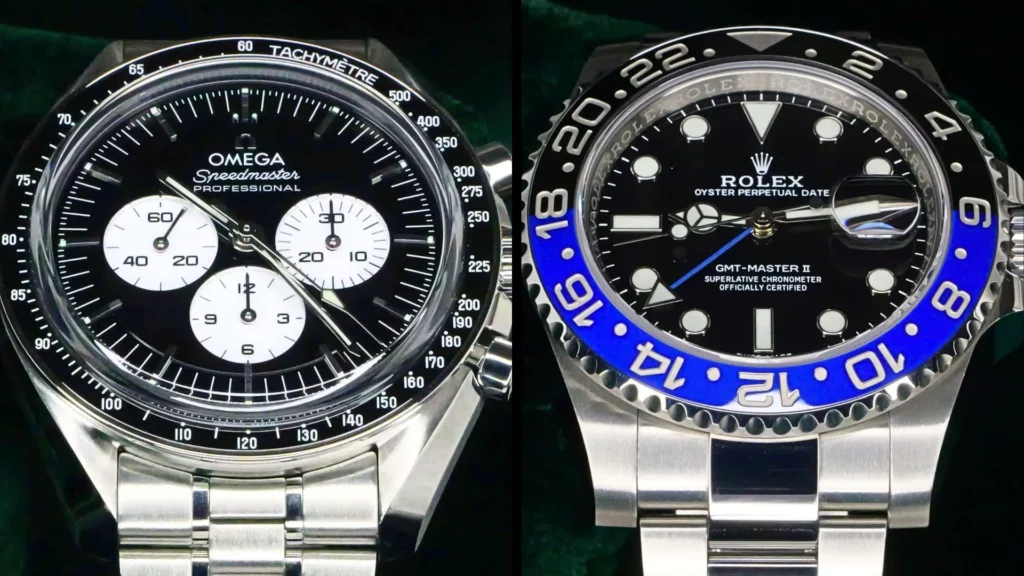
Omega’s Moonwatch measures 42 mm across, roughly 13.2 to 13.6 mm thick depending on crystal, with a lug-to-lug of about 48 mm. It sits taller on the wrist than most Rolex sport models and carries real presence. That footprint has barely moved in decades.
Rolex case sizes move around by model. Submariner and GMT-Master II sit at 41 mm, the Explorer comes in 36 mm and 40 mm, the Datejust spans 31 to 41 mm, and the Daytona holds at 40 mm.
Most Rolex sport models run between 12 and 13 mm thick, giving them a lower wrist profile that slips under a shirt cuff more easily than the Speedmaster.
7. Water Resistance
Omega’s Moonwatch is rated to 50 meters, fine for everyday splashes and rain but not meant for swimming or active water use. Its build prioritizes chronograph precision and land-based durability over going underwater.
Rolex water resistance varies a lot by model. Submariner depth rating runs to 300 meters, the Sea-Dweller to 1,220 meters, and travel or chronograph models like the GMT-Master II and Daytona to 100 meters. Even a dress Datejust carries 100 meters.
Across the entire Rolex lineup, every model offers at least double the water resistance of the Speedmaster Moonwatch. If a diver is what you actually want, our Speedmaster vs Submariner comparison is the more direct matchup.
8. Crystal Material
Current Moonwatch references come with either hesalite (acrylic) or sapphire crystal. Hesalite matches the original NASA spec and shrugs off impact better than sapphire, while sapphire adds a transparent caseback that shows off the movement. Both sit on the retail menu, so the call is yours.
Rolex fits sapphire crystal as standard across its current lineup. Sapphire is harder and far more scratch-resistant than acrylic, which suits how most Rolex models are pitched for everyday durability. One tradeoff: sapphire can crack under a sharp direct hit where hesalite would flex.
9. Collection Breadth and Use Case Coverage
Omega’s Speedmaster does one core thing, chronograph timing, and it does that exceptionally well. If your main need is a dive watch, a dual-time complication, or a slim dress piece, you will not find it inside the Speedmaster line. Omega has stretched the family with models like the Dark Side of the Moon and the Speedmaster ’57, but it stays centered on the chronograph.
Rolex offers a dedicated model for almost every common watch job: Submariner for diving, GMT-Master II for dual time zones, Explorer for general sport use, Datejust and Day-Date for formal wear, and Daytona for chronograph timing.
If the Daytona is the Rolex you are really weighing against the Speedmaster, our Speedmaster vs Daytona breakdown puts the two chronographs side by side.
More Submariners

Rolex Submariner No Date Black Dial Black Ceramic Bezel Stainless Steel Oyster Bracelet 41mm MINT CONDITION COMPLETE SET 124060-0001
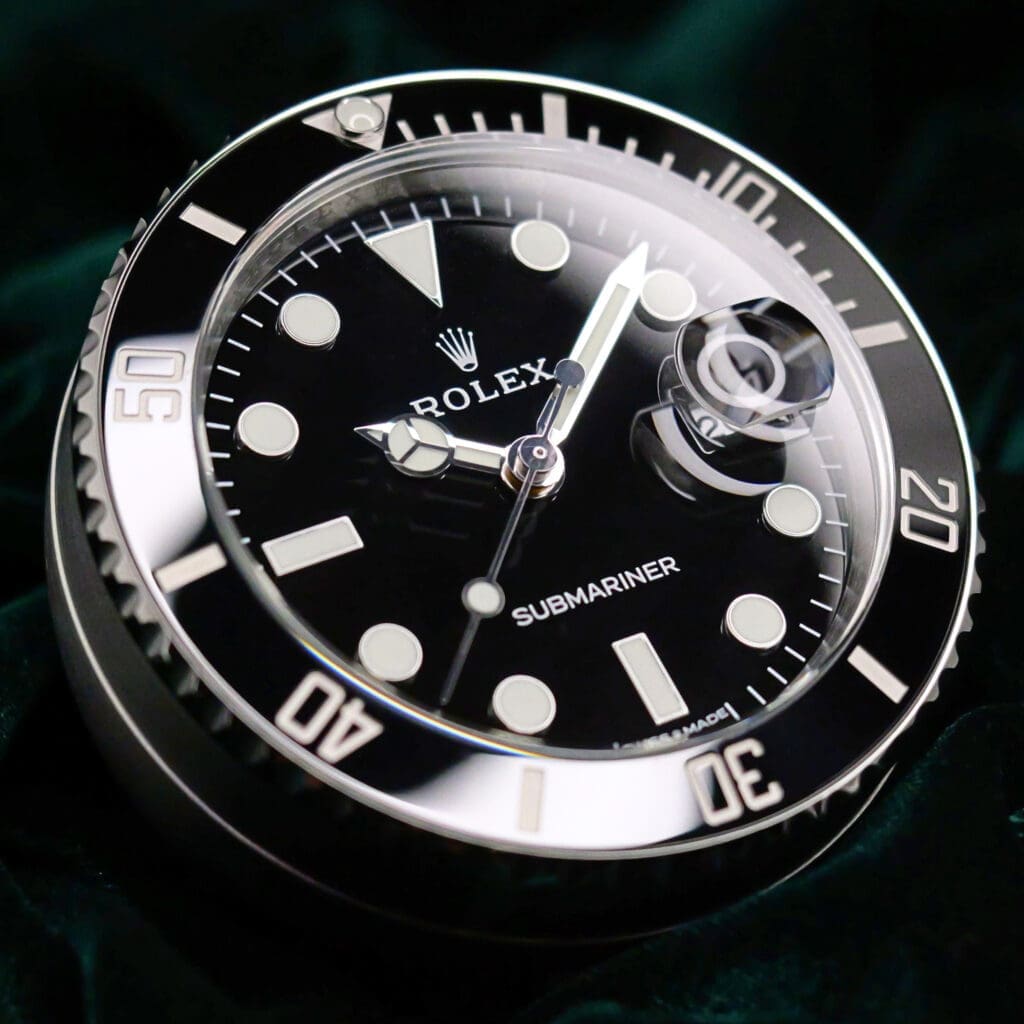
2025 NEW Rolex Submariner Date Desk Clock Black Dial Black Ceramic Bezel Stainless Steel 80mm COMPLETE SET 909010LN

Rolex Submariner Date "Bluesy" Sunburst Blue Dial Blue Ceramic Bezel Two-Tone Yellow Gold Stainless Steel 41mm MINT CONDITION COMPLETE SET 126613LB
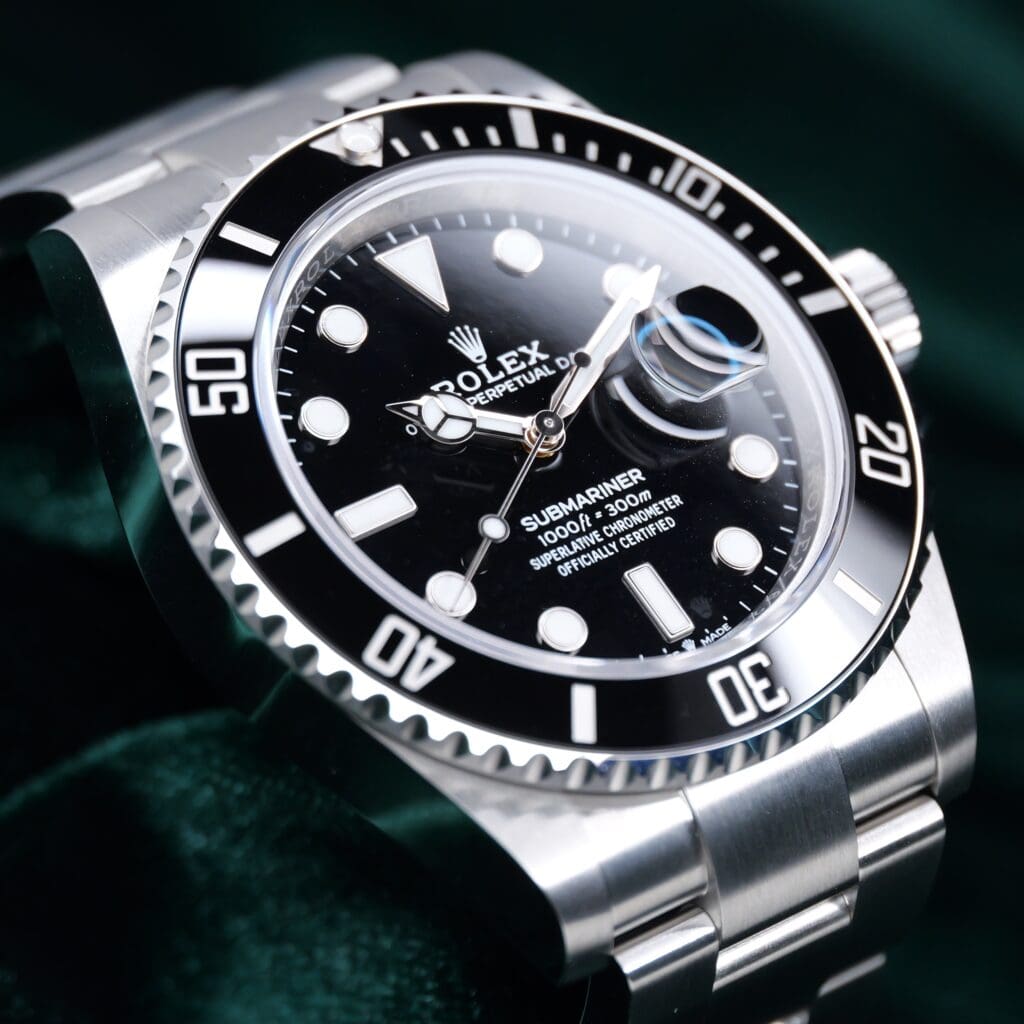
2026 NEW UNWORN Rolex Submariner Date Black Dial Black Ceramic Stainless Steel 41mm COMPLETE SET 126610LN-0001
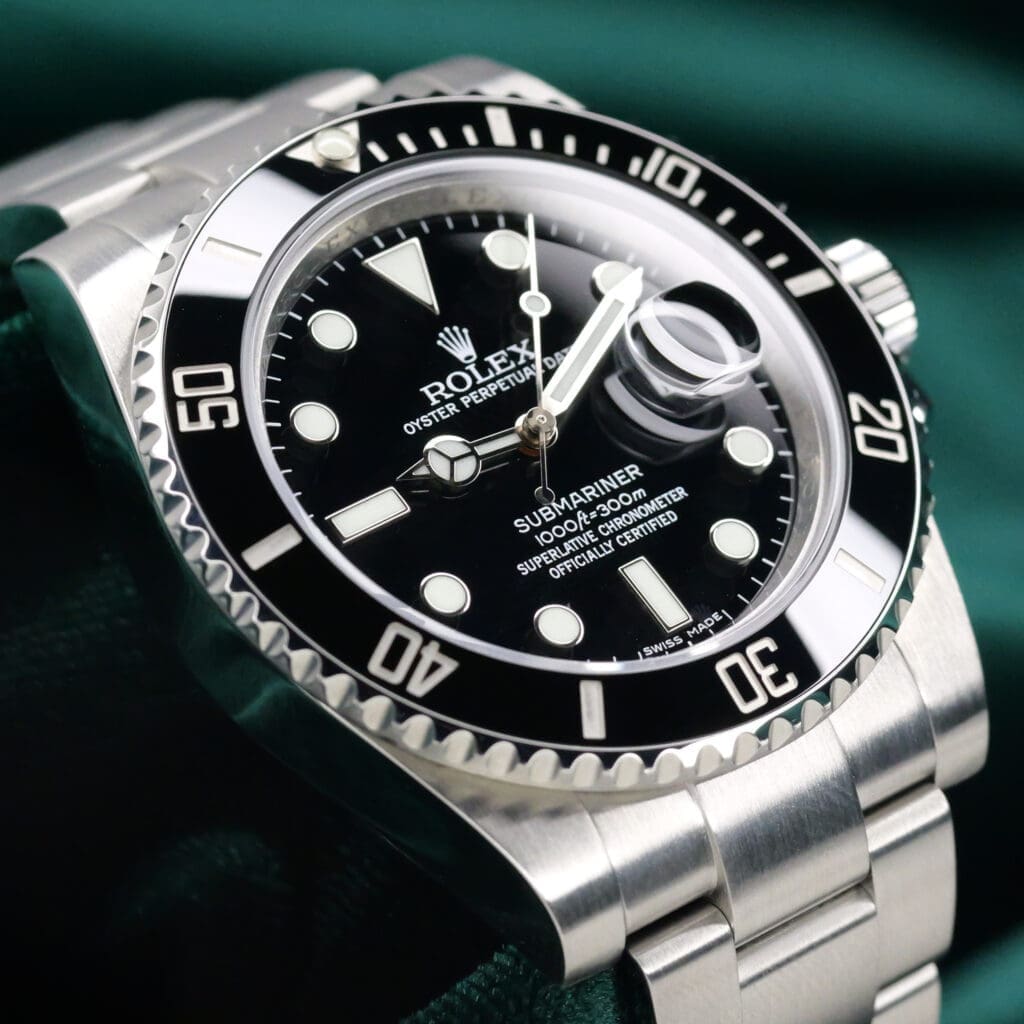
Rolex Submariner Date Black Dial Black Ceramic Bezel Stainless Steel 40mm MINT CONDITION COMPLETE SET 116610LN
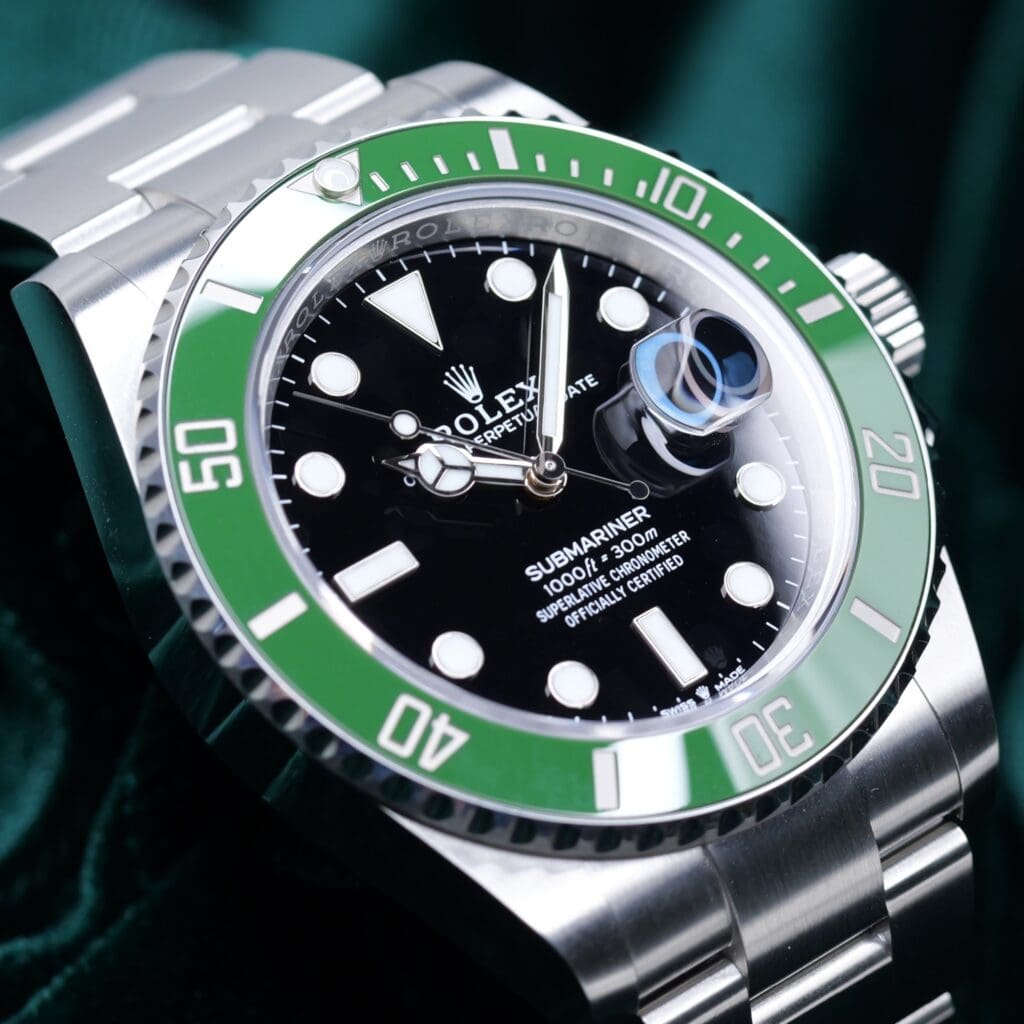
2026 NEW UNWORN Rolex Submariner Date "Starbucks" Black Dial Green Ceramic Bezel Stainless Steel 41mm COMPLETE SET 126610LV-0002
10. Serviceability
Omega’s caliber 3861 can go to qualified independent watchmakers as well as Omega service centers. Its movement is well-documented and parts move through established channels. That gives owners flexibility in where and how they service the watch, often at lower overall cost than a factory service. We lay out the numbers in our guide to Omega service costs.
Rolex keeps service inside its own network. Rolex does not supply caliber parts to independents, so any work touching the movement runs through authorized service. That keeps things consistent, but it removes the independent option for cost or scheduling flexibility, and our breakdown of Rolex service costs shows what that typically runs.
Price and Market Demand
Speedmaster and Rolex sit in very different spots in the market, and price is often the deciding factor for buyers stuck between them. As of 2026, the current Moonwatch retails around $7,800 for the hesalite ref. 310.30.42.50.01.001 and roughly $8,100 for the sapphire ref. 310.30.42.50.01.002, while clean secondary examples trade closer to $5,000 to $6,000.
That gap reflects strong production and easy access. Most buyers can walk into an authorized Omega dealer and pick up a Speedmaster without a waitlist. So standard references tend to trade at or below retail, which makes getting into the model refreshingly simple.
Related Models from Majestix
Omega Speedmaster Professional Moonwatch "Moonshine" Green Dial 18K Yellow Gold 42mm MINT CONDITION COMPLETE SET 310.60.42.50.10.001

2025 NEW UNWORN Omega Speedmaster Moonwatch Professional Black Dial Stainless Steel 42mm COMPLETE SET 310.32.42.50.01.002

2026 NEW UNWORN Omega Speedmaster Moonwatch Professional "Reverse Panda" Black Dial White Subdials Stainless Steel 42mm COMPLETE SET 310.30.42.50.01.004

2026 NEW UNWORN Omega Speedmaster Moonwatch Professional "Silver Snoopy Award" Silver Dial Blue Ceramic Bezel Blue Nylon Strap Stainless Steel 42mm COMPLETE SET 310.32.42.50.02.001
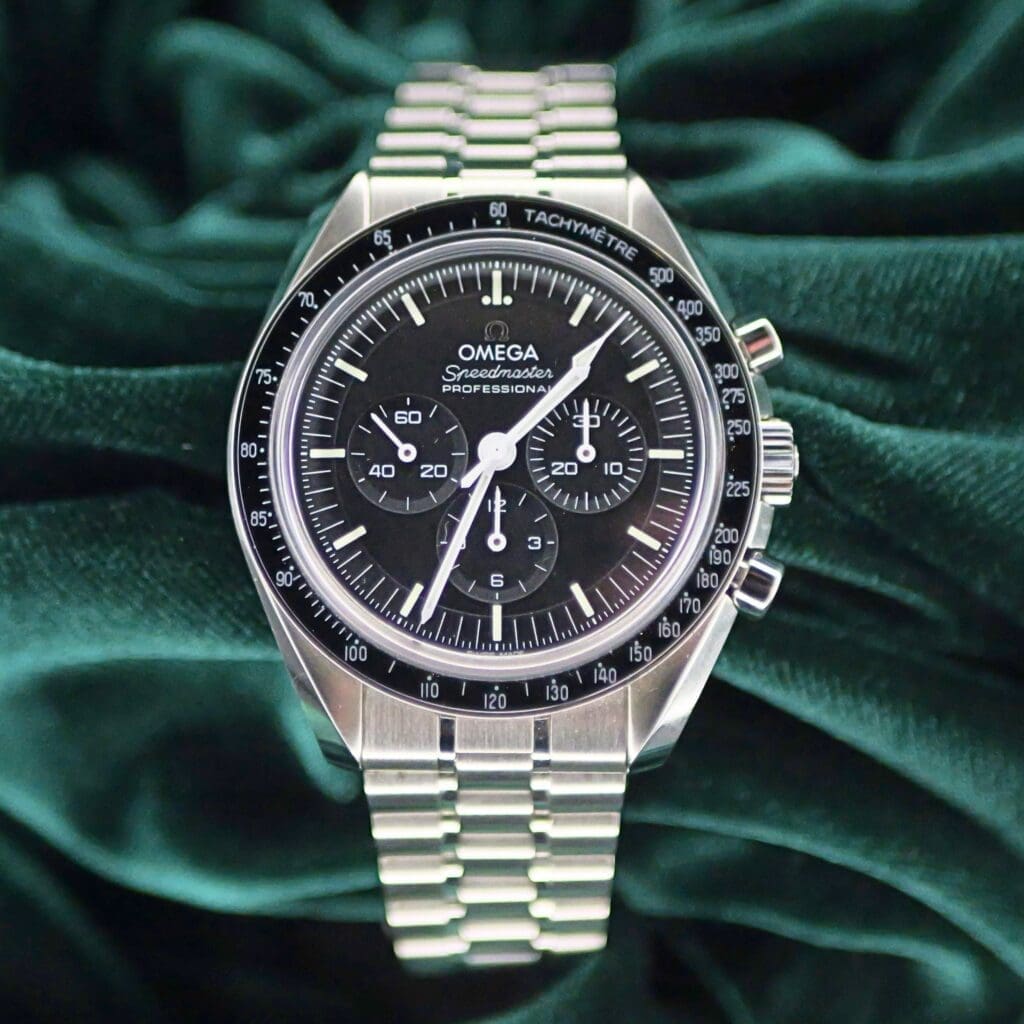
Omega Speedmaster Moon Watch Professional 42MM Black Dial Stainless Steel MINT CONDITION COMPLETE SET 310.30.42.50.01.002

2026 NEW UNWORN Omega Speedmaster Moonwatch Professional "Reverse Panda" Black Dial White Subdials Stainless Steel 42mm COMPLETE SET 310.30.42.50.01.004
Rolex plays a very different pricing game. Core models like the Datejust and Explorer already retail above the Speedmaster, and sport icons climb fast from there. As of 2026, the Submariner Date 126610LN lists at about $11,350 and the steel Daytona 126500LN at roughly $16,550 in the US.
Availability through authorized dealers is often limited, and many buyers cannot get these models at retail without an established relationship. Because of that scarcity, Rolex sport models frequently trade above their official retail prices on the secondary market.
Recent events sharpen that pattern. After Rolex discontinued the GMT-Master II Pepsi on April 14, 2026, secondary prices for the steel 126710BLRO pushed into the $24,000 to $30,000 range, several times its old retail. A Speedmaster simply does not behave that way.
Limited editions tell the same story from Omega’s side. Most standard Speedmasters dip modestly after purchase, but rare releases like the Silver Snoopy Award still sell well above retail when collector demand runs hot.
For buyers prioritizing value and accessibility, the Speedmaster remains one of the most approachable iconic Swiss watches. For those chasing brand prestige, resale stability, and global recognition, Rolex continues to hold a dominant position in the luxury market.
If resale is your main lens, we compare the two head-to-head in our Omega vs Rolex resale value breakdown.
Which Watch Should You Choose?
Your choice between the Omega Speedmaster and a Rolex comes down to what you value most and what role the watch plays in your life. Each is a different kind of ownership experience.
Choose the Omega Speedmaster if:
- You value space history and NASA heritage, owning a watch tied directly to human spaceflight.
- You want a manual-wind chronograph with direct, daily interaction with the movement.
- You prefer the highest available magnetic resistance in a production mechanical chronograph.
- You want access to a deep bench of limited editions, like the Snoopy Award or the Apollo 11 50th Anniversary.
- You want a strong chronograph without paying a secondary market premium at purchase.
Choose a Rolex if:
- You need a specific function, such as a dive watch, dual time zone, or dress watch, that the Speedmaster does not offer.
- You prioritize an automatic movement with no daily winding routine.
- You value near-universal global recognition and a proven secondary market across every model.
- You prefer a thinner case profile with stronger water resistance for active daily wear.
- You want one brand to cover multiple watch functions and occasions across different references over time.
Where to Buy Authentic Watches Online
A few legitimate online channels cover both the Speedmaster and most Rolex references. We map the full landscape in our guide to where to buy a pre-owned watch.
Chrono24 aggregates dealer and private listings worldwide, with buyer protection on eligible orders. eBay’s Authenticity Guarantee program inspects watches above a price threshold before they reach you. Grailzee runs enthusiast-focused auctions if you would rather bid than buy outright.
Independent grey-market sellers and watch forums move plenty of these pieces too, though vetting falls more on you there.
We also buy, sell, and trade luxury watches, and the reason clients pick us over a big marketplace is the layered communication before any decision. You get tour videos of the actual watch instead of stock photos, honest condition notes, and a real conversation with someone who has had the piece in hand.
That shows up in our 4.9-star Google rating, which comes from buyers who wanted a straight answer before spending five figures.
If you are weighing a specific Speedmaster against a particular Rolex and want eyes on both, reach out and we will line up options from our current collection and walk you through the trade-offs on each.
999+ Timepieces Available
Explore Our Timepieces
Authenticated, unworn, and ready to ship worldwide.
Rolex · Audemars Piguet · Patek Philippe · Omega · Cartier · Richard Mille · Hublot · Tudor
Newly Listed
2026 NEW UNWORN Rolex Deepsea "James Cameron" D-Blue Black and Blue Dial Black Ceramic Bezel Stainless Steel 44mm COMPLETE SET 136660-0005
$20,208.00
Panerai Luminor Marina 1950 3 Days Limited Edition Black Sandwich Dial Stainless Steel Black Rubber Strap 47mm MINT COMPLETE SET PAM00422
$7,503.00
Panerai Luminor Marina 1950 3 Days Black Dial Stainless Steel Brown Leather Strap 47mm LIMITED EDITION MINT CONDITION COMPLETE SET PAM00422
$7,503.00
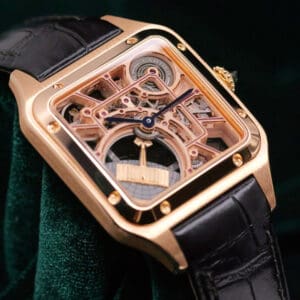
Cartier Santos-Dumont Micro-Rotor Skeleton Dial Black Alligator Strap 18k Rose Gold 43.5 x 31mm MINT CONDITION COMPLETE SET WHSA0030
$40,425.00
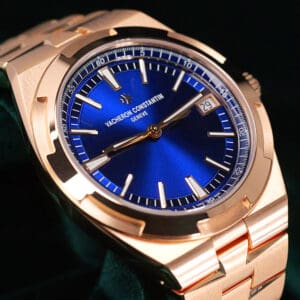
2026 Vacheron Constantin Overseas Blue Dial 18k Rose Gold 41mm MINT CONDITION COMPLETE SET 4520V/210R-B705
$72,764.00
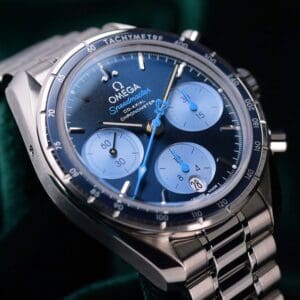
Omega Speedmaster 38 Orbis Edition Blue Dial Stainless Steel 38mm MINT CONDITION COMPLETE SET 324.30.38.50.03.002
$6,599.00
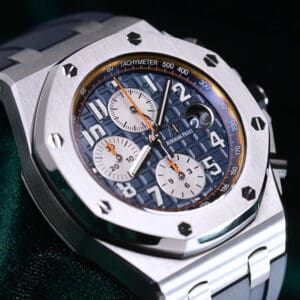
Audemars Piguet Royal Oak Offshore Chronograph “Navy” Blue Dial Orange Accents Blue Rubber Strap Stainless Steel 42mm MINT CONDITION COMPLETE SET 26470ST.OO.A027CA.01
$22,245.00
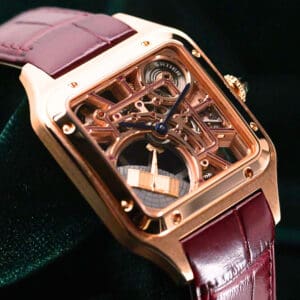
Cartier Santos-Dumont Micro-Rotor Skeleton Dial 18K Rose Gold Burgundy Alligator Strap 31mm MINT CONDITION COMPLETE SET WHSA0030
$40,425.00
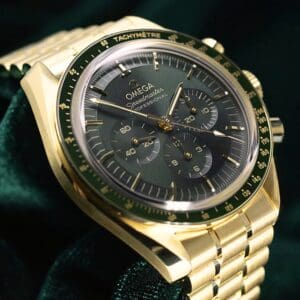
Omega Speedmaster Professional Moonwatch "Moonshine" Green Dial 18K Yellow Gold 42mm MINT CONDITION COMPLETE SET 310.60.42.50.10.001
$35,695.00
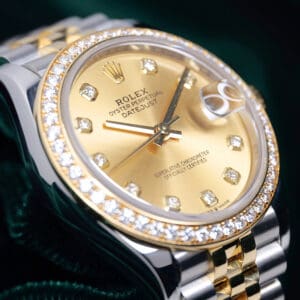
Rolex Datejust 31 Champagne Diamond Dial Diamond Bezel Jubilee Yellow Gold & Stainless Steel 31mm MINT CONDITION COMPLETE SET 278383RBR
$31,990.00
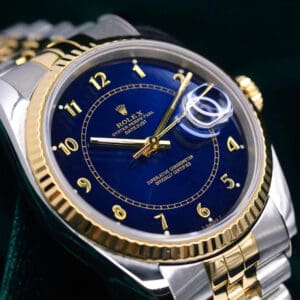
Rolex Datejust Blue Arabic Numeral Refinished Dial Fluted Bezel Jubilee Bracelet 18k Yellow Gold Stainless Steel 36mm MINT CONDITION 16233
$7,975.00
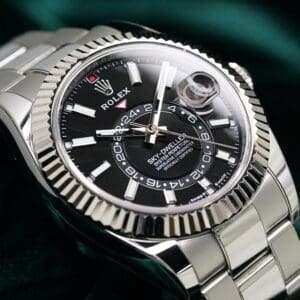
2025 Rolex Sky-Dweller Bright Black Dial 18k White Gold Fluted Bezel Stainless Steel Oyster Bracelet 42mm MINT CONDITION COMPLETE SET 336934
$22,895.00
Final Thoughts on Omega Speedmaster vs Rolex
A watch is more than a timing instrument. It says something about how you connect with watchmaking history and what role a piece plays in your week. Asking omega speedmaster vs rolex rarely gives a clean winner, because one is a purpose-built chronograph with an unmatched space legacy and the other is a brand broad enough to cover almost any need.
Two quick tips before you commit. Light scratches on a Speedmaster’s hesalite crystal polish right out at home with a dab of Polywatch, so do not overpay to dodge them. And on any Rolex, confirm the production year on the card first, because a fresh discontinuation can swing value more than condition does.