Ever held a Rolex Yacht-Master and wondered if it’s real or a clever imitation? Learning how to spot a fake Rolex Yacht- Master is crucial for anyone buying, selling, or collecting these luxury timepieces. Counterfeits have become increasingly sophisticated, making it easy to be fooled at first glance.
But small details like the weight, the movement of the second hand, and the precision of the engravings reveal the truth. In this guide, you’ll discover the key tips and tricks to confidently identify a genuine Rolex Yacht-Master and avoid costly mistakes.
Overview of the Rolex Yacht-Master
The Rolex Yacht-Master is a luxury sports watch designed for sailors and watch enthusiasts who value precision and style. Introduced in 1992, it combines robust functionality with a refined aesthetic. The Yacht-Master comes in several variations, including different case sizes like 37 mm, 40 mm, and 42 mm, and materials such as stainless steel, Rolesium (a combination of steel and platinum), and Everose gold.
Its dials offer a range of colors, from silver and white to deep blue and chocolate, often paired with Chromalight luminous markers for visibility in low light.
The watch features a bidirectional rotatable bezel with a raised 60-minute scale that allows timing of sailing events and other activities. The Oyster bracelet provides both comfort and security, often including the Easylink extension system for quick adjustments.
Yacht-Master models also vary in movement, with the latest versions powered by Rolex’s Caliber 3235 or 2236, offering high precision, shock resistance, and a 70-hour power reserve.
Key Rolex Yacht-Master Generations

The Rolex Yacht-Master has gone through several updates over the years, with each generation offering new materials, designs, and features. Understanding these key generations gives collectors and buyers a solid reference point when examining authenticity.
Here’s a breakdown of the main Yacht-Master generations:
- Early Steel/Platinum Models (1992–1999): Featured stainless steel cases with platinum bezels and classic Oyster bracelets.
- Rolesium Versions (Late 1990s–2000s): Combined stainless steel and platinum for a refined look and durable performance.
- Everose Gold Models (2005–Present): Introduced Rolex’s proprietary rose gold, adding a luxurious touch.
- Oysterflex Models (2015–Present): Fitted with a sporty elastomer bracelet while maintaining the high-end aesthetic.
- Modern References (2020–Present): Include upgraded movements, larger case options, and new dial colors for enhanced precision and style.
Yacht Master Sizes and Case Materials
Rolex designed the Yacht-Master in different sizes and materials to suit a variety of tastes and wrist sizes. Knowing the available options helps collectors spot inconsistencies when checking for authenticity.
Here are the main sizes and materials:
- 37 mm Case: A slightly smaller option, popular for a more classic or unisex fit.
- 40 mm Case: The most common size, balancing presence and comfort.
- 42 mm Case: A modern, larger option introduced for a bolder look.
- Steel: Durable and sporty, often paired with platinum bezels.
- Rolesium: A mix of stainless steel and platinum for a refined finish.
- Everose Gold: Rolex’s signature rose gold, adding a luxurious touch.
- Other Precious Metals: Includes full gold or platinum versions for high-end collectors.
Bezel Types and Materials on the Yacht Master
The bezel is one of the most noticeable features of the Rolex Yacht-Master, and it varies in material, finish, and design across different models. Understanding these differences helps collectors identify the correct bezel style for each reference and spot inconsistencies that could indicate a fake.
| Bezel Material | Finish | Engraving Style | Typical References |
| Platinum | Sandblasted | Raised numerals | 16622, 268622 |
| 18k Everose Gold | Polished | Raised numerals | 116655, 226659 |
| Ceramic (Cerachrom) | Polished | Engraved and filled with platinum or gold | 116621, 126621 |
| Rolesium (Steel & Platinum) | Sandblasted | Raised numerals | 16622, 268622 |
Bracelet and Oysterflex Configurations
The Rolex Yacht-Master offers a variety of bracelet options, each designed for comfort, durability, and style. Knowing which bracelet or strap belongs to which model helps collectors identify authentic configurations and notice mismatched components on a watch.
- Oyster Bracelet: Classic three-link metal bracelet, found on most steel, Rolesium, and gold models.
- Oysterflex Rubber Strap: A flexible elastomer strap with a metal core, introduced on sportier and more modern Yacht-Master models.
- Oysterlock Clasp: Standard clasp for metal bracelets, providing security and a polished finish.
- Folding Oysterlock Safety Clasp with Easylink: Allows quick adjustment of bracelet length; used on newer models with Oyster bracelets.
- Oysterflex with Oysterlock Clasp: Combines a sporty rubber strap with a secure clasp, found on 40 mm and 37 mm Everose models.
Yacht-Master vs Yacht-Master II (At a Glance)
The Yacht-Master and Yacht-Master II are often confused because of their similar names, but they serve very different purposes and have distinct features. Understanding the differences helps collectors quickly identify which model they are examining and prevents errors during authentication.
| Feature | Yacht-Master | Yacht-Master II |
| Function | Standard time and date | Regatta chronograph with countdown timer |
| Bezel | Bidirectional rotatable | Ring Command programmable bezel |
| Case Size | 37mm, 40mm, 42mm | 44 mm |
| Movement | Standard automatic movement | Specialized Caliber 4161 with regatta function |
| Bracelet Options | Oyster or Oysterflex | Oyster only |
How to Spot a Fake Rolex Yacht-Master

Spotting a fake Rolex Yacht-Master requires careful attention to the watch’s details. Counterfeiters often make subtle mistakes in the case, bezel, dial, hands, bracelet, and documentation. Focus on these key areas to quickly identify inconsistencies. This approach helps you verify authenticity with confidence.
Physical Checks
Start with the overall look and feel of the watch. Physical checks can quickly reveal major inconsistencies.
1. Weight and Feel: Genuine Yacht-Masters have a solid, balanced feel due to high-quality metals.
2. Case Finish: Check the case edges and lugs. Rolex cases have sharp, precise edges and smooth brushing or polishing, while fakes often show uneven or rough finishes.
3. Crown and Logo: Examine the winding crown and the etched Rolex coronet. The logo should be finely detailed, not shallow or blurry.
4. Case Back: Most authentic Yacht-Masters have a smooth case back without engravings. Any visible markings may indicate a replica.
Bezel and Insert Red Flags
The bezel is a signature feature of the Yacht-Master, and small mistakes here often reveal a fake.
1. Bezel Rotation: The bidirectional bezel rotates smoothly with firm, precise clicks. Fakes may feel loose or uneven.
2. Numeral Engraving: Numbers on the bezel are crisp and evenly raised. Blurred or shallow engravings are red flags.
3. Insert Material: Check the material and finish of the bezel insert. Rolesium bezels have a matte platinum look, and Everose gold bezels have a warm, polished tone.
4. Alignment: The triangle marker sits perfectly with the minute track on the dial. Misalignment is common in counterfeits.
Dial and Hands Red Flags
The dial and hands are where precision really matters, and fakes often fall short.
1. Marker Luminescence: Markers glow evenly in low light; inconsistent brightness is a warning sign.
2. Printing Quality: Text on the dial is sharp and perfectly aligned. Blurry or off-center text indicates a fake.
3. Hands Shape and Finish: The hour, minute, and second hands have clean edges and polished surfaces. Misproportioned or rough hands are suspect.
4. Second-Hand Movement: The second hand sweeps smoothly without visible ticking. Jerky motion suggests a quartz or low-quality movement.
Date Window and Cyclops Magnification
The date function is a common area for counterfeit mistakes.
1. Magnification: The Cyclops lens magnifies the date approximately 2.5x. Weak or uneven magnification is a red flag.
2. Date Font: The date numerals are crisp, centered, and consistent in size. Irregular fonts indicate a replica.
3. Date Alignment: The date sits perfectly within the window. Off-center dates are a sign of a fake.
4. Quickset Function: The date changes instantly at midnight. Sluggish or uneven date changes suggest a counterfeit mechanism.
Bracelet, Oysterflex, and Clasp Checks
The strap and clasp are often overlooked but reveal authenticity quickly.
1. Bracelet Weight and Flexibility
Metal bracelets feel solid, and Oysterflex straps have a firm metal core under the rubber.
2. Links and Finish
Links are smooth and precise, with consistent brushing or polishing. Rough or uneven links indicate a fake.
3. Clasp Engravings
Rolex engravings on clasps are sharp and deeply etched. Shallow or blurry markings are suspicious.
4. Easylink Function
On models with Easylink, the extension moves smoothly and locks securely. Malfunctioning extensions are a sign of poor craftsmanship.
Complete Rolex Yacht-Master Authenticity Checklist
Verifying a Rolex Yacht-Master involves checking details that are often overlooked but crucial for confirming authenticity. Beyond the obvious physical traits, authentic watches have consistent markings, precise components, and correct documentation.
The table below condenses all critical checks into a scannable format for quick reference.
| Item to Check | What to Look For | Red Flags |
| Serial Number & Reference Numbers | Deeply engraved, clear, and consistent fonts | Shallow, uneven, or mismatched numbers |
| Rehaut Engraving | Rolex coronet and serial number precisely aligned | Misaligned or poorly etched engraving |
| Case Back Markings | Smooth, unmarked except authorized limited editions | Extra engravings or text not standard |
| Bezel Function | Clicks firmly and rotates evenly | Loose, uneven rotation or incorrect click feel |
| Crystal | Clear sapphire, no distortions, micro-etched coronet | Scratches, distorted view, missing coronet |
| Bracelet & End Links | Solid fit, uniform finish, smooth link connections | Gaps, uneven links, inconsistent polishing |
| Clasp Mechanism | Snaps securely, engraving sharp and consistent | Loose clasp, shallow or sloppy engravings |
| Weight Distribution | Balanced, matches model specifications | Heavier or lighter than authentic models |
| Movement Sound | Smooth, quiet automatic movement | Loud ticking or jerky motion |
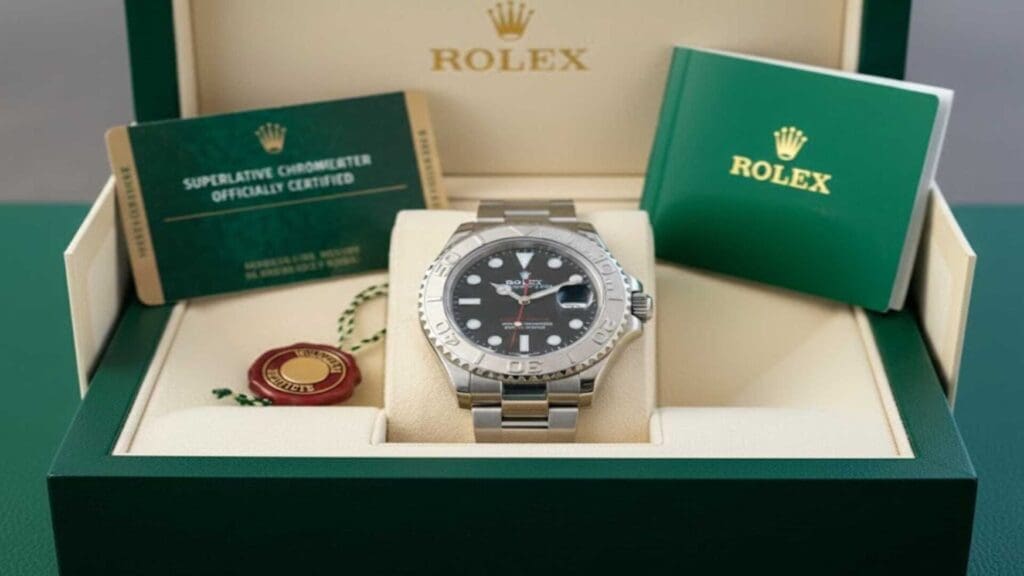
| Warranty & Papers | Matching serial numbers, authorized retailer details | Missing, altered, or suspicious documents |
Final Thoughts on How to Spot a Fake Rolex Yacht-Master
If you’re handling a Rolex Yacht-Master, take your time and trust your instincts. The major checkpoints are important, but subtle details such as the feel of the crown, the smoothness of the bezel, and the motion of the second hand can make a meaningful difference.
It helps to compare watches side by side and use a magnifying glass for small engravings. It helps to seek professional opinion if something feels off.
Even minor doubts are worth following up on, and keeping receipts or documentation can protect your investment. Taking these precautions ensures you enjoy your Yacht-Master confidently and avoid costly mistakes in the future.
FAQs About Spotting a Fake Rolex Yacht-Master
What is the quickest way to spot a fake Rolex Yacht-Master?
The fastest method is to focus on subtle physical details often overlooked by counterfeiters, such as engraving clarity, bezel function, and the second-hand movement. Observing these features carefully can reveal inconsistencies that indicate a fake, even before examining the watch in depth.
Are platinum bezel Yacht-Masters easier or harder to fake?
Platinum bezel Yacht-Masters are generally harder to replicate because of the unique texture and weight of platinum. Counterfeiters often struggle to mimic the sandblasted finish and precise engraving depth, making any slight imperfection a clear indicator of a replica.
Can I authenticate a Yacht-Master on Oysterflex just by looking at the strap and clasp?
You cannot rely solely on the strap and clasp for authentication. While the Oysterflex strap and Oysterlock clasp are unique features, fakes can replicate them closely. It’s important to combine this with dial, bezel, and movement checks for a reliable assessment.
Is it safe to buy a Yacht-Master without papers if it passes all visual checks?
Buying without papers carries extra risk, even if visual inspections appear fine. Some fakes can be sophisticated enough to pass careful eye tests. It’s recommended to seek professional verification or request provenance documentation before completing the purchase.