Authenticating a Rolex Daytona requires careful attention to detail, especially now that replicas have become increasingly sophisticated. Subtle cues in finishing, proportions, and movement behavior often reveal far more than the overall appearance. A focused, methodical approach brings those details to the surface and helps you distinguish true Rolex craftsmanship from imitation.
The Daytona has a long history shaped by distinct design eras, and learning those variations gives you a strong starting point before examining specific authenticity markers. Let’s begin with a quick overview of the model’s evolution.
Overview of the Rolex Daytona
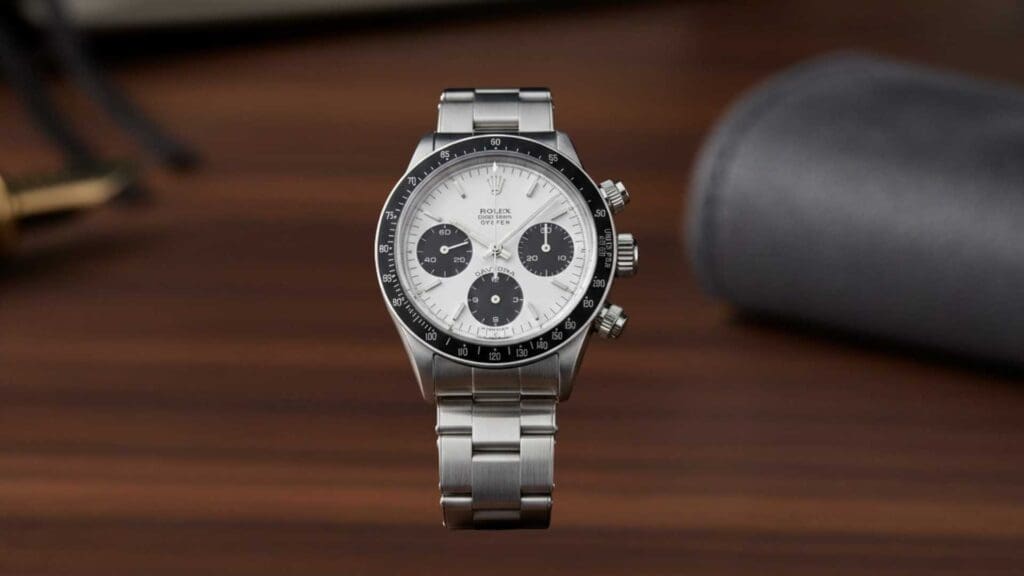
The Rolex Cosmograph Daytona is a racing chronograph designed for timing high-speed events. Early manual-wind models such as the Rolex Daytona 6239 and Rolex Daytona 6263 used Valjoux-based movements, acrylic crystals, and slim cases around 37 mm.
Many of these watches featured pump or screw-down pushers, steel tachymeter bezels, and classic panda or reverse-panda dials that vintage collectors prize today.
Later automatic generations introduced sapphire crystals, larger 40 mm cases, and new movements. The Rolex Daytona 16520 used a modified Zenith El Primero caliber, while modern references such as the Rolex Daytona 116500LN, 116515LN, and 126500LN feature in-house calibers, ceramic Cerachrom bezels, and highly consistent Oyster bracelets.
Current models appear in stainless steel, yellow gold, Everose gold, white gold, and Rolesor configurations, which gives you a clear framework for what materials and designs should appear on an authentic Daytona.
Key Daytona Generations and Variants
The Daytona has evolved through several distinct eras, each with its own movement technology, design traits, and materials. These generations help you identify what features should appear on a genuine piece.
- Pre-Daytona References (1950s–early 1960s) – Early Rolex chronographs with thin bezels, simple dials, and manual-wind calibers.
- Manual-Wind Daytona (62xx and 6239–6265, 1960s–1980s) – Paul Newman era models with acrylic crystals, pump or screw-down pushers, and Valjoux-based movements.
- Zenith Daytona (16520 Series, 1988–2000) – First automatic Daytona generation with sapphire crystals, metal bezels, and a modified Zenith El Primero movement.
- Five-Digit Gold and Two-Tone Variants (1652x / 1652xx) – Expanded dial options, engraved bezels, and combinations of steel, yellow gold, and Rolesor.
- Six-Digit Daytona with In-House Movement (1165xx, 2000–2016) – Caliber 4130, refined case finishing, and highly consistent manufacturing standards.
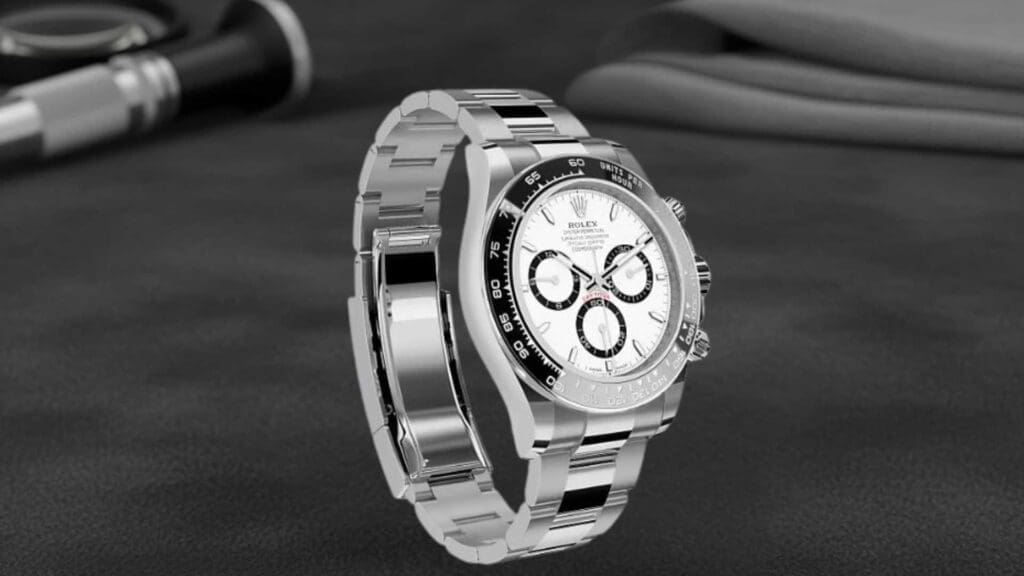
- Ceramic-Bezel Daytona (116500LN series, 2016–present) – Cerachrom bezels, sharper fonts, improved legibility, and updated bracelets.
Steel vs. Ceramic Tachymeter Bezels
The Daytona has featured both steel and ceramic tachymeter bezels, and each type has distinct characteristics that help verify authenticity. The table below highlights the key differences.
| Feature | Steel Tachymeter Bezel | Ceramic Tachymeter Bezel (Cerachrom) |
| Material | Stainless steel or gold | Ceramic with platinum or gold-filled numerals |
| Font Style | Thinner, more traditional numerals | Bold, modern numerals with clean spacing |
| Engraving Depth | Deep engravings filled with paint | Numerals filled through PVD or metal deposition |
| Surface Finish | Polished metal that develops wear | Glossy, highly scratch-resistant surface |
| Common Fake Issues | Inaccurate fonts and shallow engravings | Incorrect gloss, oversized numerals, dull filling |
Different Daytona Case Shapes and Lug Profiles
Case shape and lug geometry vary across Daytona generations. These differences serve as reliable reference points during authentication.
- Manual-wind models feature slim cases with tapered, elegant lugs.
- Zenith-era pieces show slightly broader shoulders and sharper transitions.
- Six-digit models present refined curves with more consistent polishing.
- Ceramic-bezel references have balanced proportions with narrower lugs.
- Counterfeit cases often appear bulky, unevenly polished, or inconsistent with the correct era.
How to Spot a Fake Rolex Daytona
Authenticating a Daytona involves looking closely at details that reveal the true level of craftsmanship. Counterfeit pieces often capture the overall style but fail in precision, finishing, and mechanical performance.
Below are the most reliable areas to examine when evaluating authenticity.
Physical Checks
1. Evaluate the Case Finishing – A genuine Daytona displays clean brushing, polished surfaces, and sharp transitions. Uneven texture or rounded edges suggests poor-quality replication.
2. Inspect the Tachymeter Bezel – Font weight, spacing, and engraving depth should match the correct reference. Incorrect numerals or shallow engravings are common red flags.
3. Check the Pushers and Crown – Real pushers feel firm and consistent. Loose action, uneven threading, or incorrect pusher styles indicate a possible counterfeit.
4. Look at the Dial Layout – Rolex dial printing is crisp with even spacing. Misaligned sub-dials, fuzzy text, or incorrect fonts signal inauthentic components.
5. Examine the Sub-Dials – Positioning and size should match the specific reference. Replicas often place them too close together or use incorrect marker styles.
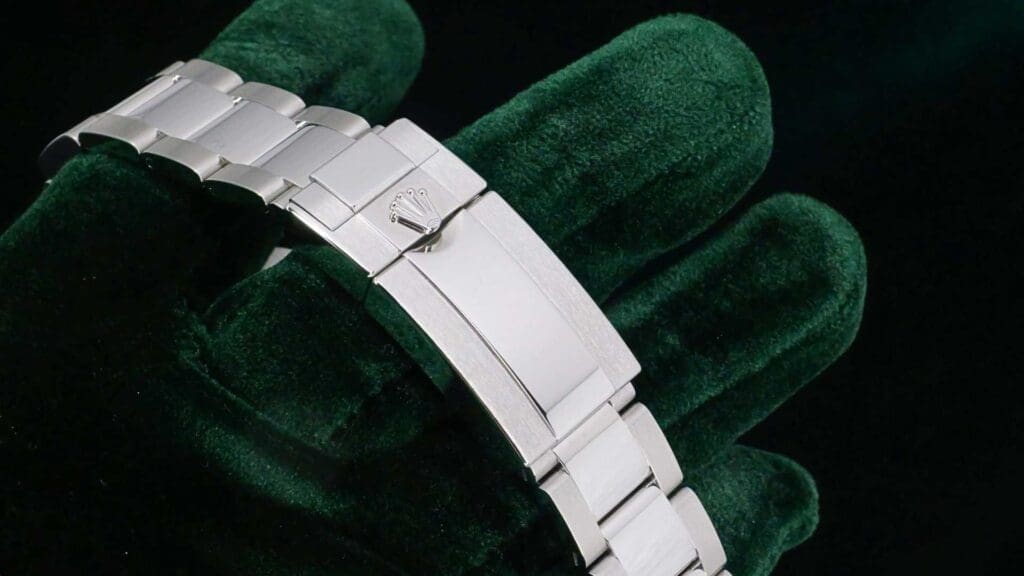
6. Assess the Bracelet and Clasp – Authentic Oyster bracelets feel solid and articulate smoothly. Lightweight links, rattling articulation, or inaccurate clasp engravings are warning signs.
Movement Checks
1. Observe the Chronograph Function – A genuine Caliber 4130 offers smooth pusher engagement and a clean start–stop–reset sequence. Jerky operation or inconsistent reset points suggests a fake movement.
2. Listen for Movement Noise – Rolex movements operate quietly. Loud ticking or irregular sound patterns point to low-quality replica calibers.
3. Confirm the Seconds Sweep – The Daytona’s seconds hand moves with a smooth, steady sweep. Stuttering or uneven motion often indicates a non-Rolex mechanism.
4. Test the Reset Alignment – The chronograph seconds and minute hands should snap back precisely to zero. Misalignment or sluggish resets are strong red flags.
5. Check Winding and Setting Feel – The crown should rotate smoothly with consistent resistance. Gritty or loose feedback typically signals inferior construction.
Documentation & Packaging Checks
1. Review the Warranty Card – Authentic cards have precise microprinting, consistent spacing, and correct model details. Poor color quality or mismatched serials is a common issue with counterfeit sets.
2. Inspect the Box Quality – Rolex packaging uses durable materials with clean edges. Flimsy construction or faded colors often indicate a replica box.
3. Check the Booklets – Printed materials should match the correct era and model. Incorrect languages, outdated booklets, or low-quality printing are signs of a counterfeit package.
4. Verify Serial and Reference Numbers – Engravings must be clean, deep, and correctly formatted. Shallow or uneven engravings frequently appear on fake Daytona cases.
5. Look for Missing or Incorrect Accessories – Modern Daytona sets often include a cardholder, hang tags, and model-specific booklets. Incomplete or mismatched accessories increase the need for close inspection.
Complete Rolex Daytona Authenticity Checklist
Use this checklist to evaluate the most important areas of a Rolex Daytona. Each item highlights what a genuine piece should display and the warning signs that often reveal a counterfeit.
| Item to Check | What to Look For | Red Flags |
| Case Finishing | Clean brushing, sharp lines, even polishing | Rounded edges, uneven texture, sloppy finishing |
| Tachymeter Bezel | Correct font style, consistent spacing, proper engraving depth | Oversized numerals, shallow engravings, incorrect font shapes |
| Pushers and Crown | Firm action, consistent threading, correct pusher style for the reference | Loose pushers, uneven threading, mismatched pusher types |
| Dial Printing | Crisp text, clean markers, correct sub-dial spacing | Fuzzy printing, misaligned markers, incorrect fonts |
| Sub-Dial Positioning | Accurate placement and proportion based on reference | Sub-dials too close together or incorrect marker styles |
| Bracelet and Clasp | Solid links, smooth articulation, accurate clasp engraving | Lightweight bracelet, rattling links, poor-quality engraving |
| Seconds Sweep | Smooth, steady motion typical of high-beat movement | Jerky or uneven sweep |
| Chronograph Function | Clean engagement and precise reset alignment | Sluggish starts, resets off-center |
| Movement Noise | Quiet operation, consistent rhythm | Loud ticking or irregular sounds |
| Serial & Reference Engravings | Deep, clean engraving with proper font | Shallow, uneven, inconsistent engraving |
| Warranty Card | Precise microprinting, clear model details, matching serial | Poor print quality, mismatched numbers |
| Box & Booklets | High-quality materials, correct era-specific inserts | Cheap materials, incorrect or mixed booklets |
Key Takeaways for Spotting a Fake Rolex Daytona
A genuine Rolex Daytona reflects a level of precision and refinement that is difficult to imitate. The balance of the case, the quality of the finishing, and the clean execution of the chronograph functions all reveal details that counterfeiters often overlook. Careful inspection of these elements gives you a clearer view of what you are evaluating and strengthens your confidence in every decision you make.
Choosing an authentic Daytona is more than identifying the correct features. It is about selecting a watch that upholds the heritage, engineering, and presence that define one of Rolex’s most celebrated models. A thoughtful approach ensures that the piece you add to your collection carries the integrity and craftsmanship worthy of the Daytona name.
FAQs About How to Spot a Fake Rolex Daytona
What is the quickest way to spot a fake Rolex Daytona?
The fastest way is to examine overall finishing and bezel details. Counterfeit Daytonas often show uneven brushing, incorrect tachymeter fonts, or lightweight bracelets. A genuine piece displays sharp lines, balanced proportions, and precise engraving that are difficult for replicas to match.
Are ceramic bezel Daytona models more difficult to authenticate?
They can be more challenging because ceramic bezels hide wear and remain glossy over time. Even so, replicas often use incorrect numeral shapes, dull filling, or an overly matte finish. Font accuracy, placement, and the quality of the metal deposition remain strong indicators of authenticity.
Can I confirm authenticity without opening the caseback?
Yes. Many reliable checks can be done externally, including dial printing, bezel engraving, sub-dial spacing, pusher function, and bracelet quality. These elements usually reveal inconsistencies long before movement inspection becomes necessary. Caseback opening should only be done by a trained watchmaker.
Should I buy a Daytona without papers if it passes visual and functional checks?
It is possible to buy a Daytona without papers, but the watch should undergo a thorough inspection. Strong visual and functional consistency provides reassurance, yet documentation still adds value and confidence. A professional authentication is recommended when purchasing higher-value Daytona references.