Cleaning a metal watch band keeps your bracelet comfortable, hygienic, and looking sharp, especially if you wear your watch daily. Sweat, skin oils, dust, and fine debris settle between the links over time, which dulls the finish and can even affect how smoothly the bracelet moves.
This guide explains how to clean a metal watch band using safe, watch-friendly methods for stainless steel, titanium, two-tone, hollow links, and integrated bracelets.
Types of Metal Watch Bands
Metal watch bands come in several constructions and materials, each reacting slightly differently to cleaning.
- Stainless steel is the most common, offering durability and strong resistance to everyday wear.
- Titanium bracelets are lighter and more resistant to corrosion, although they may show marks more easily due to their softer surface.
- Two-tone bracelets combine steel and gold, which require gentler cleaning to protect the softer gold links.
- Solid-link bands are heavier and sturdier, while hollow-link bracelets are lighter but tend to trap more dirt between the folded sections.
- Integrated bracelets connect directly into the watch case, so cleaning must be done carefully to avoid moisture near the head.
Rules Before Cleaning a Metal Watch Band
Before you begin cleaning, it’s important to handle the bracelet correctly to avoid moisture exposure, chemical damage, or unnecessary wear. Make sure the watch head is dry and the crown is fully sealed, especially if you plan to wipe the bracelet while it’s attached.
Check for loose links or stretched sections, because scrubbing can worsen structural issues. If the bracelet uses spring bars or end links that feel unstable, secure them first so the watch doesn’t detach during cleaning.
Tools Needed to Clean a Metal Watch Band
Here are the basic tools that help you clean a metal bracelet safely and effectively:
- Microfiber cloth: Removes fingerprints, sweat, and surface oils without scratching the metal.
- Soft-bristled toothbrush or watch cleaning brush: Reaches dirt trapped between links, around pins, and in tight crevices.
- Mild dish soap: Provides gentle cleaning power without damaging steel, titanium, or gold surfaces.
- Warm water: Helps loosen residue and soften built-up grime before scrubbing.
- Small bowl: Useful for soaking stainless steel bracelets during deep cleaning.
- Plastic wrap or a small zip bag: Protects the watch head when the bracelet cannot be removed.
- Lint-free or microfiber drying cloth: Ensures no water spots remain after rinsing.
- Compressed air or a hair dryer on cool setting: Blows moisture out of hidden gaps between links to prevent rust or residue buildup.
How to Clean a Metal Watch Band (Basic Everyday Cleaning)
Use this simple cleaning routine to remove daily sweat, oils, and light dirt before it builds up between the links.
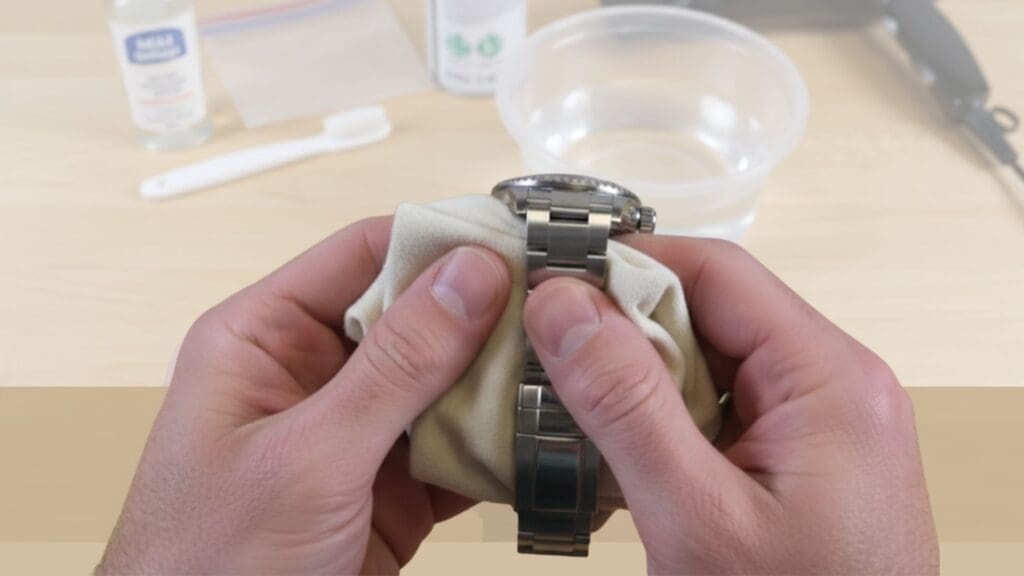
1. Wipe the Bracelet With a Soft Microfiber Cloth – Gently wipe the outside and inside of the bracelet to lift surface grime and loosen any residue.
2. Use a Soft Brush to Remove Loose Dirt Between Links – Lightly brush between the links, focusing on areas near the clasp where dust and skin oils collect.
3. Dampen Cloth With Mild Soap + Warm Water – Mix a drop of mild dish soap with warm water, then dampen your cloth without soaking it.
4. Wipe Each Link Thoroughly – Clean every link individually, sliding the cloth into the gaps to remove hidden buildup.
5. Rinse Cloth and Remove Soap Residue – Rinse the cloth in clean water, wring it out, and wipe the bracelet again to lift leftover soap.
6. Dry the Bracelet Completely With a Lint-Free Cloth – Pat the bracelet dry and polish lightly until all moisture is removed to prevent water spots or rust.
How to Deep Clean a Metal Watch Band (For Heavy Dirt and Sweat Build-Up)
Deep cleaning removes stubborn grime that collects inside the links, especially if you wear your watch daily in warm or active environments. Follow these steps for a thorough but safe clean.
1. Remove the Bracelet From the Watch Head (If Possible) – Detach the bracelet using a spring-bar tool so the watch head stays dry. This gives you full access to the links and prevents moisture from reaching the case or gaskets.
2. Prepare a Bowl of Warm Water With Mild Dish Soap – Fill a small bowl with warm (not hot) water and add a drop of gentle dish soap. Mix until the water feels slightly slick but not overly foamy.
3. Soak the Bracelet for 10–15 Minutes – Submerge the bracelet fully so water reaches inside the links. This loosens sweat, sunscreen, lotion, and grime trapped where brushes normally cannot reach.
4. Scrub Between Links Using a Soft Toothbrush – Brush each link carefully, moving along the sides and underside of the bracelet. Pay extra attention to clasp hinges and tight gaps where dirt tends to harden.
5. Rinse Under Running Water – Hold the bracelet under gentle running water to flush out soap, loosened debris, and any residue lodged in the crevices. Continue until the metal feels clean to the touch.
6. Blow Out Water From Crevices Using a Hair Dryer on Cool Setting – Use a cool air setting to push water out of folded sections, pinholes, and clasp joints. This step prevents trapped moisture from causing discoloration over time.
7. Dry With a Microfiber Cloth Until Fully Moisture-Free – Wipe the bracelet thoroughly, checking between the links for hidden damp spots. The bracelet should be completely dry before reattaching it to the watch head.
How to Clean a Metal Watch Band Without Removing It
Some watches have integrated bracelets or fragile fitting systems that should not be detached. In those cases, you can still clean the band safely by keeping the watch head fully protected.
1. Wrap the Watch Head in Plastic to Protect It – Cover the case with plastic wrap or place it inside a small zip bag, leaving only the bracelet exposed. This prevents water or soap from touching the dial, crown, or gaskets.
2. Use a Damp Cloth With Soap on the Bracelet Only – Mix mild soap with warm water and dampen a cloth. Avoid dripping water and focus solely on the exposed bracelet to prevent moisture from reaching the watch head.
3. Scrub Gently Between Links With a Soft Brush – Use a soft toothbrush or watch brush to clean dirt along the sides and underside of the bracelet. Make small, controlled strokes so the wrapped watch head does not shift.
4. Wipe and Rinse Using a Lightly Damped Cloth – Rinse your cloth in clean water, wring it thoroughly, and wipe the bracelet again to remove any soap residue. Keep the cloth barely damp to avoid water running toward the case.
5. Dry Immediately to Prevent Water Stains – Pat the bracelet dry with a microfiber or lint-free cloth. Check the clasp and link gaps for any lingering moisture, as these areas tend to trap water when the bracelet stays attached.
How to Remove Stubborn Stains or Tarnish on a Metal Bracelet
Stainless steel bracelets sometimes develop stains or light tarnish where sweat, skin oils, or moisture settle between the links. You can remove these marks safely when you use gentle, watch-friendly methods. Here are the steps to follow:
1. Use a Soft Brush With a Paste of Water + Baking Soda – Mix a small amount of baking soda with water to form a mild paste. Apply it with a soft toothbrush and work it into stained areas using slow, controlled strokes to lift discoloration.
2. Rub Only on Stainless Steel (Not Gold, PVD, or Plated Metal) – This method is safe for solid stainless steel but should not be used on gold, two-tone, plated, or PVD-coated bracelets. Those finishes require gentler products to avoid dulling or removing the surface layer.
3. Rinse and Dry Thoroughly – Rinse the bracelet under lukewarm running water until all paste is removed. Make sure no residue stays in the link gaps, since leftover baking soda can cause spotting once dry.
4. Use a Jewelry Polishing Cloth for Final Shine – Finish by polishing the bracelet with a jewelry cloth designed for stainless steel. This removes remaining haze and restores a clean, even shine without scratching the surface.
What Not to Do When Cleaning a Metal Watch Band
Certain cleaning habits can damage your bracelet, dull the finish, or put your watch at risk. These warnings help you avoid the most common mistakes people make when cleaning metal bands.
- Do Not Use Bleach or Harsh Detergents – Bleach, strong degreasers, and abrasive household cleaners can discolor steel, damage coatings, and weaken pins. Even small amounts can leave permanent stains or rough patches on the bracelet.
- Do Not Use Ultrasonic Cleaners on Gold, Two-Tone, or Stretch Bracelets – Ultrasonic cleaners are safe only for solid stainless steel. They can loosen pins on stretch bracelets, damage softer gold links, or cause plating to lift on two-tone bracelets.
- Do Not Let Water Touch the Watch Head If Water Resistance Is Unknown – If the crown gasket or caseback seal is old or untested, water can seep into the watch and damage the movement. Keep the watch head completely dry unless you’re certain it is properly sealed.
- Do Not Use Abrasive Pads That Scratch the Finish – Scouring pads, scrub sponges, and metal polishers remove surface layers and leave visible scratches. They ruin brushed finishes and leave shiny patches on previously satin surfaces.
- Do Not Use Hot Water, Which Can Damage Gaskets – Hot water can cause rubber gaskets inside the bracelet or near the watch head to swell or weaken. Warm water is safe, but anything hotter can compromise sealing components.
- Do Not Reassemble the Bracelet Until Fully Dry – Moisture trapped inside link gaps or around spring bars can create rust stains over time. Always ensure the bracelet is completely dry before reattaching it to the watch head.
How Often Should You Clean a Metal Watch Band?
How often you should clean your metal bracelet depends on how frequently you wear the watch and the environments you expose it to. Use the table below as a practical guideline.
| How Often You Wear the Watch | Recommended Cleaning Frequency | Reason |
| Daily Wear (work, errands, light activities) | Quick clean every 2–3 daysDeep clean every 2–4 weeks | Sweat, skin oils, and dust build up quickly between links. |
| Active Daily Wear (gym, outdoor work, hot climate) | Quick clean after each wearDeep clean every 1–2 weeks | Heavy perspiration and salt accelerate grime and tarnish. |
| Rotational Wear (part of a watch rotation) | Quick clean weeklyDeep clean monthly | Prevents dirt from settling into link gaps when unworn. |
| Occasional Wear (special events, weekends only) | Quick clean after every useDeep clean every 2–3 months | Dirt tends to dry and harden if left for long periods. |
| Rarely Worn (stored most of the time) | Quick clean before storage and before wearingDeep clean every 3–4 months | Long-term storage attracts dust that settles between links. |
Essential Takeaways for Ongoing Bracelet Care
Keeping a metal watch band clean is one of the simplest ways to maintain comfort and preserve the bracelet’s finish. Regular quick cleaning removes sweat and oils before they settle deep between the links, and occasional deep cleaning keeps the bracelet fresh and smooth. When you use gentle tools, avoid harsh chemicals, and let the bracelet dry completely before wearing it again, the metal stays bright and free from buildup.
A few small habits make a noticeable difference. Wipe the bracelet after long days, deep clean it when dirt becomes visible, and protect the watch head anytime moisture is involved. With consistent care, your metal bracelet will hold its shine, stay comfortable on the wrist, and continue to look the way it did when you first put it on.
FAQs About Cleaning a Metal Watch Band
Can I soak a stainless steel watch bracelet in water?
Yes, stainless steel bracelets can be safely soaked in warm soapy water as long as the bracelet is removed from the watch head. Soaking helps loosen sweat, grime, and oils trapped between the links. Avoid soaking two-tone, gold, or plated bracelets, which require gentler cleaning methods.
Is an ultrasonic cleaner safe for my watch band?
Ultrasonic cleaners are generally safe only for solid stainless steel bracelets. They should not be used on gold, two-tone, PVD-coated, stretchy link bracelets, or anything with delicate plating. These materials can loosen, discolor, or develop surface damage from ultrasonic vibrations.
How do I clean a two-tone or gold Rolex bracelet safely?
Use mild soap, warm water, and a soft brush only. Two-tone and gold links scratch more easily, and abrasive pastes or ultrasonic cleaners can damage the softer metal. Wipe each link carefully, avoid harsh chemicals, and finish with a gentle jewelry polishing cloth designed for precious metals.
Will cleaning remove scratches from my bracelet?
No, cleaning removes dirt and residue but does not remove scratches. Fine scratches require professional polishing, and deep marks may need refinishing. Regular gentle cleaning can reduce the appearance of dullness, but it cannot restore metal where material has been physically worn away.
How often should I deep clean my metal watch band?
Most metal bracelets benefit from a deep clean every two to four weeks, depending on how often you wear the watch. Daily wear, warm climates, and active use may require more frequent cleaning. Light or occasional wear usually needs only a monthly or seasonal deep clean.