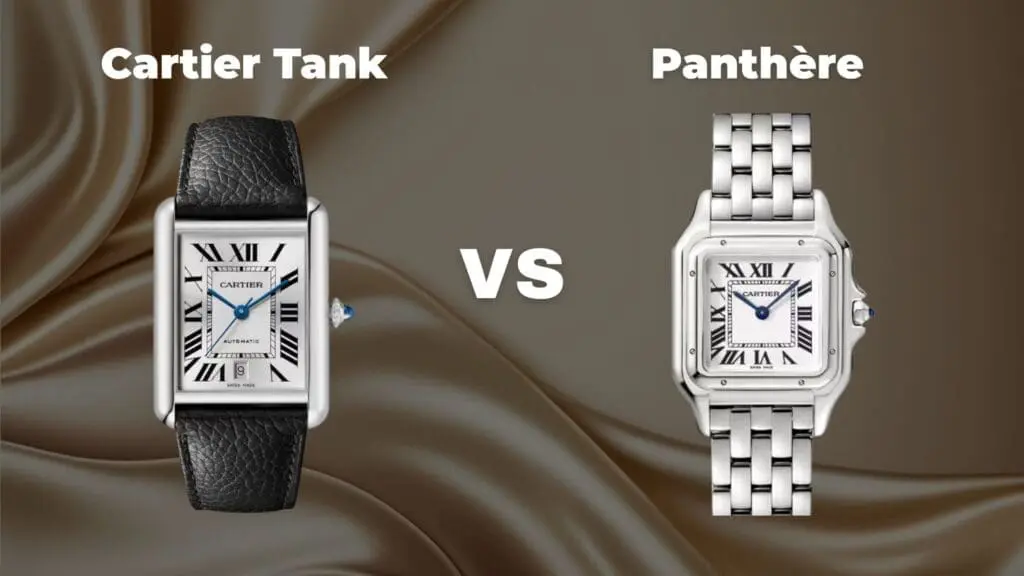
The Cartier Tank vs Panthère comparison comes up often for a reason. They share the same design language, but they behave very differently once you wear them.
The Tank dates back to 1917. The Panthère arrived in 1983. Both use Roman numerals, blued hands, and the same Cartier dial layout, but the way they sit on the wrist and how they are worn day to day are not the same.
If you are deciding between them in 2026, the differences that matter are not just in the specs. It comes down to sizing, bracelet versus strap, and how each watch fits into your routine. The market has shifted a bit lately too, and that changes the value side of the decision.
Cartier Tank Overview

The Tank traces back to 1917, with Louis Cartier introducing a rectangular case defined by its parallel side brancards. The design entered production in 1919 and has remained largely unchanged since, which is part of its appeal today.
What matters more than the origin story is how the Tank is structured as a collection. The key decision is the sub-line. The Tank Louis Cartier sits at the higher end, with precious metal cases and hand-wound or automatic movements. The Tank Must is the more accessible option, offered in steel with quartz, SolarBeat, or automatic configurations.
Our Cartier Tank buying guide walks through each sub-line if you want the full lineup.
The identity of the Tank comes down to a few consistent elements: the rectangular case, the brancards, and the leather strap that most models are built around. These details define how it looks and how it wears.
Notable references of the Cartier Tank:
- Tank Must (small, large, extra-large)
- Tank Louis Cartier (small, medium, large)
- Tank Française (small, medium, large)
- Tank Américaine (mini, small, large)
More Cartier Tank Models
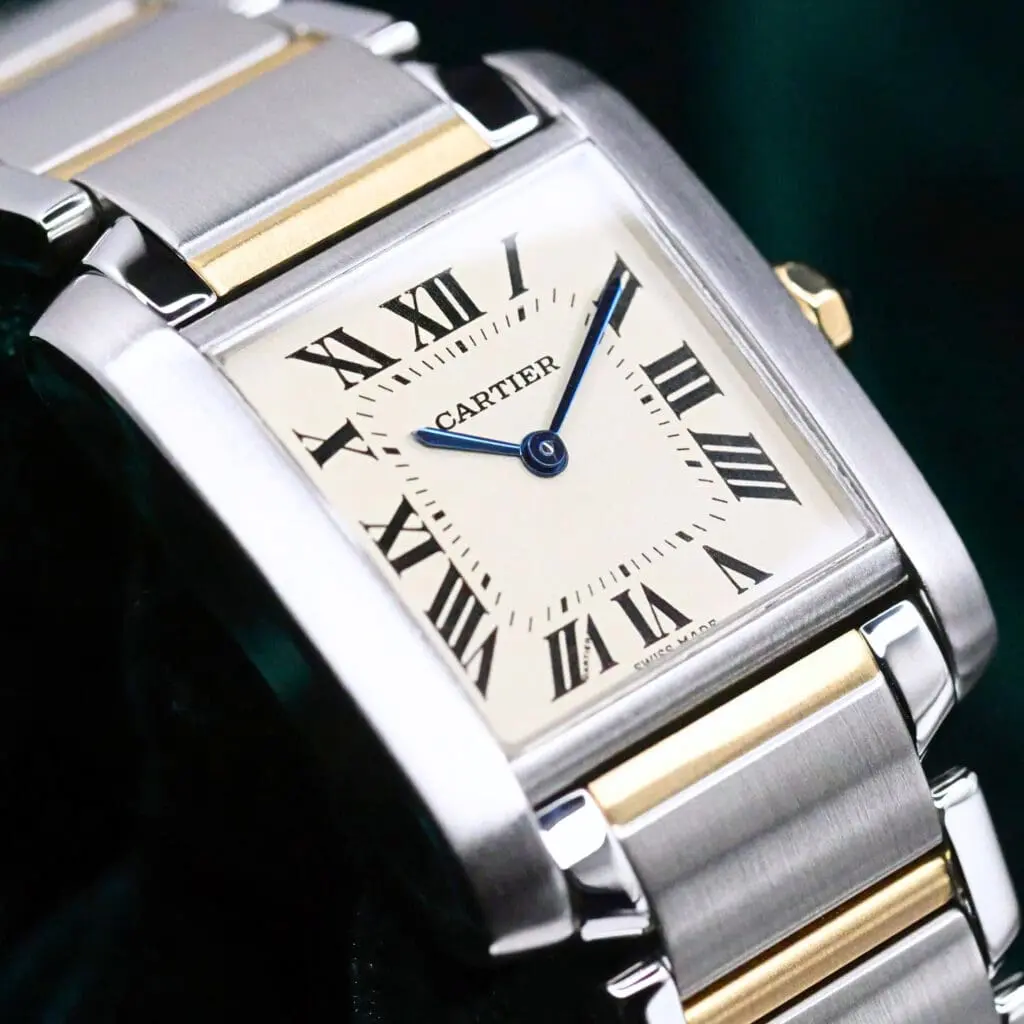
Cartier Tank Française White Dial Two-Tone 18K Yellow Gold Stainless Steel 25mm MINT CONDITION W2TA0003
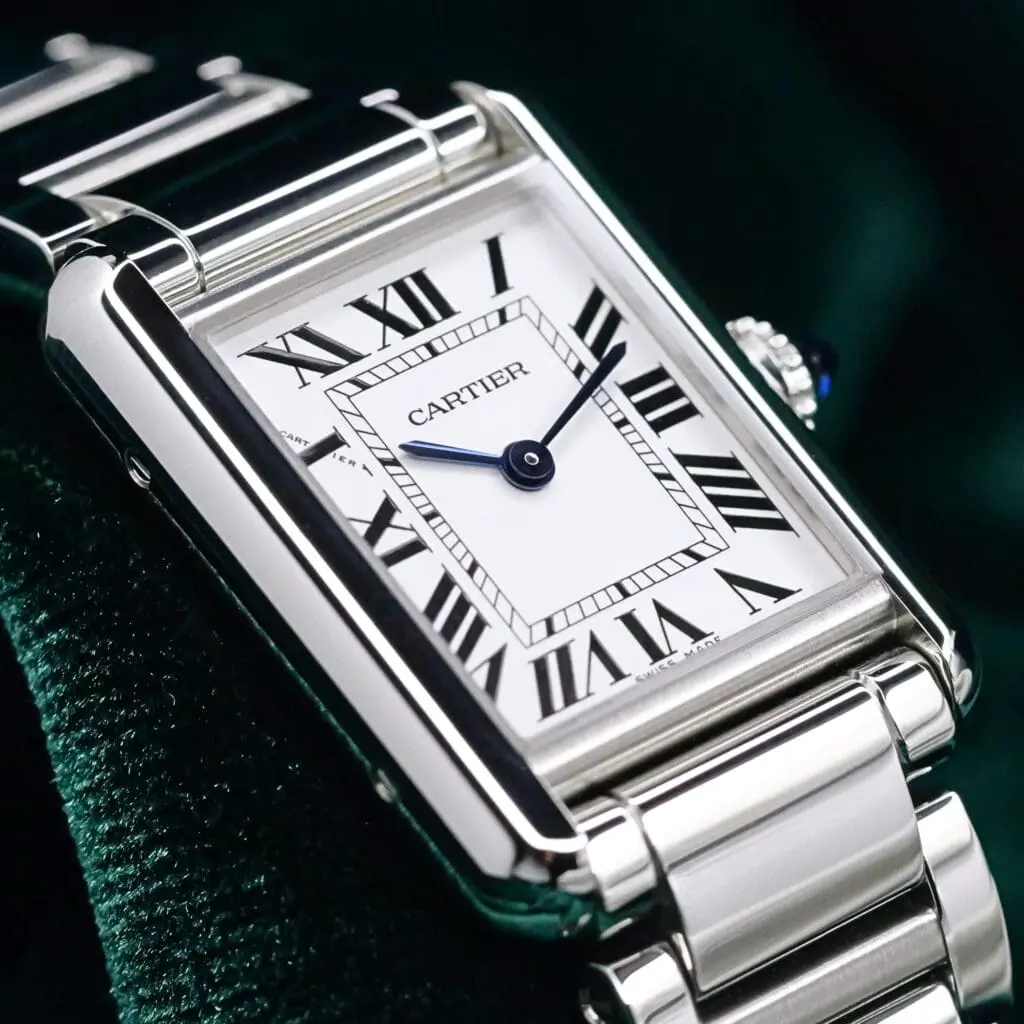
Cartier Tank Must Small Model Silver Roman Dial Stainless Steel 29.5mm MINT COMPLETE SET WSTA0107
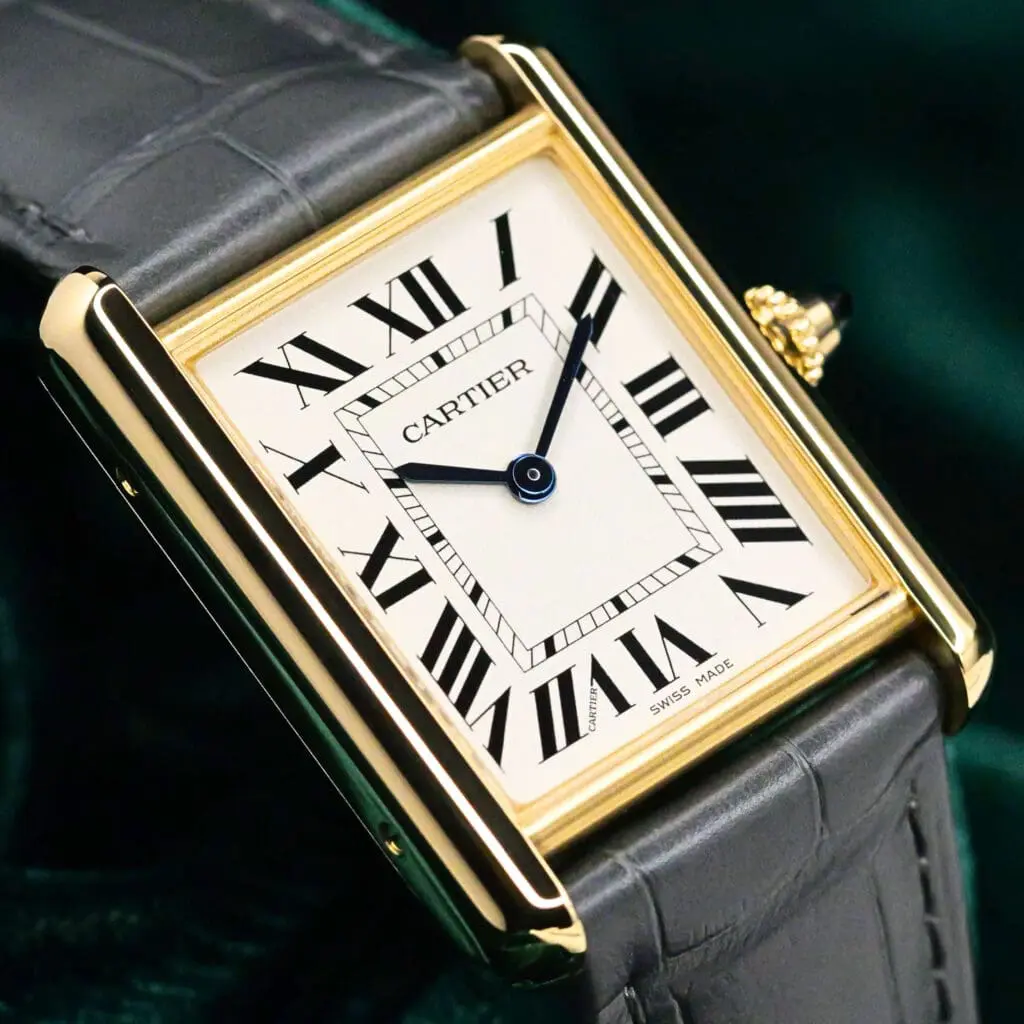
2025 Cartier Tank Louis Cartier Silver Dial Grey Alligator Strap 18K Yellow Gold 25.5mm MINT CONDITION COMPLETE SET WGTA0343
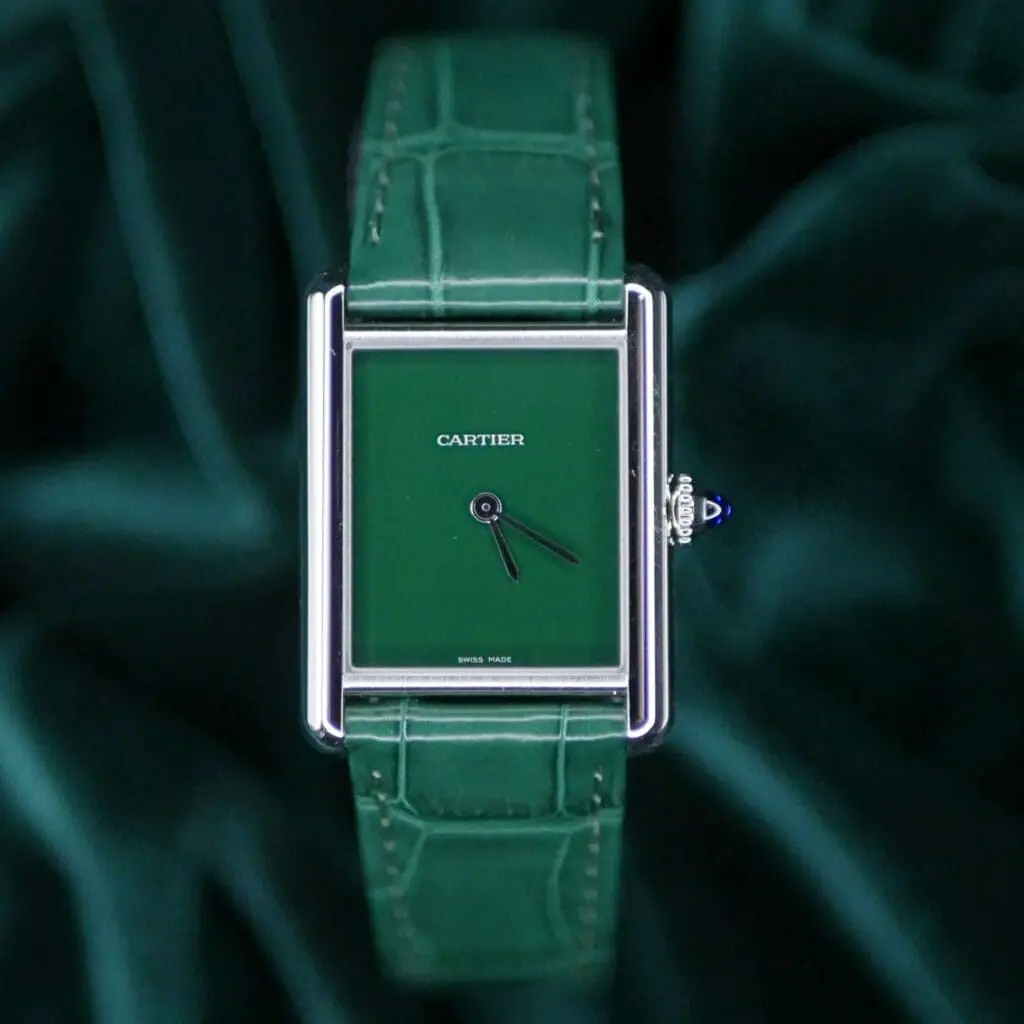
Cartier Tank Must “Cordes de Marseille” 26MM Green Dial Green Alligator Strap Stainless Steel COMPLETE SET MINT CONDITION WSTA0056
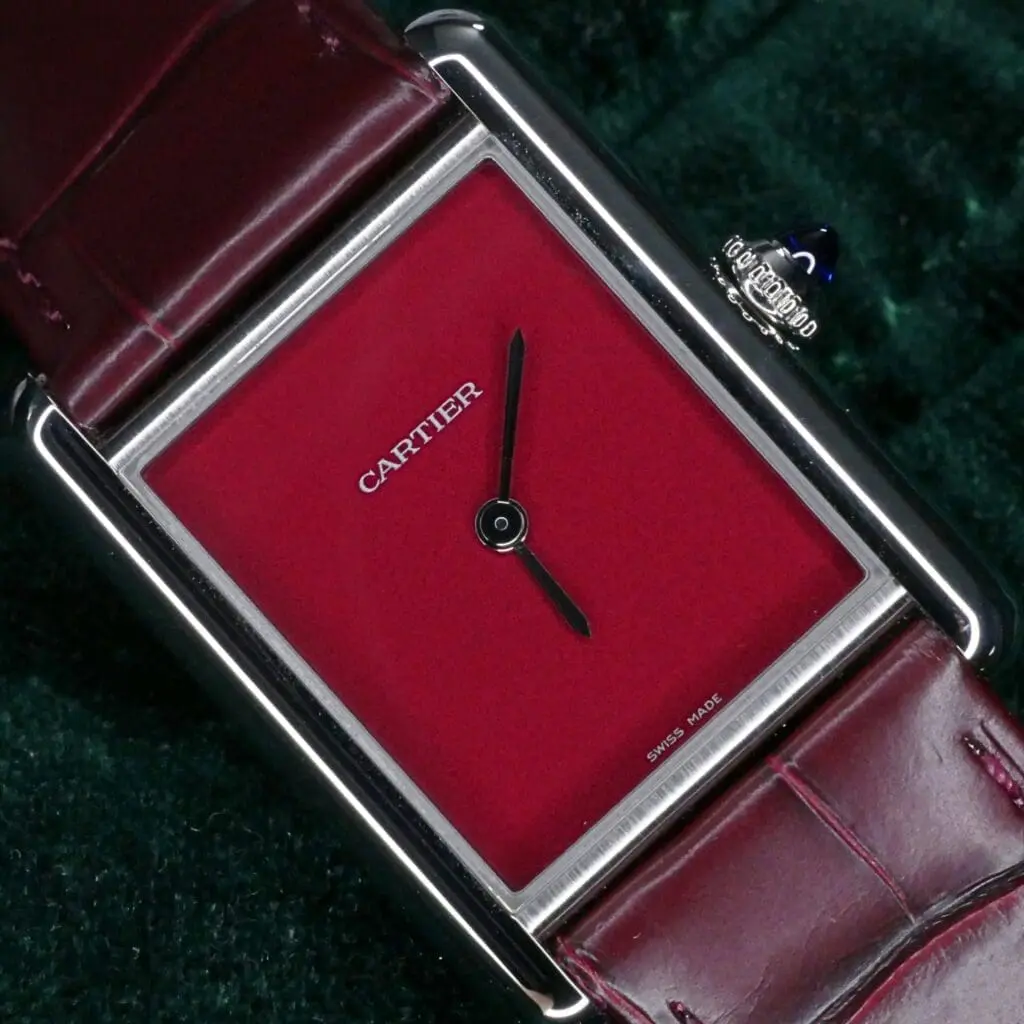
Cartier Tank Must "Cordes de Marseille" 26MM Burgundy Red Dial Stainless Steel COMPLETE SET MINT CONDITION WSTA0054
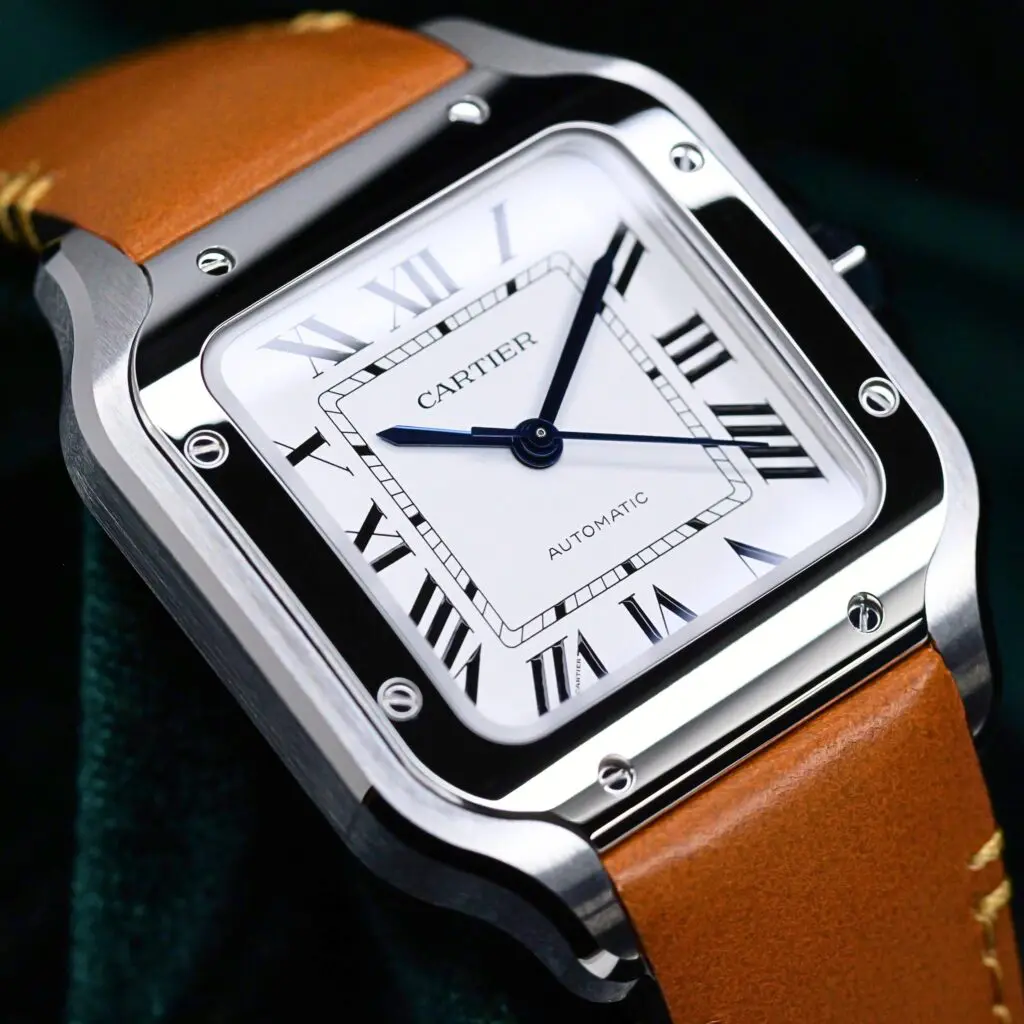
2026 NEW UNWORN Cartier Santos de Cartier Medium Opaline Silver Dial Tan Calfskin Strap Stainless Steel 35mm COMPLETE SET WSSA0029
Panthère de Cartier Overview
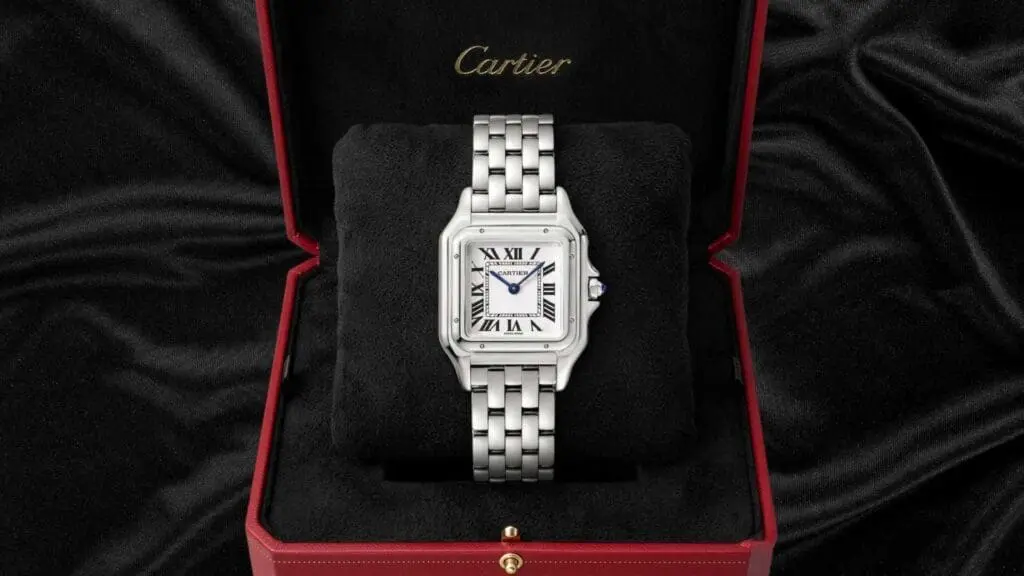
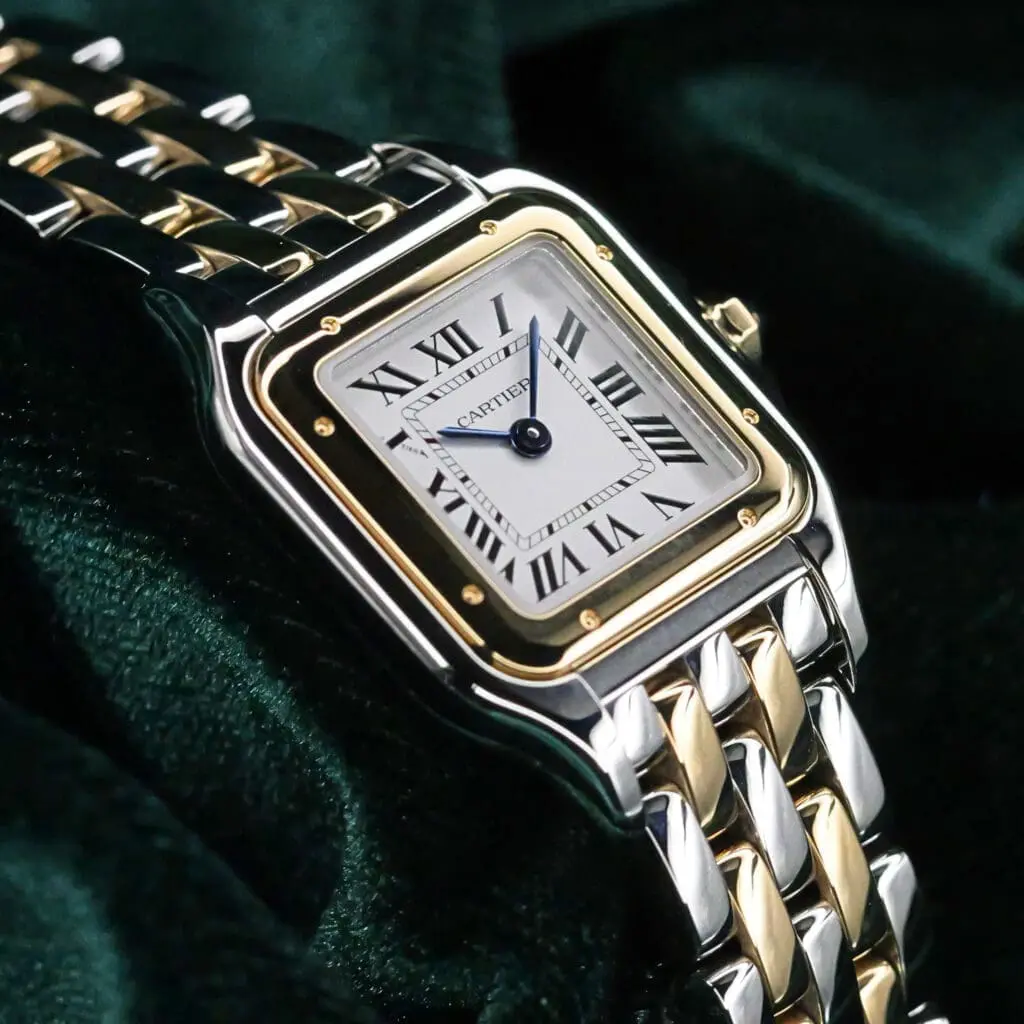
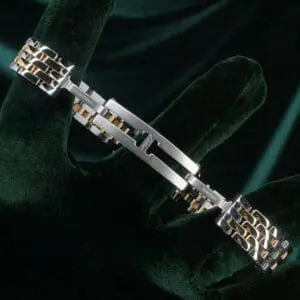
The Panthère was designed around the idea of a watch that wears like jewelry. Cartier introduced it in 1983 with an ultra-flexible five-link bracelet that drapes against the wrist rather than sitting rigid on it. That bracelet defines the watch.
The model was discontinued in the early 2000s and brought back in 2017. What matters more is how it is built. The Panthère is an integrated design, which means the case and bracelet function as one piece. Unlike the Tank, there is no option to swap straps or change its character.
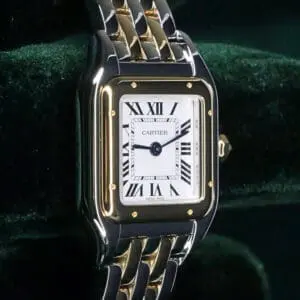
Its identity comes down to a few elements: the five-link bracelet, the square case with rounded corners, and the decorative screws on the bezel. Together, these details give the Panthère a softer, more fluid presence on the wrist. If you’re set on the Panthère, our Panthère buying guide covers the sizing and material choices in depth.
Notable references of the Panthère de Cartier:
- Panthère Small (steel, yellow gold, rose gold)
- Panthère Medium (steel, two-tone, yellow gold, rose gold)
- Panthère Large (two-tone, yellow gold)

Cartier Tank vs Panthère: Most Notable Differences
The differences between these two go well beyond shape. Case construction, movement options, bracelet system, and sizing all work differently, and each one has a direct effect on daily ownership.
1. Case Shape
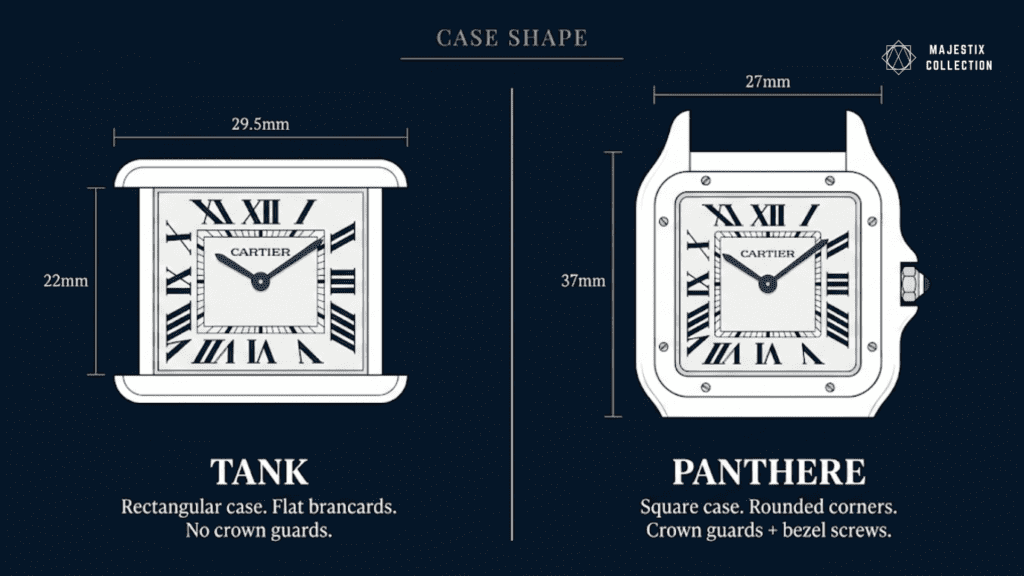
The Tank stays strictly rectangular, defined by its flat, parallel brancards. The Panthère softens that structure with a square case and rounded corners that carry through to the dial. It also adds crown guards, which the Tank leaves exposed.
The Panthère introduces more visual detail through its bezel, with exposed decorative screws at each corner. These are not functional, but they give the watch a more jewelry-like character. The Tank takes the opposite approach. There are no screws, no frame, and no extra elements around the bezel.
On the wrist, the contrast is immediate. The Tank reads flat and architectural. The Panthère feels softer and more fluid.
2. Bracelet and Strap
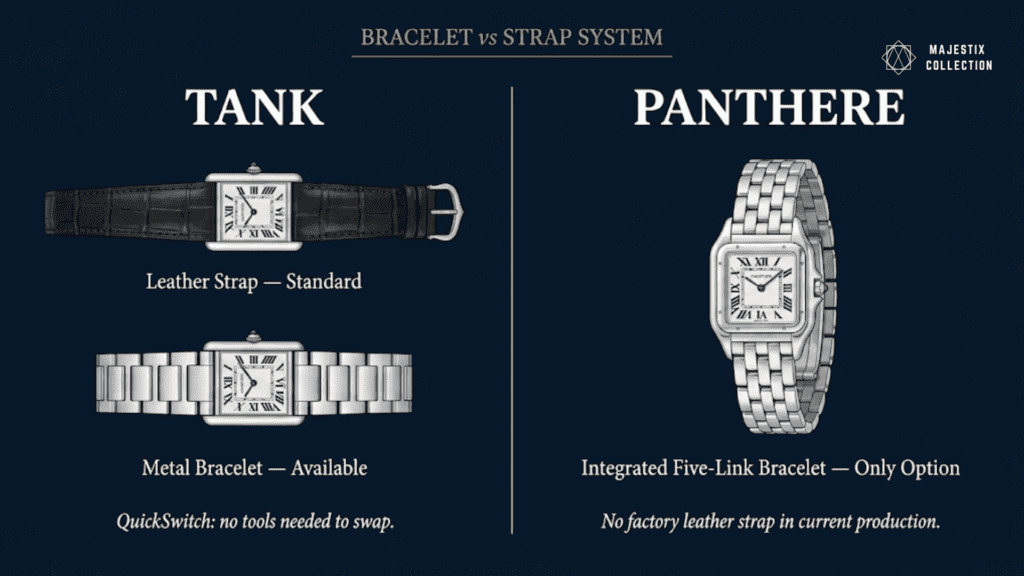
The Tank is built around flexibility. Most versions start on a leather strap, and newer models include Cartier’s QuickSwitch system, so you can swap between leather and steel without tools. It adapts easily depending on how you wear it.
The Panthère is built differently. The bracelet is not an option; it is the entire point of the watch. The integrated five-link brick bracelet moves almost like a chain, wrapping around the wrist instead of sitting on top of it. You notice it immediately.
This carries through in daily use. The Tank shifts between roles. The Panthère does not. It commits to one look and stays there.
3. Movement
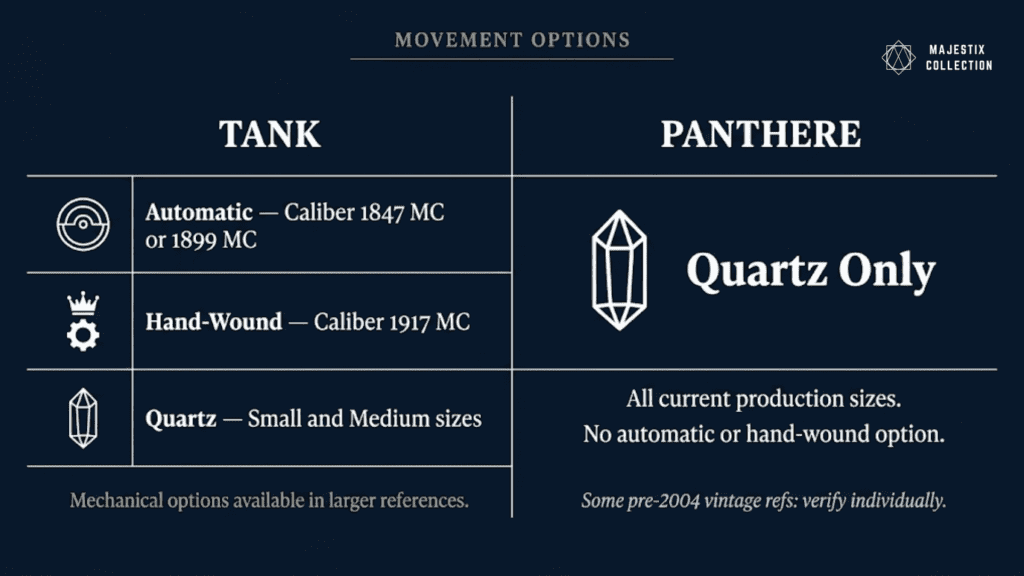
The Tank family spans quartz, automatic, and hand-wound calibers across its sub-lines. The Tank Louis Cartier medium and large use Cartier’s in-house hand-wound 1917 MC, and since Watches and Wonders 2025 there is also an automatic Tank Louis Cartier running the 1899 MC.
The Tank Must extra-large and Tank Américaine large use automatic movements, while smaller sizes across most Tank references run quartz or SolarBeat.
The Panthère is quartz-only across all current production sizes. There is no automatic or hand-wound option in the modern lineup. Some vintage Panthère references made before 2004 used manual movements, but each piece needs to be checked individually before purchase.
This becomes a deciding factor for many buyers. If a mechanical movement is part of the requirement at this price, the Tank is the only option.
4. Sizing Range
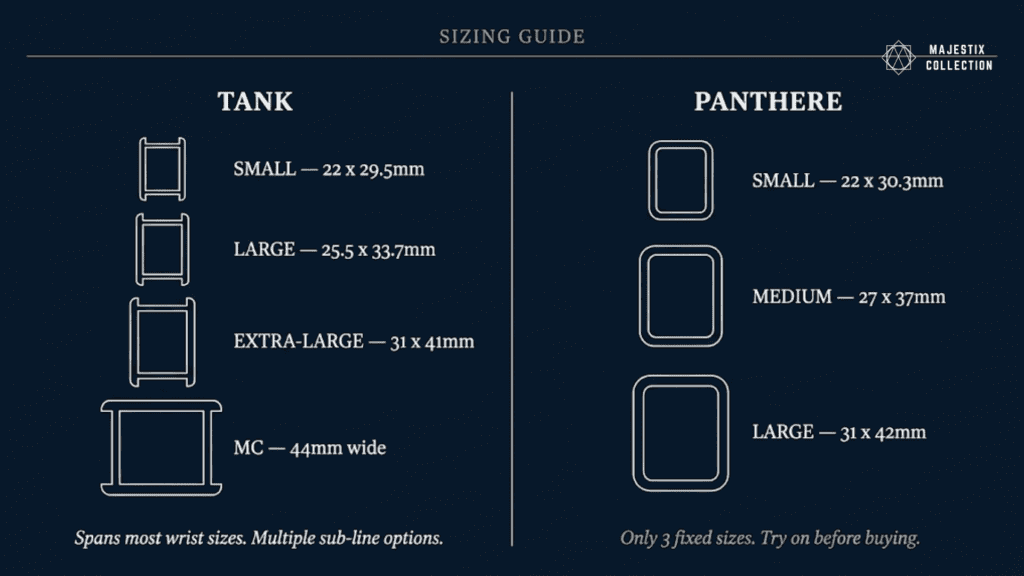
The Tank family spans from roughly 22mm wide (Tank Louis Cartier small) to 41mm wide (Tank Must extra-large), with multiple sub-lines covering most wrist sizes in gradual steps. The Panthère offers three fixed sizes: Small at 22mm × 30.3mm, Medium at 27mm × 37mm, and Large at 31mm × 42mm.
The Panthère small is a documented friction point. Buyers with wrists over 15–16cm consistently find it smaller in person than photos suggest. The medium is the broadly correct fit for most adult wrists.
There is no intermediate option between small and medium, so buyers in the gap have to commit either way. The Tank’s sub-line structure gives more gradual sizing steps and more room to find an exact fit without compromise. If you’re unsure what suits you, picking the right case size for your wrist is worth sorting out first.
5. Water Resistance
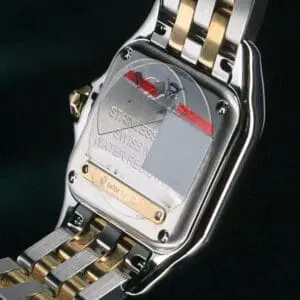
Both collections carry a 30-meter (3 bar) water resistance rating in standard steel and gold configurations. That means splash resistance only. Neither watch is appropriate for swimming, showering, or submersion. If the rating system trips you up, what water resistance actually means breaks it down.
Some Panthère high-jewelry variants with heavy diamond settings carry no water resistance rating at all, while diamond-set Tank models typically retain the standard 30m rating.
This is a spec that surprises buyers more often than it should at this price tier. Both collections require the same care around water. Neither has a practical advantage here, but the Panthère’s high-jewelry edge cases are worth knowing about if diamond configurations are part of the consideration.
6. Bezel
The Tank bezel is minimal and borderless, fully integrated into the rectangular case with no separate insert, no screws, and no frame. The crown sits flush against the case with no crown guards. The Panthère bezel has a defined square frame with visible decorative screws at each corner and crown guards flanking the winding crown.
These screws are a fixed design detail, not functional, but they give the Panthère a hardware-jewelry quality that sets it apart from the Tank’s clean geometry. The crown guards on the Panthère also add a subtle dimension to the case profile, which is visible on the wrist and in photographs.
On the Tank, the crown is exposed and the overall case reads as flatter and more architectural.
Price and Market Demand
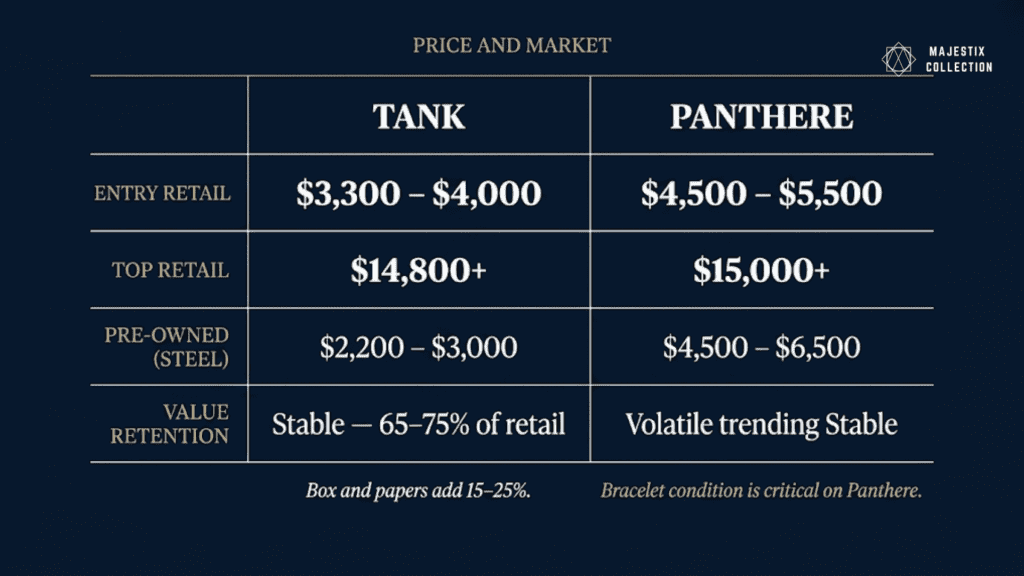
Price is where these two lines split hardest, and 2026 moved the goalposts. Cartier applied a broad US retail increase on May 21, 2026. Most watches rose about 2.5 to 7 percent, but precious metal and gem-set models climbed hardest. Steel pieces moved the least.
That gap between steel and gold is wider now than it was a year ago, so where you land on metal matters more than it used to.
The Tank Must steel small is the entry point, priced around $3,750 on a strap (quartz or SolarBeat) and about $4,100 on the steel bracelet after the increase. The Tank Française steel sits a little higher, roughly $4,450 to $5,700.
Move into gold and prices jump fast. The Tank Louis Cartier in gold runs from around $12,000 to $17,500 depending on size, and diamond-set versions climb from there.
On the secondary market, steel Tank Must references typically trade between $2,400 and $3,200. Full sets with box and papers add roughly 15 to 25 percent. The Tank’s long collector history keeps its pricing steady, with a floor that rarely surprises anyone (WatchCharts).
The Panthère sits higher than most steel Tank sub-lines because the bracelet carries real material weight. The steel medium (WSPN0015) lists around $6,250 at retail and trades close to that pre-owned, usually $5,800 to $6,600 for a clean example (Chrono24).
Gold is a different world. The gold Panthère medium jumped to $67,000 at the May increase, a bigger percentage hike than almost anything in the Tank line, because the bracelet is solid gold across every link.
Here’s the part that changed. For years the easy line was that the Tank holds value and the Panthère is the trendier, riskier pick. In 2026 that’s more complicated.
Over the past year the steel Panthère has been one of Cartier’s strongest performers, and across the brand the Panthère led the collections in early 2026 with the best value retention of the group (WatchCharts). The Tank still has the longer, calmer track record. The Panthère has the recent momentum.
So which holds value better? Honest answer: it depends on the version and the timeframe. The Tank is the safer, more liquid bet over the long run, especially in steel. The Panthère has been the stronger short-term mover lately, and gold examples hold high absolute value but sell through a smaller pool. Neither is a bad call. They’re just different bets.
Liquidity
The Tank sells quickly and predictably, with steel references often retaining around 65 to 75 percent of retail in typical pre-owned condition. The Panthère has gained real ground since its 2017 return, and steel medium examples have moved fast on the secondary market through 2026.
Some of that is the wider Cartier wave: the brand now sits second only to Rolex on the luxury resale market, driven largely by buyers coming to Cartier first.
Gold and diamond-set Panthère models keep high absolute value but move through a smaller buyer pool, which stretches how long they take to sell. Steel, in either line, is the easier watch to flip.
Notable Cartier Tank References

Each Tank sub-line serves a different buyer. The differences between them are large enough that choosing the right sub-line matters as much as choosing between Tank and Panthère. If the Santos is also on your list, our Tank vs Santos breakdown covers that pairing separately.
1. Tank Must Steel
The Must is the most practical entry into the Tank family. The small (29.5 × 22mm) and large (33.7 × 25.5mm) run quartz or SolarBeat; the extra-large (41 × 31mm) adds an automatic (Caliber 1847 MC). The QuickSwitch system on current steel references allows strap changes without tools.
For a first Cartier, the Must in steel offers the widest range of configurations and the strongest resale liquidity.
- Case size: 29.5 × 22mm (small), 33.7 × 25.5mm (large), 41 × 31mm (XL)
- Material: Stainless steel; gold also available
- Movement: Quartz or SolarBeat (small/large), automatic 1847 MC (XL)
- Water resistance: 30m
- Secondary market range: ~$2,400–$5,000
2. Tank Louis Cartier
This is the Tank at its most historically faithful. Precious metal only, leather strap only, and a hand-wound in-house caliber in the medium and large (1917 MC). An automatic version (1899 MC) joined the line in 2025 for buyers who want a self-winding movement in the same case.
No date, no seconds hand. The Tank Louis Cartier is the reference for buyers who want a true mechanical dress watch within the family.
- Case size: 29.5 × 22mm (small), 33.7 × 25.5mm (medium)
- Material: 18k yellow, rose, or white gold
- Movement: Hand-wound 1917 MC or automatic 1899 MC (medium/large); quartz in small
- Water resistance: 30m
- Secondary market range: ~$8,000–$20,000+
3. Tank Française Steel
The Française comes standard with an integrated three-link metal bracelet. This makes it the closest Tank to the Panthère in feel. The case is slightly squarer and more angular than the Must or Louis Cartier. Small and medium are quartz; the large runs automatic (Caliber 1853 MC). It is the most “bracelet-forward” Tank available in steel.
- Case size: 25.7 × 21.2mm (small), 32 × 27mm (medium), 36.7 × 30.5mm (large)
- Material: Steel, yellow/rose/white gold, two-tone
- Movement: Quartz (small/medium), automatic 1853 MC (large)
- Water resistance: 30m
- Secondary market range: ~$2,800–$6,000+
4. Tank Américaine
The Américaine has an elongated, curved case that arches across the wrist rather than sitting flat like the Must or Louis Cartier. The mini and small run quartz; the large uses an automatic (Caliber 1899 MC). It is the most structurally distinct Tank silhouette in current production.
- Case size: 28 × 15.2mm (mini), 35.4 × 19.4mm (small), 44.4 × 24.4mm (large)
- Material: Steel, 18k gold
- Movement: Quartz (mini/small), automatic 1899 MC (large)
- Water resistance: 30m
- Secondary market range: ~$4,000–$18,000+
Notable Panthère de Cartier References

The Panthère has fewer sub-lines than the Tank, but the sizing and material choices create meaningfully different watches. Each one wears differently enough to justify trying them in person before deciding. Cross-shopping the Santos instead? Our Santos vs Panthère comparison weighs those two directly.
1. Panthère Medium Steel (WSPN0015)
The medium steel is the most traded Panthère reference on the secondary market, and for good reason. At 27mm × 37mm with a 6mm thickness, it sits flat and light on the wrist. The five-link brick bracelet curves and drapes rather than sitting rigid, which is the detail buyers describe most often when they explain why they chose the Panthère over a Tank Française.
What separates this reference is how the bracelet feels in motion. It moves like a chain, not a band. The dial reads clean: silvered surface, Roman numerals, blued-steel sword hands. Up close, the exposed decorative screws on the bezel and the crown guards add detail that photographs do not fully capture.
It’s also the Cartier most often weighed against the Rolex Lady-Datejust, and our Panthère vs Lady-Datejust comparison covers that head-to-head.
- Case size: 27 × 37mm, 6mm thick
- Material: Stainless steel
- Movement: Quartz
- Water resistance: 30m
- Secondary market range: ~$5,800–$6,600
2. Panthère Medium Two-Tone
The two-tone medium alternates steel and yellow gold links across the bracelet and case, which gives it a richer visual texture than steel alone. It reads dressier without the cost or weight of a full gold version. This configuration suits buyers who mix yellow gold jewelry with silver-toned pieces, since the two-tone bracelet bridges both.
The detail that carries through in wear: the gold links sit at regular intervals, and the alternating metal catches light differently depending on the angle. It suits average-to-slightly-larger wrists. Secondary market demand for two-tone is steady, though the buyer pool is smaller than steel.
- Case size: 27 × 37mm, ~6mm thick
- Material: Steel and 18k yellow gold
- Movement: Quartz
- Water resistance: 30m
- Secondary market range: ~$6,500–$11,000
3. Panthère Small Steel
The small Panthère at 22mm × 30.3mm is the most debated reference in the collection. It is genuinely compact. On wrists under 15cm, it can sit correctly, and it’s one of the best luxury watches for a small wrist if that’s what you’re after.
For most adult wrists, it reads as more delicate in person than photos suggest, and that gap trips buyers who decide without trying it on first.
The bracelet is the same five-link design scaled down, which preserves the flexibility but reduces dial presence considerably.
The small works for buyers who specifically want a fine-jewelry scale. The dial is 22mm wide. That is closer to a jewelry piece than a watch-forward statement, which is either exactly right or a miss depending on what you are looking for.
- Case size: 22 × 30.3mm, ~6.05mm thick
- Material: Steel, yellow gold, rose gold
- Movement: Quartz
- Water resistance: 30m
- Secondary market range: ~$4,000–$5,800
4. Panthère Large Two-Tone
The large Panthère at 31mm × 42mm is the closest this collection gets to unisex sizing. The added scale makes the bracelet’s flexibility more visible in wear: the links curve more noticeably around the wrist than they do on the medium. Two-tone is the most common configuration at this size. Full yellow gold exists but is significantly less common in steel-only.
This reference attracts buyers who want clear wrist presence from the Panthère without committing to full gold, and buyers who want the medium’s design language at a larger scale.
- Case size: 31 × 42mm, ~6.7mm thick
- Material: Two-tone (steel + 18k yellow gold), yellow gold
- Movement: Quartz
- Water resistance: 30m
- Secondary market range: ~$7,500–$15,000+
Which Cartier Should You Choose?
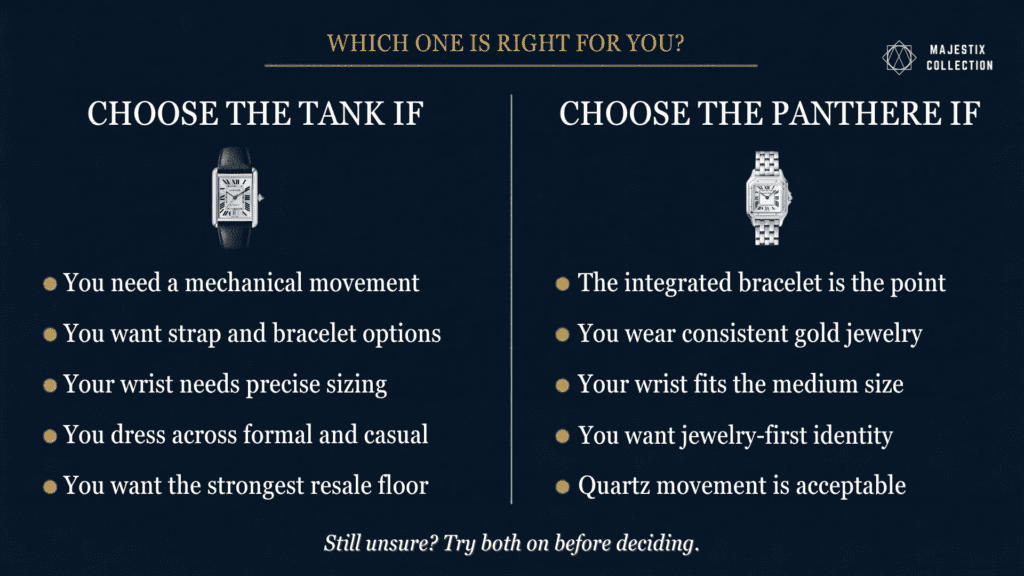
Both watches attract very different buyers, and the decision tends to be clear once you know what you actually need from the watch.
Choose the Cartier Tank if:
- A mechanical movement (hand-wound or automatic) is part of the purchase requirement
- You want to swap between a leather strap and a metal bracelet on the same watch
- Your wrist falls outside the Panthère’s three fixed sizes or needs a more gradual fit
- You want the broadest cultural recognition and the most established secondary market floor
- Your wardrobe spans formal, professional, and casual, and you need one watch that adapts
Choose the Panthère de Cartier if:
- The integrated bracelet is the reason you want this watch, not an afterthought
- You wear consistent jewelry and want a watch that reads as part of that stack
- Your wrist fits the medium size comfortably (ideally confirmed in person before buying)
- You want something that reads as jewelry-first rather than watch-first
- A quartz movement at this price point is acceptable given everything else the Panthère offers
If movement options and strap flexibility matter to you, the Tank fits better. If the bracelet is the whole point and you want it to feel like jewelry on the wrist, the Panthère is the right call.
More Cartier Models
2026 NEW UNWORN Cartier Santos de Cartier Medium Opaline Silver Dial Tan Calfskin Strap Stainless Steel 35mm COMPLETE SET WSSA0029
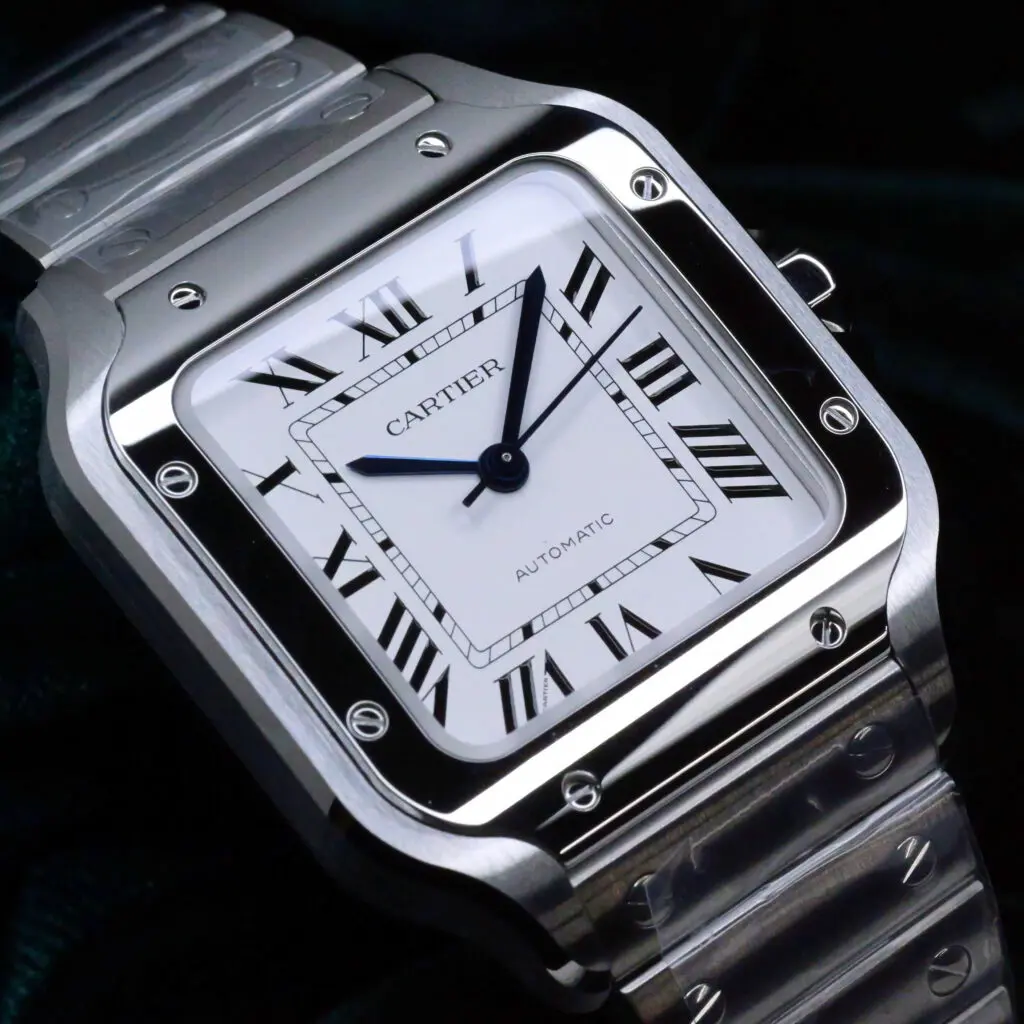
2026 NEW UNWORN Cartier Santos de Cartier Medium Silvered Opaline White Dial Stainless Steel Bracelet 35mm COMPLETE SET WSSA0029
Cartier Tank Française White Dial Two-Tone 18K Yellow Gold Stainless Steel 25mm MINT CONDITION W2TA0003
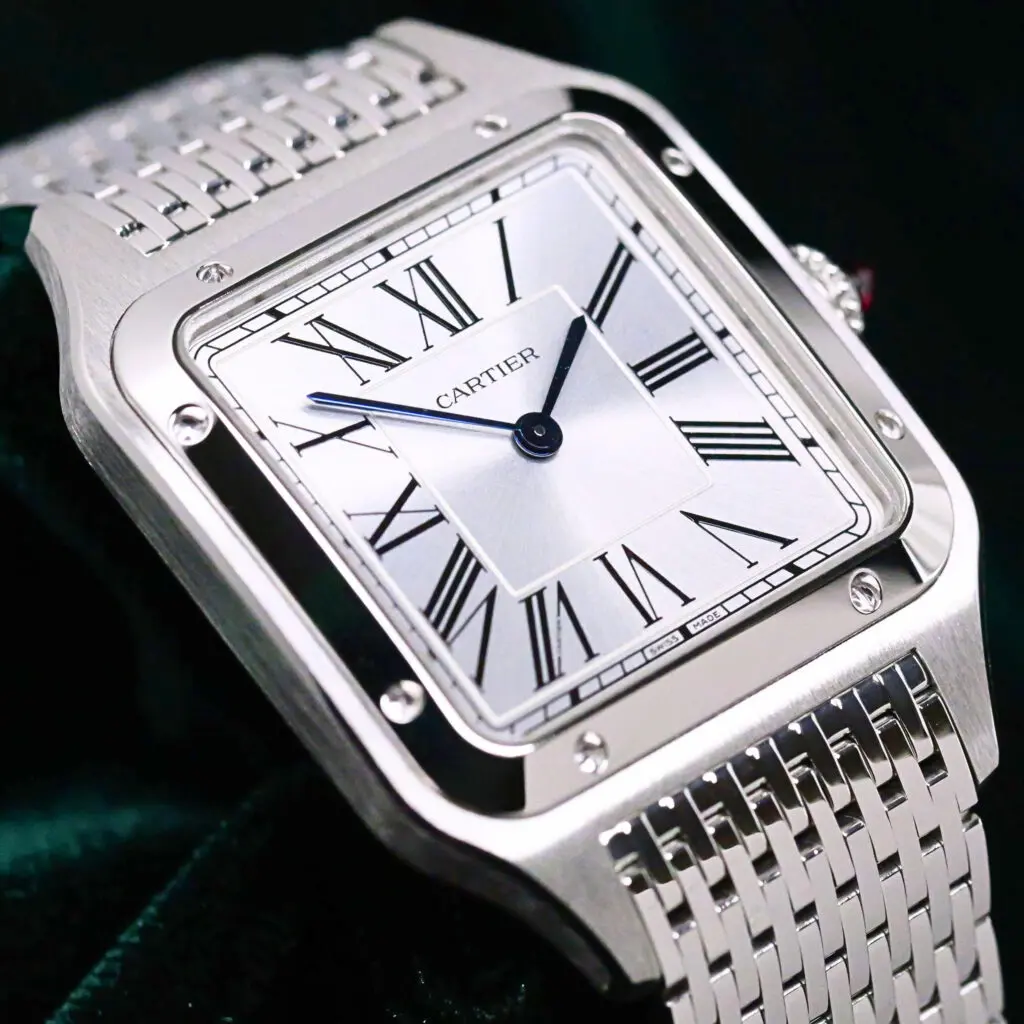
2026 NEW UNWORN Cartier Santos-Dumont Silver Dial Platinum Mesh Bracelet 31.4mm COMPLETE SET WGSA0124
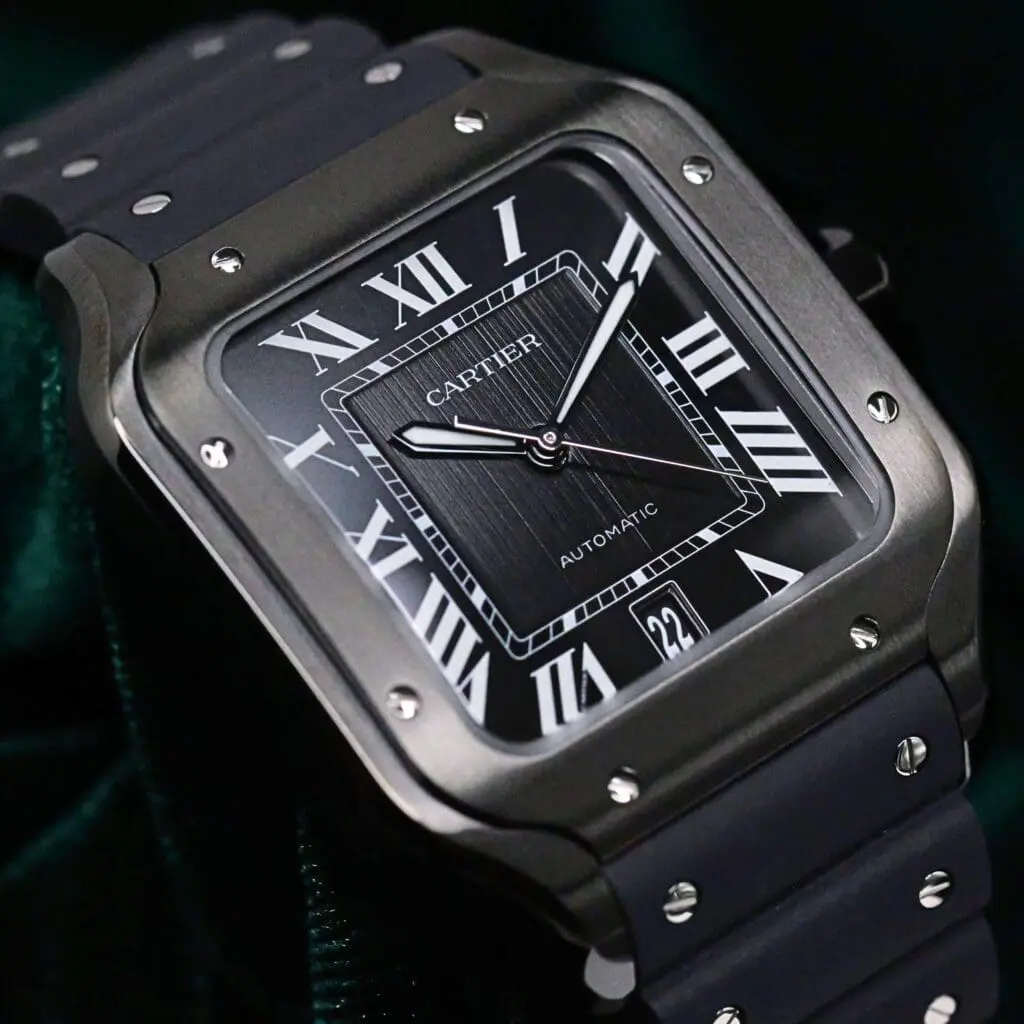
Cartier Santos De Cartier Black Dial Black ADLC Stainless Steel Black Rubber Strap 39.8mm MINT CONDITION COMPLETE SET WSSA0039
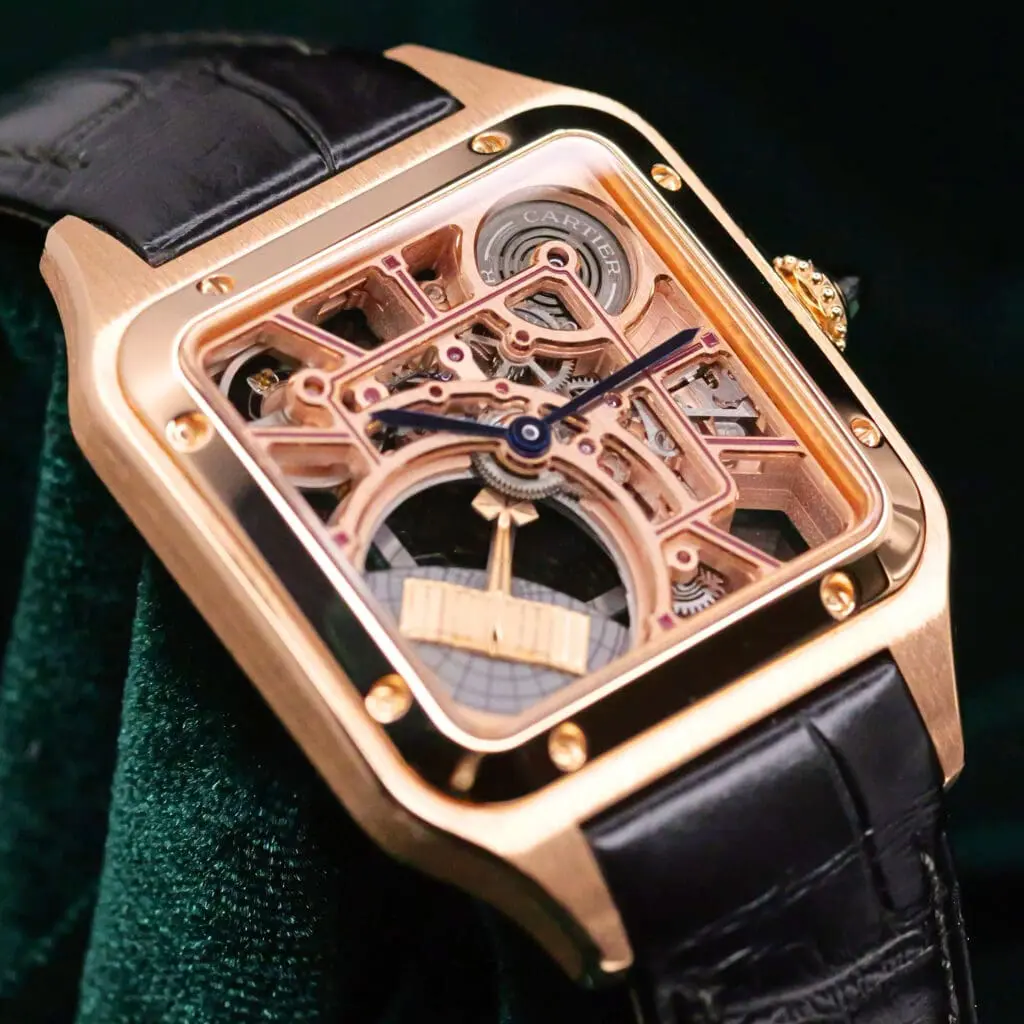
Cartier Santos-Dumont Micro-Rotor Skeleton Dial Black Alligator Strap 18k Rose Gold 43.5 x 31mm MINT CONDITION COMPLETE SET WHSA0030
Where to Buy Authentic Watches Online
There are a few solid online channels for buying either watch, and we’ve ranked the safest places to buy pre-owned in a separate guide.
Chrono24 is the largest global marketplace, and its Trusted Checkout holds your payment until the watch is verified. eBay covers most Cartier references over $2,000 under its Authenticity Guarantee, where a third party inspects the watch before it reaches you.
Grailzee runs auction-style listings if you’d rather bid than buy outright. Independent grey-market dealers and watch forums round out the options, though those put more of the vetting on you — how the grey market compares to an authorized dealer is worth understanding first.
We also buy, sell, and trade luxury watches, and the reason clients come to us instead of a big listing page is the walkthrough before they commit. You get real conversation, a tour video of the actual watch (not stock photos), and honest condition notes on the exact piece, whether it’s a steel Tank Must or a Panthère medium.
You’re not guessing from a listing and hoping the bracelet stretch or case polish matches the description.
That approach is reflected in our 4.9-star Google rating, which comes from buyers who wanted to know exactly what they were getting before wiring money.
If you want that kind of walkthrough on a specific Tank or Panthère, we can help you source one that matches your size, budget, and configuration.
Final Thoughts on Cartier Tank vs Panthère
The decision usually comes down to how you plan to wear the watch day to day. Think about your routine, your wardrobe, and how often you switch between casual and formal settings. The Tank works across more situations without much adjustment. It moves easily between a leather strap and a bracelet, and it fits professional and relaxed settings without shouting.
The Panthère is more specific. It is built around its bracelet, and that defines how it looks and feels on the wrist. When it suits your style, it feels deliberate and complete. Either way, both sit among the strongest picks in the wider Cartier lineup.
One practical note for 2026: with retail up after the May increase, a clean pre-owned example is often the smarter buy, especially in steel where the discount to list is real and the watches are usually only a year or two old.
And if you’re torn, try both on before deciding. The medium Panthère on the wrist tends to settle the question fast. In most cases, the right choice is the one you reach for without thinking.