
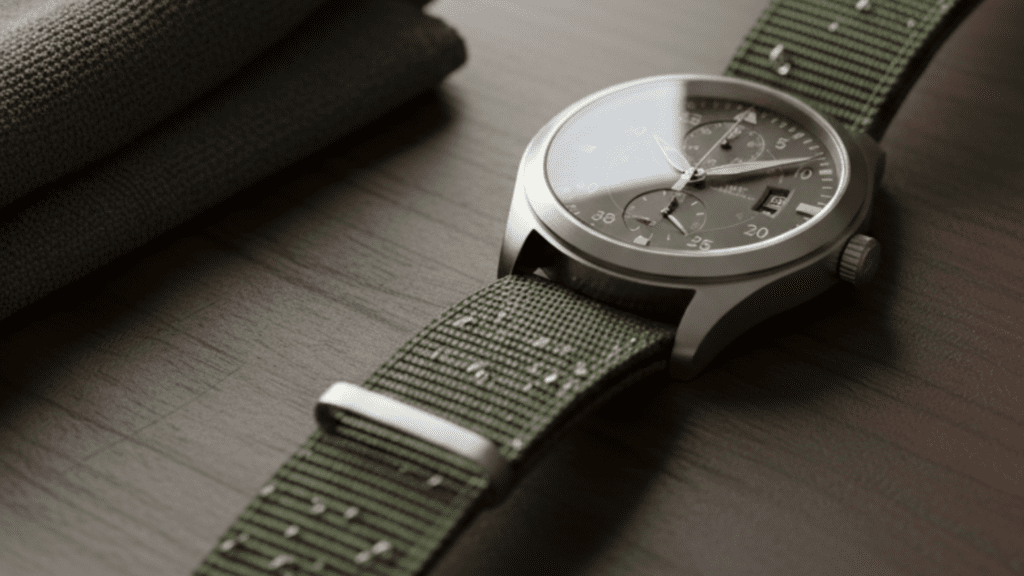
Ever take your watch off and instantly want it far away? The strap looks fine, but smells, feels stiff, or has a new stain. This guide shows you how to clean a fabric watch strap properly, so you remove sweat and buildup without fading, damaging, or warping it.
You’ll learn to identify strap types like nylon NATO, canvas, and Perlon, prevent odors with simple habits, restore cleanliness using the safest method for each fabric, handle common stains, and avoid drying mistakes. Once you understand why each step matters, cleaning your strap feels obvious, not like guesswork.
What Type of Fabric Strap Are You Wearing?

Most strap damage happens when you use the wrong cleaning steps on delicate or mixed-material straps. If your strap features fabric over leather, use gentle surface cleaning to avoid damaging it.
Use this table to spot your strap fast, then match it to the safest cleaning method.
| Fabric Type | How to Spot It | Cleaning Risk |
| Nylon NATO and one-piece | Tight weave, multiple keepers, thin profile | Low risk, fully washable |
| Canvas | Thicker fabric, visible stitching, bound edges | Medium risk, dye bleed |
| Sailcloth or fabric-coated | Textured top, rubber or coated backing | Medium risk, delamination |
| Perlon or braided nylon | Open, ladder-like weave | Stretch risk |
| Elastic MN or hook-and-loop | Stretch fabric, hook-and-loop closure | Grip loss risk |
| Fabric-over-leather hybrids | Fabric top, leather underside | No-soak only |
Post-Wear Routine That Stops Odor and Stains
Try this quick cooldown ritual, a 60-second routine that helps keep most fabric strap odors and discoloration at bay, even before you consider a deep clean. Give it a try right after sweaty commutes, gym sessions, beach outings, or days spent in the sun.
Follow these odor- and stain-preventing steps:
1. Wipe sweat, sunscreen, and salt before the residue hardens
2. Dry the underside and lug area so moisture does not sit
3. Rotate straps so fibers fully dry between wears
Fabric retains moisture longer than metal or rubber, providing an environment that bacteria prefer. Thoroughly drying straps between wears is the easiest way to keep them fresh.
Cleaning a Watch Strap by Fabric Type
Before diving into individual fabric types, it’s important to understand the general approach that applies to most fabric straps. Cleaning with warm water, gentle soap, a soft brush, and slow air-drying helps preserve the fabric’s strength and structure. Aggressive scrubbing, heat, or soaking layered straps can quickly weaken fibers and cause permanent damage.
Start with these steps as your primary cleaning method. Then, refer to the section for your strap’s specific fabric.
1. Remove the strap when possible and protect the watch head when you cannot: Taking the strap off keeps water away from the case, crown, and spring bars. If you cannot remove it, wrap the watch head in a dry microfiber cloth and keep the strap clean.
2. Use lukewarm water and mild soap, then avoid heat, bleach, and harsh chemicals: A small bowl of warm water with a few drops of mild dish or hand soap is enough for most grime. Hot water and bleach can damage fibers and cause fading of the dye.
3. Scrub lightly with a soft brush, then rinse until water runs clear: Use a soft toothbrush or detailing brush and focus on high-contact zones like the underside, keepers, and tail end. Rinse for longer than you think you need, as leftover soap is a common reason straps feel stiff or itchy.
4. Press dry with a towel, then air-dry flat in the shade: Pressing pulls water out without twisting the weave. Let it dry thoroughly before reinstalling for longevity.
5. Select the method that suits your strap: tightly woven straps can withstand a bit more brushing and rinsing. Straps with loose weaves, elastic, or built-up layers require a lighter touch to prevent them from getting stretched, curled, or coming apart.
From this point, adjust the cleaning technique depending on the fabric type.
Hand-Wash Nylon NATO and One-Piece Straps
Nylon NATO straps and one-piece straps are easy to clean, as their tight weave effectively repels water. Flush out grit, then clean sweat zones without over-brushing.
Use this cleaning sequence to keep the strap clean and straight:
1. Pre-rinse under lukewarm water to float grit out of the weave.
2. Lather high-contact zones (underside, keepers, tail end) with mild soap.
3. Gently brush metal parts to avoid scratching any finishes.
4. Shape the strap while air-drying so it dries straight without curling and avoids heat damage over time.
Hand-Wash Canvas Straps Without Fading the Color
Canvas looks rugged, but the dye and stitching are delicate. Watch for color fading. Clean quickly and focus only on dirty areas.
Follow these steps to clean canvas straps while preserving color:
1. Spot-test on an underside corner to check for dye bleed.
2. Use short soaks only when grime is heavy, then rinse immediately.
3. Brush stitch lines and bound edges gently to lift embedded dirt.
4. Air-dry flat in the shade so the strap does not warp or shrink unevenly.
If the water becomes noticeably tinted, stop soaking and switch to spot cleaning. That color is meant to stay on your strap, not in the sink.
Clean Sailcloth and Fabric-Coated Straps Without Lifting the Top Layer
Sailcloth and coated straps typically feature a fabric top layer bonded to a rubber or plastic bottom layer. These clean up well, but soaking can allow water to seep into the seams and slowly loosen the edges.
Use this “minimal-water” method to clean the surface without driving moisture under the top layer.
1. Skip soaking and clean the surface with a damp cloth and mild soap.
2. Work along seams and texture with light pressure, not aggressive scrubbing.
3. Rinse carefully so water does not pool at the edges or sit under the lining.
4. Dry flat in the shade and keep the edges open to airflow.
If you notice bubbling, lifting, or a soft edge, stop and switch to wipe-only cleaning until the area is dry. Delamination typically begins at the edges, so catching it early is crucial.
Clean Perlon and Braided Fabric Straps Without Stretching Them
Perlon and braided nylon straps breathe well due to their open weave, which also allows them to stretch if twisted or wrung when wet.
Use this rinse-and-press method to clean without stretching or deforming the braid:
1. Flush the strap gently under running lukewarm water to carry grit out of the weave.
2. Use a soft brush only where dirt is trapped, especially near buckle loops.
3. Never twist or wring the strap because wet fibers stretch more easily.
4. Dry flat, then re-check sizing and tightness before reinstalling.
If the strap feels looser after drying, it may have been handled too aggressively while wet. For Perlon, using less force retains its shape best.
Clean Elastic and Hook-and-Loop Fabric Straps Without Killing the Grip
Elastic and hook-and-loop straps require care for both the fabric and the closure. Most failures are caused by grip loss due to lint or grit in the hooks, rather than stains.
Take these steps in order, starting with restoring the closure, followed by cleaning the fabric:
1. Remove lint and grit from the hook side with a toothbrush, stiff brush, or fine comb.
2. Wash the elastic gently with warm water and mild soap, then rinse thoroughly.
3. Avoid high heat because it relaxes elastic fibers and weakens long-term snap-back.
4. Press dry, air-dry thoroughly, then test closure strength and inspect stitching.
Before washing, connect the hook-and-loop surfaces to minimize snags and fraying. A clean closure restores the entire strap’s feel.
How Do You Remove Smell and Mildew From a Fabric Watch Strap?

Eliminate odors and mildew by cleaning the strap properly rather than masking them with a deodorizer. A thorough wash and complete drying removes most odors by clearing the areas where sweat bacteria feed.
When a strap still smells after a correct wash, it usually means residue is still trapped deep in the weave. Use this simple escalation path to avoid overusing harsh products on your strap.
1. Rinse with mild soap, then rinse thoroughly until the water runs clear.
2. For fully washable nylon straps only, add a small amount of white vinegar or an oxygen-based cleaner to the wash to help break down any musty odors.
3. Air-dry completely in a well-ventilated, shaded spot before wearing again.
Replace straps that stay musty even after proper washing and drying. Persistent odor usually means the funk has settled too deeply into the fibers to be removed reliably.
How Should You Treat Common Fabric Strap Stains?
Treat stains based on their nature, not on how unappealing they look. Oils need repeated soap and rinsing, salt needs flushing, and mud needs patience so you do not grind grit deeper into the fabric.
First, rinse the strap and towel-press it dry. Next, use this table to select the safest stain treatment method:
| Stain | What Works | What to Avoid |
| Sunscreen and oils | Mild soap, repeated rinses | Alcohol |
| Salt rings | Fresh water flush, press dry | Scraping |
| Mud | Let it dry first, then brush gently | Wet rubbing |
| Coffee or ink | Controlled spot cleaning, light blotting | Full soaking |
| Dye transfer | Gentle surfactant, patience | Bleach |
After stain treatment, rinse until water runs clear, then towel-press and air-dry thoroughly. Mild soap and gentle wiping are safer defaults than strong cleaners for most fabric watch straps.
Clean the Watch Head, Not Just the Strap
Cleaning just the strap misses another scratch source: the area around lugs, spring bars, and strap channels. Grit here can scratch your case sides, especially with daily wear.
Work through this checklist to clean the spots that tend to cause case wear:
- Clean around the lugs, spring bars, and strap channels with a soft brush.
- Wipe the case clean to remove sweat and sunscreen buildup.
- Replace worn spring bars before reinstalling the strap.
This matters because trapped grit causes case scratches, not the strap itself. A clean lug area is a key to “free scratch prevention.”
Are You Drying Fabric Straps the Right Way?
Many fabric strap issues after cleaning are typically related to drying rather than washing. Drying errors cause curl, lingering odor, and, on layered straps, edge lifting. Here’s the cure: avoid rushing the drying process by following these do’s and don’ts so the strap dries straight, fresh, and stable.
Do
- Press dry with a towel.
- Air-dry flat in the shade.
Don’t
- Avoid using hair dryers, radiators, or other direct heat sources.
- Leave it in direct sunlight for long periods.
- Wear it before it is scorched.
Most strap curls are a drying mistake, not a washing one. Drying is where “clean” becomes “comfortable.”
How Often Should You Clean Fabric Straps Based on Your Week?

Clean fabric straps based on sweat, humidity, and what the strap touched, not a strict calendar. A strap worn on humid commutes and during daily wrist time usually requires more frequent care than one worn indoors and rotated frequently.
Use this simple schedule as a baseline, then adjust it if your strap starts to smell or feel stiff:
1. Wash the strap properly about once a week if you wear it daily and sweat in it.
2. Clean it right away after swimming, beach days, or dusty outdoor use to stop salt and grit from setting in.
3. Perform a deeper clean once a month, or more frequently if you notice odors, discoloration, or buildup on the underside of the item.
If your strap feels stiff, smells even after drying, or looks darker on the underside, that is your cue to clean sooner. Your nose is basically a maintenance sensor.
Final Thoughts on How to Clean a Fabric Watch Strap
If you remember one thing about how to clean a fabric watch strap, it is this: match the method to the material. Use mild soap and lukewarm water, scrub gently, rinse well, and air-dry fully in the shade. Heat and rushed drying cause curling, trapped odor, and early wear.
The biggest gains come from simple habits: a 60-second post-wear wipe, avoiding harsh chemicals, and cleaning the lug area so grit does not grind into the case. Done right, your strap stays soft, straight, odorless, and comfortable, looking better for longer with less effort.