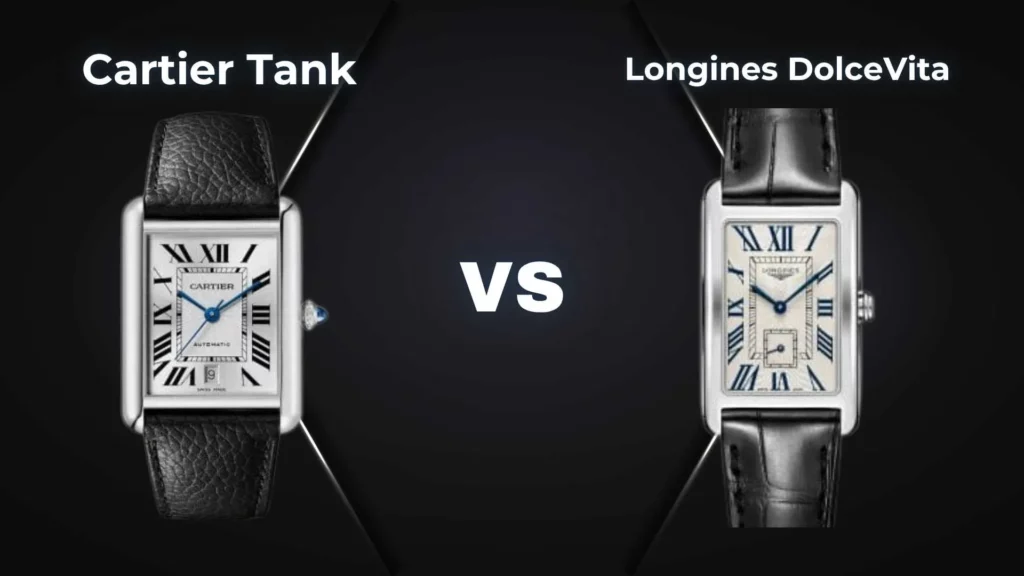
If you’ve been looking at rectangular watches and keep landing on these two, you’re not alone. The Cartier Tank vs Longines DolceVita comparison comes up constantly because both watches share a similar shape, similar dial layouts, and the same dress-watch appeal. But they are not the same watch, and the differences go deeper than price.
This article walks you through what actually separates them: case shape, movement, proportions, and how each sits on the wrist. Longines also refreshed the DolceVita for 2026, which shifts the comparison a little, and we’ll get to that. If you’re close to a decision, this should give you a clear picture of what you’re choosing between.
Cartier Tank Overview

The Cartier Tank started in 1917, when Louis Cartier drew from the top-down silhouette of a WWI tank. It entered serial production in 1919 and has barely changed since.
The design works because it is minimal without being plain: two parallel rails (called brancards) frame a near-square dial, with Roman numerals, blued sword hands, and a crown set with a colored synthetic spinel cabochon.
The Tank family covers several sub-lines, including the Must, Louis Cartier, Française, Américaine, and Solo. The Must line is the most widely compared and the most accessible entry point.
What collectors pay attention to most is the flinqué dial surface and the tight execution of the Roman numeral printing. These details are consistent across the line and hard to replicate at any nearby price point.
The watch appeals to anyone who wants the rectangular dress-watch look at its most controlled. It sits on the wrist with a compact footprint, disappears under a shirt cuff, and reads clearly when the arm is extended. The cabochon crown is a genuine design detail.
Notable references of the Cartier Tank:
- Tank Must Small (WSTA0040)
- Tank Must Large (WSTA0041)
- Tank Must Extra-Large (WSTA0053)
Longines DolceVita Overview

Longines has made rectangular watches since the 1920s, closely following Cartier’s early models. The DolceVita as a named collection launched in 1997 as a tribute to the Italian phrase for “the sweet life.”
It draws from that same Art Deco rectangular tradition but takes the case in a different direction: the DolceVita is an elongated rectangle rather than a near-square, so it sits taller and more stretched on the wrist.
The collection spans from the Mini (roughly 21.5 x 29mm) to the large automatics (28.2 x 47mm). Unlike the Tank Must, Longines publishes its movement specifications openly, and automatic versions are available at a much lower entry price than the Tank’s automatic offerings.
The sector dial variants, with their Art Deco-style index layout, have developed a separate following among buyers who want something distinct from the standard Roman numeral format.
The DolceVita appeals to buyers who want the rectangular dress-watch aesthetic with more case presence and, on the automatic models, more mechanical content per dollar. It is a watch that stands on its own history rather than existing purely as a comparison to Cartier.
Notable references of the Longines DolceVita:
- L5.512.4.71.0 (Standard quartz, 23.3 x 37mm)
- L5.767.4.71.6 (Large automatic on bracelet, 28.2 x 47mm)
- L5.757.4.73.9 (Mid-size automatic, 27.7 x 43.8mm)
What’s New: The 2026 DolceVita Refresh
Longines updated the DolceVita in June 2026, and it matters for anyone shopping the collection right now. The refresh brought three new quartz models built around ivory flinqué dials with an Art Deco geometric pattern, plus a fourth silver-dial version on a steel bracelet.
The three headline models ship on interchangeable leather straps in midnight blue, olive green, and maple red. They come in two case sizes, 20.8 x 32mm and 23.3 x 37mm, running Longines’ L176.2 and L178.2 quartz calibres depending on size. The design leans on a 1927 Longines rectangular watch rather than chasing the Cartier look directly.
Here’s the practical takeaway: the standard quartz DolceVita is still current and easy to buy new, and the interchangeable strap system is now a bigger part of the pitch. None of this changes the automatic references, which stay the mechanical heart of the line.
Related Models from Majestix
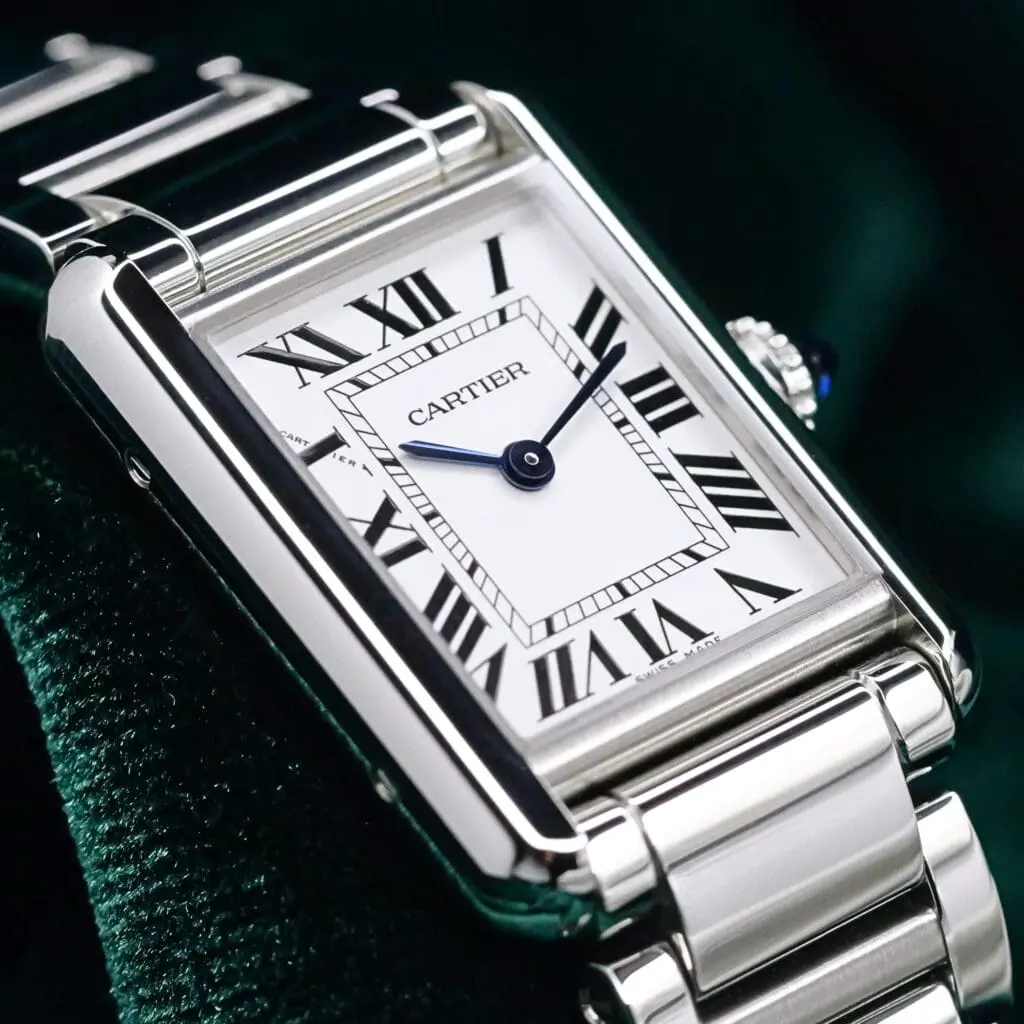
Cartier Tank Must Small Model Silver Roman Dial Stainless Steel 29.5mm MINT COMPLETE SET WSTA0107
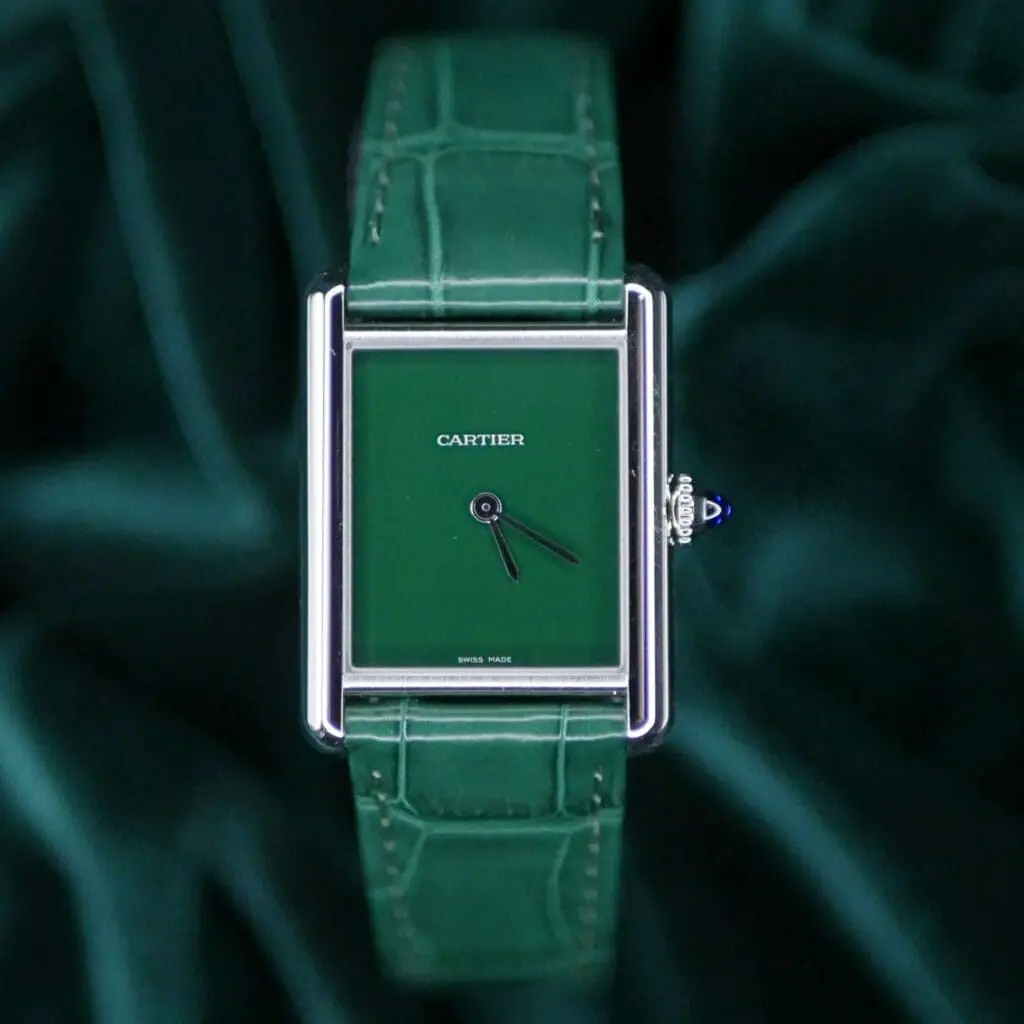
Cartier Tank Must “Cordes de Marseille” 26MM Green Dial Green Alligator Strap Stainless Steel COMPLETE SET MINT CONDITION WSTA0056
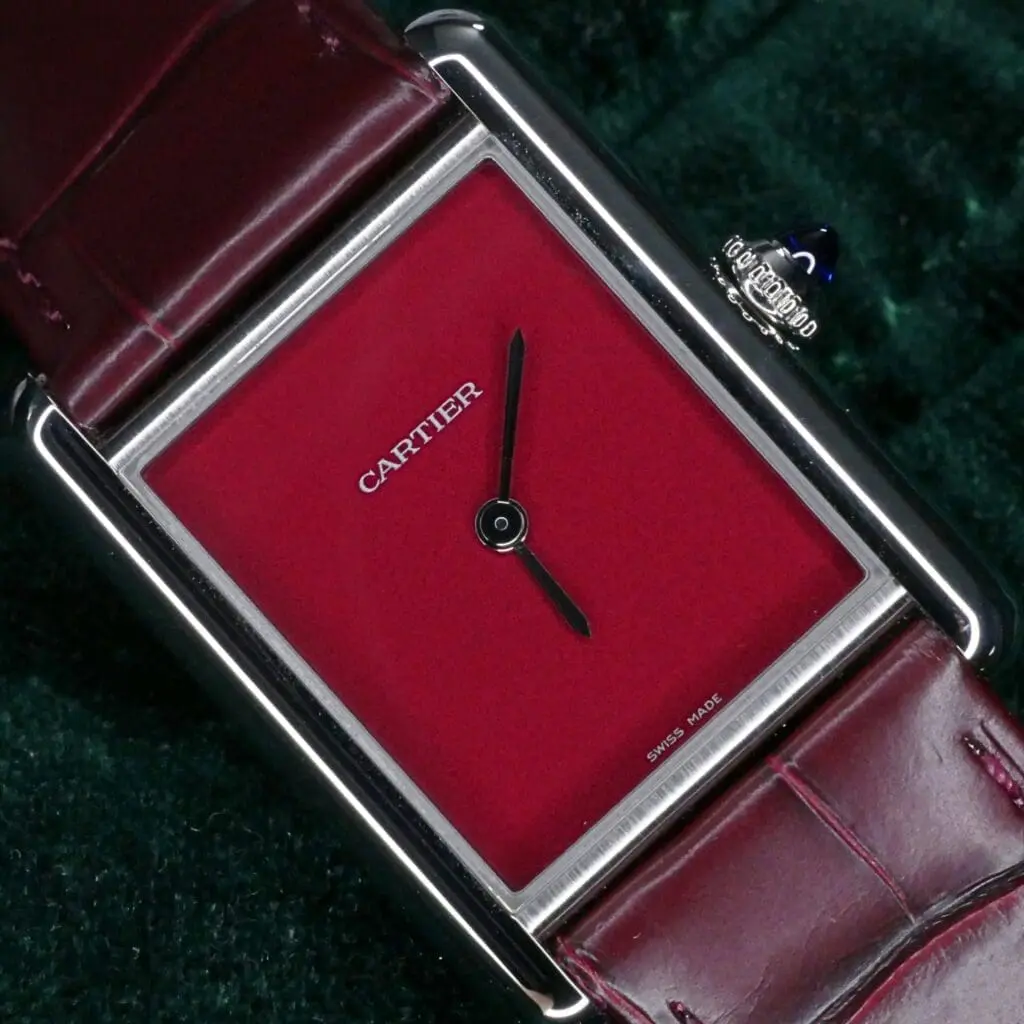
Cartier Tank Must "Cordes de Marseille" 26MM Burgundy Red Dial Stainless Steel COMPLETE SET MINT CONDITION WSTA0054
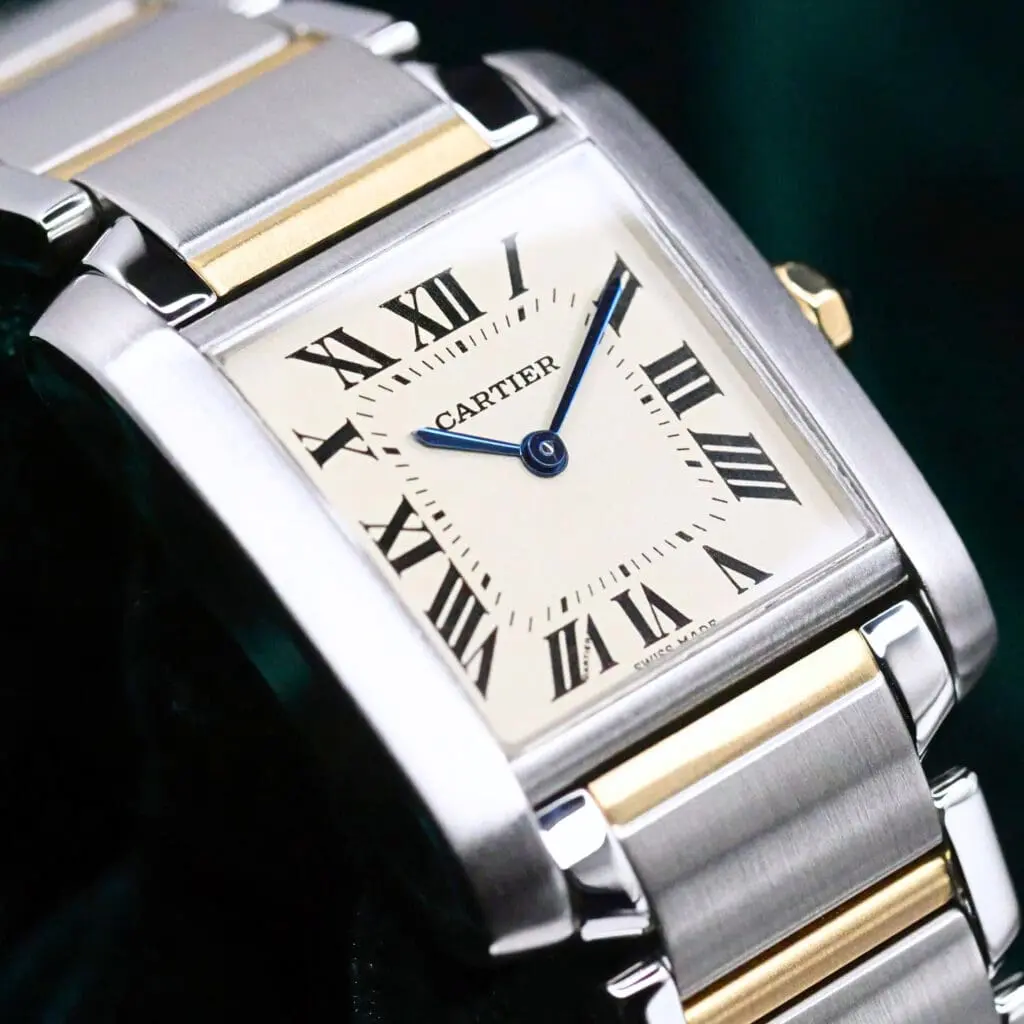
Cartier Tank Française White Dial Two-Tone 18K Yellow Gold Stainless Steel 25mm MINT CONDITION W2TA0003
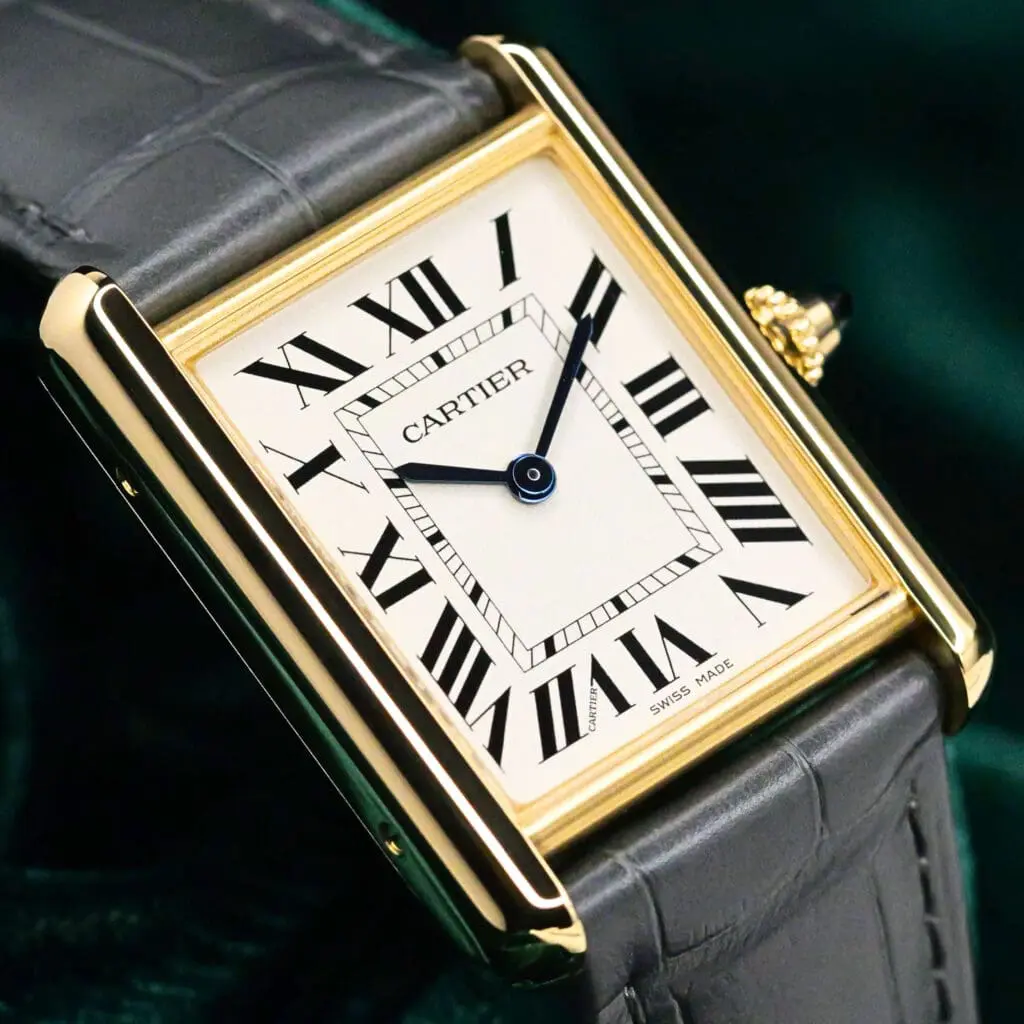
2025 Cartier Tank Louis Cartier Silver Dial Grey Alligator Strap 18K Yellow Gold 25.5mm MINT CONDITION COMPLETE SET WGTA0343
Rolex Oyster Perpetual 41 Mustard Yellow Dial Stainless Steel COMPLETE SET MINT CONDITION 124300
Cartier Tank vs Longines DolceVita: Most Notable Differences
Both watches use sapphire crystal, stainless steel cases, and 30m water resistance. The real separation happens in the technical details: case geometry, movement architecture, dial layout, and wrist presence.
Here’s where each actually pulls apart:
1. Case Shape
The Tank Must has near-square proportions (Small: 29.5 x 22mm; Large: 33.7 x 25.5mm). This creates a compact, monolithic footprint that feels controlled on the wrist. The case width and height stay close together, so the watch never feels stretched or dominant.
The DolceVita runs as a true elongated rectangle (standard: 23.3 x 37mm, large auto: 28.2 x 47mm). The greater vertical height gives it a taller, more active presence. On a slender wrist, the Tank’s tight proportions look cleaner. On a longer wrist, the DolceVita’s stretch can look more intentional and balanced.
If you’re not sure what size actually suits your wrist, that’s worth settling before you pick a shape.
2. Case Thickness
The Tank Must quartz (Small and Large) measures 6.6mm thick. This places it among the slimmest rectangular watches at any price. It slides under a dress cuff cleanly and sits nearly flush to the wrist.
The DolceVita quartz models stay comparably thin, but the automatic variants reach 10.1 to 10.3mm. That added thickness is the direct result of the L592 movement inside. The DolceVita automatic is noticeably chunkier than the Tank quartz and reads more as a casual dress watch than a formal one.
3. Movement Architecture
The Tank Must Small and Large run on Cartier’s high-autonomy quartz. Cartier does not publish the caliber name or specs. There is no central seconds hand on these models. The Tank Must Extra-Large (WSTA0053) uses the Caliber 1847 MC, a genuine Cartier in-house automatic with date and central seconds, at a significantly higher retail price.
The DolceVita quartz uses the Caliber L176 (ETA-based), with full documentation from Longines. The DolceVita automatic uses the Caliber L592 (ETA A20.L01 base), running at 28,800 vph with a 45-hour power reserve, central seconds, and date at 6 o’clock.
The automatic DolceVita gives you fully specified movement data that the Tank quartz line does not offer at any comparable price tier.
Related Models from Majestix
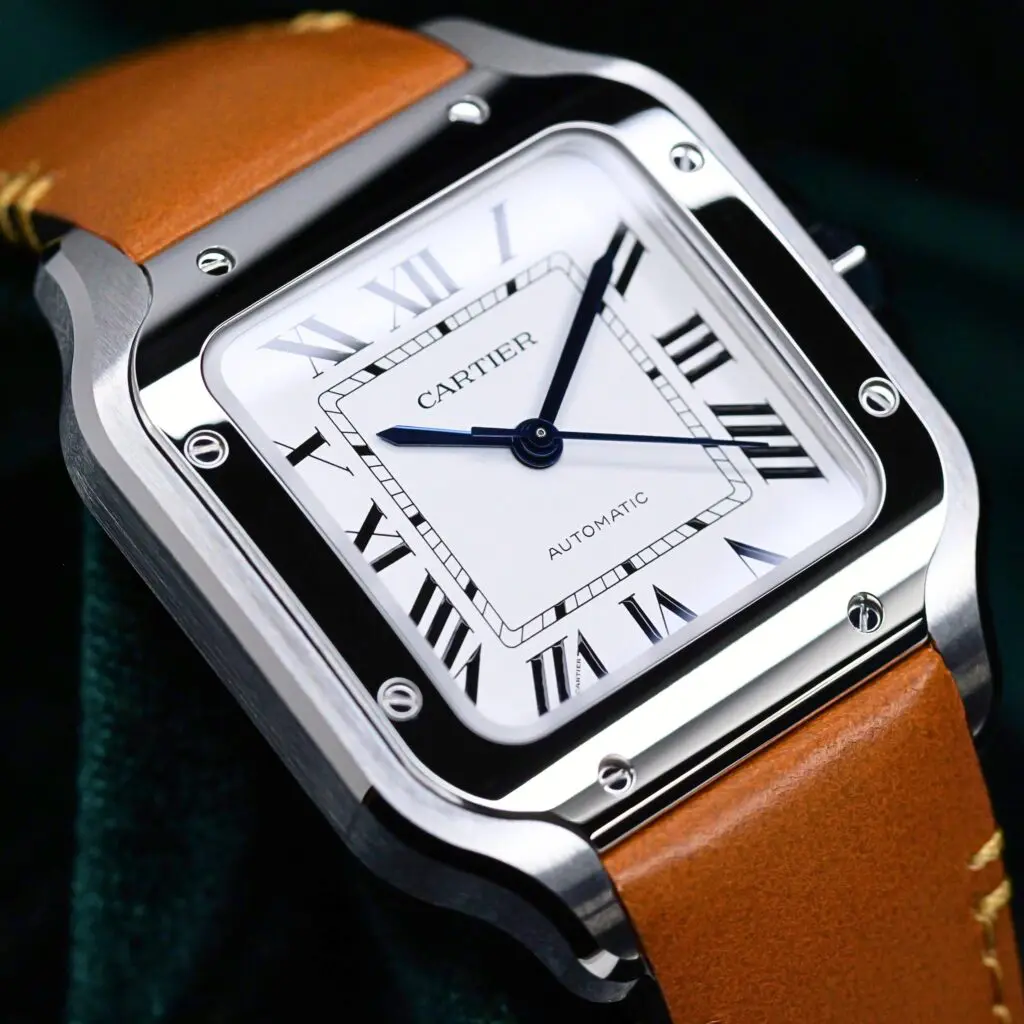
2026 NEW UNWORN Cartier Santos de Cartier Medium Opaline Silver Dial Tan Calfskin Strap Stainless Steel 35mm COMPLETE SET WSSA0029
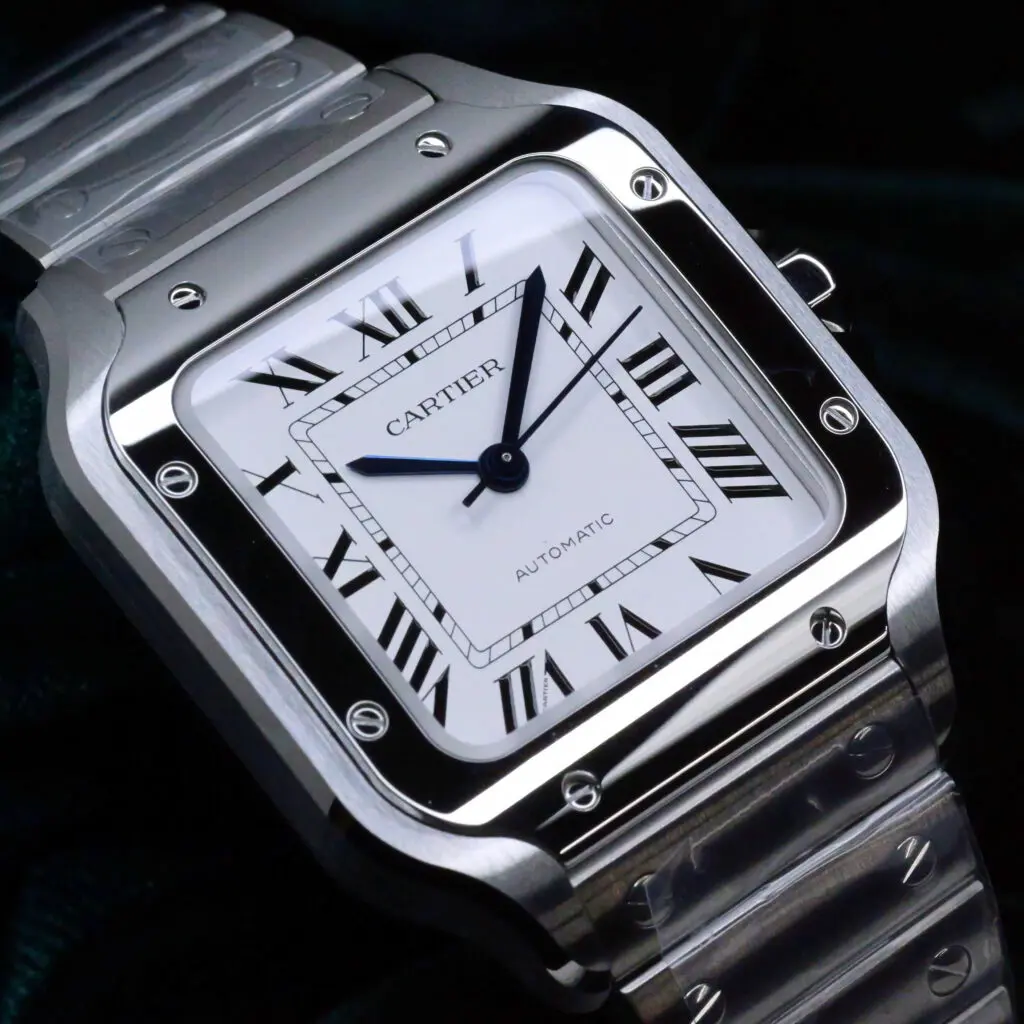
2026 NEW UNWORN Cartier Santos de Cartier Medium Silvered Opaline White Dial Stainless Steel Bracelet 35mm COMPLETE SET WSSA0029
Cartier Tank Française White Dial Two-Tone 18K Yellow Gold Stainless Steel 25mm MINT CONDITION W2TA0003
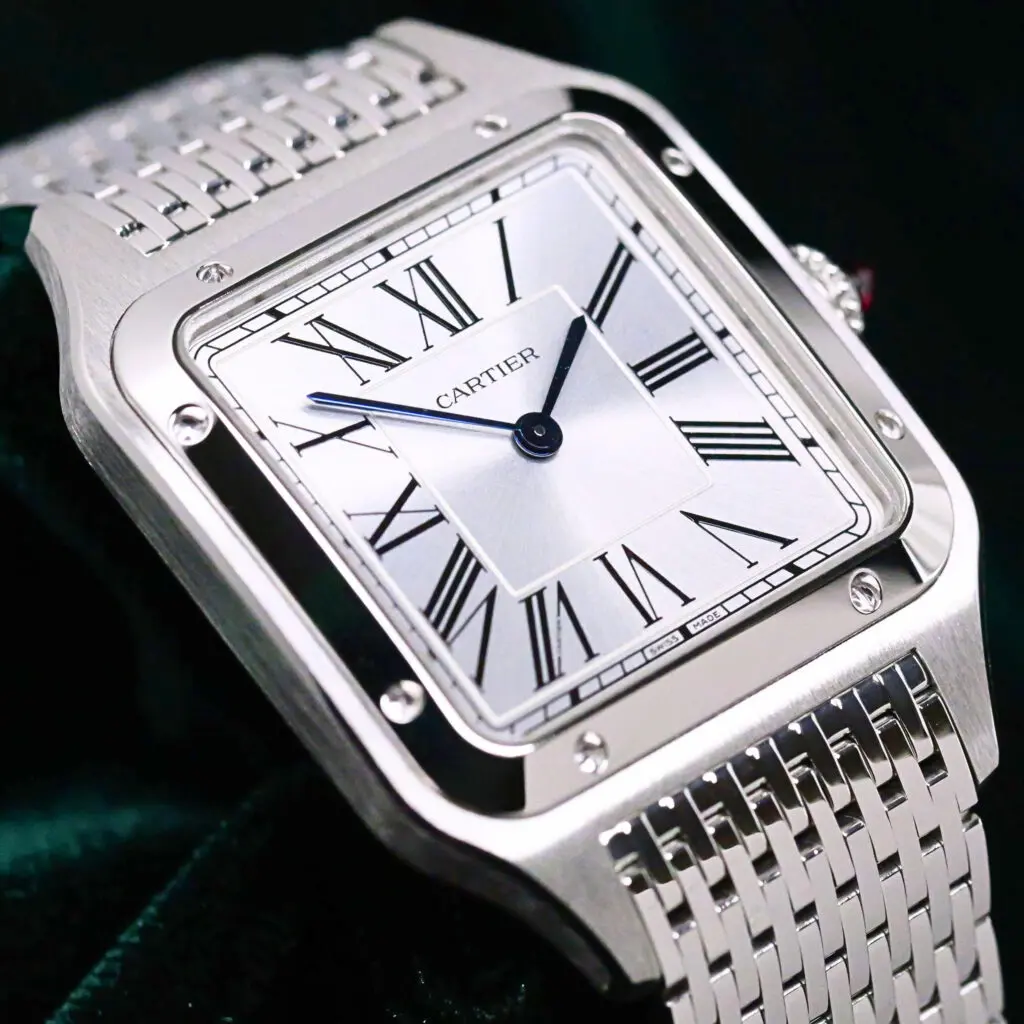
2026 NEW UNWORN Cartier Santos-Dumont Silver Dial Platinum Mesh Bracelet 31.4mm COMPLETE SET WGSA0124
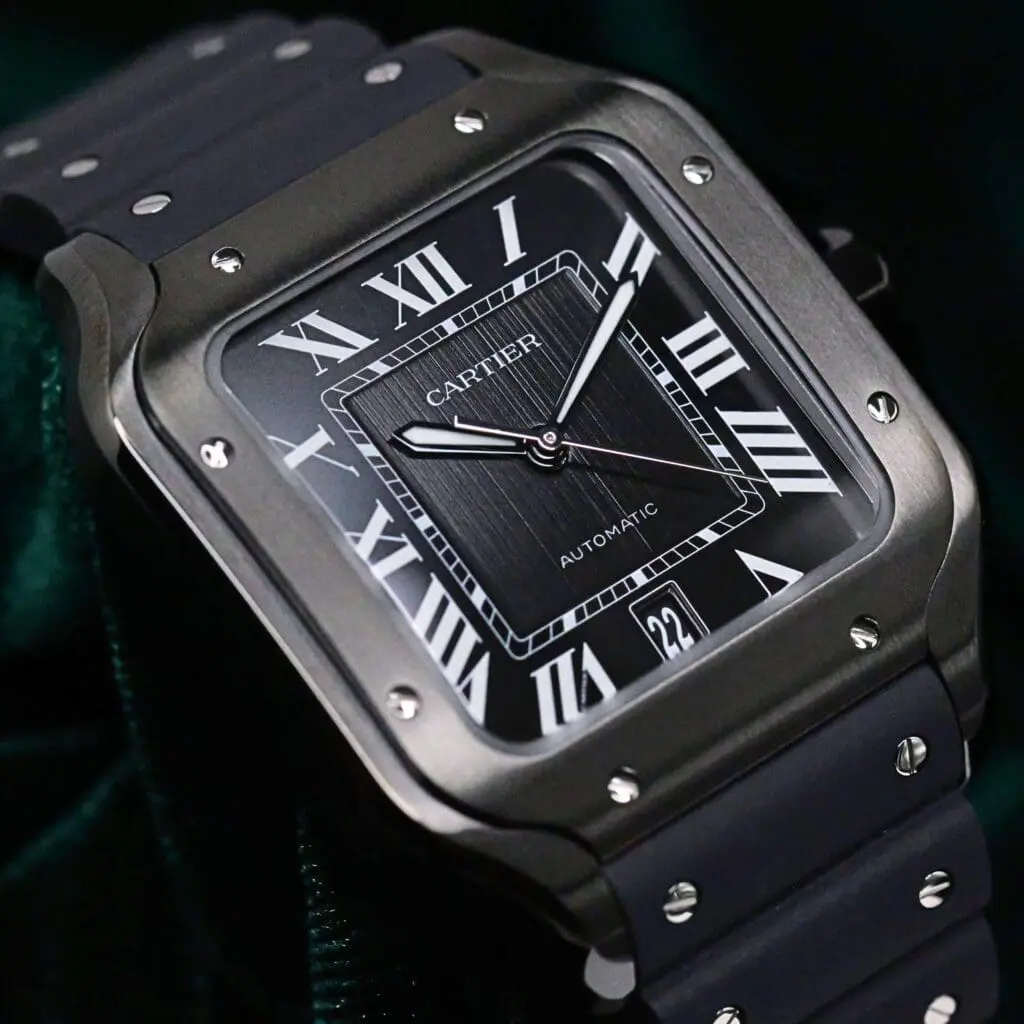
Cartier Santos De Cartier Black Dial Black ADLC Stainless Steel Black Rubber Strap 39.8mm MINT CONDITION COMPLETE SET WSSA0039
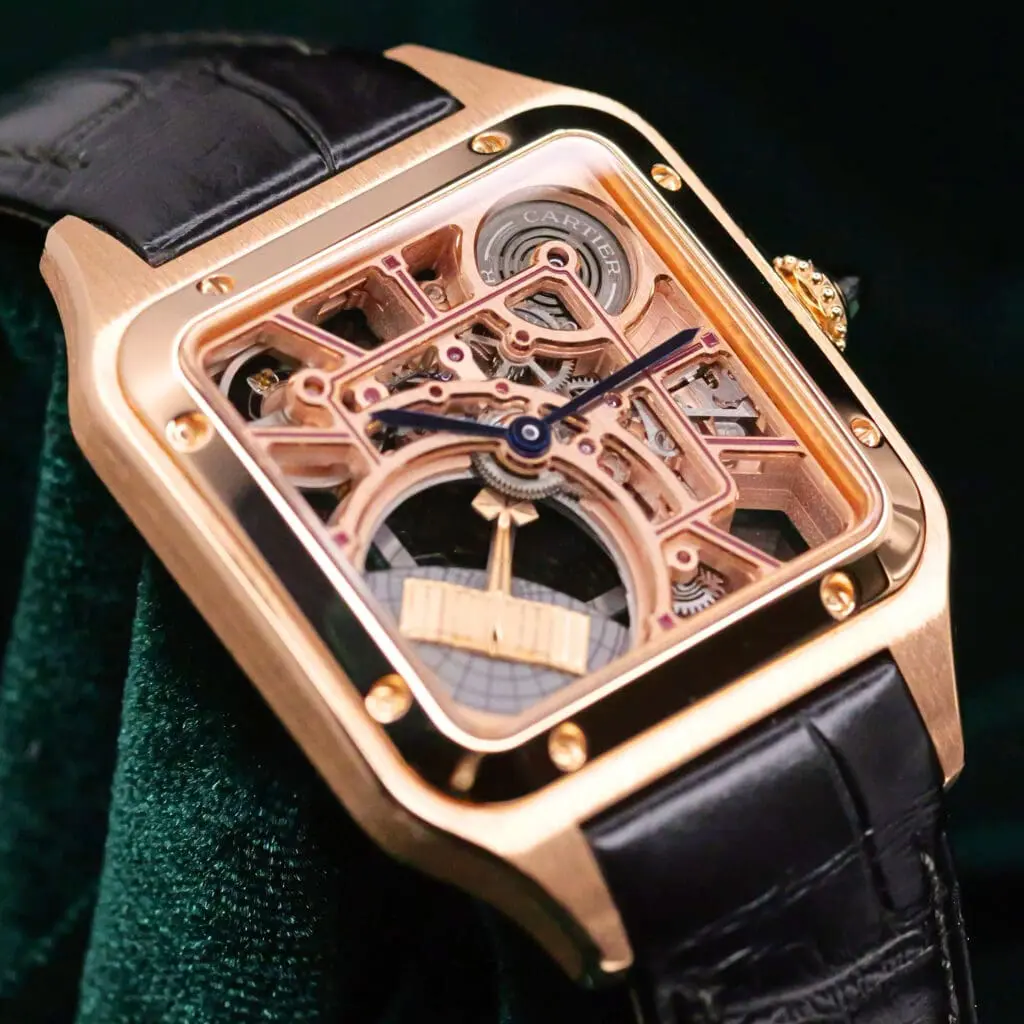
Cartier Santos-Dumont Micro-Rotor Skeleton Dial Black Alligator Strap 18k Rose Gold 43.5 x 31mm MINT CONDITION COMPLETE SET WHSA0030
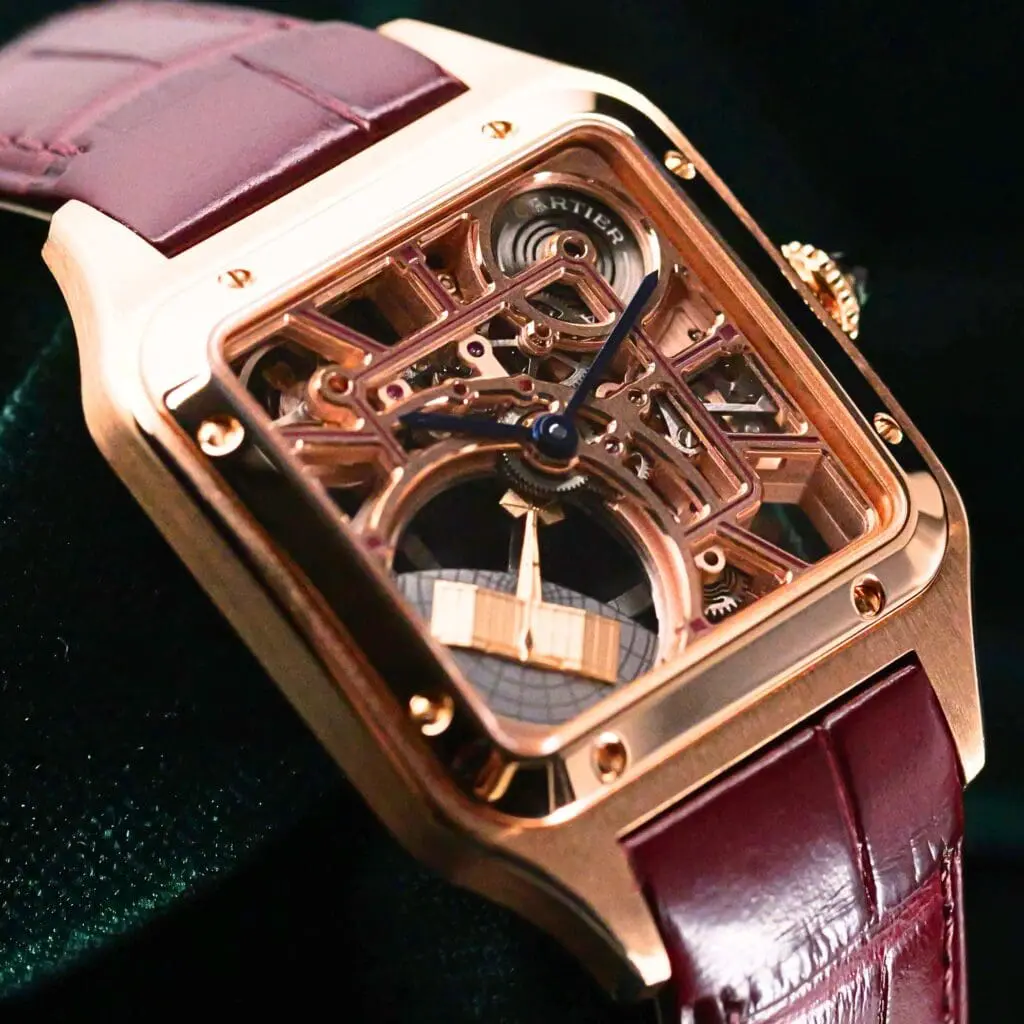
Cartier Santos-Dumont Micro-Rotor Skeleton Dial 18K Rose Gold Burgundy Alligator Strap 31mm MINT CONDITION COMPLETE SET WHSA0030
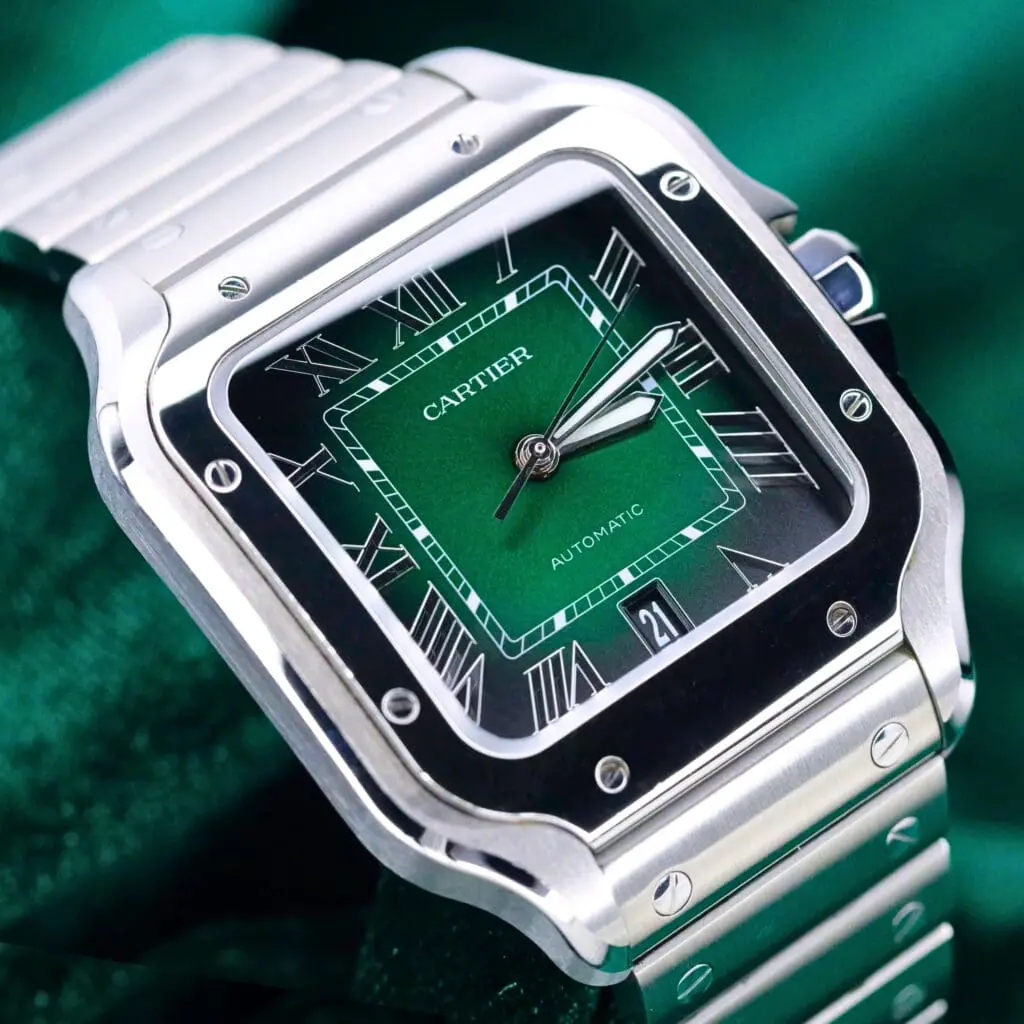
Cartier Santos Green Dial Stainless Steel 39.8mm MINT CONDITION COMPLETE SET WSSA0062
4. Dial Layout
Both dials share the flinqué texture, Roman numerals, and blued sword hands. The split happens in two places. First, several DolceVita quartz references include a small seconds subdial above 6 o’clock, and the Tank Must quartz has no seconds display at all.
Second, the DolceVita offers sector dial variants with Art Deco-style indices instead of Roman numerals. The Tank Must has no equivalent option at this sub-line.
The Tank’s dial has one advantage the DolceVita cannot replicate at any price: the blued cabochon crown. That beaded crown set with a synthetic spinel is a proprietary Cartier design element. It catches light in a specific way and reads as unmistakably Cartier even when the logo is not visible.
5. Crown Quality
The Cartier cabochon crown is a genuine design identity marker. It is tactile, distinctive, and widely recognized as part of the Tank’s visual language. It is not especially easy to grip for time-setting, but that is a minor function trade-off in a dress watch context.
The DolceVita crown is a standard crown with no decorative element. It is consistent with dress watches at this price tier, but it is also the most cited hardware complaint across forum discussions: the grip is poor, and the crown feels unrefined relative to the rest of the watch.
That’s a real tactile gap at the DolceVita’s price point, and Longines hasn’t addressed it across the line.
6. Crystal Profile
The Tank Must uses a flat sapphire crystal across the Must line. It is scratch-resistant and sits cleanly within the case architecture.
The DolceVita, particularly on automatic models, uses a slightly curved sapphire that follows the three-dimensional profile of the dial. That curvature creates a more layered appearance under angled light and gives the dial a slight depth that the Tank’s flat crystal does not produce.
Price and Market Demand

The price gap between these two collections is the clearest market signal you’ll find on this comparison. And the backdrop helps here: WatchCharts’ Q1 2026 report shows the pre-owned market up 1.9%, its fifth straight quarter of growth, with most tracked brands positive. Cartier has been one of the movers, so both floors below are firm rather than soft.
Entry Point: Quartz Steel
The DolceVita standard quartz retails around $1,650 to $1,800 USD depending on dial and strap. The Tank Must Large retails around $3,750 to $4,450 USD, with the bracelet version at the top of that range.
That is roughly a $2,000 to $2,500 gap for watches with the same water resistance, the same crystal category, and the same movement type. The premium is almost entirely brand positioning, not hardware.
Automatic Tier
The DolceVita automatic starts near $1,800 to $2,500 USD with a fully documented caliber, date, and 45-hour power reserve. The Tank Must automatic (Extra-Large only) retails from roughly $5,000 USD, with the bracelet version higher. If mechanical content per dollar spent is the metric, the DolceVita is not close to being matched at this price difference.
Secondary Market
The Tank Must holds its floor. The Tank Must Large (WSTA0041) trades around $2,600 to $4,000 USD on Chrono24 and WatchCharts, and most listings arrive as full sets with box and papers. Colored dials (black lacquer, red) carry modest premiums over silver-dial versions. Across the wider Cartier Tank line, the average sits near $4,000.
The DolceVita’s secondary market is thinner. The most-tracked quartz reference sits around $1,050 on WatchCharts, and many quartz models trade well below retail. Automatic models hold closer but still depreciate, and transaction volume is low enough that pricing is less predictable. Box, papers, and bracelet (over strap) are the main price levers for a pre-owned DolceVita.
The Tank Must is the clearer choice if secondary market liquidity matters. The DolceVita gives you more watches for the retail dollar. If you’re weighing a specific reference and want to see the exact watch before you commit, we can send a tour video and honest condition notes. Just ask.
Notable Cartier Tank References

The Tank family spans multiple sub-lines and price tiers, and our full Cartier Tank buying guide walks through the wider family. For buyers comparing this collection to the DolceVita, the Must line is the most relevant starting point.
1. Tank Must Large (WSTA0041)
The most-traded and most-searched Tank Must reference. Its 33.7 x 25.5mm case at 6.6mm thin makes it genuinely unisex in proportion, with the silver flinqué dial, cabochon crown, and blued sword hands all present at this tier.
Cartier has since rotated the Must quartz range to newer references, so the WSTA0041 now trades mainly on the pre-owned market, where demand stays consistent.
- Case size: 33.7 x 25.5mm
- Material: Stainless steel
- Movement: High-autonomy quartz (caliber undisclosed)
- Crystal: Flat sapphire
- Water resistance: 30m
- Typical price range: $2,600 to $4,000 USD (secondary market)
2. Tank Must Extra-Large Automatic (WSTA0053)
The only Tank Must model with an in-house automatic movement. The Caliber 1847 MC adds a date at 6 o’clock and central seconds. The case expands to 41 x 31mm at 8.4mm thick, with a steel bracelet option. This is a fundamentally different ownership experience from the slim quartz models.
- Case size: 41 x 31mm
- Material: Stainless steel
- Movement: Caliber 1847 MC (automatic, in-house), date
- Crystal: Sapphire
- Water resistance: 30m
- Typical price range: from about $5,000 USD new; roughly $3,200 to $3,900 USD pre-owned
Related Models from Majestix
Cartier Tank Française White Dial Two-Tone 18K Yellow Gold Stainless Steel 25mm MINT CONDITION W2TA0003
Cartier Tank Must Small Model Silver Roman Dial Stainless Steel 29.5mm MINT COMPLETE SET WSTA0107
2025 Cartier Tank Louis Cartier Silver Dial Grey Alligator Strap 18K Yellow Gold 25.5mm MINT CONDITION COMPLETE SET WGTA0343
Cartier Tank Must “Cordes de Marseille” 26MM Green Dial Green Alligator Strap Stainless Steel COMPLETE SET MINT CONDITION WSTA0056
Cartier Tank Must "Cordes de Marseille" 26MM Burgundy Red Dial Stainless Steel COMPLETE SET MINT CONDITION WSTA0054
2026 NEW UNWORN Cartier Santos de Cartier Medium Opaline Silver Dial Tan Calfskin Strap Stainless Steel 35mm COMPLETE SET WSSA0029
3. Tank Must Small (WSTA0040)
At 29.5 x 22mm, this is one of the most discrete watch proportions available at any price. The quartz movement keeps it at 6.6mm thin. It suits smaller wrists (under roughly 15cm) cleanly, and it’s a strong pick if you’ve got a smaller wrist. Like the Large quartz, it now sits mostly on the pre-owned market, trading at a modest premium over its original retail.
- Case size: 29.5 x 22mm
- Material: Stainless steel
- Movement: High-autonomy quartz (caliber undisclosed)
- Crystal: Flat sapphire
- Water resistance: 30m
- Typical price range: $2,400 to $3,500 USD (secondary market)
Notable Longines DolceVita References

The DolceVita line covers more size and movement options than most buyers realize. These are the references most relevant to the Cartier Tank vs Longines DolceVita comparison.
1. Standard Quartz (L5.512.4.71.0)
The 23.3 x 37mm case is what gets compared to the Tank most directly. The silver flinqué dial with Roman numerals and blued hands reads similarly at a distance. Up close, the small seconds subdial above 6 o’clock separates it, and adds visual movement the Tank quartz cannot offer.
The Caliber L176 quartz is ETA-based and fully documented. Longines’ interchangeable strap system makes this an unusually versatile option in the dress watch category.
What usually surprises people is how much dial is present for this price. The flinqué texture, applied Longines logo, and subdial layout hold up well against watches at twice the retail. The flat profile keeps it slim enough to wear under a formal cuff without bulk.
- Case size: 23.3 x 37mm
- Material: Stainless steel
- Movement: Caliber L176 (quartz, ETA-based)
- Crystal: Sapphire
- Water resistance: 30m
- Typical price range: $750 to $1,100 USD (secondary market)
2. Large Automatic Bracelet (L5.767.4.71.6)
The 28.2 x 47mm case on a five-link steel bracelet is where the DolceVita makes its clearest mechanical case. It carries the same automatic L592 covered earlier, at a fraction of what any automatic Tank costs new.
The bracelet follows the case curvature, which gives it a cohesive, jewelry-adjacent look that the leather strap version does not quite produce.
The main trade-off is the 10.3mm case thickness. It is not slim. But for a buyer who wants an automatic rectangular dress watch that can be worn daily and holds up to the mechanical scrutiny dress watch buyers apply, this reference answers the brief.
- Case size: 28.2 x 47mm
- Material: Stainless steel
- Movement: Caliber L592 (automatic, ETA base), 45h power reserve, date
- Crystal: Curved sapphire
- Water resistance: 30m
- Typical price range: $900 to $1,400 USD (secondary market)
3. Mid-Size Automatic Sector Dial (L5.757.4.73.9)
The 27.7 x 43.8mm case with a sector dial is the most visually distinct option in the collection. The sector dial replaces Roman numerals with Art Deco-style indices and a minute track, so it reads less like a Tank comparison piece and more like a vintage dress watch with its own language.
This is the reference for someone who wants the same L592 automatic but not the flinqué Roman numeral look at all. At a glance, this dial format passes for a vintage pocket watch style. That is a specific appeal the Tank cannot offer, and it makes this reference the most collector-forward option in the DolceVita lineup.
- Case size: 27.7 x 43.8mm
- Material: Stainless steel
- Movement: Caliber L592 (automatic, ETA base), 45h power reserve, date
- Crystal: Curved sapphire
- Water resistance: 30m
- Typical price range: $900 to $1,300 USD (secondary market)
Which Rectangular Watch Should You Choose?
Both the Tank and DolceVita occupy the same aesthetic space, but they are built for different kinds of buyers. It helps to be honest about what you actually value before deciding. Both also land under the $5,000 mark, so this is a value question as much as a taste one. And if neither shape wins you over, the Tank vs Reverso comparison covers the other rectangular icon.
Choose the Cartier Tank if:
- The Cartier name carries real meaning to you in daily wear and social settings.
- You want the slimmest possible profile (6.6mm) for formal occasions.
- A compact, near-square footprint suits your wrist size and preference.
- Secondary market liquidity matters and you may want to resell within a few years.
- The cabochon crown as a design element is part of the appeal.
Choose the Longines DolceVita if:
- You want an automatic movement with full spec transparency at this price tier.
- The elongated rectangle suits your wrist proportions better than the Tank’s near-square.
- Dial variety matters (the sector dial and small-seconds options the Tank Must doesn’t offer, plus the new 2026 colours).
- You plan to keep the watch long-term without a resale strategy.
- Spec-to-price ratio is the primary consideration in your decision.
The clearest tie-breaker: if you are buying the cultural weight that comes with the Cartier name, choose the Tank. If you are buying the watch itself, the DolceVita gives you more for the money.
Common Questions About the Cartier Tank vs Longines DolceVita
Is the Cartier Tank worth it over the Longines DolceVita?
It depends on what you’re paying for. The Tank costs roughly $2,000 more at the entry level for the same crystal, case metal, and movement type. That gap buys the Cartier name, the cabochon crown, and stronger resale, not better hardware. If those things matter to you, it’s worth it. If the watch on the wrist is what counts, the DolceVita gives you more.
Does the Longines DolceVita come as an automatic?
Yes. The larger references use the automatic Caliber L592, with a 45-hour power reserve and a date at 6 o’clock. The trade-off is thickness, around 10mm versus the slim quartz models. The Tank Must offers an automatic too, but only in the Extra-Large (WSTA0053) at more than double the DolceVita automatic’s price.
Which holds its value better, the Cartier Tank or the Longines DolceVita?
The Cartier Tank, clearly. The Tank Must has a deep, liquid pre-owned market and holds its floor well. The DolceVita’s resale market is thinner and most quartz references trade below retail. If you might sell within a few years, the Tank is the safer money.
Where to Buy Authentic Watches Online
There are a handful of legitimate online channels for buying either watch. Chrono24 is the largest global marketplace and has the widest selection of both; if you go that route, how buying on Chrono24 works covers the escrow and inspection steps before you pay.
eBay covers many listings under its Authenticity Guarantee program, which inspects eligible watches before they reach you. Grailzee runs enthusiast-focused auctions if you’d rather bid than buy outright.
Independent grey-market dealers and watch forums are worth a look too, though quality varies a lot by seller. Our rundown of where to buy a pre-owned watch weighs each channel in more detail.
We also sell, buy, and trade luxury watches, and the reason clients come to us instead of a big marketplace is the conversation before the purchase. Before you commit, we walk you through the actual watch: a tour video of the exact piece, detailed condition notes, and a real person who has handled it and can answer honestly. You’re not buying blind off a listing photo.
That’s reflected in our 4.9-star Google rating, which comes from buyers who wanted to know exactly what they were getting first.
If you want that kind of walkthrough on a specific Tank or DolceVita reference, we can help you source one and line up a few options that fit what you’re after.
999+ Timepieces Available
Explore Our Timepieces
Authenticated, unworn, and ready to ship worldwide.
Rolex · Audemars Piguet · Patek Philippe · Omega · Cartier · Richard Mille · Hublot · Tudor
Newly Listed
2026 Rolex GMT-Master II “Batgirl” Black Dial Blue Black Ceramic Bezel Jubilee Bracelet Stainless Steel 40mm MINT CONDITION COMPLETE SET 126710BLNR
$22,034.00
Vacheron Constantin Overseas Perpetual Calendar Ultra-Thin Silver Dial Blue Leather Strap 18K Rose Gold 41.5mm MINT CONDITION COMPLETE SET 4300V/120R-B064
$115,385.00
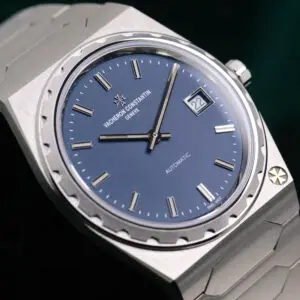
2026 NEW UNWORN Vacheron Constantin Historiques 222 Blue Dial Stainless Steel 37mm COMPLETE SET 4200H/222A-B934
$58,795.00
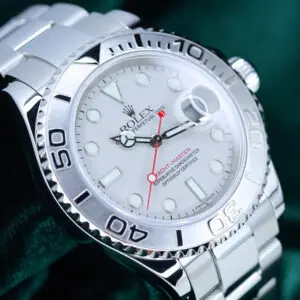
Rolex Yacht-Master Rolesium Platinum Dial Platinum Bezel Oyster Stainless Steel 40mm MINT CONDITION COMPLETE SET 16622
$14,690.00

Audemars Piguet Royal Oak Offshore Chronograph “Vampire” Black Dial Red Accents Black Ceramic Bezel Stainless Steel 42mm MINT CONDITION 26470SO.OO.A002CA.01
$34,649.00
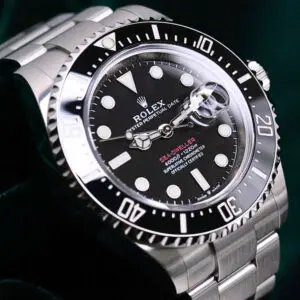
Rolex Sea-Dweller "Red Letter" Black Dial Black Cerachrom Bezel Oyster Bracelet Stainless Steel 43mm MINT CONDITION COMPLETE SET 126600
$13,120.00
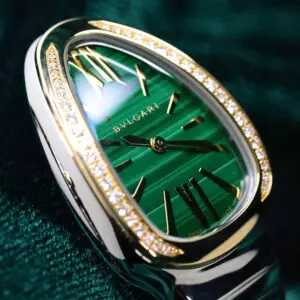
2026 NEW UNWORN Bvlgari Serpenti Tubogas Studs Capsule Limited Edition Green Dial Diamond Bezel Steel & 18k Yellow Gold 35mm COMPLETE SET 104360
$24,255.00
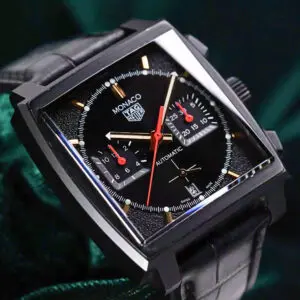
Tag Heuer Monaco Chronograph “Dark Lord” Special Edition Black Dial Black Leather Strap DLC Titanium 39mm MINT CONDITION COMPLETE SET CBL2180.FC6497
$8,135.00
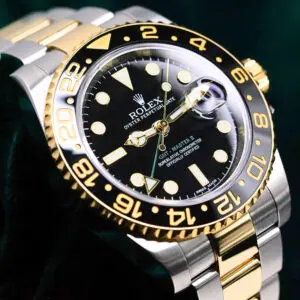
Rolex GMT-Master II “Green Arrow” Black Dial Black Ceramic Bezel Oyster Bracelet Two-Tone 18K Yellow Gold Stainless Steel 40mm MINT CONDITION COMPLETE SET 116713LN
$15,740.00
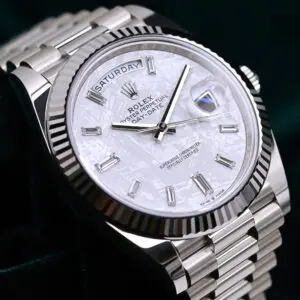
Rolex Day-Date Meteorite Baguette Diamond Dial Fluted Bezel President 18K White Gold 40mm MINT CONDITION COMPLETE SET 228239
$78,629.00
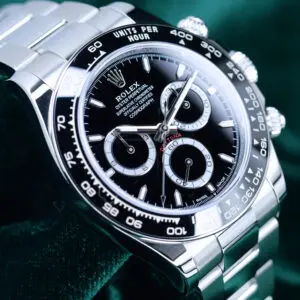
2026 Rolex Cosmograph Daytona Black Dial Black Ceramic Bezel Oyster Bracelet Stainless Steel 40mm MINT CONDITION COMPLETE SET 126500LN
$33,594.00
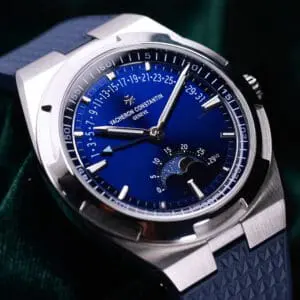
2025 Vacheron Constantin Overseas Moonphase Retrograde Date Blue Dial Blue Rubber Strap Stainless Steel 41mm MINT CONDITION COMPLETE SET 4000V/210A-B911
$52,800.00
Final Thoughts on Cartier Tank vs Longines DolceVita
The Tank attracts buyers who have already decided that Cartier is the answer. Its appeal is emotional and visual, tied to a design that has stayed relevant for over a century. People choose it because it feels right on the wrist and carries a quiet recognition few watches can match.
The DolceVita attracts buyers who pay closer attention to what sits inside the case. It offers solid mechanics, better value, and a more practical entry into rectangular watches without giving up elegance. It tends to win when the decision is made with the head rather than the heart.
One last thing worth sitting with: a dress watch earns its keep over decades, not months. Buy the one you’ll reach for on the mornings that matter, and try both on if you can. Wrist shape decides more of this than any spec sheet.
In the Cartier Tank vs Longines DolceVita decision, the better choice is not the one with the stronger spec sheet. It is the one you’ll actually wear without second-guessing.