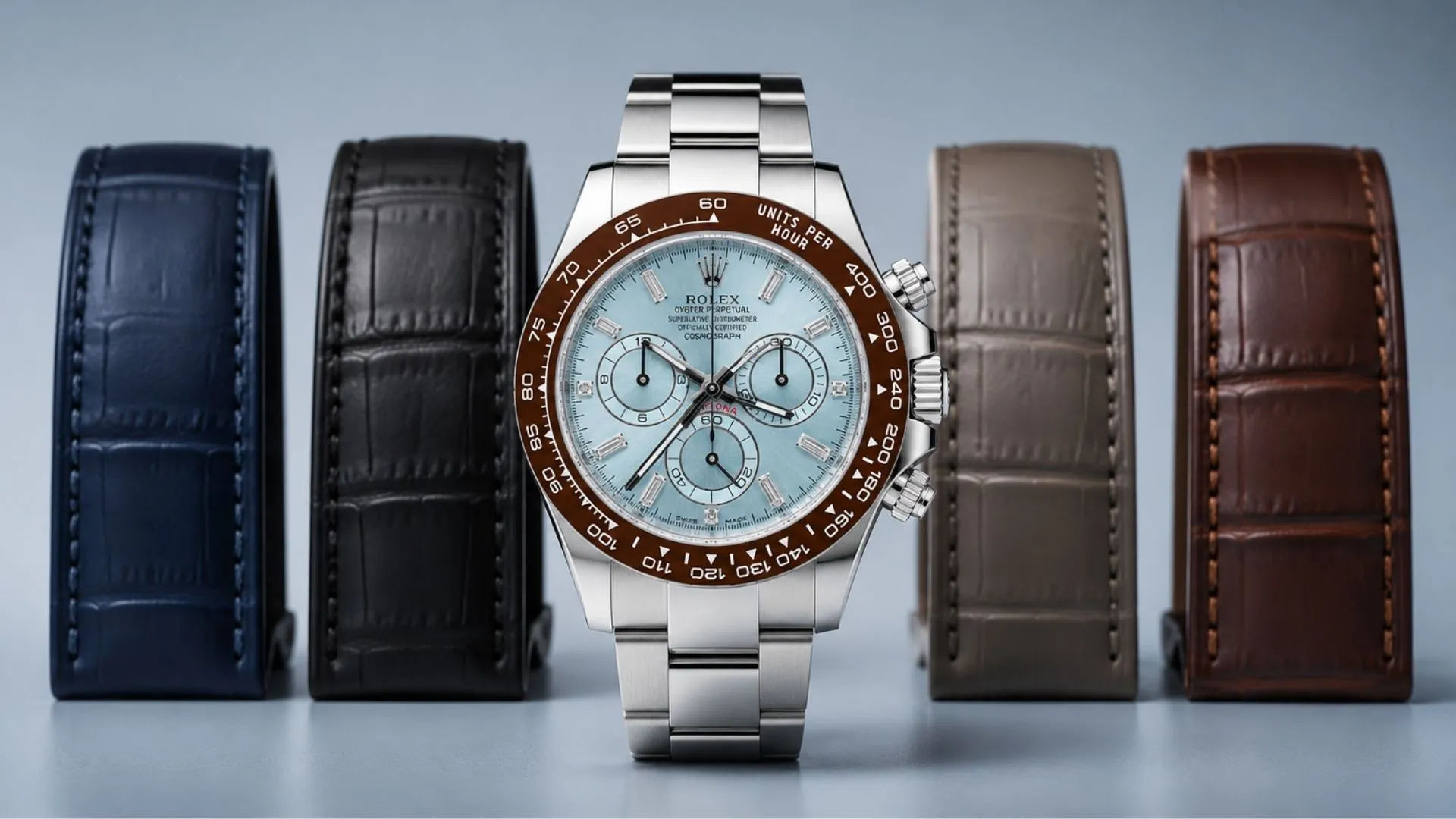

Two watches, two completely different ideas of luxury. One is a square steel Cartier that started life on the wrist of an aviator. The other is a round Rolex built to survive anything and hold its price.
Buyers keep landing on the same question. Cartier Santos vs Rolex, which one is the smarter buy? If you’re shopping the Santos against a Datejust, an Oyster Perpetual, or a Day-Date, you’re really choosing between two philosophies. The Santos leads with design and personality. Rolex leads with engineering and resale strength.
This guide walks through where they really differ, what each one costs in 2026, and which one fits your wrist and your habits. No spec-sheet overload. Just the parts that change how you’d live with the watch.
Cartier Santos Overview

The Santos is often called the first proper men’s wristwatch. Louis Cartier built it in 1904 for his friend Alberto Santos-Dumont, a pilot who couldn’t dig a pocket watch out of his jacket mid-flight. Cartier’s answer was a flat, square watch he could read at a glance. That practical brief still shapes the watch today.
Cartier turned it into a full collection in 1911, and it has grown across several generations since. The square case with rounded corners, the exposed bezel screws, the Roman numerals, and the blue cabochon crown all trace back to that first design. The 2018 relaunch kept the look and added tool-free strap and bracelet adjustment.
The Santos suits someone who wants a watch with a shape, not another round face in the room. It leans dressy but handles daily wear fine. Collectors care most about clean originality on the vintage pieces and honest condition on the modern ones.
What usually surprises people is how a square case reads across a table. You notice it. That quiet difference is most of the reason someone picks a Santos over the obvious round choice.
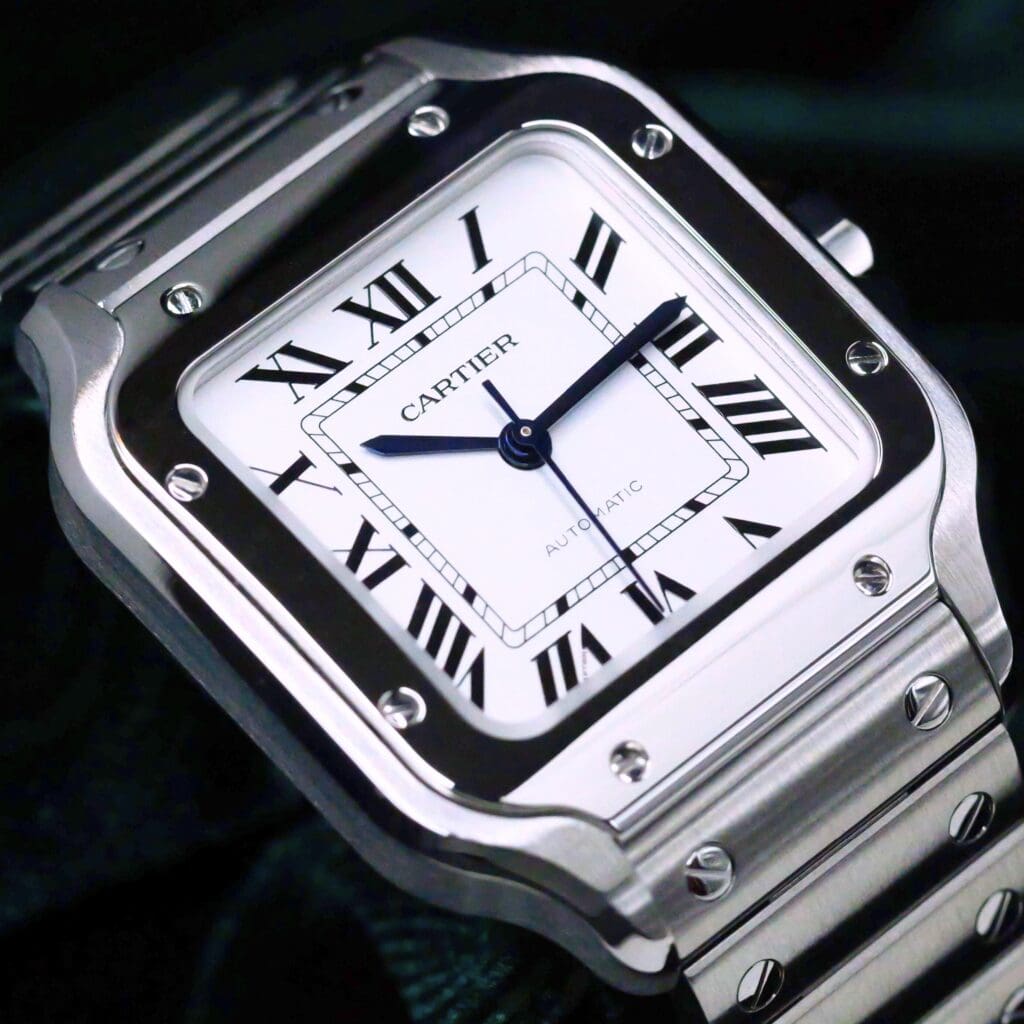


Most Popular Cartier Santos References:
- Cartier Santos-Dumont (WGSA0072 / WGSA0064)
- Santos de Cartier Medium (WSSA0029 / WSSA0061)
- Santos de Cartier Large (WSSA0030 / WSSA0062)
- Cartier Santos 100 (W20090X8 / W20121U2)
- Cartier Santos Galbée (2319 / 2961)
- Cartier Santos Skeleton (WHSA0015 / WHSA0009)
Rolex Dress Watches Overview

Rolex built its name on tool watches, but its dress lines have quietly defined reliable elegance for decades. The Datejust and the Oyster Perpetual are two of the longest-running models in the whole catalog.
The Datejust arrived in 1945 as the first self-winding wristwatch with a date that flipped over automatically at midnight. The Oyster Perpetual came earlier and strips things back to just the time. It’s the plain foundation the entire Oyster range grew out of.
Both share the round Oyster case, 100-meter water resistance, and Rolex’s Superlative Chronometer rating. The Datejust adds a date window and the Cyclops magnifier. Both use Oystersteel, a hard 904L-family alloy that resists corrosion better than the steel most brands use.
If you’re deciding between the two, we lay out how the Datejust and Oyster Perpetual compare in a separate guide.
Rolex dress watches suit buyers who want a round case, a huge choice of dials and bezels, and a look that hasn’t really dated in decades. The Datejust is the single most-traded Rolex on the secondary market, which tells you how wide its appeal runs. If you’re still mapping the brand’s range, our Rolex buying guide shows where each model sits.


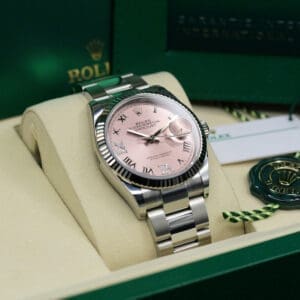

Most Popular Rolex Dress Watches References:
- Rolex Datejust 36 (126200 / 126234)
- Rolex Datejust 41 (126300 / 126334)
- Rolex Oyster Perpetual 36 (126000)
- Rolex Oyster Perpetual 41 (124300)
- Rolex Day-Date 36 (128238 / 128235)
Cartier Santos vs Rolex: Most Notable Differences

The two watches split on more than looks. Here are the differences that change daily ownership.
1. Case Shape and Geometry
The Santos de Cartier is square with rounded corners, about 39.8mm across the flats on the Large. That shape gives it real presence, and you can pick it out across a room.
The Rolex Datejust is a round Oyster case in 36mm or 41mm. It disappears under a cuff and pairs with anything.
Why it matters: the Santos makes a statement, the Datejust blends in. That single choice favors expressive dressers on one side and low-key classicists on the other.
2. Movement and Crown
The Santos runs Cartier’s in-house Caliber 1847 MC, an automatic with roughly a 40-hour reserve and a push-pull crown. Leave it off the wrist over a weekend and it usually stops.
The Datejust runs the Caliber 3235, with a 70-hour reserve and a screw-down Twinlock crown. Take it off Friday night and it’s still ticking Monday morning.
Why it matters: the longer reserve is a real quality-of-life perk if you rotate watches. For a one-watch owner it barely registers.
3. Water Resistance and Sealing
Both are rated to 100 meters, so both handle handwashing, rain, and a pool with no drama.
The difference is how they seal. The Datejust screws its crown down into the case for a locked mechanical seal. The Santos relies on a gasket behind a push-pull crown.
Why it matters: in everyday use you won’t feel a gap. If you swim often or want the extra margin, the screw-down crown is the safer habit.
Related Models from Majestix
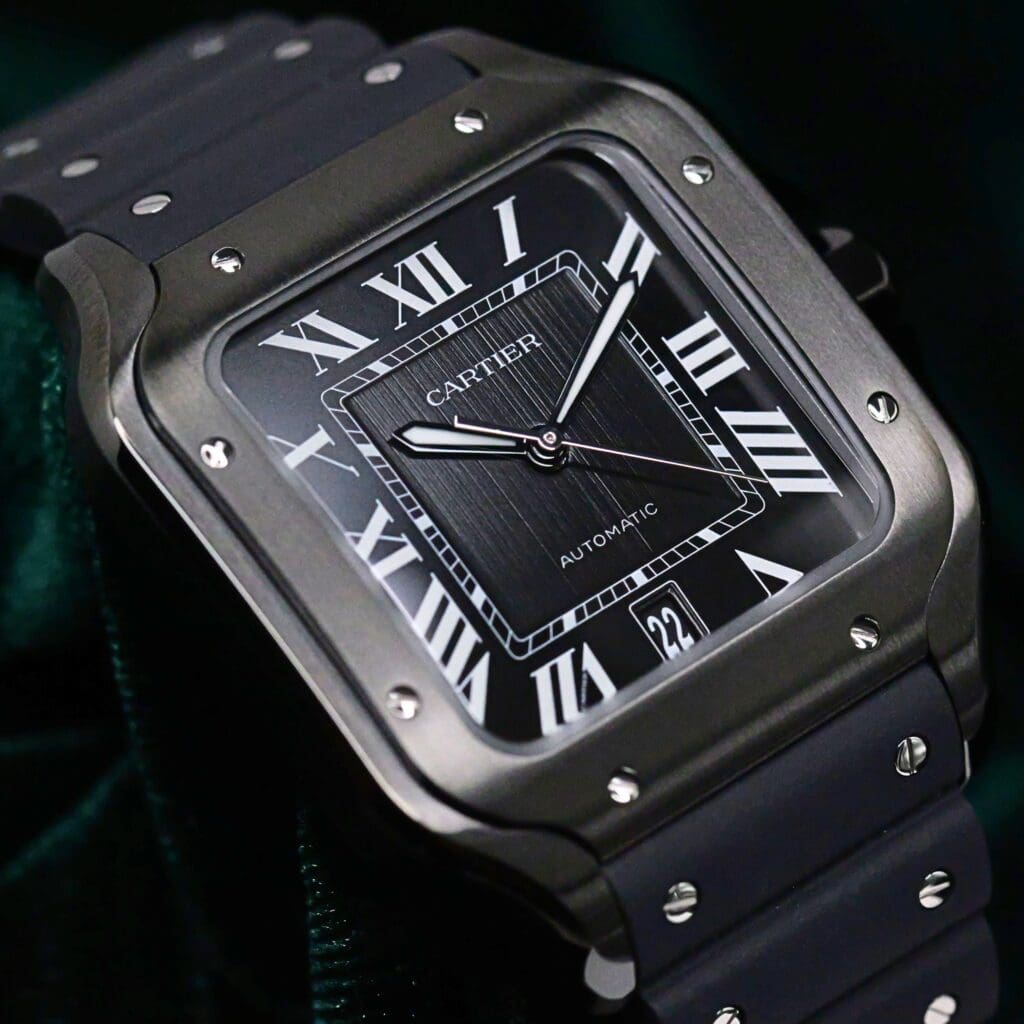
2026 Cartier Santos De Cartier Black Dial Black ADLC Stainless Steel Black Rubber Strap 39.8mm MINT CONDITION COMPLETE SET WSSA0039
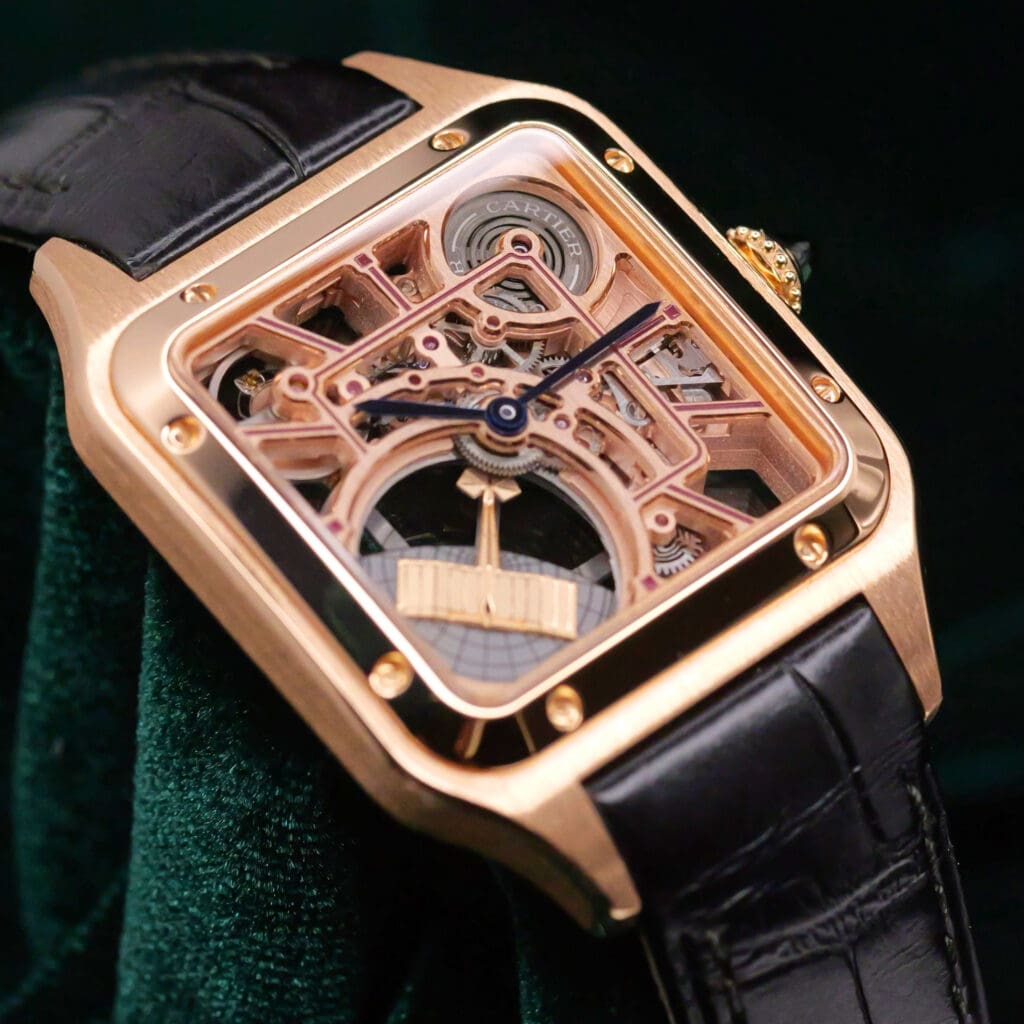
Cartier Santos-Dumont Micro-Rotor Skeleton Dial Black Alligator Strap 18k Rose Gold 43.5 x 31mm MINT CONDITION COMPLETE SET WHSA0030
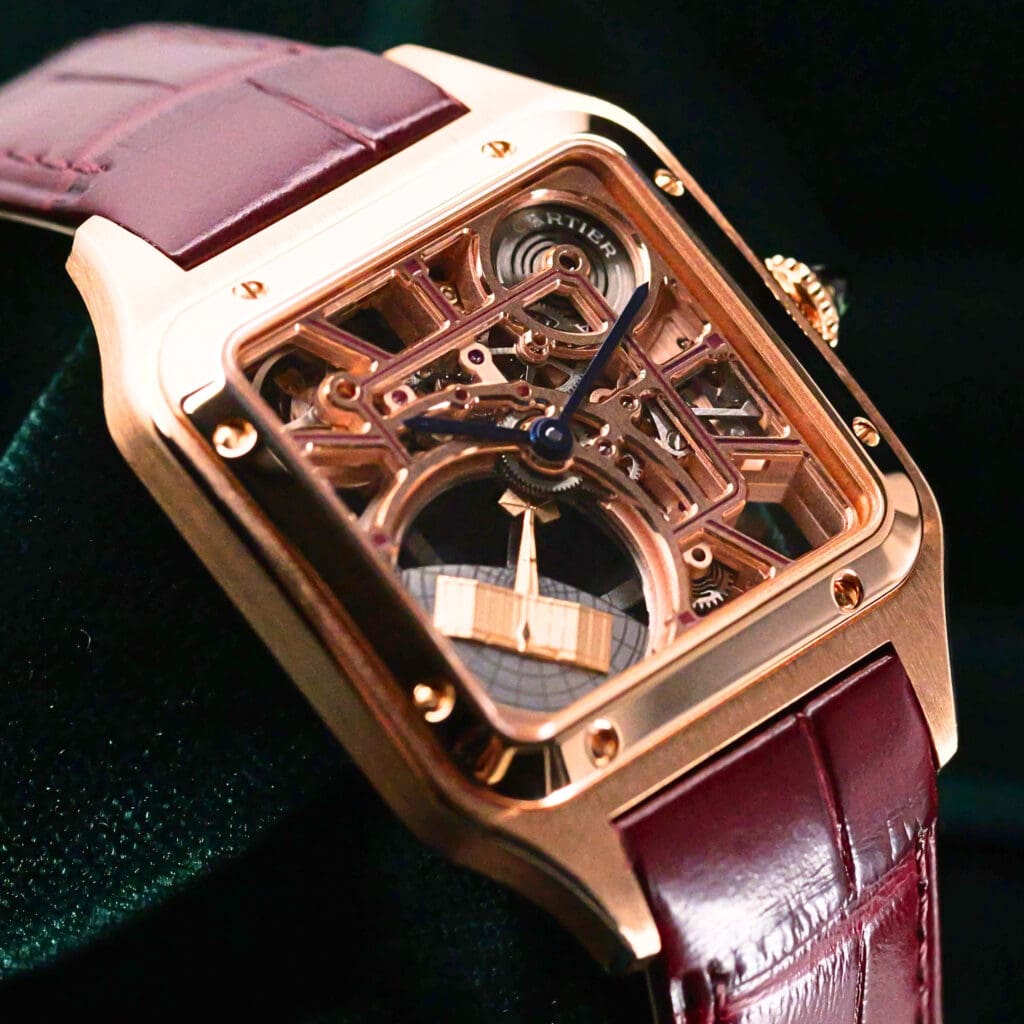
Cartier Santos-Dumont Micro-Rotor Skeleton Dial 18K Rose Gold Burgundy Alligator Strap 31mm MINT CONDITION COMPLETE SET WHSA0030

Cartier Santos Green Dial Stainless Steel 39.8mm MINT CONDITION COMPLETE SET WSSA0062
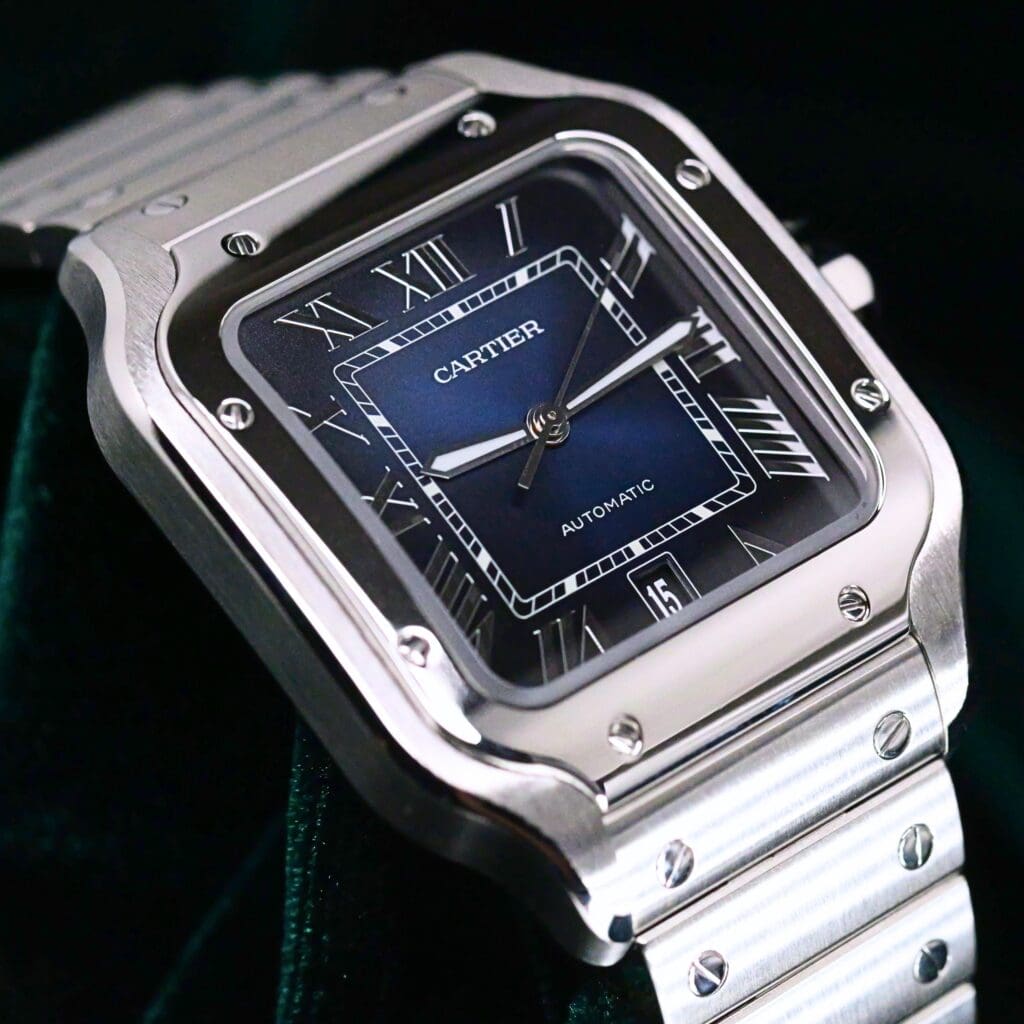
Cartier Santos de Cartier Large Blue Dial Stainless Steel 39.8mm MINT CONDITION COMPLETE SET WSSA0030

2026 NEW UNWORN Cartier Santos De Cartier White Dial 18K Rose Gold Blue Leather Strap 39.8mm COMPLETE SET WGSA0019
4. Bracelet and Adjustability
The Santos wins on convenience. SmartLink lets you resize the bracelet by hand in seconds, and QuickSwitch pops the whole bracelet off for a leather or rubber strap with no tools.
The Datejust comes on an Oyster or Jubilee bracelet with a micro-adjust clasp. To swap it out, you remove links with proper tools, or hand it to a watchmaker. If you’re torn between the two, we walk through Jubilee vs Oyster in detail separately.
Why it matters: if you like changing straps with your mood, the Santos is built for it. The Rolex trades that flexibility for a bracelet you’ll likely never take off.
5. Dial and Legibility
The Santos dial is all Cartier style: Roman numerals, a railroad minute track, and blued sword hands. There’s no lume, so it goes dark at night.
The Datejust uses lumed markers and hands, plus the Cyclops date magnifier. You can read it in a dim restaurant or at 3 a.m.
Why it matters: the Santos prioritizes looks, the Datejust prioritizes function. Night readers should note the lume gap.
6. Case Material and Finish
The Santos uses 316L stainless steel with a mix of brushed and polished surfaces, and gold or two-tone versions sit above that. The finishing feels jewelry-like, which fits Cartier’s roots.
The Datejust runs on 904L Oystersteel, which takes a deeper polish and shrugs off scratches better. Fluted and diamond-set bezels push it further upmarket.
Why it matters: both look expensive. The Oystersteel simply ages a little harder-wearing over years of daily contact.
Related Models from Majestix
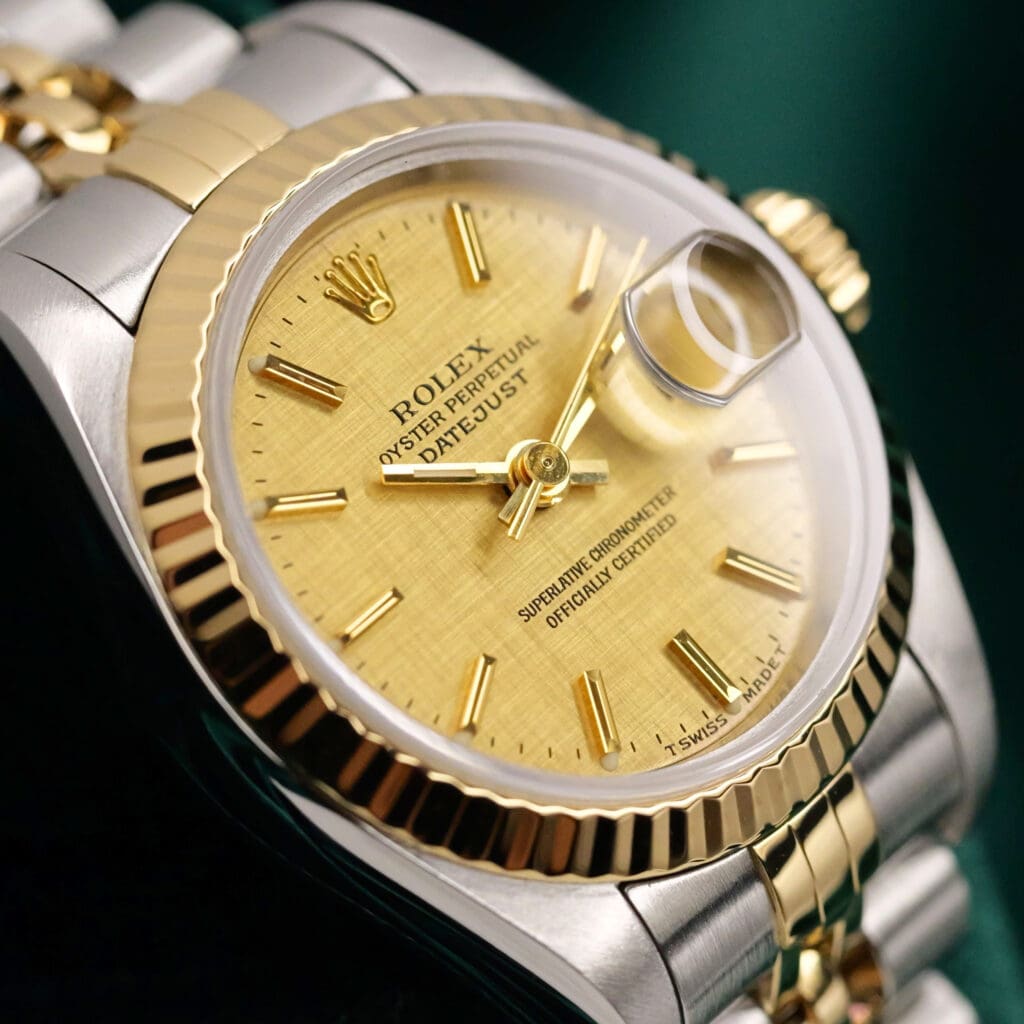
Rolex Lady-Datejust Champagne Linen Dial 18k Yellow Gold Fluted Bezel Jubilee Bracelet Two Tone Steel & Gold 26mm MINT CONDITION COMPLETE SET 69173
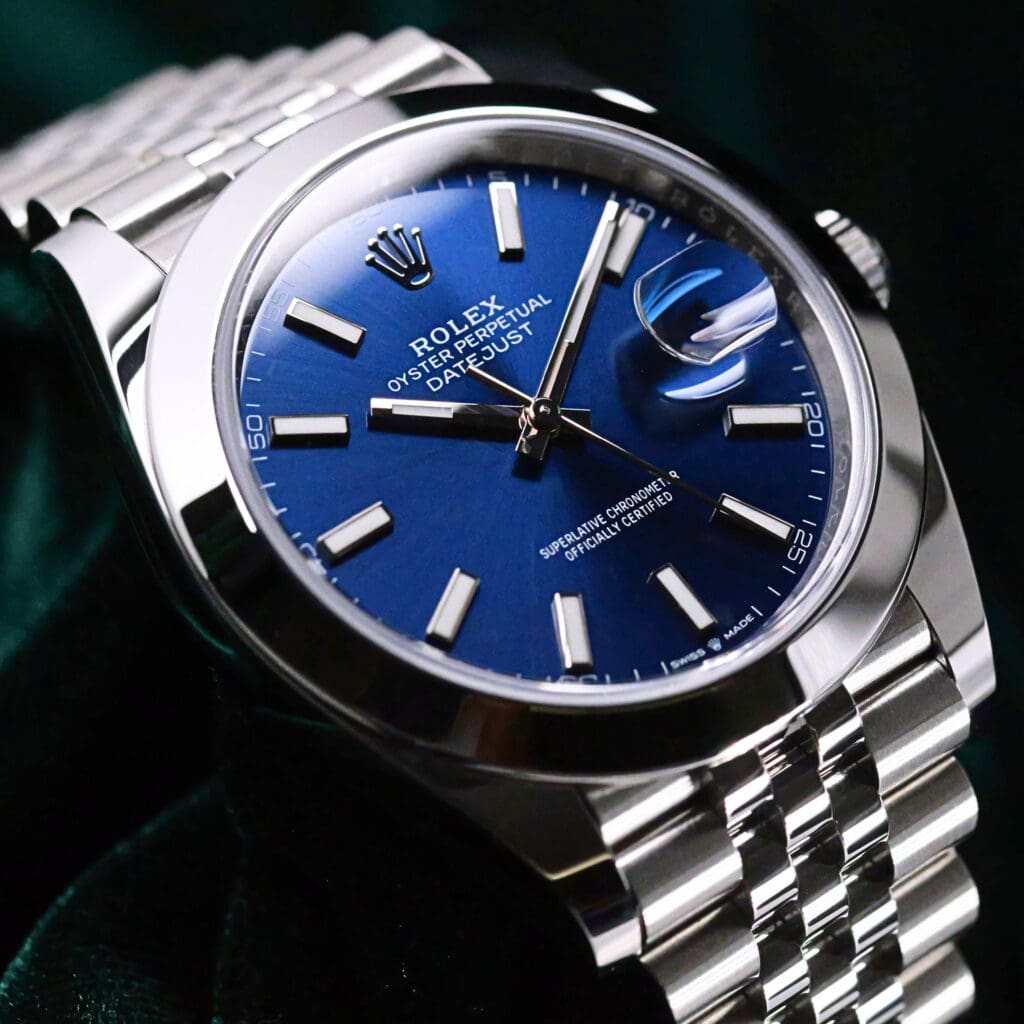
2026 Rolex Datejust Blue Dial Smooth Bezel Jubilee Bracelet Stainless Steel 41mm MINT CONDITION COMPLETE SET 126300
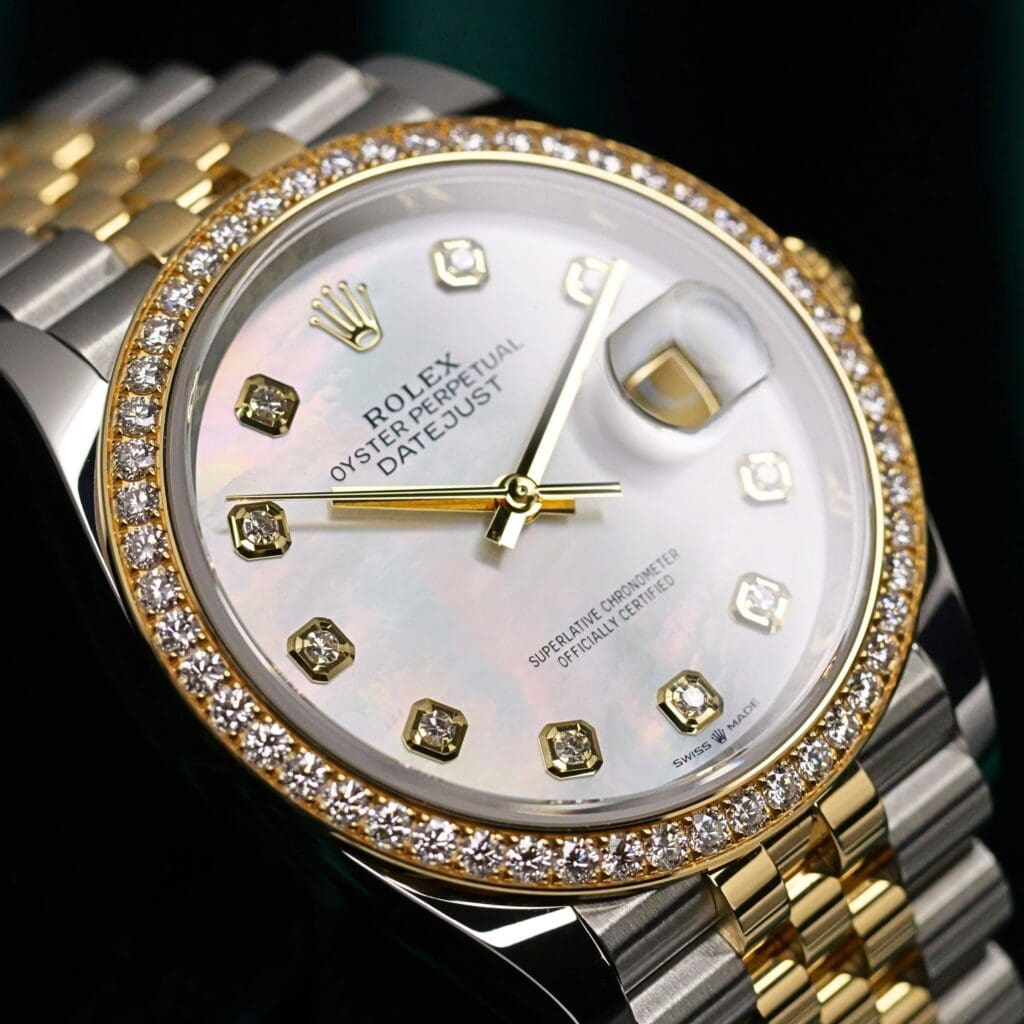
2026 NEW UNWORN Rolex Datejust 36 Mother of Pearl Diamond Dial Diamond Bezel Jubilee Two-Tone Steel 18k Yellow Gold 36mm COMPLETE SET 126283RBR-0009
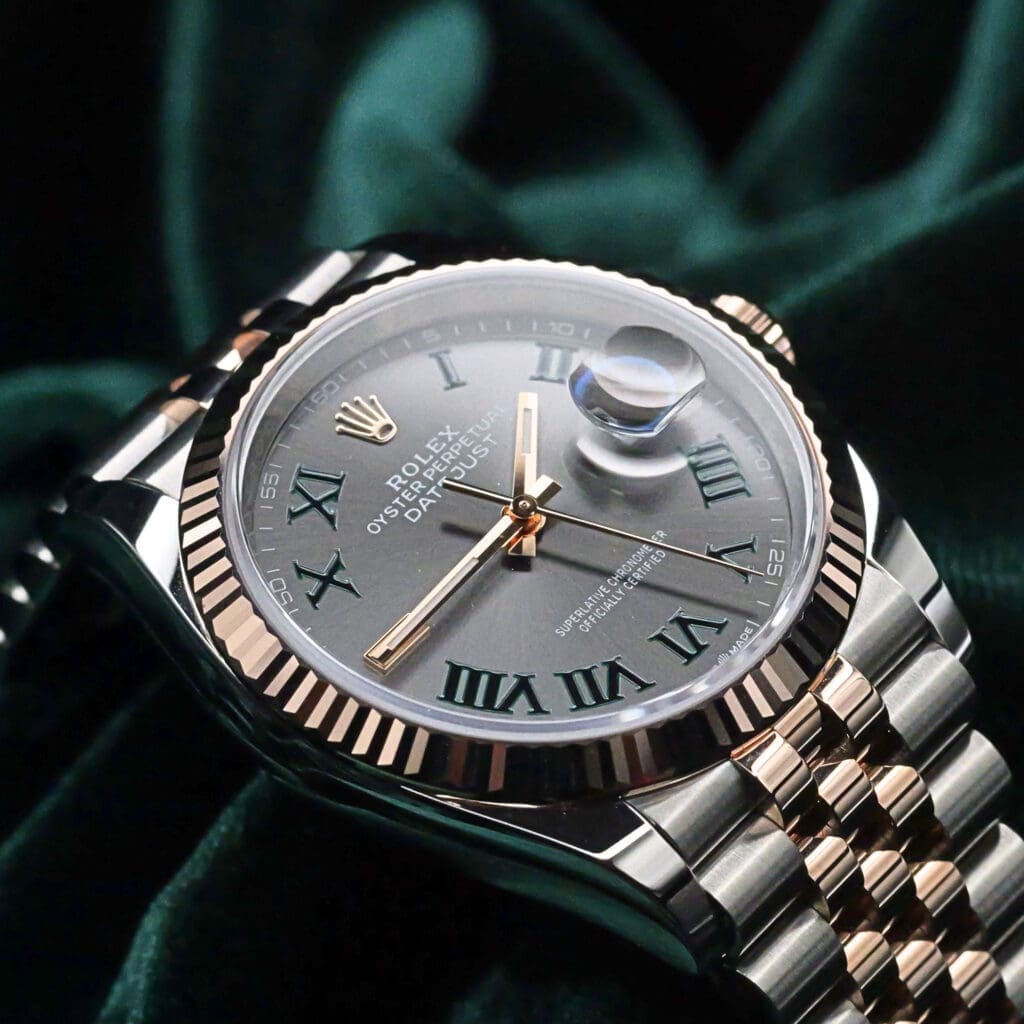
Rolex Datejust 36 Grey Wimbledon Dial Fluted Bezel Jubilee Bracelet Two-Tone Rose Gold Stainless Steel MINT COMPLETE SET 126231
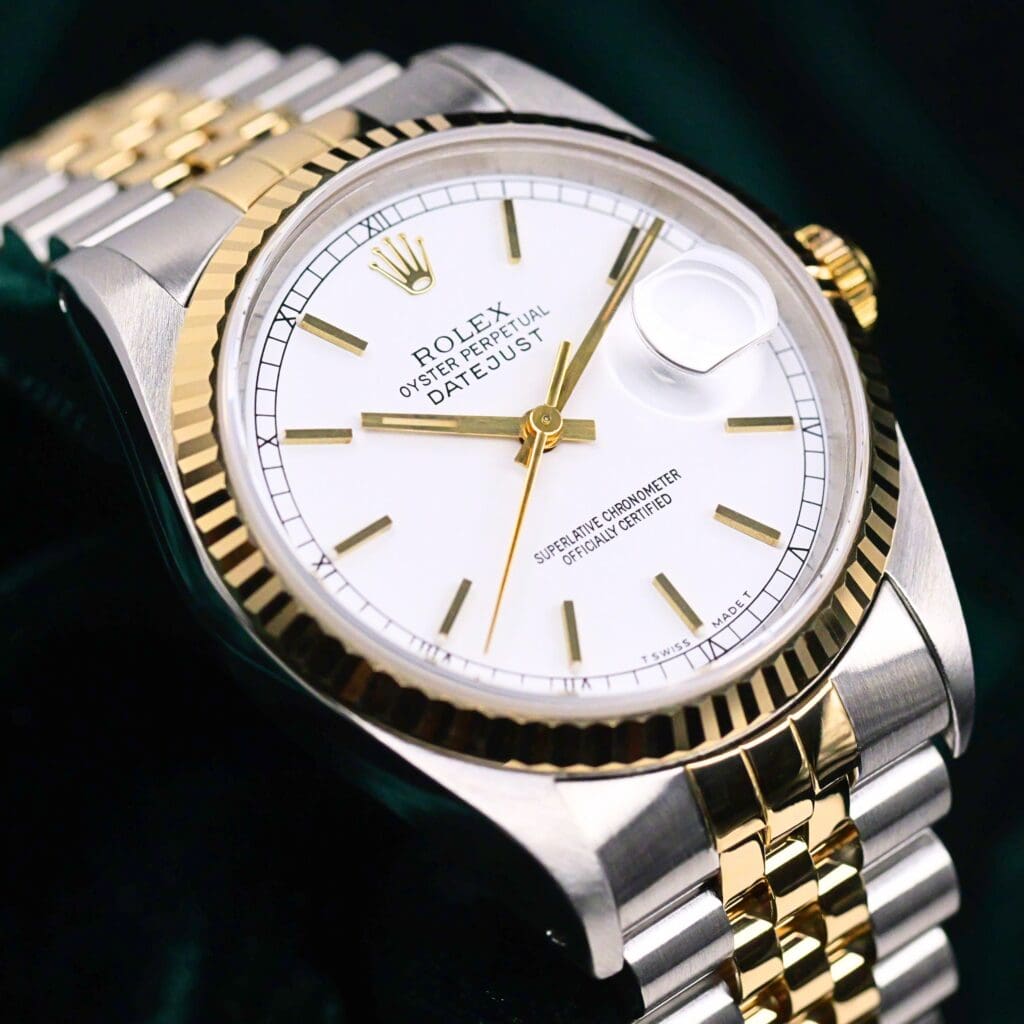
Rolex Datejust White Dial Fluted Bezel Jubilee Bracelet Two-Tone 18K Yellow Gold Stainless Steel 36mm MINT CONDITION 16233
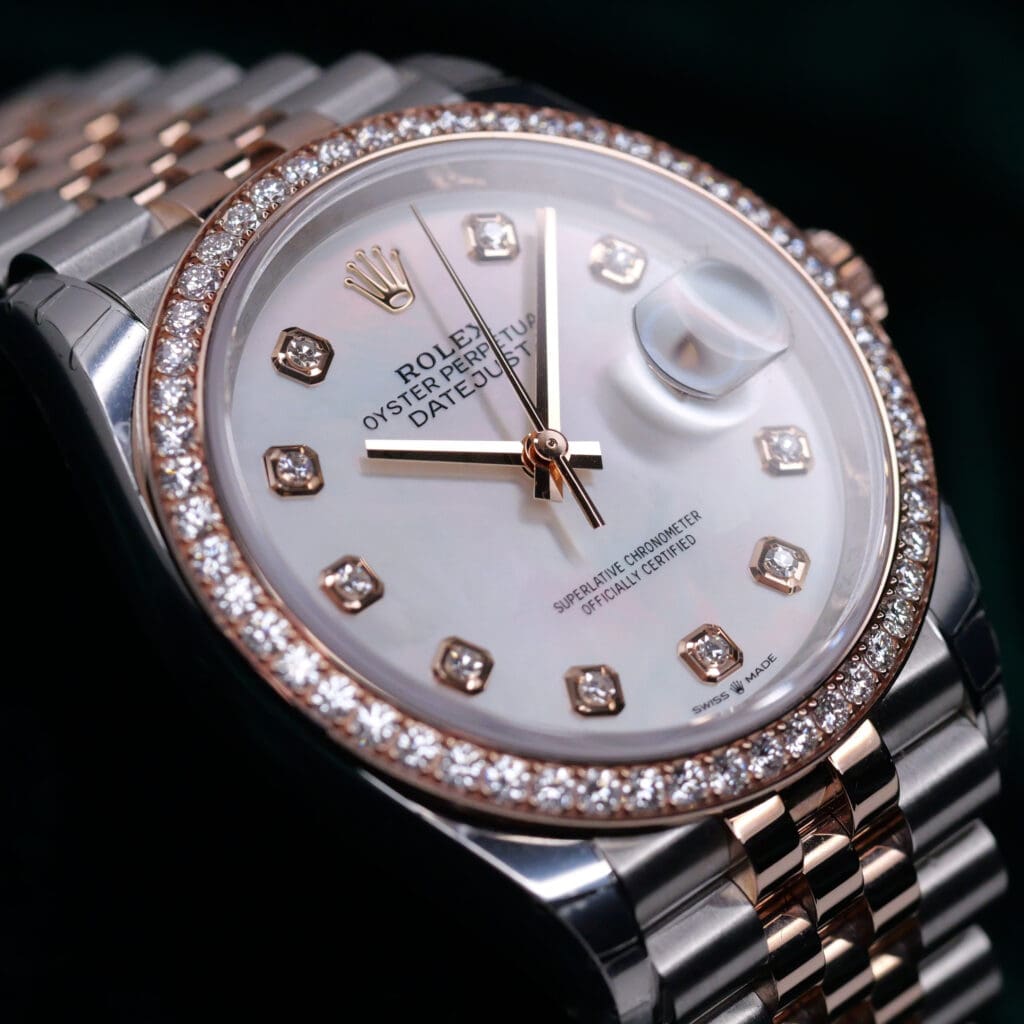
2025 NEW UNWORN Rolex Datejust 36 Mother of Pearl Dial Diamond Hour Markers Diamond Bezel Jubilee Bracelet Two-Tone 18k Rose Gold Stainless Steel 36mm COMPLETE SET 126281RBR-0009
What Changed in 2026
Both brands had a busy year, and it nudges the Cartier Santos vs Rolex picture.
Cartier walked into 2026 with real momentum. Auction results are up, shaped watches are having a moment, and the Santos is riding that wave.
At Watches and Wonders 2026, Cartier gave the Santos-Dumont a new flexible metal bracelet, a fine 394-link “beads of rice” design that drapes like fabric. It also added a yellow-gold version with a dial cut from Mexican obsidian, and no two of those dials look quite the same.
Cartier also reworked the Santos de Cartier Chronograph into a larger 47.5mm piece in steel, two-tone, and gold, released in June 2026. Steel versions are expected to land around $11,000 to $13,000.
Rolex spent the year on its 100th-anniversary run. The Oyster Perpetual turned 100, marked by a special OP 36 with a multicolored Jubilee-motif dial. Rolex also showed a Jubilee-gold Day-Date and refreshed pieces across the catalog. None of it reshuffles the core dress lineup, but it keeps demand firm.
The short version for a buyer: Cartier is getting more collector attention than it has in years, and the Santos rides that halo. Rolex stayed exactly as liquid and price-stable as it always is.
Cartier Santos vs Rolex: Side-by-Side Comparison
Here’s the closest real cross-shop, the steel Santos Large against the Datejust 36.
| Specification | Santos de Cartier Large | Rolex Datejust 36 |
| Reference | WSSA0030 | 126234 |
| Case shape | Square, 39.8mm | Round, 36mm |
| Material | 316L stainless steel | Oystersteel (904L) |
| Bezel | Steel with exposed screws | Smooth or fluted white gold |
| Movement | Caliber 1847 MC | Caliber 3235 |
| Power reserve | ~40 hours | 70 hours |
| Crown | Push-pull | Screw-down Twinlock |
| Bracelet | SmartLink / QuickSwitch | Oyster or Jubilee |
| Lume | None | Chromalight |
| Water resistance | 100m | 100m |
| Market price (2026) | ~$6,800–$7,800 | ~$12,000–$12,500 |
The table makes the split obvious. The Santos gives you shape and easy strap changes. The Datejust gives you the longer reserve, lume, and much stronger resale. For a closer head-to-head on just these two, see our full Cartier Santos vs Datejust comparison.
Price and Market Demand

Price and Market Demand
Here’s the honest version of the money side. The Santos and a Rolex dress watch start in a similar bracket, then behave very differently once you own them.
Start with the entry point. A steel Santos de Cartier Medium (WSSA0029) retails around $7,750, and the Large sits near $8,650. Cartier raised US prices in May 2026, so current stock carries small bumps. Pre-owned, those same references trade closer to $6,000 to $7,500, roughly 15 to 25 percent under retail (WatchCharts, Chrono24).
That gap is the key Santos fact. Cartier makes them to order with no waitlist, so a steel Santos is worth less than sticker the moment it leaves the boutique. That’s normal for the model, not a warning sign. A full set with box, papers, and a fresh warranty card wins back 10 to 20 percent of the difference.
Rolex runs the other way. The Datejust 36 (126234) retails near $9,550, yet clean examples trade around $12,000 to $12,500, and the popular “Wimbledon” dial climbs higher. The Datejust 41 (126334) sits near $14,000.
Related Models from Majestix

Rolex Deepsea "James Cameron" D-Blue Dial Black Ceramic Bezel Oyster Bracelet Stainless Steel 44mm MINT CONDITION COMPLETE SET 116660-0003
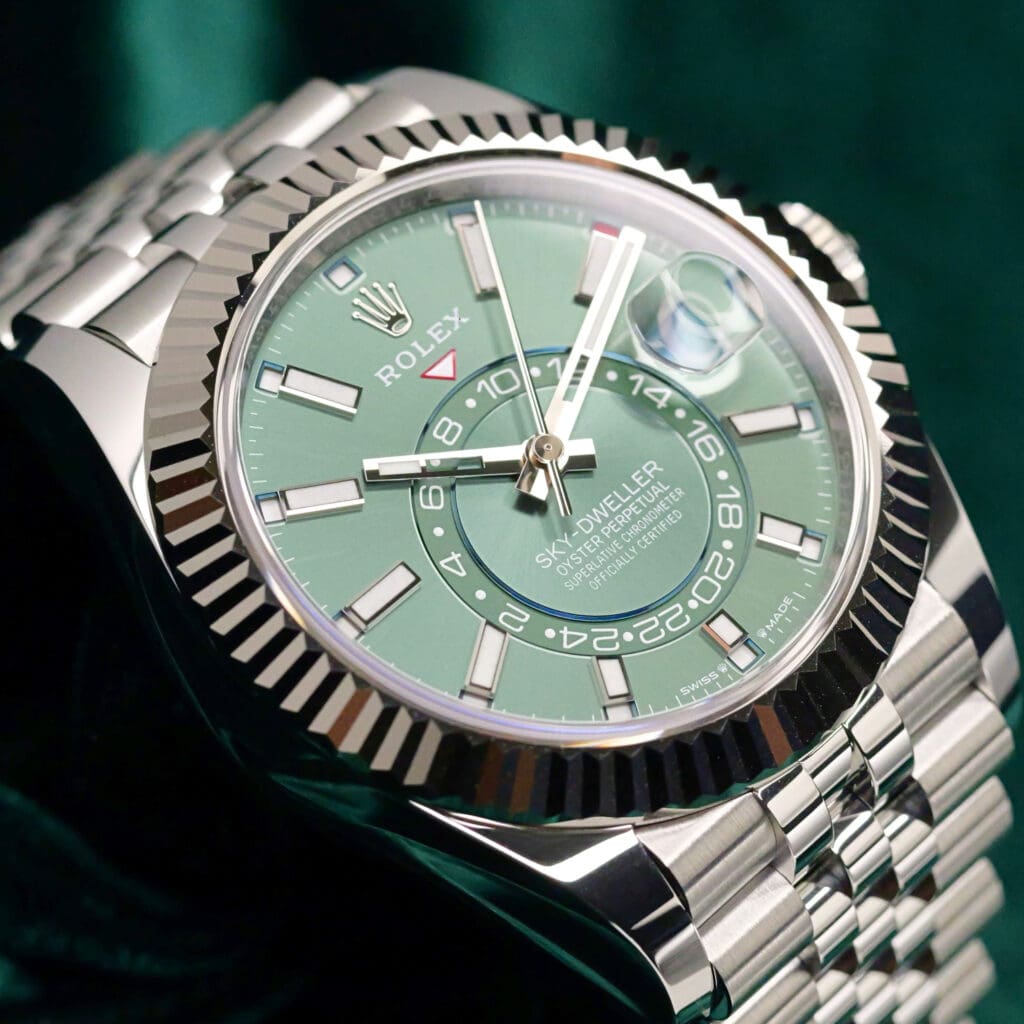
2026 NEW UNWORN Rolex Sky-Dweller Mint Green Dial 18K White Gold Fluted Bezel Jubilee Bracelet Stainless Steel 42mm COMPLETE SET 336934-0002
Rolex Lady-Datejust Champagne Linen Dial 18k Yellow Gold Fluted Bezel Jubilee Bracelet Two Tone Steel & Gold 26mm MINT CONDITION COMPLETE SET 69173
2026 Rolex Datejust Blue Dial Smooth Bezel Jubilee Bracelet Stainless Steel 41mm MINT CONDITION COMPLETE SET 126300
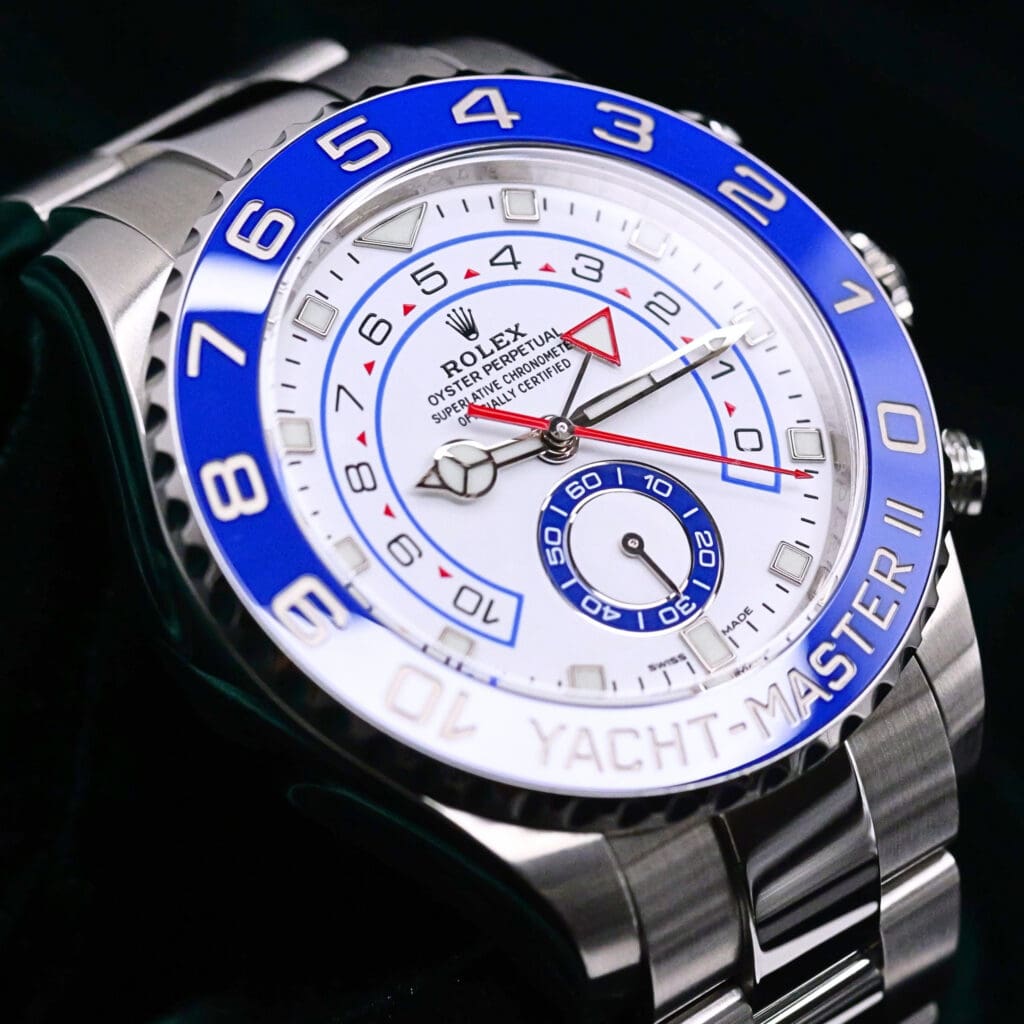
Rolex Yacht-Master II White Dial Blue Ceramic Bezel Oyster Bracelet Stainless Steel 44mm MINT CONDITION COMPLETE SET 116680
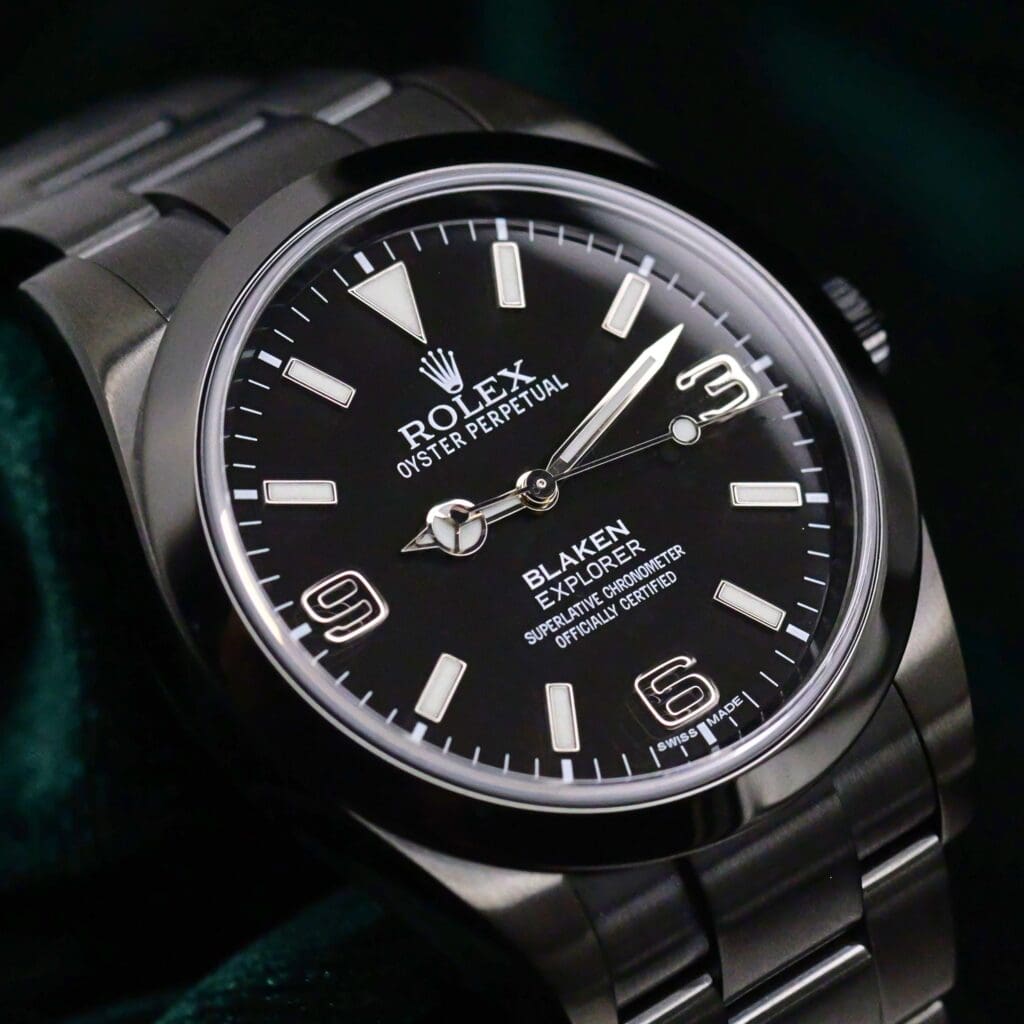
Rolex Explorer Blaken Black Dial Oyster Bracelet DLC Black Stainless Steel 39mm MINT CONDITION COMPLETE SET 214270
2026 NEW UNWORN Rolex Datejust 36 Mother of Pearl Diamond Dial Diamond Bezel Jubilee Two-Tone Steel 18k Yellow Gold 36mm COMPLETE SET 126283RBR-0009
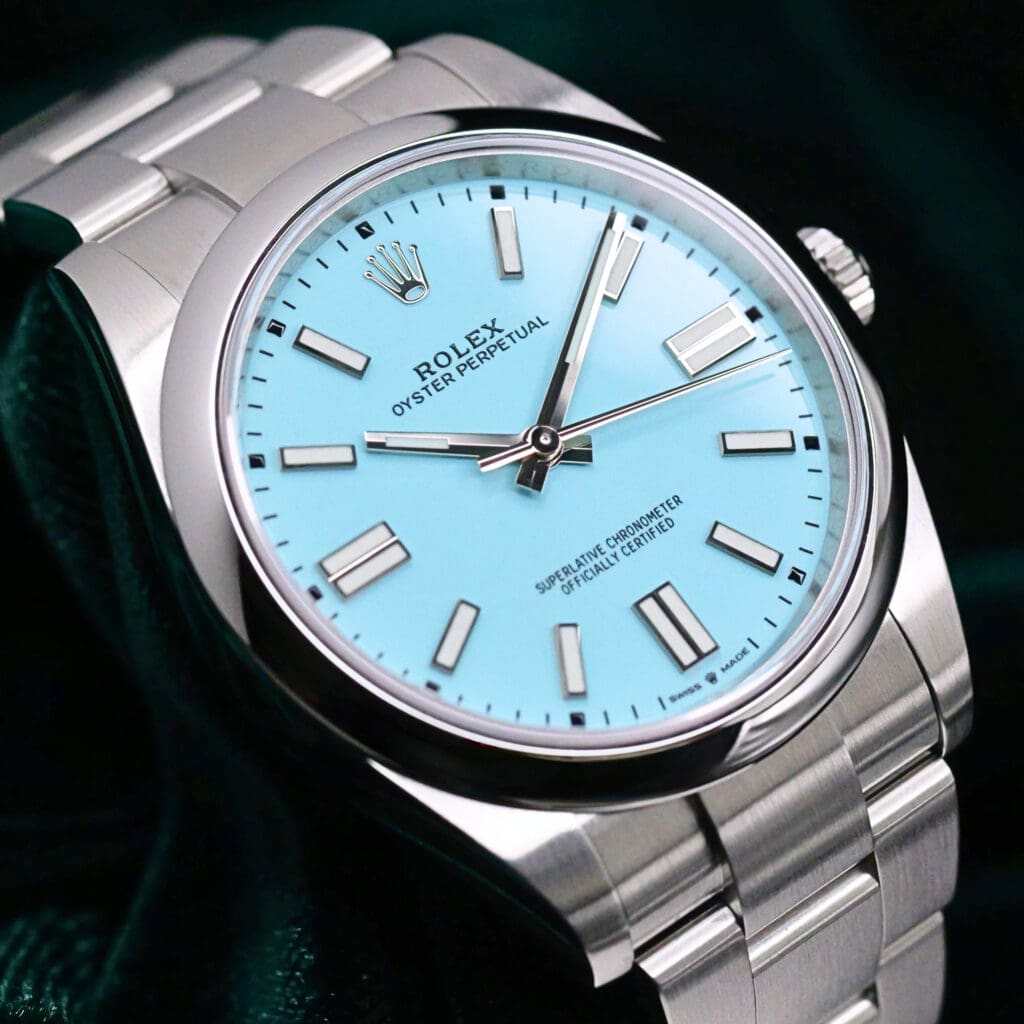
Rolex Oyster Perpetual "Tiffany" Turquoise Blue Dial Oyster Bracelet Stainless Steel 41mm MINT CONDITION COMPLETE SET 124300
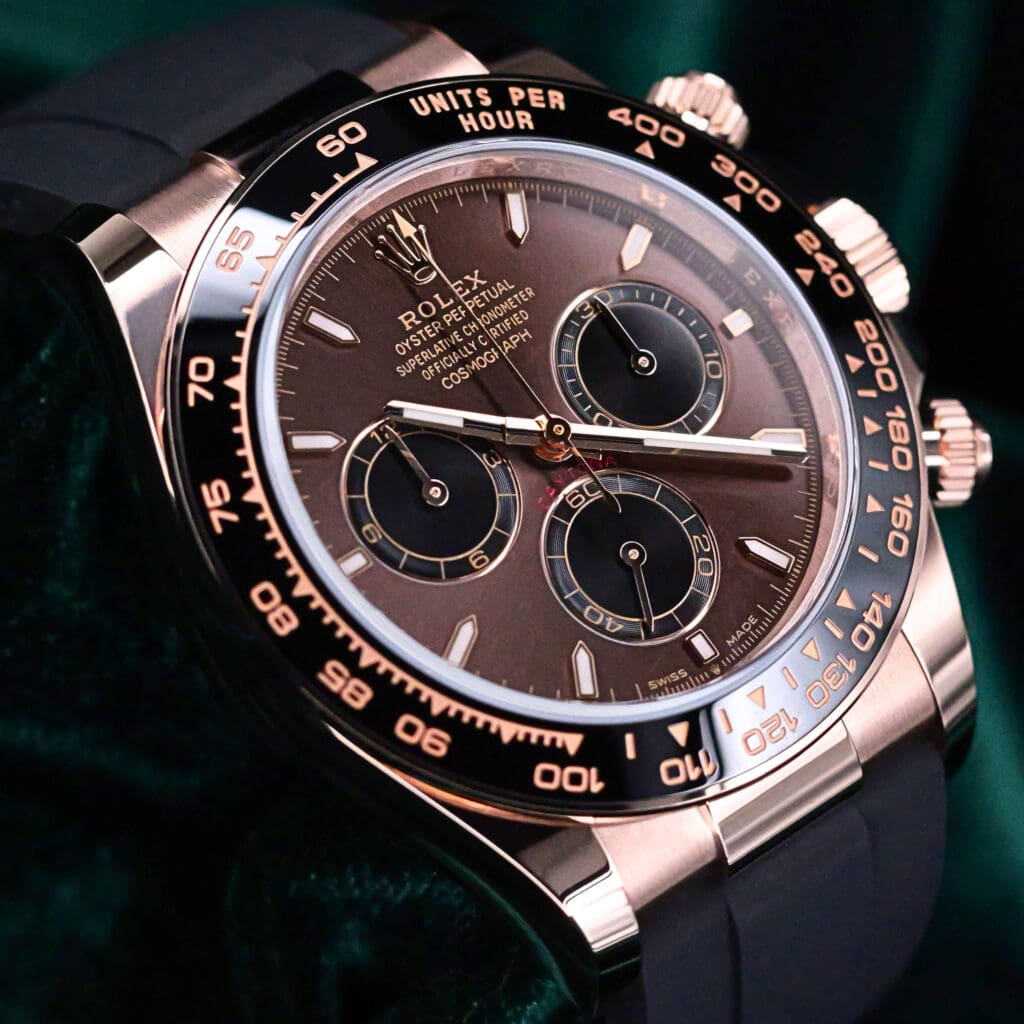
Rolex Cosmograph Daytona Chocolate Brown Dial Black Ceramic Bezel Black Subdials Black Oysterflex 18K Rose Gold 40mm MINT CONDITION 126515LN-0010
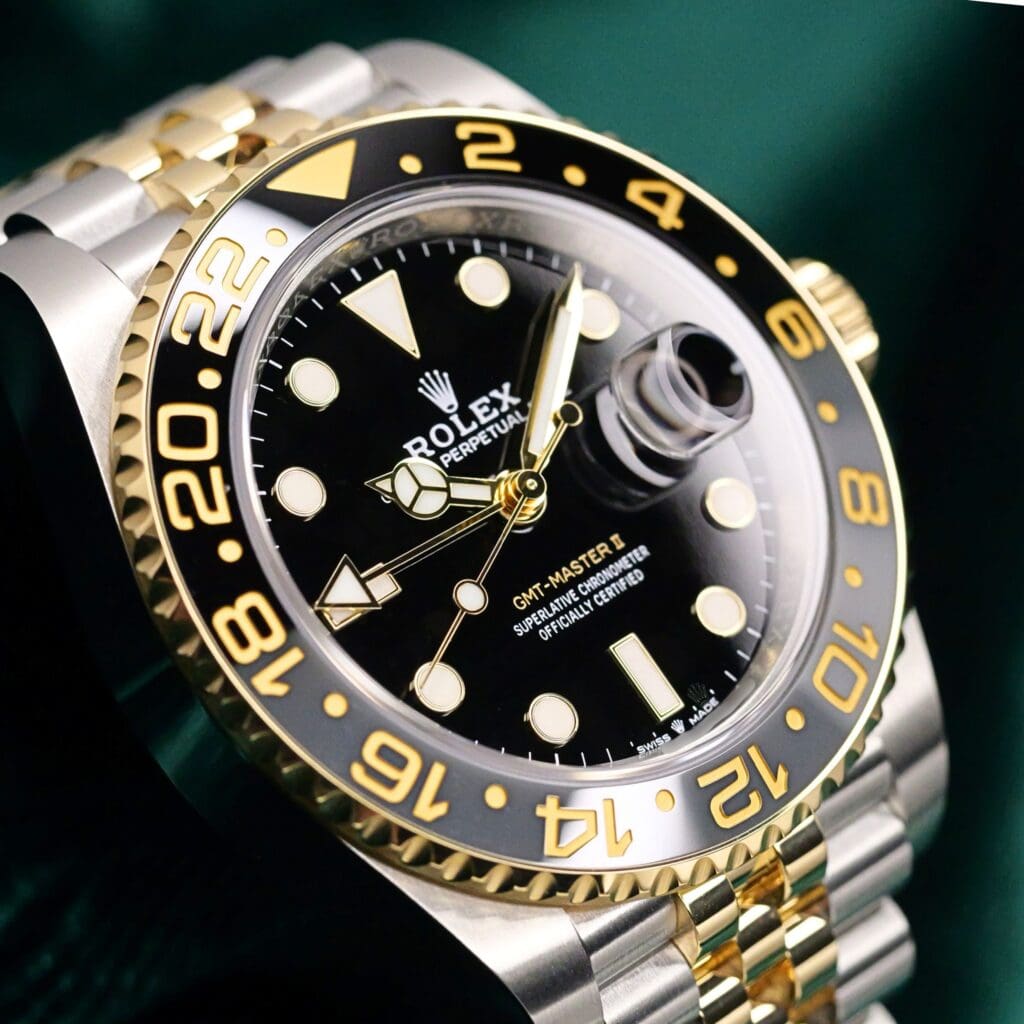
Rolex GMT-Master II Zombie Black Dial Black/Grey Ceramic Bezel Jubilee Bracelet Two-Tone 18K Yellow Gold Stainless Steel 40mm MINT CONDITION COMPLETE SET 126713GRNR
Rolex Datejust 36 Grey Wimbledon Dial Fluted Bezel Jubilee Bracelet Two-Tone Rose Gold Stainless Steel MINT COMPLETE SET 126231
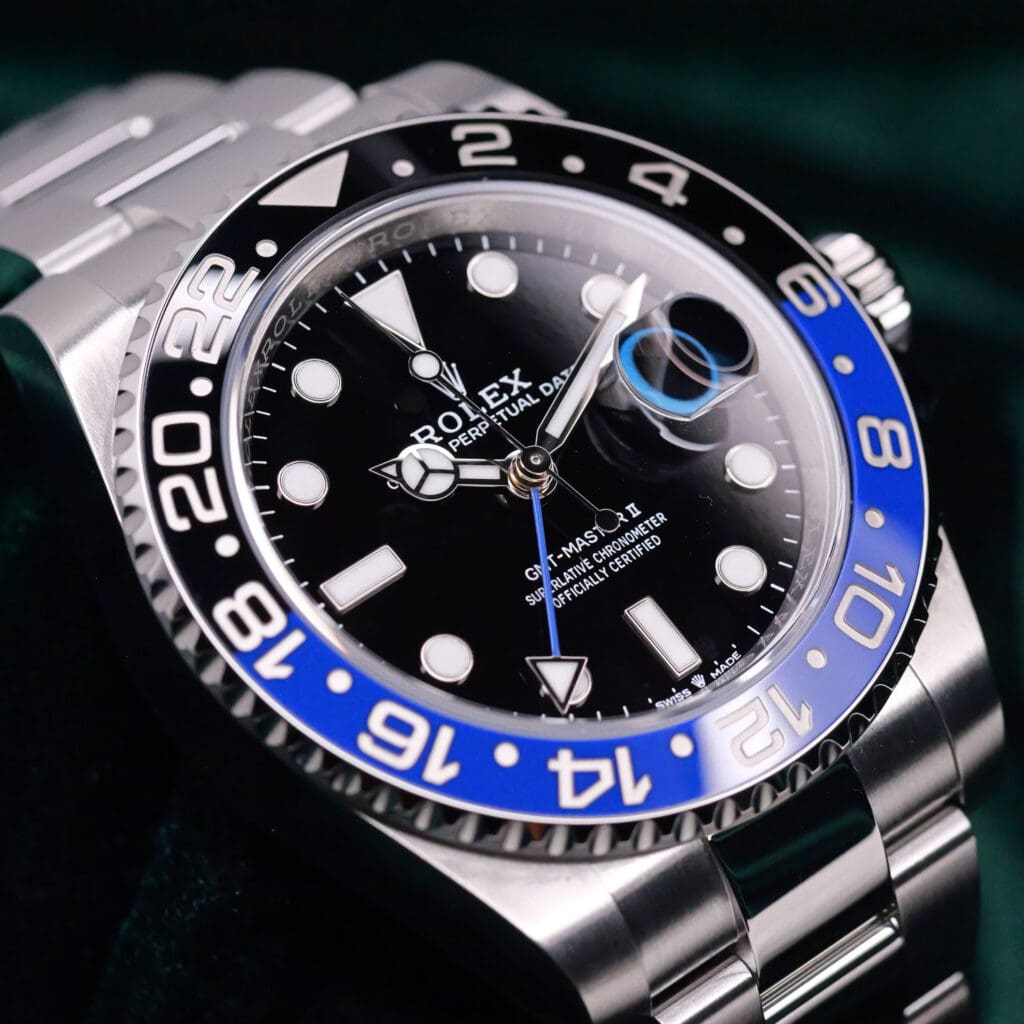
2026 Rolex GMT-Master II Batman Black Dial Black Blue Cerachrom Bezel Oyster Bracelet Oystersteel 40mm MINT CONDITION COMPLETE SET 126710BLNR
So what does that gap tell you? A watch trading above retail means demand outruns supply and resale will be quick. A watch trading below retail means you’re paying for design and instant availability, not liquidity. Neither is wrong. They’re just different deals.
On liquidity, the Datejust is one of the easiest luxury watches on earth to move, with a deep buyer pool and fast turnaround. The Santos sells too, just slower and to a narrower crowd who specifically want the square case. Gold and two-tone Santos hold their percentage better than plain steel. For more on why Rolex holds its value so well, we cover the pattern in depth.
What moves either price comes down to condition, full set, production year, and configuration. Fluted bezels, Jubilee bracelets, and rare dials lift Rolex values. On the Santos side, gold, skeleton work, and discontinued references like the Santos 100 carry the premiums.
Notable Cartier Santos References

The Santos line covers thin dress pieces, everyday steel, and openworked showpieces. Here are the ones worth knowing before you buy. If you want the whole family mapped out before committing, our Cartier Santos buying guide breaks down the lineup.
1. Cartier Santos-Dumont (WGSA0072 / WGSA0064)
The Santos-Dumont is the thin, dressy Santos that sits closest to the original 1904 watch. It’s the pick for someone who wants Cartier heritage in its purest, flattest form rather than a sports watch. If you’re deciding between the two, our Santos-Dumont vs Santos de Cartier comparison covers the split.
- Case size: about 31mm wide, 43mm tall
- Material: 18k yellow or rose gold, with limited steel editions
- Movement: manual-wind (Caliber 430 MC)
- Water resistance: 30 meters
- Typical price range: $8,000 to $17,000 for gold, less for steel editions
2. Santos de Cartier Medium (WSSA0029 / WSSA0061)
The Medium is the sweet spot for most buyers. At 35mm the square case wears like a 39–40mm round watch, so it fits a wide range of wrists and slides under a cuff cleanly.
- Case size: 35.1mm x 41.9mm
- Material: stainless steel
- Movement: automatic (Caliber 1847 MC)
- Power reserve: ~40 hours
- Water resistance: 100 meters
- Typical price range: $6,000 to $7,500
Related Models from Majestix
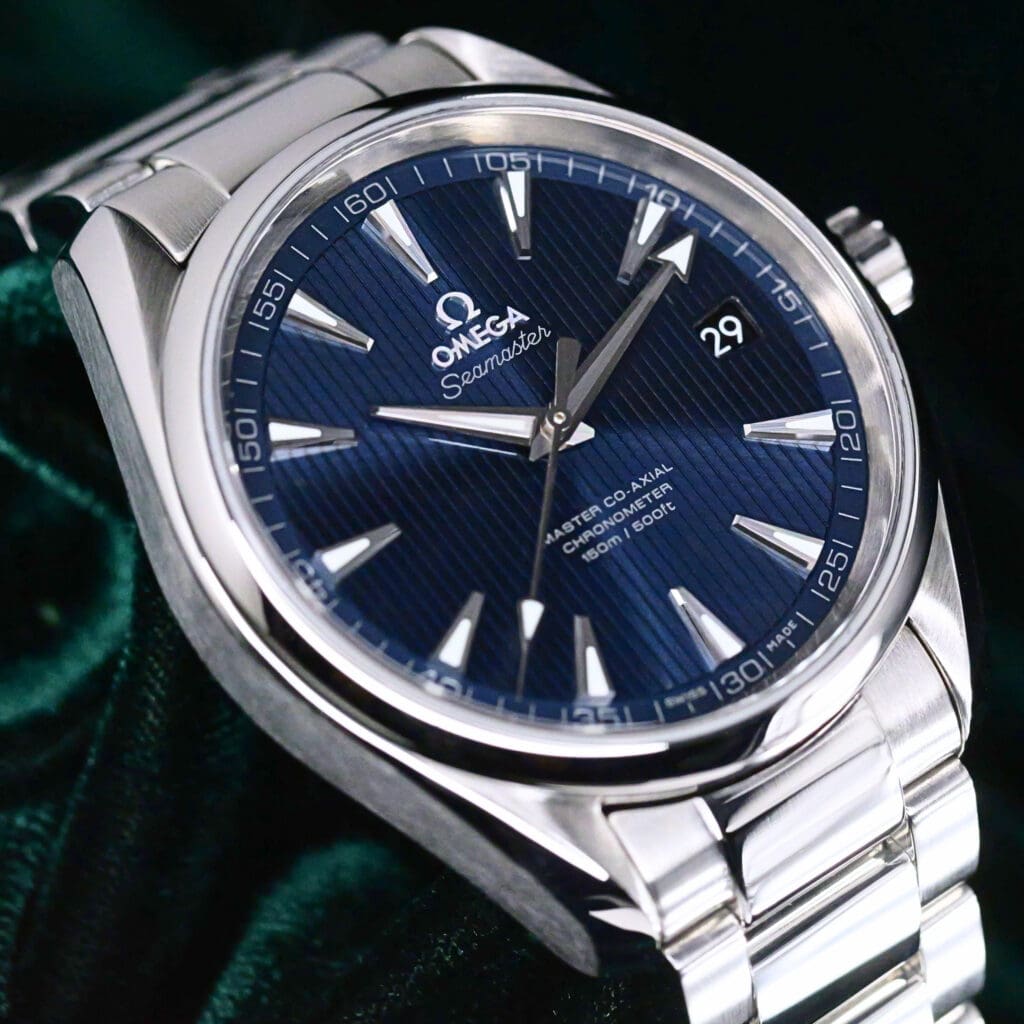
Omega Seamaster Aqua Terra 150M Master Co-Axial Chronometer Blue Teak Dial Stainless Steel 41.5mm MINT CONDITION COMPLETE SET 231.10.42.21.03.003
2026 Rolex Datejust Blue Dial Smooth Bezel Jubilee Bracelet Stainless Steel 41mm MINT CONDITION COMPLETE SET 126300
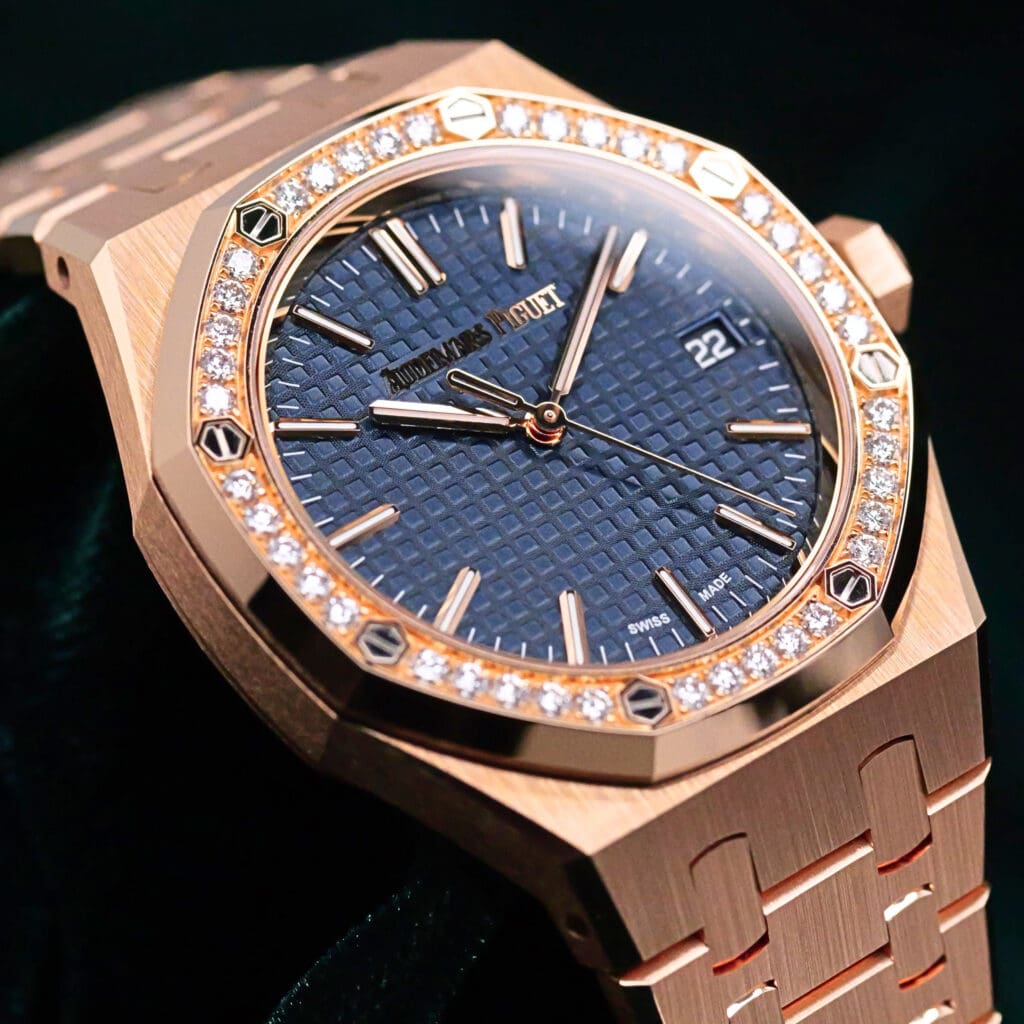
Audemars Piguet Royal Oak Selfwinding "50th Anniversary" Bleu Nuit Nuage 50 Blue Dial Diamond Bezel 18K Rose Gold 37mm MINT CONDITION COMPLETE SET 15551OR.ZZ.1356OR.02
Rolex Yacht-Master II White Dial Blue Ceramic Bezel Oyster Bracelet Stainless Steel 44mm MINT CONDITION COMPLETE SET 116680
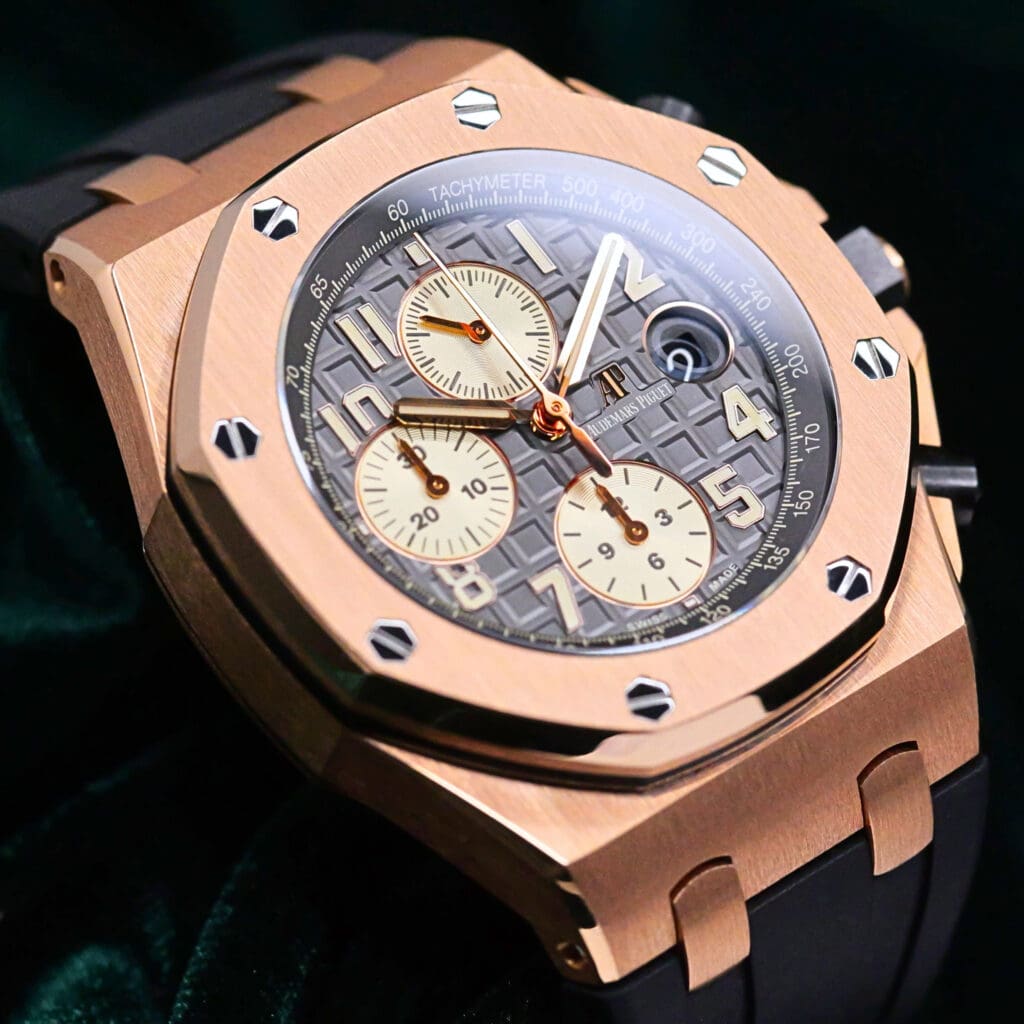
Audemars Piguet Royal Oak Offshore Chronograph “Half Brick” Ruthenium Grey Dial 18K Rose Gold Black Rubber Strap 42mm MINT CONDITION COMPLETE SET 26470OR.OO.A125CR.01
Rolex Oyster Perpetual "Tiffany" Turquoise Blue Dial Oyster Bracelet Stainless Steel 41mm MINT CONDITION COMPLETE SET 124300
3. Santos de Cartier Large (WSSA0030 / WSSA0062)
The Large is the everyday steel Santos with real wrist presence, close in footprint to a Datejust 41. It’s the one to try if the Medium feels too polite for your wrist.
- Case size: 39.8mm x 47.5mm
- Material: stainless steel
- Movement: automatic (Caliber 1847 MC)
- Power reserve: ~40 hours
- Water resistance: 100 meters
- Market price (2026): around $7,300 (see the comparison table above)
4. Cartier Santos 100 (W20090X8 / W20121U2)
The Santos 100 is the big, sporty predecessor to today’s model, with bold crown guards and a chunkier case. It’s discontinued now, so it’s a pre-owned-only hunt for buyers who want the largest, most assertive Santos.
- Case size: 41.3mm
- Material: stainless steel, two-tone, or full gold
- Movement: automatic
- Water resistance: 100 meters
- Typical price range: $3,000 to $6,500
5. Cartier Santos Galbée (2319 / 2961)
The Galbée is the older, curved-case Santos that hugs a smaller wrist. Long discontinued, it’s a quiet vintage entry point for someone who likes a slimmer, more understated profile.
- Case size: 35mm–38mm
- Material: stainless steel
- Movement: automatic
- Water resistance: 100 meters
- Typical price range: $3,500 to $6,000
6. Cartier Santos Skeleton (WHSA0015 / WHSA0009)
The Skeleton turns the movement itself into the dial, with the hours built into an openworked bridge. It’s the collector’s Santos, priced well above the standard steel pieces for the craft on show.
- Case size: 39.8mm
- Material: stainless steel, with ADLC-coated versions
- Movement: Caliber 1847 MC skeleton
- Water resistance: 100 meters
- Typical price range: $12,000 to $22,000
Notable Rolex Dress Watch References

Rolex dress watches cover clean steel classics and full precious-metal statements. These five are the ones most Santos cross-shoppers weigh up.
1. Rolex Datejust 36 (126200 / 126234)
The Datejust 36 is the template every other dress watch gets measured against. The 36mm case is genuinely gender-neutral, and the Wimbledon dial has become one of the most wanted configurations out there. To weigh the references before committing, see our Rolex Datejust buying guide.
- Case size: 36mm
- Material: Oystersteel, optional 18k white gold bezel
- Movement: Caliber 3235, automatic
- Power reserve: 70 hours
- Water resistance: 100m, screw-down Twinlock crown
- Market price (2026): from ~$9,500 for the steel 126200 up to ~$13,000 for the fluted 126234, Wimbledon dial highest
2. Rolex Datejust 41 (126300 / 126334)
The Datejust 41 is the modern default for buyers who want a bit more wrist. Same movement and finishing as the 36, more presence, and the widest dial-and-bezel menu in the lineup.
- Case size: 41mm
- Material: Oystersteel, optional 18k white gold bezel
- Movement: Caliber 3235, automatic
- Power reserve: 70 hours
- Water resistance: 100m, screw-down Twinlock crown
- Typical market range: $12,500 to $15,000
3. Rolex Oyster Perpetual 36 (126000)


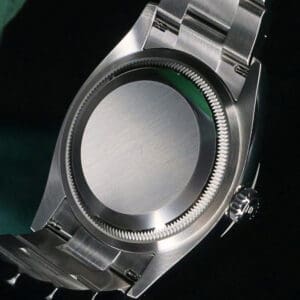


The OP 36 is the purest Rolex you can buy: no date, no fuss, just the time. Bright dial colors give it personality, and 2026’s 100th-anniversary version added a multicolored twist.
- Case size: 36mm
- Material: Oystersteel
- Movement: Caliber 3230, automatic
- Power reserve: 70 hours
- Water resistance: 100m, screw-down Twinlock crown
- Typical market range: $5,500 to $7,500
4. Rolex Oyster Perpetual 41 (124300)
The OP 41 is the same clean idea with more heft. Prices have cooled from their 2022 peak and now sit close to retail, which makes it one of the better-value modern Rolex buys. Our Rolex Oyster Perpetual buying guide runs through the sizes and dial colors.
- Case size: 41mm
- Material: Oystersteel
- Movement: Caliber 3230, automatic
- Power reserve: 70 hours
- Water resistance: 100m, screw-down Twinlock crown
- Typical market range: $6,500 to $8,500
5. Rolex Day-Date 36 (128238 / 128235)
The Day-Date is the top of the Rolex dress order, made only in precious metal, with the spelled-out day at twelve. It’s the flex pick, and the price reflects the gold as much as the name.
- Case size: 36mm
- Material: 18k yellow gold or Everose gold
- Movement: Caliber 3255, automatic
- Power reserve: 70 hours
- Water resistance: 100m, screw-down Triplock crown
- Typical market range: $32,000 to $45,000
If you’re weighing one specific reference against another, we’re glad to tell you what a given Santos or Datejust is trading for this week. No pressure to buy.
Which Watch Should You Choose?
Both watches are good. The right one depends on what you want from it day to day.
Choose the Cartier Santos if:
- You want a square case that stands apart from every round watch in the room
- You like Roman numerals and a jewelry-influenced, dressier look
- You swap straps often and want to do it in seconds, no tools
- You’d rather walk into a boutique and buy today than sit on a waitlist
- You want a thin case that slips under a shirt cuff
- The historical angle, wearing the first men’s wristwatch design, means something to you
Choose a Rolex Dress Watch if:
- You want a round case that reads formal or casual without thinking about it
- You rotate watches and value a 70-hour reserve that survives the weekend
- You need lume for low light and a screw-down crown for peace of mind
- Resale matters, and you might sell in a few years
- You want the widest possible choice of dials, bezels, and sizes
- You’d rather own the watch everyone quietly recognizes
The tie-breaker is simple. If the watch is mostly for you, buy the Santos and enjoy the shape. If part of the reason you’re buying is that you might sell it later, the Rolex is the safer money.
Where to Buy Authentic Watches Online
You’ve got a few solid online routes for a Santos or a Rolex dress watch, and it’s worth knowing where to buy a pre-owned watch safely before you commit. Chrono24 is the biggest global marketplace, with an escrow option that holds your payment until the watch checks out. Our guide to what to check when buying on Chrono24 covers that step.
eBay covers higher-value watches under its Authenticity Guarantee, where the piece is inspected before it reaches you. Grailzee runs enthusiast-focused auctions if you like the bidding route.
We also buy, sell, and trade luxury watches, and the reason clients pick us over a big listing is the conversation before the money moves. You get tour videos of the actual watch, honest condition notes, and a real person who has had it in hand and can answer straight questions. You’re not buying blind off a photo.
That’s what our 4.9-star Google rating reflects, buyers who wanted a proper walkthrough instead of a checkout button. If there’s a specific reference you’re chasing, we can help you source one.
If you want that kind of look at a specific Santos or Rolex, reach out and we’ll line up options that match what you’re after.
Frequently Asked Questions
Is the Cartier Santos a better investment than a Rolex?
No, a Rolex Datejust is the stronger investment of the two. The Datejust trades above retail and sells fast, while a steel Santos usually settles below retail on the used market. Buy the Santos because you want to wear it, not to flip it.
Does the Cartier Santos hold its value?
It holds value reasonably well, better than most non-Rolex steel watches. A steel Santos keeps roughly 55 to 75 percent of retail, and gold or two-tone versions hold their dollar value better. Full box and papers make a real difference at resale.
Is the Cartier Santos too dressy for everyday wear?
No, the Santos handles daily wear fine. It’s 100m water resistant and built for real use, despite the elegant look. The square case reads a little dressier than a Datejust, but plenty of people wear one as their only watch.
999+ Timepieces Available
Explore Our Timepieces
Authenticated, unworn, and ready to ship worldwide.
Rolex · Audemars Piguet · Patek Philippe · Omega · Cartier · Richard Mille · Hublot · Tudor
Newly Listed
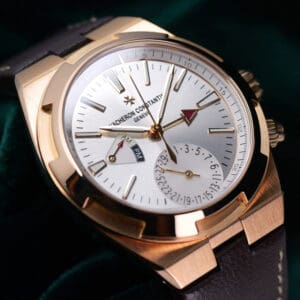
Vacheron Constantin Overseas Dual Time Silver Dial Brown Leather Strap 18K Rose Gold 41mm MINT CONDITION COMPLETE SET 7900V/000R-B336
$41,894.00
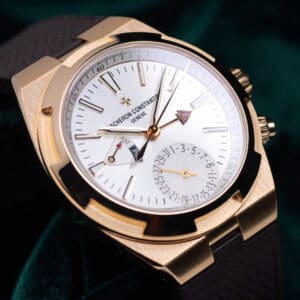
Vacheron Constantin Overseas Dual Time Silver Dial 18K Rose Gold Brown Rubber Strap 41mm MINT CONDITION COMPLETE SET 7900V/000R-B336
$41,894.00
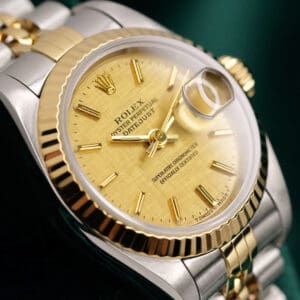
Rolex Lady-Datejust Champagne Linen Dial 18k Yellow Gold Fluted Bezel Jubilee Bracelet Two Tone Steel & Gold 26mm MINT CONDITION COMPLETE SET 69173
$9,345.00
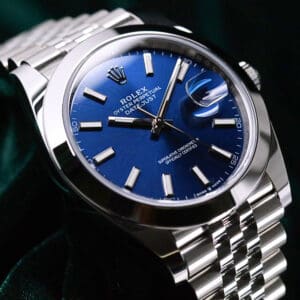
2026 Rolex Datejust Blue Dial Smooth Bezel Jubilee Bracelet Stainless Steel 41mm MINT CONDITION COMPLETE SET 126300
$13,796.00
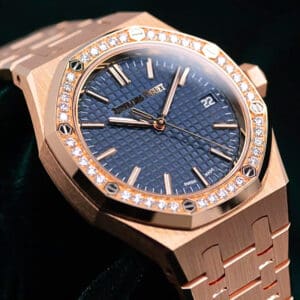
Audemars Piguet Royal Oak Selfwinding "50th Anniversary" Bleu Nuit Nuage 50 Blue Dial Diamond Bezel 18K Rose Gold 37mm MINT CONDITION COMPLETE SET 15551OR.ZZ.1356OR.02
$99,745.00
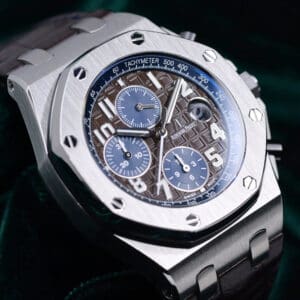
Audemars Piguet Royal Oak Offshore Chronograph "Havana" Brown Dial Blue Subdials Brown Leather Strap Stainless Steel 42mm MINT CONDITION COMPLETE SET 26470ST.OO.A099CR.01
$24,827.00
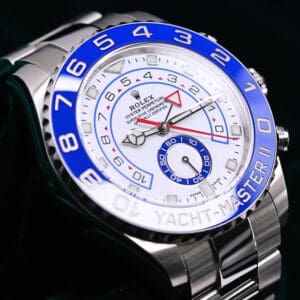
Rolex Yacht-Master II White Dial Blue Ceramic Bezel Oyster Bracelet Stainless Steel 44mm MINT CONDITION COMPLETE SET 116680
$19,409.00
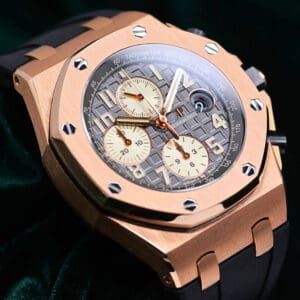
Audemars Piguet Royal Oak Offshore Chronograph “Half Brick” Ruthenium Grey Dial 18K Rose Gold Black Rubber Strap 42mm MINT CONDITION COMPLETE SET 26470OR.OO.A125CR.01
$40,892.00
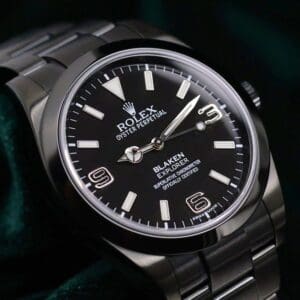
Rolex Explorer Blaken Black Dial Oyster Bracelet DLC Black Stainless Steel 39mm MINT CONDITION COMPLETE SET 214270
$16,000.00
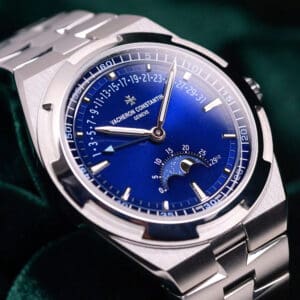
2025 Vacheron Constantin Overseas Moon Phase Retrograde Date Blue Dial Stainless Steel Bracelet 41mm MINT CONDITION COMPLETE SET 4000V/210A-B911
$52,800.00
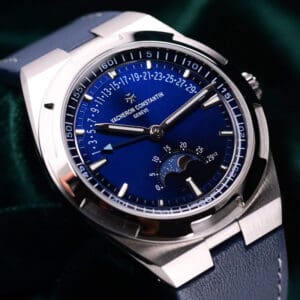
2025 Vacheron Constantin Overseas Moonphase Retrograde Date Blue Dial Blue Leather Strap Stainless Steel 41mm MINT CONDITION COMPLETE SET 4000V/210A-B911
$52,800.00
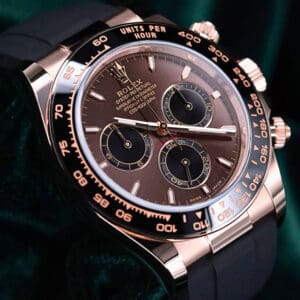
Rolex Cosmograph Daytona Chocolate Brown Dial Black Ceramic Bezel Black Subdials Black Oysterflex 18K Rose Gold 40mm MINT CONDITION 126515LN-0010
$58,396.00
Final Thoughts on Cartier Santos vs Rolex
Strip away the specs and this comes down to why you’re buying. The Santos is a watch you choose with your eye, for the square case, the Cartier name, the way it reads differently across a table. It rewards someone who wears one watch and enjoys it for its own sake.
A Rolex dress watch you choose with your head as much as your heart. It runs longer, reads easier at night, and holds its price if you ever decide to sell.
Two last things worth remembering: a full set with papers protects your resale on either watch, and trying both on in person tells you more in five minutes than any spec sheet can.