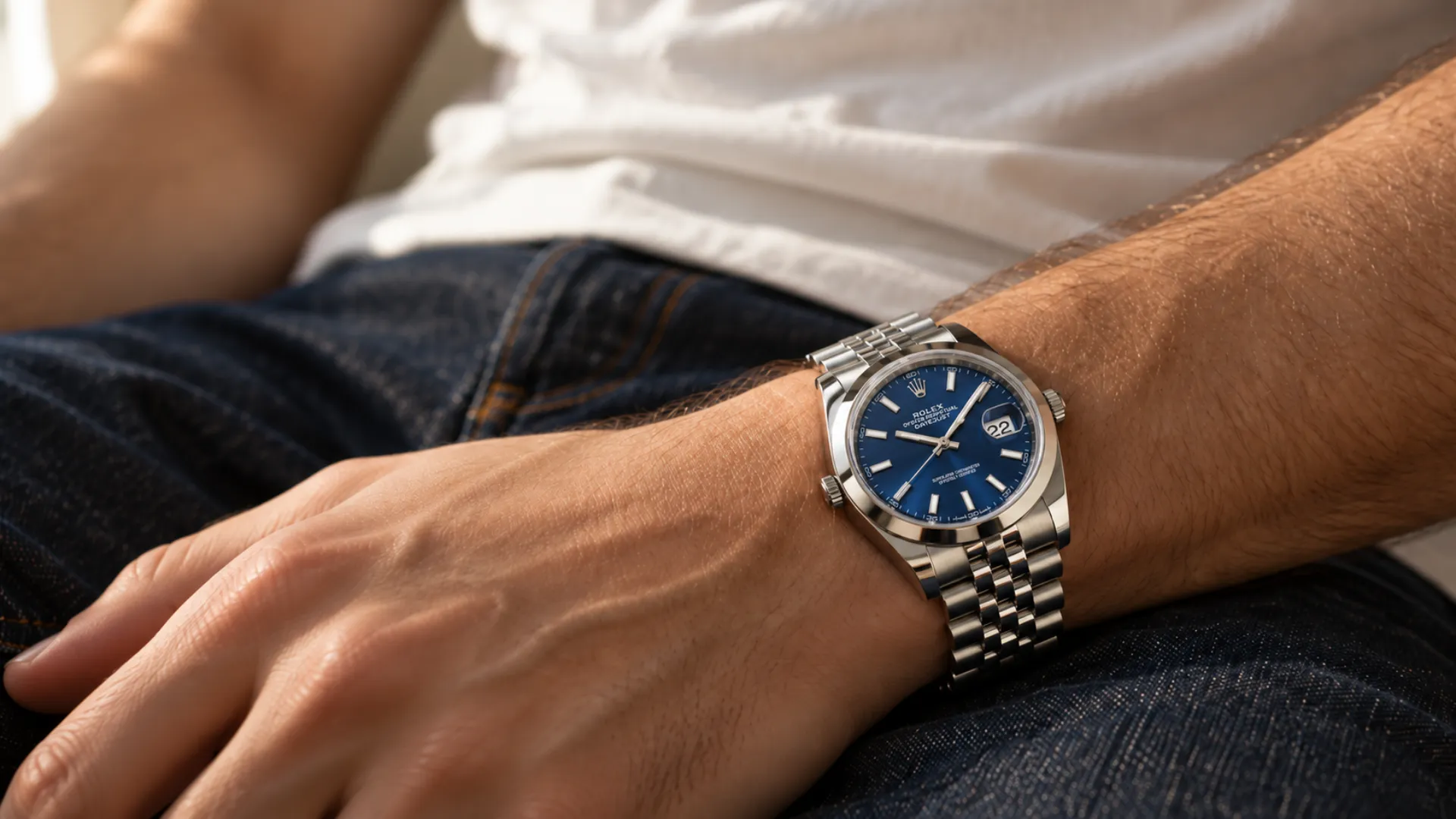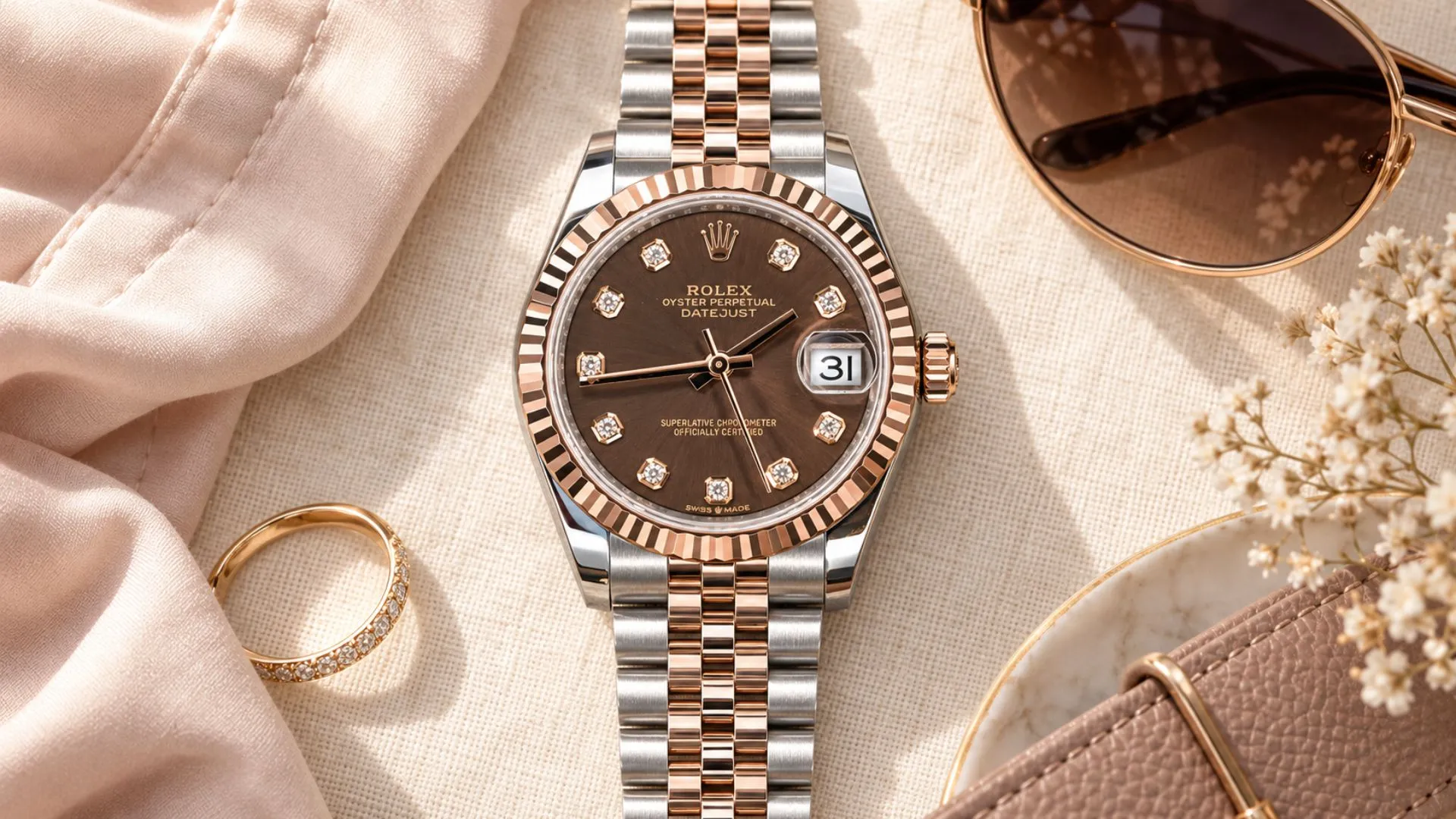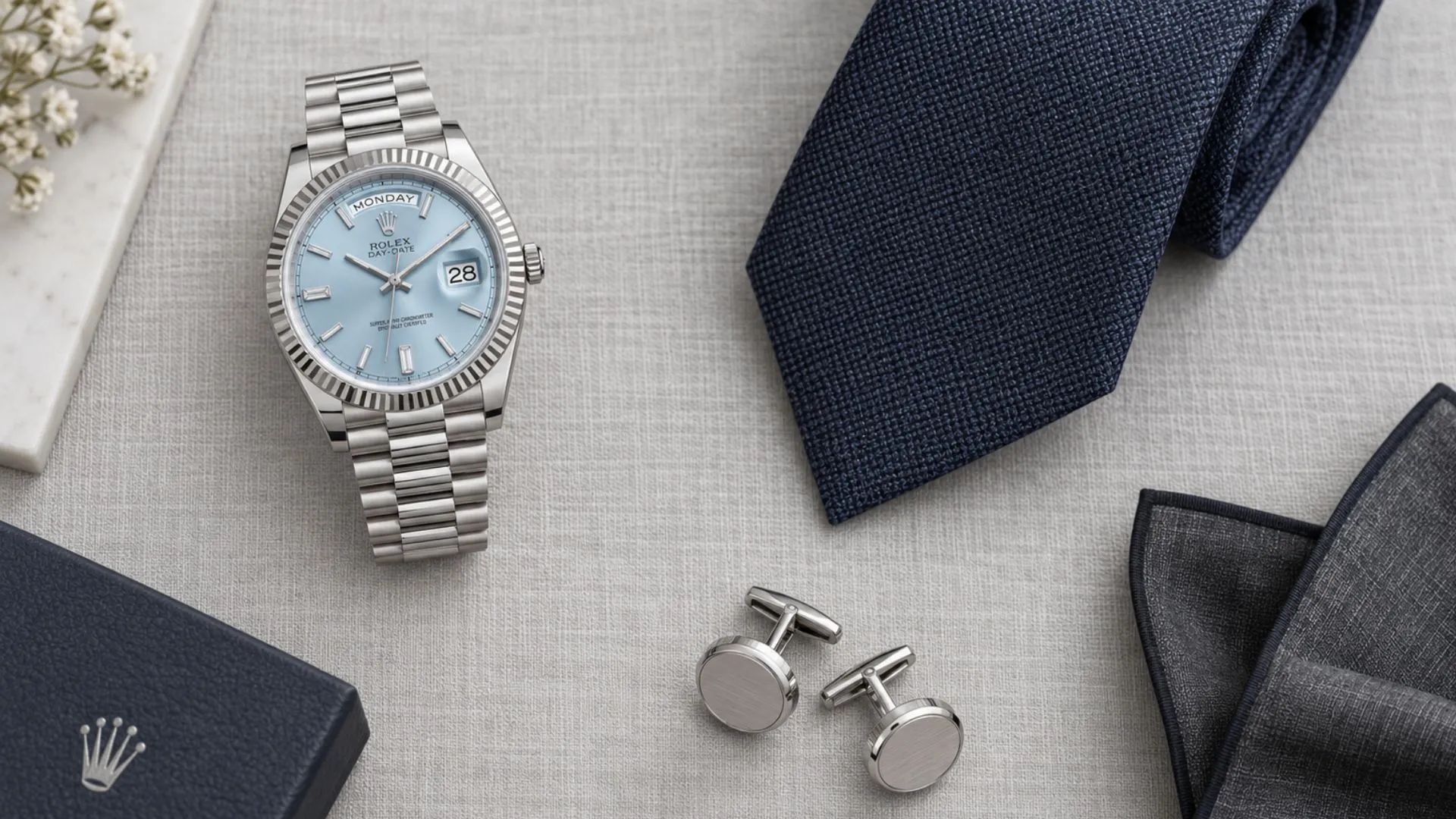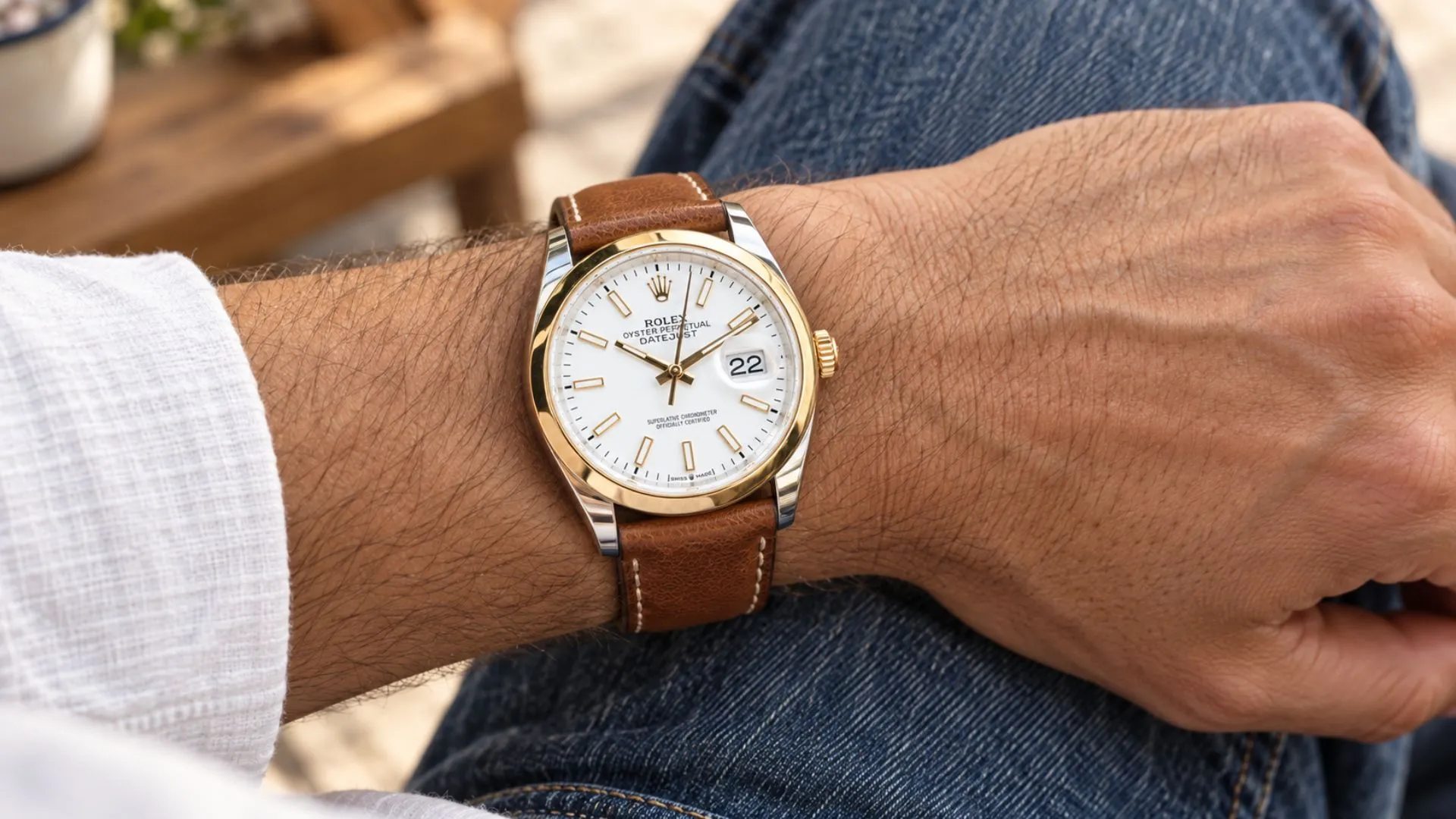

Two watches. Similar price. Completely different answers to what a luxury watch should be. The Cartier Santos vs Rolex Datejust is one of the most common comparisons at this price range. But almost nothing about them is alike.
One has a square case with a design over a century old. The other is the round watch that most people picture when they think “luxury watch.” They look different on the wrist and behave differently on the resale market.
Two things shifted in 2026 that change the math on this decision: both brands raised US retail prices, which tightened the gap between what you pay new and what these trade for used. This article covers the spec differences that matter at purchase, plus where prices sit now. Read through it and you will know which fits you.
Cartier Santos Background

The Cartier Santos has a specific origin story. In 1904, Louis Cartier made a watch for his friend Alberto Santos-Dumont, a Brazilian aviator who needed to read the time while flying without digging into his pocket.
Historians credit it as one of the first widely adopted men’s wristwatches. Cartier sold it to the public in 1911. The square case with exposed screws has been its signature look ever since.
The 2018 redesign changed a lot. Cartier standardized the in-house Cal. 1847 MC, slimmed the case, and added the SmartLink bracelet and QuickSwitch strap system. The result is a much more practical daily watch than earlier versions.
Older models like the Cartier Santos 100 and Galbée used outsourced movements and had bulkier cases. If you are shopping today, the post-2018 version is almost certainly what you are looking at.
The current steel lineup has also widened past the classic white dial. Cartier now offers green and blue dials in both sizes, including a green Santos Medium (WSSA0061). The exposed screws on the bezel and bracelet have not changed in over a century, and that detail alone makes it instantly recognizable.
If you want the full range mapped out before committing, our Cartier Santos buying guide walks through the lineup.
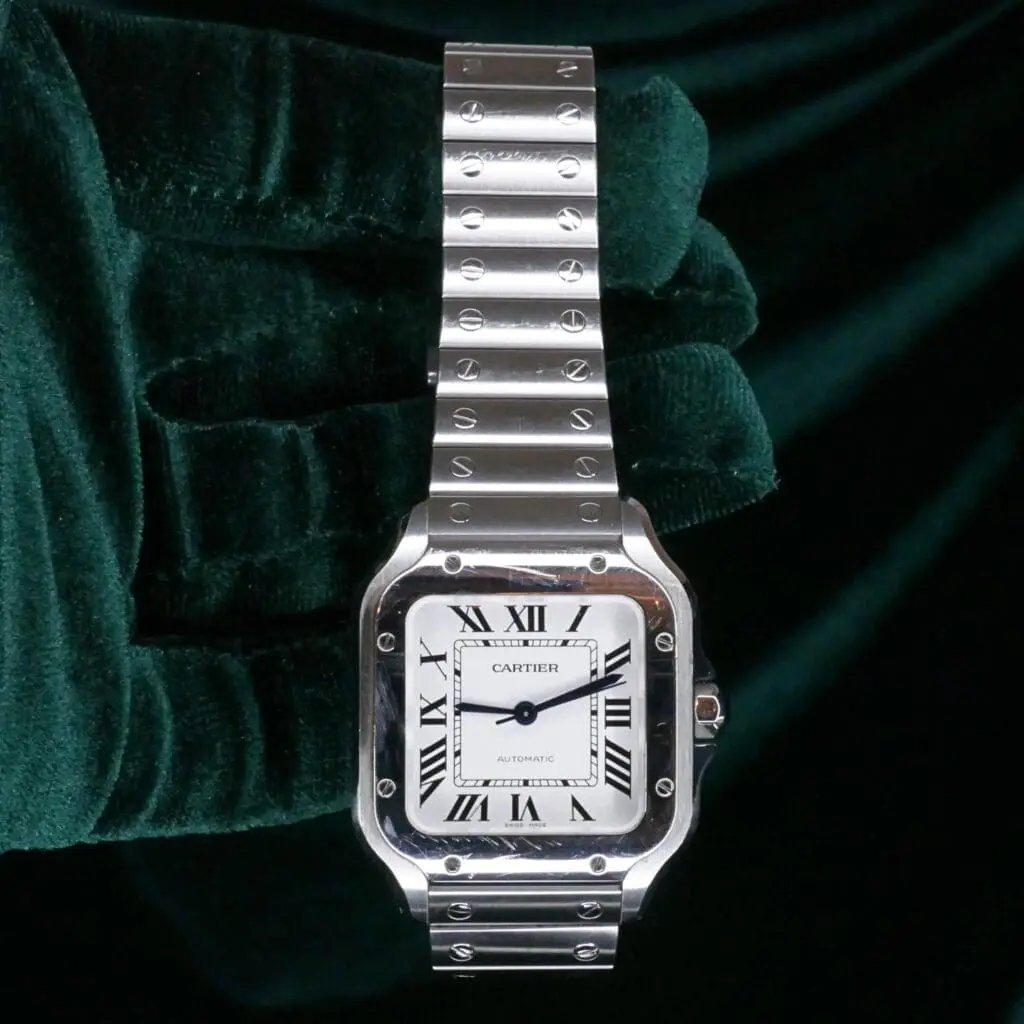
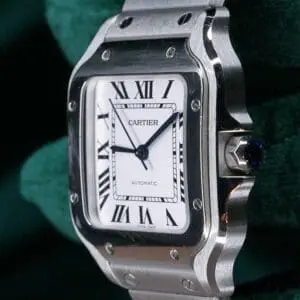
Notable References of the Cartier Santos:
- WSSA0018 (Large Steel)
- WSSA0029 (Medium Steel)
- WSSA0062 (Large Green Dial)
Rolex Datejust Background

The Rolex Datejust launched in 1945 to mark Rolex’s 40th anniversary. At the time, it did something no other watch had done: a self-winding, waterproof watch with a date display that changed automatically at midnight. That combination was new.
It also set the visual template that most people picture when they think of a classic luxury watch: round case, fluted bezel, date at three o’clock with a Cyclops magnifier (added in the 1950s), Jubilee bracelet.
Rolex got the design right from the start and has kept the core look remarkably consistent since. It comes in two case sizes (36mm and 41mm), with smooth or fluted bezel options, Jubilee or Oyster bracelet, and a dial selection that spans dozens of colors and finishes.
The current generation uses the in-house Cal. 3235, which runs at ±2 seconds per day and carries a 70-hour power reserve. The 2026 releases leaned into color: a green ombré lacquer dial on the 36mm was one of the headline Datejust launches at Watches & Wonders 2026, and the 41mm added an Azzurro blue Roman dial.
The Rolex Datejust is the brand’s best-selling model and the most common first Rolex purchase. The 36mm is the classic size, closest to the original 1945 proportions. The 41mm, updated in 2016, suits larger wrists and a more modern look.
If you’re stuck between them, we compare the Datejust 41 vs 36 side by side in a separate guide.
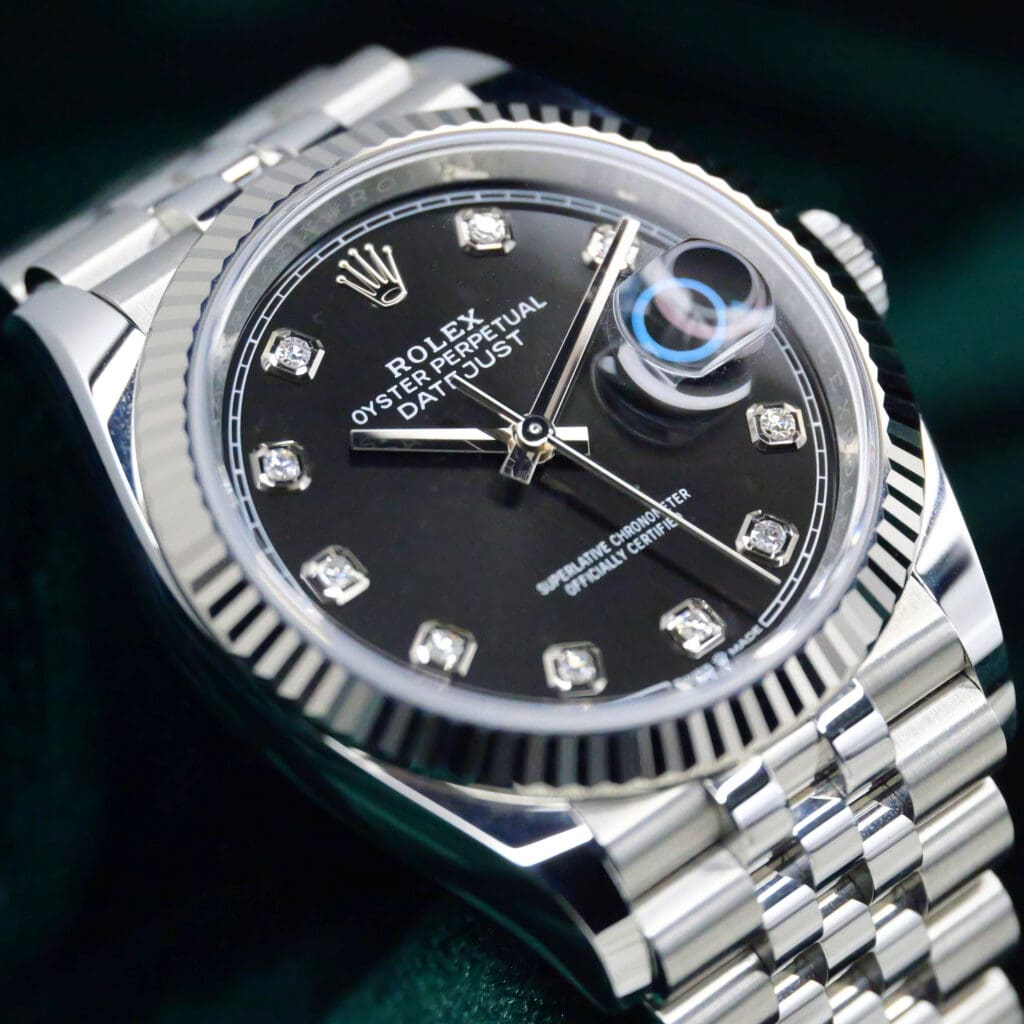
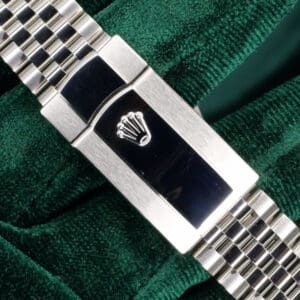
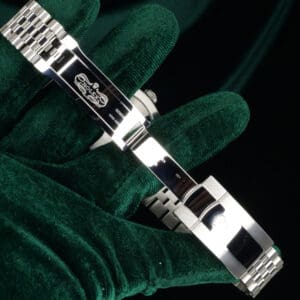


Notable References of the Rolex Datejust:
- 126200 (DJ36 Smooth Steel)
- 126234 (DJ36 Fluted White Gold)
- 126300 (DJ41 Smooth Steel)
Cartier Santos vs Rolex Datejust: Most Notable Differences

Some of these are hard specs. Others come down to how you wear a watch day to day. Both matter.
1. Case Shape
The Cartier Santos has a square case with rounded corners. It reads as intentional and distinct. At 39.8mm, it sits on the wrist closer to how a 41-42mm round watch would read.
The Rolex Datejust has a round Oyster case. Round watches are more universally conventional. The Santos stands out.
Why it matters: the square case is a look you either want or you don’t. Who it favors: the Santos suits someone who wants to be noticed. The Datejust suits someone who wants to fit in anywhere.
2. Case Thickness
The Cartier Santos Large is 9.08mm thick. The Medium is 8.83mm. Both clear a dress shirt cuff cleanly and sit flush on the wrist.
The Rolex Datejust 36 is roughly 12mm thick. It fits under most cuffs but needs a little more room than the Santos. The 41mm can catch on tighter cuffs in formal settings.
Why it matters: if you live in dress shirts, those 3mm are the difference between a watch that disappears under a cuff and one you feel. Who it favors: the Santos, for anyone dressing up daily.
3. Movement Performance
The Cartier Santos runs the Cal. 1847 MC with a 40 to 42 hour power reserve and ±10 seconds per day accuracy. There is no independent certification.
The Rolex Datejust runs the Cal. 3235 with a 70-hour power reserve and ±2 seconds per day, certified by COSC and Rolex’s Superlative Chronometer standard.
Why it matters: based on recommended intervals, a Santos owner could pay for two services over 10 years where a Datejust owner pays for one. Actual intervals vary by use and condition. Who it favors: the Datejust, on accuracy and long-term running cost.
Related Models from Majestix
Watches
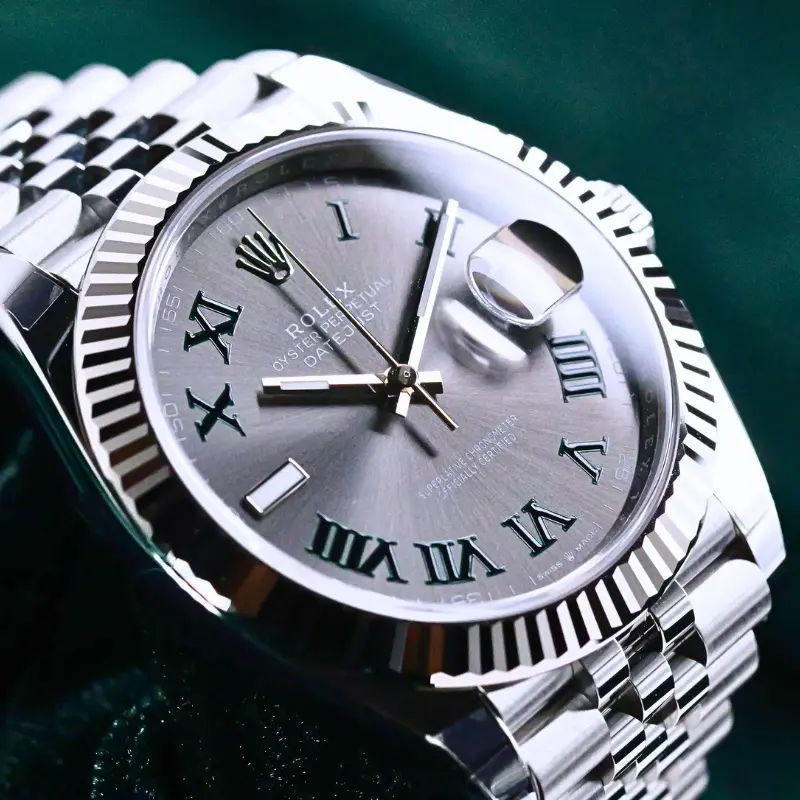
2026 NEW UNWORN Rolex Datejust 41 "Wimbledon" Slate Grey Dial Fluted Bezel Jubilee Bracelet Stainless Steel 18K White Gold 41mm COMPLETE SET 126334-0022
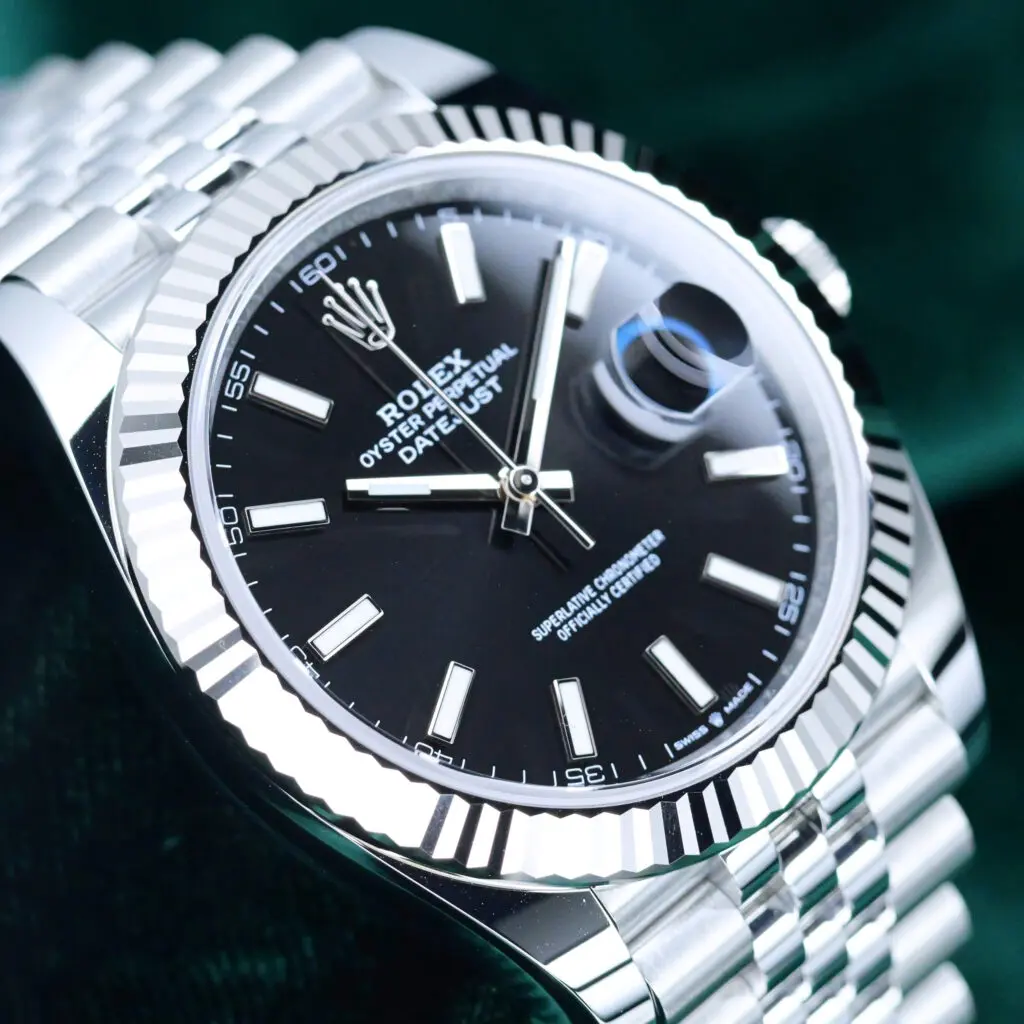
2026 NEW UNWORN Rolex Datejust Black Dial White Gold Fluted Bezel Jubilee Bracelet Stainless Steel 41mm COMPLETE SET 126334
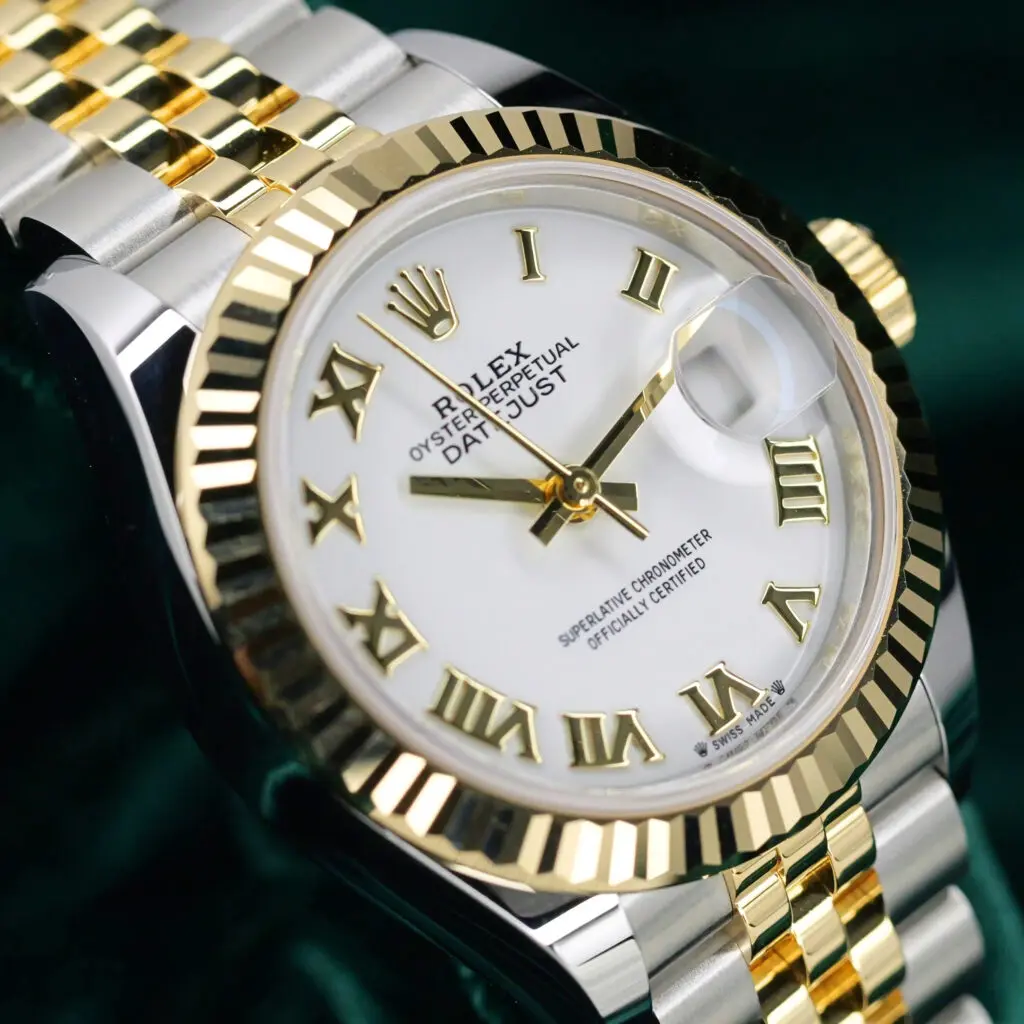
2026 NEW UNWORN Rolex Lady-Datejust White Roman Dial 18K Yellow Gold Fluted Bezel Jubilee Bracelet Stainless Steel Yellow Gold 28mm COMPLETE SET 279173
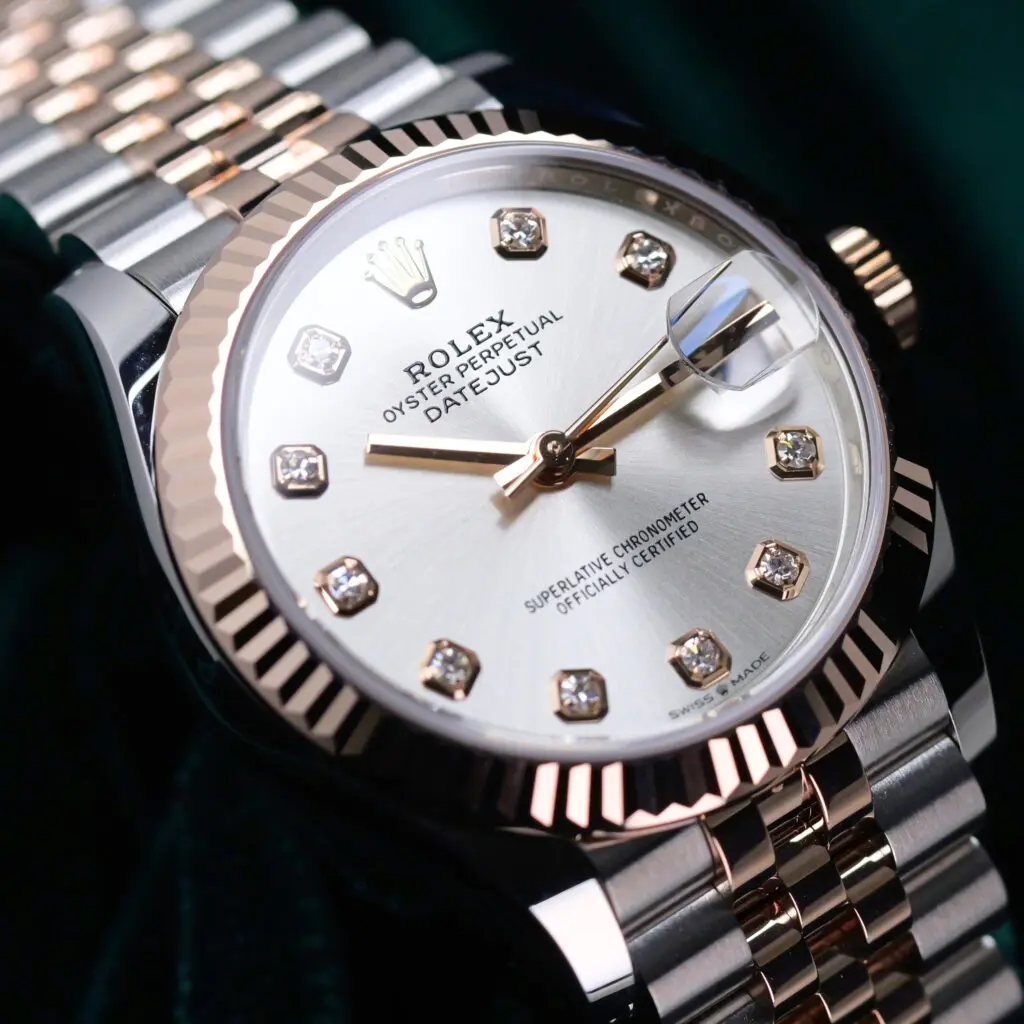
2026 NEW UNWORN Rolex Datejust 31 Silver Diamond Dial Fluted Bezel Jubilee Two-Tone 18K Rose Gold 31mm COMPLETE SET 278271-0016

Rolex Datejust 36 Aftermarket Mother of Pearl Diamond Dial Aftermarket Diamond Bezel Jubilee Two-Tone 18k Yellow Gold 36mm MINT CONDITION 16233
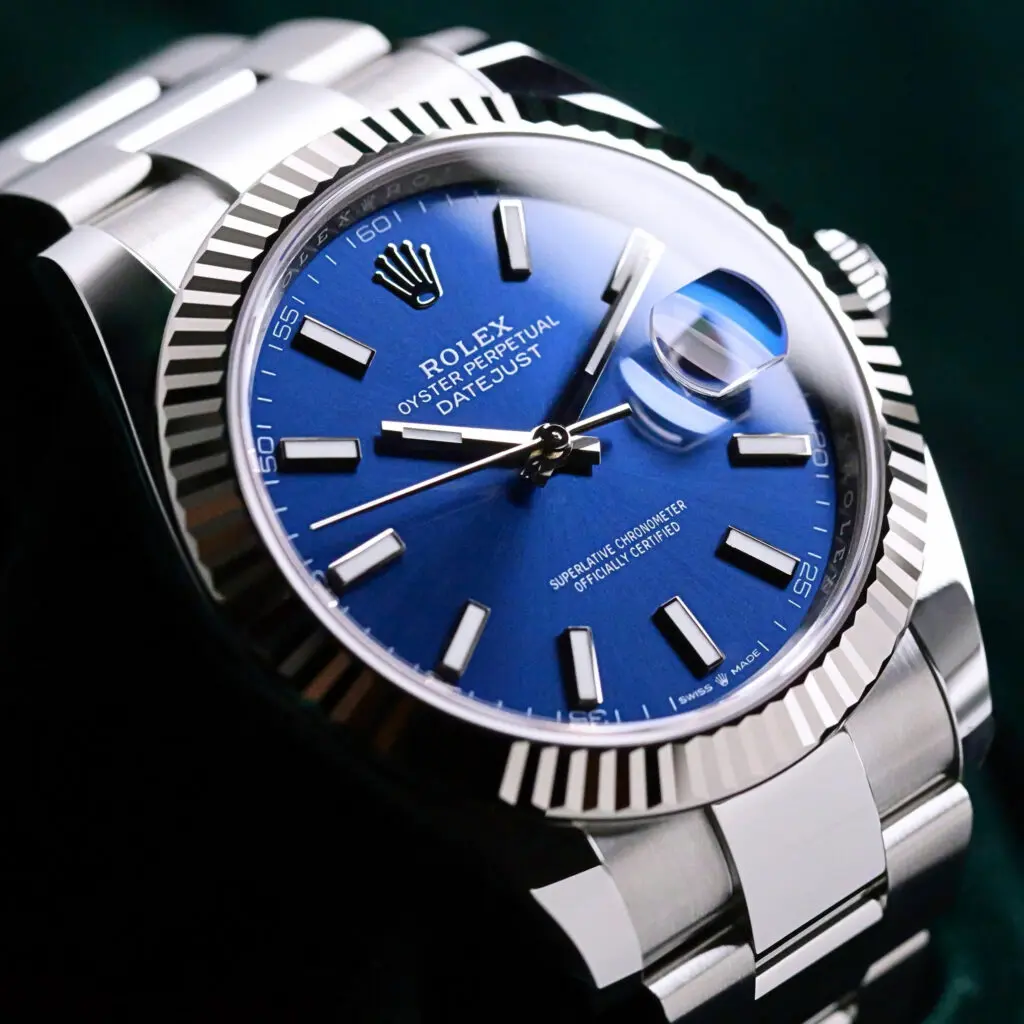
2026 NEW UNWORN Rolex Datejust Blue Dial 18K White Gold Fluted Bezel Oyster Bracelet Stainless Steel 41mm COMPLETE SET 126334
4. Bracelet System
The Cartier Santos ships with a steel bracelet and a leather strap. QuickSwitch lets you swap between them in seconds without tools. SmartLink lets you resize the bracelet without tools too.
The Rolex Datejust has no tool-free swap system. The Easylink clasp gives up to 5mm of on-the-fly adjustment, but resizing beyond that needs a watchmaker. You pick your bracelet at purchase and generally stay with it, so it’s worth reading our Jubilee vs Oyster comparison before you decide.
Why it matters: the Santos is two watches in one box, steel or leather, changed in seconds. Who it favors: the Santos, if you like switching up your look.
5. Dial and Configuration Range
The Cartier Santos is built around one core look: white opaline dial, black Roman numerals, sword-shaped hands. Green and blue dials have joined the steel range, and the bezel comes in steel, two-tone gold, or ADLC black. The range is narrow by design.
The Rolex Datejust comes in dozens of dial colors, from black and slate to Wimbledon and the new green ombré lacquer. Bezels come in smooth steel or fluted gold. Add two bracelet options and two case sizes, and the range is hard to match.
Why it matters: the Datejust lets you dial in an exact combination. The Santos hands you a finished design. Who it favors: the Datejust, for choice.
6. Date Display
The Cartier Santos Medium has no date. The Large has a small date at 6 o’clock that takes a little more attention to read.
Every Datejust has a date at 3 o’clock with a Cyclops lens that magnifies it 2.5x. It is the easiest date to read at a glance in this price range.
Why it matters: if you check the date often, the Cyclops is genuinely easier. Who it favors: the Datejust, or the Santos Medium if you’d rather skip the date entirely.
Side-by-Side Comparison (At a Glance)
This table lines up the two most directly comparable steel entries: the Santos Large (WSSA0018) against the Datejust 36 (126200). Other references in each line shift some of these numbers, so treat it as a baseline, not the full lineup.
| Specification | Cartier Santos Large (WSSA0018) | Rolex Datejust 36 (126200) |
| Reference | WSSA0018 | 126200 |
| Case shape | Square, rounded corners | Round Oyster |
| Case size | 39.8mm / 47.5mm lug-to-lug | 36mm / 43-44mm lug-to-lug |
| Thickness | 9.08mm | ~12mm |
| Material | Stainless steel | Oystersteel (904L) |
| Bezel | Steel (exposed screws) | Smooth Oystersteel |
| Movement | Cal. 1847 MC | Cal. 3235 |
| Power reserve | 40-42 hours | 70 hours |
| Accuracy | ±10 sec/day (no certification) | ±2 sec/day (COSC + Superlative) |
| Water resistance | 100m | 100m |
| Strap swap | QuickSwitch (tool-free) | None (Easylink micro-adjust only) |
| Date | Small date at 6 o’clock | Cyclops date at 3 o’clock |
| Market price (2026) | ~$7,170 | ~$9,200 |
Price and Market Demand
Both lines start near the same retail today, but they behave like opposites once you leave the boutique. The Rolex Datejust holds at or above retail. The Cartier Santos trades below it.
Two 2026 changes matter here. Rolex raised US retail by about 7% in January 2026. Cartier followed with a US price increase on May 21, 2026, lifting steel Santos models by roughly 2.5% to 7%. Both moves raised the sticker and narrowed the gap between new and used prices.
That gap was already thin on the Rolex side. On the Cartier side, it means a new buyer now pays more up front for a watch that still trades down on the secondary market.
The cheapest way into either line used is the Santos Medium (WSSA0029) at around $6,770 as of 2026, now the most-traded Santos reference. The most affordable Datejust here, the DJ36 smooth steel (126200), sits near $9,200 used. That’s roughly $2,400 more for the round steel classic.
Related Models from Majestix
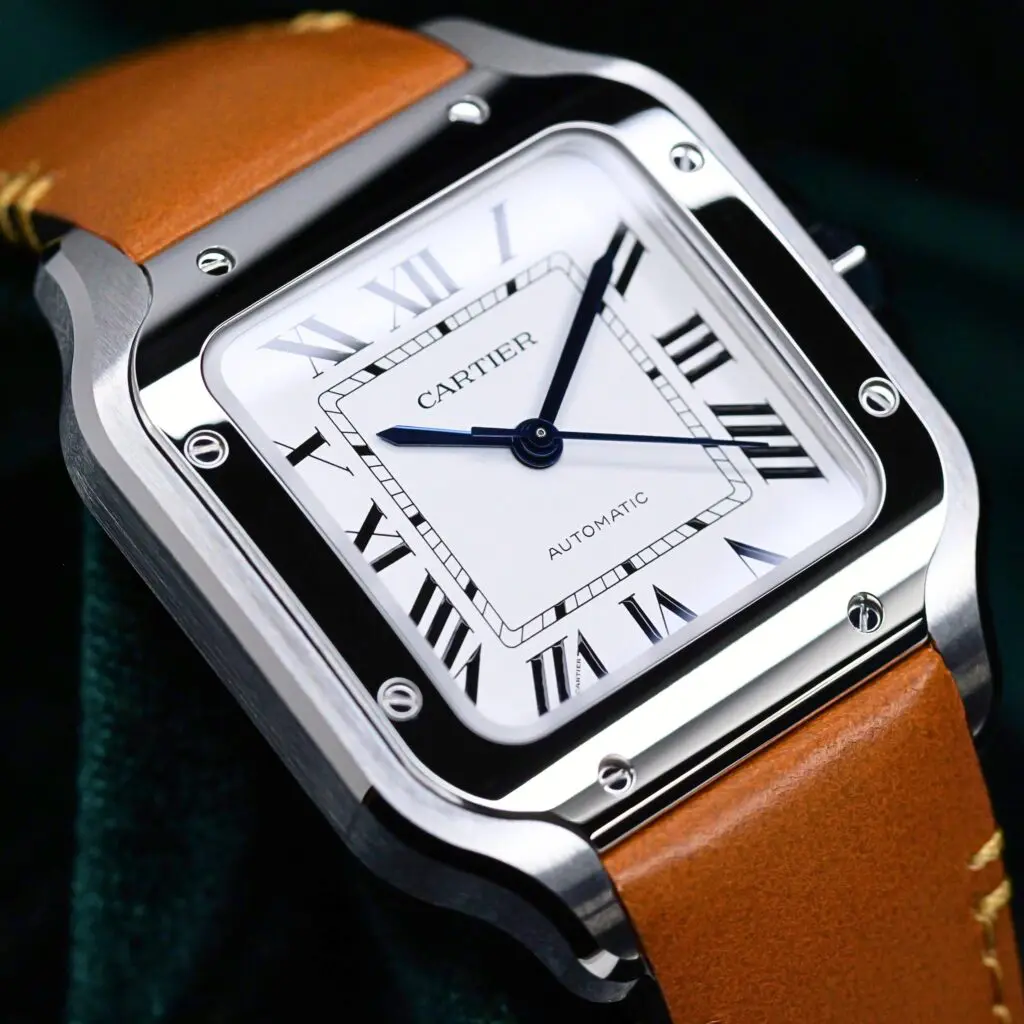
2026 NEW UNWORN Cartier Santos de Cartier Medium Opaline Silver Dial Tan Calfskin Strap Stainless Steel 35mm COMPLETE SET WSSA0029
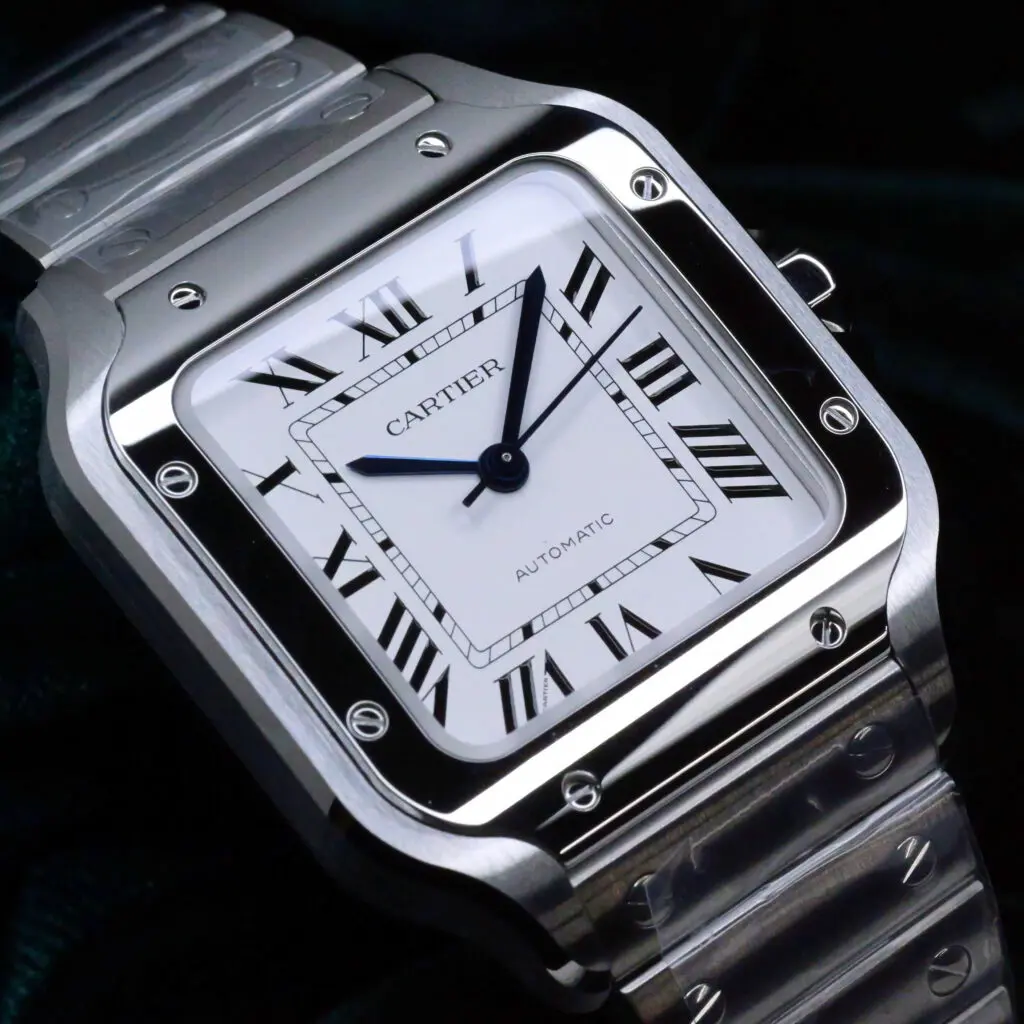
2026 NEW UNWORN Cartier Santos de Cartier Medium Silvered Opaline White Dial Stainless Steel Bracelet 35mm COMPLETE SET WSSA0029
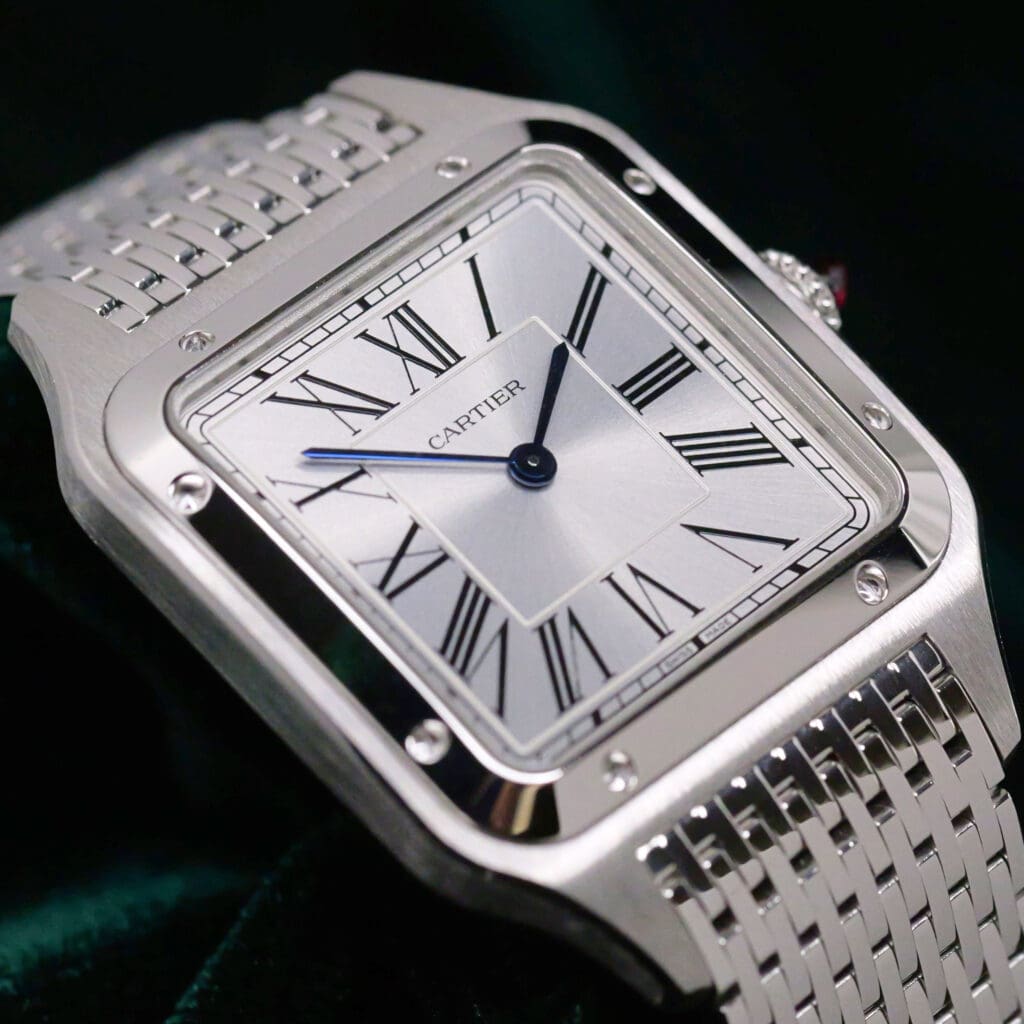
2026 NEW UNWORN Cartier Santos-Dumont Silver Dial Platinum Mesh Bracelet Platinum 31mm COMPLETE SET WGSA0124
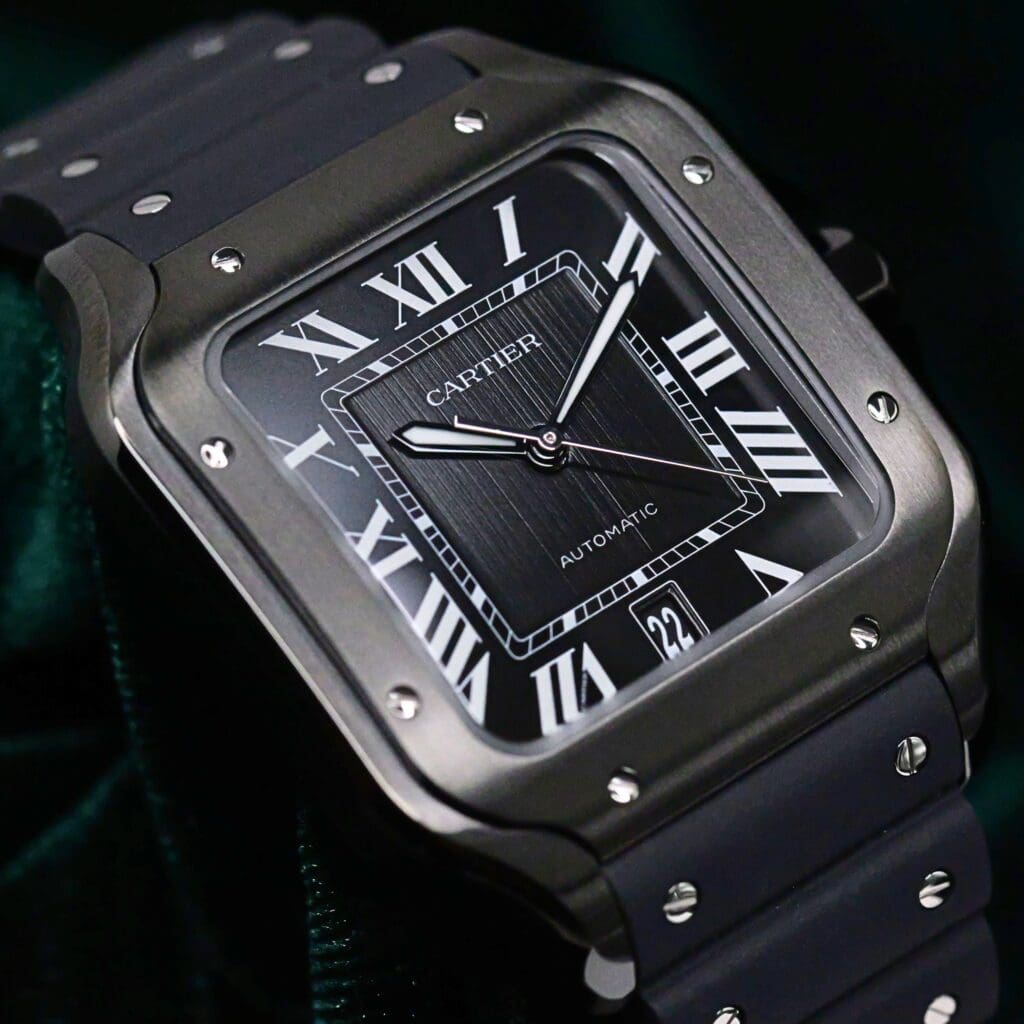
Cartier Santos De Cartier Black Dial Black ADLC Stainless Steel Black Rubber Strap 39.8mm MINT CONDITION COMPLETE SET WSSA0039
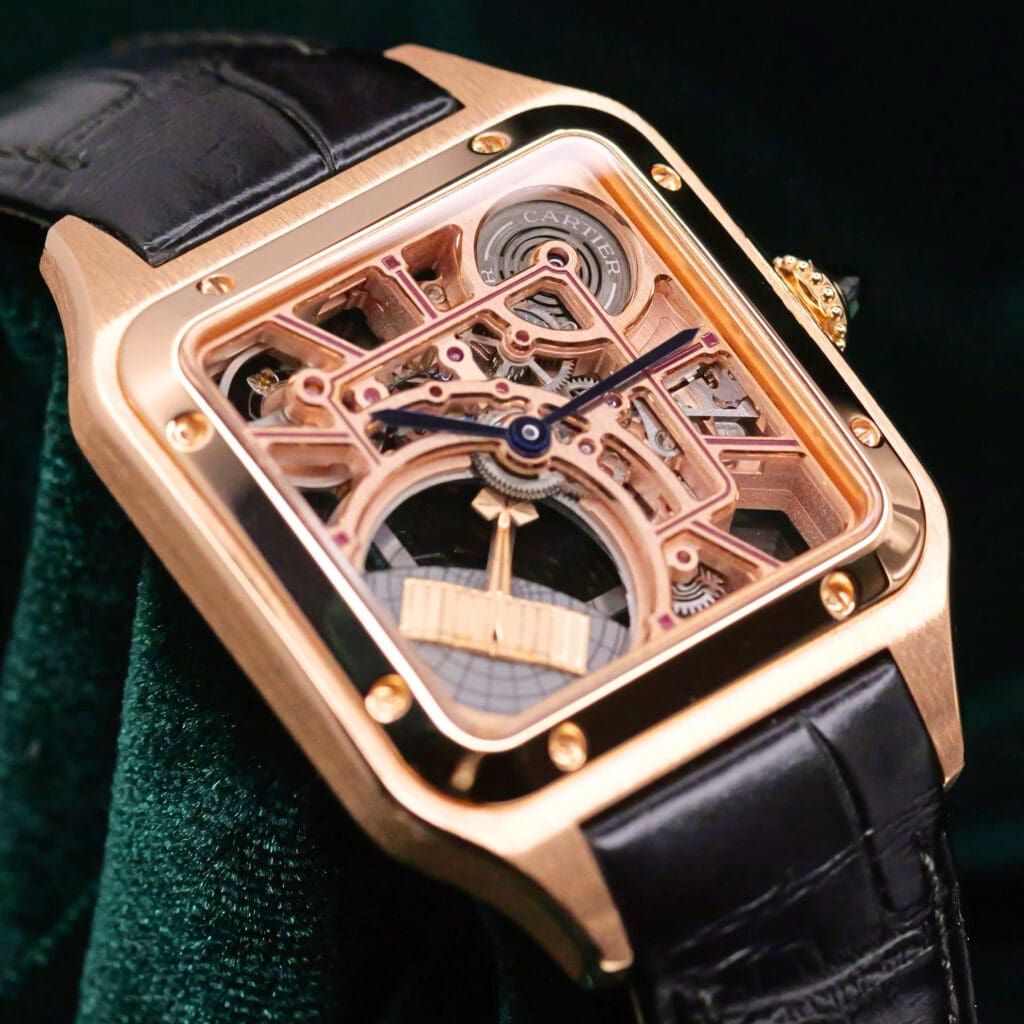
Cartier Santos-Dumont Micro-Rotor Skeleton Dial Black Alligator Strap 18k Rose Gold 43.5 x 31mm MINT CONDITION COMPLETE SET WHSA0030

Cartier Santos-Dumont Micro-Rotor Skeleton Dial 18K Rose Gold Burgundy Alligator Strap 31mm MINT CONDITION COMPLETE SET WHSA0030
The fluted white gold DJ36 (126234) shows the Rolex premium plainly. Retail runs around $10,600 after the January increase. Market price is about $12,400, with listings spanning $11,100 to $13,760 (WatchCharts, 2026). You pay over retail to skip the wait, and the gold fluted bezel drives most of that premium.
The Santos runs the other way. The green WSSA0062 lists near $9,000 after the May increase but trades around $7,200 used. That’s the Cartier pattern in one line: strong design identity, softer resale.
Liquidity favors Rolex. The 126300 (DJ41) is the easiest of these six to buy and sell pre-owned, usually moving in about three to four weeks, which keeps its pricing transparent. The Santos references sell too, just slower and at a discount.
What moves any of these: condition, a full set with box and papers, the year, and the dial and metal. On the Santos, green outperforms white. On the Datejust, the fluted white gold bezel commands a clear premium over smooth steel.
Notable Cartier Santos References
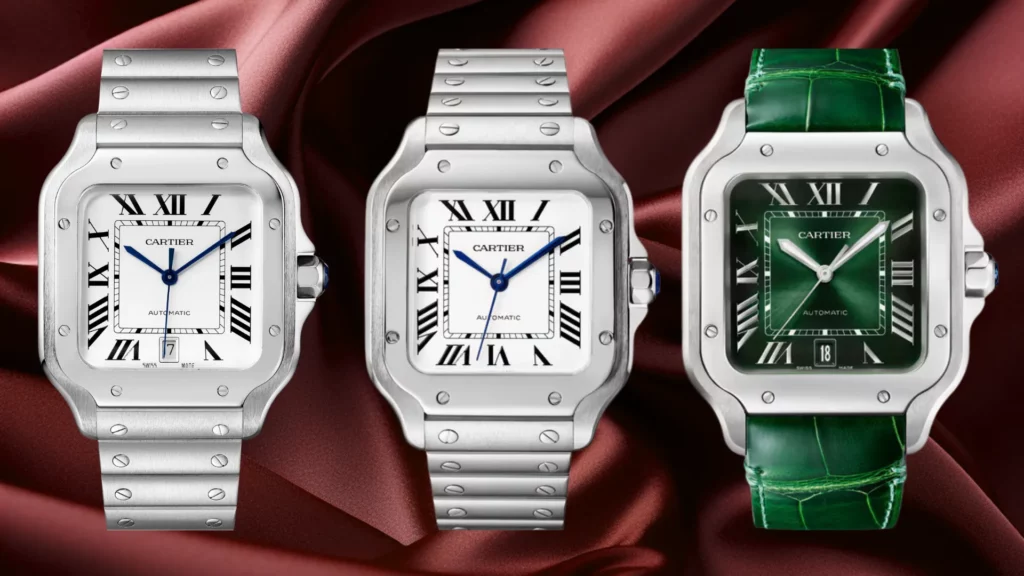
The Cartier Santos lineup is more focused than the Datejust’s. These three references cover the purchase decisions you are most likely choosing between.
1. Cartier Santos Ref. WSSA0018
The core of the current collection. The large size suits most wrists, carries a date at 6 o’clock, and ships with both the steel bracelet and a leather strap. QuickSwitch makes the strap swap practical, not just theoretical. This is likely the first reference you will come across.
- Case size: 39.8mm / 47.5mm lug-to-lug
- Thickness: 9.08mm
- Material: Stainless steel
- Movement: Cal. 1847 MC (in-house automatic)
- Water resistance: 100m
- Market price: ~$7,170 (2026)
2. Cartier Santos Ref. WSSA0029
The medium size surprises people in person. It reads more present on the wrist than the numbers suggest. No date window keeps the dial clean. It works across a wide range of wrist sizes and is genuinely unisex in proportion. It’s also the most-traded Santos on the secondary market right now.
- Case size: 35.1mm / 41.9mm lug-to-lug
- Thickness: 8.83mm
- Material: Stainless steel
- Movement: Cal. 1847-2 MC (in-house automatic, no date)
- Water resistance: 100m
- Market price: ~$6,770 (2026)
3. Cartier Santos Ref. WSSA0062
The green opaline dial is the strongest secondary market performer in the current steel Santos lineup. It holds value better than the white dial equivalent. If resale matters to you, this is the reference to buy.
- Case size: 39.8mm / 47.5mm lug-to-lug
- Thickness: 9.08mm
- Material: Stainless steel
- Movement: Cal. 1847 MC (in-house automatic)
- Water resistance: 100m
- Market price: ~$7,200 (2026)
Notable Rolex Datejust References
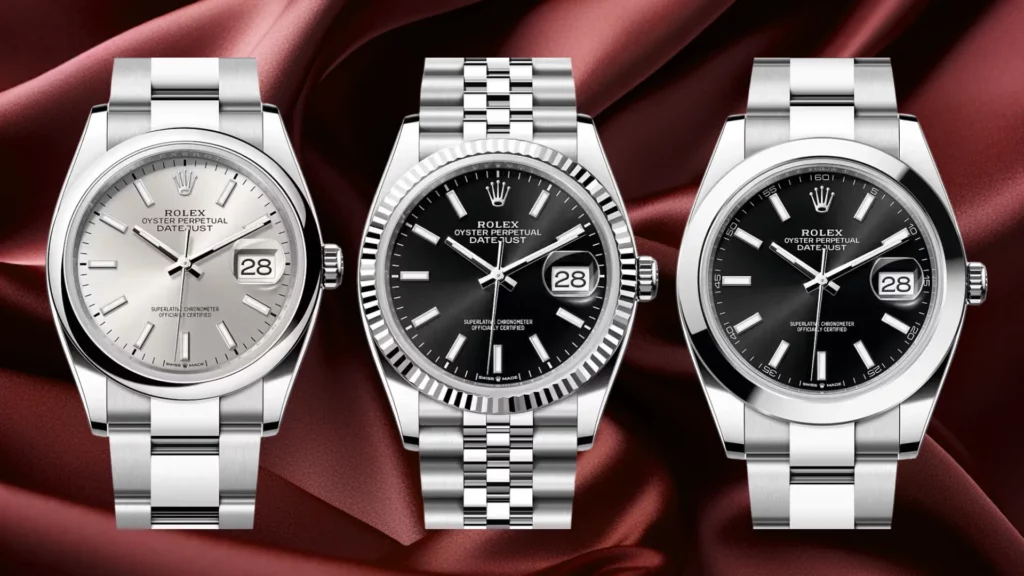
The Rolex Datejust lineup is deep. These three steel references cover the most relevant decisions if you are comparing against the Santos, across both case sizes. Our full Rolex Datejust buying guide covers the wider range if you want to see everything.
1. Rolex Datejust Ref. 126200
A 36mm case with a 43 to 44mm lug-to-lug span is as close to the original 1945 proportions as you can buy new today. The smooth steel bezel keeps the entry price at the floor of the current range.
The proportions work on almost any wrist under 7 inches, and the smooth bezel lets the dial take center stage. It comes in more colors than you might expect.
- Case size: 36mm / 43-44mm lug-to-lug
- Thickness: ~12mm
- Material: Oystersteel (904L)
- Bezel: Smooth Oystersteel
- Movement: Cal. 3235, 70hr power reserve, ±2 sec/day
- Water resistance: 100m
- Market price: ~$9,200 (2026)
2. Rolex Datejust Ref. 126234
The fluted bezel on this reference is always gold, regardless of the steel case. The contrast between polished gold and brushed steel is unmistakable. It catches light in a way the smooth bezel never does and adds formality that works across every dress context.
- Case size: 36mm / 43-44mm lug-to-lug
- Bezel: Fluted, 18k white gold
- Material: Oystersteel case, white gold bezel
- Movement: Cal. 3235, 70hr power reserve, ±2 sec/day
- Water resistance: 100m
- Market price: ~$12,400 (2026)
3. Rolex Datejust Ref. 126300
This reference gives the Datejust a more modern wrist presence. The larger dial gives more room for the indices, and the Cyclops lens keeps the date fully readable at a glance. It’s also the most liquid of these six, so it’s the easiest to find and price pre-owned.
- Case size: 41mm / 47.4mm lug-to-lug
- Thickness: ~12mm
- Material: Oystersteel (904L)
- Bezel: Smooth Oystersteel
- Movement: Cal. 3235, 70hr power reserve, ±2 sec/day
- Water resistance: 100m
- Market price: ~$10,150 (2026)
More Datejust Models
Watches
2026 NEW UNWORN Rolex Datejust 41 "Wimbledon" Slate Grey Dial Fluted Bezel Jubilee Bracelet Stainless Steel 18K White Gold 41mm COMPLETE SET 126334-0022
2026 NEW UNWORN Rolex Datejust Black Dial White Gold Fluted Bezel Jubilee Bracelet Stainless Steel 41mm COMPLETE SET 126334
2026 NEW UNWORN Rolex Lady-Datejust White Roman Dial 18K Yellow Gold Fluted Bezel Jubilee Bracelet Stainless Steel Yellow Gold 28mm COMPLETE SET 279173
2026 NEW UNWORN Rolex Datejust 31 Silver Diamond Dial Fluted Bezel Jubilee Two-Tone 18K Rose Gold 31mm COMPLETE SET 278271-0016
Rolex Datejust 36 Aftermarket Mother of Pearl Diamond Dial Aftermarket Diamond Bezel Jubilee Two-Tone 18k Yellow Gold 36mm MINT CONDITION 16233
2026 NEW UNWORN Rolex Datejust Blue Dial 18K White Gold Fluted Bezel Oyster Bracelet Stainless Steel 41mm COMPLETE SET 126334
Which Watch Should You Choose?
Both watches are built for daily wear and priced similarly at retail. The decision comes down to what you need from the watch. If you’ve narrowed it to one of these six and want eyes on the exact piece before you commit, we can send tour videos and condition notes, covered further below.
Choose the Cartier Santos if:
- You wear dress shirts regularly and need a slim, under-cuff profile
- You want tool-free strap switching built into the watch
- You prefer a clean dial with no date window (Medium size)
- You want a square case that reads as distinct rather than conventional
- You are buying pre-owned and want strong design identity at a fair entry price
Choose the Rolex Datejust if:
- You want a movement with a 70hr reserve, ±2 sec/day accuracy, and a longer service interval
- You want maximum flexibility across dials, bezels, and bracelets
- You want a bracelet that wears comfortably straight out of the box (Jubilee)
- You are buying new and want stronger secondary market value protection
- You want a round case that works in any social or professional setting
The tie-breaker: if you want a watch that stands out and switches easily from steel to leather, take the Santos. If you want one that fits in everywhere and protects your money, take the Datejust.
Frequently Asked Questions
How often does each watch need servicing?
Both run on roughly the same schedule, but the cost difference adds up. Rolex and Cartier suggest a service every few years or so. The Santos has the shorter recommended interval and no independent certification, so over ten years you can expect to service it more often than a Datejust.
Here’s what a Datejust service costs if you want to budget for it.
Is the Cartier Santos or Rolex Datejust better for a smaller wrist?
For a slim wrist, the Santos Medium (35mm) or the Datejust 36 are the picks. The Santos Medium wears a touch larger than its size suggests, and the Datejust 36 is the closest thing to the original 1945 proportions.
If you want to widen the search, we rounded up the best luxury watches for small wrists too.
Which is the better first luxury watch?
For most first-time buyers, the Datejust is the safer pick because it holds value and works in any setting. The Santos is the better first watch if you want something with a distinct look and easy strap changes.
Where to Buy Authentic Watches Online
There are a few legitimate online channels for buying either of these watches. Chrono24 aggregates listings from dealers and private sellers worldwide, with buyer protection on escrow orders.
eBay covers many of these references through its Authenticity Guarantee program, which inspects eligible watches before they reach you. Grailzee runs enthusiast-focused auctions if you’d rather bid than buy outright.
We also buy, sell, and trade luxury watches, and you can browse our current collection any time.
999+ Timepieces Available
Explore Our Timepieces
Authenticated, unworn, and ready to ship worldwide.
Rolex · Audemars Piguet · Patek Philippe · Omega · Cartier · Richard Mille · Hublot · Tudor
Newly Listed
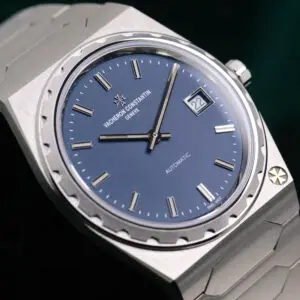
2026 NEW UNWORN Vacheron Constantin Historiques 222 Blue Dial Stainless Steel 37mm COMPLETE SET 4200H/222A-B934
$58,795.00
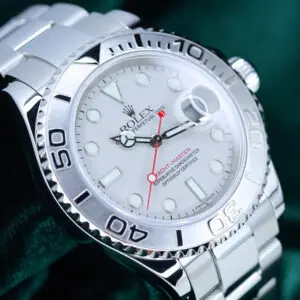
Rolex Yacht-Master Rolesium Platinum Dial Platinum Bezel Oyster Stainless Steel 40mm MINT CONDITION COMPLETE SET 16622
$14,690.00

Audemars Piguet Royal Oak Offshore Chronograph “Vampire” Black Dial Red Accents Black Ceramic Bezel Stainless Steel 42mm MINT CONDITION 26470SO.OO.A002CA.01
$34,649.00
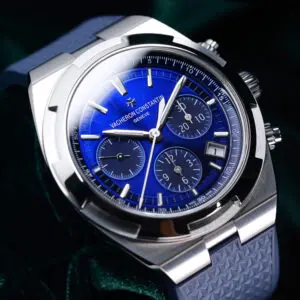
Vacheron Constantin Overseas Chronograph Blue Dial Blue Rubber Strap Stainless Steel 42.5mm MINT CONDITION COMPLETE SET 5500V/110A-B148
$35,993.00
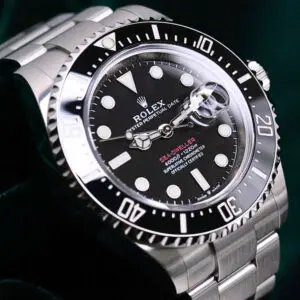
Rolex Sea-Dweller "Red Letter" Black Dial Black Cerachrom Bezel Oyster Bracelet Stainless Steel 43mm MINT CONDITION COMPLETE SET 126600
$13,120.00
2026 NEW UNWORN Bvlgari Serpenti Tubogas Studs Capsule Limited Edition Green Dial Diamond Bezel Steel & 18k Yellow Gold 35mm COMPLETE SET 104360
$24,255.00
Vacheron Constantin Overseas Chronograph Blue Dial Blue Leather Strap Stainless Steel 42.5mm MINT CONDITION COMPLETE SET 5500V/110A-B148
$37,793.00
Tag Heuer Monaco Chronograph “Dark Lord” Special Edition Black Dial Black Leather Strap DLC Titanium 39mm MINT CONDITION COMPLETE SET CBL2180.FC6497
$8,135.00
Rolex GMT-Master II “Green Arrow” Black Dial Black Ceramic Bezel Oyster Bracelet Two-Tone 18K Yellow Gold Stainless Steel 40mm MINT CONDITION COMPLETE SET 116713LN
$15,740.00
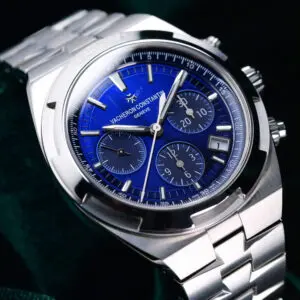
Vacheron Constantin Overseas Chronograph Blue Dial Stainless Steel 42.5mm MINT CONDITION COMPLETE SET 5500V/110A-B148
$37,793.00
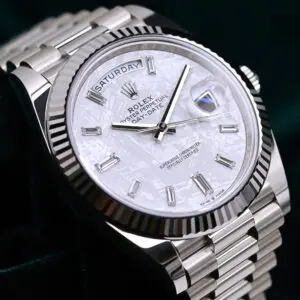
Rolex Day-Date Meteorite Baguette Diamond Dial Fluted Bezel President 18K White Gold 40mm MINT CONDITION COMPLETE SET 228239
$78,629.00
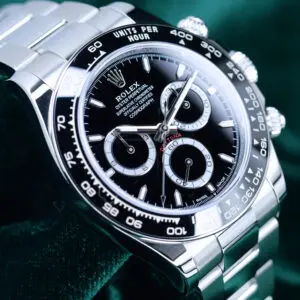
2026 Rolex Cosmograph Daytona Black Dial Black Ceramic Bezel Oyster Bracelet Stainless Steel 40mm MINT CONDITION COMPLETE SET 126500LN
$33,594.00
The reason clients choose us over a big marketplace is the walkthrough before the sale. You get layered communication, a tour video of the actual watch instead of stock photos, honest condition notes, and a direct conversation with someone who has handled the piece. You’re not buying blind off a listing.
That’s reflected in our 4.9-star Google rating, which comes from buyers who wanted to know exactly what they were getting before they paid.
If you want that kind of walkthrough on a specific Santos or Datejust reference, reach out and we’ll line up options that match what you’re after.
Final Thoughts on Cartier Santos vs Rolex Datejust
The real split here isn’t specs. It’s what you want a watch to do for you every day. The Santos rewards commitment to a look and enjoys being noticed. The Datejust rewards you quietly, holding its value while it works in every room you walk into. Live with either and you’re unlikely to regret it.
Two last tips for the pre-owned market. On a Santos, work the QuickSwitch levers before you buy and make sure they click cleanly. On a Datejust, a full set with box and papers adds more to future resale than a flawless case with missing paperwork.