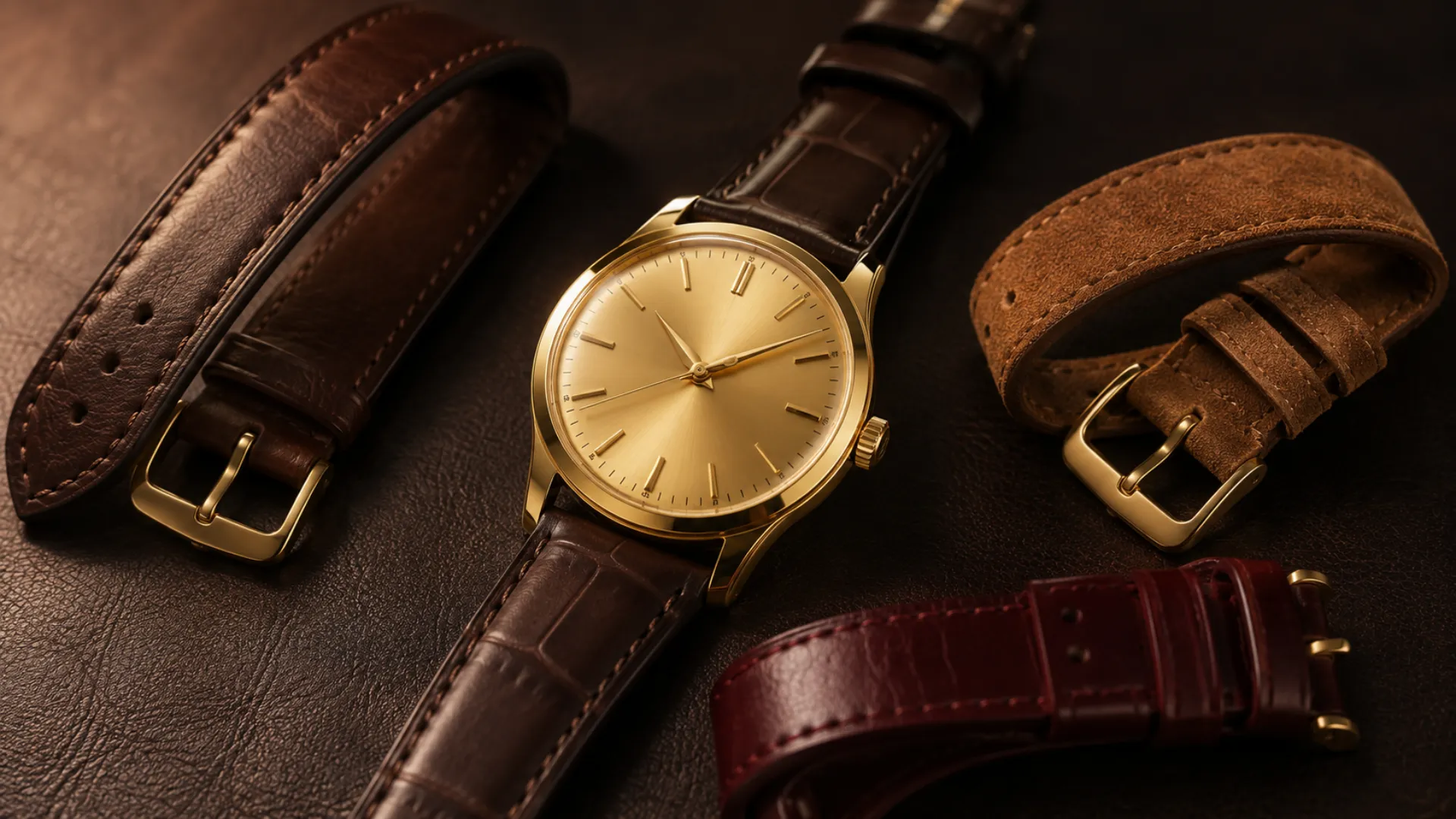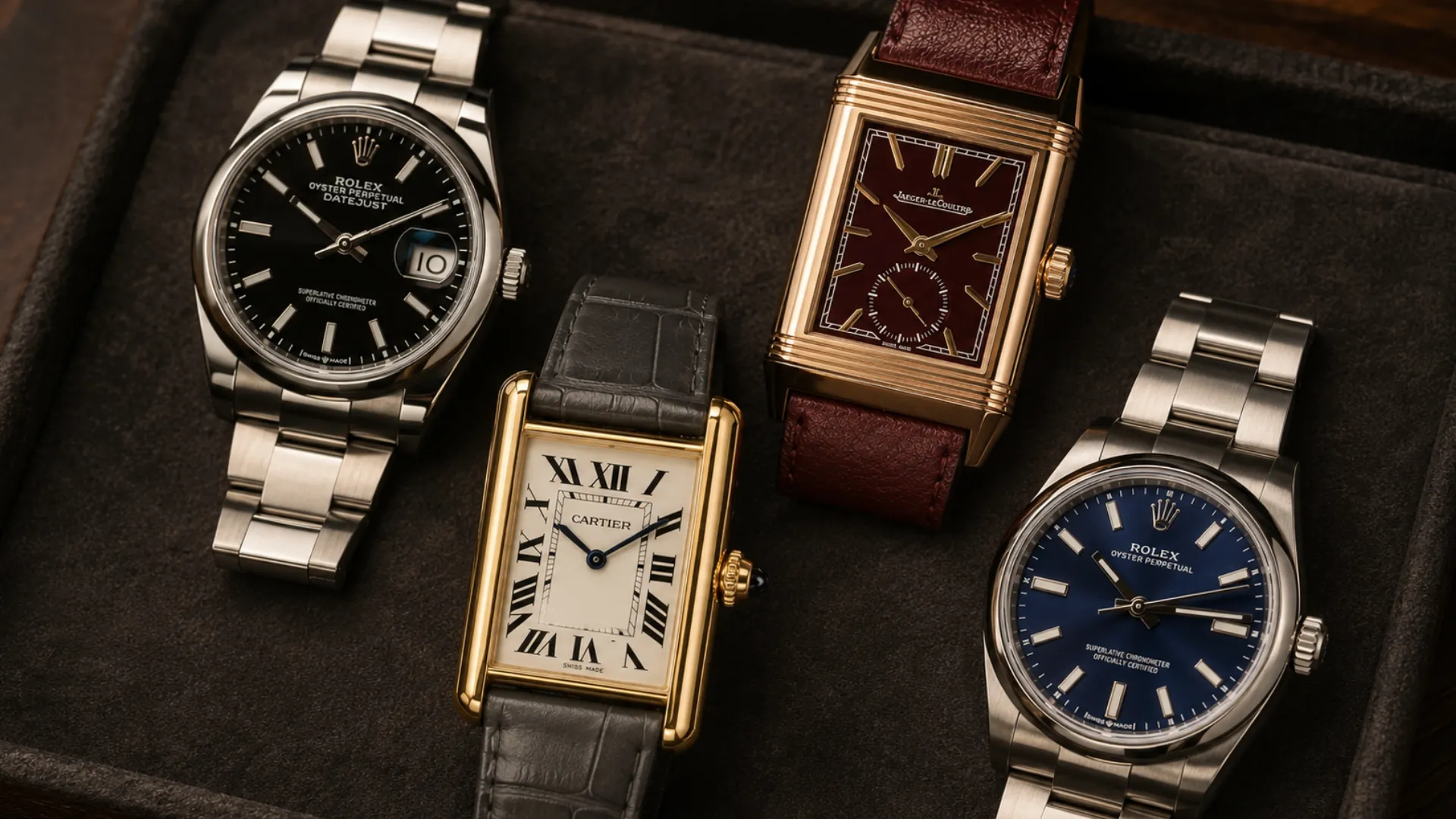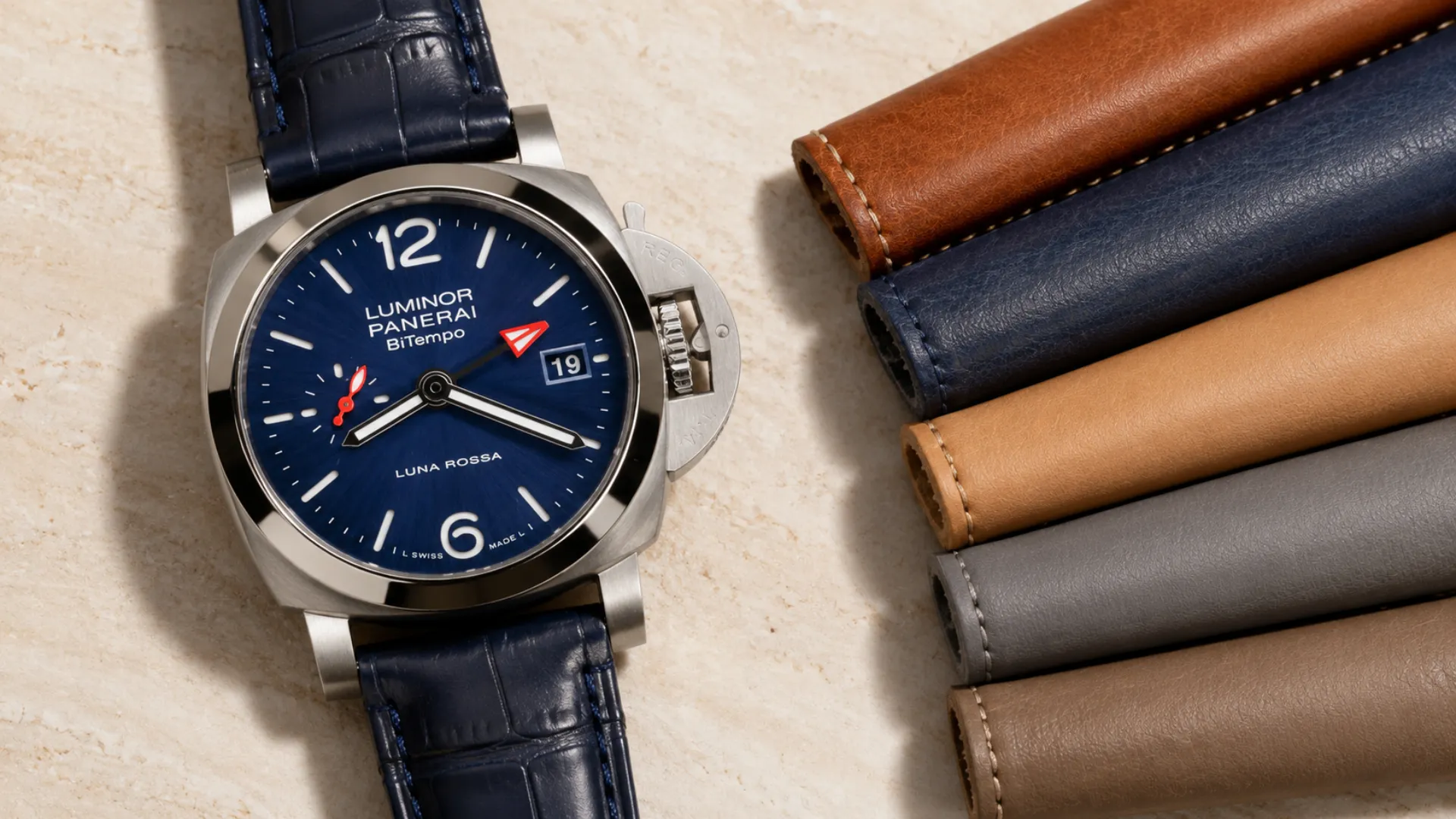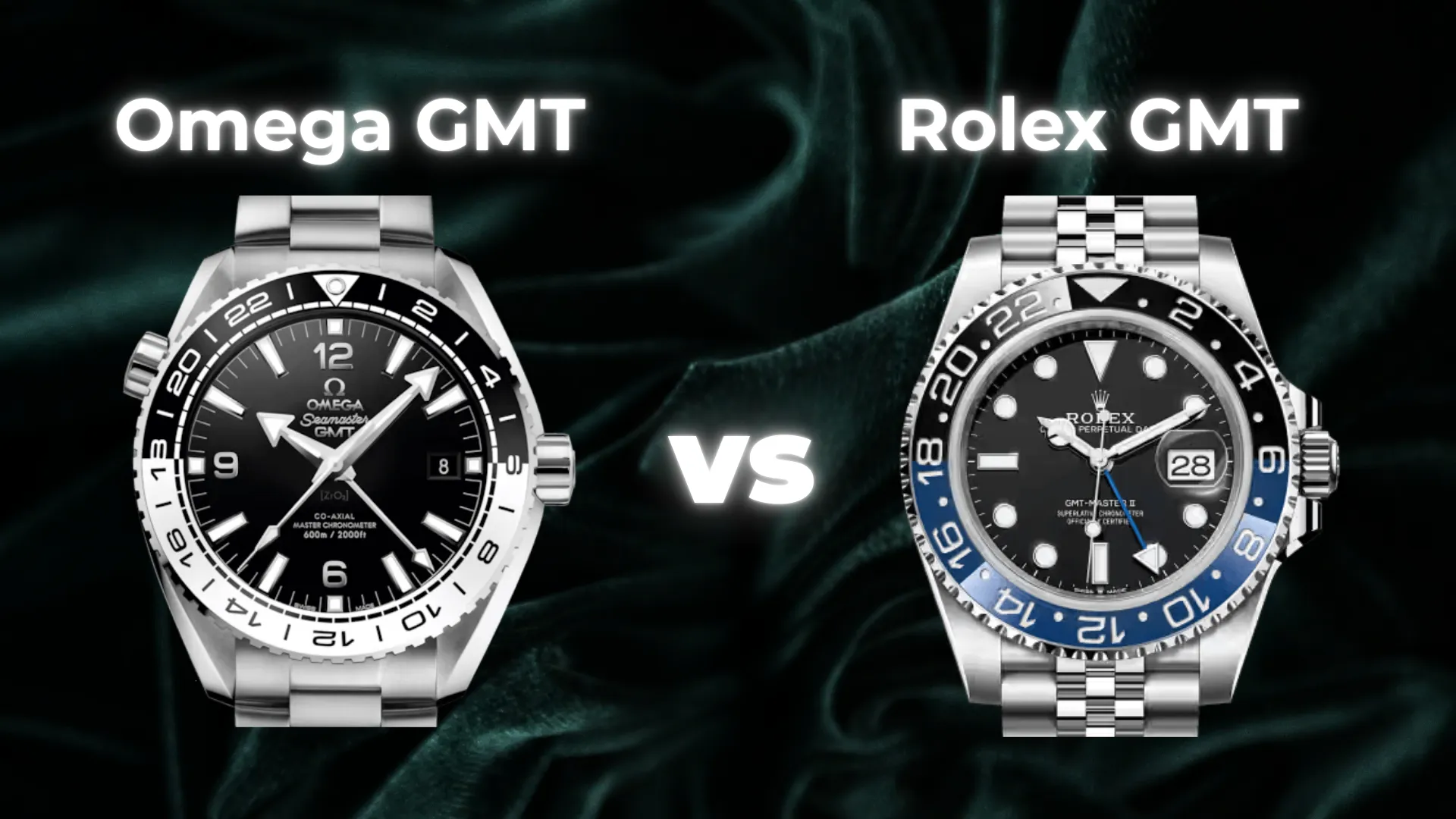

Most people searching Cartier Santos vs Omega Seamaster already have a shortlist. But the real question isn’t just specs or price, it’s which one actually fits how you live.
The Cartier Santos and the Omega Seamaster Diver 300M may sit close in price, but they’re built for completely different roles. One is a slim, square watch that leans refined and versatile; the other is a purpose-built dive watch with serious water resistance and a more rugged presence on the wrist. That gap shows up in thickness and design and in how each watch feels day to day.
This guide breaks down the key differences in wear, performance, and long-term value so you can decide which one is truly worth it for you.
Cartier Santos Overview
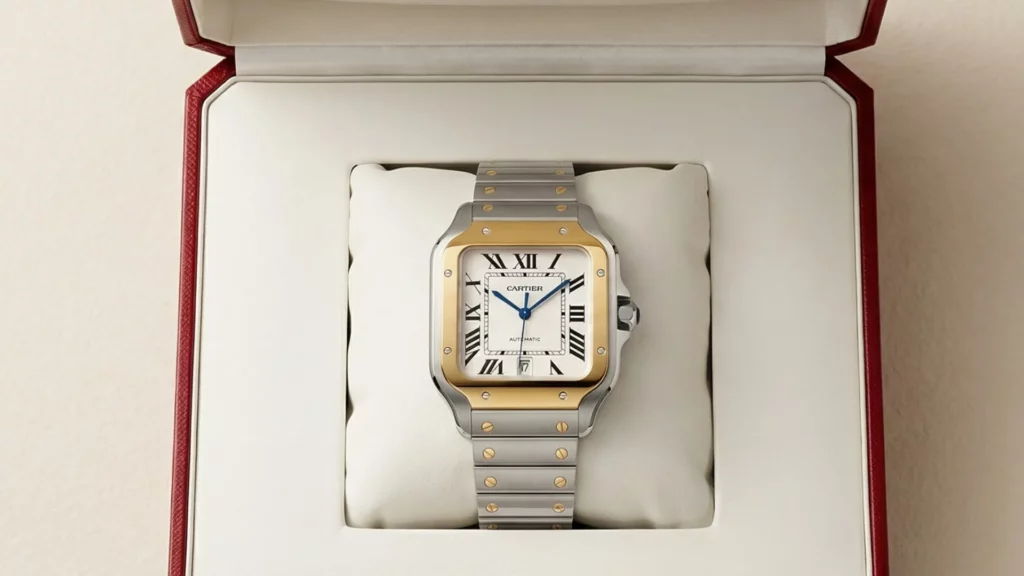
Image courtesy of Cartier Official Website (source)
In 1904, Brazilian aviator Alberto Santos-Dumont asked Louis Cartier for a watch he could read while flying. Cartier built him a square-cased wristwatch with exposed screws on the bezel. That design is still what you buy today.
The current version got a full redesign in 2018. Cartier added SmartLink, which lets you resize the bracelet by pressing a button on each link. They also added QuickSwitch, which swaps the bracelet for a strap in seconds. No tools needed for either.
The Cartier Santos has a square case, white dial, Roman numerals, and a fitted steel bracelet. It looks formal but carries 100m water resistance. Few watches at this price share that same combination of square case, exposed screws, and Roman numeral dial.
Notable Cartier Santos references:
- WSSA0009 (Large steel, 2018 generation, discontinued)
- WSSA0037 (Large, ADLC bezel, grey dial)
- WHSA0028 (Large, skeleton, green dial)
Omega Seamaster Overview

Image courtesy of Omega Official Website (source)
The Omega Seamaster line started in 1948. The Diver 300M launched in 1993 as a dedicated dive watch. The current version came in 2018 with a ceramic wave-pattern dial, a ceramic rotating bezel, and the Caliber 8800 movement.
The Caliber 8800 movement is METAS-certified. METAS-certified refers to a watch that has passed strict testing by the Swiss Federal Institute of Metrology (short for METAS). METAS tests the movement across eight stages including precision, magnetic resistance up to 15,000 gauss, and water resistance.
Most people recognize it from James Bond. Collectors focus on the ceramic dial and bezel, the certified movement, and the 300m water resistance.
Notable Seamaster Diver 300M references:
- 210.30.42.20.03.001 (Blue wave dial, steel bracelet)
- 210.22.42.20.01.002 (Two-tone Sedna gold and steel)
- 210.90.42.20.01.001 (Titanium, No Time to Die edition)
Cartier Santos vs Omega Seamaster: Most Notable Differences

Image courtesy of Cartier (source) and Omega (source)
The differences between these two go deeper than case shape. Here is what actually changes how each watch behaves on your wrist every day.
1. Case Shape
The Cartier Santos has a square case with rounded corners. The Large model measures 39.8mm wide by 47.5mm tall at 9.08mm thick. That flat profile slides under a shirt cuff without any resistance.
The Diver 300M has a round 42mm case at 13.5mm thick. That thickness comes from the screw-down crown, the helium escape valve, and the pressure-rated case. The case has brushed surfaces, so daily scratches are far less visible than on the fully polished Santos. That 4mm+ thickness difference will show under a dress shirt cuff.
2. Water Resistance
The Cartier Santos is rated to 100m with a push-in crown. It is safe for swimming. The Caliber 1847 MC uses non-ferromagnetic components for magnetic resistance, but you need to confirm the crown is fully seated before getting it wet.
The Diver 300M is rated to 300m with a screw-down crown and a helium escape valve at 10 o’clock. The Caliber 8800 is tested to 15,000 gauss of magnetic resistance. Water is never a concern with this watch.
3. Movement
The Cartier Santos runs on the Caliber 1847 MC, an in-house automatic at 4Hz with a 42-hour power reserve. Cartier does not publish an official accuracy rating for this movement. There is no external certification.
The Diver 300M uses the Caliber 8800, METAS-certified to run between 0 and +5 seconds per day. Power reserve is 55 hours. The Co-Axial escapement reduces internal friction, which Omega credits for a service interval of 8 to 10 years versus the industry standard of 5 to 7.
4. Bezel
The Cartier Santos has a fixed polished steel bezel with eight exposed screws. It does not rotate and has no timing function. A fully polished bezel shows micro-hazing within a few weeks of regular wear.
The Diver 300M has a unidirectional rotating bezel with a ceramic insert laser-engraved with a 60-minute dive scale. It only turns counterclockwise, so an accidental bump always shows more time elapsed, never less. The ceramic resists scratches far better than polished steel.
5. Bracelet and Strap System
The Cartier Santos ships with a steel bracelet and a leather strap. SmartLink adds or removes links by pressing a button on each link. QuickSwitch swaps the full bracelet for a strap in seconds. No tools needed for either.
The Diver 300M ships with a steel bracelet or rubber strap depending on the reference. The bracelet has a flip-lock clasp with a wetsuit extension. Newer references include a quick-release for strap swaps. For active wear, the Diver 300M bracelet holds up better.
6. Dial
The Cartier Santos has a white opaline dial with black Roman numerals, a railway minute track, a date at 6 o’clock, and blued steel sword-shaped hands. It is one of the cleanest dials at this price in good light.
The Diver 300M uses a laser-engraved ceramic wave dial in blue, black, grey, white, or green. The hands are broad with large lume fill. In low light, the Diver 300M is faster to read. The Cartier Santos is sharper in daylight.
Price and Market Demand
Both watches trade well below retail on the secondary market. How far below, and how fast they sell, tells you a lot about which one buyers actually want.
The W2SA0009 two-tone retails at $13,250 but trades at $8,442 on the secondary market, a 36% drop from retail (source). The WHSA0028 skeleton retails at $34,700 and trades at $22,245, roughly 36% below retail as well (source).
Full set (box, papers, warranty card) and an unpolished case are the two biggest factors that keep Santos prices higher. The fully polished finish makes scratches highly visible, so a worn Santos loses value faster than most watches at this price.
The 210.90.42.20.01.001 titanium No Time to Die edition retails at $11,300 and trades at $7,663, about 32% below retail (source). The 210.22.42.20.01.002 two-tone Sedna gold retails at $9,600 and trades at $5,708, about 41% below retail (source).
The blue dial Diver 300M (210.30.42.20.03.001) typically sells within 21 days on the secondary market, faster than 98% of watches in the same price range. The Seamaster is the easier sell.
Notable Cartier Santos References

Image courtesy of Cartier Official Website
W2SA0009: [source]
WSSA0037: [source]
WHSA0028: [source]
Here are three Santos references worth knowing before you buy. Each one holds value differently on the secondary market.
1. Cartier Santos Ref. W2SA0009
The gold screws and bracelet link accents make the exposed-screw design stand out more against the steel. It reads dressier than the all-steel version. A good pick if you want gold in the palette without going full yellow gold..
- Case size: 39.8 × 47.5mm (Large)
- Material: Stainless steel and 18k yellow gold
- Movement: Caliber 1847 MC, automatic
- Water resistance: 100m
- Market price: $8,442
2. Cartier Santos Ref. WSSA0037
ADLC stands for Amorphous Diamond-Like Carbon. The coating gives the bezel a flat matte black finish and makes it far more scratch-resistant than polished steel. It ships with both a bracelet and a rubber strap.
- Case size: 39.8 × 47.5mm (Large)
- Material: Stainless steel, ADLC-coated bezel
- Movement: Caliber 1847 MC, automatic
- Water resistance: 100m
- Market price: $7,031
3. Cartier Santos Ref. WHSA0028
The skeleton dial removes most of the dial surface so you can see the movement through the front. It is the most visually distinct reference in the Cartier Santos family and sits at a significantly higher price point to match.
- Case size: 39.8 × 47.5mm (Large)
- Material: Stainless steel
- Movement: Caliber 1847 MC, skeleton automatic
- Water resistance: 100m
- Market price: $22,245
Notable Omega Seamaster References

Image courtesy of Omega Official Website
210.30.42.20.03.001: [source]
210.22.42.20.01.002: [source]
210.90.42.20.01.001: [source]
The Diver 300M comes in several references. The main differences are dial color and material, but those details affect how each one prices on the secondary market.
1. Omega Seamaster Ref. 210.30.42.20.03.001
This is the most traded Seamaster reference on the secondary market. The ceramic blue wave dial and matching blue ceramic bezel are the most recognized combination in the current lineup. METAS certification paperwork is included at purchase.
- Case: 42mm
- Material: Stainless steel
- Movement: Caliber 8800, Co-Axial Master Chronometer, METAS certified
- Power reserve: 55+ hours
- Water resistance: 300m
- Market price: $4,208
2. Omega Seamaster Ref. 210.22.42.20.01.002
This reference has 18k Sedna gold on the bezel, crown, and bracelet center links. Sedna gold is Omega’s proprietary rose gold alloy. It is the dressiest Diver 300M in the current lineup and trades above steel references because of the gold content.
It suits buyers who want the Diver 300M’s movement in a warmer, more formal package.
- Case: 42mm
- Material: Stainless steel and 18k Sedna gold
- Movement: Caliber 8800, METAS certified
- Power reserve: 55+ hours
- Water resistance: 300m
- Market price: $5,708
3. Omega Seamaster Ref. 210.90.42.20.01.001
This reference uses a titanium case, which makes it lighter than the steel versions. The brown dial, NATO strap, and “Broad Arrow” markings give it a military look. It runs on the Caliber 8807, the titanium-specific version of the 8800, with the same METAS certification and 300m water resistance.
Secondary prices run higher than steel references because of the titanium case and the Bond film tie-in.
- Case: 42mm
- Material: Titanium
- Movement: Caliber 8807, METAS certified
- Power reserve: 55+ hours
- Water resistance: 300m
- Market price: $7,663
Which Watch Should You Choose?
These two watches suit different buyers for different reasons. The right one depends on how you actually spend your time.
Choose the Cartier Santos if:
- You wear suits or dress shirts often and need cuff clearance
- You want a square case that looks nothing like a standard sports watch
- You prefer a clean, single-color dial over functional bezel markings
- You plan to switch between a bracelet and strap throughout the week
- You prioritize thinness and design over movement certification
Choose the Omega Seamaster Diver 300M if:
- You swim, surf, or spend regular time in or around water
- You want a movement certified by an independent testing body (METAS)
- You want brushed surfaces that hide daily scratches better
- You want a watch that sells quickly on the secondary market
- You want a round 42mm sports watch with a clear athletic profile
Final Thoughts on Cartier Santos vs Omega Seamaster
In the Cartier Santos vs Omega Seamaster, you are not choosing the better watch. You are choosing the one you will wear more in your daily routine.
Both trade well below retail, but the Diver 300M sells faster and is easier to exit. The Santos holds value best when the case is unpolished and you keep the full set.
If you dress up regularly, go with Santos. If you are active or spend time around water, go with the Diver 300M. Try both on before buying. The 4mm+ thickness difference feels more significant in person than it looks in photos, and that alone can change your decision.