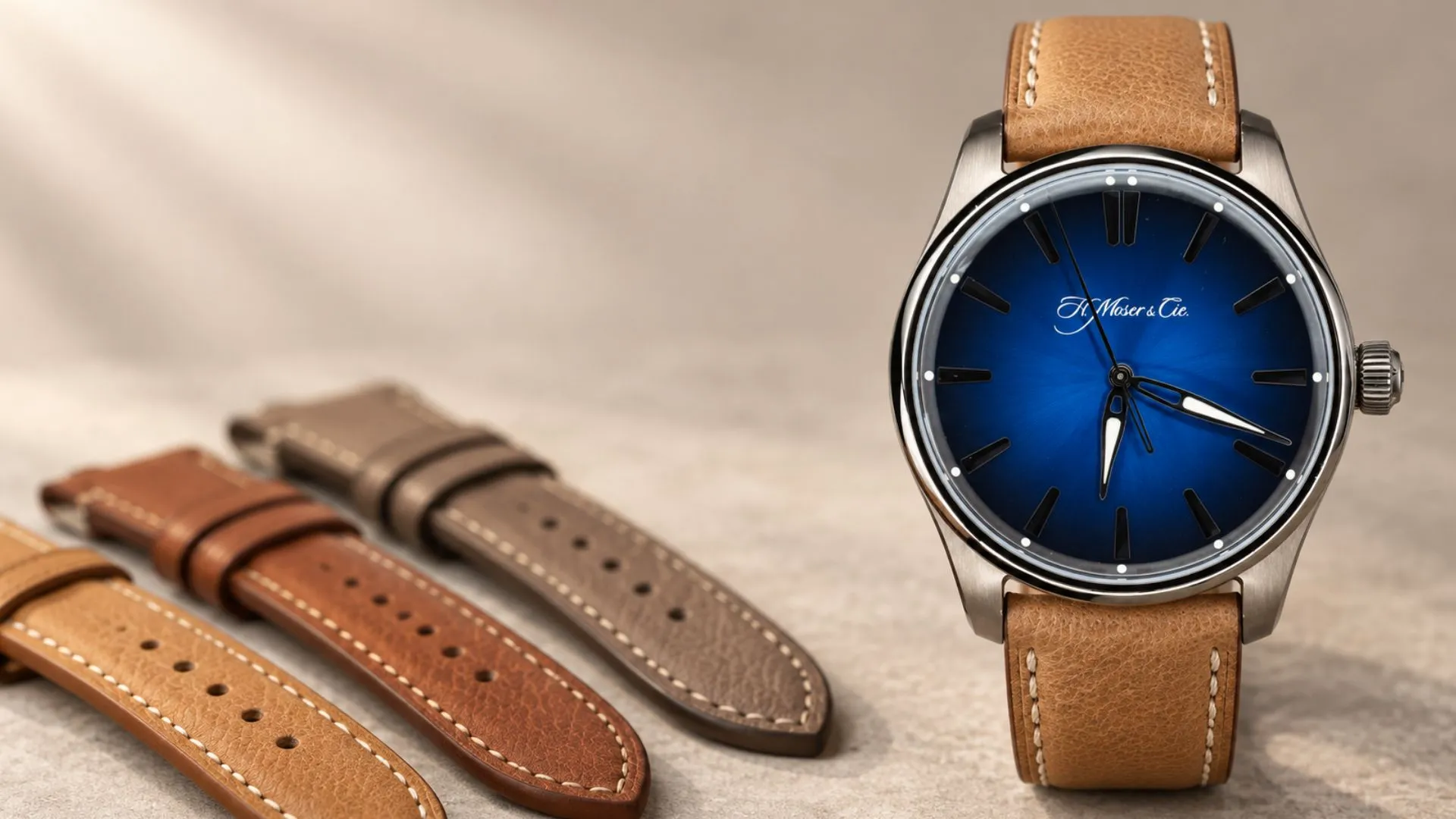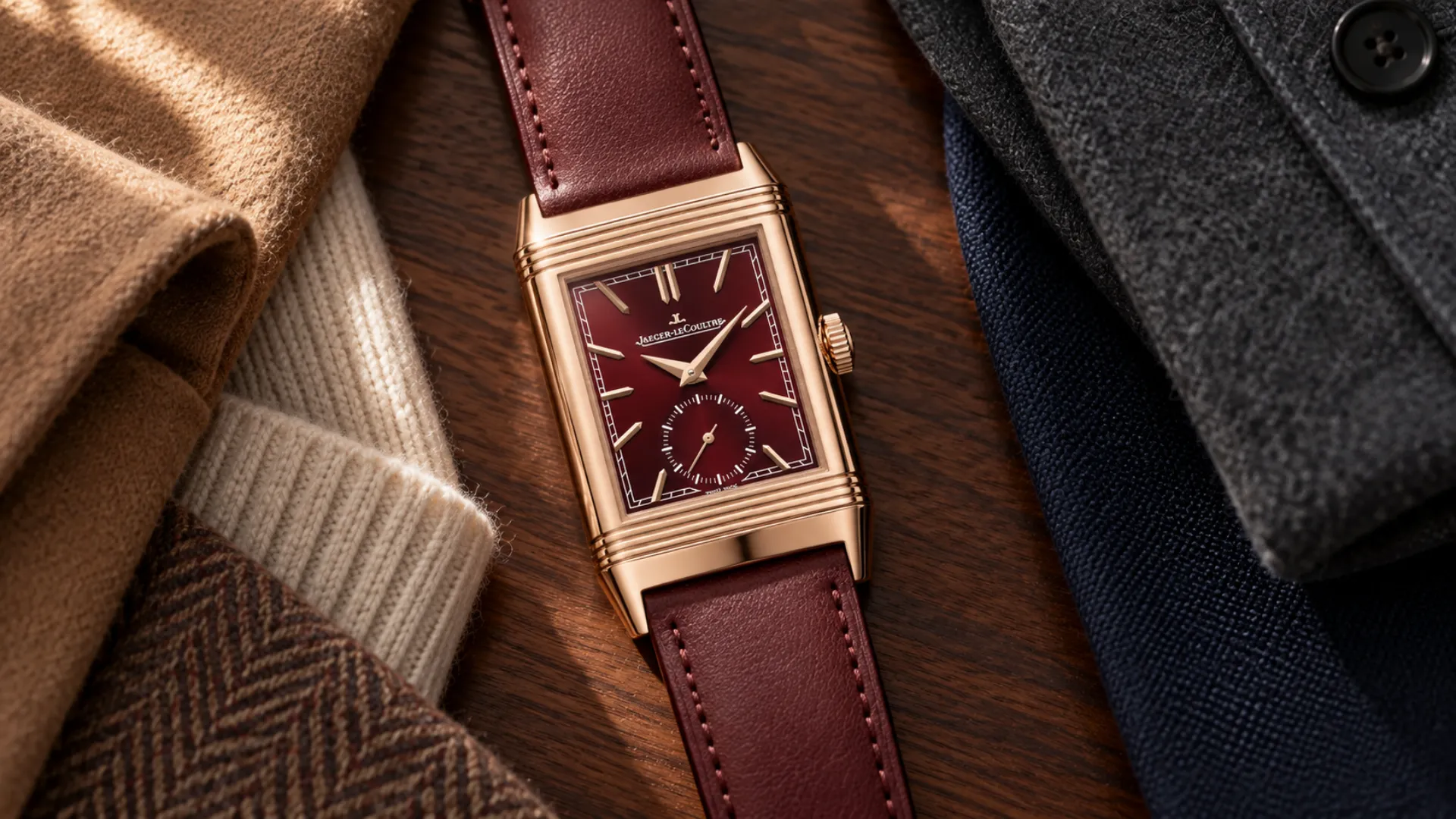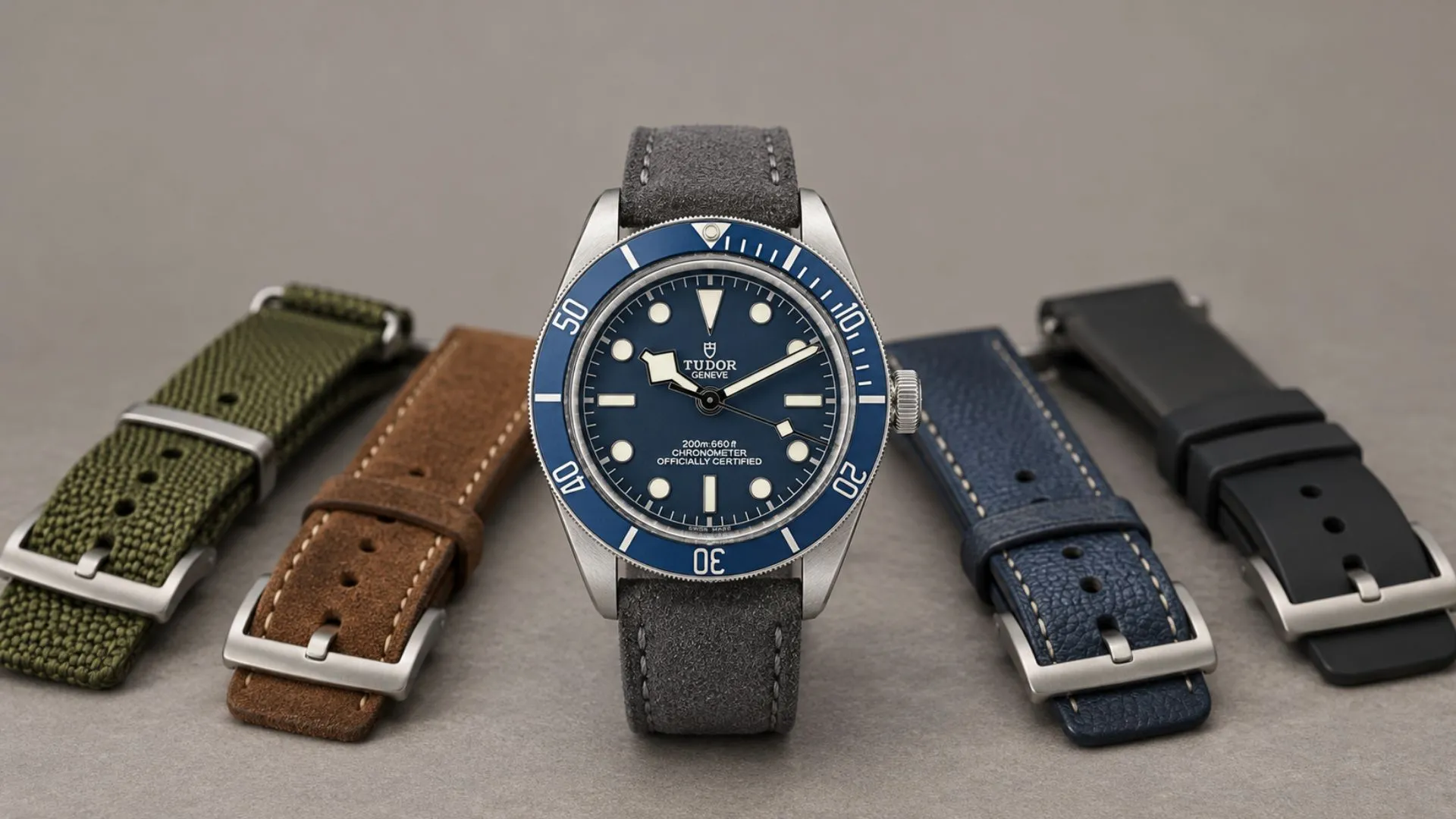
Most people pick a leather strap by color. That is the wrong place to start.
Not all types of leather watch straps wear the same way. Some last eight months. Others last a decade. The difference comes down to the leather type, the grade, and how it was tanned.
A $20 strap and a $200 strap can look the same on a shelf. After a year on your wrist, they will not. The cheaper one cracks at the buckle fold. The quality one softens, darkens, and starts to feel like yours.
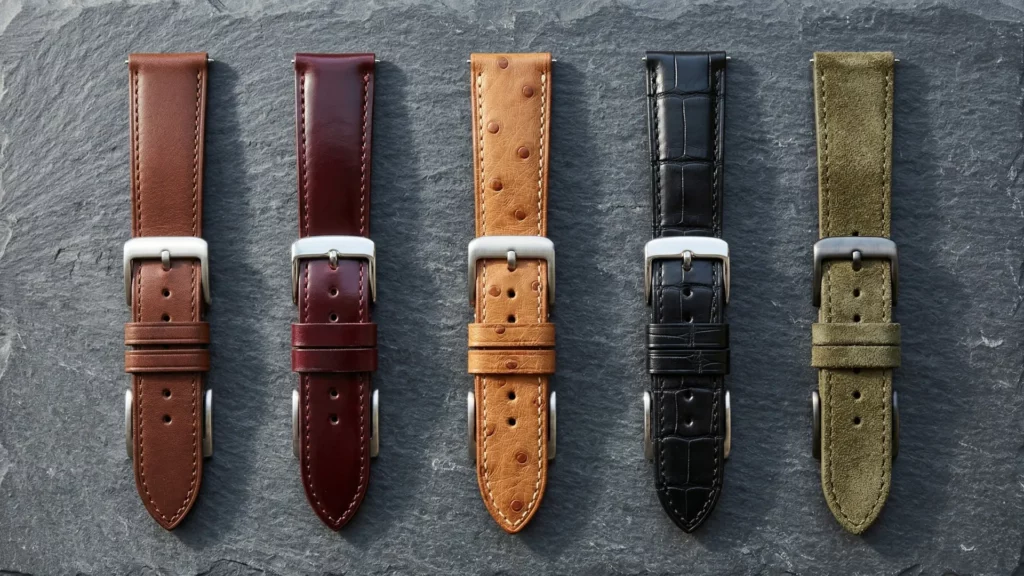
This guide covers every major type of leather watch strap, from everyday calfskin to collector-grade shell cordovan and exotic options like alligator, ostrich, and shark. For each one, you will learn how it wears, how long it lasts, and which watches it pairs with best.
Read this before you buy your next strap.
What Do Leather Grades Mean for Watch Straps?
Leather grade is the biggest factor in how long your strap lasts. It comes from which layer of animal hide the leather was cut from. The closer to the surface, the better the quality.
Here is how the four grades compare:
| Grade | What It Is | Daily Wear Lifespan | Develops Patina? |
| Full Grain | Outermost layer, no buffing or sanding | 5–10+ years | Yes, strong |
| Top Grain | Just below the surface, lightly sanded | 2–5 years | Yes, moderate |
| Genuine Leather | Lower layers, heavily processed | 1–2 years | Minimal |
| Bonded Leather | Leather scraps glued together | 6–12 months | No |
Avoid bonded leather. It peels, cracks, and falls apart fast. It shows up in straps under $20 and it is not worth your money. For any watch you care about, stick to full grain or top grain only.
How Does the Tanning Method Change How a Strap Wears?
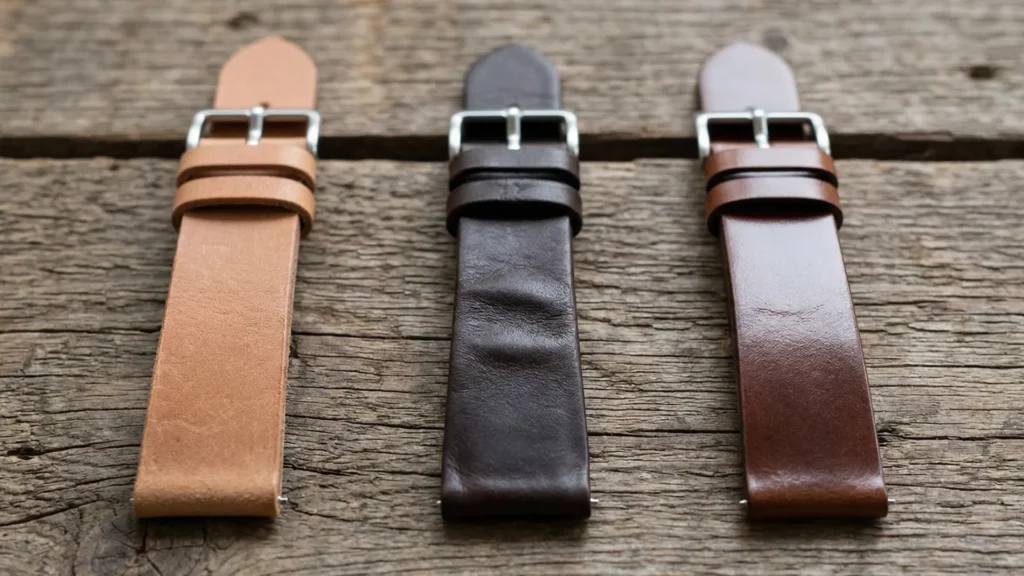
Tanning is what turns raw hide into usable leather. The method used determines how the strap feels, how it ages, and how much character it develops over time.
There are three methods used in strap production:
1. Vegetable tanning uses natural plant-based tannins, usually from tree bark. Italian tanneries like Conceria Walpier take weeks to months to complete this process. The strap starts stiff but softens with wear and builds a rich, unique patina over time.
2. Chrome tanning uses mineral salts like chromium sulfate. It produces softer leather faster and at a lower cost. The strap feels good right away but will not develop much character. Most budget straps are chrome-tanned.
3. Combination tanning uses both methods. It is softer than pure vegetable-tan, with slightly more depth than pure chrome. Many mid-range straps land here.
Different Types of Leather Watch Straps
The animal source, grain, and finish all affect how the strap feels, ages, and pairs with your watch. Here is every major type broken down, from everyday options to collector-grade materials.
1. Calfskin

Calfskin is the most common leather used in quality watch straps. It comes from young cattle, which gives it a fine grain and a soft feel. Rolex uses it on the 1908 Perpetual. Bulgari and TAG Heuer use it across many of their dress lines.
- Fine grain, supple, and comfortable within a few days of wear
- Vegetable-tanned calfskin develops a good patina; chrome-tanned does not
- Works with dress watches, casual watches, and everyday pieces
- Price range: $30 to $120
Calfskin also comes in a perforated version, commonly called rally leather. It has punched holes across the surface for breathability and is a popular choice for sports chronographs and racing-inspired watches.
It is the right first leather strap for almost anyone.
2. Cowhide and Full-Grain Bovine Leather

Cowhide is thicker and stiffer than calfskin. It has a more visible grain and takes longer to break in. Full-grain cowhide is one of the most durable leathers available at a reasonable price.
- Often sold as “distressed,” “vintage,” or “crazy horse” leather
- Better for field watches, military-style watches, and casual pieces than dress watches
- Develops a strong patina with age
- Price range: $25 to $80
Full-grain cowhide is one of the few leathers that gets better looking the harder you wear it.
3. Shell Cordovan

Shell cordovan is not standard hide. It comes from a specific fibrous membrane beneath the horse’s hindquarters, not from the surface hide.
Horween Leather Co. in Chicago is the global standard for cordovan production. Their tanning process takes a minimum of six months. The craft traces back to 7th-century Córdoba, Spain.
Here is what makes cordovan stand out:
- Rolls instead of creasing, so it stays clean-looking much longer
- Develops a deep, waxy patina and a subtle sheen unlike any other leather
- Works best at 18 to 20mm lug widths; thick cordovan loses some of its suppleness at smaller sizes
- Price range: $100 to $250+
Best for dress watches and vintage pieces where long-term wear is the point.
4. Goat Leather

Goat leather has become more popular in recent years. More independent watchmakers have started using it, and several boutique strap makers now offer it as a dedicated option alongside calfskin.
- Lighter and thinner than calfskin, but surprisingly durable
- More textured grain gives the strap a slightly casual character
- Good patina development over time
- Price range: $40 to $90
It is a solid step up from standard calfskin without spending cordovan money.
5. Pigskin

Pigskin is one of the few leathers where the follicle holes go all the way through the hide. This makes it naturally more breathable than most other leather types, which is a real advantage for daily wear in warm or humid climates.
- Distinctive, slightly porous surface with a matte finish
- Softer and more flexible than cowhide right out of the box
- Common as a lining material in premium straps, but also used as the main leather
- Works well with casual watches, field watches, and sports pieces
- Price range: $20 to $60
If you wear your watch daily in a warm or humid climate, pigskin is worth prioritizing over calfskin.
6. Deerskin

Deerskin is one of the softest leathers used in watch strap production. It has a natural stretch that makes it comfortable almost immediately, with very little break-in time needed.
- Velvety, matte surface with a relaxed, slightly rustic look
- Moisture-resistant to a degree, which gives it a slight edge over suede in humidity
- Best paired with casual or vintage-inspired dress watches
- Not ideal for formal occasions; the texture reads as relaxed
- Price range: $40 to $90
Deerskin is the most comfortable casual leather in this list with almost no break-in time.
7. Buffalo Leather

Buffalo leather comes from water buffalo hide. It has a deep, natural grain that is more pronounced than cowhide, giving it a bold, rugged character.
- Thicker and stiffer than calfskin or cowhide, with a longer break-in period
- The grain texture varies from hide to hide, so each strap looks slightly different
- Excellent durability; handles daily abuse well
- Best with tool watches, field watches, and rugged sport pieces
- Price range: $30 to $80
Buffalo leather takes longer to break in than calfskin but outlasts it in rugged daily use.
8. Saffiano Leather

Saffiano leather is a type of calfskin stamped with a crosshatch pattern and treated with a wax finish. The finish was introduced and patented by Prada in 1913. Watch brands including Panerai and Montblanc have since adopted it.
- Highly resistant to scratches and stains compared to standard calfskin
- Has a structured, slightly rigid feel that holds its shape well over time
- Does not develop a patina the same way untreated calfskin does
- Works best with modern dress watches and luxury sport watches
- Price range: $50 to $150
Saffiano is the most low-maintenance leather option in this list.
9. Alligator and Crocodile

These two get mixed up constantly. They are not the same leather.
Alligator has symmetrical, uniform belly scales. The leather is generally softer and is considered the superior option. Patek Philippe and A. Lange and Söhne pair their watches with alligator as a standard offering.
Crocodile has visible sensory pores on each scale and a slightly rougher texture. Patek Philippe has used crocodiles extensively as well. It is not inferior, just different.
One detail most articles skip: due to CITES (Convention on International Trade in Endangered Species of Wild Fauna and Flora) regulations, crocodile leather importation into the US is largely impractical. Most US buyers are purchasing alligators, even if a listing says “exotic leather.”
Most “exotic” straps on watches under $500 are embossed calfskin, not real exotic leather. Real alligator has visible pores in each scale, natural variation in scale size, and a price tag to match. If the pattern looks too perfect and the price looks too low, it is embossed.
- Best for high-end dress watches, luxury sports watches, and formal occasions
- Price range: $150 to $500+
Alligator is the best exotic leather for high-end dress watches. It is also the most likely “exotic” you will actually encounter at retail in the US.
10. Ostrich

Ostrich leather is easy to spot. It has raised bumps from where the quill follicles were. It is one of the more durable exotic leathers and is naturally more moisture-resistant than calfskin or cordovan.
- Thinner and lighter than alligator on the wrist
- The quill pattern works well with both vintage and modern mid-sized cases
- Softens further with wear over time
- Price range: $80 to $200
At $80 to $200, ostrich gives you exotic leather durability without the price tag of alligator or shark.
11. Lizard
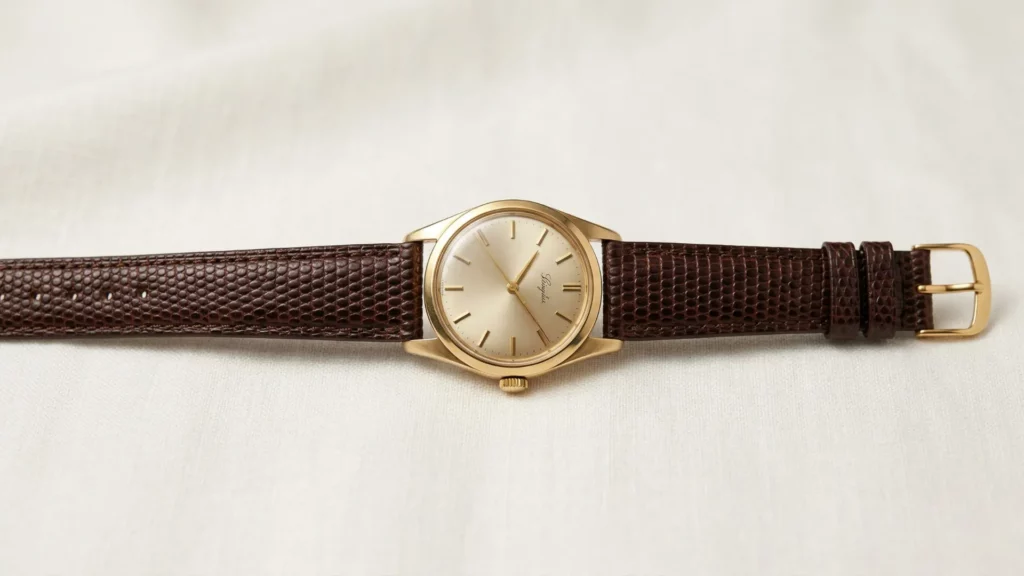
Lizard leather has a fine, intricate scale pattern. It is elegant without being loud, making it the low-key option in the exotic leather category.
- Thinner and more delicate than other exotics
- Works best on smaller cases, 36 to 38mm pieces, and mid-century vintage watches
- Not built for daily wear; better saved for dress occasions
- Price range: $80 to $180
Lizard is the most understated exotic in this list and the only one that suits smaller dress watches under 38mm.
12. Python and Snake Leather

Python and snake leather straps are among the most visually striking options available. The scale pattern is elongated and distinctive, and no two hides look exactly the same.
- Delicate and prone to cracking if not maintained properly
- Best suited for dress watches on formal occasions, not daily wear
- Subject to CITES import regulations in the US, similar to crocodile leather
- Verify authenticity carefully; embossed calfskin with a snake pattern is common at lower price points
- Price range: $100 to $300+
Python leather is for those who want a statement piece, not an everyday strap.
13. Stingray (Galuchat)

Stingray leather has a bead-like surface with a natural gloss. It is one of the hardest natural leathers and resists scratches better than almost anything else.
- Associated with Art Deco watches and haute horology
- Holds its appearance well over years of wear
- Pairs best with bold, formal, or fashion-forward pieces
- Price range: $100 to $300
Stingray is the most scratch-resistant natural leather in this list and one of the few that genuinely holds its appearance for a decade or more.
14. Shark Leather

Shark leather has a tight, grainy texture with a slightly rough feel. It is one of the rarest materials used in watch strap production and is highly durable due to the density of the hide.
- Naturally water-resistant, more so than most leathers
- Has a distinctive grained pattern that is subtler than stingray but still recognizable
- A niche option; most commonly found at boutique or custom strap makers
- Best for bold dress watches or collector pieces where rarity matters
- Price range: $150 to $400+
Shark leather is the most niche option in this list. Most buyers will never encounter it outside a custom strap maker.
15. Suede and Nubuck
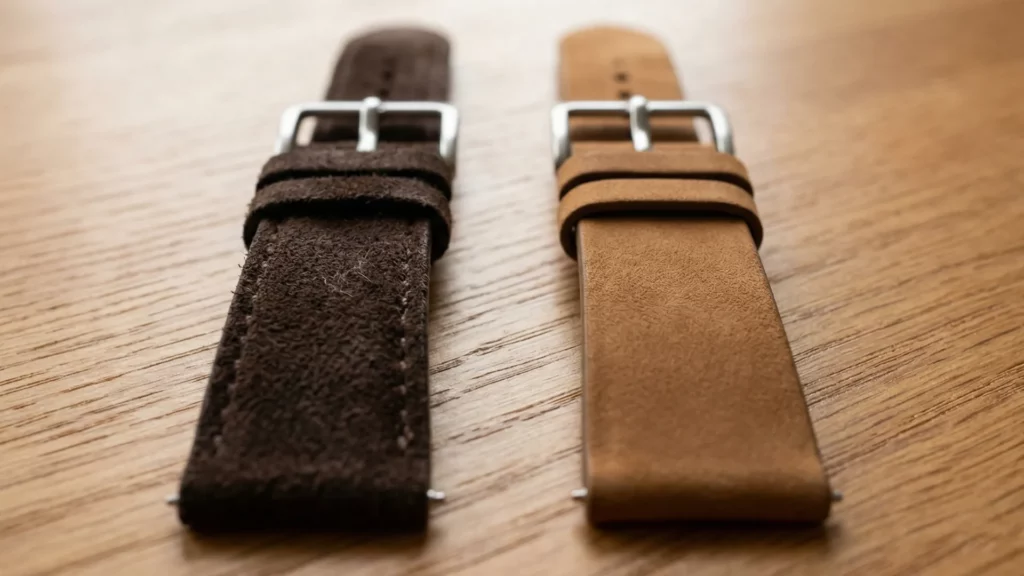
These two look similar but are not the same. Suede comes from the softer inner layers of hide. Nubuck comes from the outer hide, sanded down to create a similar velvety texture. Nubuck is slightly more durable.
Both are immediately comfortable with almost no break-in time. Neither handles moisture well. Sweat, rain, and humidity will degrade them faster than any other leather type.
- Best for casual wear, vintage dress watches, and field watches in relaxed settings
- Avoid in hot or humid climates for daily wear
- Price range: $30 to $100
Both are best saved for casual or dress occasions in dry conditions.
Why Does the Strap Lining Matter?

The lining is the inner side of the strap, the part that sits against your skin all day. A premium outer leather paired with a cheap synthetic lining is still an uncomfortable strap.
The lining affects breathability, break-in comfort, and how the strap handles sweat over time. Here are the three most common lining types:
- Calfskin lining: Smooth, comfortable, breaks in well. The most common lining in quality straps.
- Suede or Alcantara lining: Alcantara is a synthetic microfiber material that feels similar to suede. Both are soft right away but absorb sweat more, so they need more maintenance.
- Synthetic lining: Least breathable. Common in budget straps. Fine for occasional wear, not great for daily use.
When comparing two straps at similar prices, always check the lining.
Which Leather Watch Strap Matches Which Type of Watch?
Match the leather to the watch first. Outfit matching comes second. Here is what works across the most common watch types:
| Watch Type | Best Leather Options | Why It Works |
| Dress watch | Calfskin (smooth), shell cordovan, alligator, lizard | Clean grain complements formal cases |
| Field or military watch | Full-grain cowhide, buffalo, veg-tanned calfskin, goat | Rugged texture matches the tool-watch look |
| Sports chronograph | Perforated calfskin (rally), goat, pigskin, suede | Relaxed character suits sporty cases |
| Vintage dress watch | Shell cordovan, suede, nubuck, stingray, deerskin | Period-correct materials with natural aging appeal |
| Dive watch on leather | Veg-tanned calfskin or cordovan only | A deliberate collector choice, not a practical one |
| Independent / micro-brand | Goat leather, veg-tanned calfskin | Matches a considered, non-corporate aesthetic |
| Bold or fashion-forward piece | Stingray, python, shark, ostrich | Exotic texture adds visual weight to the piece |
Pairing a dive watch with a leather strap is a collector statement, not a practical choice. Exotic leather on a dive watch clashes with the tool-watch aesthetic. Vegetable-tanned calfskin or cordovan reads as purposeful.
How Long Do Different Leather Watch Straps Last?
Lifespan depends on four things: leather grade, tanning method, how often you wear it, and how often you rotate between straps. Most people replace straps earlier than they need to because they started with a low grade.
Here is a realistic lifespan guide:
| Leather Type | Estimated Lifespan | Break-In Period |
| Bonded leather | 6–12 months | None, already soft |
| Chrome-tanned calfskin | 1–2 years | A few days |
| Pigskin / deerskin | 1–3 years | A few days |
| Veg-tanned calfskin / goat / buffalo | 2–5 years | 1–2 weeks |
| Alligator / ostrich / shark | 5–15 years with care | 1–3 weeks |
| Shell cordovan | 5–10+ years | 2–4 weeks |
| Stingray | 10+ years | Short, surface is already hard |
Shell cordovan lasts so long because it resists creasing. Most straps eventually crack at the fold point near the buckle. Cordovan rolls rather than folds, which is why it holds up over years of daily wear.
For care, the basics are simple. Condition every 2 to 3 months with a leather cream suited to the material. Keep it away from prolonged water exposure. Alternate between at least two straps if you wear a watch daily.
Suede and nubuck are the exceptions. Use a dry brush on those, not conditioner. Python and lizard need a specialist leather conditioner to prevent cracking.
Final Thoughts on Types of Leather Watch Straps
The difference between a strap that lasts a year and one that lasts a decade comes down to grade, tanning method, and material type. This guide covered every major type of leather watch strap, from everyday calfskin and pigskin to collector-grade shell cordovan and exotic options like alligator, ostrich, and shark.
Start with full grain or top grain only. Choose vegetable-tanned if patina matters to you. Choose chrome-tanned if you want immediate softness. Then match the leather to your watch, not just your outfit.
For most everyday watches, vegetable-tanned calfskin is the right call. For dress and collector pieces, shell cordovan is worth the investment. For luxury pairings, alligator remains the benchmark.
One last tip: always check the lining, not just the outer leather. A quality outer leather with a synthetic lining still feels stiff and uncomfortable after six months. And rotate your straps. Two straps in rotation can easily double the lifespan of each one.