
Have you ever stored a watch only to pick it up later and find the leather strap feels stiff, smells musty, or looks worn too soon? If you are wondering how to do storing leather strap watches the right way, simply putting the watch back in its box after wearing it is rarely enough.
To understand what actually works when storing leather strap watches, it helps to start with how leather reacts to sweat, humidity, heat, and pressure during storage. From there, factors like proper cleaning, airflow, strap positioning, and storage environment add clarity, guiding how you should store leather strap watches to prevent mold, cracking, stains, warping, and dye transfer.
Why Leather Needs Different Storage Than Other Straps
Leather strap watches need different storage because leather absorbs sweat, skin oils, and humidity into its fibers, unlike metal bracelets and rubber straps that mainly hold moisture on the surface.
The table below shows how different strap materials react to moisture and storage conditions, making it easier to see why leather requires more careful handling during storage.
| Material | What it absorbs | Main storage risk |
| Leather (calfskin, suede, alligator) | Sweat, skin oils, ambient humidity, perfume residue | Mold/mildew, odor, staining, drying and cracking |
| Rubber (FKM, silicone) | Very little, mostly surface residue | Dust buildup, surface oxidation, deformation if stored bent tight |
| Metal bracelet (steel, titanium) | Very little, mostly surface moisture | Scratches, trapped grime in links, corrosion if stored wet |
| Nylon/Fabric (NATO) | Sweat and water like a sponge | Odor, mildew if stored damp, color fading |
Do a Quick Clean Before You Store It
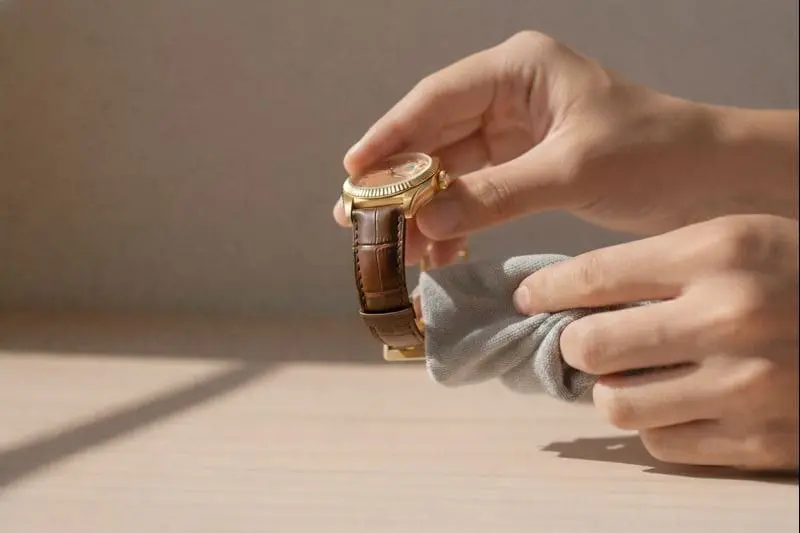
A 60-second clean after wearing your watch is the easiest way to extend leather strap life because it removes sweat salts and skin oils before they soak in and cause odor or staining. Follow these simple steps every time before storing a leather strap watch.
- Wipe the strap and case after wearing: Use a clean, soft microfiber cloth and wipe both sides of the leather strap, especially the underside that touches your skin. Also wipe the caseback, lugs, buckle, and strap holes, where sweat pools and dries into sticky grime that can stain leather over time.
- Air-dry the strap before storage: Let the watch sit in open air for a short time before placing it in a watch box, roll, or drawer. Leather should never be stored damp because trapped moisture leads to musty odor, mildew, and early material breakdown.
- Rotate straps so each one gets dry time: If you wear leather often, strap rotation is cheap insurance. Giving each strap a full day to rest reduces constant moisture cycling, which slowly weakens leather fibers and shortens strap life.
- Check lugs and spring bars for moisture and grime: Quickly inspect the lugs, spring bars, and strap ends for trapped moisture, skin flakes, or greenish buildup. That residue can transfer onto leather, cause staining, and even lead to metal corrosion if the watch is stored while wet.
How to Keep Leather Dry and Cool
To store leather strap watches correctly, you need to control heat, humidity, and chemical exposure, because leather absorbs moisture and residue instead of shedding it like metal or rubber. Here are the simple, proven habits that keep leather straps dry, clean, and long-lasting in real-world storage.
- Store away from heat and sunlight: Heat and UV exposure dry out leather fibers, fade dye, and speed up surface cracking over time. Strap makers consistently warn against leaving leather watches near windows, shelves with direct sun, or heat sources like lamps and electronics.
- Avoid humid places: Bathrooms, kitchens, laundry rooms, and tight cabinet corners trap moisture even if the room feels dry. Leather storage works best at moderate indoor humidity, not extremes, since long exposure around 70%+ relative humidity sharply increases mold and mildew risk.
- Do not seal damp leather in airtight boxes: If your strap is even slightly damp, sealing it creates a moisture prison with no airflow. This is how you end up with musty smells, mildew spots, and fuzzy mold growth that permanently damage leather.
- Use silica packs if the room is humid: Silica gel packs inside a watch box, drawer, or strap organizer help buffer daily humidity swings. This is especially useful during rainy seasons or in homes without consistent climate control.
- Keep leather away from perfume, lotion, alcohol sprays, and cleaning chemicals: Perfume, skincare products, and alcohol-based sprays can discolor leather and break down surface finishes. Apply fragrance and lotion first, let them dry, then put your watch on last to protect the strap.
When you follow these basics, you remove the biggest threats to leather: moisture, heat stress, and chemical exposure. That’s what keeps straps comfortable, clean, and wearable for years instead of months.
Store Your Watch With Leather Straps Attached
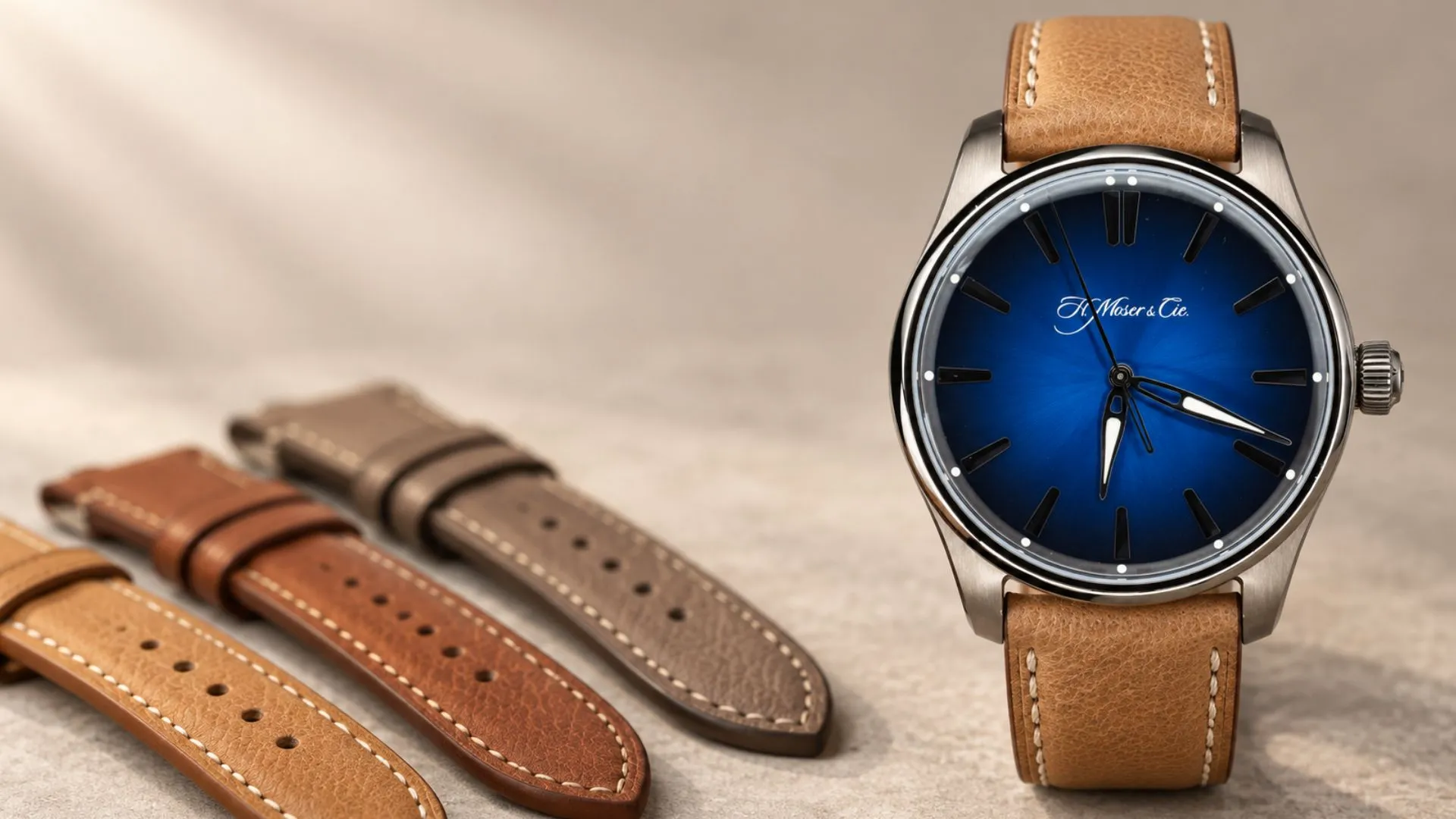
You can store a watch with the leather strap attached as long as you prevent sharp bends, pressure points, and rubbing that causes scuffs or dye transfer. Leather is like a structured fabric and it keeps a “memory” of how it sits in storage, so your goal is a gentle, natural curve.
Buckle the strap loosely, not tight. Tight buckling compresses the leather near the holes and is a fast track to deep creases and early cracking around the buckle area.
Use the right pillow size in your watch box so the strap curves naturally instead of being forced into a tight arc. If the pillow is too big, it stresses the strap; if it’s too small, the watch can shift and rub, which creates worn spots.
Avoid stands that force a hard bend near the lugs. That hinge-like bend is where leather often starts to weaken and split over time, especially on thicker or padded straps.
Keep leather away from metal parts that can scratch or mark it, like clasps, buckles, or bracelet edges. Store each watch separately to prevent scuffs and dye transfer, since dark leather can rub color onto lighter straps, cases, or watch pillows.
Choose the Best Storage for Your Setup
The best storage for leather strap watches depends on how you actually use them, like daily wear, how many straps you rotate, how often you travel, and how humid your room is.
No matter your setup, your priorities stay the same: avoid trapped humidity, avoid sharp bends, and stop straps from rubbing (that’s how you get scuffs and dye transfer).
Here’s a quick guide to help you pick the most practical storage option for your routine:
| Storage option | Best for | Not ideal if… |
| Watch box | Dust protection and display; easy rotation | The box traps humidity or sits near a humid area |
| Watch roll | Travel and daily rotation; compact storage | It’s packed tight while the strap is damp |
| Drawer tray | Straps stored flat and visible; quick access | The drawer is humid or near bathroom/laundry airflow |
| Strap organizer | Many straps sorted fast; easy to rotate | It’s stored near moisture sources or gets splashed |
If you like the display look, a watch box works well as long as your room stays cool and dry. In humid homes, add silica gel packs and avoid placing the box against an exterior wall, where condensation can build up.
A watch roll is great for travel, but it’s risky if the strap is not fully dry. Rolling a damp leather strap traps moisture, so pack only dry straps and let your watch air out overnight.
Drawer trays and strap organizers are underrated because they store straps flat, which reduces bending stress near the lugs and buckle holes. Just keep the drawer dry and away from “steamy” spots like bathrooms or laundry areas.
Condition Leather Only When Needed
Conditioning your leather strap is not something you do every day. It’s a targeted fix only when the leather shows real dryness like stiffness, a dull look, or surface dryness.
These signs usually show up after heavy sun exposure, very dry air (even strong air-conditioning), or long periods of not wearing the strap.
You should not condition the strap if it feels oily, sticky, or smells musty. That combo usually means you have a moisture problem, and conditioner can make it worse by trapping grime.
Use the right product for the leather type, because smooth calfskin, suede, and exotic leather like alligator react differently. Avoid shoe creams unless the strap maker clearly says they’re safe.
Avoid Common Leather Strap Problems
Leather strap damage is usually your environment and habits, not “bad leather.” If you manage sweat salt, tight bending, trapped humidity, and sun or heat, your straps stay fresh, flexible, and good-looking. Most long-term leather strap problems fall into these four patterns.
- Sweat stains and odor: Caused by sweat salt, skin oils, and moisture soaking into the leather, especially in hot or humid conditions. When salt dries inside the pores, the strap stiffens, darkens, and develops odor. Wipe after wear, air-dry fully, avoid alcohol, and use light saddle soap only when needed.
- Creases near the buckle: Caused by tight buckling and pulling the strap backward into the same hole, creating a stress hinge. This deepens creases, stretches holes, and weakens stitching over time. Use a deployant clasp, follow the pinky rule, and avoid hard bends in storage.
- Mold and mildew: Caused by damp leather stored in dark, humid, low-airflow spaces. Trapped moisture leads to white fuzz, musty smell, and surface damage. Never store straps wet, avoid airtight cases, and use cedar blocks or silica with regular rotation.
- Cracking: Caused by heat, sunlight, and overdrying that remove natural oils from leather. Straps left near windows, heat sources, or inside cars can become brittle and snap. Store in a cool, shaded area and condition only when leather feels dry and stiff.
The Bottom Line on Storing Leather Strap Watches
Proper leather strap storage comes down to a few consistent habits: cleaning after wear, letting straps fully dry, controlling heat and humidity, and storing leather with a gentle curve and airflow. Leather absorbs sweat, moisture, and pressure, so small storage mistakes add up fast.
When you focus on proper drying time and strap rotation, you prevent odor, staining, and moisture buildup inside the leather. These steps are simple, but they make the biggest difference in long-term strap comfort and appearance.
The right storage setup matters just as much. Avoid trapped humidity, sharp bends, and contact that causes scuffs or dye transfer, especially in watch boxes, rolls, and drawers.
Do these basics every time you put your watch away, and your leather straps will stay flexible, clean, and wearable for years instead of wearing out too soon.