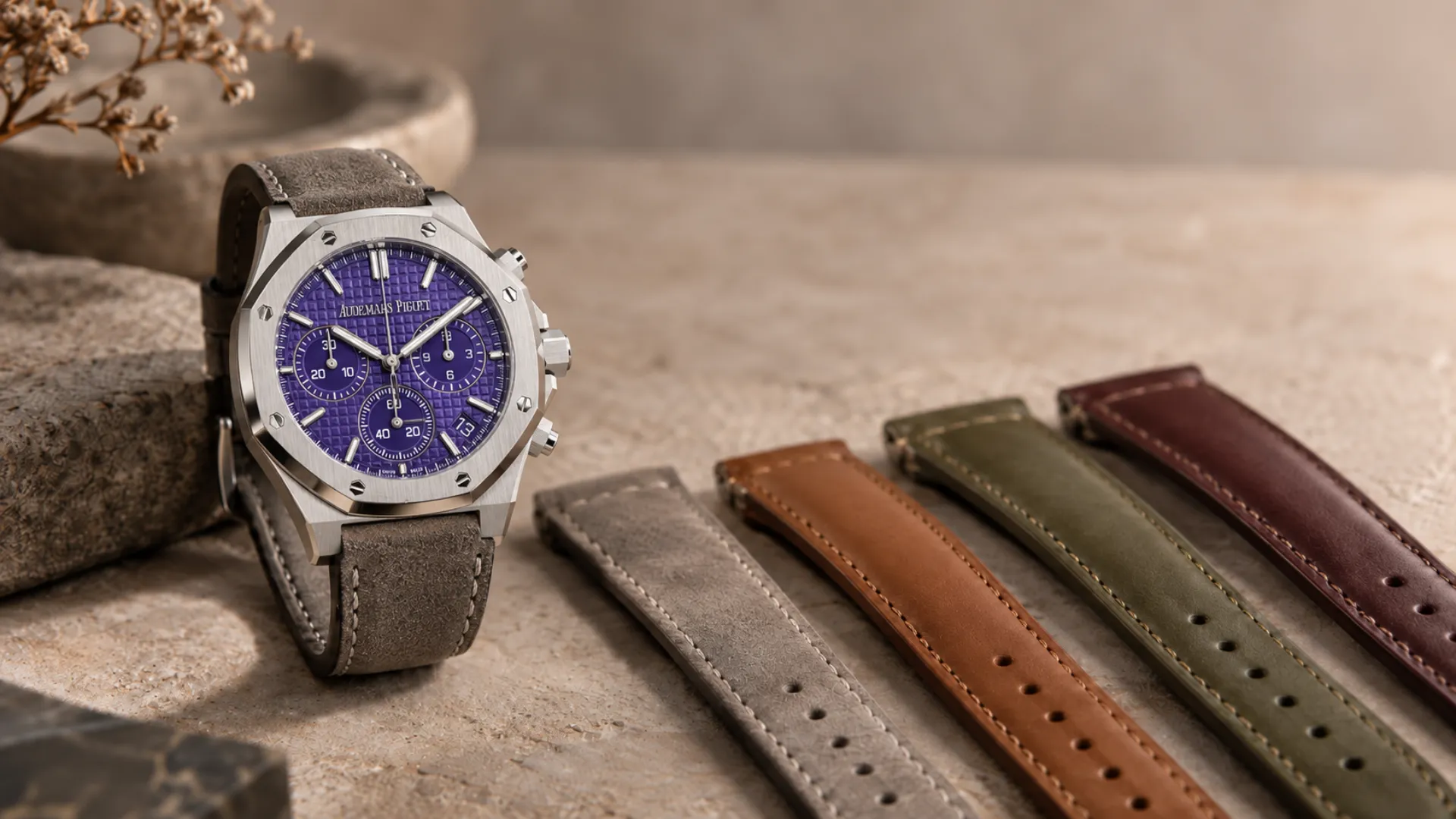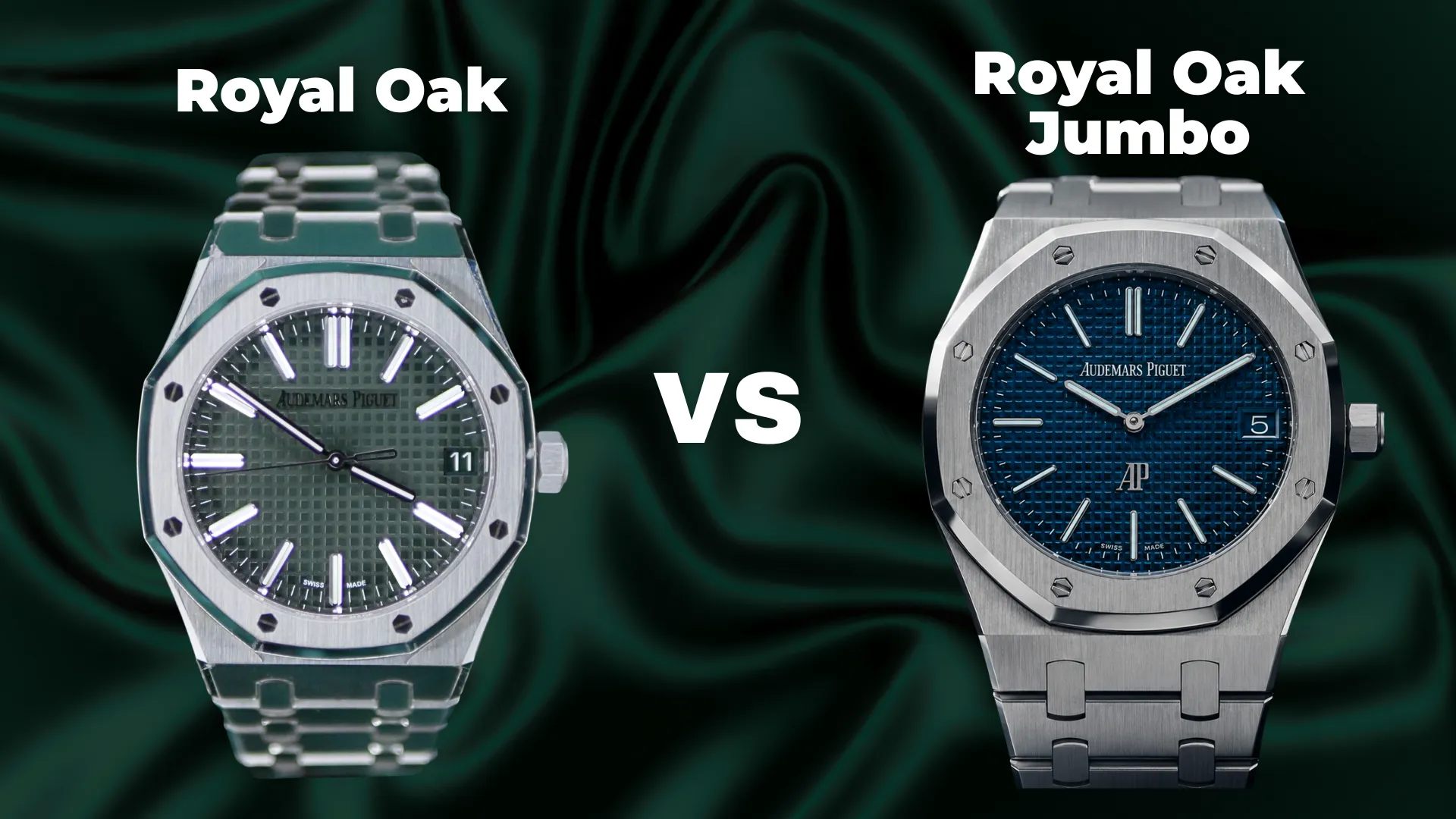

The Royal Oak vs PRX debate comes up constantly in watch communities, and the reason is simple. Both watches share an integrated bracelet, a textured dial, and a design era that still shapes what sports watches look like today. At first glance, they rhyme. Up close, they do not.
If you are researching which one belongs on your wrist, this article covers the background of each watch family, what technically separates them, the references worth knowing, and a direct recommendation. No filler, no vague tradeoffs.
These two watches are not competing for the same buyer in most cases. But the comparison keeps coming up, so it is worth doing properly.
Royal Oak Overview

The Royal Oak launched in 1972, when quartz technology was threatening the Swiss mechanical watch industry. Audemars Piguet needed something that stood apart. The result was a steel sports watch with an octagonal bezel, eight exposed hex screws, and an integrated bracelet, priced higher than gold watches at the time. It created a category that did not exist before it.
The Patek Philippe Nautilus arrived a few years later as its closest rival. We put the two icons side by side in our Royal Oak vs Nautilus comparison.
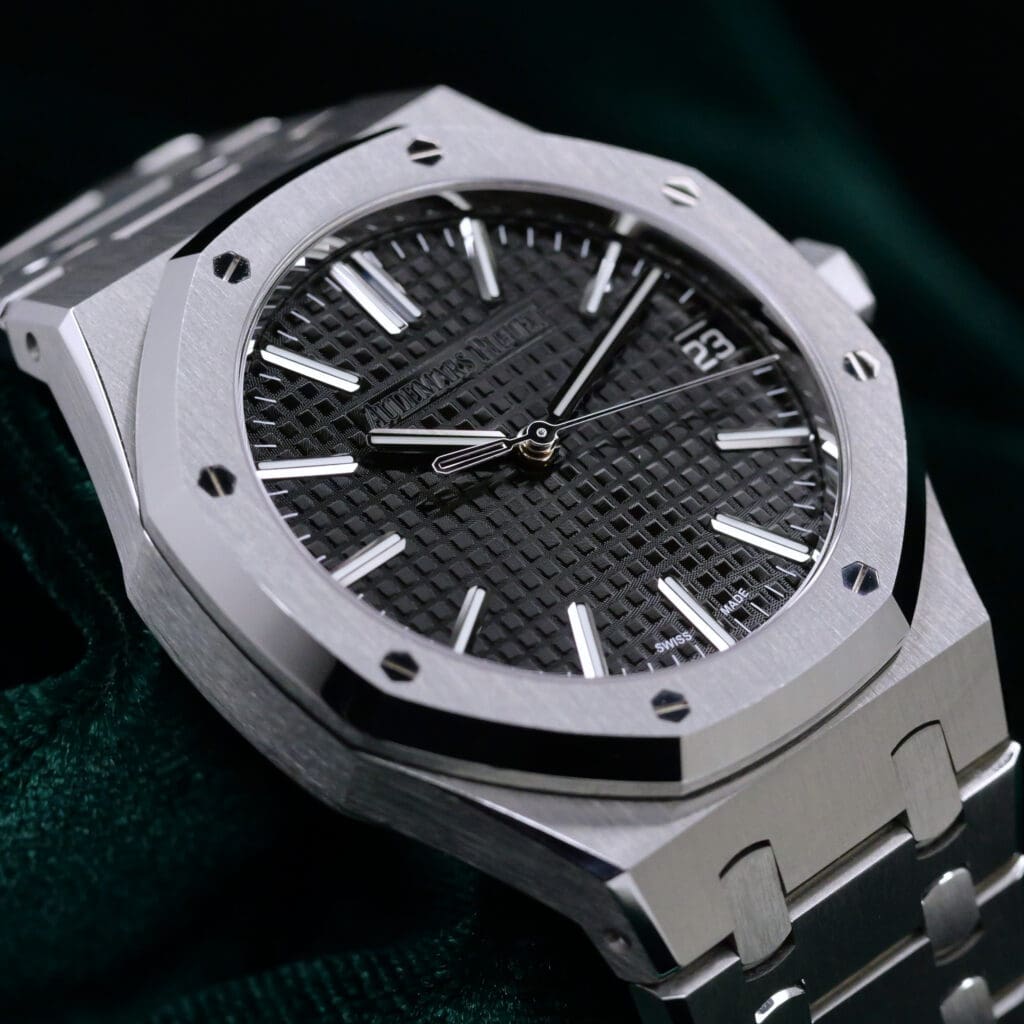
The Grande Tapisserie dial remains one of the most distinctive elements of the watch, with a level of depth and precision that changes how it reads in different light. The bracelet, with its alternating brushed and polished surfaces, is one of the defining features of the Royal Oak and a major part of its appeal on the wrist.
What matters most to collectors is the details: reference generation, dial color, and whether the case and bracelet have been polished. It helps to understand what polishing actually does to a watch’s value before you shop pre-owned.
Two things define desirability across the Royal Oak family: which reference you own, and what condition it is in.


Notable References of the Royal Oak:
- Ref. 15510ST
- Ref. 16202ST (Jumbo Extra-Thin)
- Ref. 26240ST
Tissot PRX Overview

The PRX name goes back to 1978, just six years after the Royal Oak launched. Tissot introduced it as a quartz watch with the same integrated-bracelet styling that defined that period.
The model disappeared for decades before being reintroduced in 2021, initially as a quartz watch. The following year, the Powermatic 80 automatic version arrived, which is the configuration most people associate with the PRX today. Tissot has since expanded the line with a 35mm size, a forged carbon model, and a 42mm automatic chronograph.
The PRX makes the most sense when you are buying your first mechanical watch or when you want something you can wear every day without thinking about it. It regularly lands on lists of the best entry-level luxury watches for exactly that reason. The Powermatic 80 automatic is the version to focus on here.
Notable References of the PRX:
- T137.407.11.041.00 (Powermatic 80, blue dial)
- T137.907.97.201.00 (Powermatic 80, Forged Carbon)
- T137.207.11.041.00 (Powermatic 80, 35mm)
- T137.427.11.011.01 (Automatic Chronograph)
Royal Oak vs PRX: Most Notable Differences
Up to this point, the similarities are mostly visual. The differences start to carry real weight on the wrist. Both watches share similar design elements, so the differences are easy to overlook. When compared on specs and construction, the gaps are clear and worth understanding before you decide.
1. Bezel Geometry
The Royal Oak’s octagonal bezel sits at the center of the entire design. Eight hex screws, evenly spaced and precisely aligned, are one of the most copied and never-quite-matched details in watch history. The geometric transition from bezel to case to bracelet is tight and purposeful. Screw symmetry matters so much that authentication experts check it first.
The PRX uses a smooth, polished, rounded bezel with no exposed screws. The case shape is a barrel form, rounded at the sides rather than angular. The silhouette is cleaner and softer, and the watch makes no attempt to replicate the Royal Oak’s geometry. It reads differently on the wrist because of it.
2. Dial Depth
Photos don’t really prepare you for the Royal Oak dial. The Grande Tapisserie has actual depth; you see it shift as light moves across the surface, not just reflect it. The technique traces back to specialist engravers using methods that are no longer common, and the depth is visible under any close inspection.
The PRX Powermatic 80 uses an embossed tapisserie-style pattern that echoes the Royal Oak at a distance. Up close, the pattern is shallower and softer. The quartz PRX versions use a sunburst brushed dial instead, which has no tapisserie character at all. For this comparison, the Powermatic 80 version is the only PRX worth putting next to the Royal Oak dial.
3. Movement Origin
The Royal Oak runs the Calibre AP 4302, developed and assembled in-house at Audemars Piguet’s Le Brassus manufacture. It beats at 28,800 vph, carries a 70-hour power reserve, and features Côtes de Genève stripes, polished bevels, anglage on the bridges, and a skeletonized 22k gold rotor. The movement is designed to reward the person who looks through the caseback.
The PRX Powermatic 80 uses the Powermatic 80.111, a modified ETA 2824 platform produced within the Swatch Group. It beats at 21,600 vph and delivers an 80-hour power reserve. Current steel versions now ship with a Nivachron balance spring, which resists magnetism and holds timekeeping steadier day to day.
It is reliable and well-suited to daily wear, though the finishing is functional rather than decorative. You get a watch that runs, not a movement built to be admired through the back.
Related Models from Majestix

Audemars Piguet Royal Oak Offshore Chronograph Smoked Blue Dial Blue Ceramic Bezel Black Ceramic Blue Strap 43mm MINT CONDITION COMPLETE SET 26420CE.OO.A043VE.01
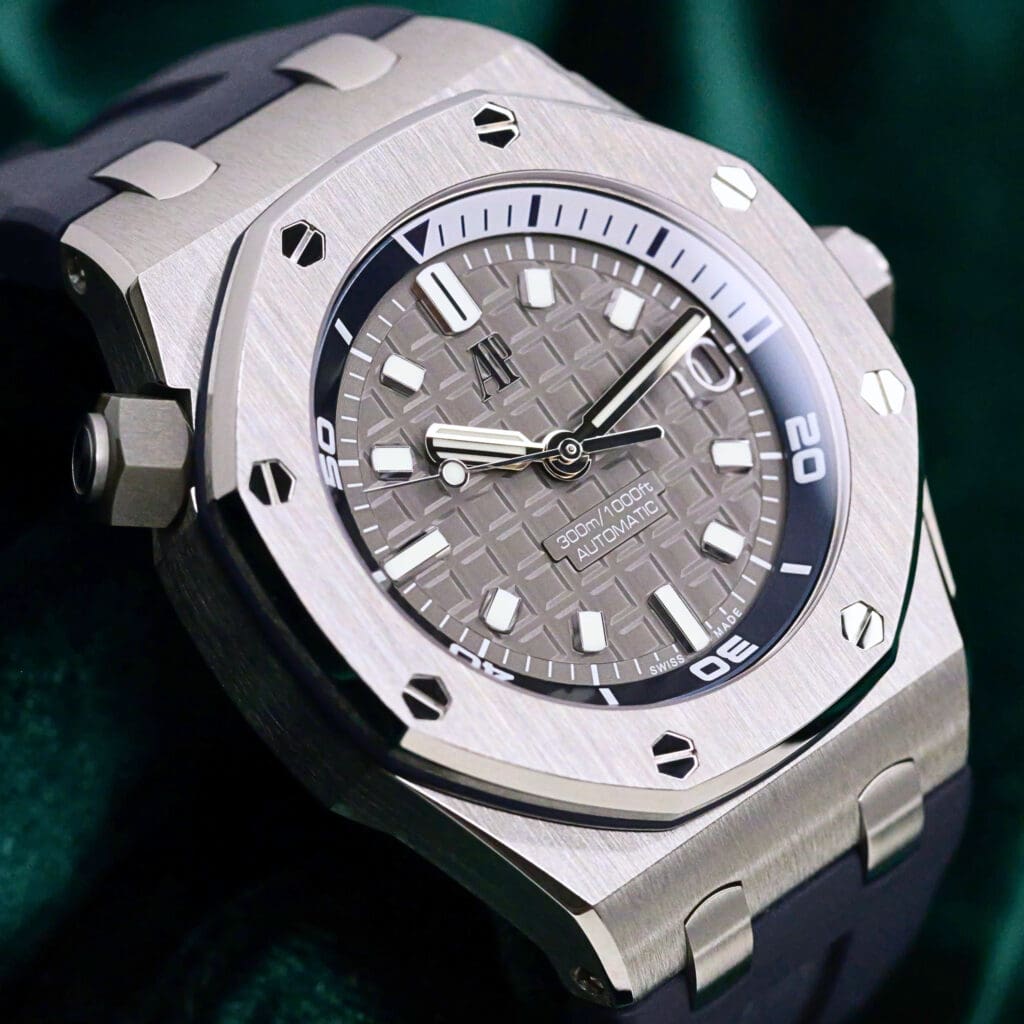
Audemars Piguet Royal Oak Offshore Diver Grey Dial Blue Rubber Strap Stainless Steel 42mm MINT CONDITION COMPLETE SET 15720ST.OO.A009CA.01
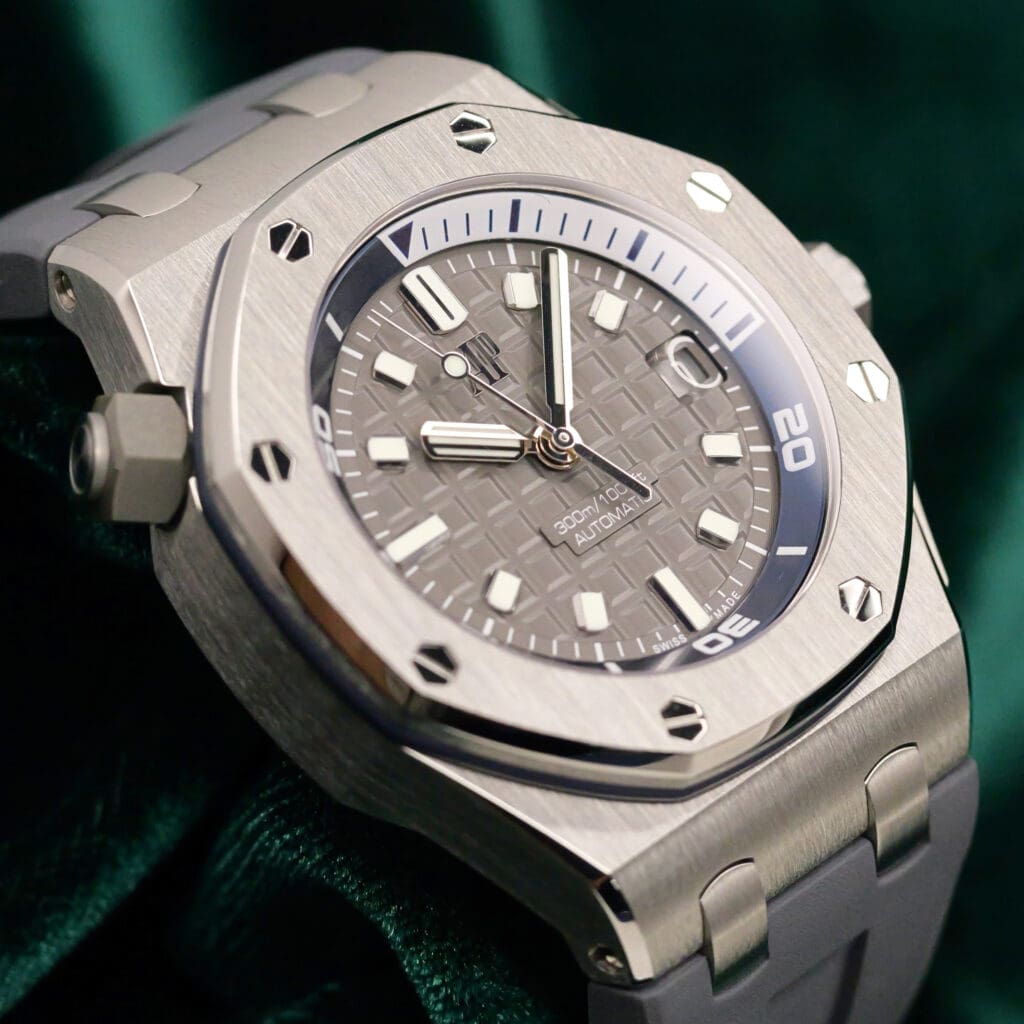
Audemars Piguet Royal Oak Offshore Diver Grey Dial Blue Inner Bezel Grey Rubber Strap Stainless Steel 42mm MINT CONDITION COMPLETE SET 15720ST.OO.A009CA.01
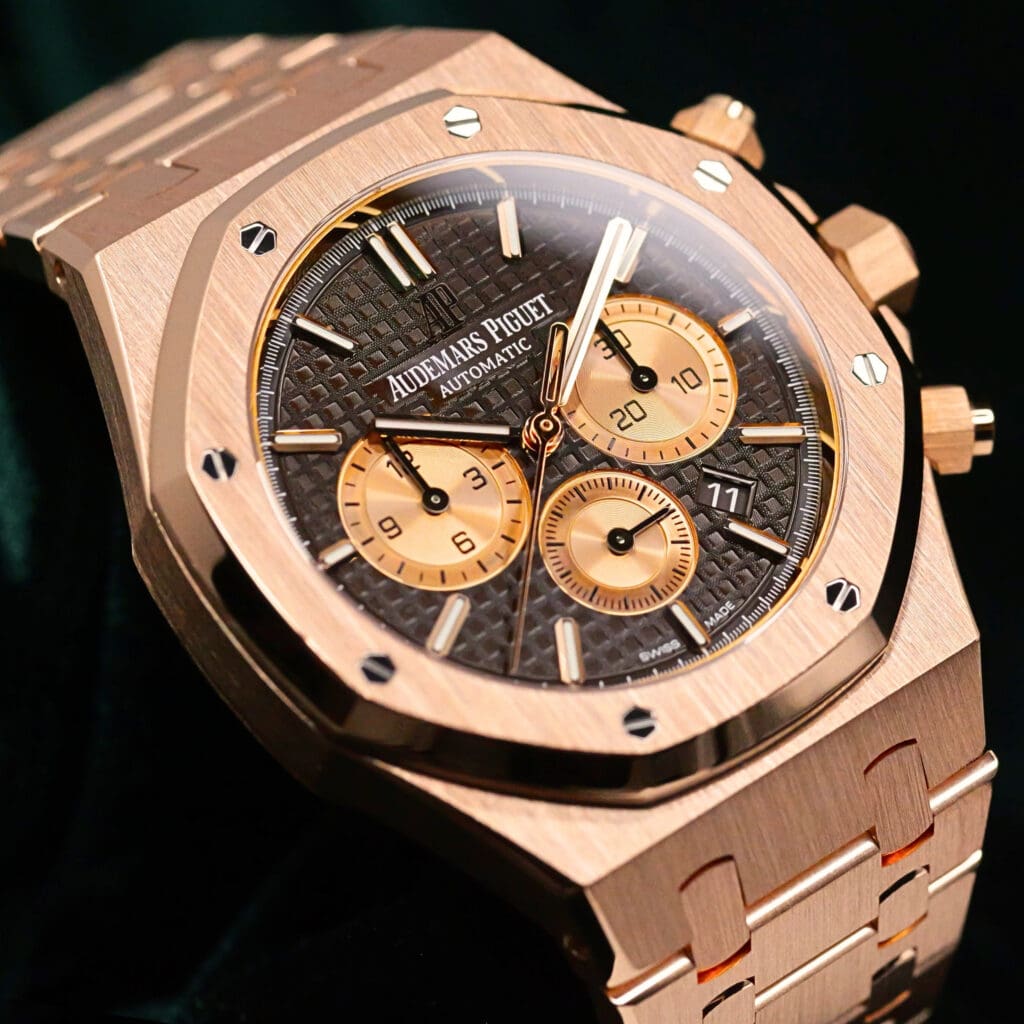
Audemars Piguet Royal Oak Chronograph Chocolate Brown Dial 18K Rose Gold Bracelet 41mm MINT CONDITION COMPLETE SET 26331OR.OO.1220OR.02

Audemars Piguet Royal Oak Offshore Diver Funky Colours 42mm Purple Stainless Steel COMPLETE SET MINT CONDITION 15710ST.OO.A077CA.01

Audemars Piguet Royal Oak Offshore Chronograph Blue Dial Titanium Bezel Blue Rubber Strap 43mm MINT CONDITION COMPLETE SET 26420TI.OO.A027CA.01
4. Water Resistance
The Royal Oak is rated to 50 meters (5 ATM). That covers rain, hand-washing, and brief splashes, but not swimming or sustained water exposure. The thin profile and case architecture take priority over water depth.
The PRX is rated to 100 meters (10 ATM). The X in PRX comes from this spec, and it has been maintained through every modern revival. A 100-meter rating removes hesitation around showers, swimming, or any water activity that would make a Royal Oak owner stop and think.
5. Case Proportions
The Royal Oak (15500/15510 family) measures 41mm in diameter and 10.4mm thick. The octagonal footprint and integrated construction mean it wears larger than a typical 41mm round watch, but the bracelet lies flat and the profile feels balanced. It generally suits wrists of 17cm and above.
On paper, the PRX sounds easy to size. On the wrist, it tells a different story. The first bracelet link does not articulate, which pushes the effective wear length to roughly 51mm, well beyond what the stated 40mm case suggests. Thickness runs about 10.8 to 11.2mm depending on the configuration.
That fixed first link is why the 40mm wears longer than most people expect. The PRX 35mm addresses it directly and fits wrists under 16.5cm far better.
6. Bracelet and Clasp
The Royal Oak bracelet alternates brushed and polished links with sharp, consistent transitions between finishing directions. It is heavy, solid, and lies flat against the wrist. The double deployant clasp includes micro-adjustment and carries an AP engraving on the inner surfaces. The tolerances throughout are tight.
The PRX bracelet is fully brushed with polished inner edges. The butterfly clasp works well, with a firm dual push-button release, but there is no micro-adjustment. Half-links are provided for sizing instead. The bracelet starts at 27mm wide at the case and tapers to roughly 17.5 to 18mm at the clasp.
For its price range, the PRX bracelet is genuinely impressive. Against the Royal Oak, the gap is real.
Price and Market Demand
Price and Market Demand
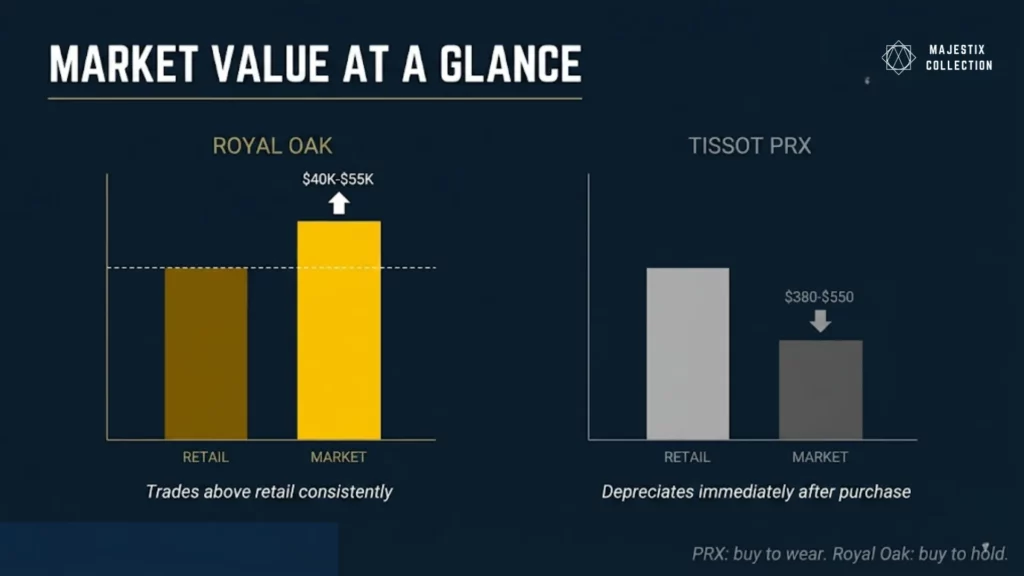
Price is where these two stop rhyming entirely. One is a mass-produced Swiss automatic you can buy off a shelf this afternoon. The other is a steel icon with a waitlist and a resale price above its own retail. The numbers tell you as much about each watch as any spec sheet.
The PRX starts at roughly $395 to $450 for quartz references and $650 to $740 for the Powermatic 80 automatic, with the Forged Carbon near $995. On the secondary market (Chrono24, WatchCharts), Powermatic 80 references usually land between $450 and $550, while quartz models drop to around $200 to $300.
The 42mm PRX Automatic Chronograph sits higher, retailing near $1,600 to $2,150 and trading around $1,100 to $1,400 pre-owned.
The PRX depreciates early and then settles into a stable lower range. That is what happens with a watch that is widely available, mass-produced, and carries no scarcity signal. It is not a knock. It is just how the value works, and it is worth understanding before you buy.
The Royal Oak sits on the opposite end. The current steel selfwinding 15510ST carries a retail price around $30,000, but waitlists push it to roughly $35,000 to $47,000 on the secondary market, with blue and green dials at the top of that band and silver or grey at the bottom.
The 26240ST Chronograph retails near $48,000 and trades around $50,000 to $65,000. The discontinued 15202ST Jumbo has become a collector piece in its own right, trading between $95,000 and $130,000.
Here is what that gap actually means. A watch that trades above its retail price is signaling real demand and strong liquidity. Steel Royal Oak references have held above retail even through broader market pullbacks, which is why they sell quickly when priced right.
A watch that trades below retail, like the PRX, is telling you it is easy to buy and easy to replace. Neither signal is good or bad on its own; they just describe two different kinds of ownership.
For the Royal Oak, value comes down to the details: full set, unpolished case and bracelet, dial color (blue and grey generally preferred), and a clean service history. Polishing, bracelet stretch, missing papers, and uncertain provenance all pull the number down. Our checklist on what to look for when buying a watch covers most of these before you commit.
For the PRX, condition matters far less to price because supply is deep. What you pay pre-owned is mostly a discount for buying used, not a reward for a rare configuration.
Notable Royal Oak References

The Royal Oak family spans decades of production across multiple case sizes and movements. These are the references most relevant to anyone researching this comparison today. If you want the full family mapped out, our Royal Oak buying guide walks through the lineup.
1. Royal Oak Ref. 15510ST
The 15510ST is the current flagship of the selfwinding Royal Oak line, and the reference you are most likely to be quoted at a boutique or see on the secondary market. It succeeded the 15500ST in 2022, keeping the same case and movement while moving the Grande Tapisserie pattern edge to edge and slimming the bracelet links.
For most buyers, this is the most accessible entry point into the modern Royal Oak.
- Case size: 41mm
- Material: Stainless steel
- Movement: Calibre AP 4302, in-house, automatic
- Power reserve: 70 hours
- Water resistance: 50 meters
- Dial options: Blue, grey, black, green
- Typical price range: $35,000 to $47,000 pre-owned (full set)
2. Royal Oak Ref. 16202ST (Jumbo Extra-Thin)
The 16202ST is the current Jumbo, and the direct continuation of the original 1972 design at 39mm and 8.1mm thick. Audemars Piguet introduced it in January 2022 for the Royal Oak’s 50th anniversary, replacing the long-running 15202ST.
The big change is inside: the new in-house Calibre 7121 (55-hour reserve, quickset date) took over from the ultra-thin Calibre 2121 that powered the Jumbo for five decades. For purists, this is the real Royal Oak, and it trades well above the standard selfwinding references. We break down how the Jumbo compares to the standard Royal Oak in a separate guide.
The outgoing 15202ST has not faded quietly. As the last Jumbo with the 2121 movement, it has become a collector’s piece and often trades between $95,000 and $130,000, above the current model in some configurations.
- Case size: 39mm
- Material: Stainless steel
- Movement: Calibre 7121, in-house, automatic (55-hour reserve)
- Water resistance: 50 meters
- Dial: Blue “Petite Tapisserie” (primary steel option)
- Typical price range: $85,000 and up on the secondary market
3. Royal Oak Ref. 26240ST (Chronograph)
The 26240ST runs the Calibre 4401 integrated flyback chronograph and carries a redesigned dial layout that cleans up the crowded look of the previous generation. It suits buyers who want a chronograph complication with the Royal Oak design, and it sits above the selfwinding models in both price and mechanical complexity.
- Case size: 41mm
- Material: Stainless steel
- Movement: Calibre 4401, flyback chronograph, in-house
- Water resistance: 50 meters
- Dial options: Blue, grey, black, green
- Typical price range: $50,000 to $65,000 pre-owned
Notable Tissot PRX References

The PRX family has expanded quickly since 2021, with multiple sizes, movements, and materials. These are the references that matter most for anyone cross-shopping the PRX against watches in the integrated bracelet category. If you’re also weighing it against Rolex’s integrated option, our Rolex Land-Dweller vs Tissot PRX breakdown covers that matchup.
1. PRX Powermatic 80, Blue Dial (T137.407.11.041.00)
An 80-hour power reserve for well under $800 is unusual at this price. Most watches in this range run around 38 to 42 hours, so the PRX keeps ticking through a full weekend off the wrist, which is handy if you rotate between watches. The blue tapisserie dial is the version most often held up against the Royal Oak aesthetic, and at a glance the resemblance is clear.
The display caseback shows the Powermatic 80.111 in action. It is not finished to Royal Oak standards, but a visible rotor at this price is still a strong showing. Current steel examples also carry the Nivachron anti-magnetic hairspring, a real practical upgrade for daily wear.
What tends to surprise first-time owners most is the bracelet. The link tolerances are tighter than the price would suggest.
- Case size: 40mm
- Material: Stainless steel
- Movement: Powermatic 80.111, automatic, ETA-based, Nivachron hairspring
- Power reserve: 80 hours
- Water resistance: 100 meters
- Typical price range: $650 to $740 retail; $450 to $550 pre-owned
2. PRX Powermatic 80 Forged Carbon (T137.907.97.201.00)
The silicon hairspring in the C07.811 movement is the main reason to pick this over the standard steel model. Silicon resists magnetism, stays more stable across temperature swings, and needs less regulation over time. For daily wear, that means fewer service concerns and less to think about.
The forged carbon case cuts weight and gives the watch a matte, marbled finish that stands apart from the brushed steel versions. The dial matches the case, so the whole watch reads as one dark, cohesive piece. At around $995 retail, it sits at the top of the PRX range, and the movement upgrade makes it the version most worth considering if you plan to keep it for years.
- Case size: 40.5mm
- Material: Forged carbon with black DLC steel core
- Movement: Powermatic C07.811, silicon hairspring, automatic
- Power reserve: 80 hours
- Water resistance: 100 meters
- Typical price range: ~$995 retail; $700 to $920 pre-owned
3. PRX Powermatic 80 35mm (T137.207.11.041.00)
The 35mm version is the fix a lot of buyers were waiting for. It cuts the effective wear length to roughly 39mm, which sidesteps the long-wearing problem the 40mm has. Nothing else changes: same movement, same bracelet construction, same display caseback. It just brings the proportions back into balance for wrists under 16.5cm.
It reads as a genuinely unisex option rather than a downsized afterthought. The design scales well at the smaller diameter, and for anyone who tried the 40mm and found it too long, this is the direct answer. It also earns a spot among the best luxury watches for a smaller wrist at this price.
- Case size: 35mm
- Material: Stainless steel
- Movement: Powermatic 80.111, automatic
- Power reserve: 80 hours
- Water resistance: 100 meters
- Typical price range: $599 to $650 retail; roughly $480 to $650 pre-owned, dial dependent
4. PRX Automatic Chronograph (T137.427.11.011.01)
This is the PRX for people who want a mechanical chronograph in the integrated-bracelet look without spending five figures. It runs the Valjoux A05.H31, a Swatch Group movement based on the well-regarded 7753, with a 3-6-9 subdial layout and a 60-hour power reserve. The panda and reverse-panda dials are the ones most people go for.
The catch is size. The chronograph movement pushes the case to 42mm wide and about 14.5mm thick, so this wears noticeably bigger and taller than the time-only PRX. On a smaller wrist it can feel like a lot. If the proportions work for you, though, it is one of the most affordable ways into a Swiss automatic chronograph.
- Case size: 42mm
- Material: Stainless steel
- Movement: Valjoux A05.H31, automatic chronograph
- Power reserve: 60 hours
- Water resistance: 100 meters
- Typical price range: $1,600 to $2,150 retail; $1,100 to $1,400 pre-owned
Browse Our Audemars Piguet Collection
Audemars Piguet Royal Oak Offshore Diver Grey Dial Blue Rubber Strap Stainless Steel 42mm MINT CONDITION COMPLETE SET 15720ST.OO.A009CA.01
Audemars Piguet Royal Oak Chronograph Chocolate Brown Dial 18K Rose Gold Bracelet 41mm MINT CONDITION COMPLETE SET 26331OR.OO.1220OR.02
Audemars Piguet Royal Oak Offshore Chronograph Blue Dial Titanium Bezel Blue Rubber Strap 43mm MINT CONDITION COMPLETE SET 26420TI.OO.A027CA.01
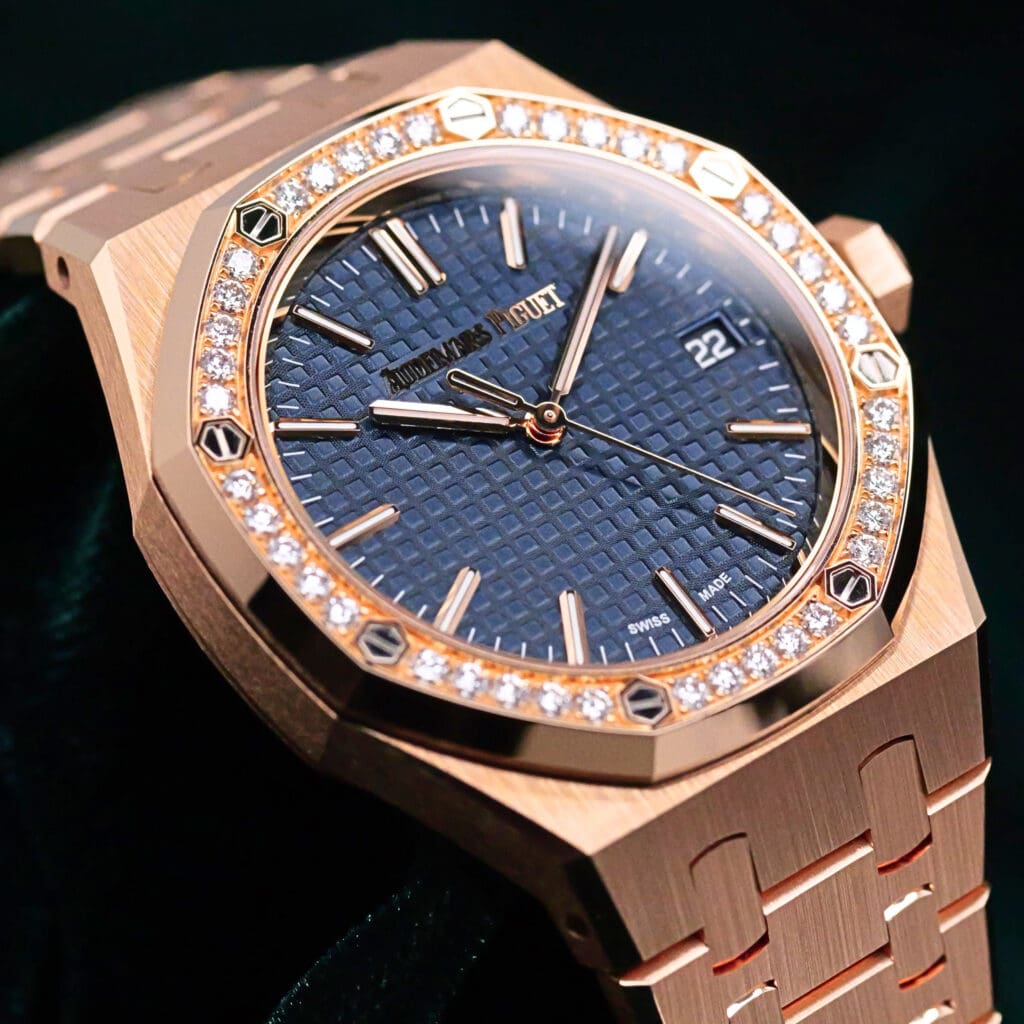
Audemars Piguet Royal Oak Selfwinding "50th Anniversary" Bleu Nuit Nuage 50 Blue Dial Diamond Bezel 18K Rose Gold 37mm MINT CONDITION COMPLETE SET 15551OR.ZZ.1356OR.02

Audemars Piguet Royal Oak Offshore Chronograph "Havana" Brown Dial Blue Subdials Brown Leather Strap Stainless Steel 42mm MINT CONDITION COMPLETE SET 26470ST.OO.A099CR.01

Audemars Piguet Royal Oak Offshore Chronograph “Half Brick” Ruthenium Grey Dial 18K Rose Gold Black Rubber Strap 42mm MINT CONDITION COMPLETE SET 26470OR.OO.A125CR.01
Which Watch Should You Choose?
Both watches have a clear buyer. The decision usually becomes obvious once you know what you are actually optimizing for.
Choose the Royal Oak if:
- A long-term acquisition matters more than immediate access
- In-house movement quality and visible finishing are important to you
- The octagonal bezel and Grande Tapisserie are specifically what drew you here
- You are ready to move meaningfully up from a mid-tier watch
- Value retention is part of how you think about a purchase at this level
Choose the PRX if:
- You want the integrated bracelet aesthetic without a five-figure price tag
- Daily wear without water anxiety matters, and 100 meters is the spec you need
- This is your first mechanical watch or your first Swiss automatic
- The 35mm or 40mm fits your wrist better than a 41mm footprint
- You want to buy today, from a store, without a waitlist or dealer relationship
If budget is a real constraint, the PRX is the clear answer. If it is not, and the Royal Oak aesthetic is what you want, nothing substitutes for the original.
Where to Buy a Royal Oak or Tissot PRX Online
A Tissot PRX is easy to source new. Any authorized Tissot dealer or the brand’s own site will have one, and warranty coverage comes standard. The Royal Oak is the harder buy. Steel references sell out at boutiques and carry waitlists, so most people end up shopping the secondary market for both watches.
Our full guide on where to buy a pre-owned luxury watch covers the channels in depth.
For that, there are a few legitimate online channels. Chrono24 is the largest marketplace for both, with buyer protection and an escrow service that holds your payment until the watch arrives as described. If you haven’t used it before, here’s how buying on Chrono24 works.
eBay works too, especially for the PRX, and its Authenticity Guarantee program has a third party inspect eligible watches before they ship. Grailzee runs enthusiast-focused auctions if you prefer that format.
We also buy, sell, and trade luxury watches, and the reason clients come to us instead of a big listing site is the conversation before the purchase. You get tour videos of the actual watch, not stock photos, plus honest condition notes and a real person who has had the piece in hand and can answer questions.
On a Royal Oak especially, where an unpolished case or a full set changes the value by thousands, that walkthrough matters.
That approach is reflected in our 4.9-star Google rating, which comes from buyers who wanted to know exactly what they were getting before committing.
If you want that kind of walkthrough on a specific Royal Oak or PRX, reach out and we’ll line up options that fit what you’re after. You can also browse our current collection to see what’s in stock.
Frequently Asked Questions
Is the Tissot PRX a Royal Oak copy?
Not exactly. The PRX shares the 1970s integrated-bracelet design language, but it descends from Tissot’s own 1978 model, not the Royal Oak. Both watches come from the same era, when the integrated sports watch was new.
The PRX borrows the look of that period rather than copying any single watch. Its barrel case, smooth bezel, and softer lines set it apart from the Royal Oak’s octagonal geometry up close.
Does the Tissot PRX hold its value?
Not in the way the Royal Oak does. The PRX depreciates after purchase and settles into a stable pre-owned range, because it is mass-produced and always available. That makes it a watch to buy and enjoy, not one to hold as an asset. If value retention is a priority, the steel Royal Oak is the piece that reliably trades above its retail price.
999+ Timepieces Available
Explore Our Timepieces
Authenticated, unworn, and ready to ship worldwide.
Rolex · Audemars Piguet · Patek Philippe · Omega · Cartier · Richard Mille · Hublot · Tudor
Newly Listed
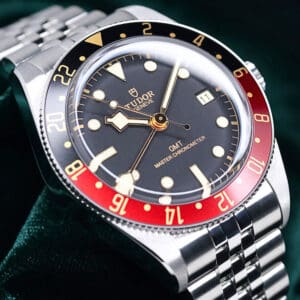
2026 NEW UNWORN Tudor Black Bay 58 GMT "Coke" Black Dial Black Burgundy Red Bezel Five-Link Stainless Steel Bracelet 39mm COMPLETE SET 7939G1A0NRU-0003
$7,385.00
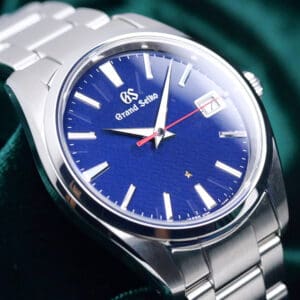
Grand Seiko Heritage 60th Anniversary Limited Edition Blue Dial Stainless Steel 40mm MINT CONDITION COMPLETE SET SBGP007G
$4,268.00

Audemars Piguet Royal Oak Offshore Diver Grey Dial Blue Rubber Strap Stainless Steel 42mm MINT CONDITION COMPLETE SET 15720ST.OO.A009CA.01
$27,788.00

Audemars Piguet Royal Oak Offshore Diver Grey Dial Blue Inner Bezel Grey Rubber Strap Stainless Steel 42mm MINT CONDITION COMPLETE SET 15720ST.OO.A009CA.01
$27,788.00

Vacheron Constantin Overseas Chronograph "Reverse Panda" Black Dial Silver Subdials Stainless Steel 42.5mm MINT CONDITION COMPLETE SET 5500V/110A-B481
$34,095.00

Rolex Sky-Dweller Black Dial 18K White Gold Fluted Bezel Oyster Bracelet Stainless Steel 42mm MINT CONDITION COMPLETE SET 336934-0007
$21,945.00

2026 Rolex Datejust Green Ombre Dial Smooth Bezel Jubilee Bracelet Stainless Steel 41mm MINT CONDITION COMPLETE SET 126300
$16,480.00

2026 NEW UNWORN Cartier Santos-Dumont Silver Dial Platinum Mesh Bracelet Platinum 31mm COMPLETE SET WGSA0124
$64,790.00

2026 Tudor Black Bay 58 Black Dial Jubilee Bracelet Stainless Steel 39mm MINT CONDITION COMPLETE SET 7939A1A0NU
$5,717.00

NEW UNWORN Rolex Submariner Date “Sub Date” Black Dial Black Ceramic Bezel Oyster Bracelet Stainless Steel 41mm COMPLETE SET 126610LN
$15,595.00

Rolex Cosmograph Daytona "Reverse Panda" Black Dial Black Ceramic Bezel Oyster Bracelet Stainless Steel 40mm MINT CONDITION COMPLETE SET 126500LN
$32,009.00
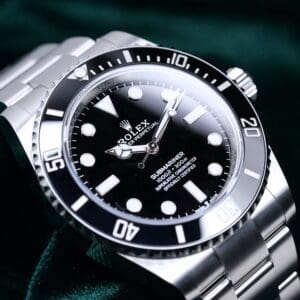
2026 NEW UNWORN Rolex Submariner No Date Black Dial Black Ceramic Bezel Oyster Bracelet Stainless Steel 41mm COMPLETE SET 124060
$15,219.00
Final Thoughts on Royal Oak vs PRX
In most cases, this decision isn’t difficult. Once you are clear on what you expect from the watch, one of these makes more sense almost immediately.
The PRX is the easy, low-friction choice: something you wear daily, enjoy, and never worry about. It’s one of the most straightforward places to start. The Royal Oak is a different kind of decision, one where finishing and long-term ownership matter, and where the watch tends to stay with you rather than get flipped for the next thing.
Either way, these are two of the most compelling watches in the integrated bracelet space, just at very different stages of the same journey. One last tip before you buy either: try the case on in person if you can, because the PRX wears longer than its size suggests and the Royal Oak wears larger than its 41mm footprint.