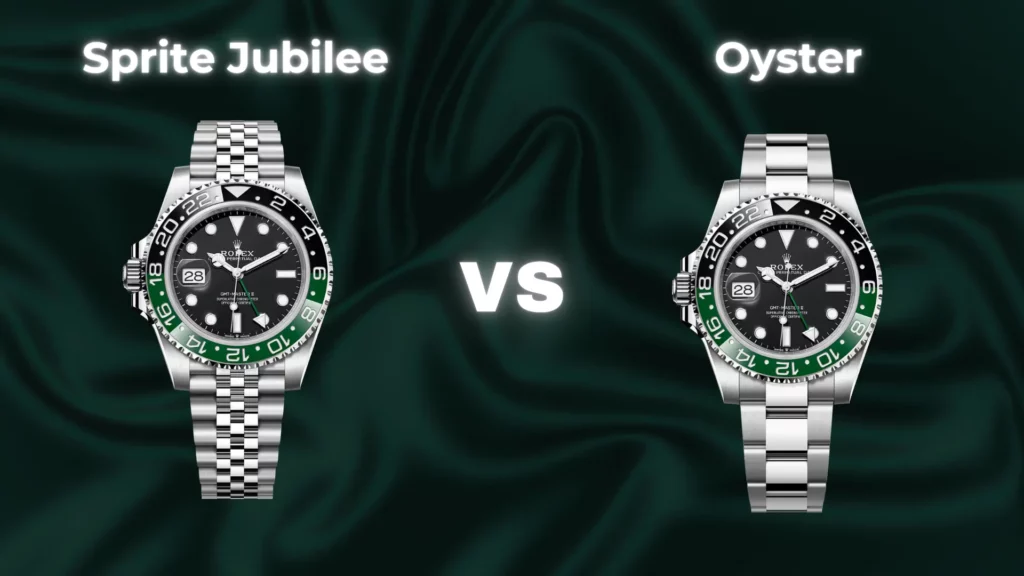
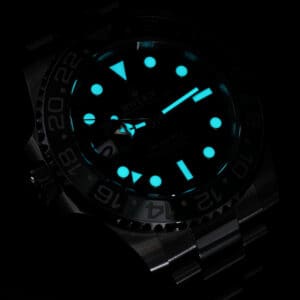
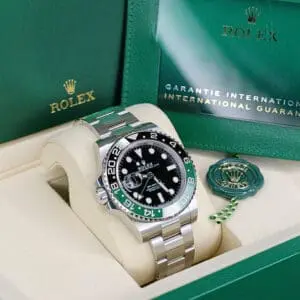
The Rolex Sprite (ref. 126720VTNR) is one of the few watches in Rolex’s catalog where a single decision changes the entire feel of the watch. The case, bezel, dial, and movement are all locked in. The only real choice is the bracelet: Jubilee or Oyster.
That small retail gap hides a much bigger difference in how the watch sits on your wrist, how it ages, and what it signals to anyone who notices it.
If you’re comparing the Rolex Sprite Jubilee vs Oyster and can’t decide, you’re not overthinking it. The two configurations attract genuinely different buyers. This article walks through the objective differences, spec by spec, so you can close the tab confident in your choice.
Rolex Sprite Jubilee Overview



The Jubilee bracelet first appeared on the 1945 Datejust, made to celebrate Rolex’s 40th anniversary. From the start, it was built to feel different from the Oyster: five smaller links per row, more articulation, a finer and more refined look. For decades it stayed on dress watches, but the GMT-Master became the exception.
Early GMT references from the late 1950s were offered on Jubilee, and Rolex brought it back as a GMT option in 2018. When the Sprite launched in 2022, the Jubilee came with it.
The modern Jubilee on the 126720VTNR is a solid-link construction. Post-2015, Rolex rebuilt the bracelet with ceramic tube inserts in the pins, removing the metal-on-metal friction that gave older Jubilees their stretch reputation. A Sprite Jubilee is not a hollow-link vintage bracelet. That concern doesn’t apply here.
Rolex Sprite Oyster Overview
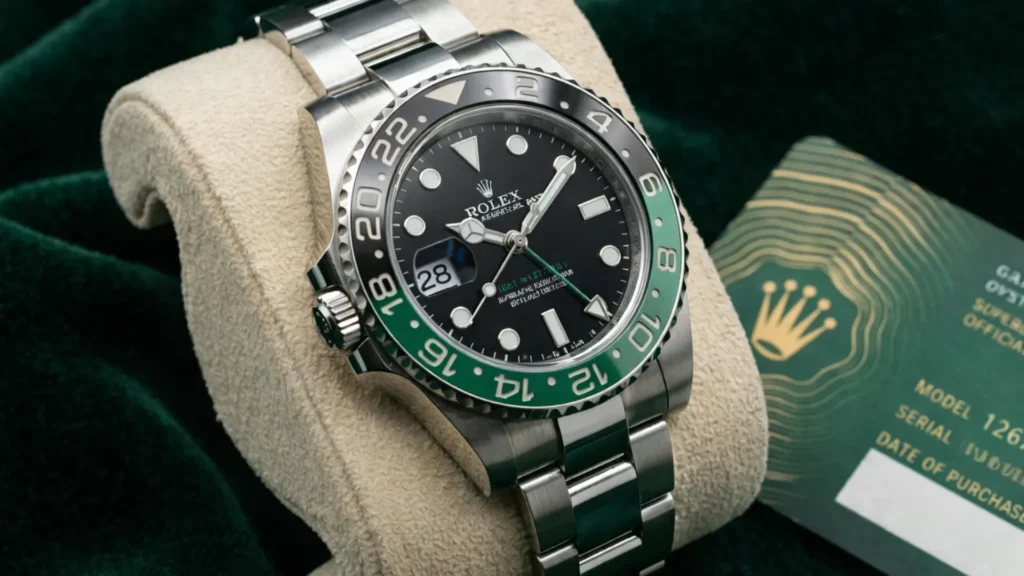
The Oyster bracelet has been Rolex’s default for professional watches since the late 1930s, and it was patented in 1948. Three links per row, flat profile, built for durability and easy maintenance. The Submariner, Explorer, and Daytona all use Oyster exclusively because Rolex designed those watches to live and work hard. The Sprite’s Oyster carries that same DNA.
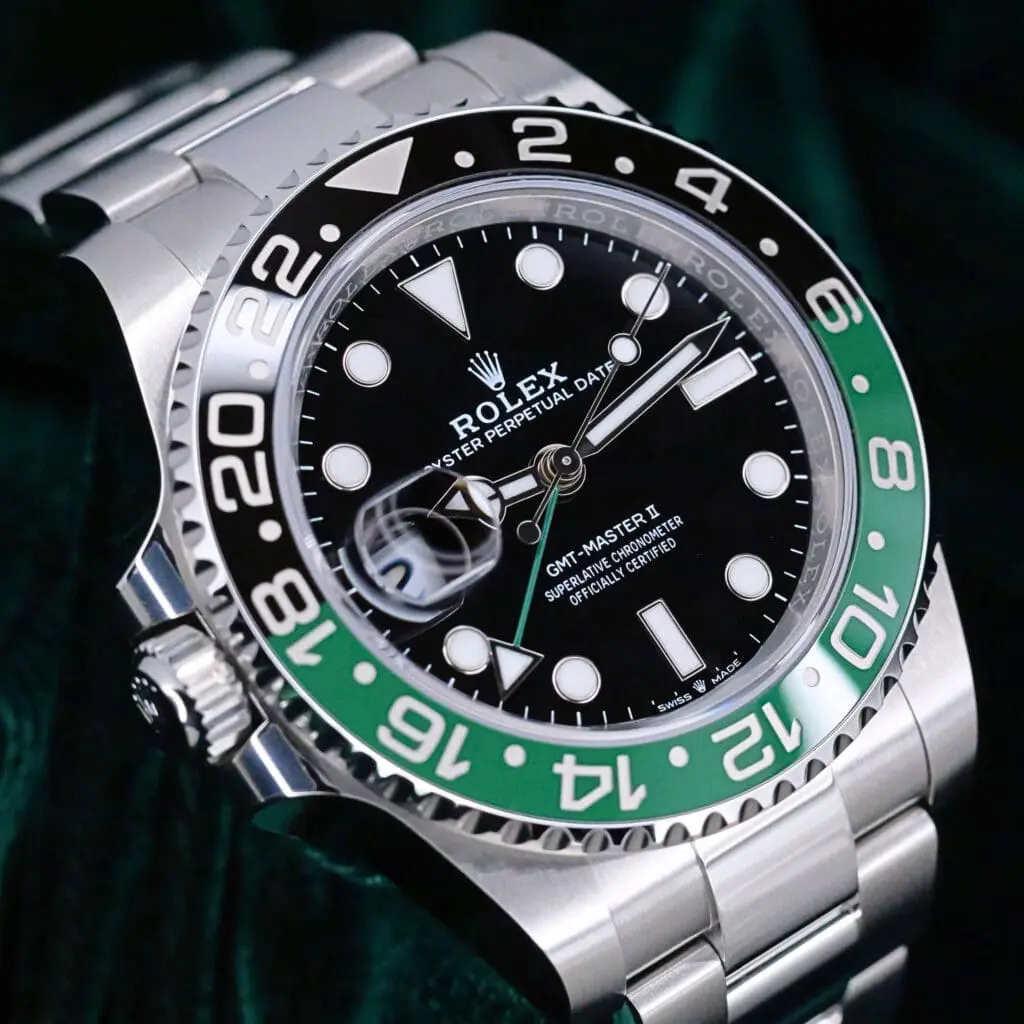
There’s one thing worth correcting upfront: the Sprite’s Oyster is not the same as a Submariner’s. On the Sprite and all current steel GMT-Master II references, the Oyster has polished center links combined with brushed outer links.
It’s not a matte, fully brushed utility bracelet. It catches light. It has a presence. The finish sits between the raw Submariner Oyster and the jewel-like quality of the Jubilee.
Rolex Sprite Jubilee vs Oyster: Most Notable Differences
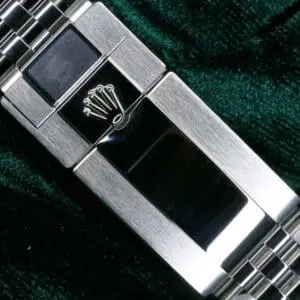
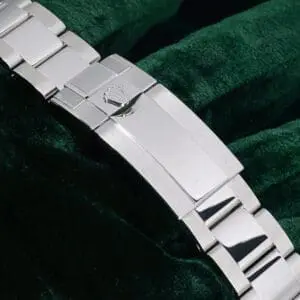
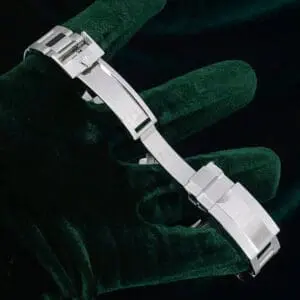
Every spec from the case to the movement is identical between these two configurations. Even the clasp is shared. Both use the same Oysterlock clasp with a fold-over safety catch and the Easylink 5mm comfort extension, not the concealed Crownclasp found on some Datejust Jubilees. Plenty of comparisons get that wrong.
So the bracelet is the only real variable. What changes is how the watch behaves on your wrist, and the four points below are the only places these two actually part ways. Beyond the Sprite, we break down how the Jubilee and Oyster compare across the wider Rolex range.
1. Link Count
The Jubilee and Oyster approach structure very differently, and you feel that immediately once the watch is on. The Jubilee uses five smaller links per row, which creates more articulation across the width of the bracelet.
That flexibility lets it follow the natural curve of your wrist instead of resisting it. Over a full day, especially during travel or temperature changes, the Jubilee tends to settle into place rather than press against the skin.
The Oyster is built with three broader links per row. That simpler construction gives it a more rigid, structured feel. Instead of adapting to your wrist, it holds its shape and stays anchored. The fit feels more fixed throughout the day, which some wearers prefer, but it also means sizing needs to be more precise since there’s less natural give.
Our guide to adjusting the GMT-Master II bracelet covers dialing that in.
2. Bracelet Weight
Link construction also changes how much the bracelet weighs and how noticeable it feels over time. Because the Jubilee splits its structure into smaller links, there’s less material in each row. The result is a lighter bracelet that tends to disappear on the wrist after a few hours. Many owners describe it as something you stop noticing once it settles in.
The Oyster carries more steel per link thanks to its broader three-link design. That added material creates a heavier, more substantial feel. Some buyers actively want this because it gives the watch a stronger physical presence. It stays noticeable throughout the day, which can feel reassuring if you like a watch that reminds you it’s there.
3. Link Finish and Scratch Visibility
Both bracelets use the same finishing concept, polished center links with brushed outer links, but how that finish wears over time is not the same. On the Jubilee, the polished center section is broken into three smaller links. That segmented layout spreads out minor scratches, making them less obvious at a glance.
The Oyster takes the opposite approach with a single wide polished center link. That uninterrupted surface gives scratches more room to show. Even light micro-abrasions become easier to see because there’s nothing to visually break them up. Both bracelets will develop wear, but the Oyster’s larger polished area makes those marks more immediately noticeable.
4. Visual Character
The final difference comes down to how the watch presents itself, which is often what drives the decision. The Jubilee’s five-link construction creates a more detailed, reflective surface. Light hits it from multiple angles, giving it a more refined and slightly dressier look.
The Oyster keeps things simpler. Its three-link layout creates a clean, uninterrupted line that doesn’t compete with the bezel. The watch reads as a single, cohesive tool watch with a strong identity. There’s no added refinement layered on top, just a straightforward design that leans fully into the GMT-Master II’s sport heritage.
Rolex Sprite Price and Market Demand in 2026

The Sprite trades well above retail, and the bracelet you pick shifts where you land in the range. Here’s how the two sit as of 2026.
At authorized dealers, retail is around $10,550 for the Oyster and $10,750 for the Jubilee. That roughly $200 gap reflects the more complex build of the five-link bracelet. The catch is availability. AD supply is thin, so most buyers end up on the pre-owned and unworn market, where the numbers look very different.
On the secondary market, the Oyster (126720VTNR-0001) generally trades between $16,000 and $19,000. The Jubilee (126720VTNR-0002) sits higher, around $17,000 to $20,000, with unworn full sets pushing to the top of that range.
The Jubilee premium has widened since launch and now runs roughly $1,000 to $2,000 over a comparable Oyster (source: WatchCharts and Chrono24 listing data).
That gap tells you something. A consistent premium signals steady demand rather than a temporary spike. The Jubilee is the harder of the two to find in clean condition, so buyers pay up for it and sellers move it faster.


Liquidity splits the same way. The Oyster is listed more often, which makes it easier to source as a buyer. The Jubilee shows up less, sells quicker when it does, and returns more per sale. Put simply: the Oyster is easier to buy, the Jubilee is easier to sell.
Zoom out and the whole Sprite has calmed down. Prices came off the $30,000-plus speculative peaks of late 2022 as Rolex increased production, and they’ve stabilized through 2026 at roughly 50% to 68% over retail. The destro layout keeps long-term collector interest alive, but at current levels the Sprite is a watch to wear and enjoy, not a flip.
For the broader pattern, we look at whether Rolex watches hold their value across the catalog.
One piece of 2026 context worth knowing: Rolex discontinued the steel Pepsi in April 2026, leaving only three steel GMT-Master II bezel options in production, the Sprite, the Batman, and the Bruce Wayne. That’s thinned the field a little, but it hasn’t changed the Jubilee-versus-Oyster math on the Sprite itself.
If the Batman is on your shortlist too, our Sprite vs Batman comparison covers how the two differ.
Side-by-Side Comparison (At a Glance)
| Specification | Jubilee | Oyster |
| Reference | 126720VTNR-0002 | 126720VTNR-0001 |
| Case Size | 40mm | 40mm |
| Material | 904L Oystersteel | 904L Oystersteel |
| Bezel | Black/Green Cerachrom | Black/Green Cerachrom |
| Bracelet Links | 5-link, fine | 3-link, broad |
| Link Finish | Polished center, brushed outer | Polished center, brushed outer |
| Bracelet Weight | Lighter | Heavier |
| Clasp | Oysterlock + Easylink (identical) | Oysterlock + Easylink (identical) |
| Movement | Caliber 3285 | Caliber 3285 |
| Power Reserve | ~70 hours | ~70 hours |
| Water Resistance | 100m | 100m |
| Crown Position | 9 o’clock (destro) | 9 o’clock (destro) |
| Retail (approx.) | ~$10,750 | ~$10,550 |
| Secondary Market (2026) | ~$17,000 to $20,000 | ~$16,000 to $19,000 |
Which Rolex Sprite Should You Choose?
Both configurations share the same case, movement, dial, and bezel. The decision comes down entirely to how you want the watch to feel and what you plan to do with it.
Choose the Jubilee if:
- You want the most comfortable bracelet for extended daily wear
- The watch will move between casual, business, and formal settings
- You prefer a bracelet that drapes and adapts to your wrist rather than sitting against it
- You plan to resell and want the configuration that holds a consistent secondary market premium
- Lighter overall weight matters to you over a long day
- You like the refined contrast between the Jubilee’s fine links and the Sprite’s bold bezel
Choose the Oyster if:
- You want the watch to stay firmly in tool-watch territory
- You prefer a heavier, more structured feel on the wrist
- The watch will see active use where a firmer bracelet profile makes sense
- You value a cleaner visual line between bracelet and case
- You want the configuration that’s easier to find on the secondary market
- The polished-center Oyster’s bolder presence on the wrist matches your taste
If you’re still torn, decide where the watch will live. A Jubilee suits a watch that’s meant to stand out and move between settings. An Oyster suits the one you’ll wear hard, several days a week, without thinking about it. And if you’re weighing the Sprite against the rest of the range, our full GMT-Master II buying guide maps the lineup.
More GMT-Master II
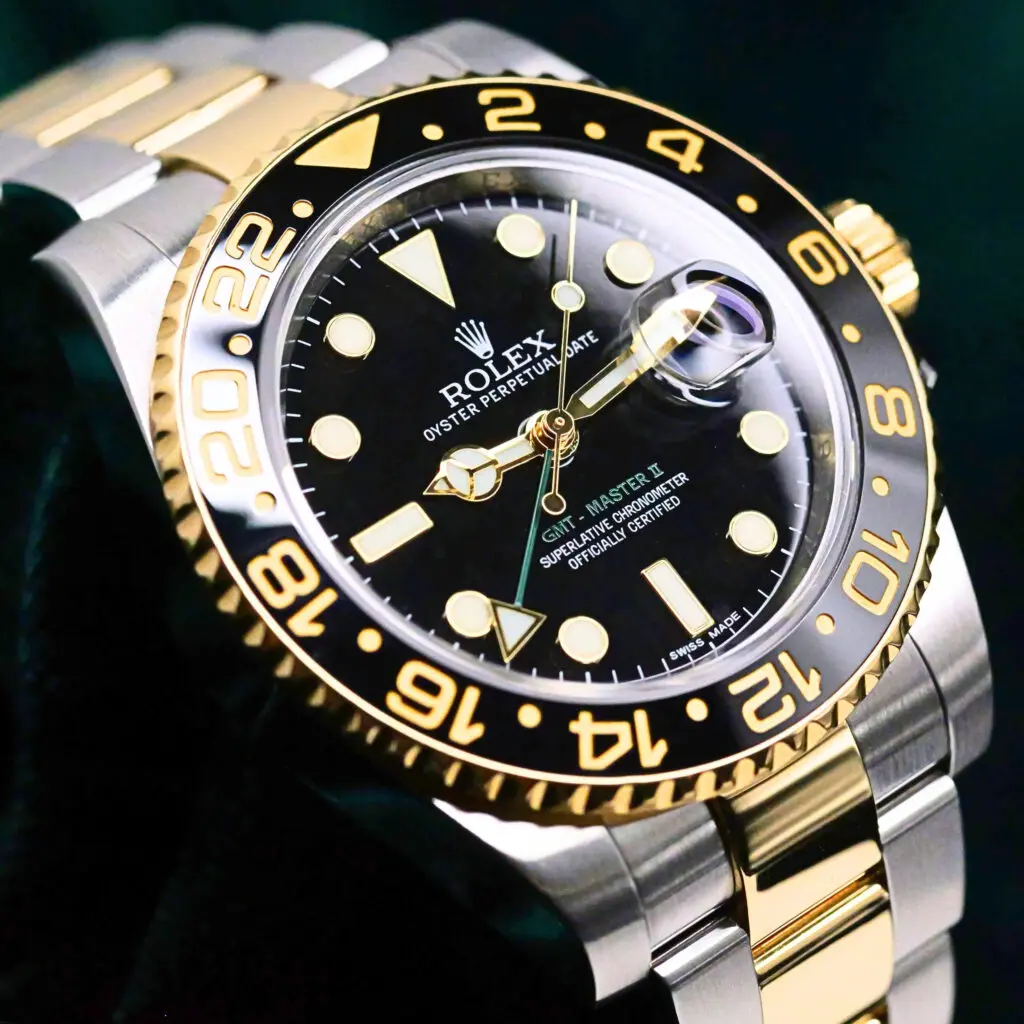
Rolex GMT-Master II “Green Arrow” Black Dial Black Ceramic Bezel Oyster Bracelet Two-Tone 18K Yellow Gold Stainless Steel 40mm MINT CONDITION COMPLETE SET 116713LN
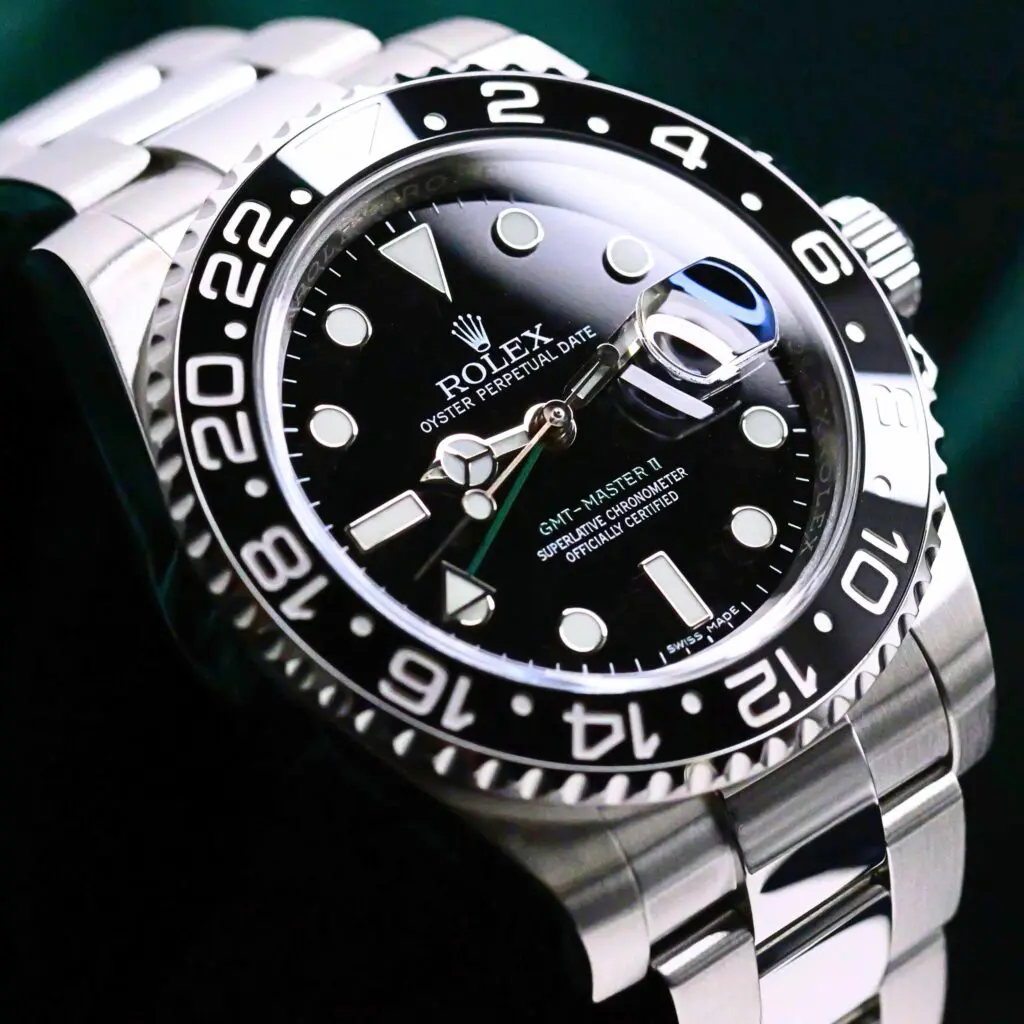
Rolex GMT-Master II "Green Arrow" Black Dial Black Ceramic Bezel Oyster Bracelet Stainless Steel 40mm MINT CONDITION COMPLETE SET 116710LN
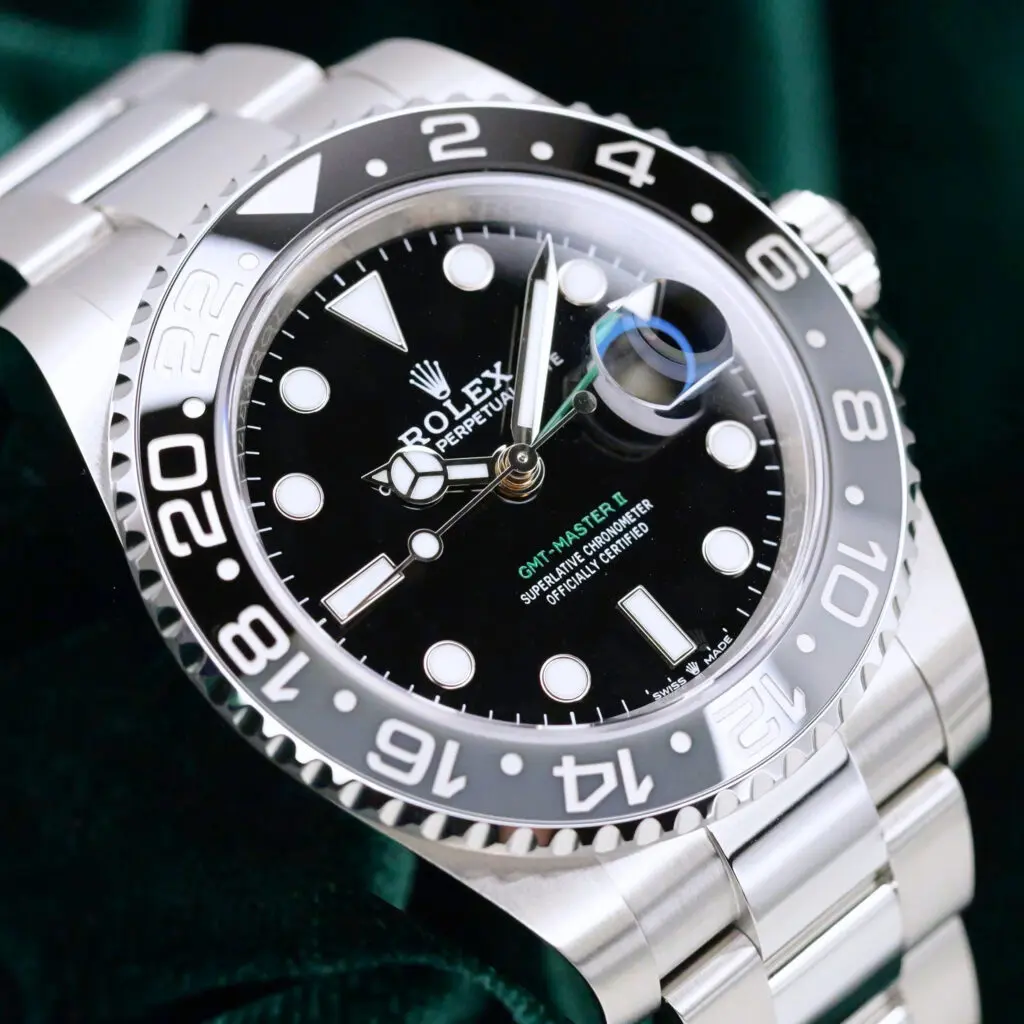
2026 NEW UNWORN Rolex GMT-Master II Bruce Wayne Black Dial Grey and Black Ceramic Bezel Stainless Steel Oyster Bracelet 40mm COMPLETE SET 126710GRNR-0004
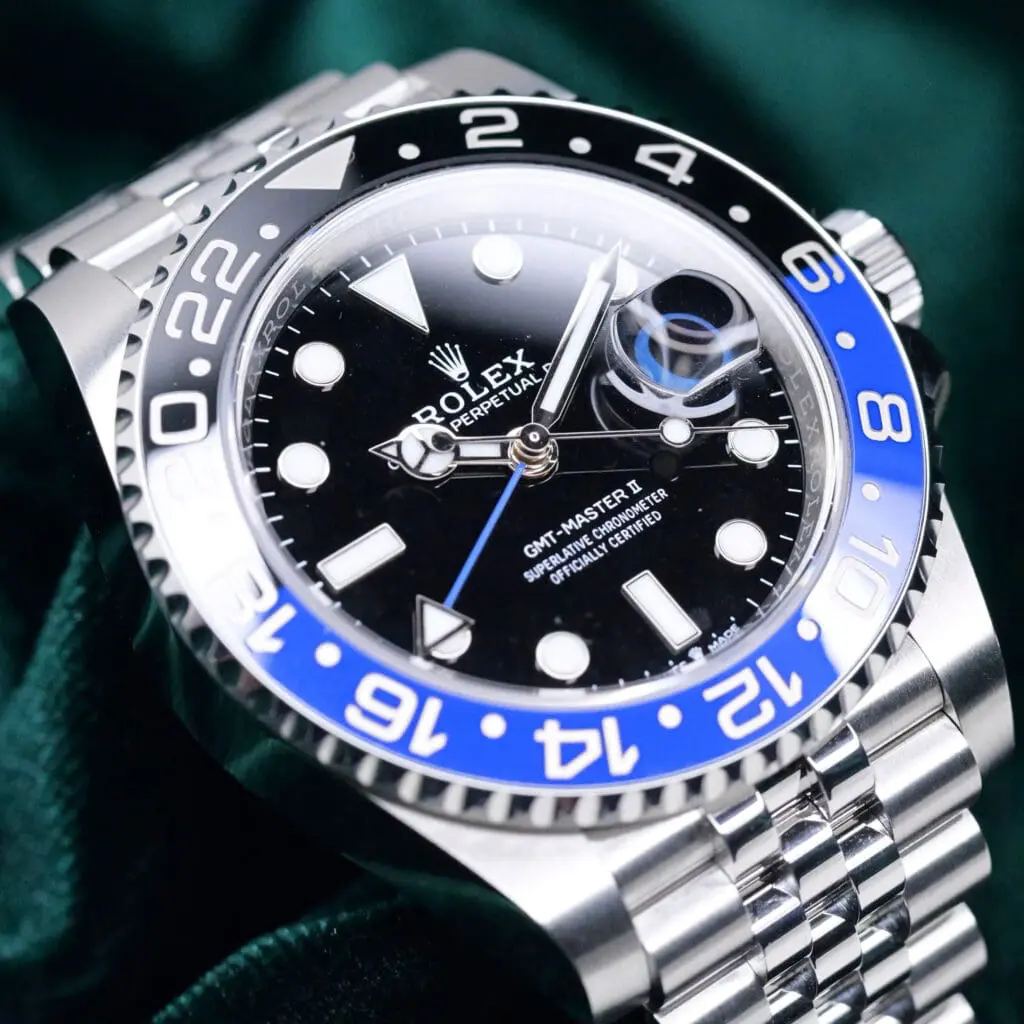
2025 NEW UNWORN Rolex GMT-Master II "Batgirl" Black Dial Blue Black Ceramic Bezel Jubilee Bracelet Stainless Steel 40mm COMPLETE SET 126710BLNR-0002
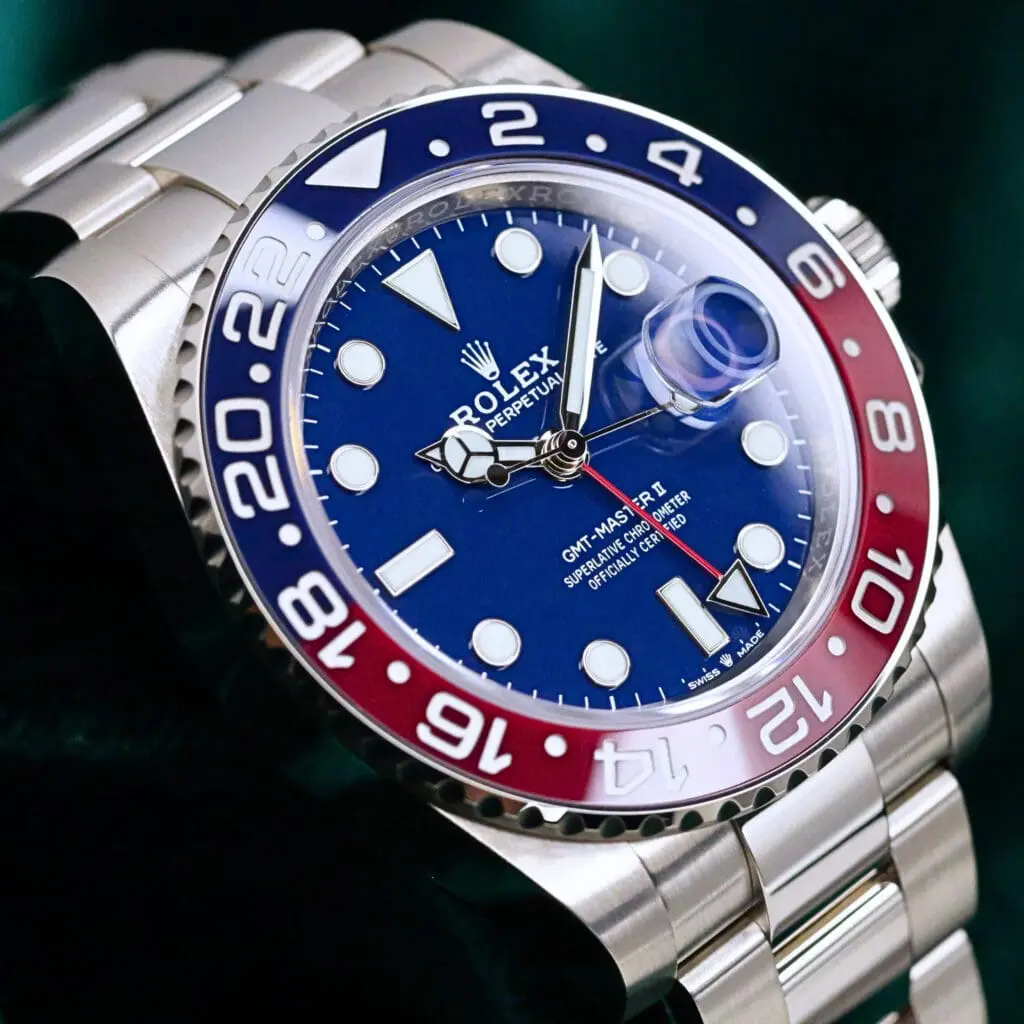
Rolex GMT-Master II "Pepsi" Blue Dial Blue Red Ceramic Bezel Oyster Bracelet 18K White Gold 40mm MINT CONDITION COMPLETE SET 126719BLRO
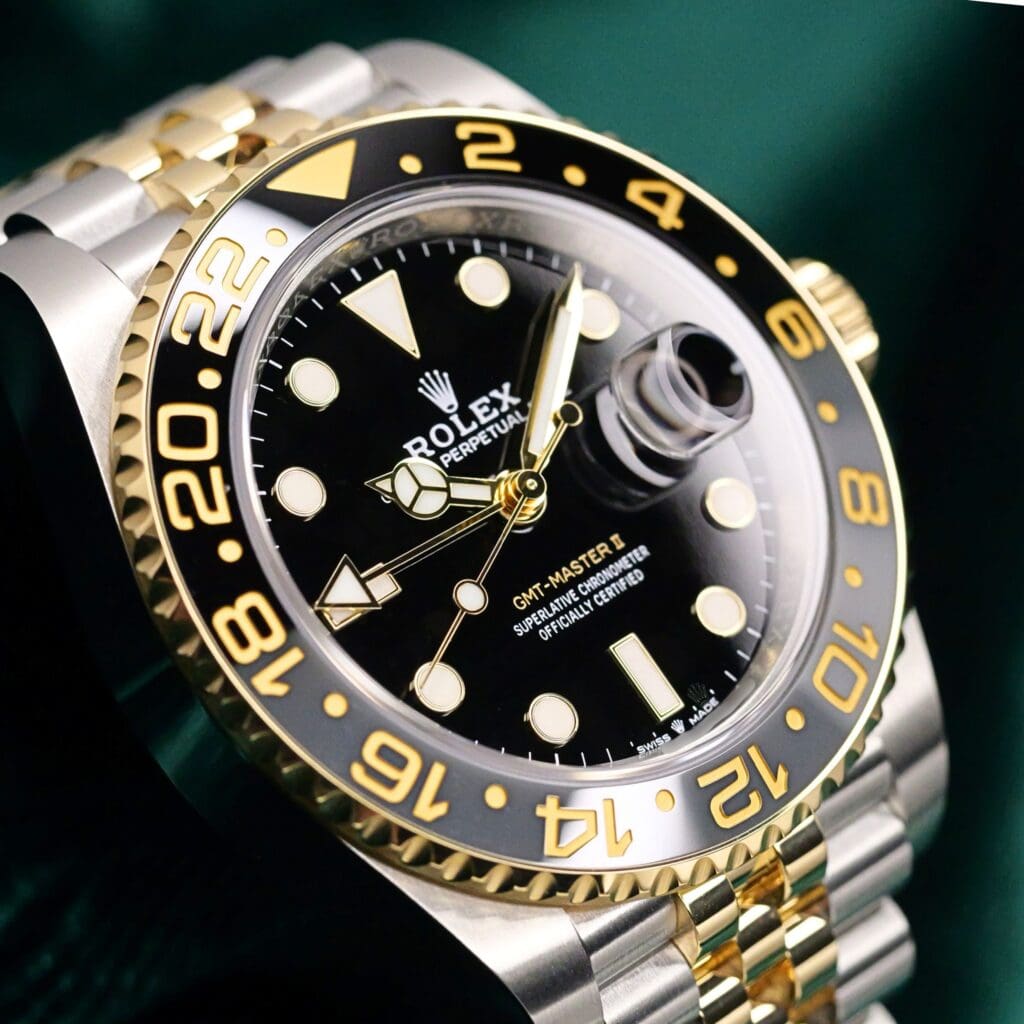
Rolex GMT-Master II Zombie Black Dial Black/Grey Ceramic Bezel Jubilee Bracelet Two-Tone 18K Yellow Gold Stainless Steel 40mm MINT CONDITION COMPLETE SET 126713GRNR
Where to Buy Authentic Watches Online
There are a few legitimate ways to buy a Sprite online. Chrono24 is the largest global marketplace, with an escrow service that holds your payment until the watch arrives and checks out. We walk through buying safely on Chrono24 in a separate guide.
eBay covers watches above a set value under its Authenticity Guarantee program, where a third party inspects the piece before it reaches you. Grailzee is an enthusiast-focused auction platform worth watching if you’re patient and hunting for a deal.
We also buy, sell, and trade luxury watches, and the reason clients pick us over a big marketplace is what happens before you commit. You get tour videos of the actual watch, honest condition notes, and a real conversation with someone who has handled the piece, not a stock photo and a listing. That’s reflected in our 4.9-star Google rating.
If you’re weighing the Jubilee against the Oyster and want to see real examples of each on the wrist before deciding, reach out and we’ll line up options that match what you’re after.
Final Thoughts on the Rolex Sprite Jubilee vs Oyster
This choice comes down to how you want the watch to feel every time you wear it. The Sprite already stands out, so the bracelet just shapes the experience.
If you picture wearing it all day, through travel, work, and quieter moments, the Jubilee makes more sense. It feels lighter, adapts better, and disappears on the wrist in a good way. If you prefer something more grounded and tool-like, the Oyster keeps that identity intact. It feels solid, direct, and consistently sporty wherever you take it.
One last thing to keep in mind: switching later isn’t cheap or simple. Buying the other bracelet from Rolex after the fact costs real money and often means a wait, so treat this as a decision you’re making once. The right pick is the one that matches how you actually live with the watch, not how it looks in photos.
999+ Timepieces Available
Explore Our Timepieces
Authenticated, unworn, and ready to ship worldwide.
Rolex · Audemars Piguet · Patek Philippe · Omega · Cartier · Richard Mille · Hublot · Tudor
Newly Listed
2026 NEW UNWORN Bvlgari Serpenti Tubogas Studs Capsule Limited Edition Green Dial Diamond Bezel Steel & 18k Yellow Gold 35mm COMPLETE SET 104360
$24,255.00
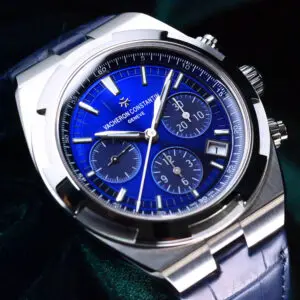
Vacheron Constantin Overseas Chronograph Blue Dial Blue Leather Strap Stainless Steel 42.5mm MINT CONDITION COMPLETE SET 5500V/110A-B148
$37,793.00
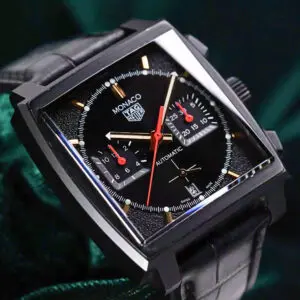
Tag Heuer Monaco Chronograph “Dark Lord” Special Edition Black Dial Black Leather Strap DLC Titanium 39mm MINT CONDITION COMPLETE SET CBL2180.FC6497
$8,135.00
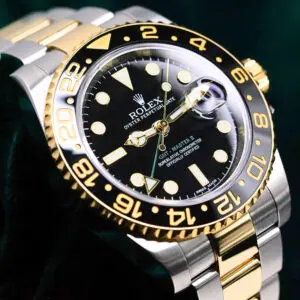
Rolex GMT-Master II “Green Arrow” Black Dial Black Ceramic Bezel Oyster Bracelet Two-Tone 18K Yellow Gold Stainless Steel 40mm MINT CONDITION COMPLETE SET 116713LN
$15,740.00
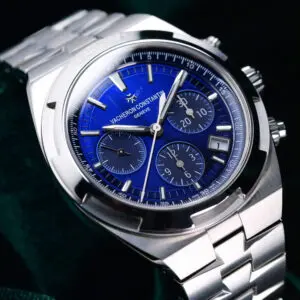
Vacheron Constantin Overseas Chronograph Blue Dial Stainless Steel 42.5mm MINT CONDITION COMPLETE SET 5500V/110A-B148
$37,793.00
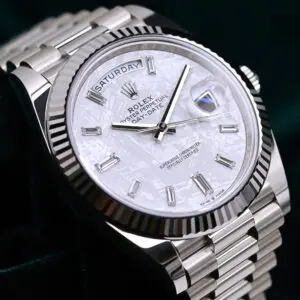
Rolex Day-Date Meteorite Baguette Diamond Dial Fluted Bezel President 18K White Gold 40mm MINT CONDITION COMPLETE SET 228239
$78,629.00
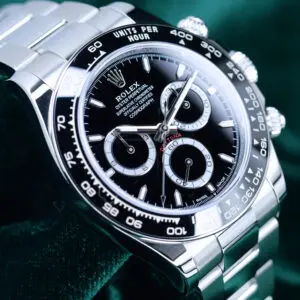
2026 Rolex Cosmograph Daytona Black Dial Black Ceramic Bezel Oyster Bracelet Stainless Steel 40mm MINT CONDITION COMPLETE SET 126500LN
$33,594.00
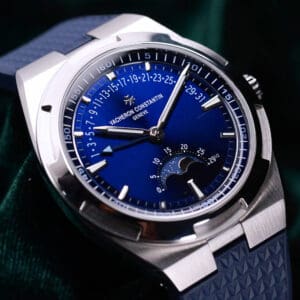
2025 Vacheron Constantin Overseas Moonphase Retrograde Date Blue Dial Blue Rubber Strap Stainless Steel 41mm MINT CONDITION COMPLETE SET 4000V/210A-B911
$52,800.00
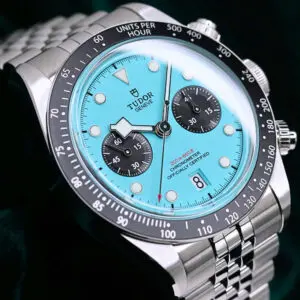
2025 Tudor Black Bay Chrono "Flamingo Blue" Turquoise Dial Black Bezel Stainless Steel 41mm MINT CONDITION COMPLETE SET 79360N-0024
$10,494.00
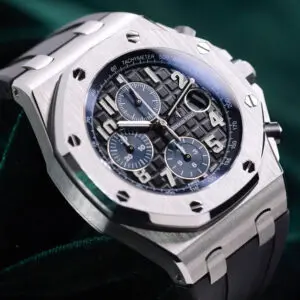
Audemars Piguet Royal Oak Offshore Chronograph "Batman" Black Dial Blue Accents Black Rubber Strap Stainless Steel 42mm MINT CONDITION COMPLETE SET 26470ST.OO.A028CR.01
$25,715.00
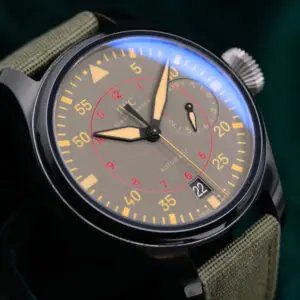
IWC Big Pilot's Watch Top Gun Miramar Grey Dial Green Textile Strap Black Ceramic 48mm MINT CONDITION COMPLETE SET IW501902
$7,240.00
Audemars Piguet Royal Oak Offshore Chronograph "Elephant" Gray Dial Stainless Steel Rubber Strap 42mm 26470ST.OO.A104CR.01
$23,974.50