
Rolex Hulk vs Sprite is a comparison many buyers reach once they start looking at green Rolex sports watches. At first, the choice looks easy. Both stand out quickly, but they do not feel the same after spending time with them.
Once you get past the shared green look, the comparison becomes more interesting. These watches bring different strengths to the wrist, and the differences show up in how they wear, how they function, and the kind of presence they create day to day. What looks close in photos starts to feel much less similar once you wear them.
This guide looks at what matters after the first impression. It breaks down how each watch wears, who it suits, how their prices sit in 2026, and which one makes more sense once you live with it for a while.
Rolex Hulk Background: The Only Green-Dial Submariner

Rolex launched the Submariner Date ref. 116610LV at Baselworld in 2010 as the follow-up to the Kermit. With this reference, Rolex gave the steel Submariner a much stronger visual shift by pairing a green dial with a green Cerachrom bezel, something the line had never seen before.
If you are weighing the two green Subs, our Hulk vs Kermit comparison covers what changed between them.
Collectors quickly gave it the nickname Hulk. The broader Super Case shape made the watch look more blocky and gave it more wrist presence than older Submariners. That larger visual stance, combined with the full green look, is what pushed the nickname to stick. Rolex kept the model in the lineup until 2020, when the Submariner range moved to 41mm.
Worth remembering: the Hulk was not an instant darling. For years the collector consensus was that the black Submariner was the safer, more versatile buy, and green-dial examples sometimes sat at a discount. Sentiment only flipped hard once discontinuation rumors started circulating near the end of the run.
The 116610LV remains the only steel Submariner with a green dial, which is a big part of why collectors still focus on it. Rolex also used this reference to introduce solid bracelet links and Super LumiNova, giving the watch a more modern feel than its predecessor. For the wider range, our Submariner buying guide covers the current references.
Key Specifications:
- Reference: 116610LV
- Production: 2010 to 2020
- Dial: Green sunburst lacquer with Chromalight indices
- Bezel: Green Cerachrom ceramic, platinum numerals
- Case: 40mm, Super Case architecture, 904L Oystersteel
- Bracelet: Fully solid links, Glidelock extension
- Movement: Caliber 3135, 48-hour power reserve
- Water Resistance: 300m
Rolex Sprite Background: The First Left-Handed GMT-Master II

Rolex introduced the GMT-Master II ref. 126720VTNR in 2022 as a new version of its long-running travel watch. The model still follows the GMT-Master idea that began in the 1950s, when Rolex built the line for tracking more than one time zone. This reference kept that purpose but changed the layout by moving the crown and date to the left.
It sits within the broader GMT-Master II family, and our GMT-Master II buying guide maps out where each version fits.
Collectors began calling it the Rolex Sprite soon after its release because of its green-and-black bezel. The color was not the whole story. This watch stood apart within the steel GMT-Master II line because it kept the same travel function but changed the entire wearing experience.
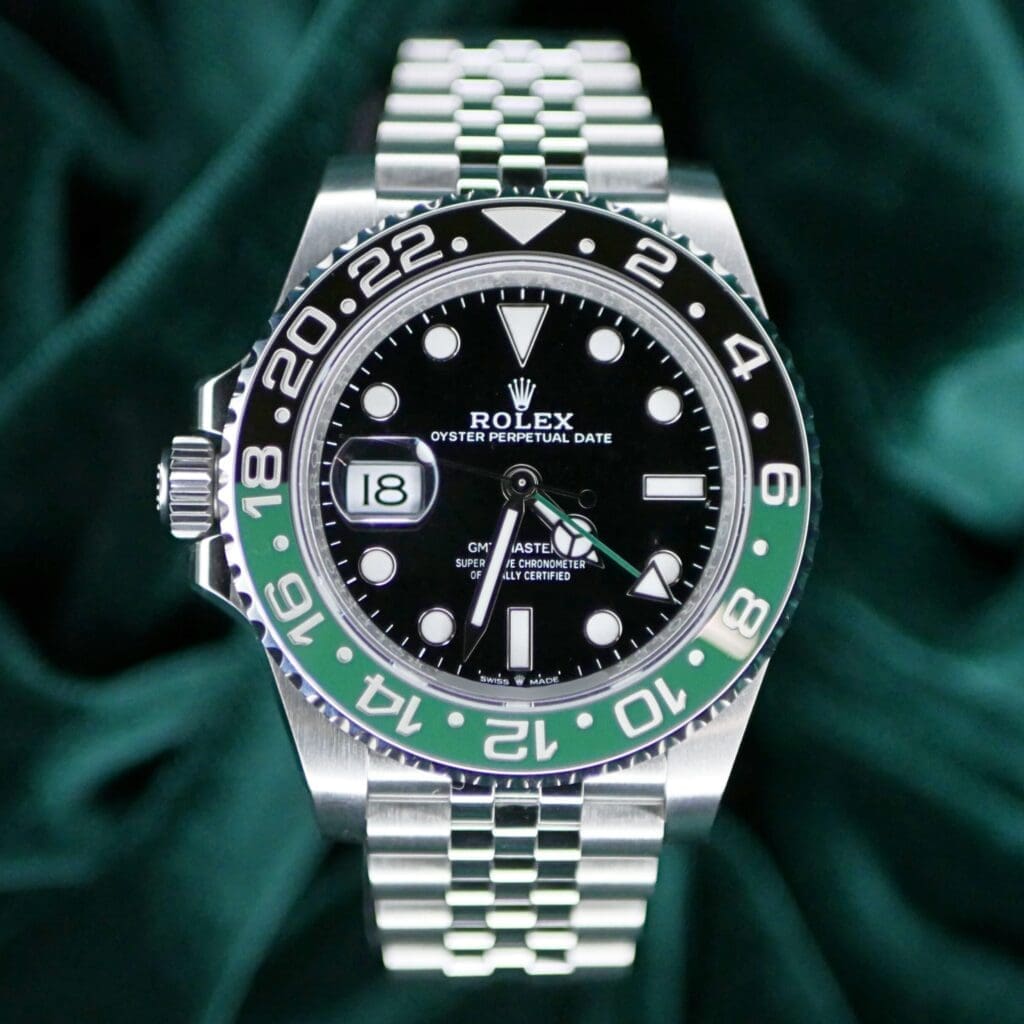
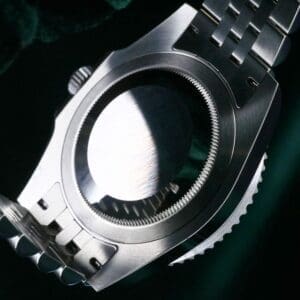
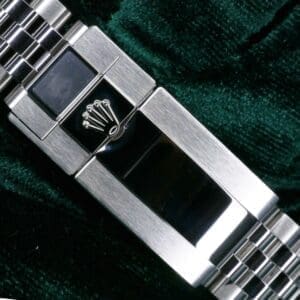
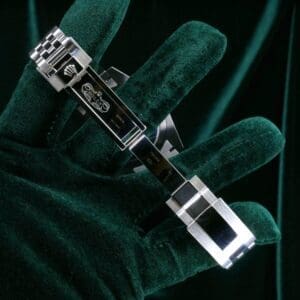
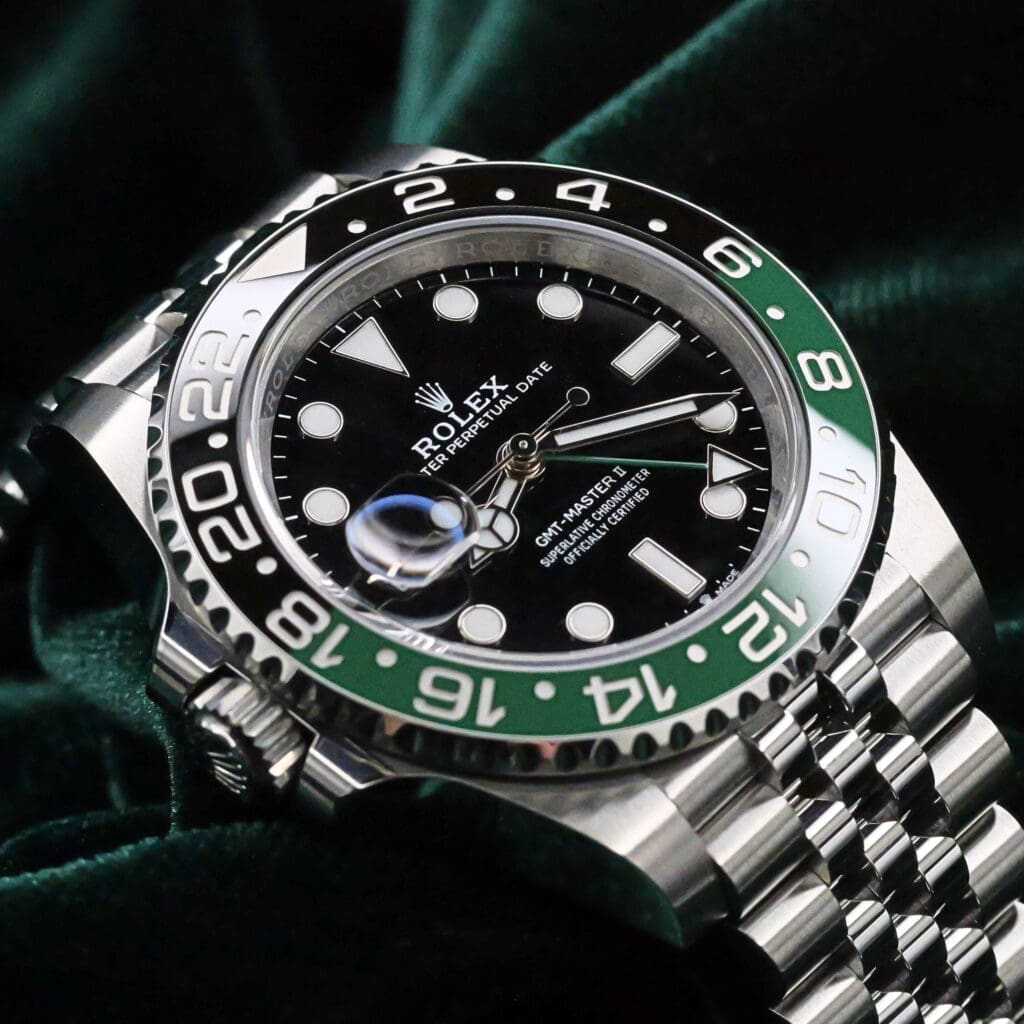
Its most recognizable features are the left-side crown, the date at 9 o’clock, and the green-black Cerachrom bezel. Those details make it easy to spot and easy to remember. Rolex kept the core GMT function intact, so the design still serves a clear purpose. That mix is what gave the Sprite its identity.
Key Specifications:
- Reference: 126720VTNR
- Production: 2022 to present
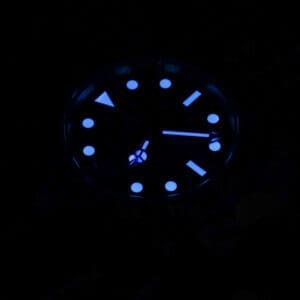
- Dial: Black dial with Chromalight indices
- Bezel: Green and black Cerachrom, 24-hour scale
- Case: 40mm Oystersteel, left-side crown layout
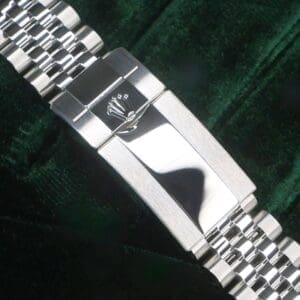
- Bracelet: Oyster bracelet with Oysterlock clasp and Easylink
- Movement: Caliber 3285, around 70-hour power reserve
- Water Resistance: 100m
Rolex Hulk vs Sprite: Most Notable Differences

These two watches share a green theme and a 40mm case, but they do different jobs. The Hulk is a Submariner built around dive use. The Sprite is a GMT-Master II built around travel. In many ways it’s the classic Submariner vs GMT-Master II comparison playing out between two green watches.
That changes how each one works, how each one wears, and who usually connects with it after the first few days.
1. Bezel Function
The Hulk uses a 60-minute unidirectional bezel with a dive scale. It turns counterclockwise only, which is part of the safety design. If the bezel moves accidentally during a dive, the reading shortens rather than lengthens. That tells the diver to come up sooner instead of staying underwater too long.
The Sprite uses a bidirectional 24-hour bezel that works with the green GMT hand. Instead of tracking elapsed minutes, it helps you read a second time zone. You rotate it in either direction to follow the zone you want. That makes it more useful for travel, flights, and people who often deal with another city.
2. Movement Generation
Caliber 3135 with a 48-hour power reserve powers the Hulk. Rolex used this movement because the Submariner only needs core functions: time, date, and a standard three-hand layout. That keeps the watch simple and focused on dive use.
The Caliber 3285 with a 70-hour power reserve powers the Sprite. Rolex added a GMT hand and an independently adjustable local hour hand because the watch was built for travel across multiple time zones. Those extra functions make the movement more useful across locations, and the longer reserve helps it keep running through a weekend off the wrist.
3. Water Resistance
Rolex rated the Hulk to 300 meters, which fits its role as a true dive watch. The Triplock screw-down crown, screw-down caseback, and full Submariner sealing system help the case resist water pressure.
The Sprite carries a 100-meter rating, which covers swimming and daily wear. It is not in the same dive category. Rolex built the GMT-Master II for travel and time-zone use, not for diving. That makes 300 meters versus 100 meters a real difference, not a small spec change.
More Submariners
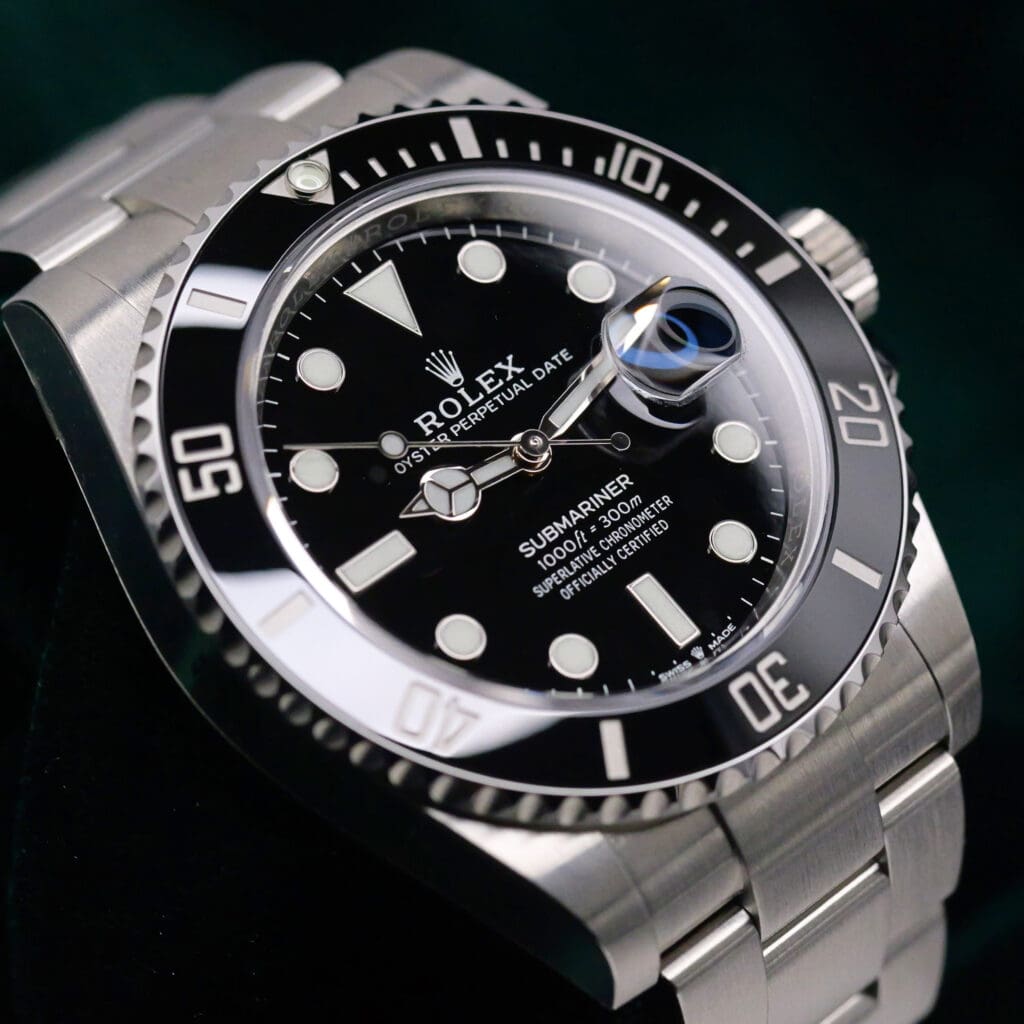
NEW UNWORN Rolex Submariner Date “Sub Date” Black Dial Black Ceramic Bezel Oyster Bracelet Stainless Steel 41mm COMPLETE SET 126610LN
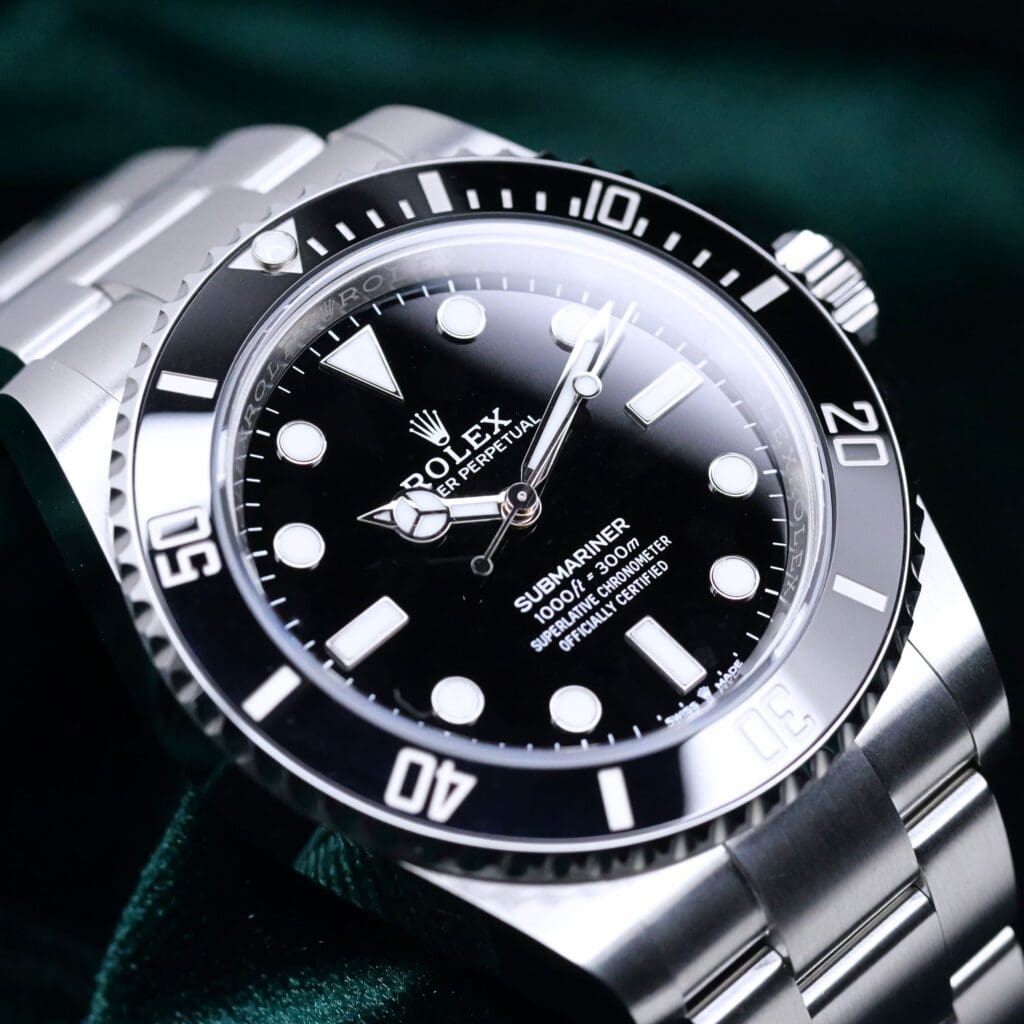
2026 NEW UNWORN Rolex Submariner No Date Black Dial Black Ceramic Bezel Oyster Bracelet Stainless Steel 41mm COMPLETE SET 124060
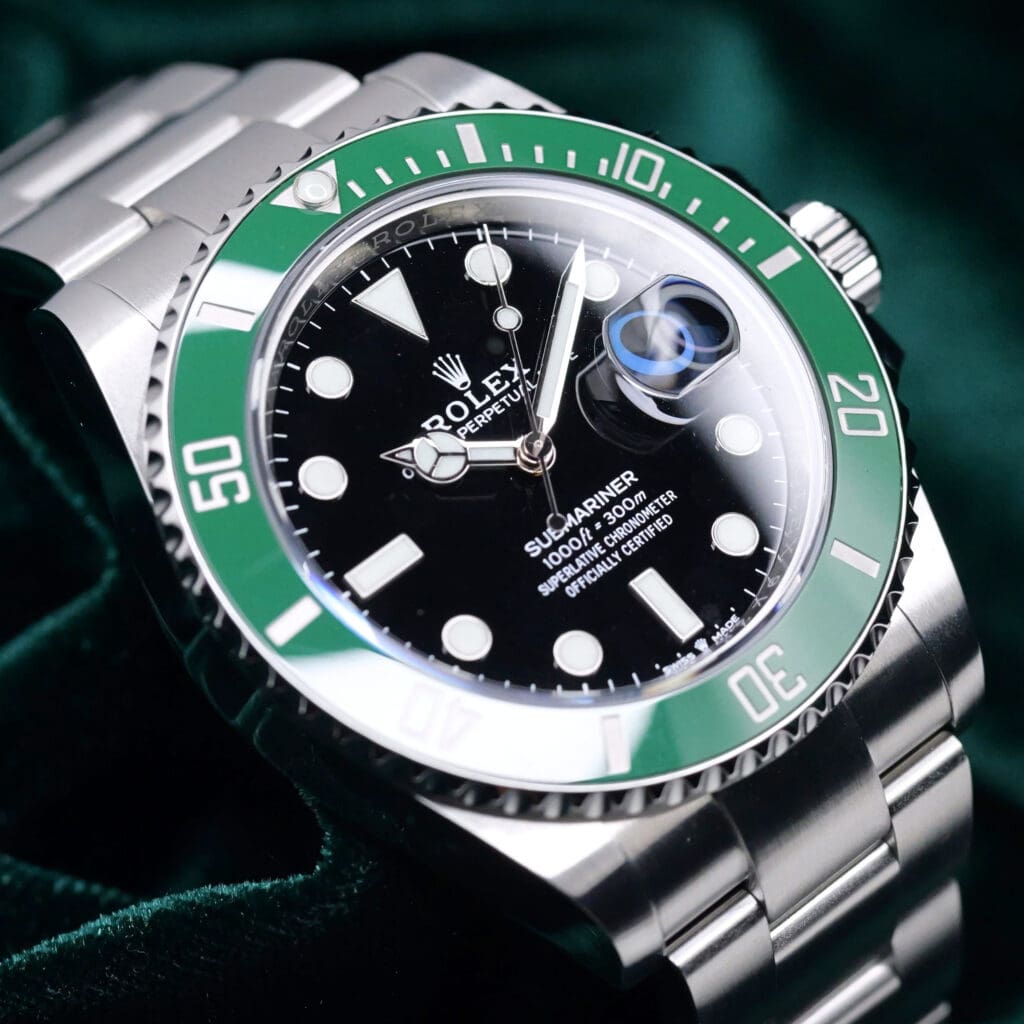
Rolex Submariner Date Starbucks Black Dial Green Ceramic Bezel Oyster Bracelet Stainless Steel 41mm MINT CONDITION COMPLETE SET 126610LV
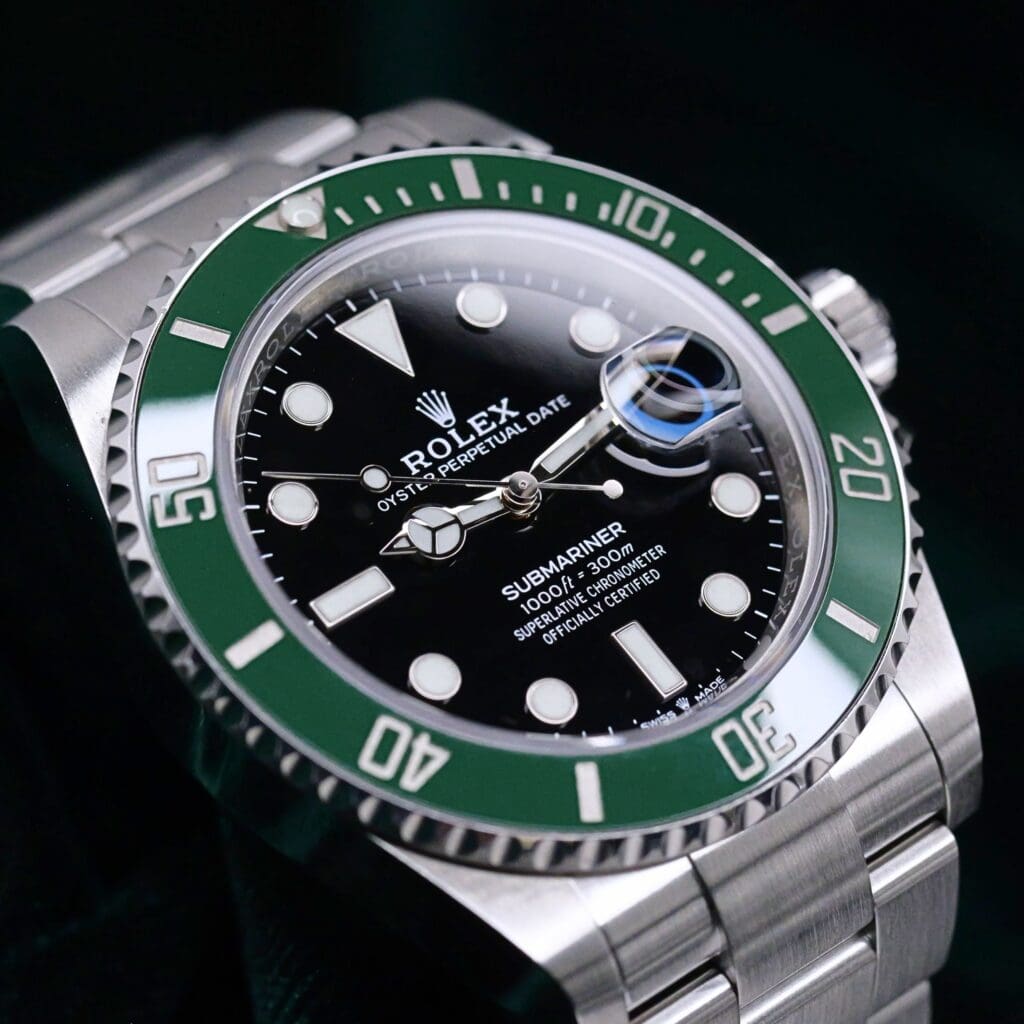
Rolex Submariner Date "Starbucks" Black Dial Green Ceramic Bezel Oyster Bracelet Stainless Steel 41mm MINT CONDITION COMPLETE SET 126610LV-0002
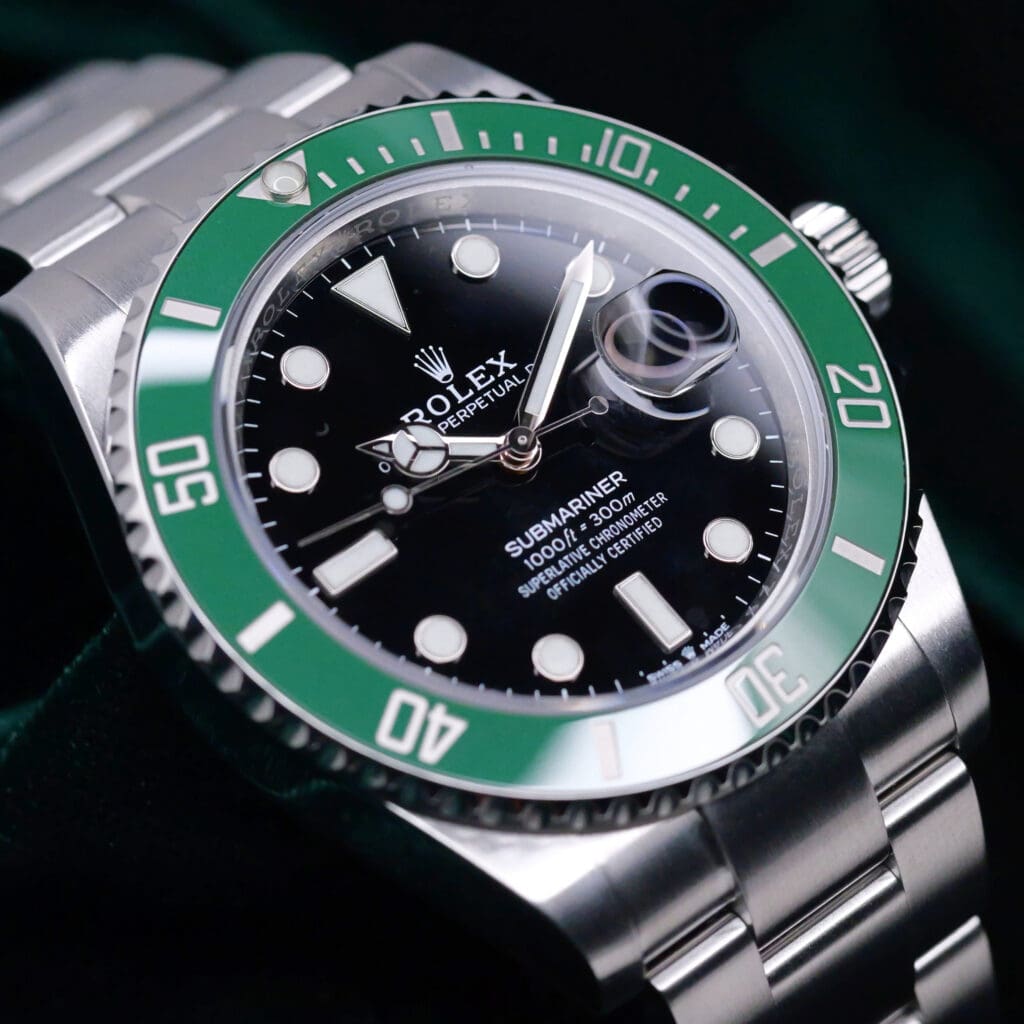
Rolex Submariner Date "Starbucks" Black Dial Green Ceramic Bezel Stainless Steel 41mm MINT CONDITION COMPLETE SET 126610LV-0002

Rolex Submariner No Date Black Dial Black Ceramic Bezel Stainless Steel Oyster Bracelet 41mm MINT CONDITION COMPLETE SET 124060
4. Crown Position
A standard 3 o’clock crown keeps the Hulk in the familiar Rolex sports watch format. Rolex kept this setup because it suits the Submariner’s straightforward role and puts the controls where most people expect them. The dial, case, and date placement follow the standard Submariner layout, so the watch reads easily at a glance.
A left-side crown with the date at 9 o’clock gives the Sprite its most distinct layout. Rolex did this to create a genuinely new version of the GMT-Master II while keeping the core travel-time function. The reversed setup changes how the watch looks and how it sits, especially when worn on the left wrist with the crown facing outward.
The destro layout is one of the more divisive things Rolex has done in recent years. Plenty of owners love the novelty and the way the crown stays clear of the hand, while others never warm to a dial that reads backwards from every other Rolex sports watch. It is worth handling before you buy rather than deciding from photos.
5. Bracelet Options
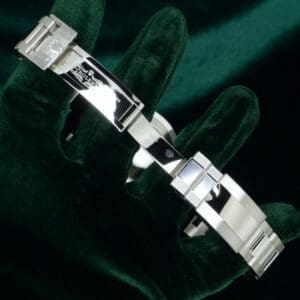
The Hulk came only on the Oyster bracelet across its entire ten-year run. Its Glidelock clasp allows 20mm of extension in 2mm steps, designed for fitting over a dive suit sleeve. The Sprite’s Easylink works differently, and our Glidelock vs Easylink breakdown explains both.
The Sprite gives you a factory choice between Oyster and Jubilee. That choice changes the watch’s feel and look more than people expect. Oyster keeps it sportier and more tool-like. Jubilee softens the wrist feel and dresses the watch up slightly. If that choice is the sticking point, our Sprite Jubilee vs Oyster breakdown goes deeper.



Price and Market Demand in 2026
The Hulk trades like a discontinued Rolex with fixed supply. Its last retail was around $9,050 before it left the catalog in 2020. As of 2026, secondary-market examples generally sell between roughly $18,000 and $25,000, with the median sitting near $20,000 across Chrono24 and eBay listings. Unworn full sets push past $27,000.
That premium comes from scarcity and configuration. No other steel Submariner pairs a green dial with a green bezel, and Rolex is not making more. It’s part of why some Rolex models hold their value far better than others. Condition drives the spread: clean, unpolished full sets sell at the top of the range, while worn watch-only examples pull it down.
The Sprite follows a different pattern because it is still in production. Retail sits in the low-$11,000s to around $12,000 depending on bracelet. On the secondary market in 2026, Chrono24 lists it at an average near $21,000, with most examples between about $16,000 and $25,000. Jubilee pieces tend to carry a small premium over Oyster.
Put together, the two tell different value stories. The Hulk’s premium rests on a closed production run and a one-of-one configuration. The Sprite still sells above retail, but fresh supply keeps entering the market, so its pricing stays more flexible. WatchCharts data through mid-2026 shows both holding firm rather than climbing.
What the 2026 Pepsi Discontinuation Means for the Sprite
At Watches & Wonders 2026 on April 14, Rolex quietly removed the steel Pepsi (ref. 126710BLRO) from its catalog. For the first time in the ceramic era, no steel GMT-Master II carries a red bezel. The steel lineup is now down to three colorways: the Batman, the Bruce Wayne, and the Sprite.
That shift matters for this comparison. The Sprite is now the only green-bezel GMT-Master II Rolex sells, and one of just three steel bezel colors left in the line. With the Pepsi gone, the Batman is the natural cross-shop now, and our Sprite vs Batman comparison lays out that decision.
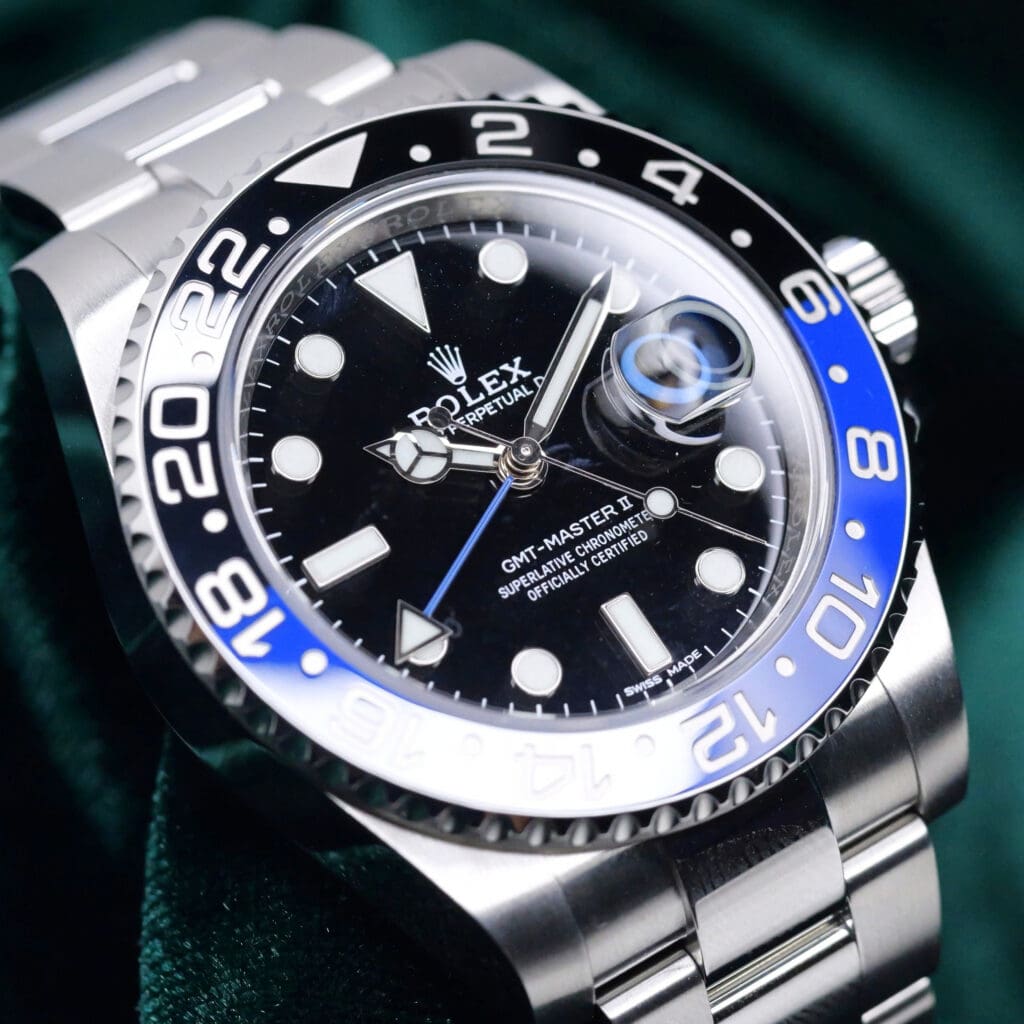
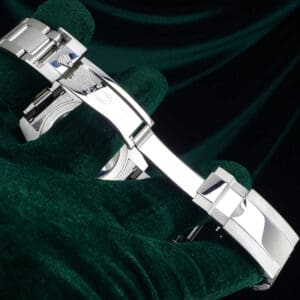
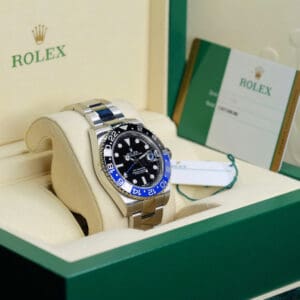
It doesn’t change how the watch wears, but it does change where it sits: a current-production reference with thinner competition and a stronger collector story than it had a year ago.
If part of the appeal is owning something distinctive, the Sprite’s destro layout was already rare, and the shrinking steel GMT lineup only sharpens that. The Hulk earned its standing the same way years earlier, when its 2020 discontinuation turned a slow seller into a grail.
Side-by-Side Comparison (At a Glance)
This table shows the core factory specs side by side. Both watches share some basics. The more useful point is how far they separate once you look at the bezel, movement, water resistance, and function.
| Specifications | Hulk | Sprite |
| Reference | 116610LV | 126720VTNR |
| Collection | Submariner Date | GMT Master II |
| Case material | Oystersteel | Oystersteel |
| Case diameter | 40mm | 40mm |
| Case construction | Super Case | Standard GMT Master II case |
| Movement | Caliber 3135 | Caliber 3285 |
| Escapement | Traditional lever escapement | Chronergy escapement |
| Power reserve | About 48 hours | About 70 hours |
| Bezel | Green Cerachrom | Green and black Cerachrom |
| Bezel function | Unidirectional 60-minute scale | Bidirectional 24-hour scale |
| Dial | Green sunburst | Black |
| Date position | 3 o’clock | 9 o’clock |
| Additional hand | None | Green GMT hand |
| Lume | Chromalight | Chromalight |
| Water resistance | 300m / 1,000ft | 100m / 330ft |
| Crown position | Right side, 3 o’clock | Left side, 9 o’clock |
| Bracelet options | Oyster only | Oyster or Jubilee |
| Clasp system | Glidelock | Easylink |
| Production period | 2010 to 2020 | 2022 to present |
Rolex Hulk vs Sprite: Which Should You Choose?
Both references stand out quickly, but the better choice depends on how you plan to live with the watch. This is the stage where function matters more than first impressions. Look at what each model offers in daily use, then decide which one fits your habits. After that, the choice usually gets clearer.
Choose the Hulk if:
- You want a diver’s watch with genuine 300m water resistance.
- You want a full green dial and green bezel.
- You prefer a discontinued reference with fixed supply.
- You want the standard Submariner crown-and-date layout.
- A 48-hour power reserve fits your wearing routine.
Choose the Sprite if:
- You want a GMT hand and a 24-hour bezel for travel or multiple time zones.
- You prefer the left-side crown and 9 o’clock date layout.
- You want the Caliber 3285 with a 70-hour power reserve.
- You want the option of an Oyster or Jubilee bracelet.
- You prefer a black dial with green kept to the bezel and GMT hand.
One tip before you commit either way: try the Sprite on the wrist you’ll really wear it on. The destro layout reads very differently on the left wrist than most people expect from photos, and it’s the fastest way to know if the whole idea clicks for you.
Browse Our Rolex Collection
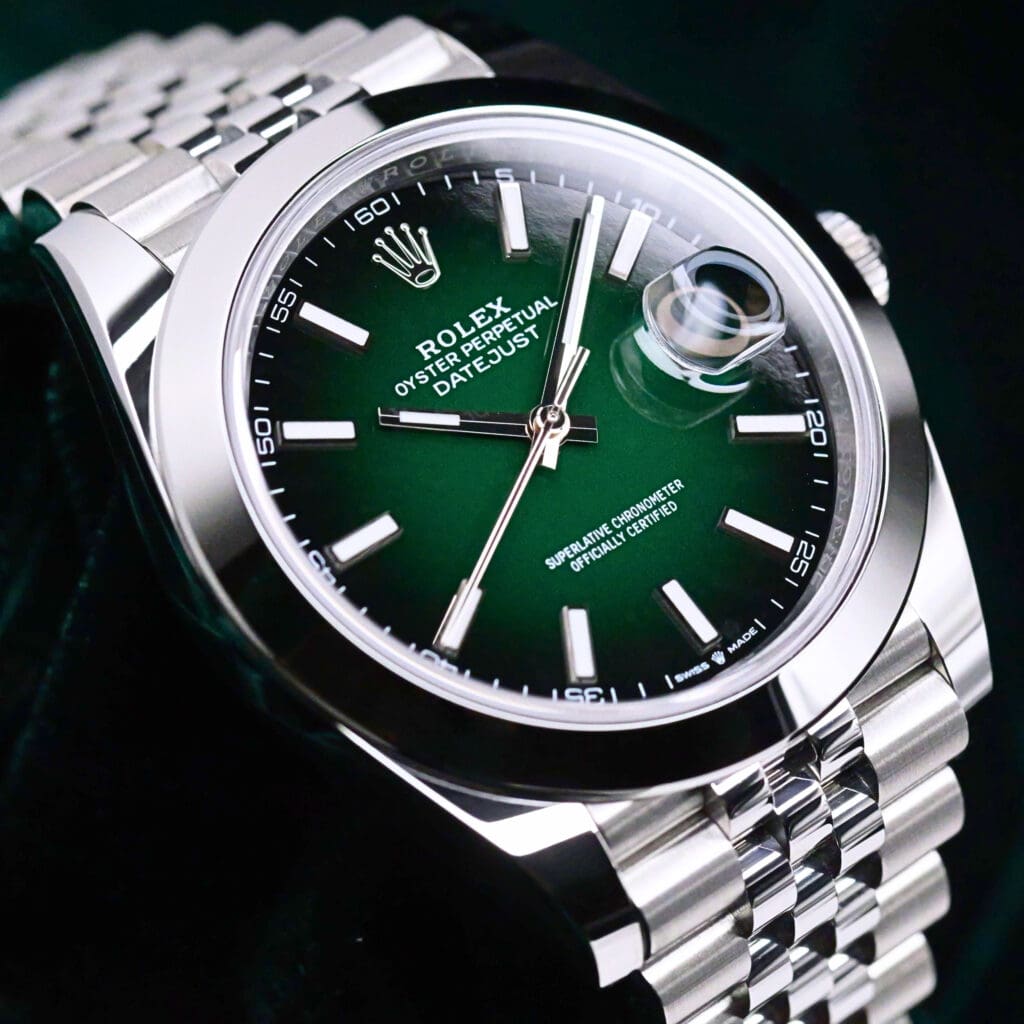
2026 Rolex Datejust Green Ombre Dial Smooth Bezel Jubilee Bracelet Stainless Steel 41mm MINT CONDITION COMPLETE SET 126300

Rolex GMT-Master II "Pepsi" Blue Dial Blue Red Ceramic Bezel Oyster Bracelet 18K White Gold 40mm MINT CONDITION COMPLETE SET 126719BLRO
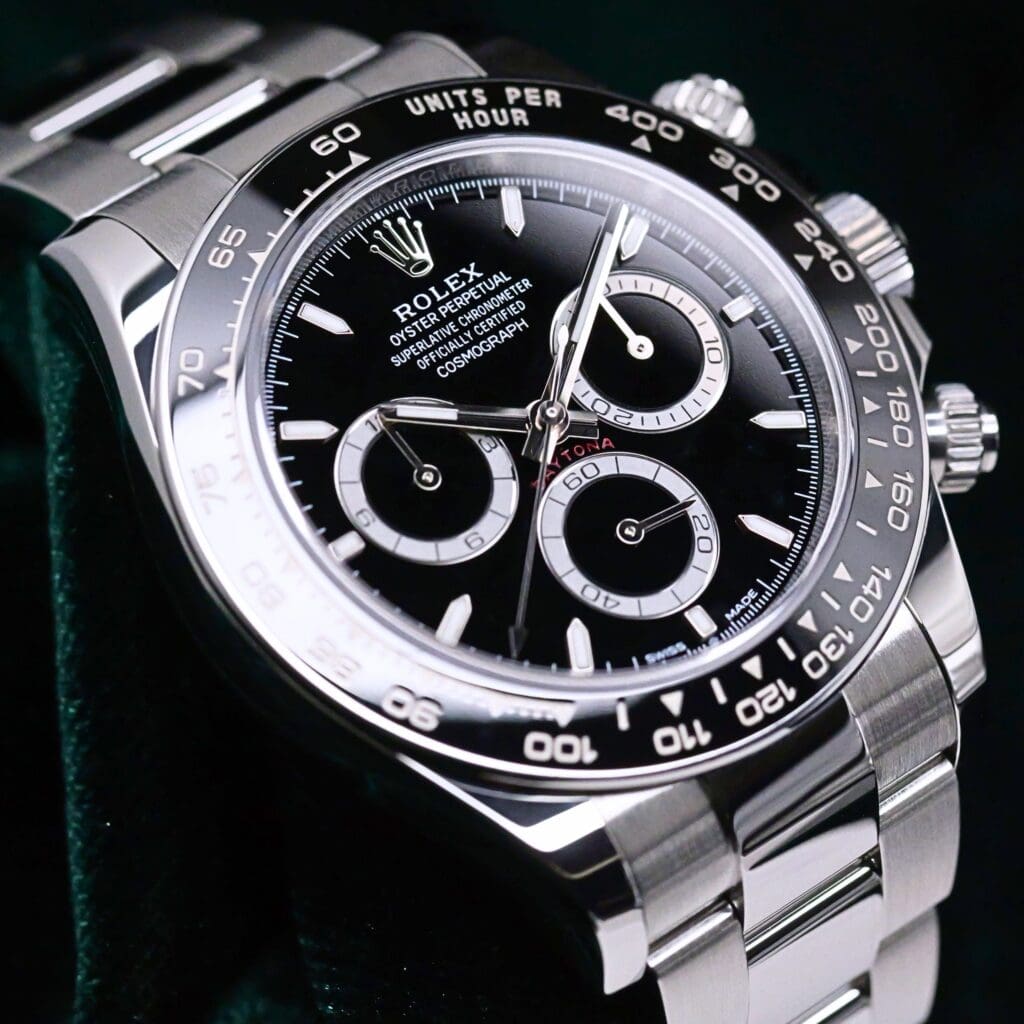
Rolex Cosmograph Daytona "Reverse Panda" Black Dial Black Ceramic Bezel Oyster Bracelet Stainless Steel 40mm MINT CONDITION COMPLETE SET 126500LN
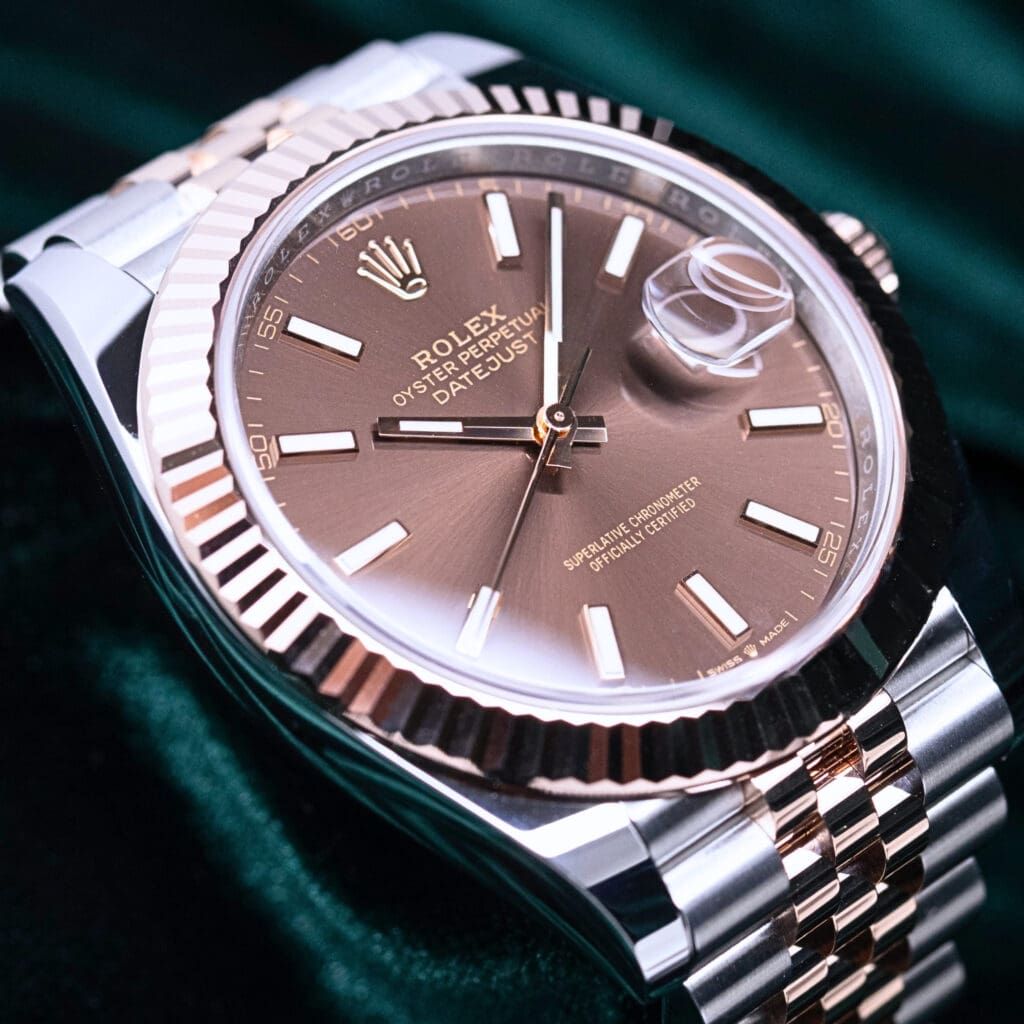
2026 NEW UNWORN Rolex Datejust 41 Chocolate Brown Jubilee Two-Tone 18K Everose Gold Steel 41mm COMPLETE SET 126331
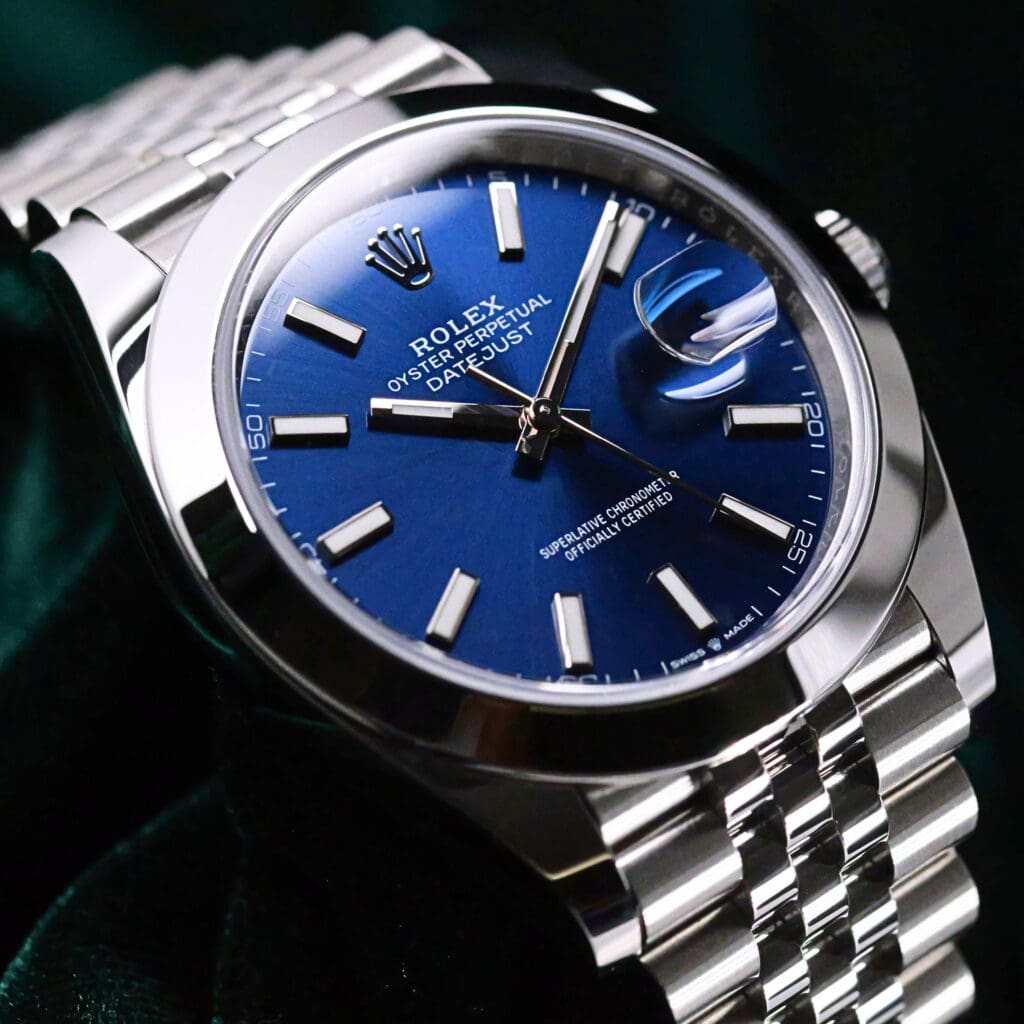
2026 Rolex Datejust Blue Dial Smooth Bezel Jubilee Bracelet Stainless Steel 41mm MINT CONDITION COMPLETE SET 126300
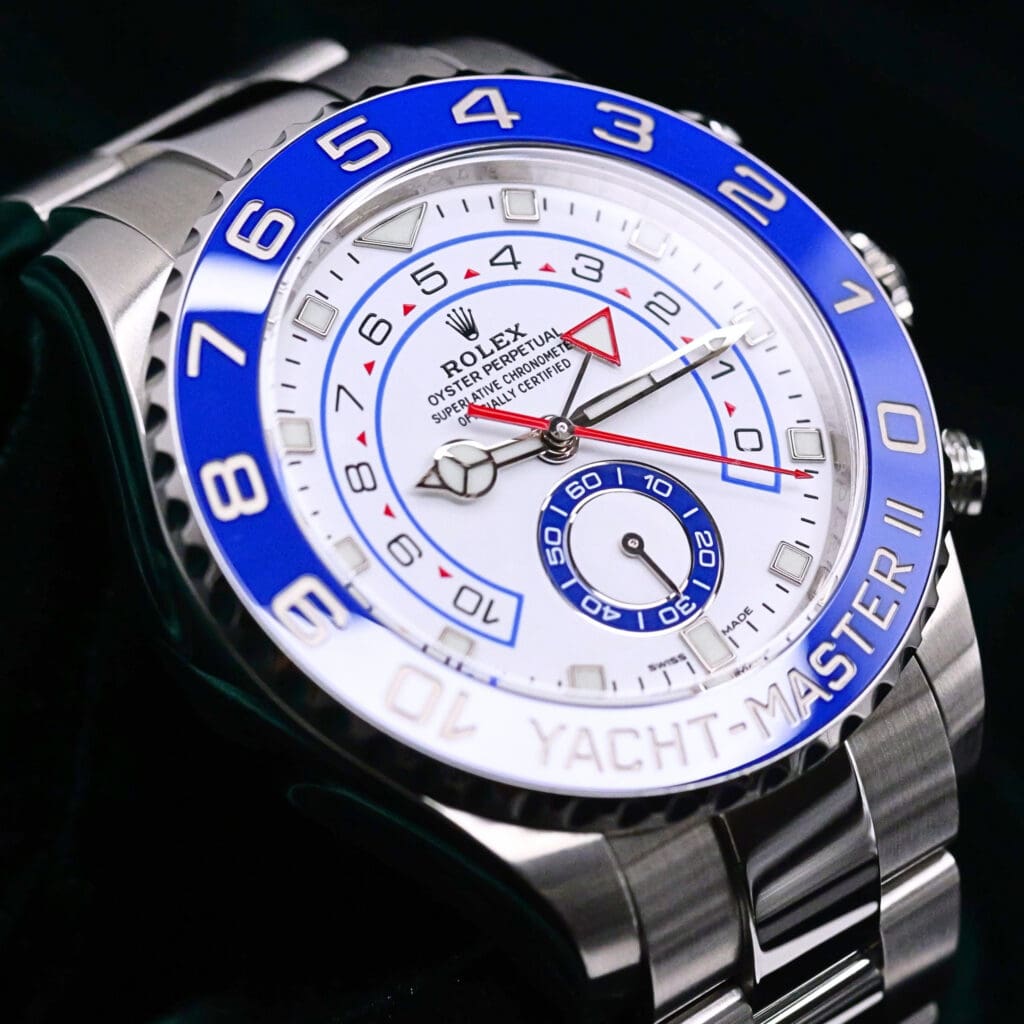
Rolex Yacht-Master II White Dial Blue Ceramic Bezel Oyster Bracelet Stainless Steel 44mm MINT CONDITION COMPLETE SET 116680
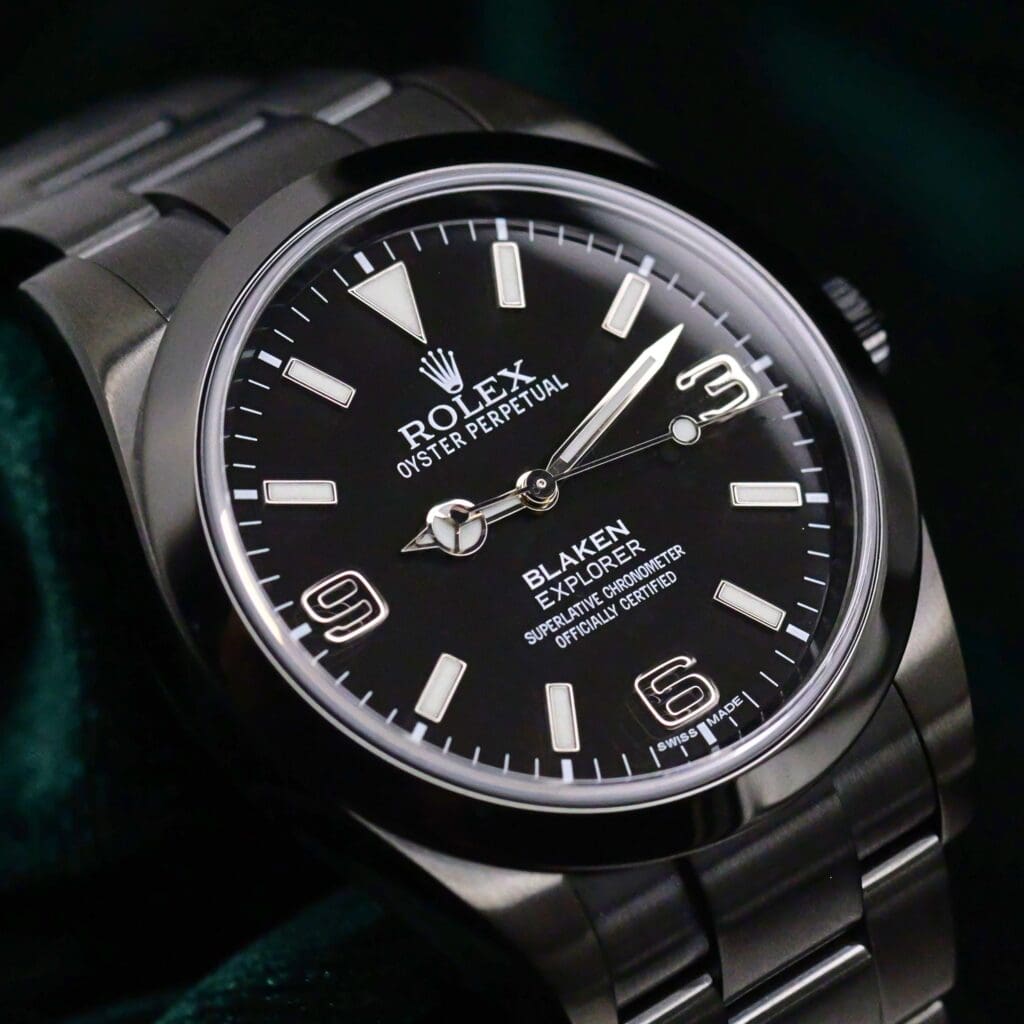
Rolex Explorer Blaken Black Dial Oyster Bracelet DLC Black Stainless Steel 39mm MINT CONDITION COMPLETE SET 214270
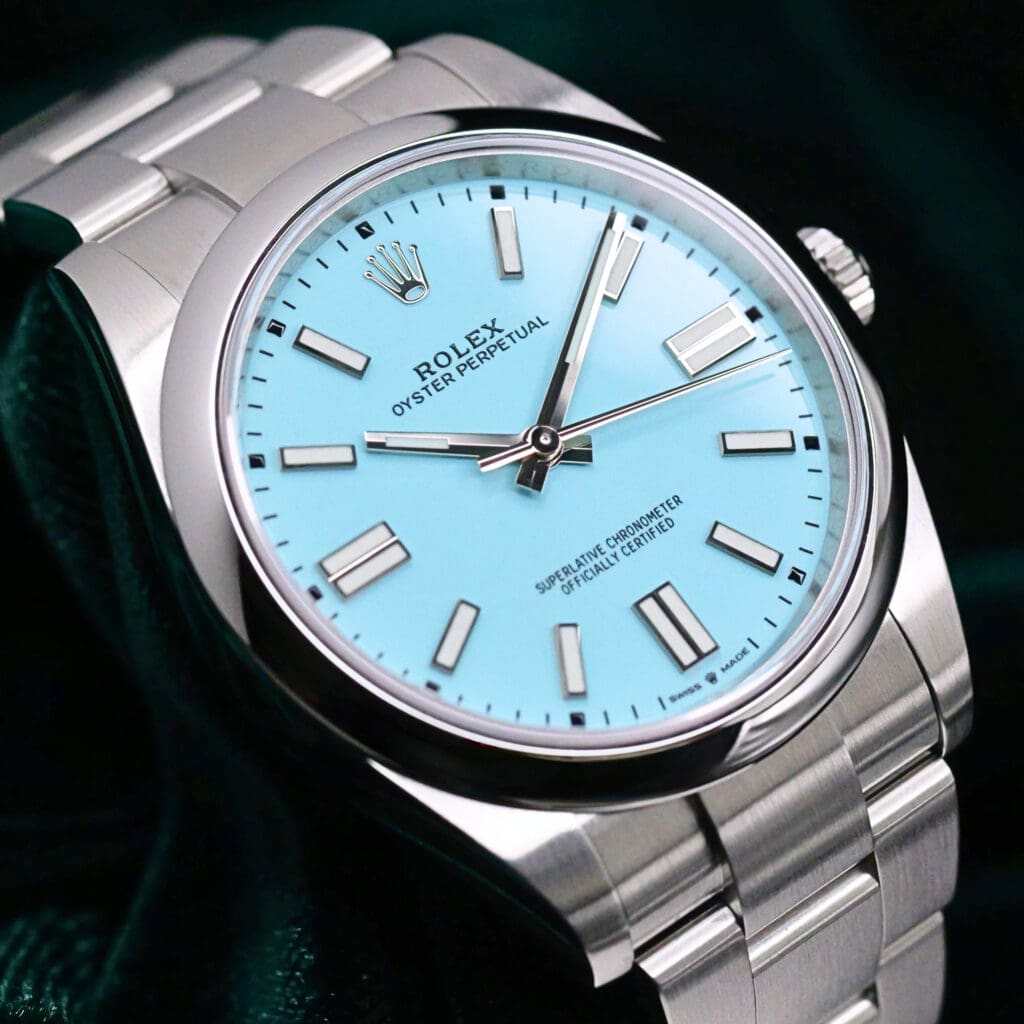
Rolex Oyster Perpetual "Tiffany" Turquoise Blue Dial Oyster Bracelet Stainless Steel 41mm MINT CONDITION COMPLETE SET 124300
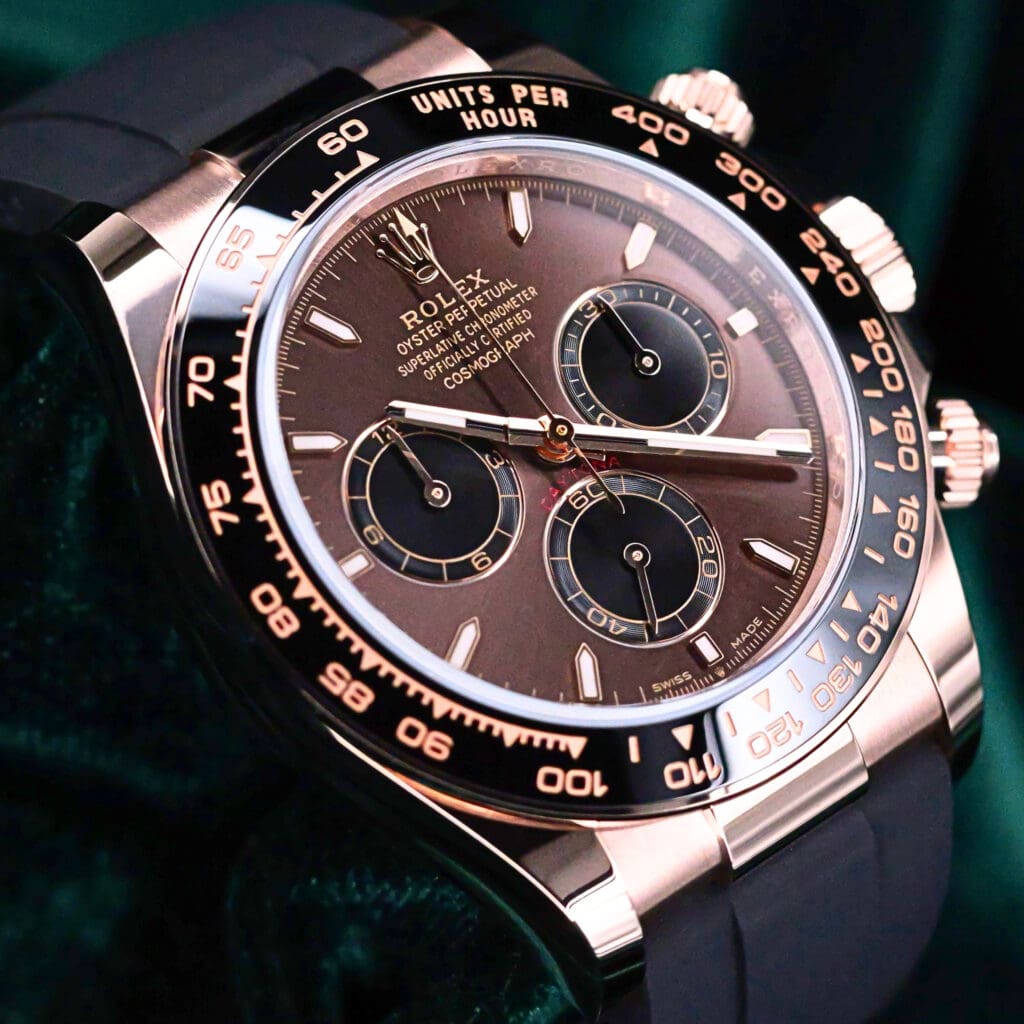
Rolex Cosmograph Daytona Chocolate Brown Dial Black Ceramic Bezel Black Subdials Black Oysterflex 18K Rose Gold 40mm MINT CONDITION 126515LN-0010
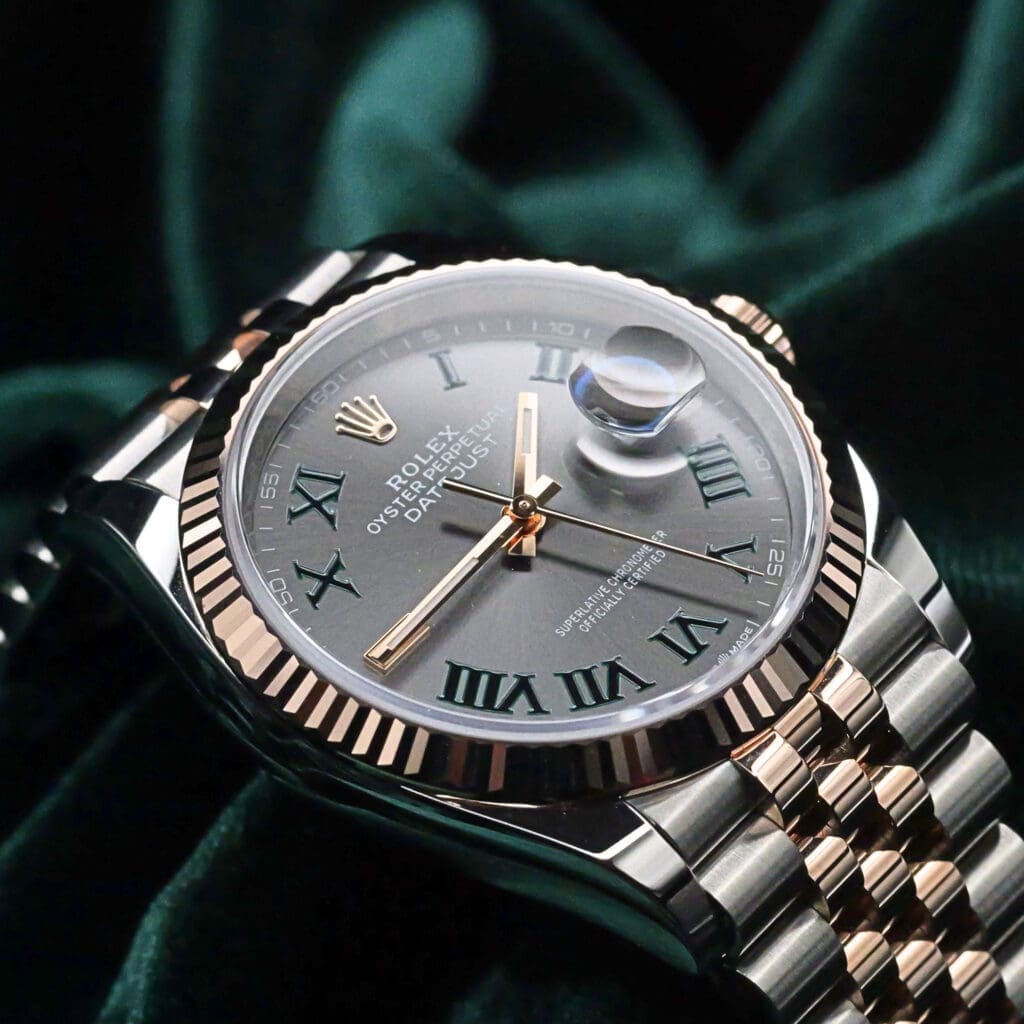
Rolex Datejust 36 Grey Wimbledon Dial Fluted Bezel Jubilee Bracelet Two-Tone Rose Gold Stainless Steel MINT COMPLETE SET 126231
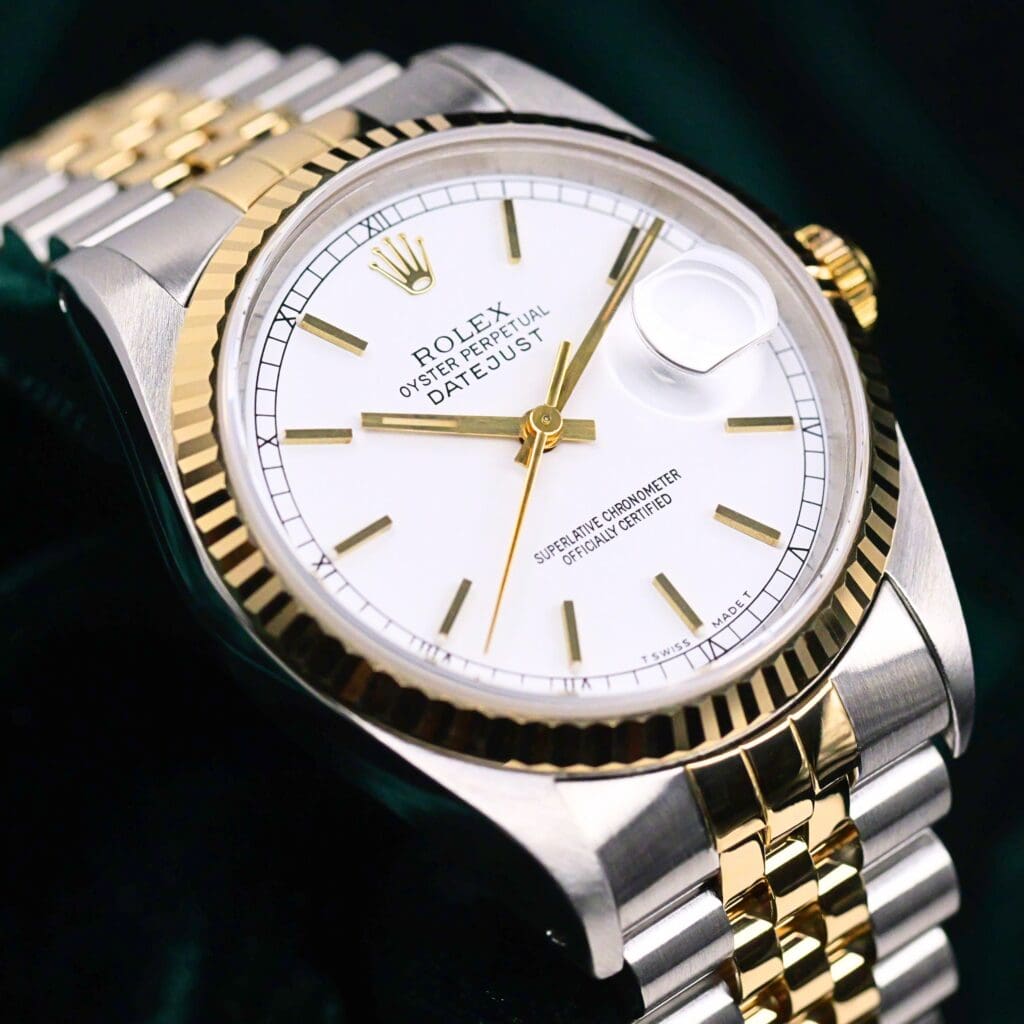
Rolex Datejust White Dial Fluted Bezel Jubilee Bracelet Two-Tone 18K Yellow Gold Stainless Steel 36mm MINT CONDITION 16233
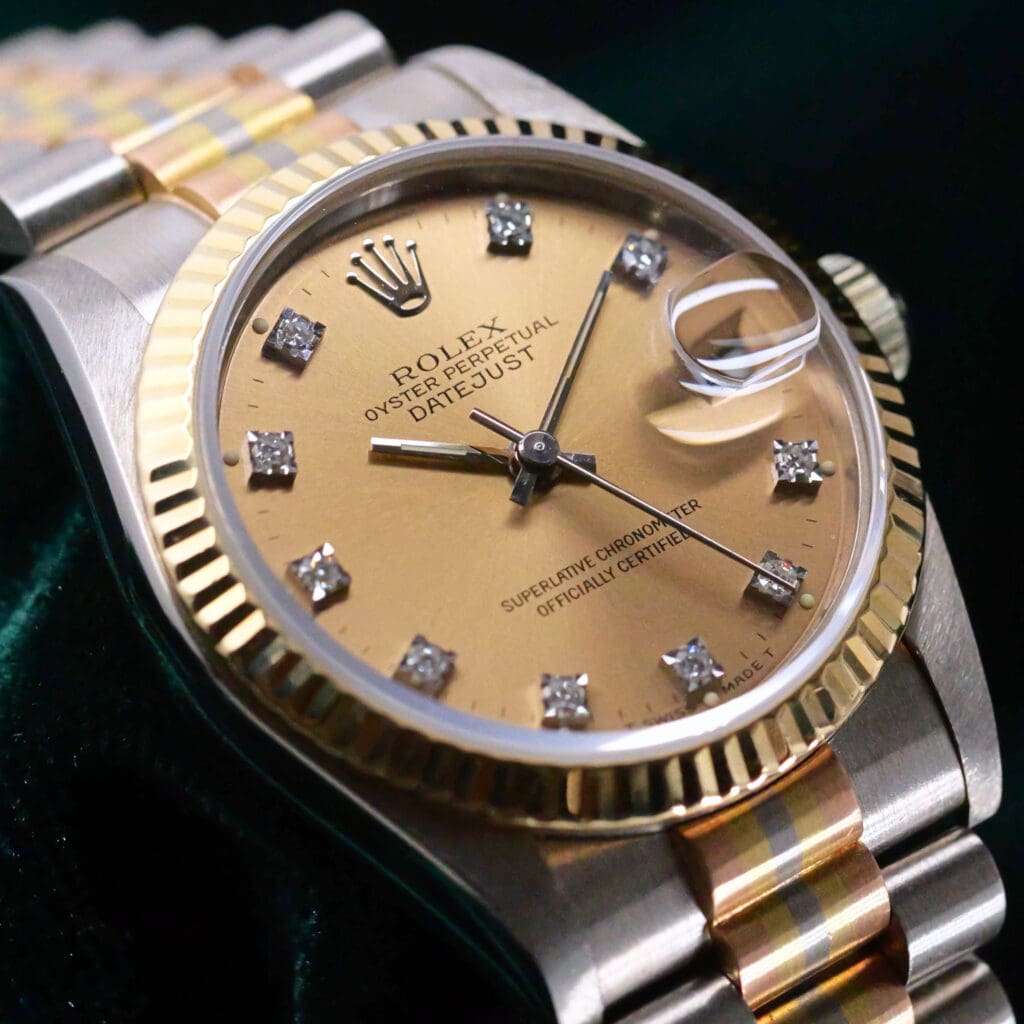
Rolex Datejust Champagne Diamond Markers Fluted Bezel Tridor President Bracelet 18k White Gold 31mm MINT CONDITION 68279B
Where to Buy Authentic Watches Online
There are a few legitimate online channels for a Hulk or a Sprite. Chrono24 aggregates dealer and private listings worldwide with an escrow option that holds your payment until the watch is verified. eBay covers many of these references under its Authenticity Guarantee, which routes eligible watches through a third-party check before delivery.
Grailzee runs enthusiast-focused auctions if you prefer a bidding format. Watch forums are worth a look too, though you take on more of the vetting yourself. For the wider view, our guide on where to buy a pre-owned watch covers the channels in depth.
We also buy, sell, and trade luxury watches, and the reason clients come to us instead of a big marketplace is the conversation before the decision. On a piece like the Hulk, where condition sets the price, we send tour videos of the actual watch, honest condition notes, and answers from someone who has had it in hand. You are not buying blind off a listing photo.
That shows up in our 4.9-star Google rating, built by buyers who wanted the details before they committed.
Not sure which one suits you? Tell us how you’ll really wear it, from daily rotation to real travel across time zones, and we’ll help you settle on the Hulk or the Sprite, then help you track down the right one.
Frequently Asked Questions
Can you dive with a Rolex Sprite? T
The Sprite handles swimming and daily wear but is not built for diving. Its 100m rating lacks the 300m depth, dive bezel, and Triplock sealing that make the Hulk a true tool. For actual dive use, the Submariner is the right watch.
Can you still buy the Sprite at retail?
Almost never. The Sprite is current production, but authorized-dealer allocation is thin and waitlists are long, so most buyers end up on the secondary market and pay a premium over the list price. That gap is why the pre-owned figures above matter more than the retail number.
Is the destro crown uncomfortable to wear?
For most people it is not, and it can be more comfortable than a standard layout. Worn on the left wrist as most owners do, the 9 o’clock crown faces away from the back of the hand instead of pressing into it. The bigger adjustment is visual, since the asymmetric dial takes a few days to feel normal.
Final Thoughts on the Rolex Hulk vs Sprite
The Rolex Hulk vs Sprite decision usually clears up once the watch moves from a purchase into a habit. Early on, you notice the green, the shape, and the thrill of something distinctive. That part is real, but it fades. Daily wear tells you more.
A few weeks in, a different test takes over. You notice which watch you reach for without thinking, and that is where preference turns into clarity.
In the end, the better watch is the one that still feels right when nothing special is happening. One last practical note: both run modern Rolex calibers, and Rolex’s service intervals run to roughly ten years, so budget a future service into either purchase rather than treating the sticker as the final cost.
999+ Timepieces Available
Explore Our Timepieces
Authenticated, unworn, and ready to ship worldwide.
Rolex · Audemars Piguet · Patek Philippe · Omega · Cartier · Richard Mille · Hublot · Tudor
Newly Listed
2026 NEW UNWORN Tudor Black Bay 58 GMT "Coke" Black Dial Black Burgundy Red Bezel Five-Link Stainless Steel Bracelet 39mm COMPLETE SET 7939G1A0NRU-0003
$7,385.00
Grand Seiko Heritage 60th Anniversary Limited Edition Blue Dial Stainless Steel 40mm MINT CONDITION COMPLETE SET SBGP007G
$4,268.00
Audemars Piguet Royal Oak Offshore Diver Grey Dial Blue Rubber Strap Stainless Steel 42mm MINT CONDITION COMPLETE SET 15720ST.OO.A009CA.01
$27,788.00
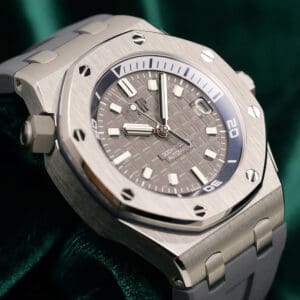
Audemars Piguet Royal Oak Offshore Diver Grey Dial Blue Inner Bezel Grey Rubber Strap Stainless Steel 42mm MINT CONDITION COMPLETE SET 15720ST.OO.A009CA.01
$27,788.00
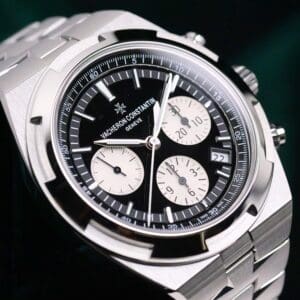
Vacheron Constantin Overseas Chronograph "Reverse Panda" Black Dial Silver Subdials Stainless Steel 42.5mm MINT CONDITION COMPLETE SET 5500V/110A-B481
$34,095.00

Rolex Sky-Dweller Black Dial 18K White Gold Fluted Bezel Oyster Bracelet Stainless Steel 42mm MINT CONDITION COMPLETE SET 336934-0007
$21,945.00

2026 Rolex Datejust Green Ombre Dial Smooth Bezel Jubilee Bracelet Stainless Steel 41mm MINT CONDITION COMPLETE SET 126300
$16,480.00

2026 NEW UNWORN Cartier Santos-Dumont Silver Dial Platinum Mesh Bracelet Platinum 31mm COMPLETE SET WGSA0124
$64,790.00

2026 Tudor Black Bay 58 Black Dial Jubilee Bracelet Stainless Steel 39mm MINT CONDITION COMPLETE SET 7939A1A0NU
$5,717.00

NEW UNWORN Rolex Submariner Date “Sub Date” Black Dial Black Ceramic Bezel Oyster Bracelet Stainless Steel 41mm COMPLETE SET 126610LN
$15,595.00
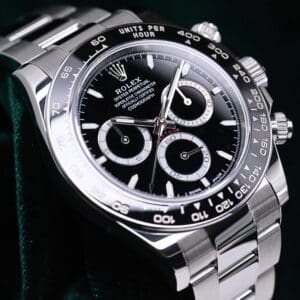
Rolex Cosmograph Daytona "Reverse Panda" Black Dial Black Ceramic Bezel Oyster Bracelet Stainless Steel 40mm MINT CONDITION COMPLETE SET 126500LN
$32,009.00
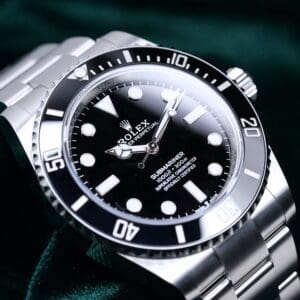
2026 NEW UNWORN Rolex Submariner No Date Black Dial Black Ceramic Bezel Oyster Bracelet Stainless Steel 41mm COMPLETE SET 124060
$15,219.00