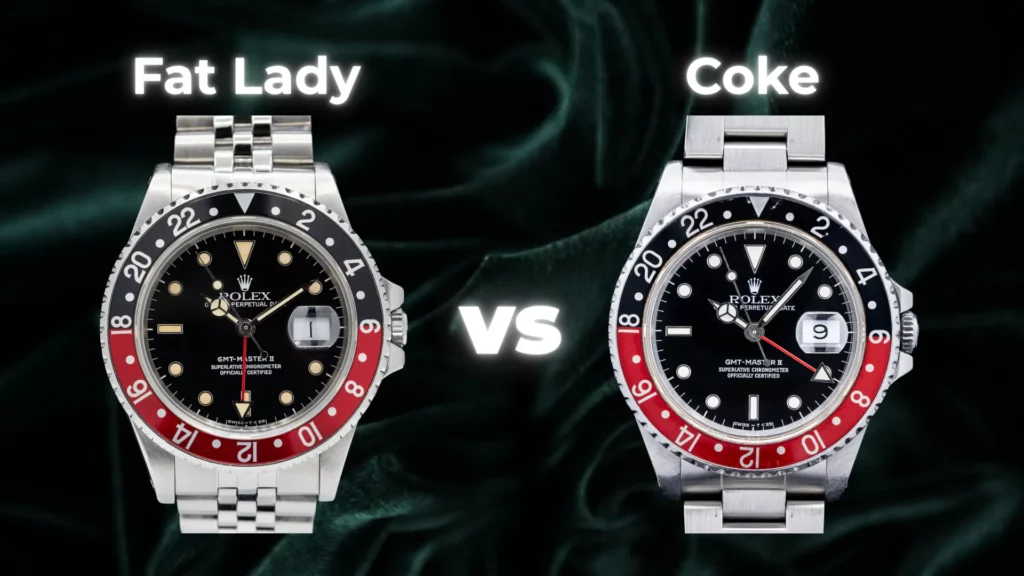
Two watches, one bezel color, and a debate that has run since 1989. The Rolex Fat Lady vs Coke question got sharper this year. In April 2026, Rolex quietly dropped the ceramic Pepsi and put nothing red-and-black in its place.
So the red bezel is now gone from the current steel lineup entirely. That leaves these two vintage references as the way into a red-and-black Rolex GMT. Same nickname, same insert, very different watches.
One is the original GMT-Master II, short-run and fixed in identity. The other is an 18-year follow-up with three bezel options, two bracelet generations, and far more supply. This guide covers the specs, the build differences, the 2026 shift, and what each one costs now. Read through before you decide.
What Changed in 2026
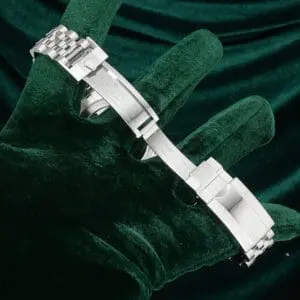
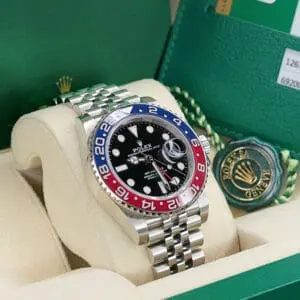
For the first time in the ceramic era, there is no red bezel anywhere in the current steel catalog. The configurator now shows only the Batman, the Bruce Wayne, and the Sprite. Most people expected a ceramic Coke to step in. It didn’t.
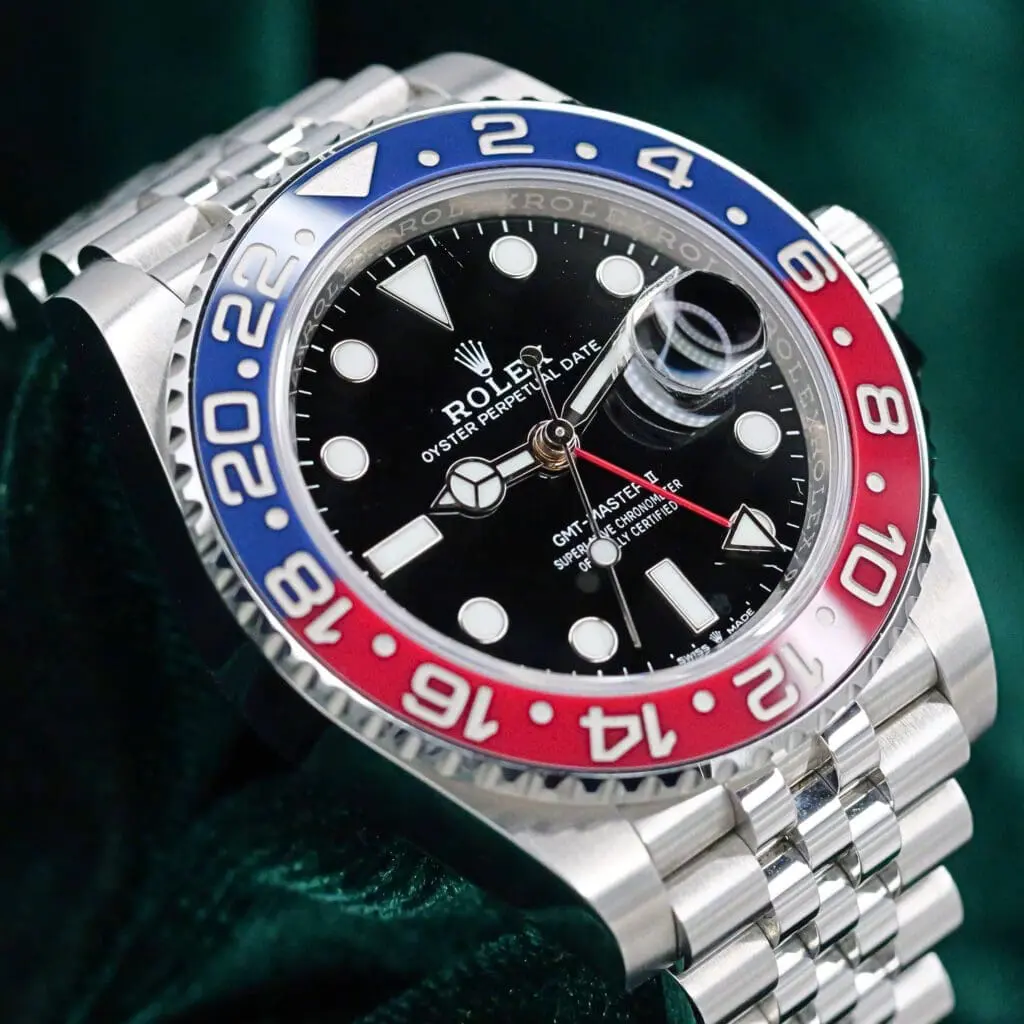
Rolex discontinued the ceramic Pepsi (ref. 126710BLRO) at Watches & Wonders 2026, confirmed on April 14, 2026. The white-gold Pepsi went with it. No Coke came back to fill the gap. If you want the two red bezels side by side, our Coke vs Pepsi breakdown covers how they differ.
That matters for these two watches. If you want a red-and-black Rolex GMT and you want it now, the 16760 and the 16710 are the only way in. Rolex did file a patent in 2022 for a red-and-black ceramic bezel, so a modern Coke may still come one day. Nothing is confirmed. Until then, vintage is the only door.
Rolex Fat Lady Overview

Rolex introduced the ref. 16760 in 1983 as the first GMT-Master II. It was built around the Caliber 3085, the first GMT movement with an independently adjustable local hour hand. The hour hand jumped in one-hour steps without disturbing the minute hand or the 24-hour hand. That single feature launched the whole GMT-Master II line.
The 3085 was bigger than anything before it, so the case had to grow. The lugs widened, the crown guards flared, and the profile thickened. Collectors called it the “Fat Lady.” Some call it the “Sophia Loren.” Same watch, both names nod to the fuller case.
The 16760 was also the first GMT to get a sapphire crystal, white gold index surrounds, and the Coke red-and-black bezel. Production ran for roughly five years. Every example left the factory the same way: Coke insert, stainless steel case, Tritium lume. No precious metal, no bezel alternatives, no variation.
Notable references of the Fat Lady:
- Reference: 16760
- Production: Approximately 1983 to 1988
- Dial: Black, white gold index surrounds, Tritium lume throughout
- Bezel: Bidirectional rotating aluminum, Coke (red/black) only
- Case: 40mm, ~12.6mm thick, ~47.6mm lug-to-lug, stainless steel
- Bracelet: Oyster or Jubilee, hollow end links, stamped clasp
- Movement: Caliber 3085, automatic, 27 jewels
- Power Reserve: ~50 hours
- Water Resistance: 100 meters
Rolex Coke Overview
Rolex launched the ref. 16710 in 1989 to replace the Fat Lady. Same GMT-Master II function, slimmer case, more choice. The Caliber 3185 replaced the 3085, shed roughly 0.6mm of case height, and dropped the adhesive the older movement used. The crown guards narrowed to match the Submariner of the day.
For the first time, a GMT-Master II could be ordered with a Coke, Pepsi, or all-black insert. The inserts are aluminum and user-swappable, so a single 16710 can wear any of the three looks.
A lot changed across the 18-year run. Lume went from Tritium to Luminova around 1997, then to SuperLuminova around 2000. Solid end links replaced hollow ones around 2000. Lug holes disappeared around 2002, and those later cases are called the 16710T.
The final 2005-to-2007 examples got the Caliber 3186, which improved magnetic resistance and cleaned up 24-hour hand wobble. The 16710 was discontinued in 2007. It is still the last Coke GMT-Master II Rolex has ever made.
Notable references of the Coke:
- Reference: 16710 / 16710T (post-~2002)
- Production: 1989 to 2007
- Dial: Black, white gold index surrounds; Tritium (pre-~1997), Luminova (~1997-1999), SuperLuminova (~2000 onward)
- Bezel: Bidirectional rotating aluminum; Coke, Pepsi, or All-Black
- Case: 40mm, ~12.0mm thick, ~47.1mm lug-to-lug, stainless steel
- Bracelet: Oyster or Jubilee; hollow end links (early) or solid end links (~2000 onward); stamped clasp
- Movement: Caliber 3185 (most production); Caliber 3186 (~2005-2007)
- Power Reserve: ~50 hours
- Water Resistance: 100 meters
Rolex Fat Lady vs. Coke: Most Notable Differences
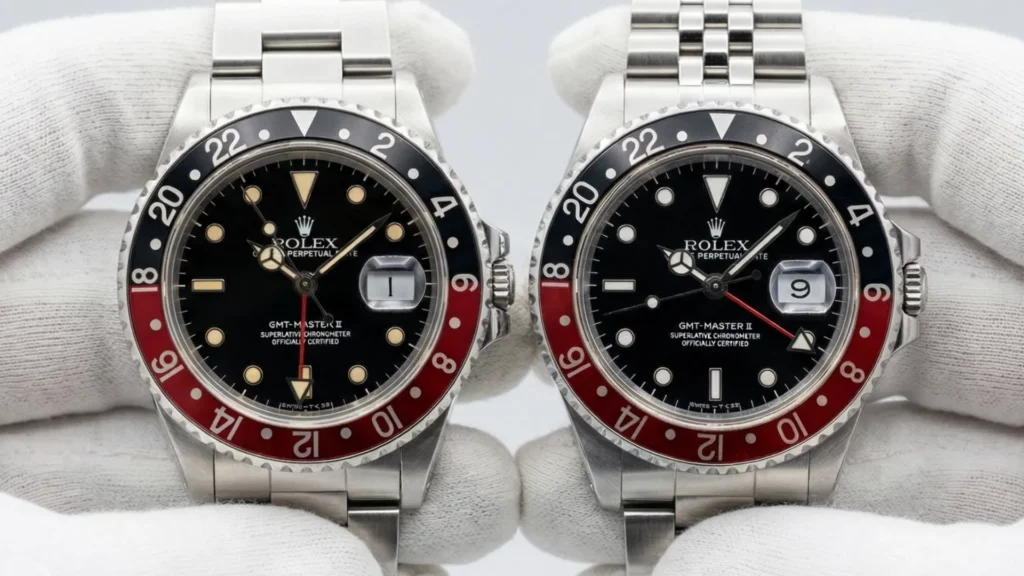
Both watches share the same 40mm diameter, water resistance, dial layout, and GMT-II function. The real gaps come down to five things.
1. Case Thickness
The Fat Lady runs about 12.6 to 12.7mm thick. It sits taller on the wrist, with wider crown guards and squarer lugs. That depth came straight from the Caliber 3085, which needed more room than any GMT movement before it.
The Coke sits at roughly 12.0mm, around 0.6mm slimmer, with trimmer crown guards and a flatter profile. Under a shirt cuff, you feel that difference every day. The Fat Lady favors anyone who likes wrist presence. The Coke suits anyone who wants the watch to slip away.
2. Movement Construction
The Fat Lady’s Caliber 3085 uses an industrial adhesive to fix the hairspring to the regulator stud. It has held up across four decades. Still, glue inside a luxury movement is a known sticking point for some buyers.
The Coke’s Caliber 3185 dropped that adhesive for a cleaner, slimmer build. Late examples carry the Caliber 3186, with better magnetic resistance and less hand wobble. Both are a step forward from the 3085. This one favors the buyer who wants the more refined movement over the historical first.
More GMT-Master II
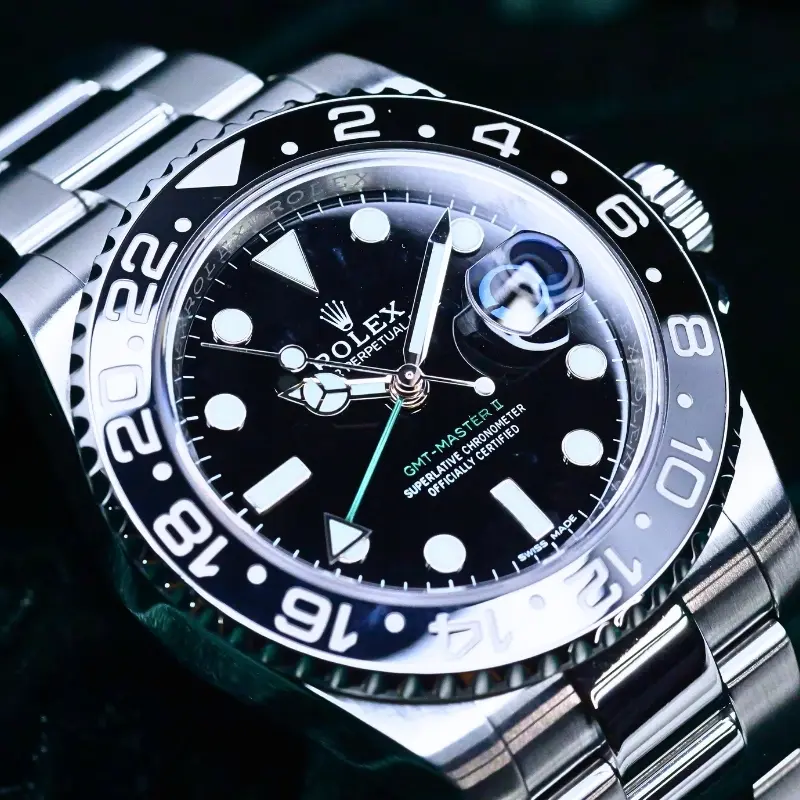
Rolex GMT-Master II Green Arrow Black Dial Black Cerachrom Bezel Oyster Bracelet Stainless Steel 40mm MINT CONDITION COMPLETE SET 116710LN-0001
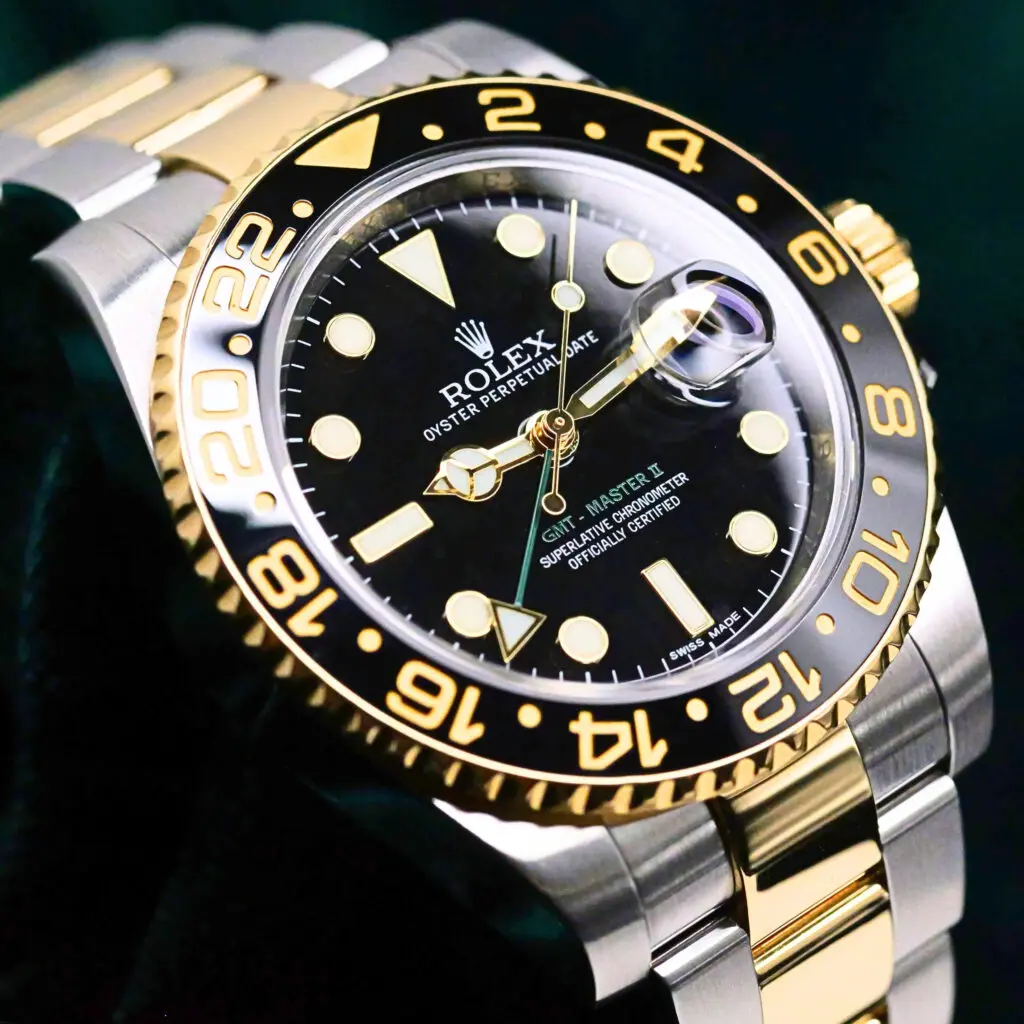
Rolex GMT-Master II “Green Arrow” Black Dial Black Ceramic Bezel Oyster Bracelet Two-Tone 18K Yellow Gold Stainless Steel 40mm MINT CONDITION COMPLETE SET 116713LN
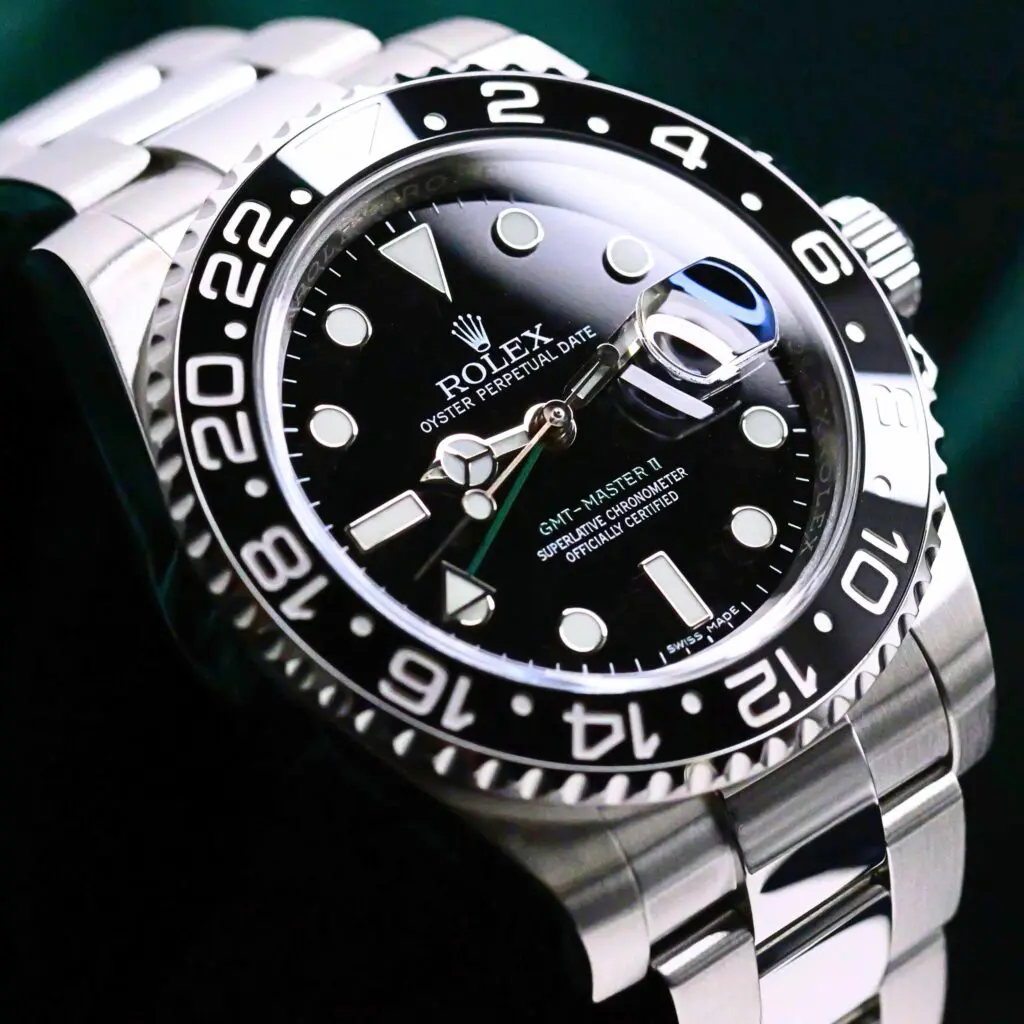
Rolex GMT-Master II "Green Arrow" Black Dial Black Ceramic Bezel Oyster Bracelet Stainless Steel 40mm MINT CONDITION COMPLETE SET 116710LN
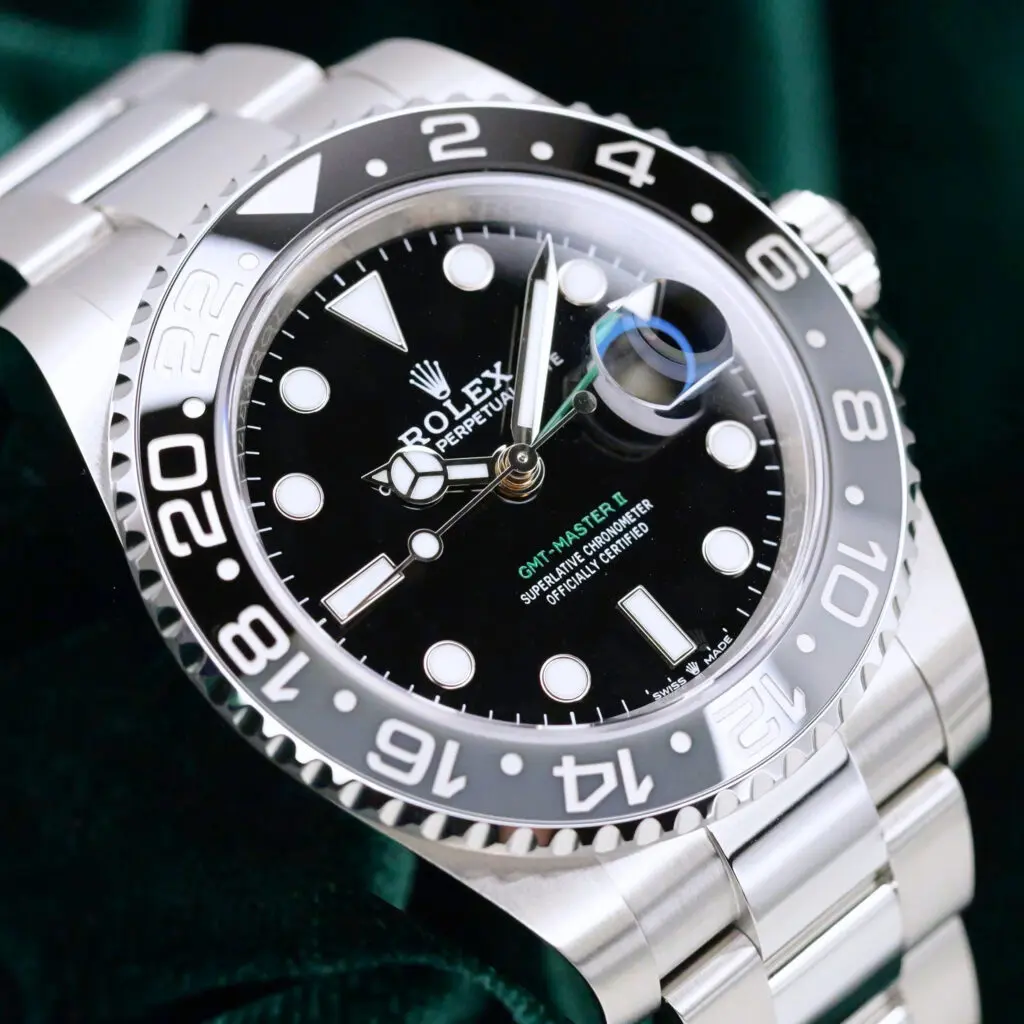
2026 NEW UNWORN Rolex GMT-Master II Bruce Wayne Black Dial Grey and Black Ceramic Bezel Stainless Steel Oyster Bracelet 40mm COMPLETE SET 126710GRNR-0004
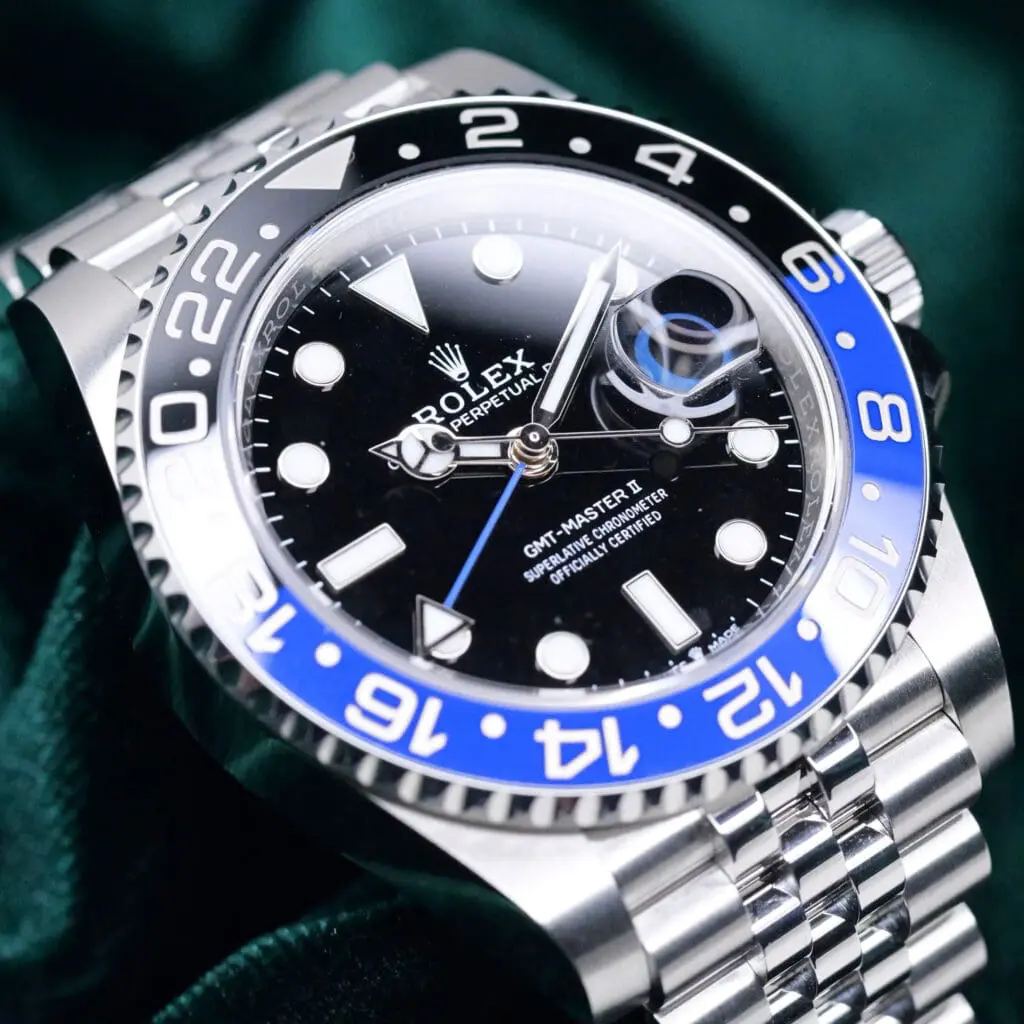
2025 NEW UNWORN Rolex GMT-Master II "Batgirl" Black Dial Blue Black Ceramic Bezel Jubilee Bracelet Stainless Steel 40mm COMPLETE SET 126710BLNR-0002
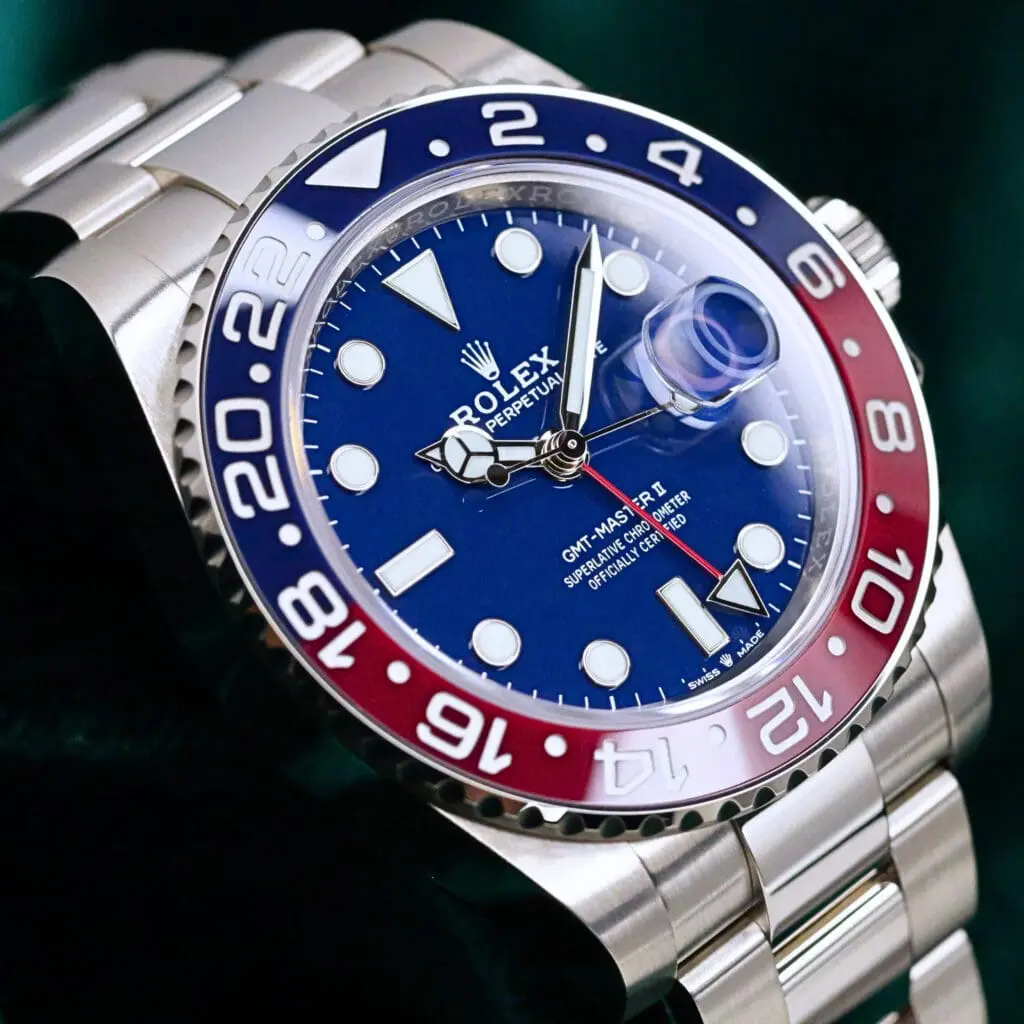
Rolex GMT-Master II "Pepsi" Blue Dial Blue Red Ceramic Bezel Oyster Bracelet 18K White Gold 40mm MINT CONDITION COMPLETE SET 126719BLRO
3. Bezel Options
The Fat Lady came one way: Coke, and only Coke. No Pepsi, no all-black, no variation across the entire run. Every piece wears the same red-and-black insert.
The Coke shipped with a choice of Coke, Pepsi, or all-black, and the aluminum insert swaps out easily. A Coke owner can change the whole look of the watch. A Fat Lady owner cannot. This favors flexibility on the 16710 and single-configuration purity on the 16760.
4. Bracelet End Links
The Fat Lady has hollow end links for the full run. The bracelet sits against the lug with a small gap and a light rattle. That was normal for 1980s Rolex sports watches, and vintage buyers tend to accept it.
The Coke moved to solid end links around 2000. The metal runs flush to the bezel edge and the watch feels denser on the wrist. Pre-2000 Cokes share the same hollow build as the Fat Lady, so the year matters here. Both use a stamped clasp with no Oysterlock. Torn between an Oyster and a Jubilee? Our Jubilee vs Oyster comparison weighs the two.
5. Lume Material
The Fat Lady used Tritium throughout. After 35 to 40 years, the plots turn a cream-to-golden patina. The glow is long gone, but that aged look is exactly what many vintage buyers are chasing.
The Coke ran through three lume types: Tritium (pre-1997), Luminova (1997 to 1999), and SuperLuminova (2000 on). The dial text tells you which. “Swiss T<25” means Tritium, “Swiss” means Luminova, and “Swiss Made” means SuperLuminova. Want a watch that still lights up at night? The later Coke is the one.


Price and Market Demand
Both references are discontinued, so there are no authorized dealers and everything trades on the secondary market. And the 2026 Pepsi exit gave the whole red-bezel category a fresh push, since these are now the only red GMTs money can buy.
Start with the entry point. A solid 16710 Coke typically runs somewhere in the $11,000 to $14,000 range, depending on condition, year, and delivery contents. That makes it the more accessible door into a Coke GMT.
A clean 16760 Fat Lady sits higher. WatchCharts puts its market price around $13,600, with most examples trading between roughly $12,000 and $15,200.
Now the gap. The Fat Lady is the scarcer, older watch, so it costs more to buy but moves slower to sell. Configuration drives the ceiling on both. On the Fat Lady, premiums go to full sets with an unpolished case, a vivid insert, and an original Tritium dial. The rare “spider dial,” where the lacquer has cracked into a web pattern, trades above standard pieces.


On the Coke, the money follows the late details: post-2000 solid end links, an unfaded bezel, a full set, and a late Caliber 3186. A Tritium-dial early Coke pulls vintage interest of its own.
Here is what the pricing behavior tells you. The Coke is one of the most liquid vintage Rolex sports references going, so it sells fast and holds its value well. The Fat Lady is a thinner, slower market. It rewards patience on the way in and asks for patience on the way out. If you are buying the Fat Lady, treat it as a watch to keep, not a quick flip.
Side-by-Side Comparison (At a Glance)
Both watches share the 40mm case, the GMT-II function, and the depth rating. The separation is in build and market behavior.
| Specification | Fat Lady | Coke |
| Reference | 16760 | 16710 / 16710T |
| Production | ~1983 to 1988 | 1989 to 2007 |
| Case Size | 40mm | 40mm |
| Case Thickness | ~12.6-12.7mm | ~12.0mm |
| Lug-to-Lug | ~47.6mm | ~47.1mm |
| Case Material | Stainless steel | Stainless steel |
| Bezel Options | Coke only | Coke, Pepsi, All-Black |
| Movement | Cal. 3085 | Cal. 3185 / Cal. 3186 (late) |
| Power Reserve | ~50 hours | ~50 hours |
| End Links | Hollow throughout | Hollow (early) / Solid (~2000+) |
| Lume | Tritium throughout | Tritium / Luminova / SuperLuminova |
| Crystal | Sapphire with Cyclops | Sapphire with Cyclops |
| Water Resistance | 100m | 100m |
| Original Retail | ~$2,900 | ~$5,750 (2007) |
| Current Market Price | ~$13,600 | ~$11,000-$14,000 |
Which Rolex Should You Choose?
The call comes down to the kind of collector you are and how you plan to wear it.
Choose the Ref. 16760 “Fat Lady” if:
- You want the first GMT-Master II ever made
- You like single-configuration purity, Coke only, no swaps
- You are fine with hollow end links and a vintage bracelet feel
- You want Tritium patina on the dial and hands
- You want a thicker, more assertive case on the wrist
- You are buying to keep, not to resell
Choose the Ref. 16710 “Coke” if:
- You want the last Coke GMT Rolex ever made
- You want a slimmer case for daily wear
- You want solid end links (look for post-2000 examples)
- You want real nighttime legibility from SuperLuminova
- You want the option to run Coke, Pepsi, or black
- You want a watch that is easy to sell if your plans change
The tie-breaker is simple. Want the historical first and don’t mind the slower market? Take the Fat Lady. Want the easier daily wearer and the easier resale? Take the Coke. Still mapping the wider family? Our Rolex GMT-Master II buying guide shows where every reference sits.
Browse Our Rolex Collection
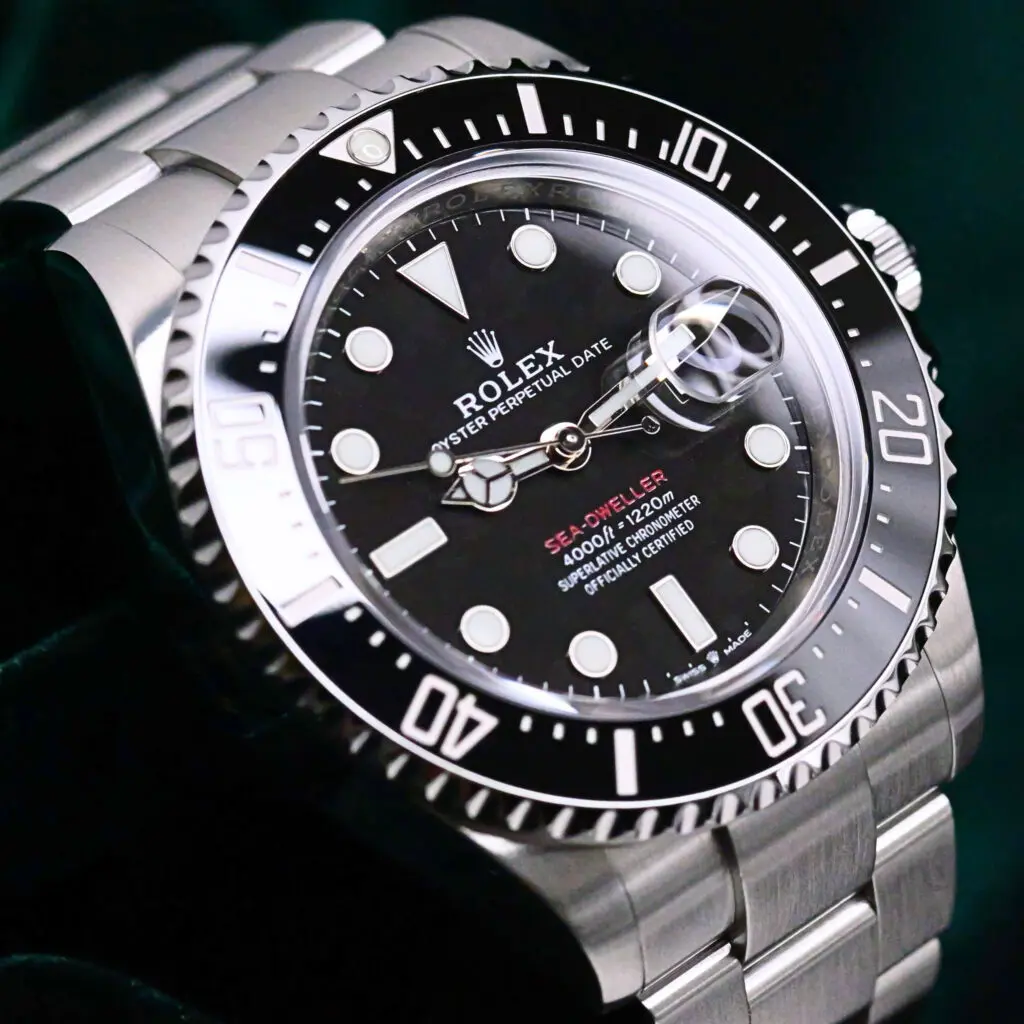
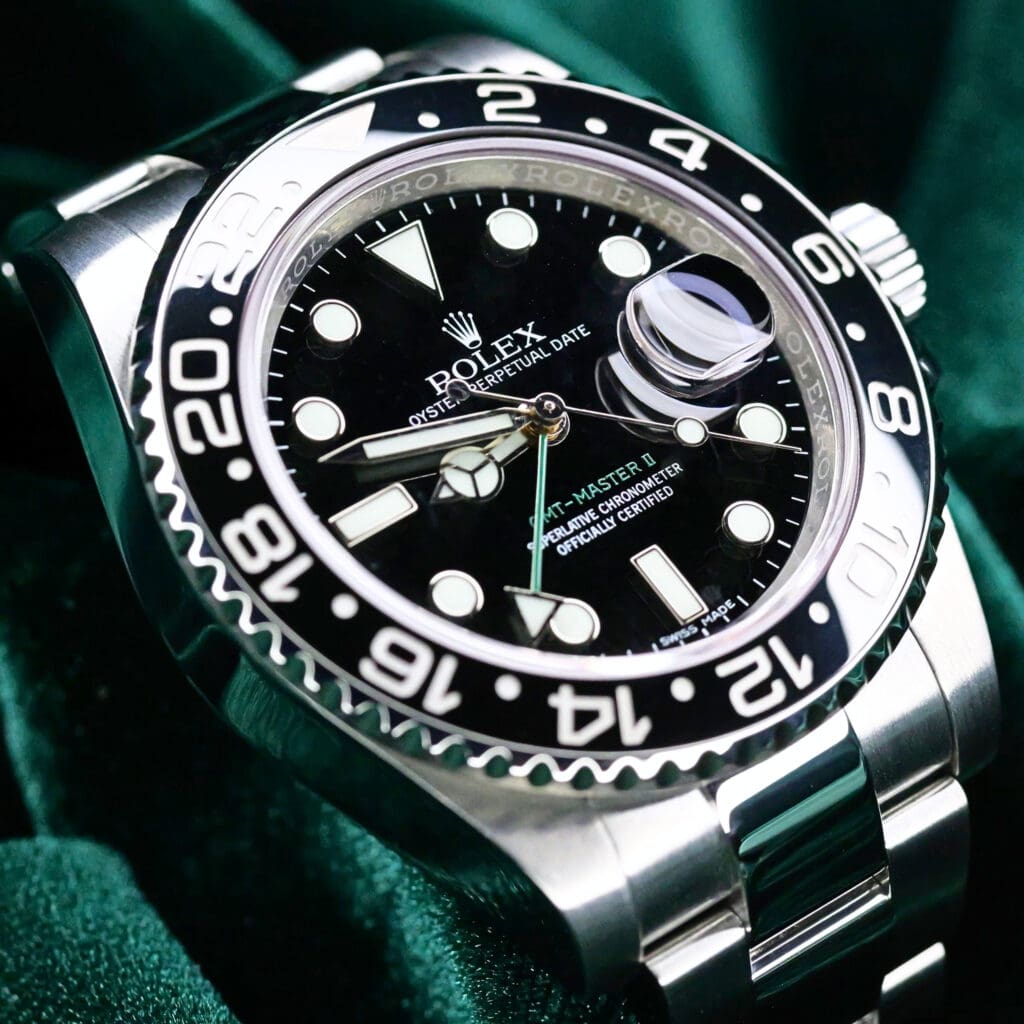
Rolex Sea-Dweller "Red Letter" Black Dial Black Cerachrom Bezel Oyster Bracelet Stainless Steel 43mm MINT CONDITION COMPLETE SET 126600
Rolex GMT-Master II “Green Arrow” Black Dial Black Ceramic Bezel Oyster Bracelet Two-Tone 18K Yellow Gold Stainless Steel 40mm MINT CONDITION COMPLETE SET 116713LN
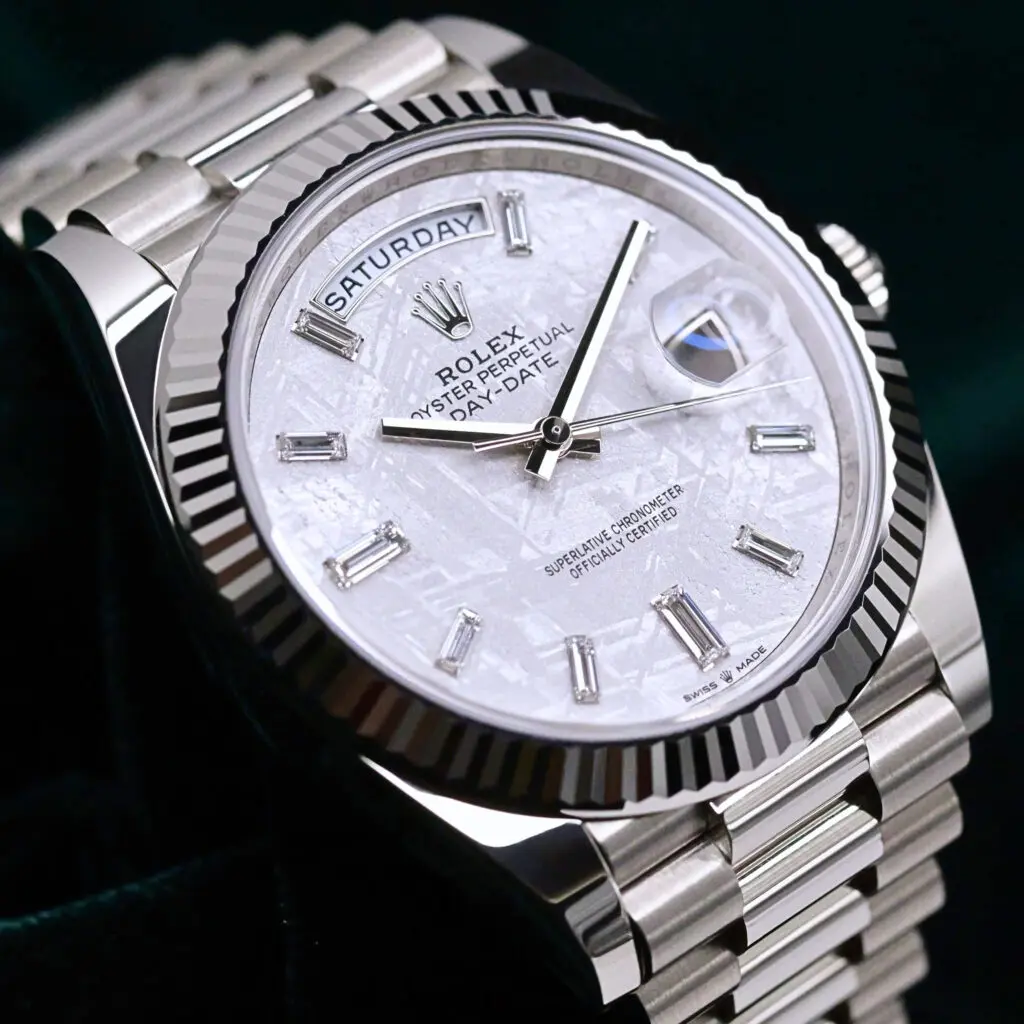
Rolex Day-Date Meteorite Baguette Diamond Dial Fluted Bezel President 18K White Gold 40mm MINT CONDITION COMPLETE SET 228239
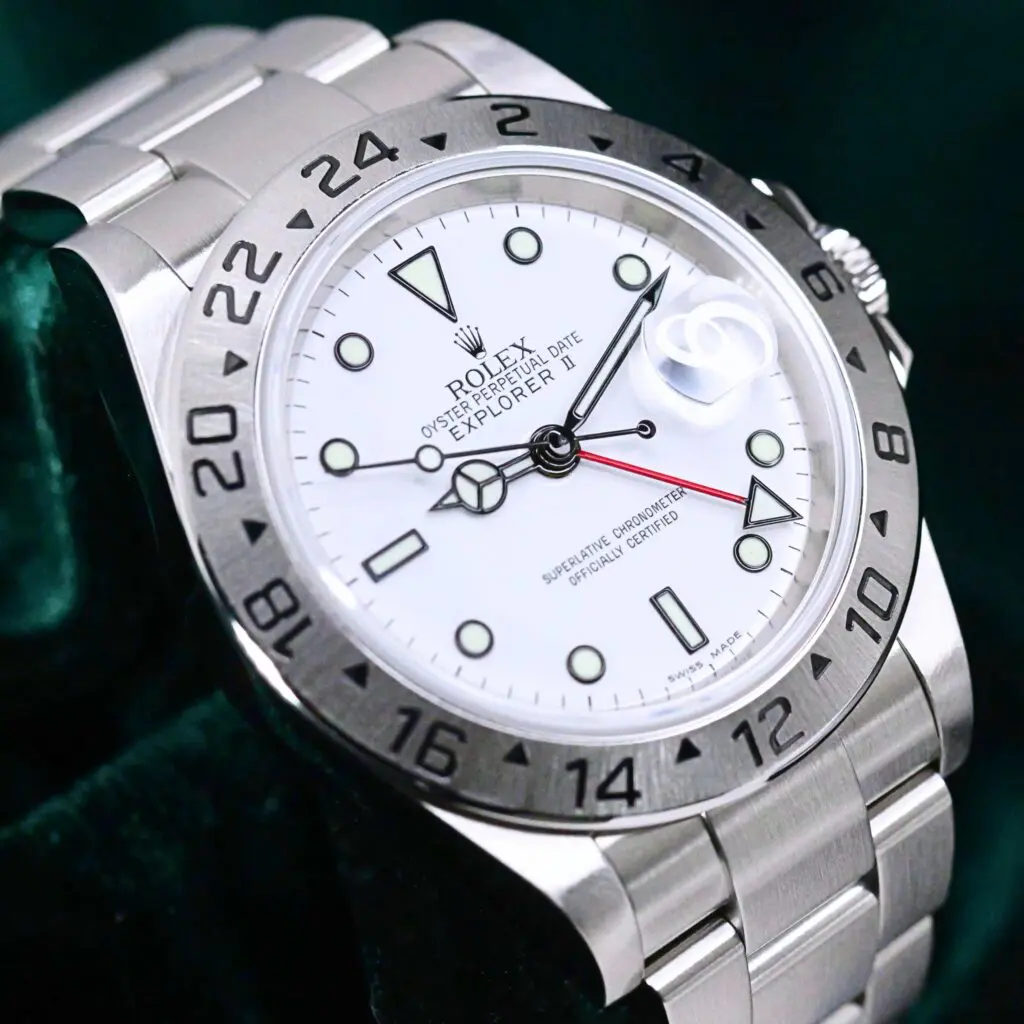
Rolex Explorer II "Polar" White Dial Oyster Bracelet Stainless Steel 40mm MINT CONDITION COMPLETE SET 16570
Rolex GMT-Master II "Green Arrow" Black Dial Black Ceramic Bezel Oyster Bracelet Stainless Steel 40mm MINT CONDITION COMPLETE SET 116710LN
2026 NEW UNWORN Rolex Sky-Dweller Bright Blue Dial 18K White Gold Fluted Bezel Jubilee Bracelet Stainless Steel 42mm COMPLETE SET 336934-0006
Where to Buy Authentic Watches Online
A few legitimate channels sell vintage Coke GMTs. Chrono24 is the biggest marketplace, with an escrow option and a wide spread of both references, so you can compare years and conditions in one place. eBay has real vintage stock too, and its Authenticity Guarantee program inspects higher-value watches before they reach you.
Watch forums like Rolex Forums run their own sales sections, though you are on your own for authentication there. If you go that route, our guide to spotting a fake GMT-Master II is worth reading first.
We also buy, sell, and trade luxury watches, and the reason people come to us over a big listing is the walkthrough. Before you commit, we send tour videos of the actual watch, not stock photos, plus honest condition notes and a real conversation about the exact piece.
On a 40-year-old Fat Lady, where an unpolished case and an original dial decide the price, that close look matters. That approach is behind our 4.9-star Google rating.
If you want that kind of walkthrough on a specific Fat Lady or Coke, reach out and we’ll line up a few options that match what you’re after.
Final Thoughts on Rolex Fat Lady vs Coke
Here’s the thing about these two. They wear the same red-and-black bezel, but they ask different things of an owner. The Fat Lady is a watch you settle into for the long haul, a piece of Rolex history you stop trying to price and just wear. The Coke is the easier companion, lighter on the wrist and easier to move on from if life changes.
And the ground shifted this year. With the ceramic Pepsi gone and no Coke to replace it, the red bezel now lives only in the past. That gives both of these a pull they didn’t have a year ago. Buy the one that fits your wrist and your patience, look hard at the case and the dial before you pay, and either one will sit right for years.
999+ Timepieces Available
Explore Our Timepieces
Authenticated, unworn, and ready to ship worldwide.
Rolex · Audemars Piguet · Patek Philippe · Omega · Cartier · Richard Mille · Hublot · Tudor
Newly Listed
2026 NEW UNWORN Vacheron Constantin Historiques 222 Blue Dial Stainless Steel 37mm COMPLETE SET 4200H/222A-B934
$58,795.00
Rolex Yacht-Master Rolesium Platinum Dial Platinum Bezel Oyster Stainless Steel 40mm MINT CONDITION COMPLETE SET 16622
$14,690.00

Audemars Piguet Royal Oak Offshore Chronograph “Vampire” Black Dial Red Accents Black Ceramic Bezel Stainless Steel 42mm MINT CONDITION 26470SO.OO.A002CA.01
$34,649.00
Rolex Sea-Dweller "Red Letter" Black Dial Black Cerachrom Bezel Oyster Bracelet Stainless Steel 43mm MINT CONDITION COMPLETE SET 126600
$13,120.00
2026 NEW UNWORN Bvlgari Serpenti Tubogas Studs Capsule Limited Edition Green Dial Diamond Bezel Steel & 18k Yellow Gold 35mm COMPLETE SET 104360
$24,255.00
Tag Heuer Monaco Chronograph “Dark Lord” Special Edition Black Dial Black Leather Strap DLC Titanium 39mm MINT CONDITION COMPLETE SET CBL2180.FC6497
$8,135.00
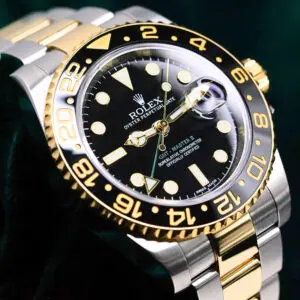
Rolex GMT-Master II “Green Arrow” Black Dial Black Ceramic Bezel Oyster Bracelet Two-Tone 18K Yellow Gold Stainless Steel 40mm MINT CONDITION COMPLETE SET 116713LN
$15,740.00
Rolex Day-Date Meteorite Baguette Diamond Dial Fluted Bezel President 18K White Gold 40mm MINT CONDITION COMPLETE SET 228239
$78,629.00
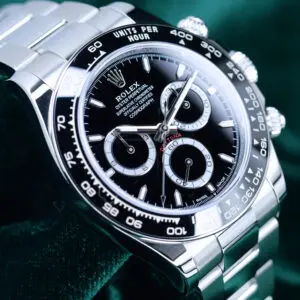
2026 Rolex Cosmograph Daytona Black Dial Black Ceramic Bezel Oyster Bracelet Stainless Steel 40mm MINT CONDITION COMPLETE SET 126500LN
$33,594.00
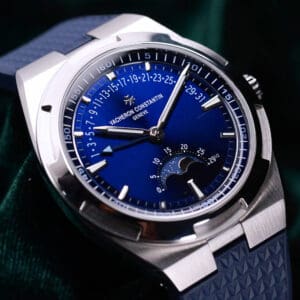
2025 Vacheron Constantin Overseas Moonphase Retrograde Date Blue Dial Blue Rubber Strap Stainless Steel 41mm MINT CONDITION COMPLETE SET 4000V/210A-B911
$52,800.00
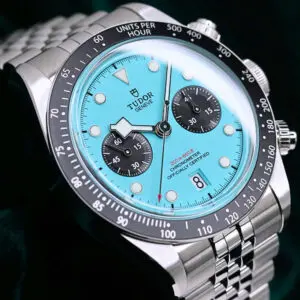
2025 Tudor Black Bay Chrono "Flamingo Blue" Turquoise Dial Black Bezel Stainless Steel 41mm MINT CONDITION COMPLETE SET 79360N-0024
$10,494.00
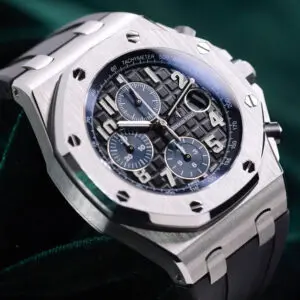
Audemars Piguet Royal Oak Offshore Chronograph "Batman" Black Dial Blue Accents Black Rubber Strap Stainless Steel 42mm MINT CONDITION COMPLETE SET 26470ST.OO.A028CR.01
$25,715.00