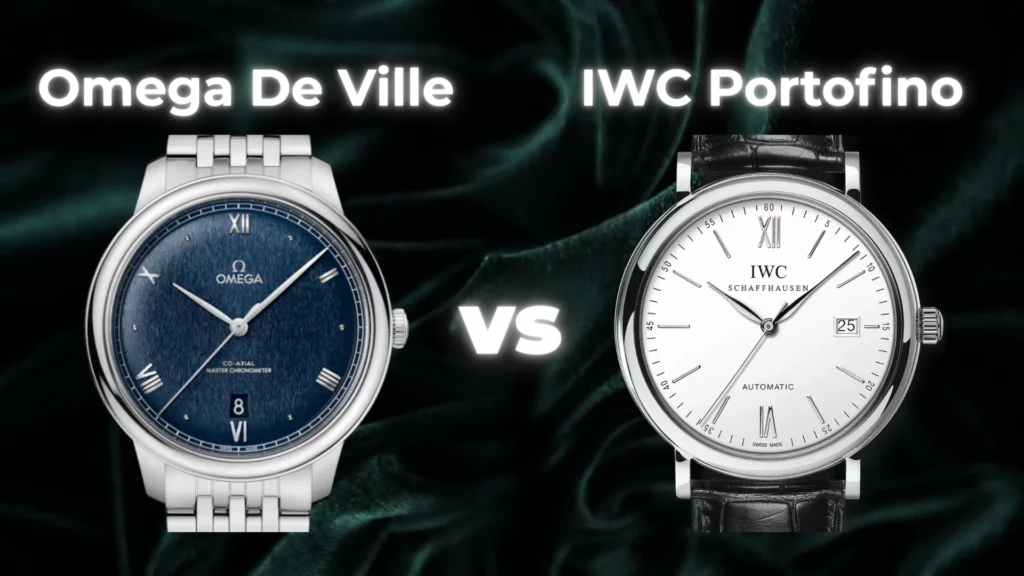
If you are looking for a refined Swiss dress watch, the Omega De Ville and IWC Portofino almost always end up on the same shortlist. Both sit in polished steel cases with clean dials, and both carry the kind of quiet credibility that works in a boardroom or at a formal dinner.
The Omega De Ville vs IWC Portofino decision is one of the most common in this category, and the differences are more concrete than most comparisons let on.
This article breaks down exactly where they differ, from the movement inside to the profile on the wrist, so you can make a clear call.
Omega De Ville Background

The De Ville name goes back to 1960, when Omega used it to describe slim dress variants within the Seamaster family. It became its own independent collection in 1967, built to bring Omega’s technical standards into formal wear.
The third generation launched in 2022 with an upgrade to the Cal. 8800 series across all mechanical models, each METAS-certified. The case was redesigned, new dial colors were added, and sizes now run from 27.5mm to 42mm.
The signature details remain: the triple-apple bassine case shape, a full Roman numeral chapter ring, and alternating cabochon indexes. The Cal. 8800 delivers 15,000 gauss anti-magnetic resistance, a silicon balance spring, and a 55-hour power reserve.
For 2026, Omega added the De Ville Mini Trésor in stainless steel and Moonshine gold, a smaller-cased addition to the same dress collection. It sits outside the three references below, but it’s a sign Omega keeps investing in this line rather than letting it coast on the Gen 3 redesign.
On the wrist, the bassine case and cabochon indexes give the dial real depth under overhead light, catching a highlight that a flat dial doesn’t. That layered look is what makes the De Ville read as the more formal of the two side by side.
Most popular references of the Omega De Ville:
- 434.10.40.20.03.001
- 434.13.41.21.10.001
- 434.13.40.20.03.001
IWC Portofino Background

Portofino takes its name from a small village on the Italian Riviera. IWC introduced the collection in 1984 as a counterpoint to its more utilitarian lines, a dress watch with restrained proportions, clean dials, and a daily-wear character. It sits alongside IWC’s better-known Pilot and Portugieser collections.
The Portofino is built around a 40mm stainless steel case at 9.3 to 9.5mm thick, powered by Cal. 35111, an IWC-spec movement based on the Sellita SW300-1. The dial uses Roman numerals at 12 and 6, baton indexes for the remaining hours, feuille hands, and a date at 3 o’clock.
IWC has expanded the family to include the Moonphase, Pointer Date, Hand-Wound Eight Days, and Chronograph. The straight lug design runs across all of them and keeps the case flat on the wrist.
At Watches and Wonders 2026, IWC introduced the Portofino Automatic Day & Night 34 Le Petit Prince, the collection’s first tie-in with that partnership. It’s a smaller, dressier reference aimed at a different buyer than the three below, but it confirms IWC hasn’t parked Portofino as a legacy line.
On the wrist, the payoff of that flat 9.5mm case shows up the moment you slide a cuff over it. Where a thicker dress watch catches on the shirt fabric, the Portofino slips through without a snag.
Most popular references of the IWC Portofino:
- IW356501
- IW356502
- IW356504
Omega De Ville vs IWC Portofino: Most Notable Differences

Both watches share the same dress watch category, but they are built differently. Each comparison below reflects a real tradeoff for the buyer.
1. Movement Certification
The De Ville runs Cal. 8800, an in-house Co-Axial movement certified to METAS Master Chronometer standards. It operates at 25,200 vph, holds a 55-hour power reserve, uses a silicon balance spring, and resists magnetic fields up to 15,000 gauss. METAS tests the fully assembled watch, which is a stricter standard than COSC alone.
The Portofino runs Cal. 35111, built on a Sellita SW300 base that IWC finishes to its own spec. It runs at 28,800 vph with a 42-hour power reserve. There is no independent certification and no published magnetic resistance rating. The movement is reliable but it is not an in-house design.
2. Dial Layout
The De Ville uses a full Roman numeral chapter ring with alternating cabochon indexes. Some variants add a sub-seconds subdial at 9 o’clock, which creates a more layered, traditionally formal dial. Legibility is adequate, though on smaller sizes the numerals can feel crowded.
The Portofino uses Roman numerals only at 12 and 6, slim baton indexes at the remaining hours, and a large central sweep seconds hand. The date sits at 3 o’clock. The dial has more open space, the feuille hands have less competition, and the overall result reads faster at a glance.
Related Models from Majestix
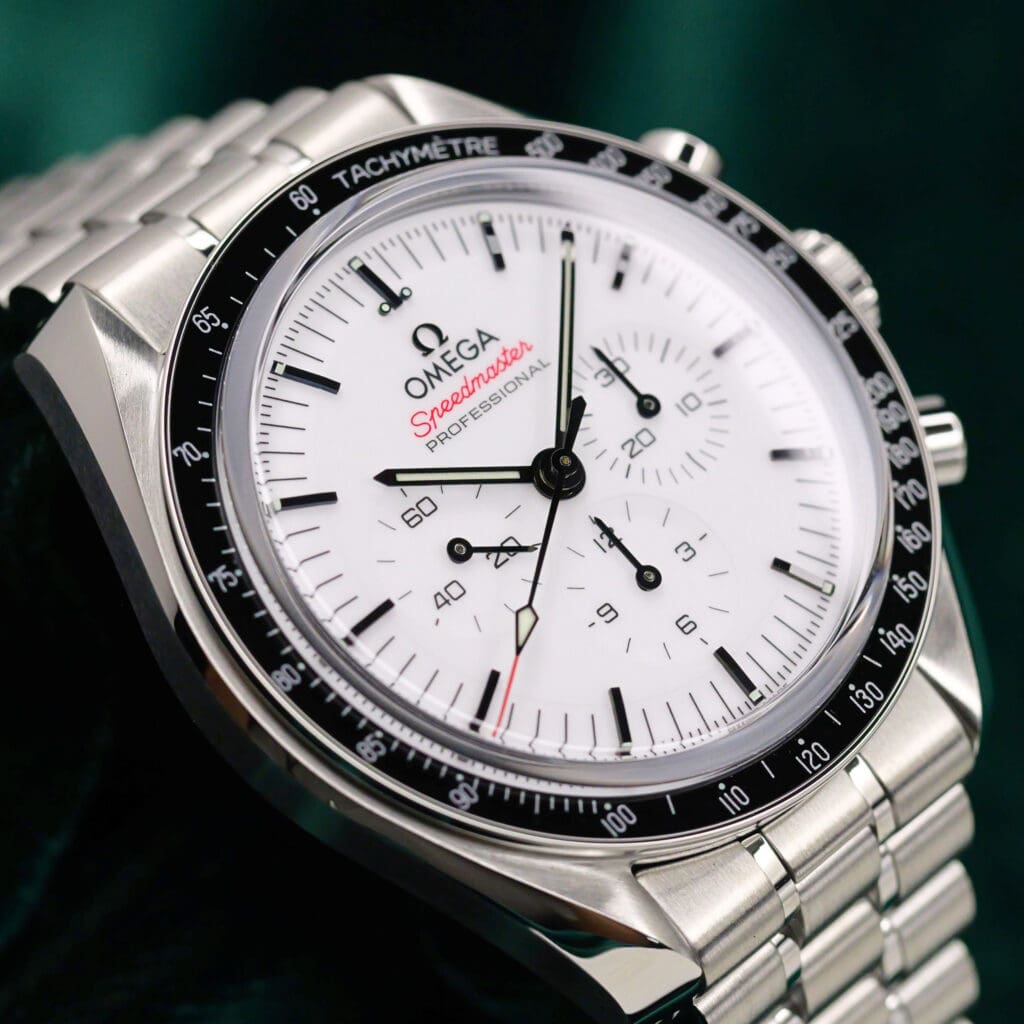
2026 NEW UNWORN Omega Speedmaster Moonwatch Professional White Dial Stainless Steel 42mm COMPLETE SET 310.30.42.50.04.001
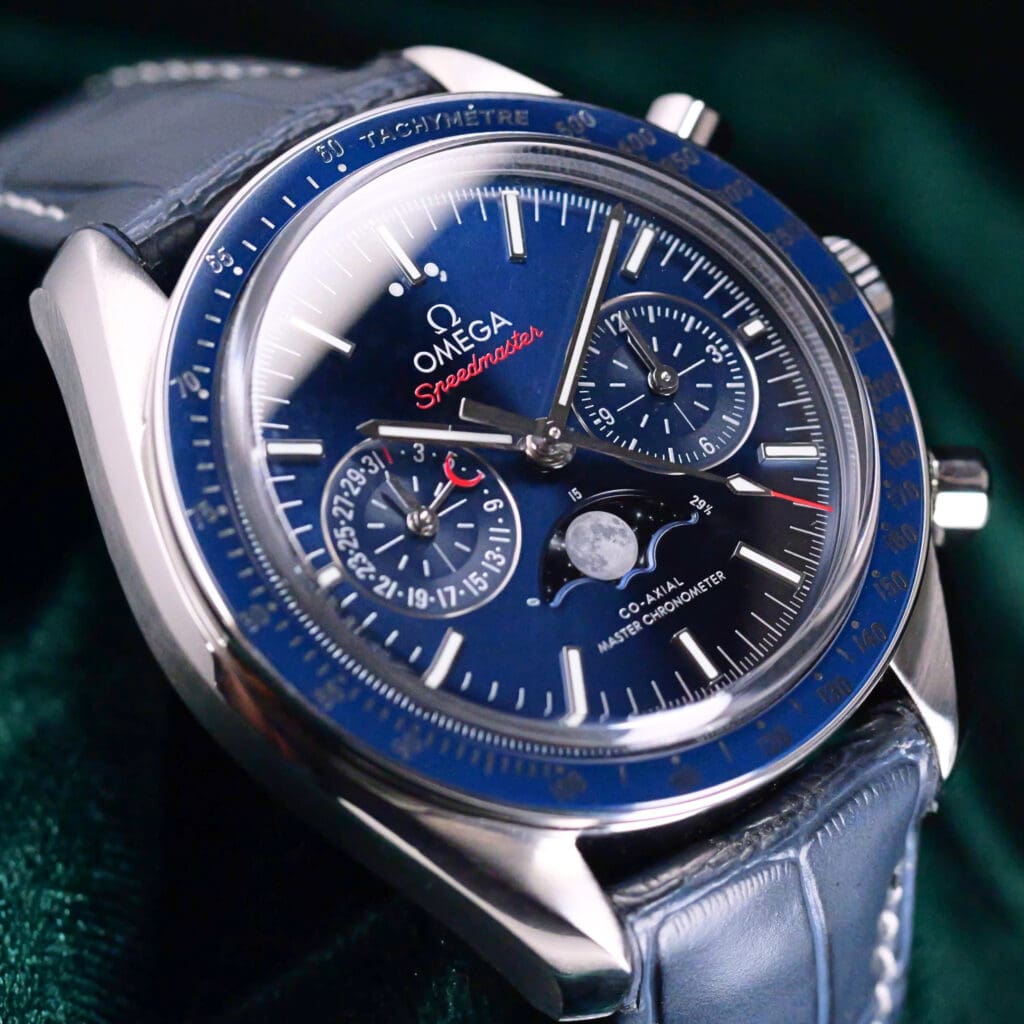
Omega Speedmaster Moonphase Blue Dial Blue Leather Strap Stainless Steel 44.25mm MINT CONDITION COMPLETE SET 304.33.44.52.03.001

Omega Speedmaster "Orbis Edition" 38mm Blue Dial Blue Bezel Stainless Steel Bracelet MINT COMPLETE SET 324.30.38.50.03.002
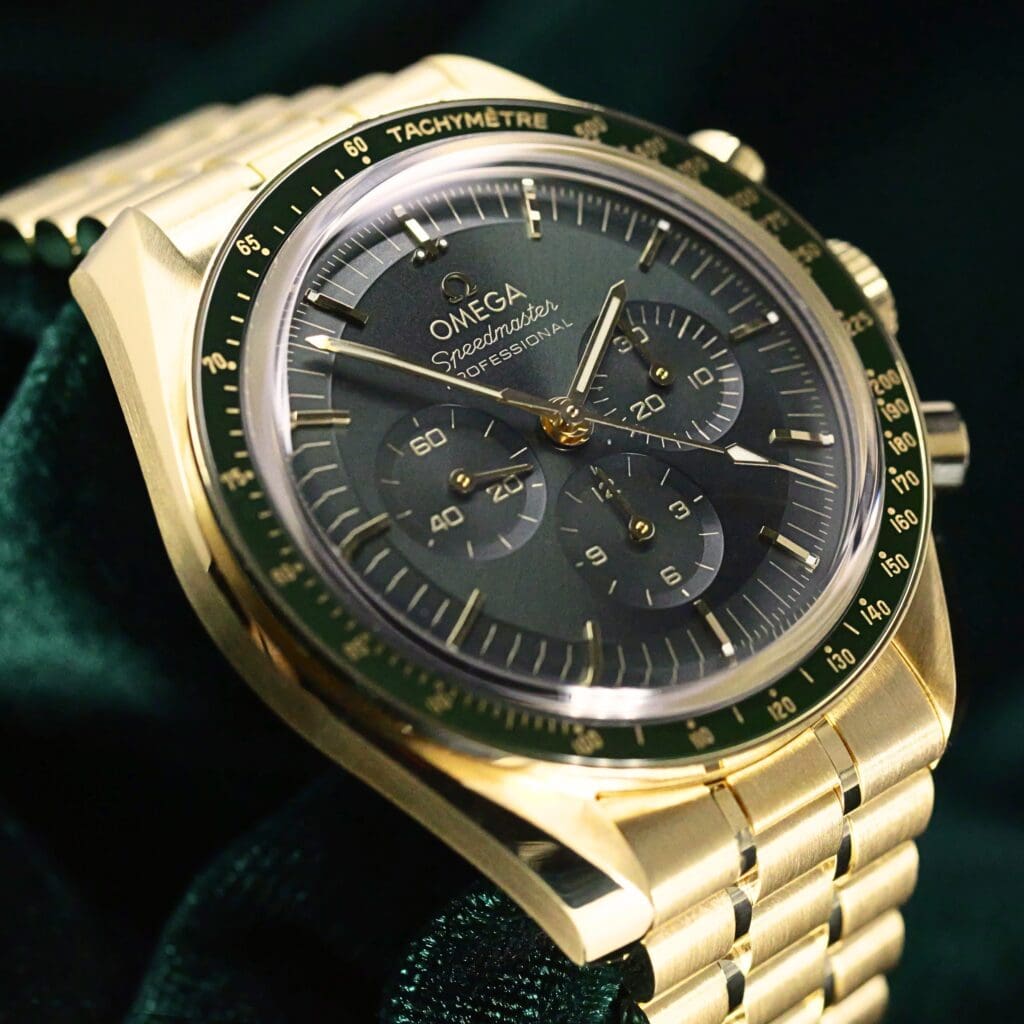
Omega Speedmaster Professional Moonwatch "Moonshine" Green Dial 18K Yellow Gold 42mm MINT CONDITION COMPLETE SET 310.60.42.50.10.001

Omega Speedmaster Split-Seconds "Rattrapante" Black Carbon Fiber Dial Stainless Steel 42mm MINT CONDITION 3540.50
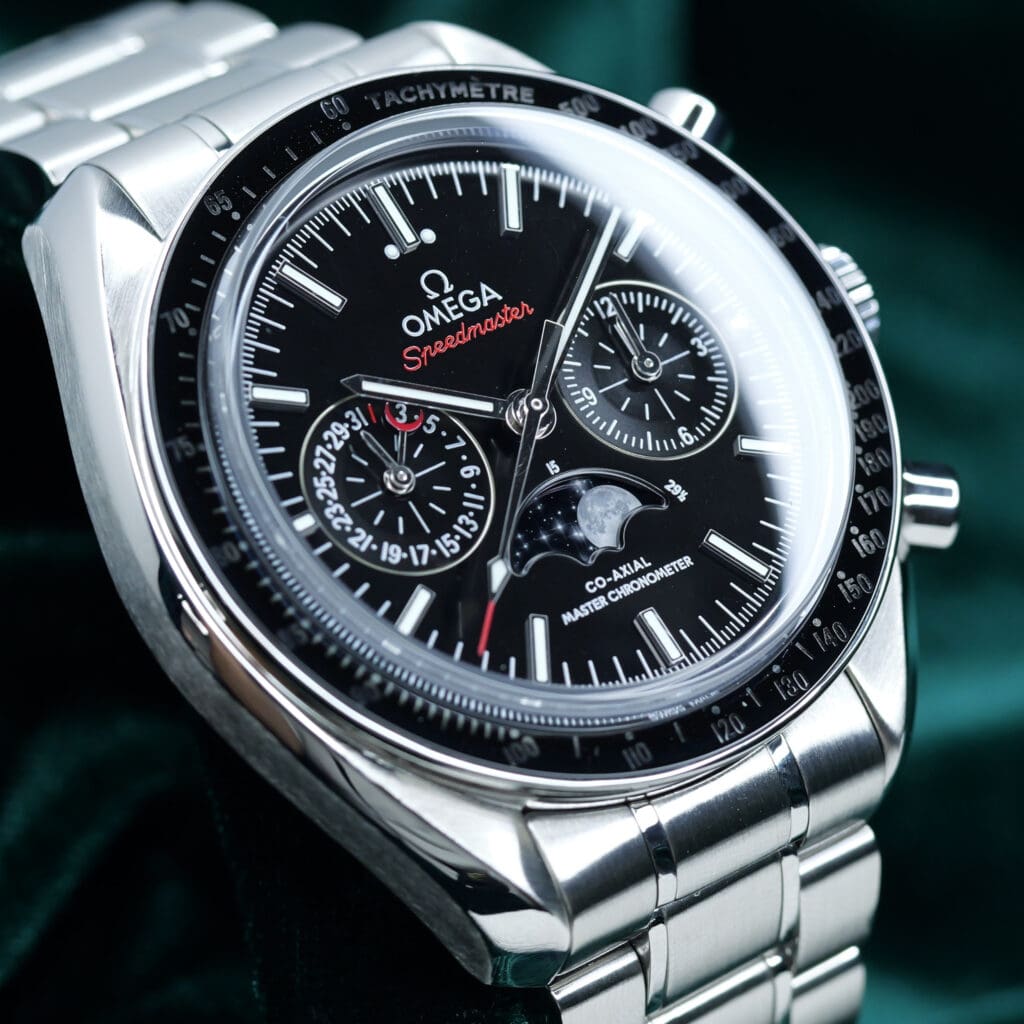
Omega Speedmaster Moonphase Co-Axial Master Chronometer Chronograph Black Dial Stainless Steel 44.25mm MINT CONDITION COMPLETE SET 304.30.44.52.01.001
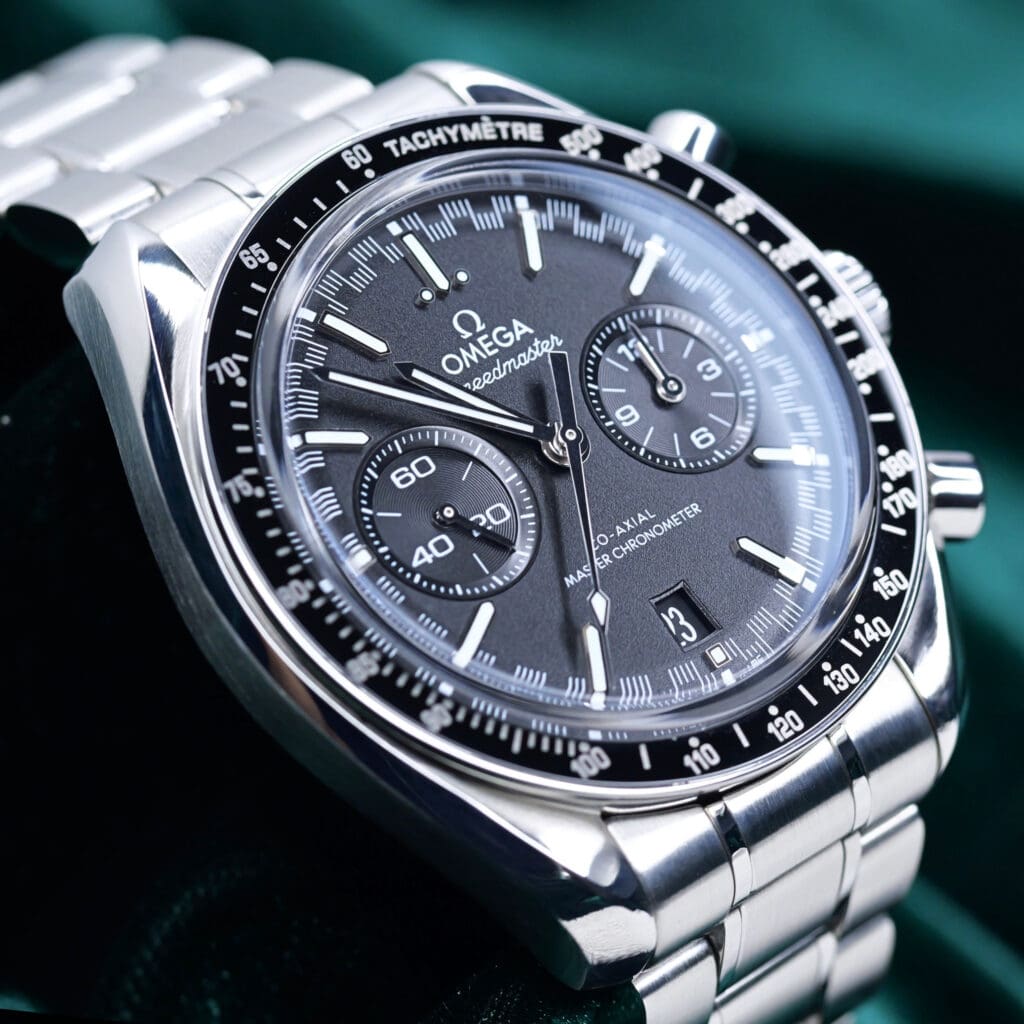
Omega Speedmaster Racing Co-Axial Master Chronometer Black Dial Stainless Steel 44.25mm MINT CONDITION COMPLETE SET 329.30.44.51.01.001
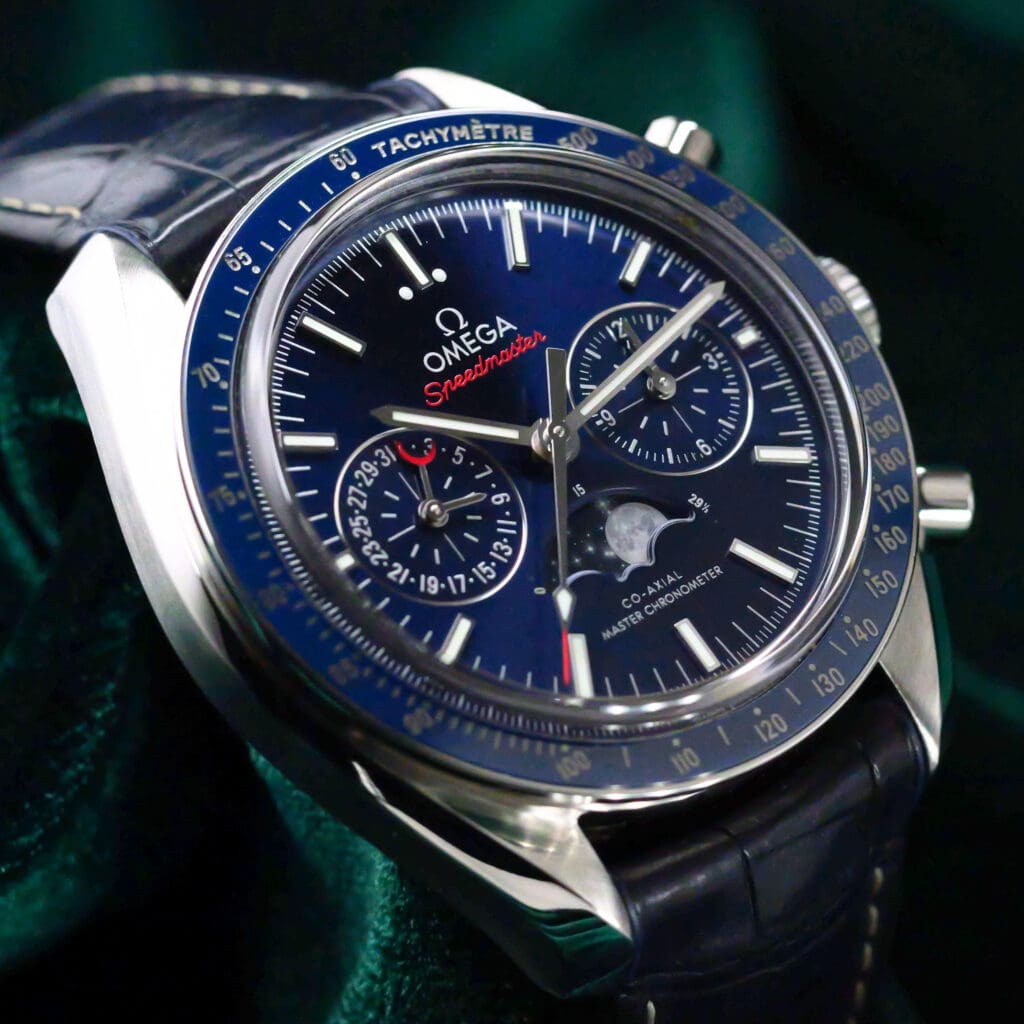
Omega Speedmaster Moonphase Blue Dial Blue Ceramic Bezel Blue Leather Strap Stainless Steel 44.25mm MINT CONDITION COMPLETE SET 304.33.44.52.03.001
3. Case Thickness
The De Ville at 40mm measures 9.9mm thick. The case has a bassine profile, a cushion-shaped form with a slight concave curve that wraps around the wrist. The curvature adds visual depth from the side.
The Portofino at 40mm measures 9.5mm thick, with a flat case and straight lugs that sit parallel to the wrist. The 0.4mm difference is small, but the flat profile means the Portofino sits closer to flush under a dress shirt cuff.
4. Lug Design
The De Ville has curved lugs that taper downward and follow the wrist’s contour. On smaller wrists, this helps the watch sit without overhanging the edges. Combined with the bassine case, the fit is traditional and close to the skin.
The Portofino has straight lugs that extend horizontally before tapering to the strap. On most wrist sizes the proportions work well. On very slender wrists, the absence of a downward curve can make the watch look flat from the side. The tradeoff is a cleaner, more architectural look.
5. Case Back
The De Ville Prestige Gen 3 mechanical references use a sapphire exhibition caseback, giving a clear view of the arabesque-finished Cal. 8800 rotor. This is a meaningful detail at this price point and one of the visible upgrades from the previous generation.
The Portofino Automatic uses a solid closed caseback on its core references. At the same price tier, the De Ville has a clear advantage here for buyers who want to see the movement.
6. Serviceability
The Cal. 8800 is a fully in-house movement with a Co-Axial escapement built for extended service intervals. Omega’s global service network is large and available across most major markets, which is a clear long-term advantage.
The Cal. 35111 is based on the Sellita SW300, which means an independent watchmaker outside the IWC network can service it, often at lower cost and shorter turnaround. IWC’s own network is smaller. For buyers in regions with limited IWC presence, the widely-understood base caliber is a practical advantage.
More Portofino
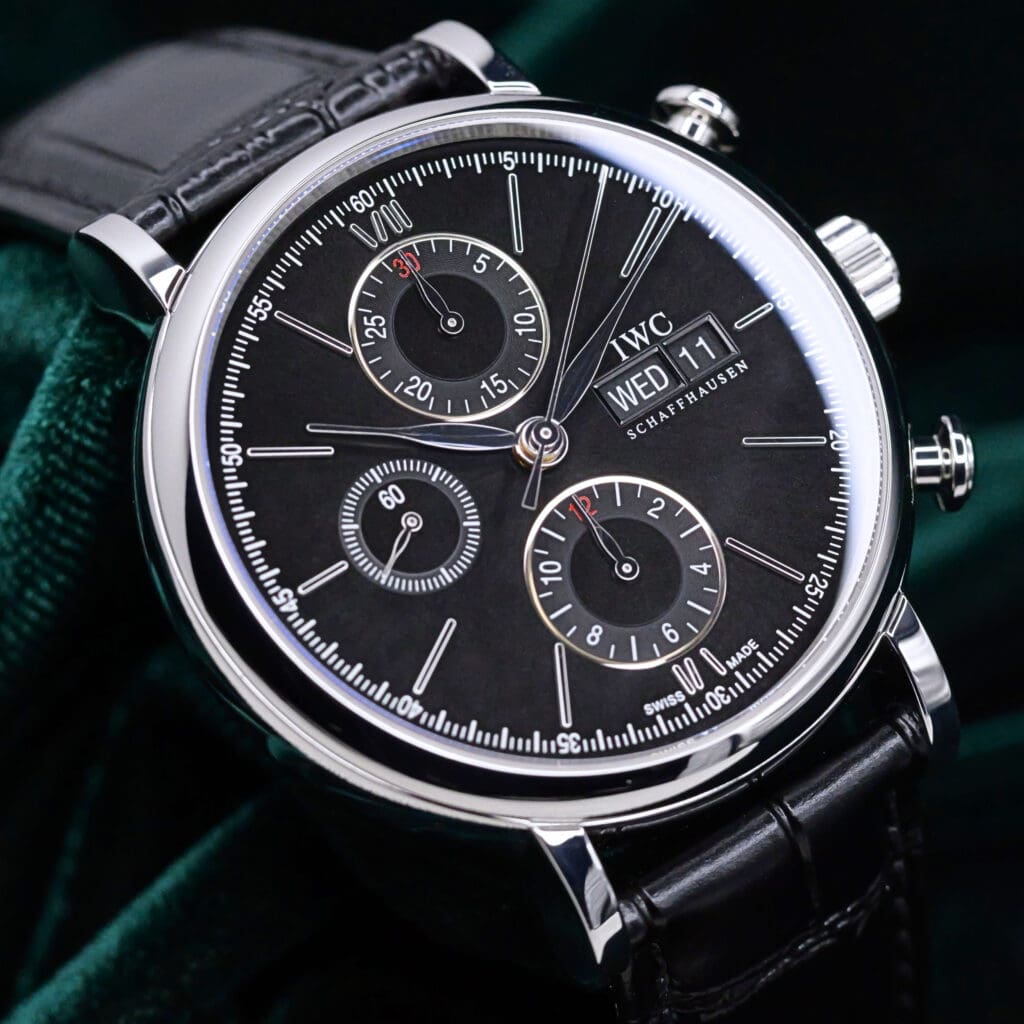
IWC Portofino Chronograph Black Dial Black Leather Strap Stainless Steel 42mm MINT CONDITION COMPLETE SET IW391008

IWC Schaffhausen Portofino Chronograph Black Dial Stainless Steel Black Leather Strap 42mm MINT CONDITION COMPLETE SET IW391002
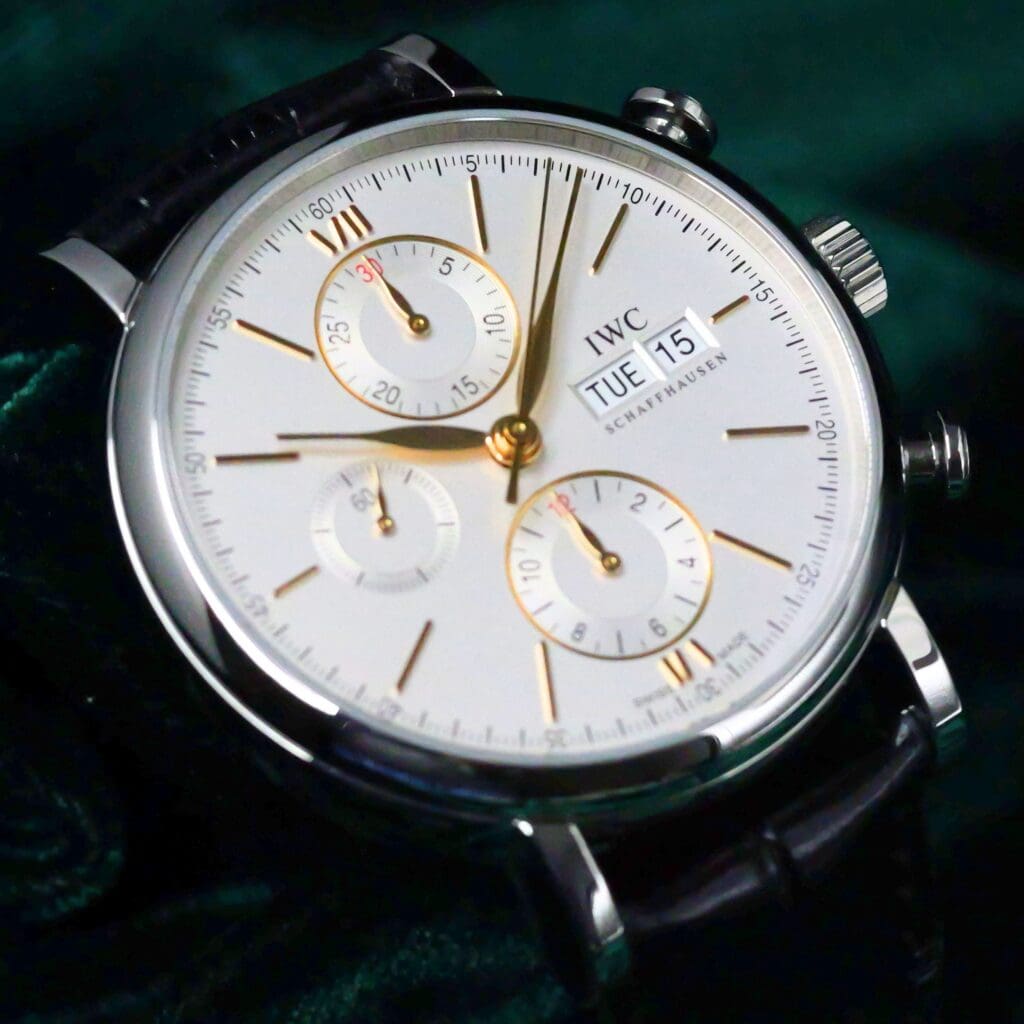
IWC Portofino Chronograpgh Silver Dial Black Alligator Leather Strap Stainless Steel 42mm MINT CONDITION COMPLETE SET IW391031
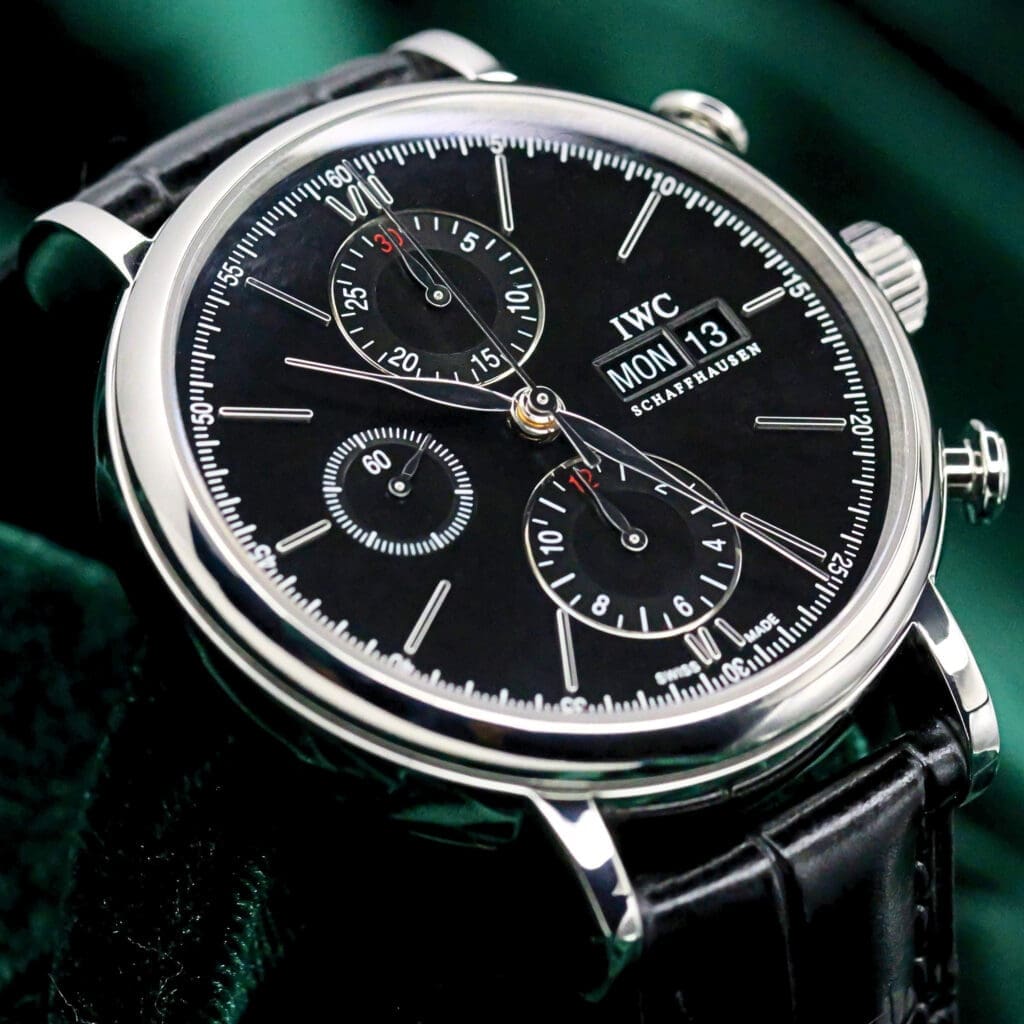
IWC Portofino Chronograph Black Dial Stainless Steel Alligator Strap 42mm MINT CONDITION COMPLETE SET IW391008
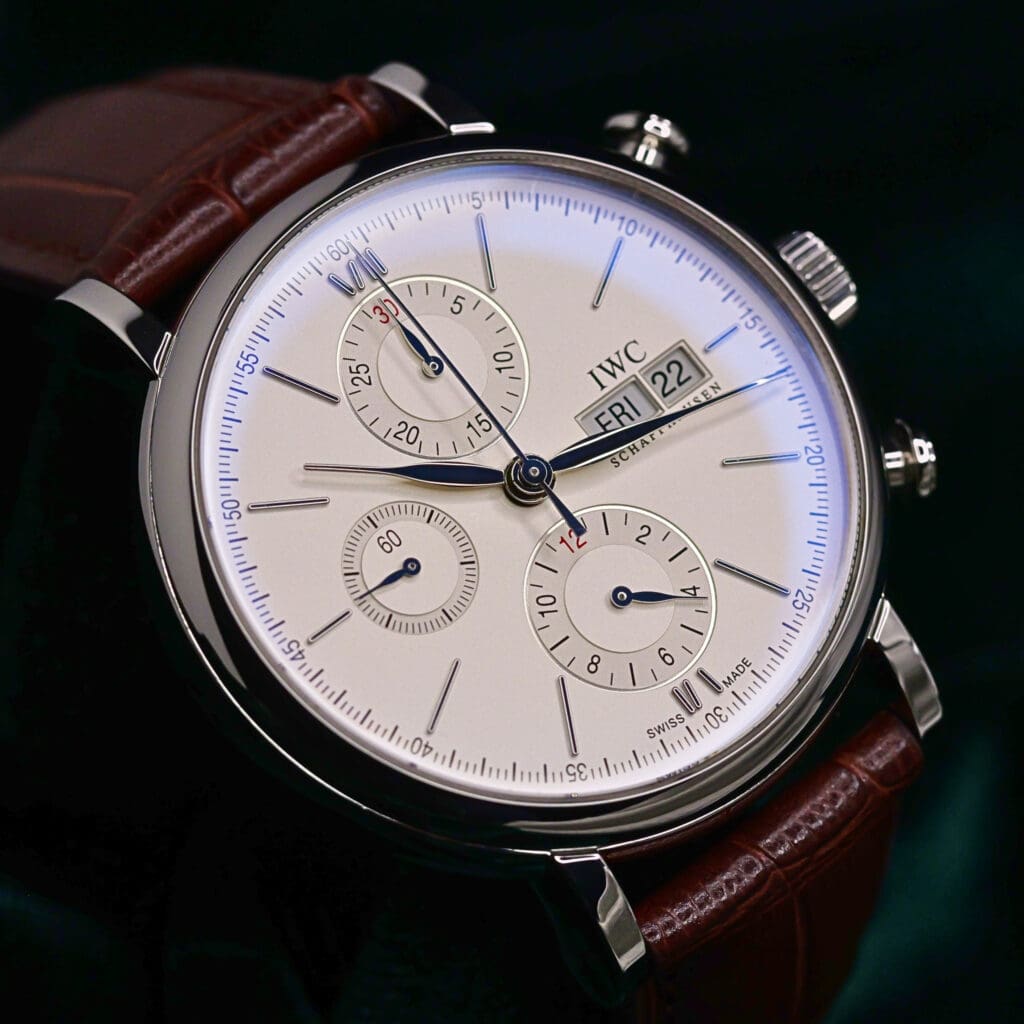
IWC Portofino Chronograph Silver Dial Brown Leather Strap Stainless Steel 42mm MINT CONDITION COMPLETE SET IW391027
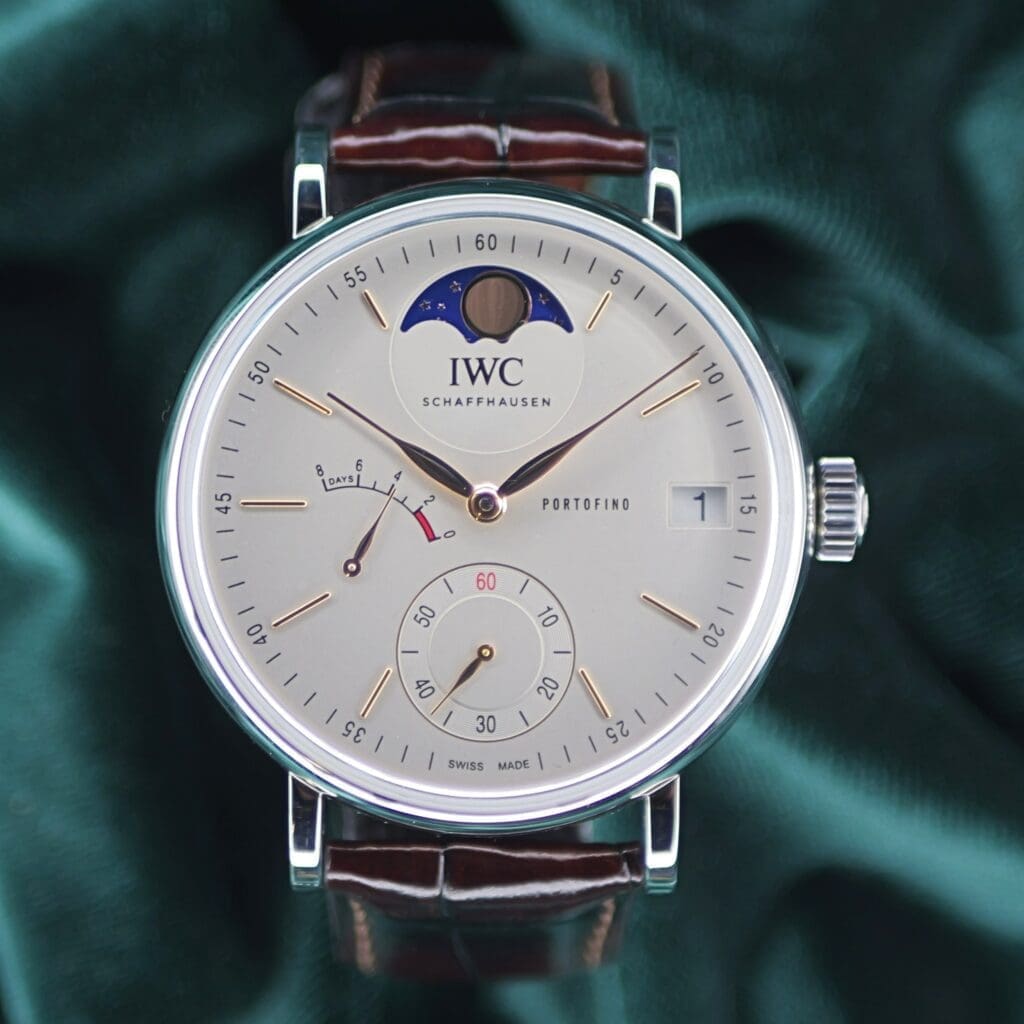
IWC Portofino Hand-Wound Moon Phase 45MM Silver Dial Stainless Steel COMPLETE SET MINT CONDITION IW516401
Price and Market Demand
Both watches drop below retail on the secondary market, and pricing has moved since these Gen 3 references first launched. Exact ranges for each reference are broken out below in the reference sections; this is the comparative read, sourced from current Chrono24 listing data as of 2026.
Retail-to-retail, the De Ville and Portofino sit within about $100 to $200 of each other depending on the exact reference. Pre-owned, they land in a similar band too, though the De Ville’s in-house METAS-certified movement gives it the stronger technical case if resale and movement pedigree both matter to you.
One shift worth noting: the black-dial Portofino used to trade at a noticeably steeper discount than the silver-dial version. That gap has largely closed, so dial color alone isn’t the resale factor it once was.
Notable Omega De Ville References

The De Ville covers multiple movement variants and size options, from the standard three-hander to power reserve and small seconds configurations.
1. Omega De Ville Ref. 434.10.40.20.03.001
The blue dial bracelet reference on Cal. 8800 with METAS certification and a 55-hour power reserve. The dark blue PVD dial uses a stamped vertical pattern finish, giving it a different character from the silver dial variants without changing any movement specification.
- Case size: 40mm
- Material: Stainless steel
- Movement: Cal. 8800, Co-Axial Master Chronometer
- Water resistance: 30m
- Typical market range: $3,300–$5,000 USD (used, full set)
2. Omega De Ville Ref. 434.13.41.21.10.001
Cal. 8810 adds a small seconds subdial at 9 o’clock and a power reserve indicator, giving the dial more information without adding a full complication. The 41mm case suits wrists above 7 inches and pairs well with the steel and Sedna gold two-tone configuration.
- Case size: 41mm
- Material: Stainless steel / Sedna gold accents
- Movement: Cal. 8810, Co-Axial Master Chronometer
- Water resistance: 30m
- Typical market range: $2,800–$3,800 USD (used, varies by configuration)
3. Omega De Ville Ref. 434.13.40.20.03.001
The same Cal. 8800 as the bracelet variant but on a dark blue leather strap, with the same dark blue PVD dial. A cleaner option for buyers who prefer a strap over a bracelet without giving up any movement specification.
- Case size: 40mm
- Material: Stainless steel
- Movement: Cal. 8800, Co-Axial Master Chronometer
- Water resistance: 30m
- Typical market range: $3,000–$4,500 USD (used, full set)
Notable IWC Portofino References

The Portofino family runs from the clean three-hander to moonphase and pointer date complications, all within the same restrained aesthetic.
1. IWC Portofino Ref. IW356501
The 40mm case at 9.5mm thick sits nearly flat on the wrist and clears a dress cuff with minimal bulk. The silver dial uses Roman numerals at 12 and 6, baton indexes, feuille hands, and a date at 3 o’clock. Nothing on the dial competes for attention.
Cal. 35111 runs at 28,800 vph with a 42-hour power reserve. It is not a technically adventurous movement, but it is consistent and well-supported.
- Case size: 40mm
- Material: Stainless steel
- Movement: Cal. 35111
- Power reserve: 42 hours
- Water resistance: 30m
- Typical market range: $2,600–$4,400 USD (used, full set)
2. IWC Portofino Ref. IW356502
The black dial gives the Portofino more range across casual and formal settings. The contrast between white applied markers and the dark surface improves legibility in lower light. Specs are identical to the IW356501: Cal. 35111, 40mm, 42-hour power reserve, and 30m.
- Case size: 40mm
- Material: Stainless steel
- Movement: Cal. 35111
- Power reserve: 42 hours
- Water resistance: 30m
- Typical market range: $2,500–$4,400 USD (used, full set)

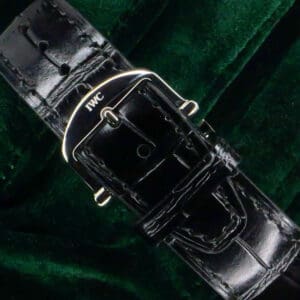

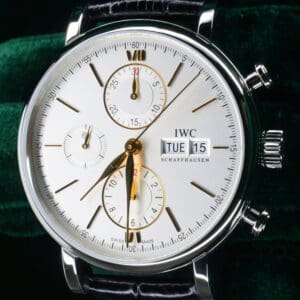
3. IWC Portofino Ref. IW356504
An 18K rose gold case at 40mm and 9.5mm thick is rare below $10,000. The IW356504 pairs warm metal finishing with a silver dial and the same feuille hands as the steel references. The movement is the same Cal. 35111, so the premium is entirely in the case material.
Used examples currently trade between roughly $8,000 and $9,450, a discount from retail that’s typical for a precious metal watch on the secondary market.
- Case size: 40mm
- Material: 18K rose gold
- Movement: Cal. 35111
- Power reserve: 42 hours
- Water resistance: 30m
- Typical market range: $8,000–$9,450 USD (used)
Which Dress Watch Is for You
The clearest way to decide is to identify which factor matters most. Both watches sit at similar price points, but they are built around different priorities.
Choose the Omega De Ville If
- Movement certification and in-house manufacture matter to you
- You want a 55-hour power reserve and 15,000 gauss magnetic resistance
- You prefer a traditional, layered Roman numeral dial
- You want a sapphire exhibition caseback to view the movement
- Long-term global service access is important
Choose the IWC Portofino If
- A minimal, open dial design is a priority
- You want the slimmest possible profile under a dress shirt cuff
- You plan to wear the watch across both formal and smart-casual settings
- A complication like the Moonphase or Pointer Date appeals to you
- You want flexibility on servicing outside the IWC network at a lower cost
If the movement matters to you, De Ville wins clearly. If the dial and wrist profile matter more, the Portofino is the stronger choice.
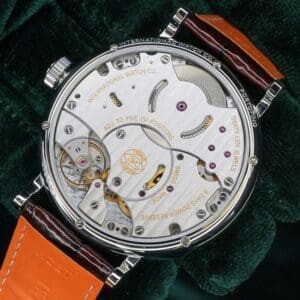
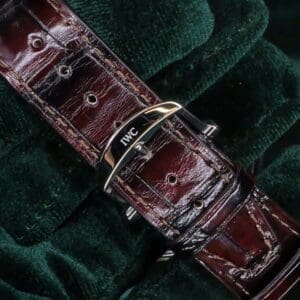

Where to Buy Authentic Watches Online
There are a handful of legitimate online channels for buying either watch. Chrono24 carries the deepest pool of listings for both the De Ville and Portofino, with dealer ratings and a buyer protection program on qualifying purchases.
eBay, through its Authenticity Guarantee program, adds a third-party verification step before a watch ships. Grailzee focuses specifically on pre-owned luxury pieces with in-house condition checks before listing.
Independent grey-market dealers and watch forums are another route, and worth knowing about, though vetting the seller yourself matters more on those channels.
We also buy, sell, and trade luxury watches directly, and the reason clients come to us over a big marketplace listing is simple: before you commit, we walk you through tour videos of the actual watch, not stock photography.
That comes with detailed condition notes and a direct conversation with someone who has physically inspected the piece. You’re not buying blind off a listing description.
That’s reflected in our 4.9-star Google rating, built from clients who value knowing exactly what they’re getting before it ships.
If you want that kind of walkthrough on a specific De Ville or Portofino reference, reach out and we’ll line up a few options that match what you’re looking for.
Final Thoughts on Omega De Ville vs IWC Portofino
The Omega De Ville vs IWC Portofino comparison rarely comes down to specs alone. The De Ville suits buyers who value technical depth and traditional dress watch character. The Portofino suits buyers who want a clean, proportional watch that works across more situations.
Buyers who try both usually know within minutes, since the specs only point you in the right direction. Both are worth buying pre-owned with full paperwork to get the best entry price, and it’s worth checking the caseback and dial finish in person before deciding.
Think about how you plan to wear the watch day to day. Choose the one that feels natural on your wrist, because that’s the one you’ll keep reaching for.
999+ Timepieces Available
Explore Our Timepieces
Authenticated, unworn, and ready to ship worldwide.
Rolex · Audemars Piguet · Patek Philippe · Omega · Cartier · Richard Mille · Hublot · Tudor
Newly Listed
Vacheron Constantin Overseas Dual Time Silver Dial Brown Leather Strap 18K Rose Gold 41mm MINT CONDITION COMPLETE SET 7900V/000R-B336
$41,894.00
Rolex Sea-Dweller Deepsea James Cameron D-Blue Dial Black Ceramic Bezel Oyster Bracelet Stainless Steel 44mm MINT CONDITION 116660-0003
$14,272.00
Vacheron Constantin Overseas Dual Time Silver Dial 18K Rose Gold Brown Rubber Strap 41mm MINT CONDITION COMPLETE SET 7900V/000R-B336
$41,894.00
Rolex Lady-Datejust Champagne Linen Dial 18k Yellow Gold Fluted Bezel Jubilee Bracelet Two Tone Steel & Gold 26mm MINT CONDITION COMPLETE SET 69173
$9,345.00
2026 Rolex Datejust Blue Dial Smooth Bezel Jubilee Bracelet Stainless Steel 41mm MINT CONDITION COMPLETE SET 126300
$13,796.00
Audemars Piguet Royal Oak Selfwinding "50th Anniversary" Bleu Nuit Nuage 50 Blue Dial Diamond Bezel 18K Rose Gold 37mm MINT CONDITION COMPLETE SET 15551OR.ZZ.1356OR.02
$99,745.00
Audemars Piguet Royal Oak Offshore Chronograph "Havana" Brown Dial Blue Subdials Brown Leather Strap Stainless Steel 42mm MINT CONDITION COMPLETE SET 26470ST.OO.A099CR.01
$24,827.00
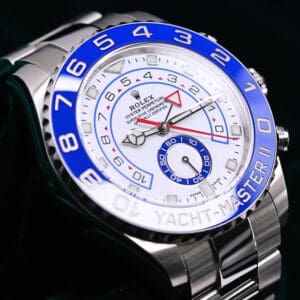
Rolex Yacht-Master II White Dial Blue Ceramic Bezel Oyster Bracelet Stainless Steel 44mm MINT CONDITION COMPLETE SET 116680
$19,409.00
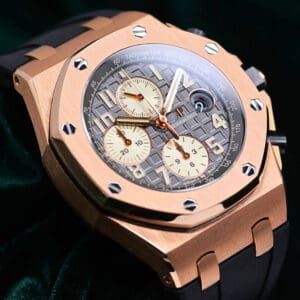
Audemars Piguet Royal Oak Offshore Chronograph “Half Brick” Ruthenium Grey Dial 18K Rose Gold Black Rubber Strap 42mm MINT CONDITION COMPLETE SET 26470OR.OO.A125CR.01
$40,892.00
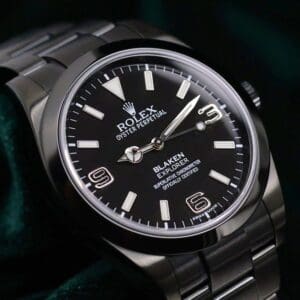
Rolex Explorer Blaken Black Dial Oyster Bracelet DLC Black Stainless Steel 39mm MINT CONDITION COMPLETE SET 214270
$16,000.00
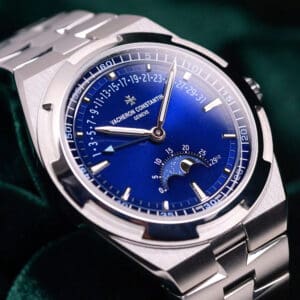
2025 Vacheron Constantin Overseas Moon Phase Retrograde Date Blue Dial Stainless Steel Bracelet 41mm MINT CONDITION COMPLETE SET 4000V/210A-B911
$52,800.00
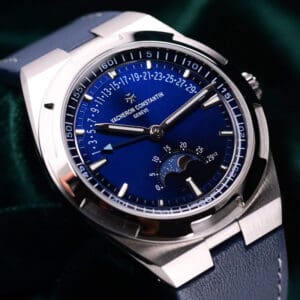
2025 Vacheron Constantin Overseas Moonphase Retrograde Date Blue Dial Blue Leather Strap Stainless Steel 41mm MINT CONDITION COMPLETE SET 4000V/210A-B911
$52,800.00