
Two Omega dress watches. Both polished, both running Co-Axial movements, both carrying serious Swiss credentials. But the Omega Constellation vs De Ville decision is less obvious than it looks at first glance.
These two collections pull very different buyers, even though they share a brand and overlap in price. One leans into design personality. The other leans into quiet refinement.
And 2026 shifted the ground under this comparison. Omega discontinued the Globemaster, launched the new Constellation Observatory, and pushed retail pricing up across the Constellation line.
This article walks you through the real differences and what shifted this year, from case construction to movement tier to how each one sits on the wrist.
Omega Constellation Overview

The Constellation launched in 1952 as Omega’s flagship precision timepiece, created to showcase the brand’s chronometer achievements. The caseback carried an engraved observatory medallion with eight stars, each one representing a competition record or first-place finish. For decades, it was the most technically capable dress watch Omega made.
A major design shift came in 1982 with the Manhattan update. That model introduced the four polished “griffes,” the claws at 3 and 9 o’clock that defined the collection’s look for every generation that followed. The claws were originally functional, helping press the crystal against the case, but they became the single most recognizable signature in the lineup.
The Globemaster, introduced in 2015, revived the original pie-pan dial and fluted bezel and became the world’s first Master Chronometer. Omega discontinued it in 2026, so it now lives on the pre-owned market only. Its replacement is the new Constellation Observatory, covered below.
For buyers who want something modern and bold off the shelf, the current 39mm and 41mm automatic references are the heart of the collection today. Both were upgraded to Master Chronometer status in 2020.
Notable Constellation References:
- 131.10.39.20.01.001 (39mm steel)
- 131.33.41.21.01.001 (41mm steel, ceramic bezel)
- 130.20.39.21.03.001
- 131.20.25.60.55.001
- 130.33.39.21.03.001 (Globemaster, discontinued 2026, pre-owned only)
- Constellation Observatory (new 2026 collection; steel from $10,900)
Omega De Ville Overview

The De Ville started in 1960 as a refined sub-line inside the Seamaster collection, built to answer demand for a cleaner, more classical dress watch. It became its own independent collection in 1967 and sold out quickly, going on to win six Golden Rose design awards at Baden-Baden through the 1970s.
The collection became a technical landmark in 1999, when Omega introduced the Co-Axial escapement inside a De Ville for the first time. The Hour Vision model in 2007 then brought the full in-house Cal. 8500 architecture to the line. Today the De Ville spans four sub-lines: the Prestige, the Trésor, the Ladymatic, and the Tourbillon.
De Ville’s identity is built on restraint. No claws, no integrated bracelet in most models, just clean lines and a polished case that disappears into formality. The Trésor is the most refined expression of this, a slim, manual-wind dress watch that sits at the top of what Omega offers in pure classical form.
Omega also expanded the line recently with the Mini Trésor at 26mm, offered in steel and Moonshine gold for buyers who want the Trésor look in a smaller case.
Notable De Ville References:
- 424.10.37.20.03.001 (Prestige)
- 435.13.40.21.03.002 (Trésor)
- 433.13.41.21.10.001 (Hour Vision)
- 425.30.34.20.57.001 (Ladymatic)
- 428.58.36.60.99.001 (Trésor gold)




Omega Constellation vs De Ville: Most Notable Differences
Both watches occupy the same dress-watch category, but they are built around different priorities. The differences below are the ones that change the ownership experience.
Case Design and Thickness

The Constellation is immediately recognizable. Four polished claws sit at the 3 and 9 o’clock positions, framing the bezel and defining the watch’s Manhattan identity. These claws visually widen the watch beyond its stated diameter, giving it a stronger presence on the wrist.
Many modern references also feature Roman numerals engraved on the bezel. On the 41mm versions, the numerals are often set into ceramic, which adds contrast and durability.
That construction adds bulk. The 41mm Constellation measures around 13.5mm thick, which is substantial for a dress-leaning watch. Under a shirt cuff it can feel noticeable and wears more like a sport-dress hybrid.
The De Ville, including the Trésor and Prestige lines, takes the opposite approach. The case is smooth and minimal, with clean lugs and no external design elements. The restraint is intentional, letting the watch read as formal without drawing attention.
Bracelet Construction
The Constellation uses an integrated bracelet, flowing directly from the case with no visible gap. It’s a premium construction detail, but it limits flexibility. Strap swaps take more effort than on a standard lug watch, and the fit depends on the bracelet’s built-in adjustment rather than a simple spring bar change.
The De Ville Prestige and Trésor use a conventional lug and strap setup. Swapping straps takes seconds and opens the watch to a wider range of contexts. The Trésor adapts well across strap types, though it’s most at home on a slim dress leather.
Movement Type

Both collections carry Master Chronometer certification (METAS) on current automatic and manual-wind references. That certification means resistance to magnetic fields up to 15,000 gauss and precision testing that goes beyond standard COSC. The caliber tier is where the two diverge.
The Constellation’s men’s automatics use Cal. 8800 (39mm) or Cal. 8900 (41mm), with a 55 to 60 hour power reserve. These are the same caliber family found across Omega’s sport and dress lines.
The De Ville Trésor runs on Cal. 8926 or 8934, a manual-wind Co-Axial Master Chronometer with twin barrels in series. In traditional watchmaking, a manually wound movement is treated as a higher finishing discipline than an automatic, and the Trésor’s calibers reflect that.
Water Resistance

Water Resistance
The 39mm and 41mm Constellation automatics are rated to 50 meters (5 bar), enough for hand-washing, rain, and light splashes without concern. Earlier models (circa 2009 generation) were rated to 100m, so the current 50m rating is worth noting for buyers comparing older references.
The De Ville across all sub-lines is rated to 30 meters (3 bar), which covers splash resistance only. This is not a watch for water contact beyond rain. Buyers who want a dress watch they can also wear near water have a clear advantage with the Constellation.
Complication Range
The Constellation’s current lineup is focused: time-and-date automatics and a quartz entry tier. The Globemaster Annual Calendar used to sit at the top of the range, but it was discontinued in 2026, so the modern collection now offers no calendar complication or power reserve indicator beyond date.
The new Constellation Observatory is the collection’s halo piece, and it goes the other way entirely, dropping even the seconds hand for a pure two-hand layout.
The De Ville offers more depth. The Prestige carries standard date automatics. The Trésor adds small seconds and power reserve variants. The Hour Vision provides movement visibility through sapphire case panels. The Tourbillon sits at the top tier, making the De Ville the only Omega dress collection carrying that complication in its current catalog.
What Changed in 2026
If you researched this comparison a year ago, two things are now different, and both matter for buyers.
First, the Globemaster is gone. Omega discontinued both the time-and-date and Annual Calendar Globemaster in 2026. Existing examples are pre-owned only now, which tends to firm up prices on clean, full-set pieces over time as supply stops refreshing. If you’re hunting one down, our Globemaster buying guide covers what to look for.
Second, the Constellation Observatory arrived. Announced March 26, 2026, it’s a ground-up redesign rather than a refresh: a 39.4mm case with mid-century “dog-leg” lugs, an integrated tapered bracelet, a pie-pan dial, dauphine hands, and the Observatory medallion on the caseback.
The headline is technical. It’s the first two-hand watch to earn Master Chronometer certification, made possible by a new acoustic rate-testing method that reads the movement’s sound instead of tracking a seconds hand.
The catch is price. Steel Observatory references start at $10,900 (the black ceramic-dial version runs $12,200), with precious-metal models climbing to roughly $59,100. That places the Observatory well above the standard claw-bezel Constellation and above where the Globemaster used to sit.
If the pie-pan aesthetic was your reason for looking at a Constellation, the Observatory is the current answer, but it’s a meaningfully more expensive one.
One more shift worth knowing: Omega thinned the core Constellation catalog from around 209 models in 2025 to roughly 120 by mid-2026, cutting a chunk of the 34–39mm dial and material options. The collection is smaller and skews smaller in size than it did a year ago.
Price and Market Demand
Both collections occupy a similar price band on paper, but their market behavior tells two different stories. Prices below reflect the used market as of 2026.
For context, the broader secondary watch market has been climbing. The Q1 2026 WatchCharts market report noted a fifth straight quarter of growth, with more than 70% of tracked brands trending positive. Omega dress pieces aren’t the headline movers, but the tide has been rising under them.
Constellation: Accessible Modern Icon
The 36mm quartz Constellation starts around $2,500–$3,500 used. The 39mm automatic in steel trades between $3,000 and $5,500, while the 41mm lands in the $4,500–$7,500 range depending on bezel and dial configuration.
Meteorite dials and ceramic bezel variants consistently pull higher prices. What moves the price: full set (box and papers), unpolished case, ceramic bezel, and dial color.
Retail for the 41mm steel now starts around $8,000–$8,200 new (the 39mm steel around $7,400), so the used-market discount runs roughly 30–45% on most references. Retail climbed over the past year, which widens the gap between buying new and buying pre-owned.
The discontinued Globemaster now trades pre-owned in the $4,000–$7,000 band for steel three-handers, with cleaner full sets holding the top of that range.
De Ville: Undervalued Entry, Strong Trésor
The Prestige automatic trades in the $1,500–$3,500 range used, often at a steeper retail discount than the Constellation. That signals softer secondary demand for the Prestige specifically. The steel Trésor small seconds holds better, with examples trading around $4,500–$6,000, and gold configurations pushing well past $8,000.
What moves the price: metal (steel vs. gold), full set, dial color (blue and champagne move fastest), and for the Trésor, service records. The De Ville is the better used-market entry point if budget matters.
The trade-off is lower liquidity. The Constellation generates more secondary listings and faster average sale times, so if resale is part of the plan, its buyer pool is broader and more active.
Notable Omega Constellation References

The current Constellation lineup focuses on bold, integrated-bracelet automatics for men and a wide quartz and automatic range for women. Here are the references most relevant to this comparison, and our Constellation buying guide walks through the full lineup if you want to go wider.
1. Constellation 41mm Steel
The 41mm with black ceramic bezel (Ref. 131.33.41.21.01.001) is the flagship of the current men’s lineup. The ceramic bezel carries Roman numerals in Liquidmetal, which is scratch-resistant and permanent. The case and bracelet form a single unbroken unit, and the watch presents with clear visual authority on the wrist.
- Case size: 41mm
- Material: Stainless steel
- Movement: Auto Co-Axial Master Chronometer Cal. 8900
- Water resistance: 50m
- Typical used price range (2026): $4,500–$7,500
2. Constellation 39mm Steel
The 39mm (Ref. 131.10.39.20.01.001) is the more proportionate option for wrists in the 15.5–17.5cm range. It uses Cal. 8800 with a 55-hour power reserve and the standard steel bezel. This is the better daily-wear choice for buyers who find the 41mm too large under a cuff.
- Case size: 39mm
- Material: Stainless steel
- Movement: Auto Co-Axial Master Chronometer Cal. 8800
- Water resistance: 50m
- Typical used price range (2026): $3,000–$5,500
3. Constellation Observatory
With the Globemaster discontinued, the Observatory is the current home for the vintage pie-pan look. It’s a 39.4mm redesign with dog-leg lugs, an integrated tapered bracelet, and a two-hand dial.
Its distinction is being the first two-hand Master Chronometer, verified through acoustic rate testing rather than a seconds hand. Buyers who once cross-shopped the Globemaster land here now, at a higher price.
- Case size: 39.4mm
- Material: O-MEGASTEEL (or precious metals)
- Movement: Auto Co-Axial Master Chronometer Cal. 8914 (steel), Cal. 8915 (gold)
- Water resistance: 50m
- Retail (2026): from $10,900 (steel); precious metals to ~$59,100
Notable Omega De Ville References

The De Ville’s sub-collections each serve a different buyer. The references below are the most relevant for someone comparing the De Ville directly against the Constellation, and our De Ville buying guide covers the rest of the range.
De Ville Trésor Small Seconds
A 40mm manual-wind Co-Axial Master Chronometer (Ref. 435.13.40.21.03.002) with a small seconds display at 6 o’clock, the Trésor is built as thinly as Omega’s current platform allows. The domed sapphire crystal sits high above the dial and catches light in a way that makes the face feel almost three-dimensional.
This is the watch you reach for with a suit jacket, and it doesn’t compromise on that intention.
The case is fully polished with no brushed sections, which asks for more careful daily handling but reads as unmistakably formal. The manual Cal. 8926 carries a 60-hour power reserve and is finished with Geneva waves in arabesque, visible through the exhibition caseback.
Related Models from Majestix
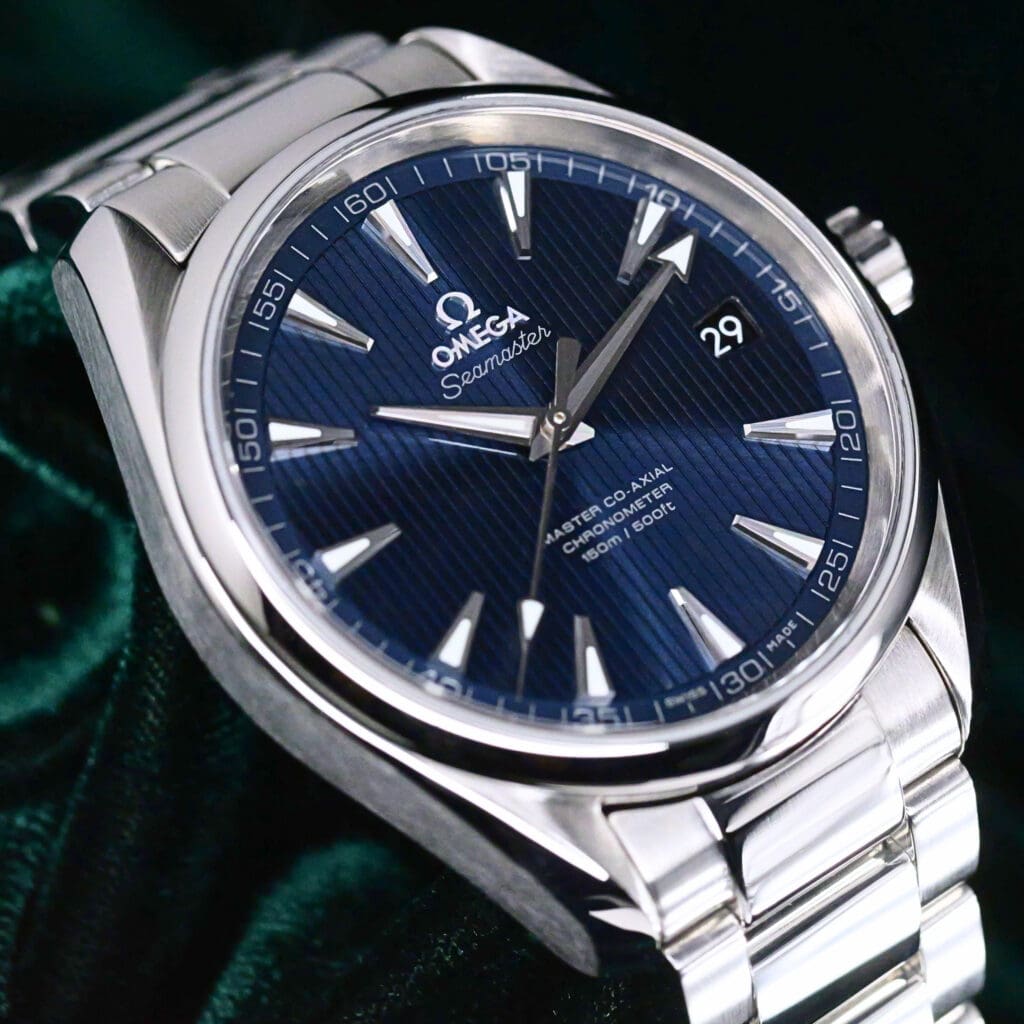
Omega Seamaster Aqua Terra 150M Master Co-Axial Chronometer Blue Teak Dial Stainless Steel 41.5mm MINT CONDITION COMPLETE SET 231.10.42.21.03.003
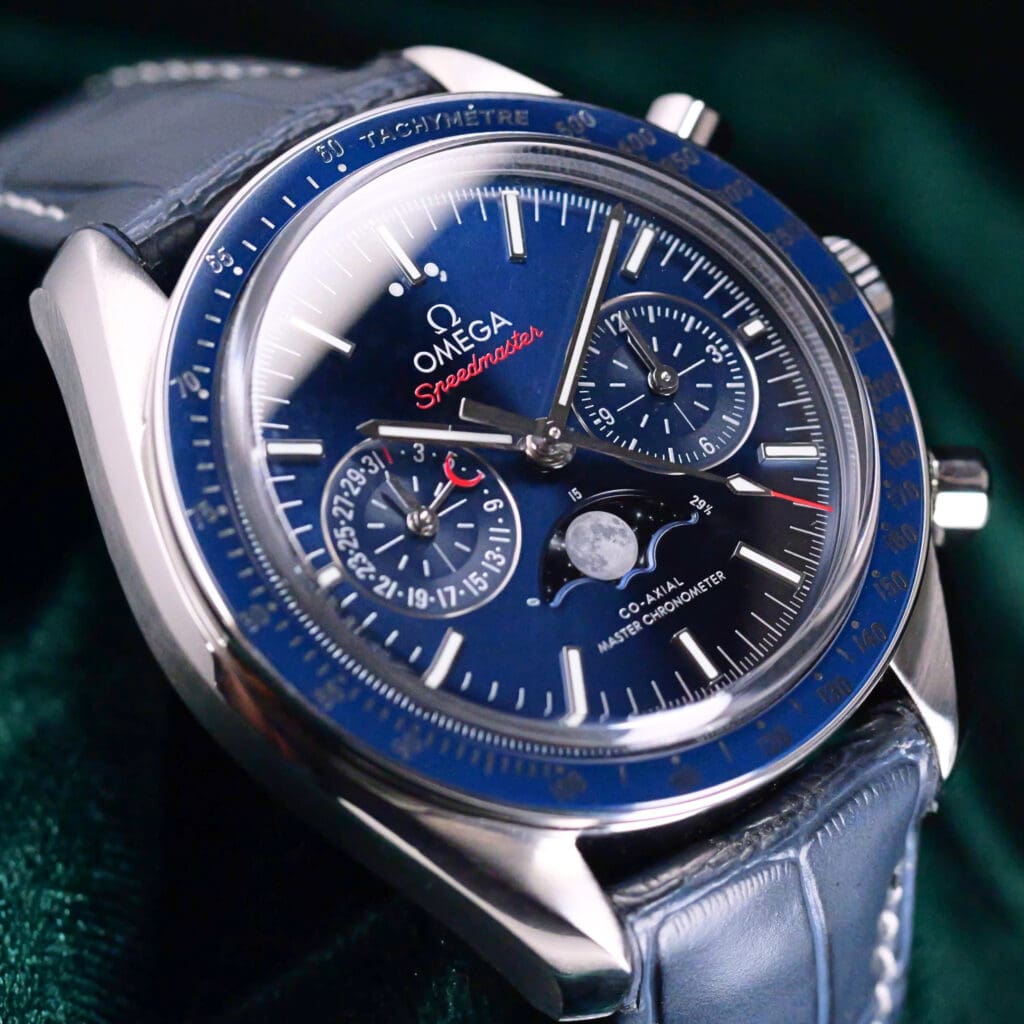
Omega Speedmaster Moonphase Blue Dial Blue Leather Strap Stainless Steel 44.25mm MINT CONDITION COMPLETE SET 304.33.44.52.03.001
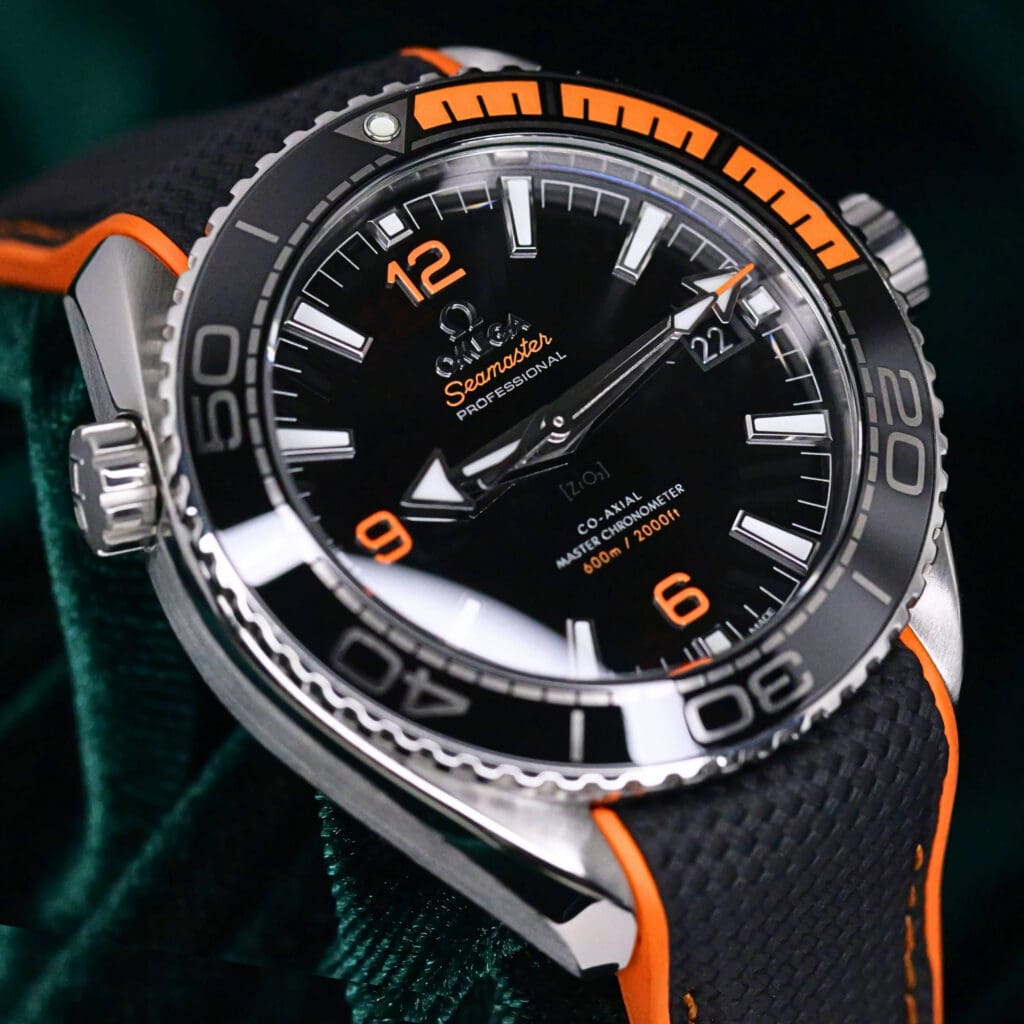
Omega Seamaster Planet Ocean 600M Black Dial Black Orange Ceramic Bezel Black Orange Rubber Strap Stainless Steel 43.5mm MINT CONDITION COMPLETE SET 215.32.44.21.01.001
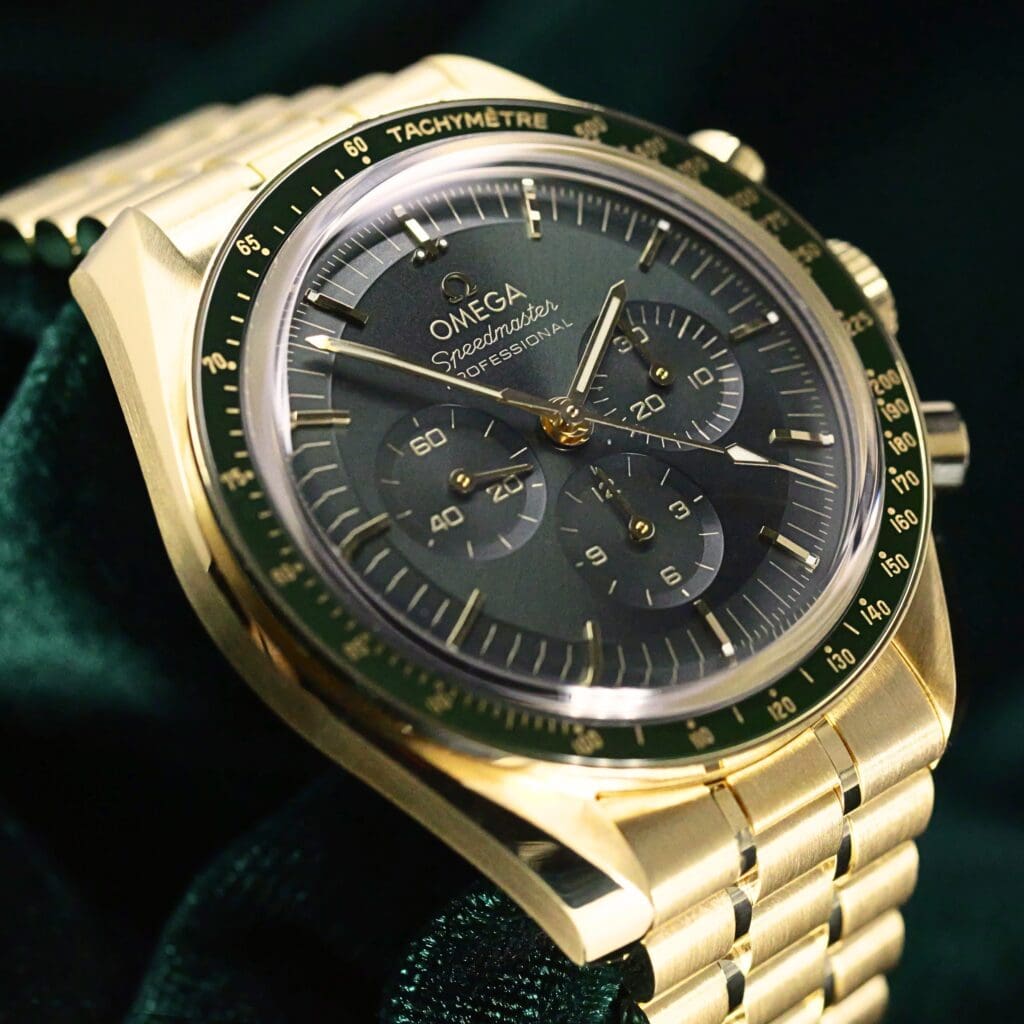
Omega Speedmaster Professional Moonwatch "Moonshine" Green Dial 18K Yellow Gold 42mm MINT CONDITION COMPLETE SET 310.60.42.50.10.001
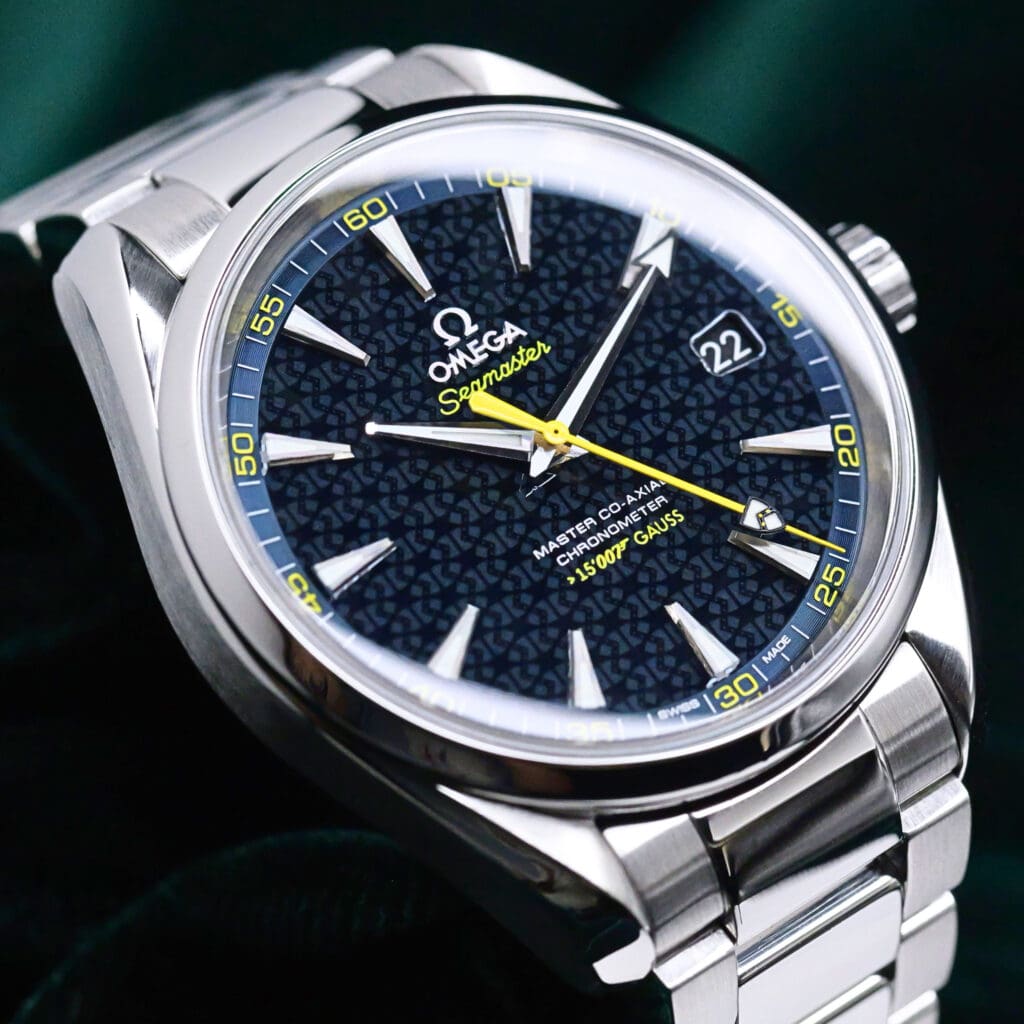
Omega Seamaster Aqua Terra 150M "James Bond Spectre" Blue Dial Yellow Accents Stainless Steel 41.5mm MINT CONDITION COMPLETE SET 231.10.42.21.03.004
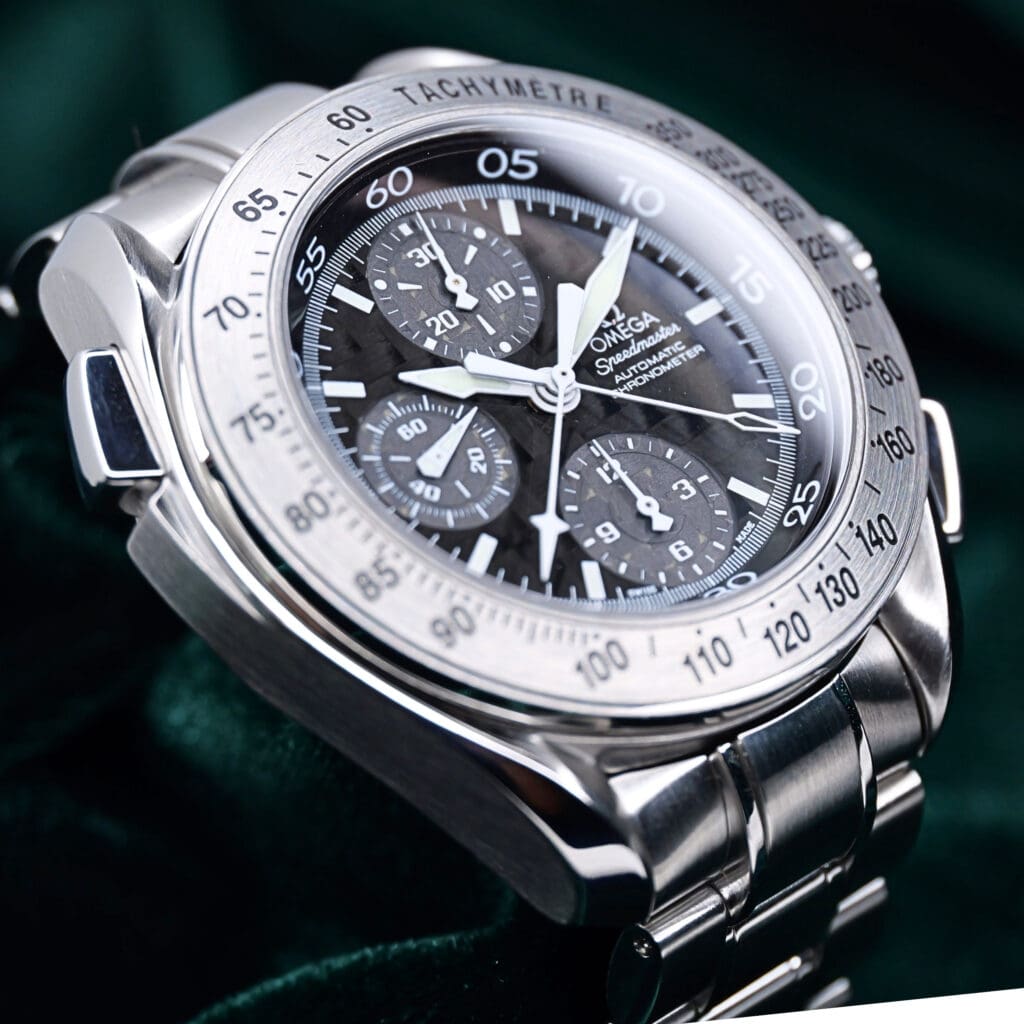
Omega Speedmaster Split-Seconds "Rattrapante" Black Carbon Fiber Dial Stainless Steel 42mm MINT CONDITION 3540.50
For buyers who want the most refined dress watch Omega currently makes under five figures pre-owned, this reference is the answer.
- Case size: 40mm
- Material: Stainless steel
- Movement: Manual Co-Axial Master Chronometer Cal. 8926
- Water resistance: 30m
- Typical used price range (2026): $4,500–$6,000
De Ville Prestige Automatic
The Prestige in 39.5–40mm (Ref. 424.10.37.20.03.001) is the most accessible entry into the De Ville collection. It runs on the Co-Axial Master Chronometer Cal. 8800 series in the 2022-and-later generation, which brought the certification to a price point previously held by the older 2500-family calibers.
The dial carries Roman numerals, a date at 3 o’clock, and nothing else.
The Prestige suits buyers who want a formal Omega without the Constellation’s visual personality or the Trésor’s commitment to manual winding. If you’re weighing those two De Ville mainstays against each other, our Trésor vs Prestige breakdown goes deeper.
The 2022 generation is specifically worth seeking out for the movement upgrade. Older references with the Cal. 2500A have a documented history of amplitude issues after extended service intervals, so factor in what Omega servicing costs before committing to an older example.
- Case size: 39.5–40mm
- Material: Stainless steel (also two-tone and full gold)
- Movement: Auto Co-Axial Master Chronometer Cal. 8802 (2022+)
- Water resistance: 30m
- Typical used price range (2026): $1,500–$3,500
De Ville Hour Vision
The Hour Vision at 41mm (Ref. 433.13.41.21.10.001) is the De Ville reference with the most visual complexity. Select versions feature sapphire panels on the case sides, exposing the movement from three directions at once. The Cal. 8900-series movement runs with a 60-hour power reserve and full Master Chronometer certification.
The Hour Vision bridges the gap between the Prestige’s restraint and the Trésor’s minimalism. It’s the right choice for a buyer who wants the De Ville aesthetic but also wants the watch to reveal something interesting when you look closely.
- Case size: 41mm
- Material: Stainless steel
- Movement: Auto Co-Axial Master Chronometer Cal. 8900
- Water resistance: 30m
- Typical used price range (2026): $2,500–$5,000
Which Omega Should You Choose?

Which Omega Should You Choose?
Both watches are technically excellent. The decision comes down to how you wear a watch day to day. If you’re still zooming out across the brand, our Omega buying guide maps how each collection fits together.
Choose the Constellation if:
- You want a watch with a recognizable design signature others will notice
- An integrated bracelet appeals to you as a complete, unified object
- You want 50m water resistance for everyday versatility
- Stronger secondary market liquidity matters for future resale
- You prefer an automatic movement without the ritual of daily winding
- The pie-pan aesthetic drew you here (now via the Observatory, at a higher price, or a pre-owned Globemaster)
Choose the De Ville if:
- You need a watch that fits cleanly under a dress shirt cuff
- The Trésor’s slim profile and manual-wind movement appeal to your taste
- Strap versatility matters and you want to swap easily across contexts
- You want a broader complication range (power reserve, small seconds, tourbillon)
- A better used-market entry price is a priority
- You’re keeping the watch long-term and resale liquidity isn’t a factor
The tie-breaker: if you wear a suit more than twice a week and need a watch that disappears into formality, the De Ville Trésor is the correct answer. If you want one watch that handles dinner, the office, and the weekend with equal confidence, the Constellation is the more practical choice.
Omega Constellation vs De Ville: Common Questions
Is the Omega Globemaster discontinued? Yes. Omega retired both the three-hand and Annual Calendar Globemaster in 2026 and replaced it with the Constellation Observatory. It’s still available pre-owned, at the pricing covered in the market section above.
Do both use the Co-Axial Master Chronometer movement? The current men’s references do. The Constellation runs automatics (Cal. 8800/8900) while the Trésor runs a manual-wind caliber (Cal. 8926/8934), which many collectors consider the more traditional choice.
Can you wear a De Ville Trésor as a daily watch? You can, but it asks for care. The fully polished case picks up hairlines faster than a brushed one, and the 30m water resistance means keeping it away from anything past a splash. It’s happiest as a two-or-three-days-a-week dress piece, not a beater.
Is the Omega Constellation a good investment? Treat it as a watch to enjoy, not an asset. It holds value reasonably and sells faster than the De Ville thanks to a broader buyer pool, but steel Constellations aren’t appreciating pieces. Full sets with unpolished cases protect resale best.
Where to Buy Authentic Watches Online
There are a handful of legitimate online channels for buying either watch pre-owned. Chrono24 is the largest global marketplace, with buyer protection and escrow on most listings. eBay’s Authenticity Guarantee program inspects watches above a price threshold before they reach you.
Grailzee runs auction-style sales if you’d rather bid than buy outright. Watch forums like Omega Forums also have active, knowledgeable member-to-member sales. If you’re new to the process, our guide on where to source a pre-owned watch breaks the channels down.
We also buy, sell, and trade luxury watches, and the reason clients come to us over a big marketplace is the walkthrough before the decision. On a specific Constellation or De Ville, we’ll send you a full tour video of the actual watch, not stock photos, plus honest condition notes and a real conversation with someone who has had the piece in hand.
You’re not buying blind off a listing and hoping the photos told the truth.
That’s reflected in our 4.9-star Google rating, which comes from buyers who wanted to understand exactly what they were getting before committing.
If you’ve narrowed it to a Constellation or a De Ville and want that kind of walkthrough on a specific reference, reach out and we can help you source one that matches your budget and wrist.
999+ Timepieces Available
Explore Our Timepieces
Authenticated, unworn, and ready to ship worldwide.
Rolex · Audemars Piguet · Patek Philippe · Omega · Cartier · Richard Mille · Hublot · Tudor
Newly Listed

Rolex Sky-Dweller Black Dial 18K White Gold Fluted Bezel Oyster Bracelet Stainless Steel 42mm MINT CONDITION COMPLETE SET 336934-0007
$21,945.00

2026 Rolex Datejust Green Ombre Dial Smooth Bezel Jubilee Bracelet Stainless Steel 41mm MINT CONDITION COMPLETE SET 126300
$16,480.00

2026 NEW UNWORN Cartier Santos-Dumont Silver Dial Platinum Mesh Bracelet Platinum 31mm COMPLETE SET WGSA0124
$64,790.00

2026 Tudor Black Bay 58 Black Dial Jubilee Bracelet Stainless Steel 39mm MINT CONDITION COMPLETE SET 7939A1A0NU
$5,717.00

NEW UNWORN Rolex Submariner Date “Sub Date” Black Dial Black Ceramic Bezel Oyster Bracelet Stainless Steel 41mm COMPLETE SET 126610LN
$15,595.00
Rolex Cosmograph Daytona "Reverse Panda" Black Dial Black Ceramic Bezel Oyster Bracelet Stainless Steel 40mm MINT CONDITION COMPLETE SET 126500LN
$32,009.00
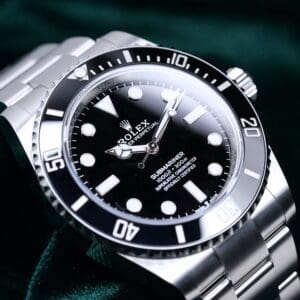
2026 NEW UNWORN Rolex Submariner No Date Black Dial Black Ceramic Bezel Oyster Bracelet Stainless Steel 41mm COMPLETE SET 124060
$15,219.00
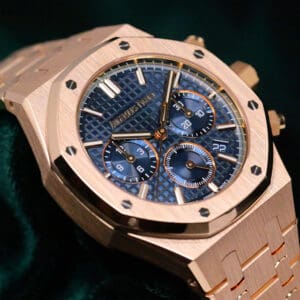
Audemars Piguet Royal Oak Selfwinding Chronograph Bleu Nuit Nuage 50 Blue Dial Bracelet 18k Rose Gold 38mm MINT CONDITION COMPLETE SET 26715OR.OO.1356OR.01
$104,942.00
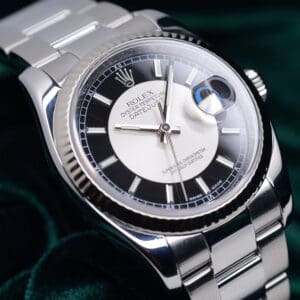
Rolex Datejust “Tuxedo” Black and Silver Dial 18K White Gold Fluted Bezel Stainless Steel Oyster 36mm MINT CONDITION COMPLETE SET 116234
$10,671.00
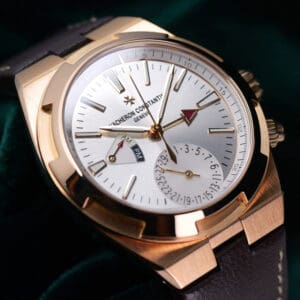
Vacheron Constantin Overseas Dual Time Silver Dial Brown Leather Strap 18K Rose Gold 41mm MINT CONDITION COMPLETE SET 7900V/000R-B336
$41,894.00
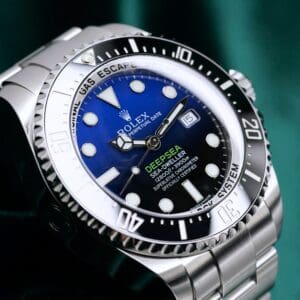
Rolex Sea-Dweller Deepsea James Cameron D-Blue Dial Black Ceramic Bezel Oyster Bracelet Stainless Steel 44mm MINT CONDITION 116660-0003
$14,272.00
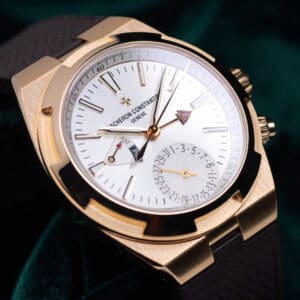
Vacheron Constantin Overseas Dual Time Silver Dial 18K Rose Gold Brown Rubber Strap 41mm MINT CONDITION COMPLETE SET 7900V/000R-B336
$41,894.00
Final Thoughts on Omega Constellation vs De Ville
These two watches have never really competed for the same buyer. The Constellation asks to be noticed. The De Ville asks to be trusted. That gap in intent is what makes this comparison feel harder than it is.
In 2026 the Constellation story shifted, with the Globemaster retired and the pricier Observatory taking over the pie-pan role, but the core choice hasn’t. If you want a visual signature that wears across contexts, the Constellation still serves. If you want a watch that recedes into formality, the De Ville Trésor is one of the few at this price that genuinely delivers it.
Two quick tips before you buy. On any Constellation, check whether the case has been over-polished, because the claws and half-moon facets lose their crispness fast under a careless buffing wheel. On a Prestige, confirm you’re getting the 2022-or-later Master Chronometer generation rather than an older 2500-caliber example.
Trust your instinct on the rest, and you won’t regret either choice.