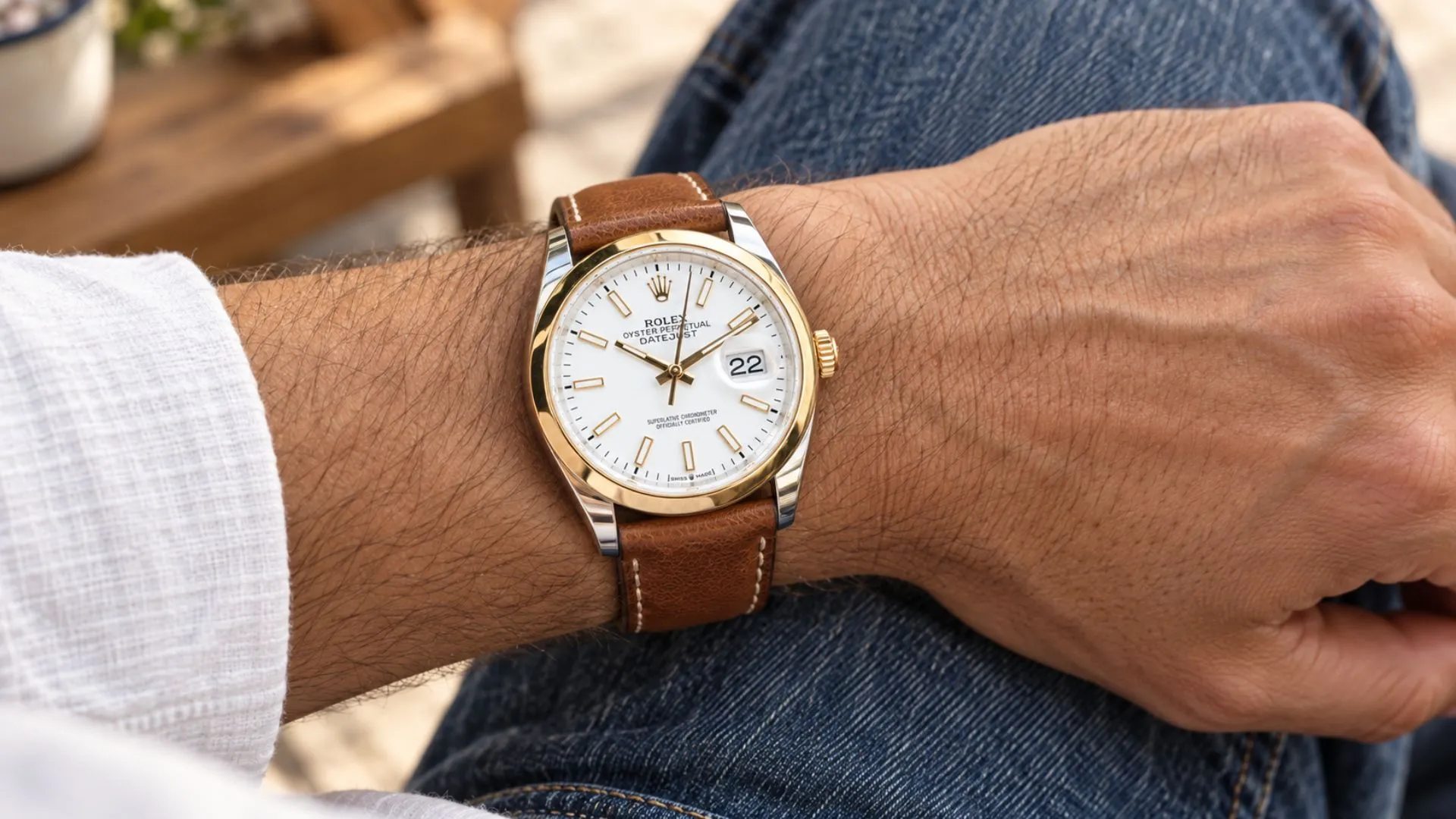

Have you ever looked at your Rolex GMT-Master 2 and felt unsure about the right way to wind it without causing damage? It’s a common moment of hesitation, especially when you want to protect such a valuable timepiece.
This guide gives you a clear, simple, and confident way to wind your GMT-Master 2 correctly so you keep its movement healthy and its accuracy reliable. You’ll learn the exact steps, what to avoid, and why proper winding matters for the longevity of your watch. Handle your Rolex with ease and confidence.
Rolex GMT-Master II Movement Overview
The Rolex GMT-Master II uses the Caliber 3285, a self-winding mechanical movement known for its accuracy, durability, and ability to track dual time zones. This movement delivers a 70-hour power reserve, giving the GMT hand, date, and time functions consistent and dependable performance.
Rolex built the Caliber 3285 with a Chronergy escapement, which increases energy efficiency and boosts shock resistance. It also features a Parachrom hairspring that protects the movement from magnetic fields and temperature changes, helping your watch maintain precision in daily use.
Its bidirectional rotor keeps the watch powered through normal wrist motion, so manual winding only becomes necessary when the power reserve runs low. This combination of efficiency and rugged engineering makes the Caliber 3285 one of Rolex’s most reliable modern movements.
How to Wind a Rolex GMT-Master II (Manual Winding)
Winding a Rolex GMT-Master II manually makes sure that the mainspring stores enough energy to activate all functions immediately after you put it on. Proper manual winding also helps the crown mechanism stay smooth and prevents unnecessary strain on the case threads.
Follow the steps below to wind your GMT-Master II carefully and efficiently, keeping the operation precise and controlled:
1. Make Sure the GMT-Master II Is Completely Dry
Before winding, check that your GMT-Master II is completely dry. Water or moisture on the crown or case can compromise the Triplock system, which maintains water resistance. Wipe the watch gently with a soft, clean cloth, and keep your hands dry to prevent slipping or accidental pressure on the crown.
2. Unscrew the Crown Counterclockwise
Do not unscrew the crown while the watch rests on your wrist. The pressure from your hand can tilt the crown and damage the threading or crown tube. Always hold the watch in your other hand for a straight, stable unscrew motion.
3. Pull the Crown to the First Position (Manual Winding Mode)
Gently pull the crown outward to the first position, which engages manual winding. Do not pull the crown further, as the second and third positions control the date and GMT functions. Confirm the crown sits securely in this position before starting to wind.
4. Turn the Crown Forward (Clockwise) 20–40 Times
Rotate the crown clockwise slowly between 20 and 40 complete turns. Each turn transfers energy to the mainspring, gradually filling the power reserve. Avoid spinning too quickly or forcing the crown, as this can strain the movement and reduce accuracy over time.
5. Stop Winding When You Feel Smooth, Natural Resistance
You will feel increased resistance as the mainspring reaches full tension. Stop winding once the resistance feels natural and smooth. Overwinding does not improve performance and can stress internal components, so trust the tactile feedback from the crown.
6. Push the Crown Back Toward the Case
Once winding is complete, gently push the crown back toward the case. This action disengages manual winding mode and prepares the crown for secure screwing. Press the crown until it sits flush with the case to maintain proper alignment with the Triplock system.
Step 7: Screw the Crown Down Fully to Maintain Water Resistance
Finish by screwing the crown clockwise until it is fully tight against the case. The Triplock seal relies on this step to keep the GMT-Master II water-resistant up to 100 meters. Confirm the crown is fully sealed to protect the movement from moisture, dust, and other environmental factors.
What Not to Do When Winding a Rolex GMT-Master 2

The Rolex GMT-Master 2 has a unique GMT function and a robust Triplock crown system that requires careful handling during winding. Avoiding certain actions protects the dual-time mechanism and crown threads from damage.
Here are key model-specific actions to avoid when winding your GMT-Master II:
1. Do Not Wind the Watch While Holding the Rotating GMT Bezel
Avoid gripping or turning the 24-hour GMT bezel during winding to prevent unnecessary pressure on the movement. The bezel’s internal teeth interact with the GMT hand system, and pressure during winding can misalign the dual-time function or stress the gearing. Always leave the bezel in a neutral, stationary position.
2. Do Not Unscrew the Crown While the Watch Is Still on Your Wrist
Do not unscrew the crown while the watch rests on your wrist. The pressure from your hand can tilt the crown and damage the threading or crown tube. Always hold the watch in your other hand for a straight, stable unscrew motion.
3. Do Not Wind Immediately After Exposure to Extreme Temperature Changes
Do not wind the GMT-Master II right after it has been exposed to hot or cold extremes, such as direct sunlight or cold water. Rapid temperature shifts can slightly expand or contract the case and crown, increasing the risk of crown tube misalignment or moisture entry. Let the watch stabilize to room temperature first.
4. Do Not Force the Crown if the Jumping Hour Mechanism Feels Engaged
Do not force the crown when the jumping hour adjustment engages. The GMT-Master II allows independent hour setting, and forcing the crown can damage the hour-wheel mechanism or misalign the GMT hand. Pause and check the crown position before attempting to wind further.
5. Do Not Wind the GMT-Master II If You Feel Grit Near the Crown Tube
Do not continue winding if you detect any gritty or rough resistance near the crown tube. Particles or debris can scratch the crown threads and compromise water resistance. Stop and have the watch inspected before proceeding to prevent internal damage.
6. Do Not Leave the Crown Partially Unscrewed After Winding
Do not leave the Triplock crown partially unscrewed after winding. A partially sealed crown exposes the case to dust, moisture, and shock, which can affect the GMT system or damage the movement. Always screw the crown fully back into place to maintain complete protection.
Final Thoughts on Winding Your Rolex GMT-Master II

Winding a Rolex GMT-Master II correctly is essential for maintaining the watch’s intricate GMT function and the integrity of the Triplock crown system. Following careful manual winding steps while avoiding model-specific mistakes keeps the movement running smoothly and prevents unnecessary wear.
It helps to wind the watch at a consistent time daily if not worn, store it upright or in a watch winder, and avoid exposure to strong chemicals or magnetic fields. Taking these precautions will keep your GMT-Master II fully functional and preserve its value, so you can enjoy accurate timekeeping for years to come.
FAQs About Winding a Rolex GMT-Master II
How many turns does a GMT-Master II need to wind fully?
A Rolex GMT-Master II typically requires 20 to 40 clockwise turns of the crown to fully wind the mainspring. The exact number depends on how depleted the power reserve is. You should feel smooth resistance as the mainspring reaches full tension, indicating that the watch is completely wound.
Do I need to wind my GMT-Master II if I wear it daily?
If you wear your GMT-Master II every day, manual winding is generally unnecessary. The bidirectional rotor automatically powers the movement through wrist motion. However, if your daily activity is minimal or the watch stops overnight, a few manual turns provide enough energy to keep the GMT hand and time functions accurate.
Why did my GMT-Master II stop even though I wore it recently?
Even with regular wear, the GMT-Master II can stop if the wrist motion wasn’t sufficient to fully power the rotor or if the watch was exposed to strong magnetic fields. Mechanical movements require consistent movement to maintain energy, and low activity may not fully recharge the power reserve.
Is it okay to shake the watch to restart it?
You should never shake a Rolex GMT-Master II to restart it. Sudden motion can stress the movement components or misalign the GMT mechanism. Always use the manual winding method by turning the crown clockwise gently to safely restore the mainspring’s tension.