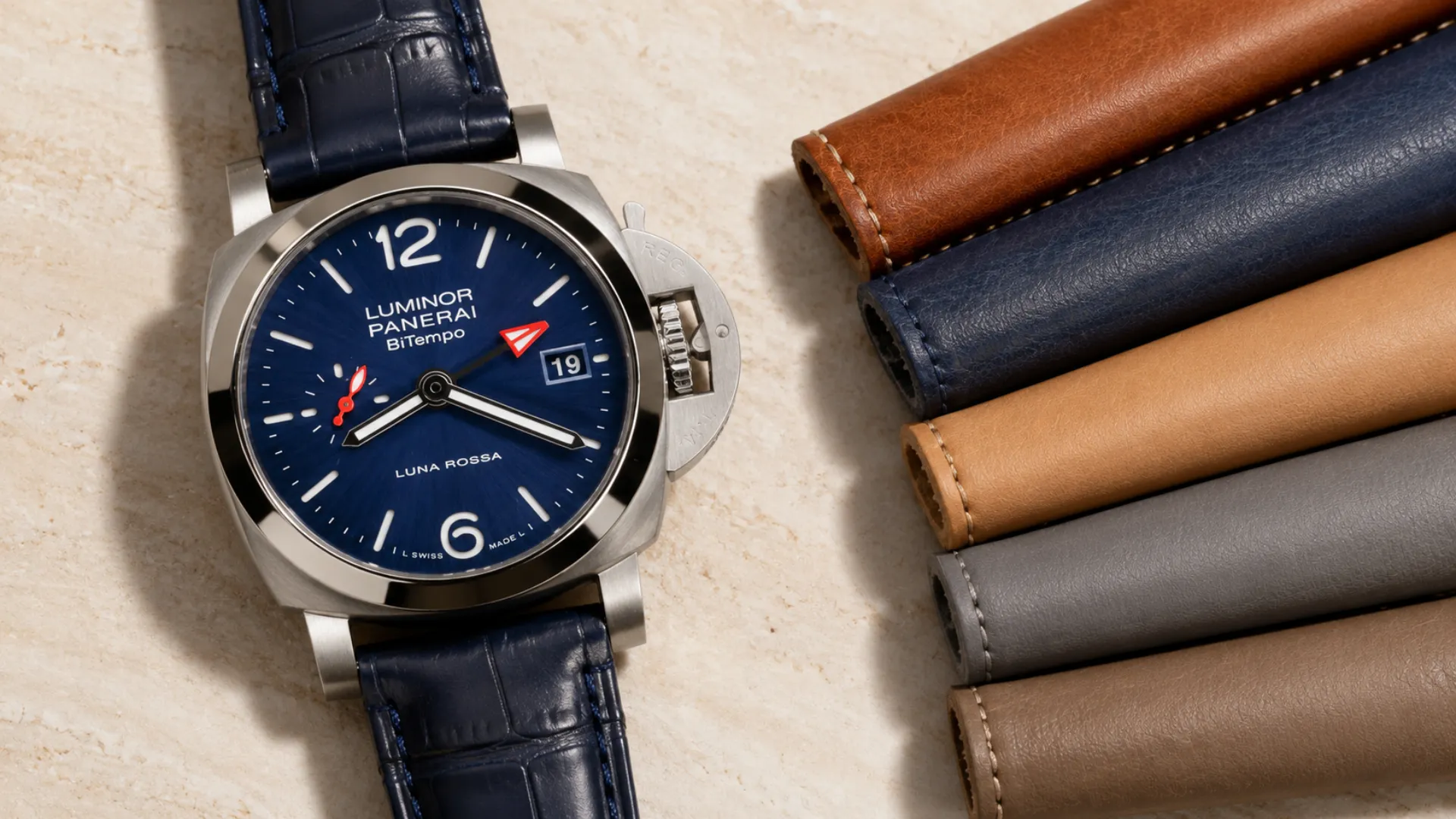

A watch compass bezel allows you to navigate using the sun and your watch’s hour hand, turning a simple timekeeping tool into a functional outdoor instrument. When you understand how the bezel aligns with the Earth’s rotation, you can determine north, south, east, and west with surprising accuracy — an essential skill when GPS signals drop, batteries die, or you need quick orientation on a trail.
Learning the method takes only a few moments, but mastering it gives you a dependable way to stay on course in real-world conditions.
What Is a Watch Compass Bezel and How Does It Work?
A watch compass bezel is a rotating ring marked with the four cardinal directions (North, South, East, and West) designed to help you find orientation using the sun and the position of your watch’s hour hand. Instead of relying on magnetic needles, the bezel works by leveraging the way the sun moves across the sky.
When you point the correct part of the watch toward the sun and rotate the bezel to match that alignment, the markings allow you to read the cardinal directions directly on the watch face. Because the system is based on the sun’s position relative to local time, it functions as a simple solar compass: precise enough for hiking, travel, and outdoor navigation when electronic tools aren’t available.
How to Use a Watch Compass Bezel (Step-by-Step Guide)
Using a compass bezel correctly depends on where you are in the world and how your watch displays time. Each region uses the same basic idea, but the alignment changes slightly, so it helps to look at the process one method at a time.
Using a Compass Bezel in the Northern Hemisphere
Finding direction in the Northern Hemisphere follows the classic sun-and-watch method that most outdoor guides teach. The key is to use the hour hand as your reference point, then let the bezel mark the cardinal directions once everything is aligned.
1. Point the hour hand toward the sun. Turn your wrist until the hour hand directly faces the sun; this creates the reference line needed for orientation.
2. Find the midpoint between the hour hand and 12 o’clock. Locate the halfway point on the dial between the hour hand and the 12 o’clock marker; this midpoint indicates the south line.
3. Rotate the bezel so South aligns with the midpoint. Turn the bezel until the “S” lines up with the midpoint you just identified.
4. Read North, East, and West using the bezel markers. With the bezel set, the remaining cardinal points automatically fall into place for quick direction reading.
Using a Compass Bezel in the Southern Hemisphere
Navigating in the Southern Hemisphere uses the same sun-based principle, but the alignment flips because the sun travels across the northern part of the sky. Instead of following the hour hand, you use the 12 o’clock marker as your reference point to establish direction accurately.
1. Point the 12 o’clock marker toward the sun. Rotate your wrist so the 12 o’clock index (not the hour hand) faces the sun, establishing the correct reference.
2. Find the midpoint between the 12 o’clock marker and the hour position. Determine the halfway point on the dial between the 12 o’clock index and the hour hand.
3. Rotate the bezel so North aligns with that midpoint. Turn the bezel until the “N” lines up with your midpoint, marking true north for Southern Hemisphere use.
4. Read the remaining directions on the bezel. Once aligned, the bezel displays the correct directional layout relative to your position.

Using a Compass Bezel With a Digital Watch or Minimalist Dial
Some watches don’t have traditional hour hands, but the method still works as long as you can estimate where the hour hand would fall. The process mirrors the analog technique; you just visualize the hand position before aligning your bezel with the sun.
1. Estimate the hour-hand position. If your watch lacks visible hands, visualize where the hour hand would fall based on the current time.
2. Align with the sun using the same method. Use this estimated hand position to point toward the sun, mirroring the traditional analog technique.
3. Use bezel markers to determine direction. Rotate the bezel exactly as you would with a standard dial, then read the cardinal points.
How to Maintain a Bearing While Moving
Once your bezel is aligned, the challenge is keeping that direction steady as you walk. Small shifts in sunlight, terrain, or wrist angle can throw off your heading, so these habits help you stay consistent while moving.
- Keep the bezel locked in place after your initial alignment.
- Recheck your reference every 10–15 minutes, as the sun’s position changes.
- Hold the watch level and steady while walking to avoid misreading angles.
- Use landmarks (e.g., trees, ridgelines, distant buildings) to maintain a straight path between checks.
- If the sun shifts behind clouds, continue moving in the same bearing until clear visibility returns.
Adjustments and Limitations When Using a Compass Bezel
Even though a compass bezel is reliable for basic orientation, a few factors can influence its accuracy. Time adjustments, sunlight conditions, and environmental challenges all play a role, so understanding these limitations helps you use the bezel more effectively outdoors.
How Daylight Saving Time Affects Compass Accuracy
Daylight Saving Time shifts your watch one hour ahead, which changes how the hour hand relates to the sun. This extra hour creates a slight directional error unless you adjust for it.
To correct for DST:
- Subtract one hour from the displayed time before aligning the watch with the sun.
- Imagine where the hour hand would be if DST were not in effect.
- Use this corrected position when finding the midpoint for North or South.
Accuracy Limitations of the Sun-and-Watch Method
The sun-and-watch method works well for general orientation, but it does have limits. It relies on clear sunlight, so heavy clouds or fog reduce accuracy. Unlike a magnetic compass, it provides only a broad sense of direction rather than precise degree measurements.
Any timekeeping error (e.g., a watch running fast or slow) shifts the reference line and creates small deviations. Bearings also drift as the sun moves across the sky, which means you must check your alignment regularly. The method is most reliable in mid-morning and mid-afternoon, while sunrise and sunset angles make readings less defined.
Situations Where a Watch Compass Bezel Won’t Work Well
Some conditions make it difficult or impossible to use the sun as a reference point, so keep these limitations in mind:
- Dense cloud cover or fog that hides the sun.
- Deep forests, mountain valleys, or urban canyons where the sun is blocked.
- Near the equator, where the sun’s position becomes harder to use for directional reference.
- During winter at high latitudes, when the sun stays low and angles become unreliable.
- At night, unless supported by moon-based direction methods (which are far less accurate).
- When the watch time is incorrect, making the alignment fundamentally flawed.
Common Mistakes When Using a Watch Compass Bezel
Even though the sun-and-watch method is simple once you learn it, a few common mistakes can throw off your readings. Avoiding these issues helps you get more reliable direction every time you use the bezel outdoors.
Pointing the Wrong Part of the Watch at the Sun
Many users accidentally point the 12 o’clock marker toward the sun in the Northern Hemisphere or point the hour hand toward the sun in the Southern Hemisphere. Because each region uses a different reference line, mixing them up immediately reverses the direction reading.
Mixing Up Northern and Southern Hemisphere Methods
The Northern Hemisphere relies on the hour hand, while the Southern Hemisphere relies on the 12 o’clock marker. Using the wrong method gives you an incorrect midpoint and misaligned bezel. If you travel frequently or live near the equator, double-check which approach applies before you start.
Forgetting to Correct for an Incorrectly Set Time
A compass bezel is only as accurate as the time your watch displays. If the watch is running fast, slow, or still set to Daylight Saving Time, the hour hand will not match the sun’s actual position. This leads to directional drift and unreliable bearings.
Confusing a Compass Bezel With a Dive or GMT Bezel
Not all rotating bezels are designed for navigation. A dive bezel tracks elapsed time, and a GMT bezel tracks additional time zones. Neither bezel has the cardinal direction markers needed for sun-based navigation. Before attempting to orient yourself, confirm that your watch actually has a compass bezel, not just any rotating ring.

Using a Watch Compass Bezel: Key Takeaways
Learning how to use a watch compass bezel turns your timepiece into a reliable navigation tool. Once you know how to align the watch with the sun and read the bezel markings, the setup takes only a few seconds. With a bit of practice, it gives you a dependable sense of direction, especially when electronic devices fail or lose signal.
Proper hemisphere adjustment, accurate timekeeping, and careful alignment make the bezel a dependable tool in real outdoor situations.
FAQs About Using a Watch Compass Bezel
How accurate is an analog watch compass compared to a real magnetic compass?
A watch compass bezel provides general directional guidance, but it is not as precise as a magnetic compass. Magnetic compasses measure exact degrees and respond directly to Earth’s magnetic field, while a watch bezel relies on the sun’s position and correct time alignment. Expect it to give a reliable sense of direction, but not pinpoint bearings.
Can I use a watch compass bezel at night?
No, the method requires sunlight to align the watch correctly. Without the sun, the hour hand or 12 o’clock marker cannot be used to determine direction. Moon-based navigation techniques exist, but they are significantly less accurate and not recommended when precise orientation is needed.
Do I need a special watch with a compass bezel, or will any analog watch work?
Any analog watch with an hour hand can be used for the sun-based compass method, but a dedicated compass bezel makes it easier to read and mark direction. Standard watches still work for basic navigation; you’ll just need to imagine the cardinal points instead of turning a marked bezel.
Is a compass bezel still useful if I rely on GPS or a smartphone?
Yes. A compass bezel serves as a dependable backup when batteries die, signals drop, or devices malfunction. Even if you primarily use GPS, having a non-electronic navigation method adds an extra layer of safety, especially during hiking, travel, or emergencies.