
Have you ever seen a watch with a rotating bezel and wondered what it actually does? Many people own dive watches, GMT watches, or timing watches, but never learn how to use the bezel properly. Understanding how to use rotating bezel on watch models can make it more useful than you expect.
This guide explains what a rotating bezel is, the different types, and how each one works in real situations. We also show common mistakes, give luxury watch examples, and include clear step-by-step instructions. Keep reading so you can confidently use any rotating bezel like a pro.
What Is a Rotating Bezel and How It Works
A rotating bezel is a movable ring around the watch crystal that helps you track elapsed time, measure a second time zone, or follow decompression schedules, depending on the bezel type. It is one of the most practical tools for anyone who wants to master using rotating bezels on their watches.
The bezel clicks or turns smoothly around the dial, letting you align markers with the minute hand or hour hand. Dive watches use unidirectional bezels that prevent accidental increases in dive time, while GMT and timing bezels are typically bidirectional for easier adjustment.
Types of Rotating Bezels
Different bezel types perform very different jobs. Knowing which one your watch has will help you understand how to properly use rotating bezel on watch models correctly.
1. Unidirectional Dive Bezel
A unidirectional dive bezel rotates only counterclockwise and is required on professional dive watches. This prevents accidental forward rotation, which could cause a diver to overestimate remaining underwater time.
A dive bezel usually has a 0–60 minute scale with a large, luminous zero marker for visibility underwater. You use it to track elapsed time during diving, workouts, cooking, or any activity that needs simple timing.
2. Bidirectional Timing Bezel
A bidirectional timing bezel turns freely both ways. It is used for everyday timing tasks such as parking meters, meetings, workout sets, or rest periods. The numbers on this bezel usually represent minutes or hours. Because it rotates both ways, it is not safe for diving, but it is extremely convenient for daily timing.
3. GMT Bezel
A GMT bezel helps you track a second time zone using a 24-hour scale. When the GMT hand is set to home time, you rotate the bezel to match a new timezone offset. Travelers use it constantly. It’s one of the most useful functions for people who want to use a rotating bezel on watch pieces when flying between countries.
4. Decompression Bezel
A decompression bezel uses multi-colored rings to show required decompression stops at specific depths during scuba diving. It is based on old decompression tables and helps divers ascend safely. While digital dive computers have replaced them, these bezels still appear on modern retro-inspired watches.

How to Use Rotating Bezel on Watch: Step-by-Step for All Types
Below is the simple, step-by-step guide for how to effectively use rotating bezel on watch models across all bezel types.
1. How to Use a Unidirectional Dive Bezel
How It Works
A unidirectional dive bezel helps you track elapsed time in a safe and predictable manner. Because it rotates only counterclockwise, it can only shorten your measured dive time, never extend it. This prevents dangerous miscalculations underwater. To use it, you simply align the zero marker with the minute hand before starting your activity. As time passes, the minute hand will point to the elapsed minutes directly on the bezel.
Steps:
Align the Zero Marker: Turn the bezel so the zero marker meets the minute hand.
Track Your Time: Watch the minute hand move and read elapsed minutes directly.
Stay within Time Limit: Never exceed your planned dive or activity time.
2. How to Use a Bidirectional Timing Bezel
How It Works
A bidirectional timing bezel gives you fast timing without needing a stopwatch. Because you can rotate it both ways, you can align it with any hand quickly. This bezel is ideal for daily use—like timing walks, meetings, oven baking, rest periods during workouts, or even tracking how long your phone has been charging. It’s one of the easiest ways to learn about watch functions because it responds instantly and works for almost any timing need.
Steps:
Rotate the Bezel: Align the minute marker with the minute hand.
Count Up or Down: Use the scale to track time passing.
Reset: Return the bezel to its neutral position after use.
3. How to Use a GMT Bezel
How It Works
A GMT bezel lets you track another time zone using a 24-hour scale. This is extremely useful for travel, international work, and coordinating with other countries. The bezel is rotated based on the hour difference between locations. To rotate the bezel on watch models with GMT functionality, you simply set the GMT hand to home time and adjust the bezel to match your destination’s offset.
Steps:
Set the GMT Hand: Align it with your home time.
Rotate the Bezel: Move it forward or backward based on hour offset.
Read Second Time Zone: Use the GMT hand + bezel scale.
4. How to Use a Decompression Bezel
How It Works
A decompression bezel is specialized for vintage-style scuba timing. Instead of timing minutes, it displays color-coded depth levels and decompression stop durations. These numbers come from classic dive tables. Modern divers rarely rely on them, but the bezel remains iconic on retro dive watches. Understanding how to operate the rotating bezel on watch models with decompression scales helps collectors appreciate their historical purpose and safety design.
Steps:
Align to Dive Plan: Match depth ring to your intended depth.
Use for Ascent: Follow color-coded rings for decompression times.
Monitor Stops: Check each required stop carefully.
Examples of Rotating Bezels on Popular Luxury Watches
Many luxury watches use rotating bezels differently, and each model is built with a specific timing function in mind. Seeing real examples helps you understand how to utilize rotating bezel on watch models correctly. These watches show how bezel features can change depending on whether you’re diving, traveling, or measuring short intervals.
Rolex Submariner
The Rolex Submariner uses a unidirectional rotating dive bezel designed for safe underwater timing. Its highly durable ceramic insert resists scratches and fading, even after years of use. The bright luminous pip at the zero marker helps you read elapsed time in dark or underwater environments.
This reliable bezel design is one reason the Submariner remains one of the most trusted dive watches worldwide.
Omega Seamaster Diver 300M
The Omega Seamaster Diver 300M features a ceramic bezel with a white enamel diving scale for long-lasting readability. Its smooth rotation makes it easy to adjust even when your hands are wet or wearing gloves. The bezel is engineered to handle deep-sea conditions, pressure changes, and harsh environments.
This blend of toughness and clarity is why the Seamaster is a favorite among recreational and professional divers.
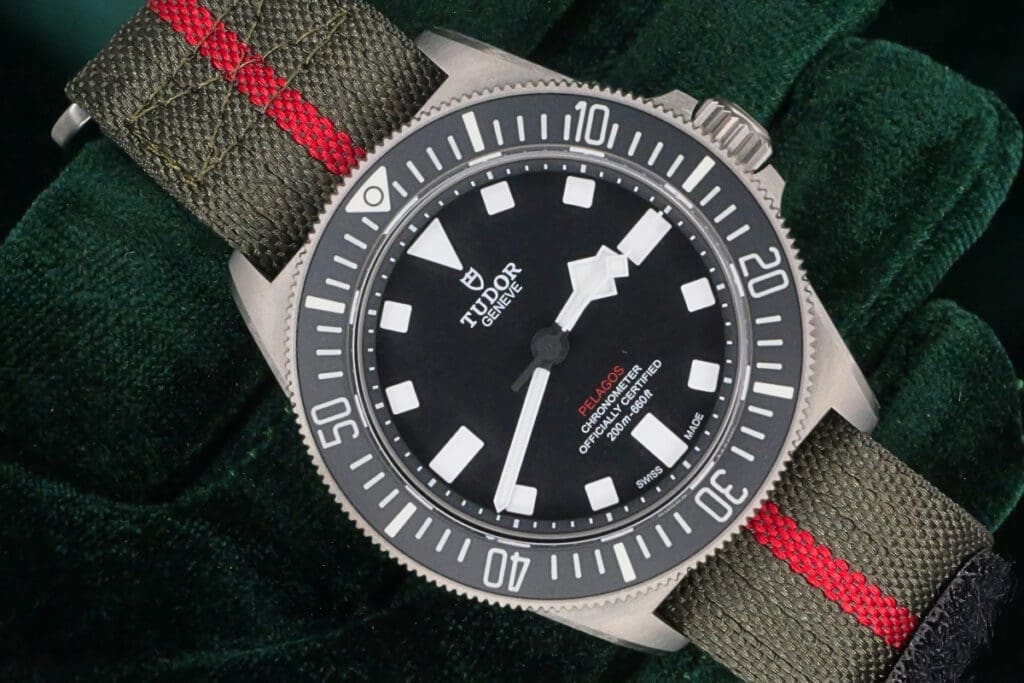
Tudor Pelagos
The Tudor Pelagos includes a matte ceramic unidirectional bezel with full luminous markers for maximum visibility. The bezel clicks firmly into place, giving you secure and precise control while timing a dive. Its titanium construction makes the watch lightweight without sacrificing strength. These features make the Pelagos one of the most functional and dependable tool
Rolex GMT-Master
The Rolex GMT-Master II uses a bidirectional rotating GMT bezel to track a second or even third time zone. Its two-tone Cerachrom insert helps you easily distinguish between daytime and nighttime hours. The bezel moves smoothly for fast time-zone changes without affecting your main local time.
This design makes the GMT-Master II perfect for travelers, pilots, and anyone who needs to monitor multiple time zones.
Common Mistakes When Using a Rotating Bezel
Below are common mistakes people make when rotating the bezel on watch models, along with clear explanations. Understanding these errors helps you avoid damaging your watch or misreading important timing information.
1. Misaligning the Zero Marker
Not aligning the zero marker can lead to wrong dive-time calculations, which can be dangerous underwater. Even a small misalignment can throw off your reading by several minutes. Always double-check your bezel position before entering the water. This simple habit keeps your timing accurate and your dive plan safe.
2. Turning a Bezel Underwater Without Enough Grip
It can be hard to turn a bezel underwater if your gloves or fingers can’t grip the edge. A slip can move the bezel accidentally, changing your timing without you noticing. Make sure your hands are secure before adjusting anything underwater. If conditions are rough, it’s better to set the bezel at the surface.
3. Using a Bidirectional Bezel for Diving
A bidirectional bezel can move both ways, which means it can shorten your dive time by mistake. This can cause unsafe timing and lead you to think you have more air than you actually do. Only use a unidirectional dive bezel for underwater timing. It is specifically designed to prevent accidental overestimation of remaining time.
4. Misreading a Countdown Bezel
Countdown bezels display time in reverse, which can confuse you if you are used to dive bezels. Misreading these markers can cause you to think you have more or less time than you actually do. Always learn the layout before depending on it to time something important. Practice on land first so you feel confident.
5. Forgetting to Reset the Bezel
If you leave the bezel in the wrong position, your next timing session will automatically start off wrong. This mistake is extremely common and can ruin any reading you try to take afterward. Make it a habit to reset the bezel after every use. It keeps your watch ready and prevents confusion.
6. Treating a Dive Bezel Like a Stopwatch
A dive bezel measures minutes, not split-second accuracy. If you try to use it like a chronograph, your timing will never be exact. It’s best for simple timing tasks such as cooking, parking meters, or dive intervals. If you need precision, use a watch with an actual chronograph instead.
7. Using an Unlumed Bezel in Low Light
A faded bezel or one without lume can become unreadable at night or underwater. This can lead to unsafe timing mistakes, especially during dives or evening activities. Always make sure your bezel has visible markers before relying on it. If it’s too worn out, consider servicing or replacing it.
8. Confusing GMT and Dive Bezels
A GMT bezel is for tracking time zones, not underwater safety. If you try to use it to measure dive time, your reading will be incorrect and risky. Make sure you know which bezel your watch has and what it is designed to do. Using the wrong bezel for the wrong task can lead to dangerous mistakes.
9. Over-Rotating Cheap Bezels
Some bezels are not designed to be forced past their natural rotation limits. If you over-rotate them, you can damage the click spring or alignment ring inside. Once damaged, the bezel may become loose or stop rotating entirely. Always rotate gently and stop if you feel resistance.
10. Ignoring ISO Dive Standards
ISO dive-watch standards exist for your safety and should never be ignored. These rules define how a bezel should be used to track safe dive times. If you don’t follow them, you risk staying underwater longer than you should. Always learn standard diving practices before depending on your bezel.
Extra Features That Most Guides Fail to Include
Below are important details missing from most online guides about rotating the bezel on watch models. Knowing these extra functions helps you understand your watch better and use the bezel more confidently in real-world situations.
Bezel Click Counts (60-, 90-, 120-click)
More clicks = finer timing accuracy.
Professional diver models often use 120-click bezels.
Bezel Materials Table
When Not to Use a Rotating Bezel
Inside tight clothing (jacket cuff may rotate it)
In mud or dirt (grit can jam bezel)
With damaged lume (unsafe in low light)
Conclusion
Understanding how to use rotating bezel on watch models gives you more control and confidence every time you wear your timepiece. As you practice, you’ll get quicker at aligning markers, tracking elapsed time, and choosing the right bezel for your needs. Just remember to stay gentle with the bezel, avoid turning it underwater unless you’re sure your watch allows it, and take a moment after each use to reset it.
With these habits, your bezel will stay accurate, smooth, and ready for your next dive, flight, or daily task. Your watch will always reward careful handling.
FAQs About Using a Rotating Bezel Watch
How do I use a rotating bezel to tell time passed?
To use a rotating bezel to tell time passed, rotate the zero marker to align with your minute hand before starting your activity. As time passes, the minute hand will move along the bezel scale, showing you exactly how many minutes have gone by.
Can a rotating bezel replace a stopwatch?
No, a rotating bezel is not as accurate as a stopwatch. It’s better suited for timing activities where precision isn’t critical and for general tracking. For high-precision measurements, you should use a stopwatch or chronograph instead.
What’s the difference between a dive bezel and a GMT bezel?
A dive bezel tracks elapsed time using a 60-minute scale, while a GMT bezel tracks a second time zone using a 24-hour scale. Dive bezels are unidirectional for safety, and GMT bezels are bidirectional for convenience. Understanding this difference is essential so you don’t mix up functions.
Why does a dive bezel only turn one way?
A dive bezel turns only counterclockwise to prevent accidental rotation that could increase your dive time. This safety feature ensures that the bezel can only shorten—not extend—your measured dive. It is a crucial part of safe underwater timing and follows ISO 6425 dive standards.
Is it safe to turn the bezel underwater?
Generally, it is safe to turn a bezel underwater, but extreme conditions can hinder grip. Always ensure your watch functions properly and that you can secure it before attempting adjustments.
Do I need to service my watch bezel?
Yes. Regular cleaning and servicing keep the bezel turning smoothly and prevent grit from jamming the mechanism. Dive watches especially need periodic maintenance to ensure the bezel remains safe and accurate.