
Spotting a fake Rolex box can feel tricky, especially when counterfeiters imitate colors, textures, and shapes that look close to the real thing. The small details inside modern Rolex packaging often confuse buyers. That’s why knowing how to spot a fake Rolex box gives you real protection.
Rolex packaging has changed across decades, so older boxes look very different from the ones you see with current models like the Submariner, Datejust, or Day-Date. If you know what belongs in each era, you avoid paying extra for a counterfeit add-on that lowers the value of your purchase.
This guide walks you through box generations, materials, sizes, accessories, red flags, and a full authenticity checklist so you can inspect any box with confidence. Keep reading and learn the exact checks that help you verify a Rolex box before you buy.
Overview of Genuine Rolex Boxes
Genuine Rolex boxes follow clear patterns in design, materials, and layout across different eras. Rolex uses specific textures, colors, and construction choices that counterfeiters have a hard time imitating. Understanding these nuances helps you judge what belongs with models like the Rolex Submariner, GMT-Master II, or Datejust.
Key Rolex Box Generations
Rolex packaging changed several times across decades, and each era has features counterfeiters often miss. These generation differences help you match the right box to the right watch.
- 1960s–1980s – Vintage Wood Veneer Boxes: Real wood veneer, burgundy or green tones, simple interiors.
- 1990s – Early Green Leatherette Boxes: Smooth leatherette exterior with basic cream interiors.
- Mid-2000s–2015 – Wave-Top Boxes: Distinct green wave-pattern lid, cream interior, gold crown logo.
- 2015–Present – Modern Green “Ceramic-Era” Boxes: Deeper green, sharper edges, improved suede interior, updated crown logo.
Common Materials Used in Genuine Rolex Boxes
Rolex uses specific materials that stay consistent in quality and feel across authentic boxes. Knowing these helps you spot fakes made with cheaper substitutes.
- Leatherette Exterior: Smooth, even grain with consistent color tones.
- Suede or Microfiber Interior: Soft feel, uniform texture, clean stitching.
- Plastic or Wood Cores: Solid structure with no hollow flex.
- Color Variations: Greens, creams, and burgundy shades tied to specific eras.
Rolex Box Sizes and Configurations
Rolex releases boxes in different sizes depending on the watch category. These size cues help you confirm if a box belongs with a sports model, a precious metal piece, or a special edition.
Genuine Rolex boxes come in small, medium, and large formats. Sports models such as the Submariner, GMT-Master II, and Explorer typically include medium boxes.
Precious metal models (e.g., Day-Date or gold Yacht-Master) ship in larger premium boxes with thicker interiors. Limited or special editions may include oversized presentation-style packaging.
Outer Box, Inner Box, and Accessories Explained
Every authentic Rolex set includes specific layers and accessories arranged in a predictable layout. These details make it easier to spot missing, misplaced, or counterfeit parts.
- Outer Cardboard Sleeve: Thin sleeve with correct green pattern or cream tone for its era.
- Cream Box (Middle Box): Holds the green presentation box; print and texture stay crisp.
- Inner Green Box: The main presentation box with pillow, compartments, and lining.
- Booklet/TAG/Card Placement: Warranty card slot sits at the rear; booklets sit flat in the lid pocket or side compartment, depending on era.
Rolex Boxes by Era (At a Glance Comparison)
Rolex box styles vary sharply when you compare older wood boxes to wave-top styles and modern ceramic-era versions. This quick overview helps you spot incorrect pairings during inspection.
| Era / Style | Colors | Key Patterns | Logo Style |
| Vintage Wood Veneer | Burgundy, deep green | Wood grain surface | Printed crown or foil logo |
| Wave-Top Box (2000s–2015) | Bright to mid-green tones | Raised wave pattern lid | Gold embossed crown |
| Modern Green “Ceramic-Era” | Deep rich green | Smooth, sharp-edge finish | Updated gold crown, refined shape |
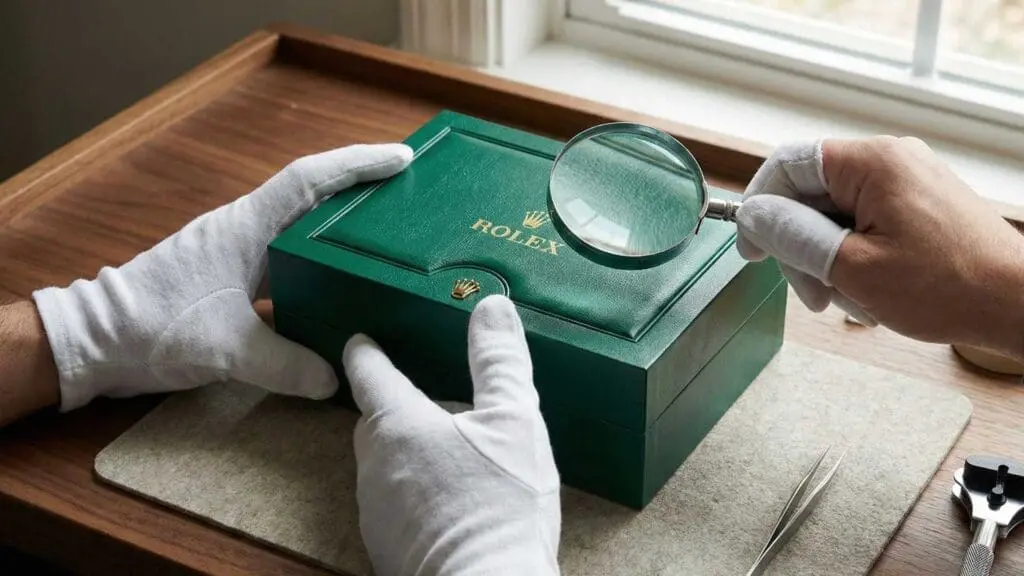
How to Spot a Fake Rolex Box
Counterfeit boxes often look convincing at first glance, but they break down fast under close inspection. These checks help you verify the exterior, interior, accessories, and structural details with confidence.
Physical Checks
1. Compare the Weight
Authentic boxes feel solid because they use dense cores and thick leatherette that add noticeable heft. Lightweight or hollow-feeling boxes signal a fake because counterfeiters rely on thin cardboard and low-density fillers.
2. Check Lid Alignment
Rolex lids close cleanly with even pressure because the hinge and box structure are precisely built. Misaligned lids or uneven gaps show poor manufacturing and usually indicate replica construction.
3. Test Structural Rigidity
A genuine box does not flex when squeezed because Rolex uses thick cores that hold their shape under pressure. Fakes often bend or creak since they rely on thin, low-density materials that feel weak the moment you handle them.
4. Inspect the Base Edges
Real boxes have sharp, well-cut edges created from accurate molds and consistent shaping. Rounded or uneven bases suggest cheaper molds that fail to match Rolex’s clean structural lines.
5. Look for Uniform Stitching (If Applicable)
Some interiors use stitching that is always clean, tight, and perfectly aligned. Uneven spacing, loose threads, or crooked lines are clear red flags of counterfeit craftsmanship.
Exterior Red Flags
1. Incorrect Shade of Green
Genuine green tones stay consistent for each era because Rolex controls its dye formulas closely. Washed-out or overly bright greens often indicate a replica using generic materials.
2. Poor Gold Crown Embossing
Real crowns are crisp, balanced, and deeply embossed with precise tooling. Blurry or shallow logos reveal poor stamping techniques often found in fake boxes.
3. Low-Quality Leatherette Texture
Authentic leatherette feels smooth with a tight, uniform grain. Fake textures feel rubbery, uneven, or overly glossy because they use cheaper vinyl substitutes.
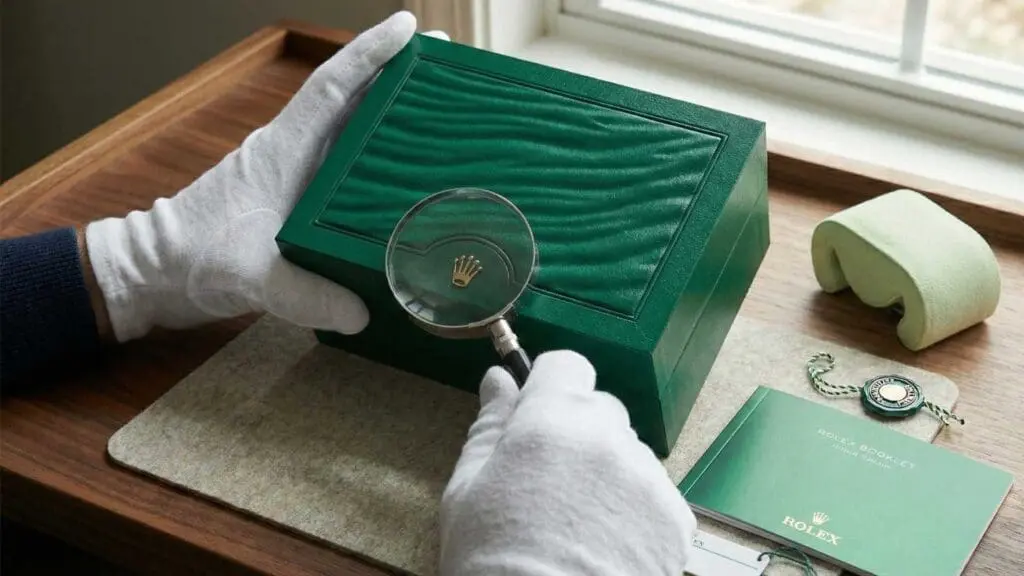
4. Uneven Wave Pattern (Wave-Top Era)
Wave patterns on mid-2000s lids should flow cleanly with evenly spaced ridges. Crooked, inconsistent, or mismatched waves point to a fake lacking proper mold precision.
5. Wrong Box Proportions
Fakes often copy the shape but get the height or lid depth slightly wrong due to poor reference models. These proportion issues stand out when you compare the box to verified examples from the same Rolex era.
Interior Lining Red Flags
1. Rough Suede or Microfiber
Real interiors feel soft, smooth, and consistent in texture across every panel. Scratchy, stiff, or loose fibers signal imitation material with lower-quality finishing.
2. Poor Cushion Quality
The pillow in genuine boxes keeps its shape and feels dense because it uses high-quality foam. Saggy, lumpy, or overly soft cushions are common in fakes that cut corners on padding.
3. Off-Centered Crown Logo
The interior crown must be perfectly centered and cleanly printed or embossed to match Rolex’s precise branding. A shifted or uneven crown becomes obvious when you compare it to authentic interiors from the same era.
4. Stains or Excess Glue
Rolex interiors do not show glue residue because their assembly process is tightly controlled. Spotting glue marks, stains, or uneven seams usually means counterfeit construction.
5. Incorrect Color Tones
Beige, cream, and suede greens follow specific palettes that Rolex repeats consistently. Any color that looks dull, too dark, or mismatched is a warning sign of replica materials.
Outer Cardboard Box and Sleeve Checks
1. Compare Texture of the Green Pattern
Real sleeves feature a very fine, crisp texture that looks sharp even under magnification. Blurry or smudged patterns show poor printing quality used in replicas.
2. Check the Cream Box Walls
Authentic mid-boxes feel sturdy with firm walls and clean corners. Thin, soft, or collapsing walls indicate a fake built with low-grade cardboard.
3. Inspect Print Quality on Stickers
Warranty reference stickers should have sharp text, accurate fonts, and correct model codes. Misprints, fuzzy lettering, or odd spacing are common among replicas.
4. Look for Correct Sizing
Some fake sleeves are slightly too short or too wide due to inaccurate measurements. These sizing issues become clearer when you compare them to genuine boxes from the same production period.
5. Confirm Barcode Format
Rolex uses specific barcode placements and fonts that stay consistent across eras. Any variation in spacing, thickness, or positioning is suspicious.
Booklets, Tags, and Extras
1. Inspect the Warranty Card Slot
Real boxes hold the card securely in a precise slot that fits tightly around the edges. Loose, oversized, or poorly shaped slots indicate a fake.
2. Review Booklet Paper Quality
Rolex prints booklets with thick, matte paper and sharp, detailed colors. Glossy, thin, or overly bright paper is a strong red flag that the set is not authentic.
3. Check the Green Hang Tag
The Superlative Chronometer tag should have clean gold lettering with smooth edges. Many fakes show smudging, uneven gold tone, or incorrect font thickness.
4. Verify Model-Specific Booklets
A Submariner booklet should not come with a Datejust box because each model has its own documentation. Mismatched literature suggests tampering or aftermarket packaging.
5. Look for Missing Serial Sticker
Older sets include a serial sticker inside the box, and its absence can signal replacement parts. Many fake sets skip this detail entirely because counterfeiters rarely copy era-correct sticker designs.
Complete Rolex Box Authenticity Checklist
This checklist summarizes the exact points you should inspect, along with the red flags that often expose counterfeit packaging. Use the table below to review every part of a Rolex box set quickly.
| Item to Check | What to Look For | Red Flags |
| Box Weight | Solid, dense construction with no hollow feel | Lightweight shell, thin walls |
| Lid Alignment | Even closing pressure and straight edges | Crooked lid, uneven gaps |
| Exterior Texture | Smooth, consistent leatherette grain | Rubber-like feel, uneven patterns |
| Gold Crown Logo | Clean, crisp embossing with sharp lines | Blurry edges, shallow impressions |
| Interior Suede/Microfiber | Soft, uniform texture, correct color tone | Rough feel, loose fibers |
| Cushion Quality | Dense, structured pillow that holds shape | Sagging, overly soft, or misshaped pillow |
| Interior Crown Logo Placement | Centered print or embossing | Off-center, smudged, or faded logo |
| Wave Pattern (Wave-Top Era) | Smooth, even flowing waves on the lid | Misaligned or distorted wave pattern |
| Outer Sleeve Texture | Crisp, fine pattern depending on era | Blurry print, wrong shade of green |
| Cream Box Construction | Firm walls and clean corners | Thin cardboard, dents, poor structure |
| Stickers & Barcodes | Sharp print, correct reference and serial formatting | Misprints, incorrect model codes |
| Warranty Card Slot | Tight, precise fit that holds the card properly | Loose or oversized slot |
| Booklet Quality | Thick, matte paper with sharp colors | Glossy, thin paper; poor print alignment |
| Hang Tag Details | Clean lettering, correct green or Superlative tag style | Smudged text, wrong tag shape |
| Serial Sticker (Older Sets) | Correct placement and era-specific design | Missing sticker, incorrect layout |
Key Takeaways on How to Spot a Fake Rolex Box
Understanding how to spot a fake Rolex box gives you a significant advantage, especially when buying pre-owned or verifying a watch you already own. You now have a clear sense of the authentic textures, colors, and construction to expect, along with a practical checklist to guide each inspection. These simple steps make the process far less stressful and much more straightforward.
If anything feels off, trust your instincts and take a moment to compare the box to confirmed examples from the same Rolex era. You’ll protect your money, your watch, and your peace of mind. And if you ever feel uncertain, reach out to a trusted dealer or collector; you don’t have to figure it out alone.
FAQs About Spotting a Fake Rolex Box
What is the quickest way to spot a fake Rolex box?
Check the materials and logo quality, especially on the exterior. Genuine Rolex boxes use consistent leatherette texture, sharp gold crown embossing, and dense construction. Fakes often feel lightweight, show sloppy embossing, or use colors that don’t match the correct era. These small details reveal issues fast.
Do all Rolex boxes look the same?
Rolex boxes vary by era, model type, and watch category, such as sports models, precious metal pieces, and special editions. Designs range from vintage wood veneer boxes to modern green ceramic-era boxes. Because of these differences, the “right” box depends on the specific Rolex reference and production year.
Are fake Rolex boxes common?
Fake boxes are very common, especially for models like the Submariner, Datejust, and GMT-Master II. Many sellers pair counterfeit boxes with real watches to increase perceived value. That’s why checking materials, logos, and construction details is essential before trusting any packaging.
Can the box alone confirm the authenticity of a Rolex watch?
No. A real watch can come with a fake box, and a fake watch can come with a real box. Use the box as one inspection point, but always verify the watch itself through serial numbers, movement checks, and trusted experts.