
Ever struggled with a Rolex President bracelet that just doesn’t fit right? A bracelet that’s too loose can slide annoyingly across your wrist, while one that’s too tight feels like a constant squeeze. Getting the perfect fit isn’t just about comfort—it protects your watch and keeps it looking pristine.
In this guide, you’ll learn step-by-step how to adjust a Rolex President bracelet, from the hidden Crownclasp micro-adjustments to removing links safely, so your watch feels tailor-made for you.
What Is a Rolex President Bracelet?
The Rolex President bracelet is a high-end watch band made for the Rolex Day-Date and some Lady-Datejust models. It has three-piece semi-circular links made from solid gold or platinum, giving it both luxury and strength.
Rolex designed it to sit comfortably on the wrist while lasting for decades. The bracelet has a concealed Crownclasp that keeps the closure smooth and hidden. Its links are solid, not hollow, which prevents stretching over time.
The President bracelet also balances weight and flexibility, making it secure without feeling heavy. This combination of design and engineering makes it one of the most recognizable and prestigious Rolex bracelets.
Tools Needed to Adjust a Rolex President Bracelet
To adjust a Rolex President bracelet safely, you need the right tools. Using improper tools can damage the bracelet or screws.
- Spring-bar tool for Crownclasp micro-adjustments
- 1.6mm Rolex screwdriver for screw links
- Pin pusher for older pin-and-tube links
- Soft microfiber cloth to protect the bracelet
- Tweezers or small tray to hold screws and links
- Torque tool (optional) for precise screw tightening
How to Adjust a Rolex President Bracelet Using the Crownclasp Micro-Adjustment
Rolex President bracelets often include a hidden micro-adjustment inside the Crownclasp. Here are clear steps to fine-tune your Day-Date or Lady-Datejust bracelet for a precise fit.
- Open the Crownclasp by Lifting the Rolex Coronet – Gently lift the Rolex crown logo on the clasp until it opens. Do this carefully to avoid bending the clasp or scratching the gold or platinum links.
- Locate the Internal Micro-Adjustment Slot – Look inside the clasp for a small metal slot that holds the spring bar. This slot controls tiny changes in bracelet length, usually in 1–2 mm increments.
- Use a Spring-Bar Tool to Move the Bar to a New Position – Insert a Rolex spring-bar tool into the slot and slide the bar to another notch. Each notch shortens or lengthens the bracelet slightly, allowing precise adjustments without removing links.
- Make Sure the Bar Locks Fully in the Slot – Press the bar until you feel it click securely. If it isn’t fully seated, the clasp could slip or the bracelet may feel uneven.
- Close the Crownclasp and Check Fit – Fold the clasp back and press the Rolex coronet until it clicks. Wear the watch and confirm the bracelet sits snugly, does not pinch, and maintains proper alignment along the wrist.
How to Remove Links From a Modern Rolex President Bracelet (Screw Links)
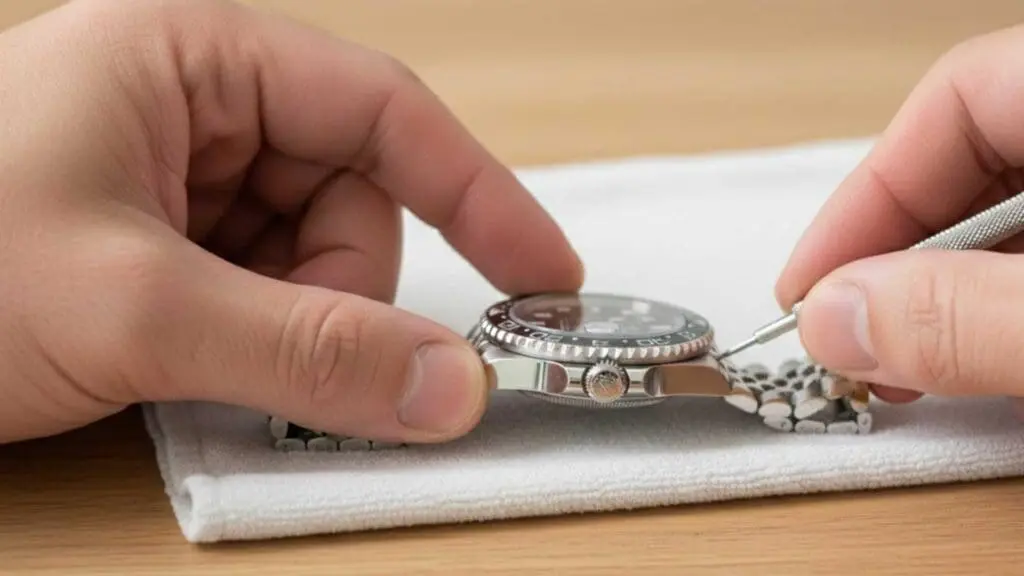
Modern Rolex President bracelets on Day-Date and Lady-Datejust models use screw links for adjusting size. Here are the exact steps to remove links safely without damaging gold or platinum finishes:
- Lay the Bracelet on a Soft Microfiber Cloth – Place the bracelet flat on a clean, soft cloth to prevent scratches on the polished or brushed surfaces.
- Use a 1.6mm Rolex Screwdriver to Loosen One Link Screw – Insert the correct Rolex screwdriver into the screw head and turn slowly counterclockwise. Do not apply excessive force to avoid stripping the gold threads.
- Remove the Link Carefully Without Scratching Gold – Once the screw loosens, gently separate the link. Hold the link securely to prevent it from falling or hitting the surface.
- Keep the Screw and Link Sleeve Together – Place the screw and the small sleeve in a tray or container. Keeping them together ensures you can reassemble the bracelet correctly later.
- Reconnect the Bracelet and Hand-Tighten the Screw – Align the remaining links and insert the screw back. Turn it gently by hand until it seats properly.
- Torque Screws to Approx. 5–7 cN·m (Avoid Over-Tightening Gold Threads) – Use a torque tool if available to secure screws with the correct pressure. Over-tightening can damage the gold threads permanently.
- Store Removed Links Safely – Keep extra links in a safe, labeled container. You may need them if you want to restore the original bracelet size in the future.
How to Adjust an Older Rolex President Bracelet (Pin-and-Tube Links)
Older Rolex President bracelets, often found on vintage Day-Date models, use pin-and-tube links instead of screws. Adjusting them requires care to avoid bending or damaging the pins.
- Identify Directional Arrows Under the Links – Look under the bracelet links for small arrows showing the direction to push the pins out. Following these arrows prevents pin damage.
- Use a Pin Pusher to Push Out the Link Pin – Place a pin pusher on the end of the pin and gently tap or push it in the arrow’s direction until it slides out.
- Remove Link and Keep Pin + Tube Together – Carefully separate the link and keep the pin and tube paired. This ensures proper reassembly later.
- Insert Tube Into the Reattached Link – When reconnecting, place the tube into the link first. This supports the pin and keeps the bracelet secure.
- Press the Pin Back In Until It Sits Flush – Push the pin back into the link until it is fully seated. Make sure it is level with the surrounding links to avoid gaps or loose sections.
What Not to Do When Adjusting a Rolex President Bracelet
Adjusting a Rolex President bracelet requires precision and care. Following specific warnings helps protect both the bracelet and the watch from damage.
- Do Not Force Screws or Pins – Forcing a screw or pin can strip delicate gold threads, bend solid links, or damage the bracelet’s internal alignment, making future adjustments difficult.
- Do Not Adjust the Bracelet While Wearing the Watch – Adjusting on the wrist can cause the tool to slip, scratch the case, or damage the polished surfaces of the gold or platinum links.
- Do Not Use Non-Precision Tools – Using regular screwdrivers, pliers, or improvised tools can slip, strip screws, deform pins, or leave marks on the clasp and links.
- Do Not Overtighten Screws – Applying too much torque can permanently damage gold threads, making the screw insecure or causing the link to crack.
- Do Not Ignore Alignment – Misaligned links can twist the bracelet, cause uneven wear, and put stress on the clasp and pins, reducing the bracelet’s longevity.
- Do Not Lose Small Components – Pins, screws, and sleeves are essential for secure reassembly; losing even one can prevent proper fit and may require a costly replacement.
- Do Not Skip Checking the Fit After Adjustments – A bracelet that is too tight can pinch the wrist and stress links, while a loose bracelet may slide excessively, risking scratches or accidental detachment.
Useful Tips for Adjusting a Rolex President Bracelet
Adjusting a Rolex President bracelet requires more than just the right tools—it takes careful attention to detail. Below are practical tips to help you make precise adjustments while protecting the watch and bracelet.
- Work in Bright, Focused Light – Use a bright desk lamp or LED light to clearly see the tiny screws, pins, and spring bars. Proper lighting prevents slipping the tool and scratching polished or brushed surfaces.
- Label Removed Links for Easy Reassembly – When removing multiple links, mark each with a small sticky note or number them in order.
- Use a Divided Tray for Screws and Pins – Place each screw, tube, and pin in a sectioned tray. This prevents small components from rolling away or getting lost, which is especially important for vintage pin-and-tube links.
- Check Bracelet Flexibility After Adjustment – After adding or removing links, bend the bracelet gently along its natural curve. Make sure all links move smoothly and that pins are seated evenly to avoid stress points that could lead to stretching or breakage.
- Clean Links Before Reassembling the Bracelet – Wipe each link with a microfiber cloth to remove dust, fingerprints, and oils. Residue in the link joints or micro-adjustment slots can interfere with smooth clasp operation.
- Rotate the Clasp Slightly During Micro-Adjustments – While moving the internal spring bar in the Crownclasp, rotate the clasp slightly to help the bar align with the notch. This prevents the bar from slipping or jamming.
- Test Fit on the Wrist at Different Times of Day – Measure fit in the morning and evening, as wrist size can fluctuate. This ensures the bracelet is snug without pinching, even during daily temperature changes or activity.
- Use Non-Magnetic Tools Near the Watch Movement – Magnetic tools can affect the movement of your Rolex. Always use certified Rolex spring-bar tools and screwdrivers to avoid interference with the precision movement.
When to Ask a Professional to Adjust a Rolex President Bracelet
You should ask a professional watchmaker or authorized Rolex service center to adjust your President bracelet if it involves vintage pin-and-tube links, heavily worn gold threads, or a tight micro-adjustment inside the Crownclasp.
Attempting these adjustments without experience can scratch the gold, bend links, or damage the clasp mechanism. Professionals have the correct tools, torque settings, and expertise to make precise changes safely, ensuring the bracelet maintains its fit, function, and value over time.
Conclusion on How To Adjust Rolex President Bracelet
Adjusting your Rolex President bracelet should feel simple and stress-free when you take your time and use the right steps. Focus on protecting the gold, checking the fit twice, and keeping track of every small part.
If a screw feels tight, a pin feels stuck, or the clasp doesn’t move the way it should, stop and get help from a pro—they deal with these bracelets every day. With careful handling, your President bracelet will sit right on your wrist, stay secure, and keep looking sharp every time you wear it.
FAQ About Adjusting a Rolex President Bracelet
Are President Bracelet Screws Softer Because They’re Gold?
Yes, President bracelet screws are softer because they use 18k gold, which is naturally more delicate than steel. These screws can strip easily if you use the wrong screwdriver size or apply too much torque. Rolex recommends around 5–7 cN·m for safe tightening. Because gold threads deform faster, even small mistakes can damage the link, so careful, controlled pressure is essential.
How Many Links Should I Remove for a Proper Fit?
You should remove one to three links depending on your wrist size and how the clasp sits on the underside of your wrist. The goal is to center the Crownclasp so it stays balanced and does not rotate. Most Day-Date models have removable links near the clasp, allowing small adjustments. Always remove links evenly from both sides to maintain the bracelet’s natural curve and comfort.
Can I Adjust the President Bracelet Without Removing Links?
Yes, you can adjust the President bracelet without removing links by using the micro-adjustment inside the Crownclasp. This spring-bar system lets you shift the bracelet by a few millimeters to fine-tune the fit. It’s ideal when the bracelet feels slightly loose or tight but doesn’t require a full link change. However, the adjustment range is limited, so larger sizing changes still require link removal.
Should I Size a Gold Bracelet Differently From Steel?
Yes, you should size a gold bracelet more carefully than a steel bracelet because gold links and screws are softer and more prone to wear. Gold can stretch faster if the bracelet is too loose, and it can develop pressure marks if it’s too tight. A proper fit allows slight movement without sliding excessively. Always tighten gold screws with controlled torque to avoid damaging the threads.
Is It Safe to Adjust a Vintage Stretched President Bracelet?
No, adjusting a vintage stretched President bracelet is risky because older links often have worn pins, thin tubes, and weakened gold walls. These bracelets can deform or crack during resizing. A watchmaker can inspect internal wear, replace damaged tubes, or stabilize stretched links before making adjustments. For heavily stretched bracelets, professional restoration is often needed to prevent further damage and ensure safe daily wear.