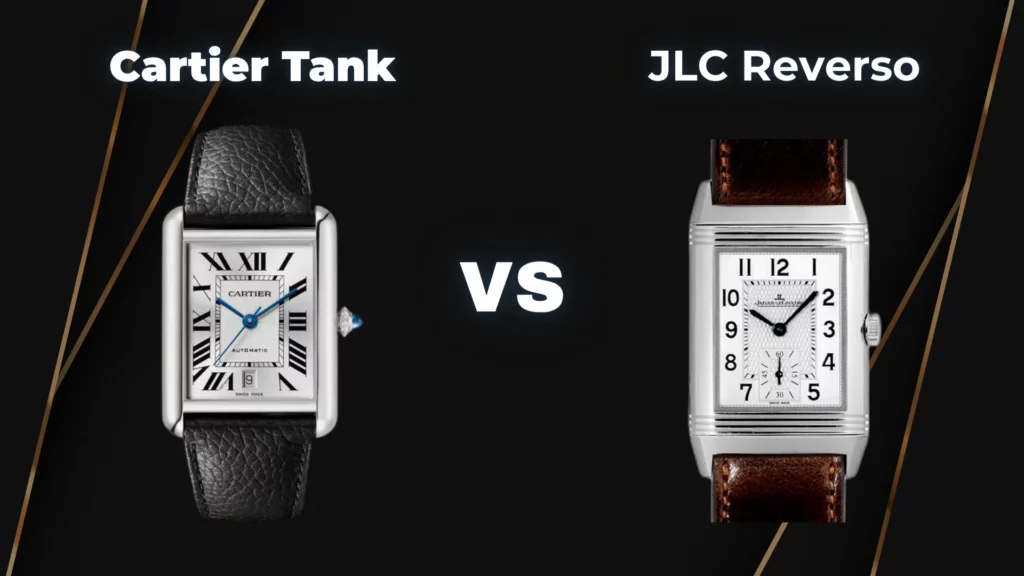
If you are shopping for a rectangular dress watch and have landed on these two, you are choosing between the only real options in the category. The Cartier Tank and the JLC Reverso have each been in production for more than 90 years without a break. No other rectangular watch comes close to that run.
One is a design icon built around restraint. The other is an engineered object that happens to look beautiful. That difference shows up in every part of ownership, from wrist feel to resale behavior.
This guide covers case specs, movement differences, what changed in 2026, pre-owned pricing, and the references that matter most. Start with the overviews below, or jump straight to the differences if you already know both watches.
Cartier Tank, Explained

Louis Cartier created the Tank in 1917, taking the shape directly from the top-down view of the Renault FT-17 military tank. The parallel side rails of the case referenced the vehicle’s tracks. It reached the public in 1919 and became one of the most copied case shapes in watch history.
The Tank is made for buyers who want an authoritative watch with broad name recognition. The dial has barely moved since the 1920s: Roman numerals in the corners, blued sword hands, a railroad minute track, and a sapphire or synthetic cabochon on the crown. That consistency is deliberate, and it is a large part of what makes the Tank last as a design.
The current lineup splits into two clear paths. Steel references sit under the Must family, which includes quartz in Small and Large, and the Must XL with an automatic Caliber 1847 MC and date window. Gold references fall under the Tank Louis Cartier, manual-wind only with the Caliber 1917 MC, no date, and no steel option.
Our full Cartier Tank buying guide walks through every reference in the family if you want the wider view.
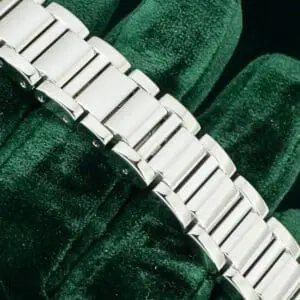
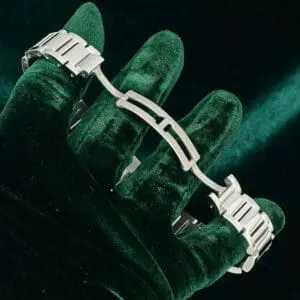
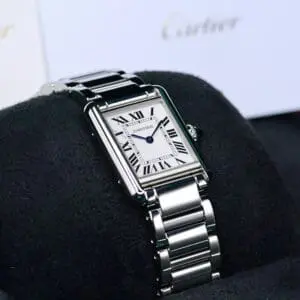
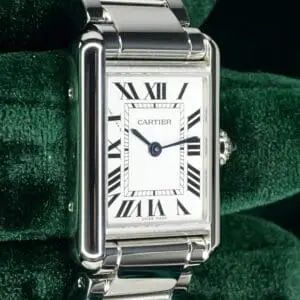
Notable Cartier Tank References:
- Tank Must Large (WSTA0041)
- Tank Must XL Automatic (WSTA0040 / WSTA0053)
- Tank Louis Cartier Large (WGTA0011)
JLC Reverso, Explained

The Reverso came out in 1931. A businessman named César de Trey brought the brief to JLC: polo players in India were breaking their watch crystals during matches. The answer was a case that could physically slide and flip inside a fixed metal cradle, turning the dial face-down so the steel back took the impact.
JLC is a manufacturer, not a design house or jewelry brand. They design, build, and finish movements entirely in-house in the Vallée de Joux, Switzerland, and have historically supplied movements to Patek Philippe, Audemars Piguet, and Vacheron Constantin.
That pedigree reaches all the way down the line. Entry-level Reverso references run the same movement architecture that underpins some of the most respected watches in the world.
On Duoface models, the reverse dial runs a second time zone with a day/night indicator, all from the same single movement as the front. On Monoface versions, the reverse panel is blank steel ready for personal engraving. The reversing case is functional, not decorative.
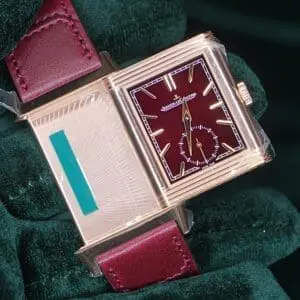
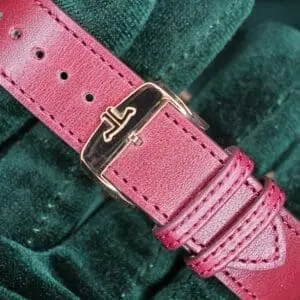
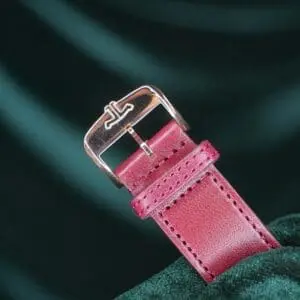
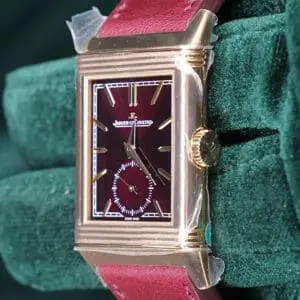
Notable JLC Reverso References:
- Reverso Classic Large Monoface (Q3858522)
- Reverso Classic Medium Duoface Small Seconds (Q2458422)
- Reverso Tribute Duoface Small Seconds (Q3988482)
Cartier Tank vs JLC Reverso: Most Notable Differences
These two watches share a rectangular shape and a strong Art Deco influence, and that is roughly where the overlap ends. Each difference below has a direct consequence for how the watch feels to own.
1. Case Geometry

The Tank has a wider case relative to its height. The Must Large sits at 33.7 mm tall x 25.5 mm wide, with softly rounded corners and a short lug-to-lug distance. That compact footprint is why the Tank works on slimmer wrists where other watches overhang.
The Reverso is built vertically. The Classic Medium measures 42.9 mm tall x 25.5 mm wide, the Classic Large reaches 47 mm tall x 28.3 mm, and all versions have sharp right-angle corners with three horizontal gadroons near each lug.
For wrists under 6.5 inches, the Classic Medium is the right size. The Tribute Mid-Size at roughly 24.4 mm x 40 mm is the closest to original 1930s proportions.
If a slim wrist is the deciding factor for you, it helps to see which luxury watches wear best at that size before you settle on either one.
2. Case Thickness

The Tank Louis Cartier Large is 6.6 mm thick. The Must XL reaches 8.4 mm. Either version slides under a dress shirt cuff without resistance, a direct result of having no reversing mechanism.
The Reverso is thicker because it has to be. The Classic Medium measures about 9.2 mm, and the Large Duoface reaches 10.3 mm, thicker than a Rolex Datejust 36. Under a tight French cuff, the Reverso creates a noticeable ridge. Under an open collar or looser sleeve, it is not an issue.
3. Movement and Manufacturing

The Must Small and Must Large in steel run quartz. The Must XL uses the automatic Caliber 1847 MC. The Tank Louis Cartier runs the manual-wind Caliber 1917 MC. All are genuine Cartier in-house calibers from their La Chaux-de-Fonds facility.
Every Reverso runs a manual-wind movement made entirely in-house at JLC. Current Classic and Tribute references use the Cal. 822 (Monoface) and Cal. 854 (Duoface), both with about 42 hours of power reserve. The watch stops after two days without winding. Most owners wind it each morning as part of putting it on.
4. Dial and Complications
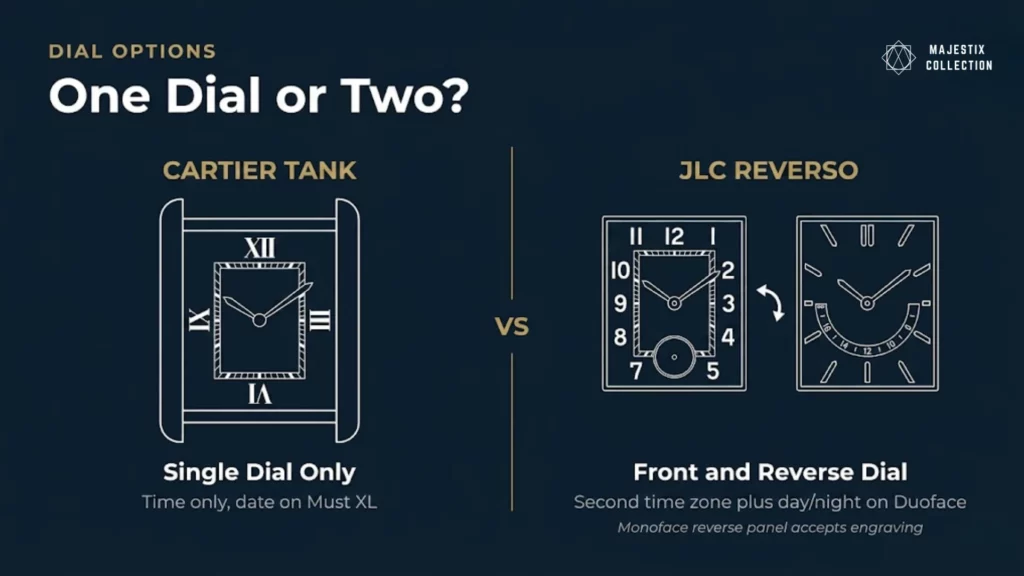
The Tank is two hands and a time display. Roman numerals, blued sword hands, and a railroad minute track. The Must XL adds a date at 6 o’clock. Nothing else. That restraint is why the Tank reads as instantly legible.
The Reverso family covers more ground. Monoface references show local time plus a small-seconds subdial. Duoface references add a full second dial on the reverse with a second time zone and 24-hour indicator, controlled by a hidden slider on the carriage. Monoface versions have a blank reverse panel that accepts personal engraving. No Tank reference offers either feature.
5. Strap and Bracelet
The Tank Must line uses a push-button quick-release built into the lug. The Must XL also comes on an integrated steel bracelet (WSTA0053). The Tank Française has its own integrated chain-link bracelet. Steel, gold, and two-tone bracelet options exist across the broader Tank family.
The Reverso uses a quick-release pin system. Lug width is 19 mm on the Classic Medium and 20 mm on the Tribute Large. The standard strap is Fagliano Casa calfskin. Select references come on a steel bracelet, but no two-tone option currently exists in the Reverso lineup.
What Changed in 2026
Both brands made news at Watches and Wonders 2026. Neither release changes the core buying decision, but both are worth knowing before you spend.
Cartier revived the Tank Normale under its Privé line, a close nod to the original 1917 shape. It sits well above the Must and Tank Louis references most buyers here are weighing, but it signals Cartier is leaning back into the Tank’s roots.
Jaeger-LeCoultre brought seven new Reversos and a new Master Control Chronométre carrying the brand’s High Precision Guarantee (HPG) seal. Most of the new Reversos are high-jewelry enamel pieces, so the Classic and Tribute references stay the sensible entry points for this comparison.
The change that actually affects your budget is pricing. Cartier raised US retail across the Tank line on May 21, 2026, which moved the numbers in the next section.
Price and Market Demand
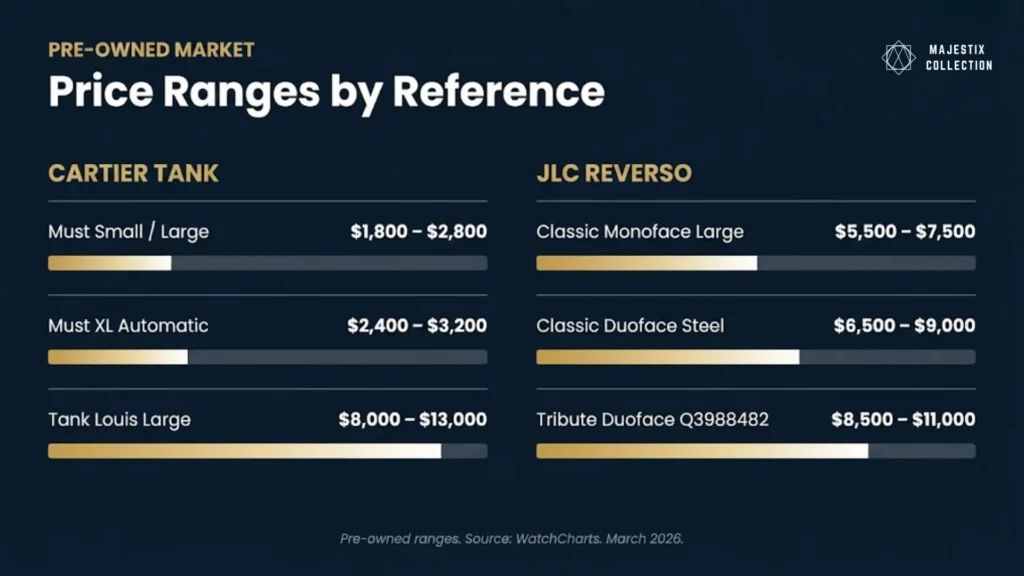
These two watches attract different buyer behavior on the secondary market. That affects how easy each is to sell, what condition factors move the price, and where the best pre-owned value sits as of 2026.
The Tank: Accessible Entry, High Liquidity
The steel quartz Must references retail in the $3,400–$4,300 range and trade pre-owned between $1,800–$2,900. They rank in the top 3–4% of all tracked watches by monthly transaction volume on WatchCharts, which makes them among the easiest luxury watches to resell.
The Must XL Automatic (WSTA0040/53) retails around $4,300–$5,100 and trades pre-owned in the $2,400–$3,300 range, roughly 20–25% below retail. That gap reflects a well-supplied market, not a distressed one.
Cartier’s May 21, 2026 increase was mild on steel, around 2.5% on the Must, but heavier on gold, roughly 6% on the Tank Louis. Rising gold costs and new US tariffs on Swiss watches hit precious metal hardest. The Tank Louis Cartier Large (WGTA0011) in 18k rose gold now retails near $12,000–$15,000 and trades pre-owned in the $8,000–$13,000 range.
Here is the buyer signal: pre-owned prices did not chase the retail bump, so the discount on gold Tanks actually widened. Pick the specific reference, not just the family name, because performance varies within the line.
The Reverso: Higher Floor, Collector-Driven Demand
The Classic Monoface Large retails around $7,500–$9,500 and trades pre-owned in the $5,500–$7,500 range. The Classic Duoface retails at $9,000–$12,000 and trades pre-owned between $6,500–$9,000.
The Tribute Duoface (Q3988482) retails around $11,000–$13,500 and trades pre-owned in the $8,500–$11,000 range. It gained roughly 7% over the past year on WatchCharts, and the wider Reverso index is up about 8% over the same stretch, so JLC has recovered from the softer patch it went through earlier.
More JLC Reverso

JLC Polaris Master Control Perpetual Calendar Blue Dial Blue Rubber Strap 40mm MINT CONDITION Full Set 9088180

JLC Polaris Perpetual Calendar Blue Dial Stainless Steel 40mm MINT CONDITION Full Set 9088180
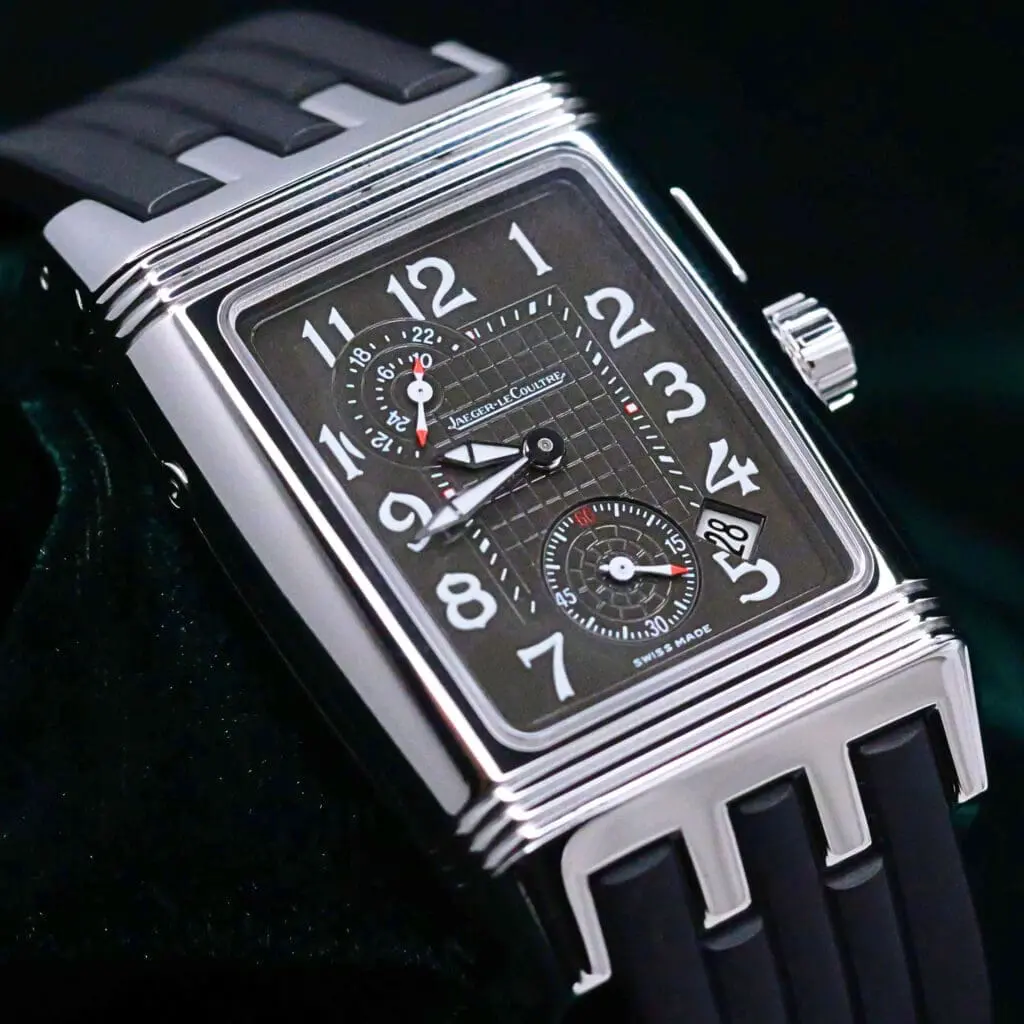
Jaeger-LeCoultre Reverso Gran Sport Black White Dial Black Rubber Strap Stainless Steel 28mm MINT CONDITION COMPLETE SET 295.8.51
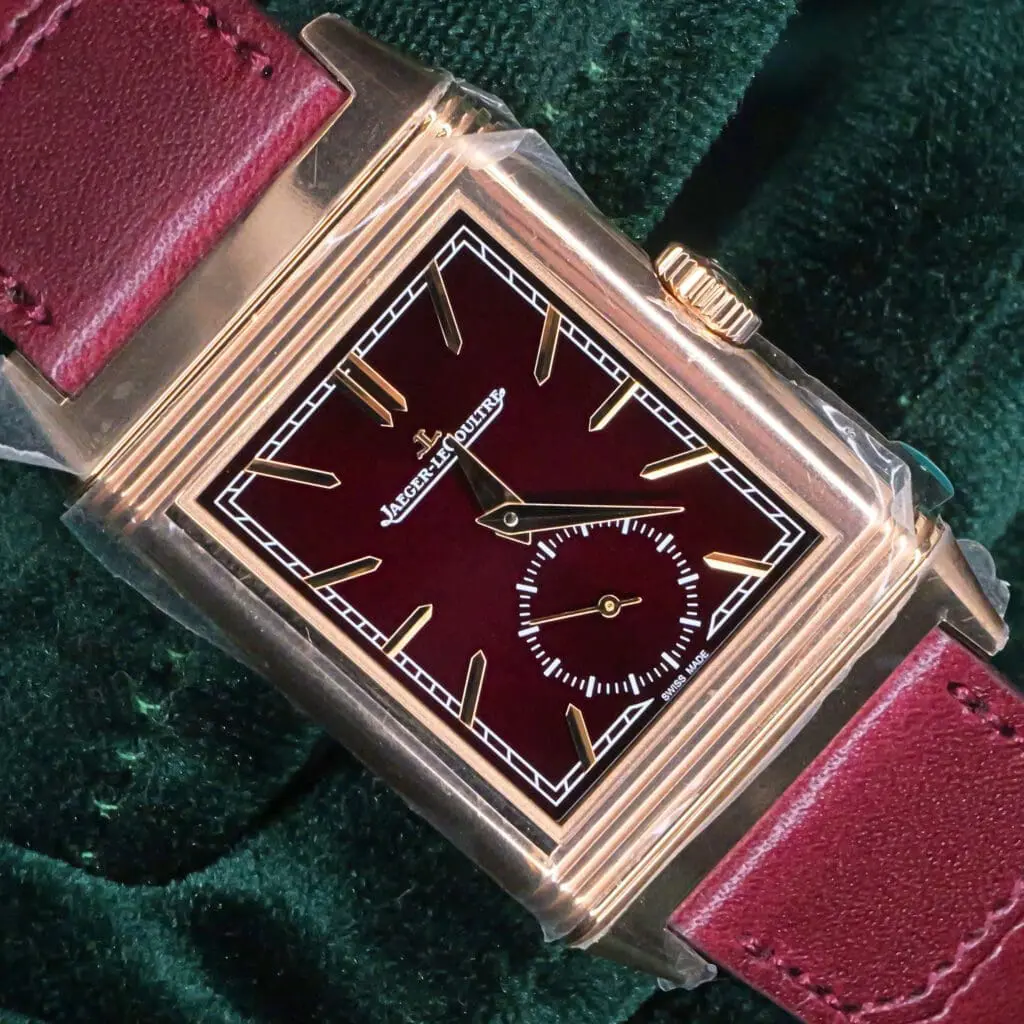
Jaeger LeCoultre Reverso 27.4MM Burgundy Red Dial Pink Gold Red Leather Strap MINT CONDITION Q713256J
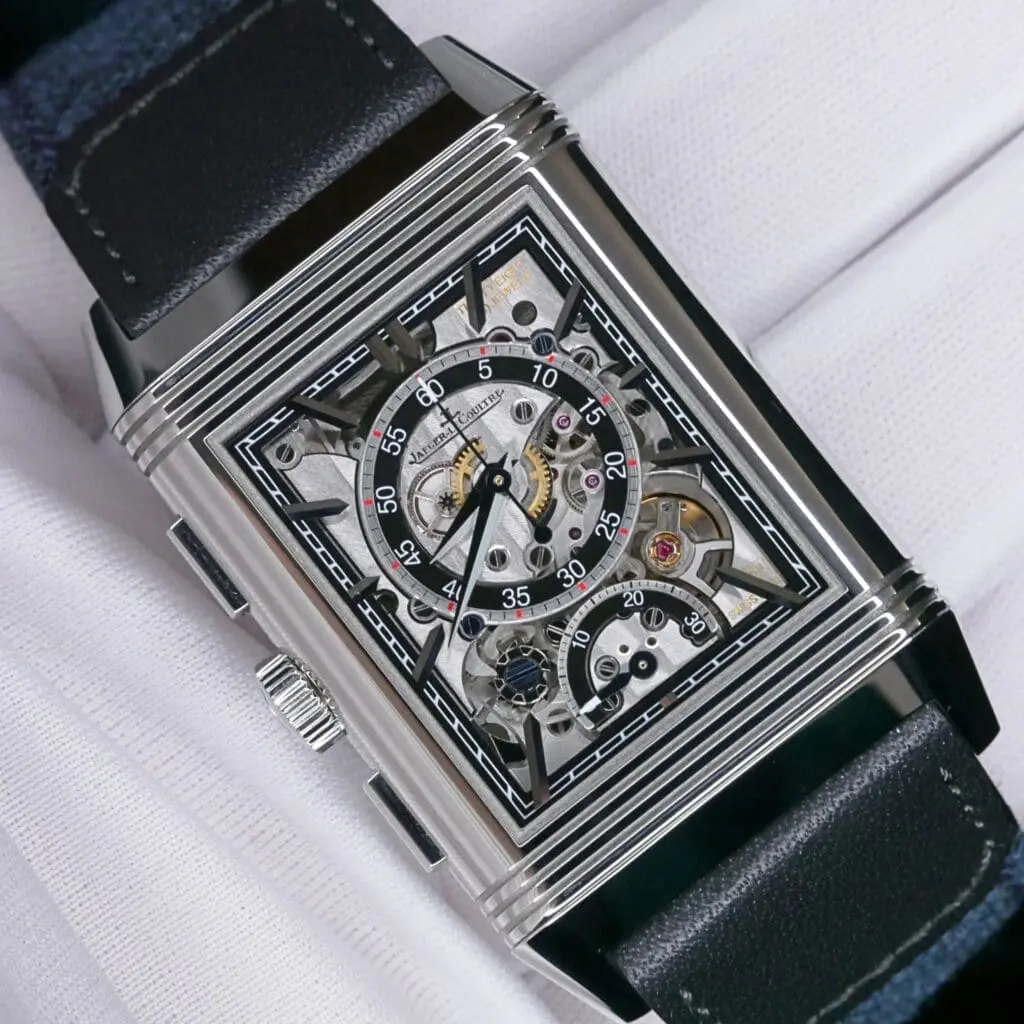
Jaeger-LeCoultre Reverso Tribute Chronograph Blue EXTRA STRAP COMPLETE SET MINT CONDITION Q389848J
Pre-owned Reversos trade 25–40% below retail. For buyers focused on mechanical content per dollar, the Q3988482 around $9,000–$10,000 pre-owned gets you a fully in-house manual-wind movement, a dual time zone, and a 42-hour power reserve. That competes with watches retailing at $15,000 or more from other brands.
What Moves the Price on Each
A full set (box and papers) is the single biggest factor for both watches. Beyond that, the two react to different things.
On the Tank, case condition drives the range. An amateur polish that rounds the sharp case rails can cut value 15–20%. On the Reverso, check the flip mechanism for play, inspect the reverse dial for scratches, and confirm the original Fagliano strap is present. Knowing how condition is graded makes it easier to read a listing honestly.
Notable Cartier Tank References

The Tank family spans quartz and mechanical, steel and gold, across several distinct sub-lines. The three references below cover the most relevant buying decisions for this comparison.
1. Tank Must Large (WSTA0041)
The Must Large is the entry point most buyers should start with. The two-hand quartz layout keeps the dial as clean as the original 1917 design, and at 6.6 mm thick it is one of the flattest watches at this price. It fits wrists from about 6 to 7.5 inches without overhang. It also holds up well against other entry-level options if you are buying your first luxury watch.
- Case size: 33.7 mm x 25.5 mm, 6.6 mm thick
- Material: Stainless steel
- Movement: Quartz (Cartier in-house)
- Crystal: Sapphire
- Water resistance: 30 meters
- Typical pre-owned range: $1,800–$2,900
2. Tank Must XL Automatic (WSTA0040 / WSTA0053)
The Must XL is the only steel Tank in the Must line with an automatic movement and a date display. The guilloché dial, the Cal. 1847 MC, and the integrated bracelet option give it a more substantial daily-wear character than the smaller quartz references. It is a different proposition from the rest of the Must family.
- Case size: 41 mm x 31 mm, 8.4 mm thick
- Material: Stainless steel
- Movement: Automatic, Caliber 1847 MC
- Bracelet option: Yes (WSTA0053)
- Water resistance: 30 meters
- Typical pre-owned range: $2,400–$3,300
More Cartier Tank
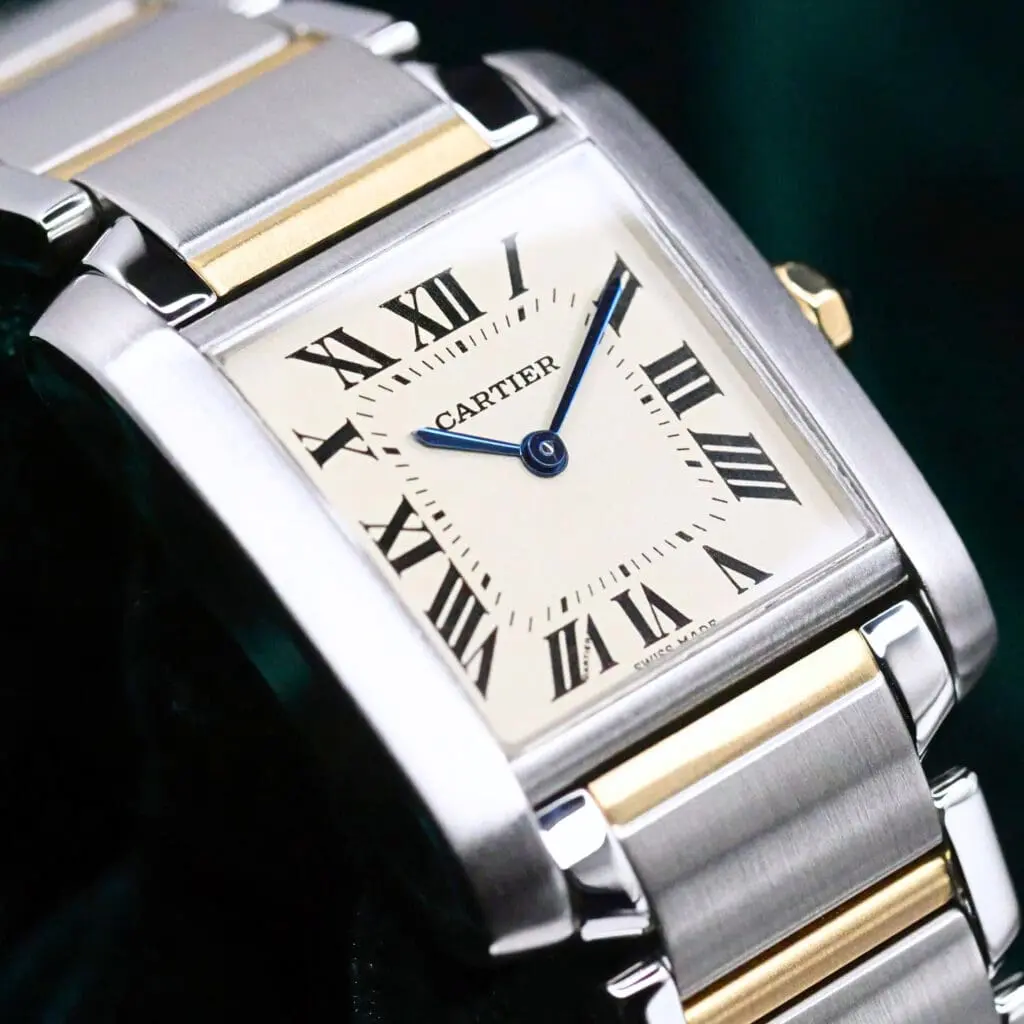
Cartier Tank Française White Dial Two-Tone 18K Yellow Gold Stainless Steel 25mm MINT CONDITION W2TA0003
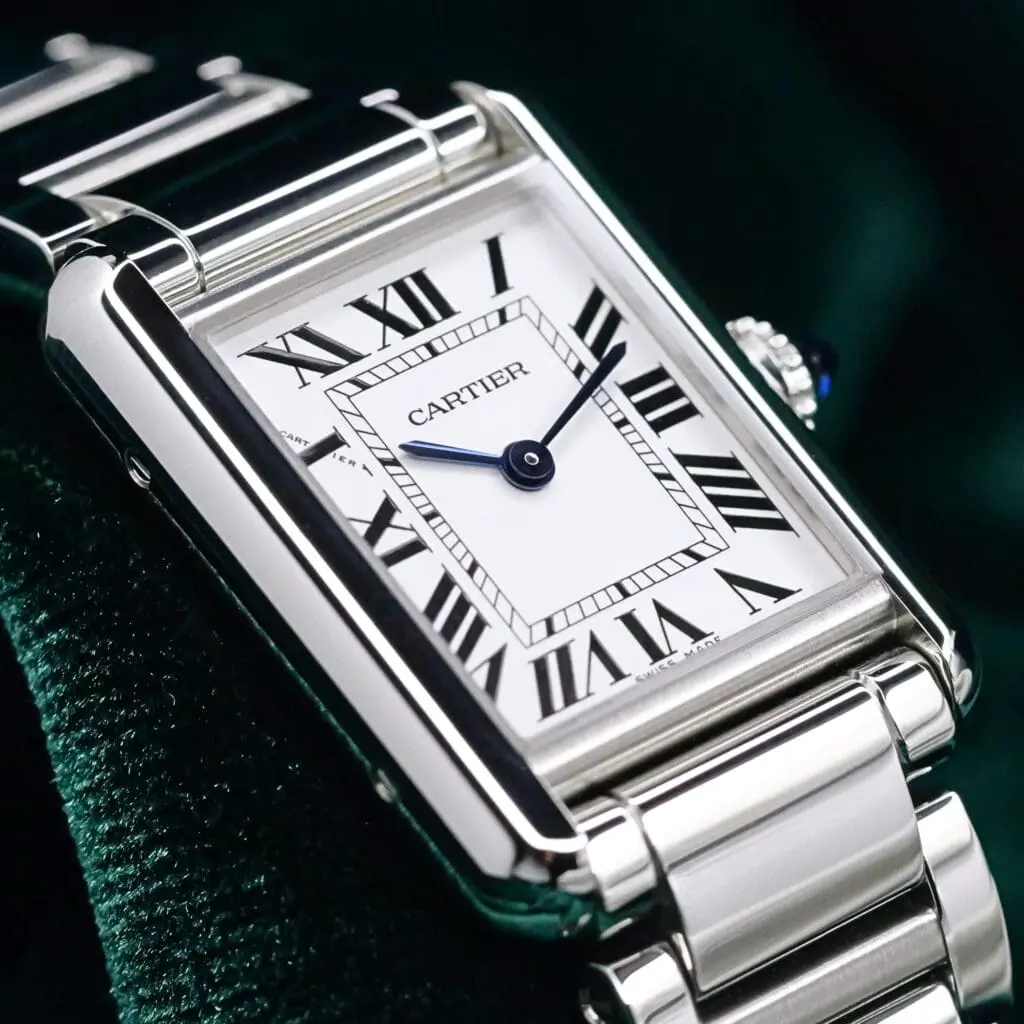
Cartier Tank Must Small Model Silver Roman Dial Stainless Steel 29.5mm MINT COMPLETE SET WSTA0107
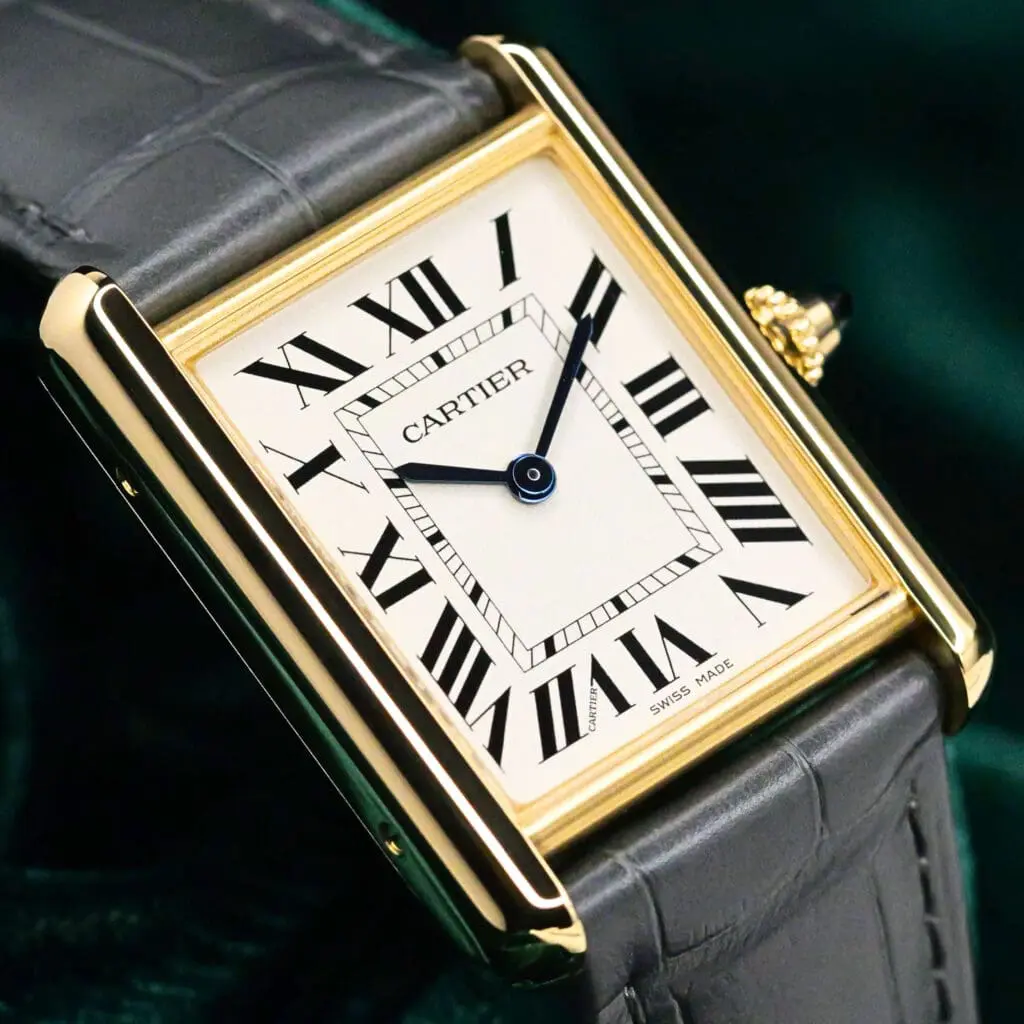
2025 Cartier Tank Louis Cartier Silver Dial Grey Alligator Strap 18K Yellow Gold 25.5mm MINT CONDITION COMPLETE SET WGTA0343
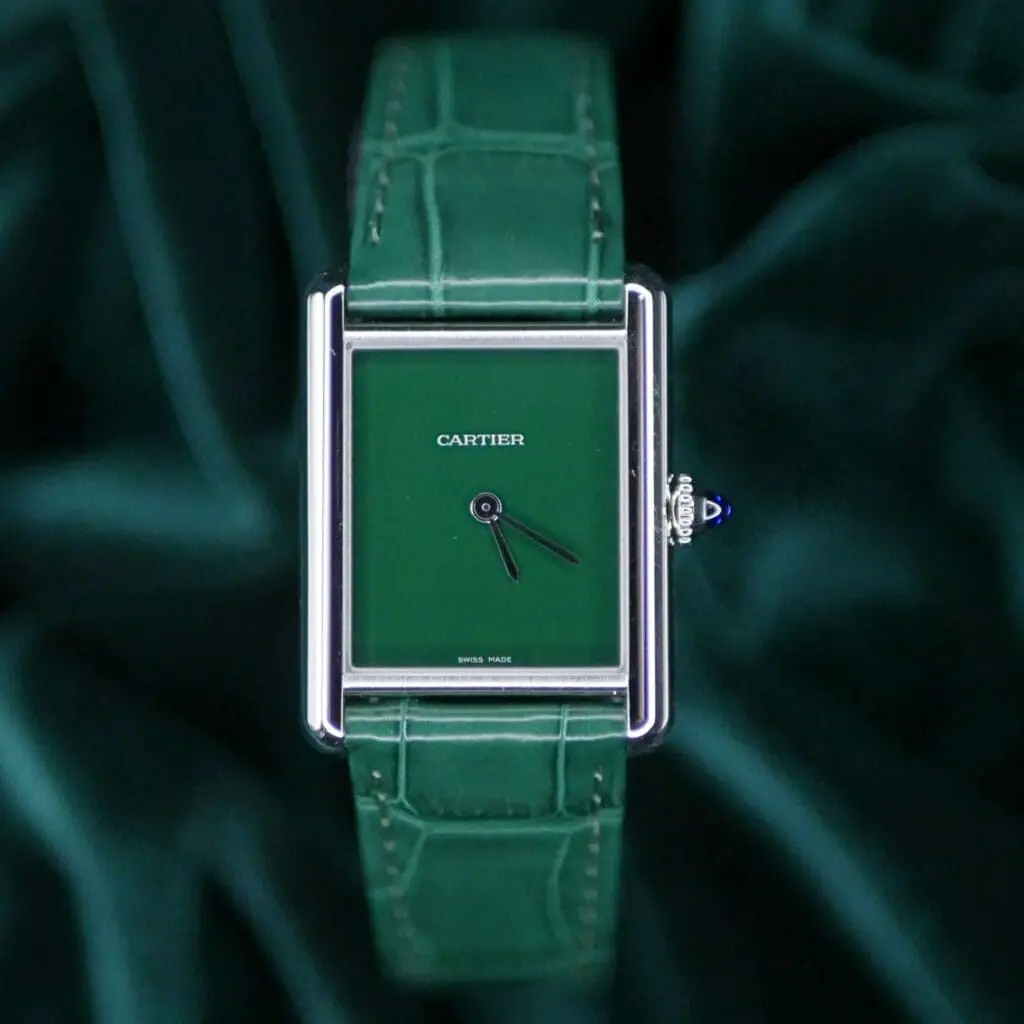
Cartier Tank Must “Cordes de Marseille” 26MM Green Dial Green Alligator Strap Stainless Steel COMPLETE SET MINT CONDITION WSTA0056
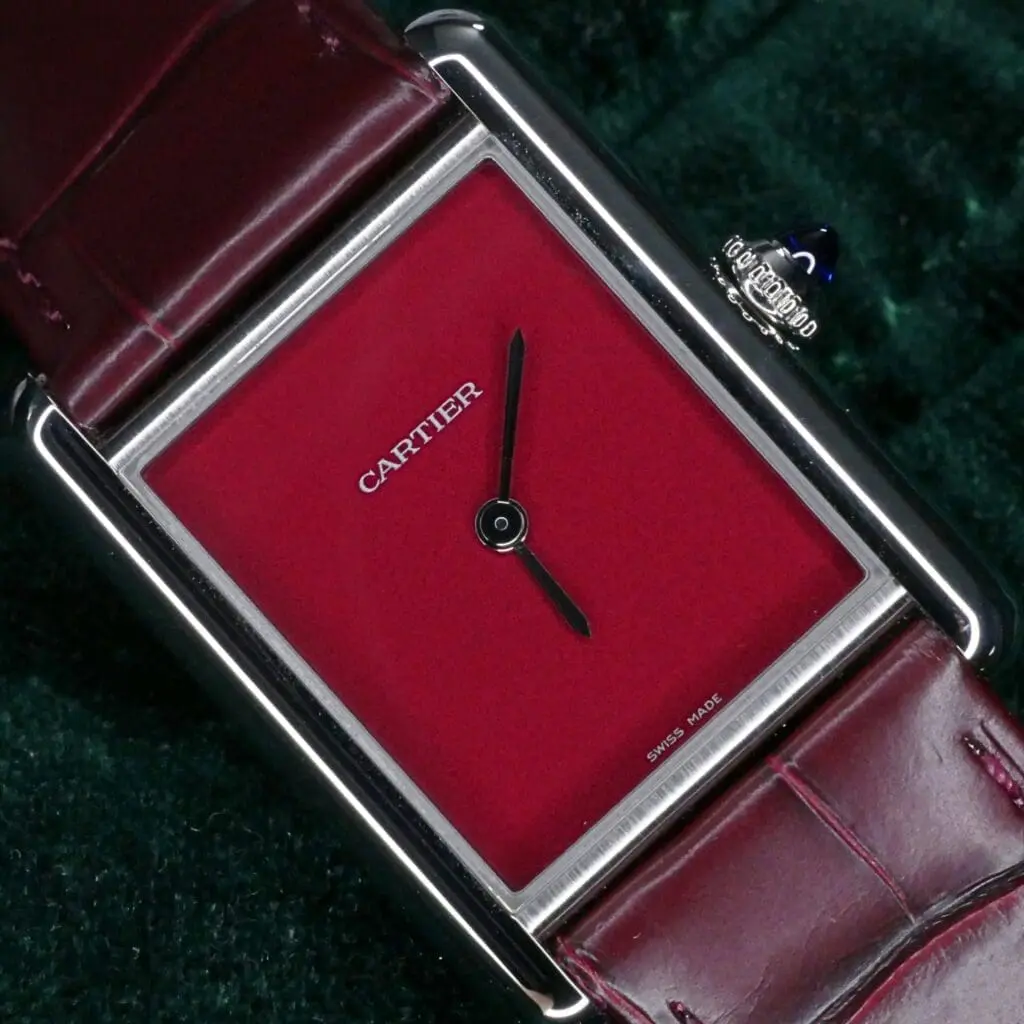
Cartier Tank Must "Cordes de Marseille" 26MM Burgundy Red Dial Stainless Steel COMPLETE SET MINT CONDITION WSTA0054
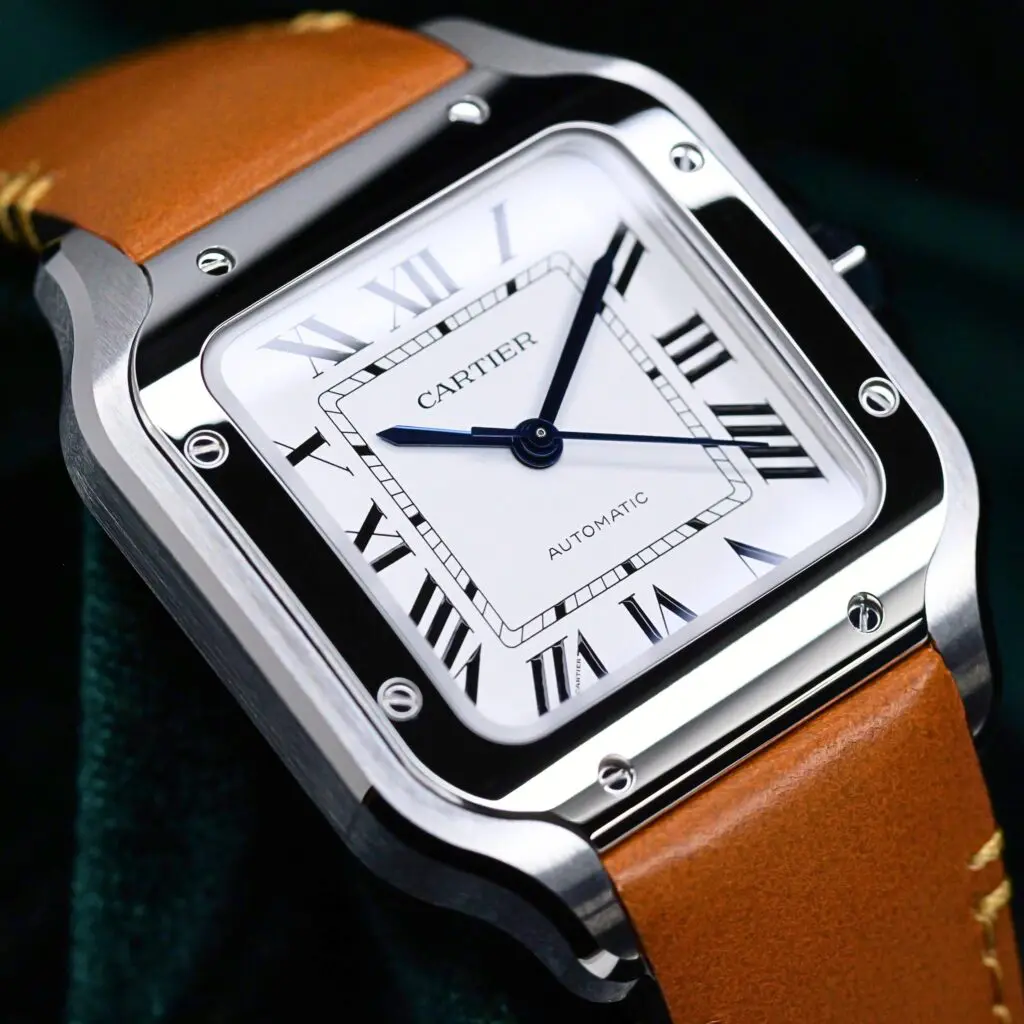
2026 NEW UNWORN Cartier Santos de Cartier Medium Opaline Silver Dial Tan Calfskin Strap Stainless Steel 35mm COMPLETE SET WSSA0029
3. Tank Louis Cartier Large (WGTA0011)
The Tank Louis Cartier in rose gold is the closest current reference to the original 1917 design. The manual-wind Caliber 1917 MC, the beaded dial, the absence of a date window, and the 18k gold case make this the reference collectors reach for when they want the purest Tank.
It is a formal watch in every sense, and the 2026 price increase landed here harder than anywhere else in the line.
- Case size: 33.7 mm x 25.5 mm, 6.6 mm thick
- Material: 18k rose gold
- Movement: Manual-wind, Caliber 1917 MC
- Crystal: Mineral
- Water resistance: 30 meters
- Typical pre-owned range: $8,000–$13,000
Notable JLC Reverso References

The Reverso lineup can be confusing to navigate from the outside. Here are the references that matter most for this comparison, starting with the specs that define each one.
1. Reverso Classic Medium Duoface Small Seconds (Q2458422)
The Cal. 854 powers two separate dials from a single movement. The front shows local time with Arabic numerals and a small-seconds subdial. Flip the case and the reverse shows a second time zone on a guilloché surface with a 24-hour indicator. The flip clicks into place firmly with no play.
At 25.5 mm wide and 42.9 mm tall, this is the smallest Duoface in the current lineup. It fits wrists between 6 and 7 inches without overhang. For a first Reverso, this reference covers the full Duoface function without the bulk of the larger sizes.
- Case size: 42.9 mm x 25.5 mm, ~9.2 mm thick
- Material: Stainless steel
- Movement: Manual-wind, Caliber 854, ~42-hour power reserve
- Lug width: 19 mm
- Water resistance: 30 meters
- Typical pre-owned range: $6,500–$9,000
2. Reverso Tribute Duoface Small Seconds (Q3988482)
At 47 mm x 28.3 mm with a 20 mm lug width, the Tribute Duoface is the largest steel Reverso most buyers seriously consider. The Tribute line references 1930s design details more directly than the Classic, with different index sizing and case finishing. The 20 mm lug width opens up more strap options than the 19 mm Classic Medium.
The Q3988482 has been one of the stronger performers in the line, up roughly 7% over the past year while JLC as a whole returned to growth. Collector demand for this reference is current and active. It suits wrists of 7 inches and above most comfortably.
- Case size: 47 mm x 28.3 mm, ~10.3 mm thick
- Material: Stainless steel
- Movement: Manual-wind, Caliber 854, ~42-hour power reserve
- Lug width: 20 mm
- Water resistance: 30 meters
- Typical pre-owned range: $8,500–$11,000
3. Reverso Classic Large Monoface Small Seconds (Q3858522)
The Cal. 822 runs a single time display with a small-seconds subdial and nothing else. No second time zone, no reverse dial. The back of the watch is flat blank steel, polished and ready for engraving. At 47 mm x 28.3 mm, it shares the Tribute Large’s footprint but stays slightly thinner without the reverse dial mechanism.
Most buyers who choose this reference come specifically for the blank panel. It is the only watch at this price where you can put a personal inscription directly on the case. JLC boutiques and independent engravers both work with the Reverso format.
- Case size: 47 mm x 28.3 mm
- Material: Stainless steel
- Movement: Manual-wind, Caliber 822
- Reverse panel: Blank steel (engravable)
- Water resistance: 30 meters
- Typical pre-owned range: $5,500–$7,500
Which Watch Should You Choose?
Both watches have strong cases, but they suit genuinely different buyers. Here is how to think about it.
Choose the Cartier Tank if:
- You want a watch that people outside the watch hobby will recognize
- You prefer a flat profile that clears a shirt cuff without any resistance
- A quartz or low-maintenance movement option matters to you
- You want a two-hand dial with nothing extra to manage
- You prefer a wider, horizontal case with rounded corners
- Formal wear is the primary context for the watch
Choose the JLC Reverso if:
- Fully in-house mechanical movements are important to you
- The Duoface second time zone would actually get used
- You want the option to engrave the reverse panel as a personal or gift piece
- Daily or every-other-day manual winding is not a problem
- You prefer a taller, narrower case with sharper Art Deco lines
- You want a watch that carries weight within collector circles
The question to ask yourself is simple: do you want a watch that disappears beautifully, or one that rewards attention? The Tank disappears. The Reverso rewards attention. That single contrast is the most honest tie-breaker between them.
If the rectangular shape is really what’s pulling you in, our Tank vs Longines DolceVita comparison looks at a more affordable take on the same idea.
Where to Buy Authentic Watches Online
A few online channels are safe for a watch at this level. Chrono24 is the largest marketplace, with an escrow option that holds your payment until the watch checks out. It’s worth knowing how buying on Chrono24 works before you commit.
eBay’s Authenticity Guarantee routes eligible watches through a third-party inspection before they reach you. Grailzee runs enthusiast-focused auctions if you would rather bid than pay a fixed price.
Watch forums like WatchUSeek also have active sales sections, though you take on more of the vetting yourself there.
We also buy, sell, and trade luxury watches, and the reason clients pick us over a big marketplace is the walkthrough before the sale. You get tour videos of the actual watch, honest condition notes, and a real conversation with someone who has handled the piece, not a stock photo and a listing.
On a Tank, that means you see the case rails before you commit. On a Reverso, you see the flip action and the reverse dial up close.
That approach is behind our 4.9-star Google rating. You can browse our current collection any time to see what’s in stock.
If you want that kind of look at a specific Tank or Reverso, reach out and we will line up a few options that fit what you are after.
999+ Timepieces Available
Explore Our Timepieces
Authenticated, unworn, and ready to ship worldwide.
Rolex · Audemars Piguet · Patek Philippe · Omega · Cartier · Richard Mille · Hublot · Tudor
Newly Listed
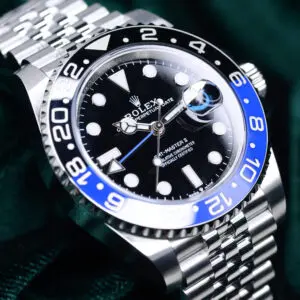
2026 Rolex GMT-Master II “Batgirl” Black Dial Blue Black Ceramic Bezel Jubilee Bracelet Stainless Steel 40mm MINT CONDITION COMPLETE SET 126710BLNR
$22,034.00
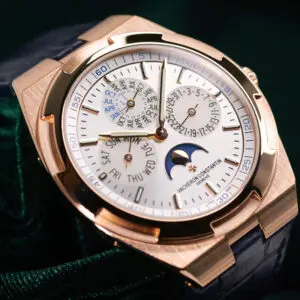
Vacheron Constantin Overseas Perpetual Calendar Ultra-Thin Silver Dial Blue Leather Strap 18K Rose Gold 41.5mm MINT CONDITION COMPLETE SET 4300V/120R-B064
$115,385.00
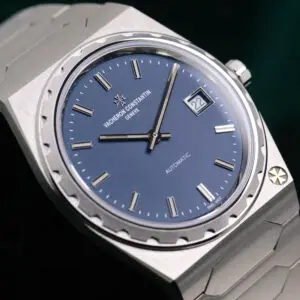
2026 NEW UNWORN Vacheron Constantin Historiques 222 Blue Dial Stainless Steel 37mm COMPLETE SET 4200H/222A-B934
$58,795.00
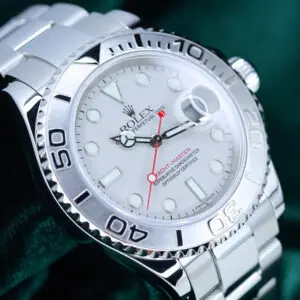
Rolex Yacht-Master Rolesium Platinum Dial Platinum Bezel Oyster Stainless Steel 40mm MINT CONDITION COMPLETE SET 16622
$14,690.00

Audemars Piguet Royal Oak Offshore Chronograph “Vampire” Black Dial Red Accents Black Ceramic Bezel Stainless Steel 42mm MINT CONDITION 26470SO.OO.A002CA.01
$34,649.00
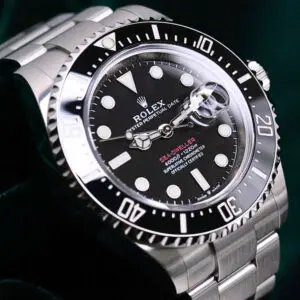
Rolex Sea-Dweller "Red Letter" Black Dial Black Cerachrom Bezel Oyster Bracelet Stainless Steel 43mm MINT CONDITION COMPLETE SET 126600
$13,120.00
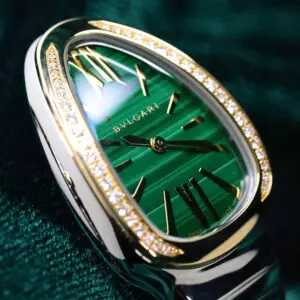
2026 NEW UNWORN Bvlgari Serpenti Tubogas Studs Capsule Limited Edition Green Dial Diamond Bezel Steel & 18k Yellow Gold 35mm COMPLETE SET 104360
$24,255.00
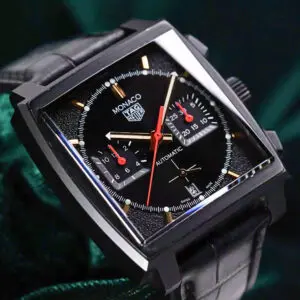
Tag Heuer Monaco Chronograph “Dark Lord” Special Edition Black Dial Black Leather Strap DLC Titanium 39mm MINT CONDITION COMPLETE SET CBL2180.FC6497
$8,135.00
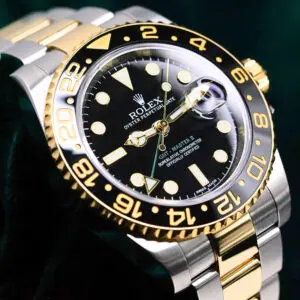
Rolex GMT-Master II “Green Arrow” Black Dial Black Ceramic Bezel Oyster Bracelet Two-Tone 18K Yellow Gold Stainless Steel 40mm MINT CONDITION COMPLETE SET 116713LN
$15,740.00
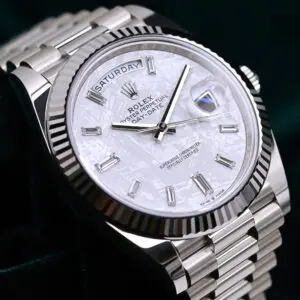
Rolex Day-Date Meteorite Baguette Diamond Dial Fluted Bezel President 18K White Gold 40mm MINT CONDITION COMPLETE SET 228239
$78,629.00
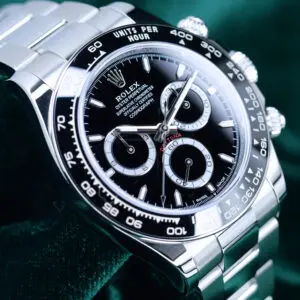
2026 Rolex Cosmograph Daytona Black Dial Black Ceramic Bezel Oyster Bracelet Stainless Steel 40mm MINT CONDITION COMPLETE SET 126500LN
$33,594.00
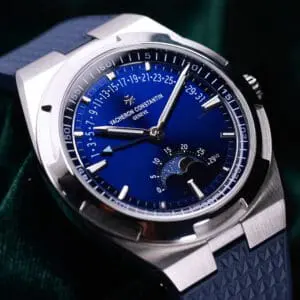
2025 Vacheron Constantin Overseas Moonphase Retrograde Date Blue Dial Blue Rubber Strap Stainless Steel 41mm MINT CONDITION COMPLETE SET 4000V/210A-B911
$52,800.00
Final Thoughts on Cartier Tank vs JLC Reverso
The Tank and the Reverso ask different things from you, and that becomes clear the moment you handle them. The Tank asks almost nothing. It sits quietly on the wrist, easy to read, easy to wear, and never demands your attention. You glance at it, and it does its job.
The Reverso is different. It invites interaction. You wind it, flip the case, and become more aware of the mechanics each time you use it. That engagement is part of the appeal.
Neither approach is better, just different. Try both on in person if you can, and pay attention to how each feels after a few minutes on the wrist.
One practical note that often gets missed: Cartier service costs and intervals tend to run lower than Jaeger-LeCoultre, largely because of the Reverso’s more complex construction. Factor that in if you plan to keep the watch for the long haul.