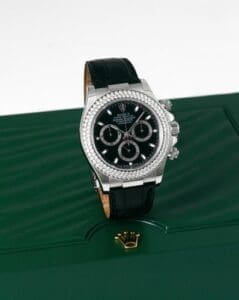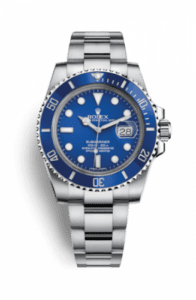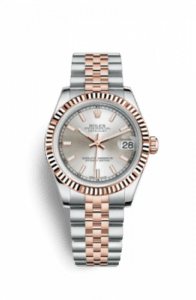

The Rolex Datejust is one of Rolex’ undisputed icons. In its current version, its case measures a traditional 36mm. It is available in a great number of configurations, ranging from low-key all-stainless steel versions to full gold and diamond-set models.
Watch our tour video about the ROLEX DATEJUST 36 TWO TONE BLACK DIAL

In the 1990s, the Rolex Datejust 16233 with black dial carved its place as a watch that combined the brand’s long-standing two-tone formula with a darker, more versatile face. The steel-and-gold design had been around for decades, but pairing it with a black dial gave the watch a stronger contrast, making it look sharper than champagne dials and more formal than silver. It became a go-to choice for those who wanted a Datejust that felt appropriate in the office but still had an appeal at a dinner table.
For collectors, the 16233 highlights an important period of transition. This was when Rolex introduced the Caliber 3135, a movement praised for its accuracy and reliability, and when sapphire crystals replaced acrylic for better scratch resistance. These updates made the watch sturdier for daily use while holding on to the 36mm case size that has always defined the Datejust’s identity.
To appreciate its place in the Rolex story, we begin with how the Datejust itself evolved into this reference.

The Datejust story began in 1945, when Rolex introduced the reference 4467 to mark its 40th anniversary. It was the first automatic wristwatch to feature a date window at 3 o’clock, an innovation that flipped over instantly at midnight. This simple but practical feature became a signature of the brand and set the foundation for one of the brand’s most enduring collections.
Through the following decades, the Datejust evolved with new case designs, bracelet options, and improved movements, but it always held on to its 36mm proportions and the date display under the Cyclops lens.
By the late 1980s, Rolex launched the reference 16233, a two-tone version in stainless steel and 18k yellow gold – what Rolex calls Rolesor. This reference marked an important shift into modern production: acrylic crystals were replaced by scratch-resistant sapphire, and inside, Rolex introduced the Caliber 3135, its most advanced automatic movement at the time.
The black dial version, like this 1991 piece, was less common than the champagne or silver options of the time, giving the watch a more contemporary look. Dials from this period used tritium lume, a material applied to the hands and hour markers to glow in the dark. Over the years, tritium loses its ability to shine, but it develops a warm patina that collectors now view as part of the vintage charm.
This mix of classic style, modern upgrades, and the less common black dial option makes the Rolex 16233 an important reference – one that bridged the earlier vintage Datejusts with the updated models that followed in the 2000s.
Beyond its story, what truly sets the Datejust 16233 apart is how it looks and feels. Let’s examine the case and bracelet to see why they remain central to its appeal.

The Rolex Datejust 16233 features a 36mm stainless steel Oyster case, a size that wears comfortably across most wrists and is widely regarded as the classic Datejust proportion. The case measures just over 11mm thick, allowing it to sit flat and comfortable on the wrist, whether paired with formal or casual clothing. The top of the lugs is brushed, while the case sides are high-polished, giving the watch a mix of textures that highlight its profile.

Around the case is an 18k yellow gold fluted bezel, one of Rolex’s most recognizable design elements. Originally created to help screw the crystal to the case, the fluted bezel has since become a defining aesthetic detail, its sharp ridges reflecting light in a way unique to Rolex. The screw-down crown (also in yellow gold and embossed with the Rolex coronet) works with the Oyster case construction to provide water resistance up to 100 meters. Protecting the dial is a flat sapphire crystal with a Cyclops lens that magnifies the date display by 2.5x. The caseback is solid stainless steel and screw-down, typical of the Rolex tool construction.

This 1991 Datejust is fitted with the two-tone Jubilee bracelet, the pairing most often seen on the 16233. Its five-piece link design makes it supple and comfortable on the wrist. The three center links are crafted in high-polished 18k yellow gold, while the outer links are brushed stainless steel, with high-polished sides that mirror the case finishing. The bracelet closes with a brushed stainless steel clasp. In this era, Rolex used a stamped clasp, meaning the parts were pressed from metal sheets rather than milled from solid blocks, resulting in a lighter but period-correct design. Multiple adjustment points inside the clasp allow for fine-tuning the fit.
From the case and bracelet, the attention naturally shifts to the dial – and on this Datejust 16233, the black finish is what truly defines its character.

The black dial is the feature that makes this Datejust 16233 stand out. Against the steel-and-gold case, the darker surface creates a contrast, giving the watch a look that feels less traditional than champagne dials and more versatile for different settings.
Applied yellow gold stick hour markers line the dial, each paired with a small tritium lume plot. The hour and minute hands also carry thin tritium strips, designed to glow in low light when the watch was new. Today, the tritium no longer illuminates, but it has aged into a soft patina that collectors value. At the very bottom, “T Swiss Made T” is printed across 6 o’clock – the “T” marking confirms tritium was used during this production period.

Circling the edge is a gold minute track with small Roman numerals that align precisely with the hour markers, making the layout easy to read while adding a distinctive detail not seen on every Datejust dial. At 12 o’clock sits the high-polished, applied Rolex coronet, with the text ‘Rolex Oyster Perpetual Datejust’ printed in gold beneath it. The lower half of the dial carries the words “Superlative Chronometer Officially Certified”, keeping the layout uncluttered.
At 3 o’clock is the date display, a hallmark of the Datejust since 1945. On this model, the sapphire crystal carries the Cyclops lens directly above the window, enlarging the numbers for clear readability – a feature that remains one of the most noticeable traits of the Datejust line.
With the dial details set, the next focus is what powers the watch – the movement that made the Datejust 16233 reliable enough to wear every day.

Inside the 16233 beats the Rolex Caliber 3135, an automatic movement introduced in 1988 and regarded as one of the brand’s most reliable engines. The 3135 brought improvements over the earlier 3035, including a full balance bridge for added stability and a larger balance wheel for better timekeeping.
It runs at 28,800 vibrations per hour, giving the seconds hand a smooth sweep across the dial. Practical functions include hacking seconds, which stops the seconds hand for precise time setting, and a quickset date, allowing the wearer to adjust the date independently through the crown. The bidirectional rotor keeps the watch fully wound with regular wear, delivering a power reserve of around 48 hours.
Accuracy was another strength. Each Caliber 3135 was tested by COSC and certified as a chronometer, rated to run within -4 to +6 seconds per day at the time. The Breguet overcoil hairspring helped it maintain consistency across different positions, making it dependable not just on paper but also in daily use.
The 3135 would go on to power some of the Rolex most iconic models, from the Submariner Date to the Yacht-Master, remaining in production for over three decades. For collectors, this longevity reinforces the movement’s reputation – it was built to last, and many examples from the early 1990s, like this 16233, still run strong today when properly serviced.
Knowing the movement is only part of the story – the real test comes in how the Datejust 16233 feels once it’s on the wrist.

At 36mm, the Rolex 16233 Datejust sits in that sweet spot where it feels substantial without being oversized. The case measures just over 11mm thick with a compact 43.7mm lug-to-lug span, so it wears comfortably even on smaller wrists – down to around 13cm in circumference. This makes it a versatile size that works for both men and women.
The Jubilee bracelet is one of the highlights of the wearing experience. Its five-link construction makes it flexible and airy, and the small gaps between the links allow the wrist to breathe, which is especially noticeable in warm weather. Being a 1991 example, the bracelet uses hollow center links and a stamped clasp, which keeps it lighter than modern solid-link versions. Some owners call it the “Rolex rattle,” but for collectors, that feel is part of the period charm.
The two-tone steel and yellow gold design catches the eye without being overwhelming. On this version, the black dial tempers the shine, giving the watch a sharper look compared to the brighter champagne dial models. The sapphire crystal also sits lower than the older acrylic crystals, so the profile feels more modern and less prone to snagging.
On the wrist, the Jubilee bracelet makes it comfortable for all-day wear, the case proportions make it easy to pair with formal and casual clothing, and the black dial brings just enough distinction to set it apart in a lineup of two-tone Datejusts.
If you enjoy the contrast and sportier personality of darker dials, you might also appreciate the Rolex Explorer II 226570 Black Dial, which channels a similar sense of refinement but with a more adventurous, tool-watch character. Both watches show how Rolex uses dark tones to balance sophistication with practicality.
For those who want the full picture, here’s a summary table of the key features.
| Feature | Description |
| Case | 36mm Oystersteel, 11mm thick, 43.7mm lug-to-lug |
| Case Details | Brushed lugs, high-polished case sides, sapphire crystal with Cyclops lens |
| Bezel | 18k yellow gold fluted bezel |
| Bezel Details | Sharp ridges that reflect light; originally functional for securing the crystal, now a signature design element |
| Caseback | Solid stainless steel, screw-down, closed |
| Crown | 18k yellow gold screw-down crown with embossed Rolex coronet; part of Oyster case construction for 100m water resistance |
| Water Resistance | 100 meters (330 feet) with Oyster case and screw-down crown |
| Clasp | Brushed stainless steel stamped clasp with adjustment points (lighter than modern milled clasps) |
| Jubilee Bracelet | Two-tone five-link design; three high-polished yellow gold center links, brushed stainless steel outer links, high-polished sides; supple and comfortable |
| Movement | Rolex Caliber 3135, automatic, 28,800 vph, 48h power reserve, COSC-certified, quickset date, hacking seconds |
| On-Wrist Feel | Wears light and flexible with Jubilee bracelet; compact size makes it comfortable on smaller or medium wrists; black dial adds sharper contrast compared to champagne variants |

If you’ve been considering a two-tone Datejust, the 16233 with a black dial is well worth a closer look. It offers the reliability of a proven movement, the comfort of the Jubilee bracelet, and a look that still feels relevant after more than 30 years. It may not be the flashiest Rolex, but it’s one you’ll find yourself wearing more than you expect.
For a warmer, more contemporary twist on the two-tone concept, explore the Rolex Datejust Chocolate Brown Dial. It carries the same timeless design language but adds a rich, modern hue that complements today’s style sensibilities while preserving the Datejust’s iconic versatility.