
Deciding between the Speedmaster and Carrera puts two well-known Swiss chronographs side by side. Both carry real history, and both sit in a similar price range. They were built with completely different purposes in mind.
One ended up on the moon, the other stayed on the racetrack. That difference matters more than most buyers realize once you get into daily wear, fit, and long-term value.
This article covers what sets these two watches apart: the specs, the fit, the movement differences, and how each one behaves on the used market. Everything you need to make a confident decision before you buy.
Omega Speedmaster Overview

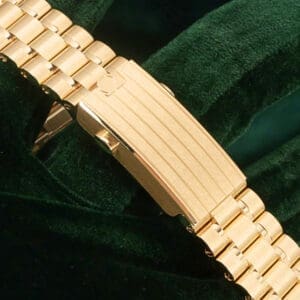
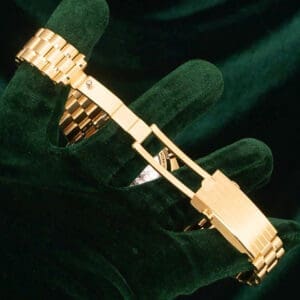
Omega launched the Speedmaster in 1957 as a tool chronograph for engineers and racing drivers who needed reliable timing during demanding work. A clear three-register layout and tachymeter bezel handled quick speed calculations. Design focus stayed on legibility and practical timing rather than decoration.
NASA changed the watch’s story. In the early 1960s, the agency tested several chronographs against extreme heat, shock, and vacuum conditions. Only the Speedmaster passed the full qualification round. During the Apollo 11 moon landing in 1969, Buzz Aldrin wore his Speedmaster outside the lunar module, making it the first watch worn on the moon.
What makes it iconic is how little the design has changed over six decades. Asymmetric case, tachymeter bezel, three-register dial, and a manual-wind movement all still appear on current models. Few watches keep a production version that looks nearly identical to the one worn in space.

Collectors usually check the crystal type first. Many prefer Hesalite because it feels closer to the original Moonwatch, while others choose sapphire because it handles daily wear better. If you are cross-shopping inside Omega’s own lineup, our Speedmaster vs Seamaster comparison weighs the two icons.
TAG Heuer Carrera Overview


Jack Heuer launched the Carrera in 1963, naming it after the Carrera Panamericana road race in Mexico. He built it for racing drivers who needed a chronograph that stayed easy to read at speed. That focus quickly earned it a name in motorsport circles for clean dial layout.
Drivers valued the Carrera because they could read elapsed time fast without scanning across the dial. That clarity helped it stand out among other chronographs of the 1960s, and the racing function became one of its most recognizable traits.
Much of that identity comes from the dial. Early Carreras used wide subdials, simple baton markers, and a tension ring around the edge that separated the timing scales. That layout kept the dial open and easy to scan.

Collectors often focus on how the Carrera evolved while keeping its original design idea. Later models brought in in-house chronograph movements, which added technical credibility. Many enthusiasts point to the Glassbox 39mm as the modern version that holds the early proportions and dial clarity. If you are weighing it against other TAG Heuer chronographs, our Carrera vs Formula 1 breakdown compares them directly.
Speedmaster vs Carrera: Most Notable Differences

Both watches sit in a similar price range and share a racing background, but each brand built them around different priorities. Those priorities show up in how you wind the watch, how it wears, and what you see on the dial.
Here is where they separate.
1. Movement Type
Speedmaster chronographs use manual-wind movements. Current Moonwatch models run the Cal. 3861 with a 50-hour power reserve, METAS Master Chronometer certification, and resistance to 15,000 gauss, with silicon parts and a Co-Axial escapement. Manual winding keeps the movement thin and close to the original Moonwatch architecture.
Carrera chronographs usually run automatic movements such as the TH20-00, an evolution of the Heuer 02. Power reserve reaches 80 hours, and the chronograph uses a column wheel with a vertical clutch. Automatic winding keeps the watch running through wrist motion, and the vertical clutch stops the seconds hand from jumping when you start the chronograph.
2. Crystal Design
Speedmaster buyers get two options. Hesalite is the acrylic version that scratches with daily wear but adds the original tool-watch character. Sapphire resists scratches, includes a display caseback, and is the more practical choice for everyday use.
Carrera Glassbox models come only with a domed sapphire crystal that curves from the center of the dial to the edges, where it meets the flange. That curve creates a layered, three-dimensional look a flat crystal cannot match. Mild distortion appears at shallow angles, though it does not affect legibility in normal use.
3. Case Size
Speedmaster spec sheets list 42mm, but it wears closer to 40mm because the crown guards sit inside that measurement. Lug-to-lug runs 47 to 48mm, and on wrists under 6.5 inches the ends can visibly overhang.
Related Models from Majestix
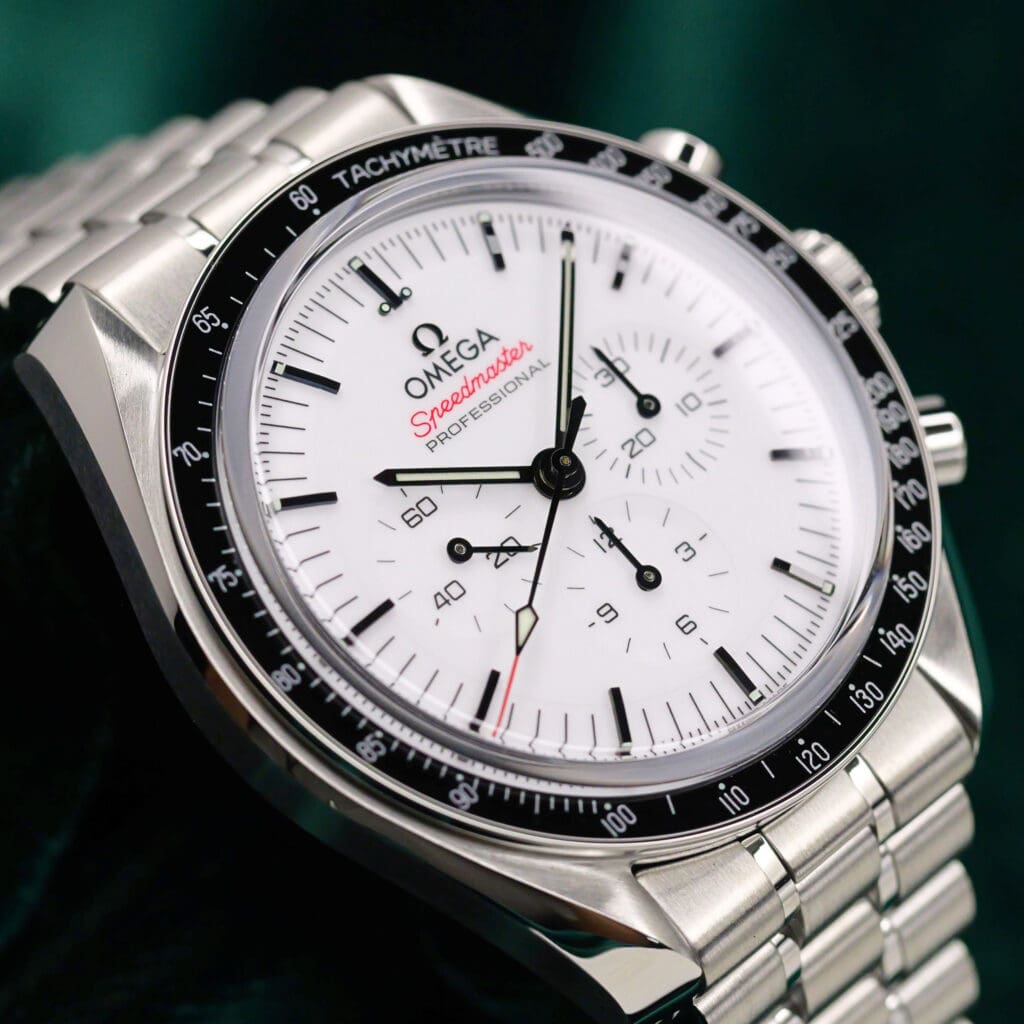
2026 NEW UNWORN Omega Speedmaster Moonwatch Professional White Dial Stainless Steel 42mm COMPLETE SET 310.30.42.50.04.001
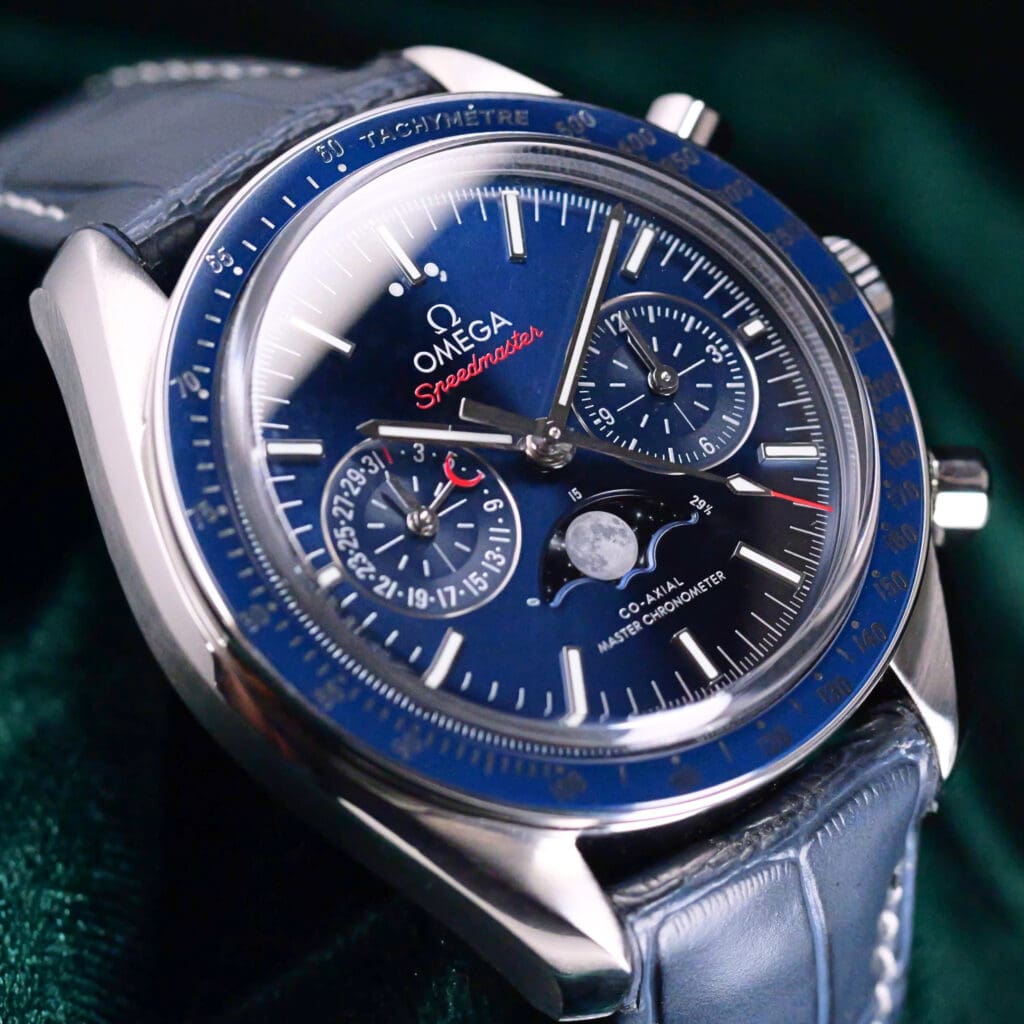
Omega Speedmaster Moonphase Blue Dial Blue Leather Strap Stainless Steel 44.25mm MINT CONDITION COMPLETE SET 304.33.44.52.03.001

Omega Speedmaster "Orbis Edition" 38mm Blue Dial Blue Bezel Stainless Steel Bracelet MINT COMPLETE SET 324.30.38.50.03.002
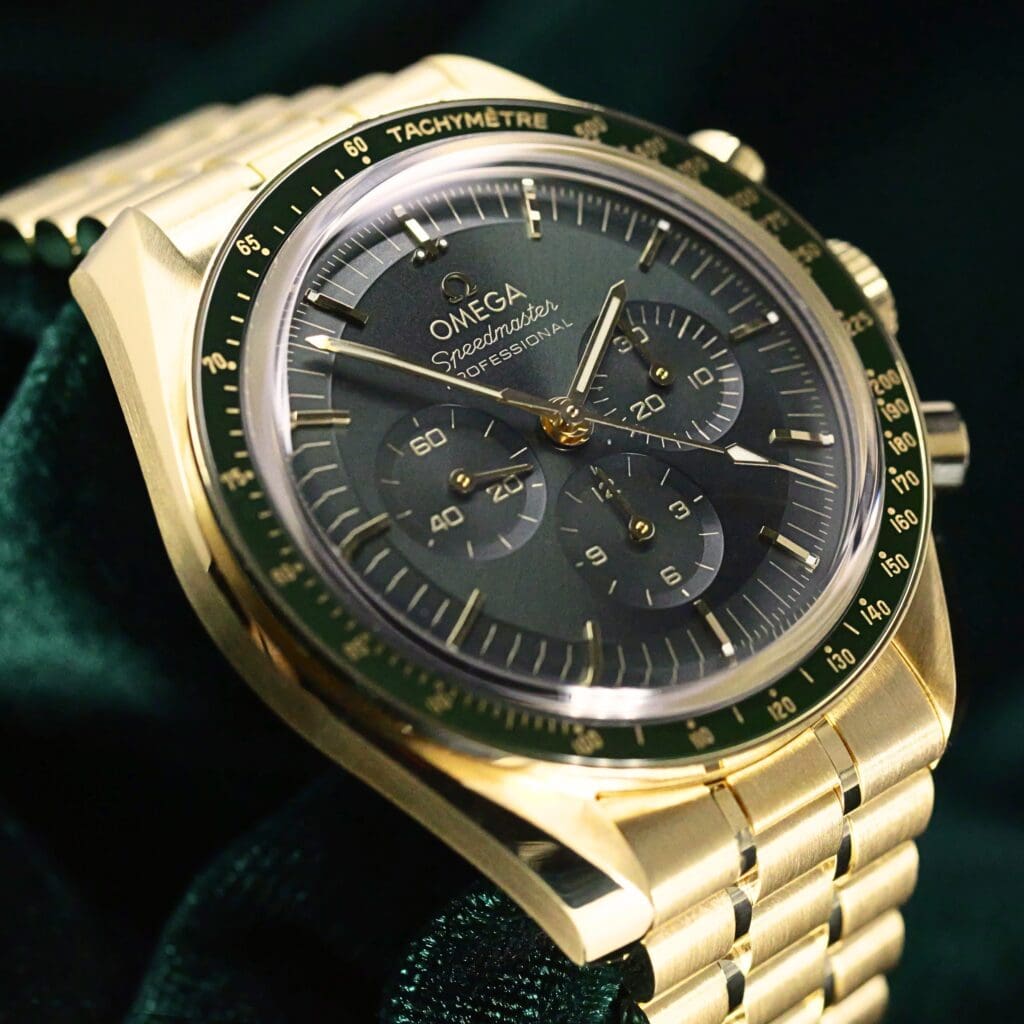
Omega Speedmaster Professional Moonwatch "Moonshine" Green Dial 18K Yellow Gold 42mm MINT CONDITION COMPLETE SET 310.60.42.50.10.001
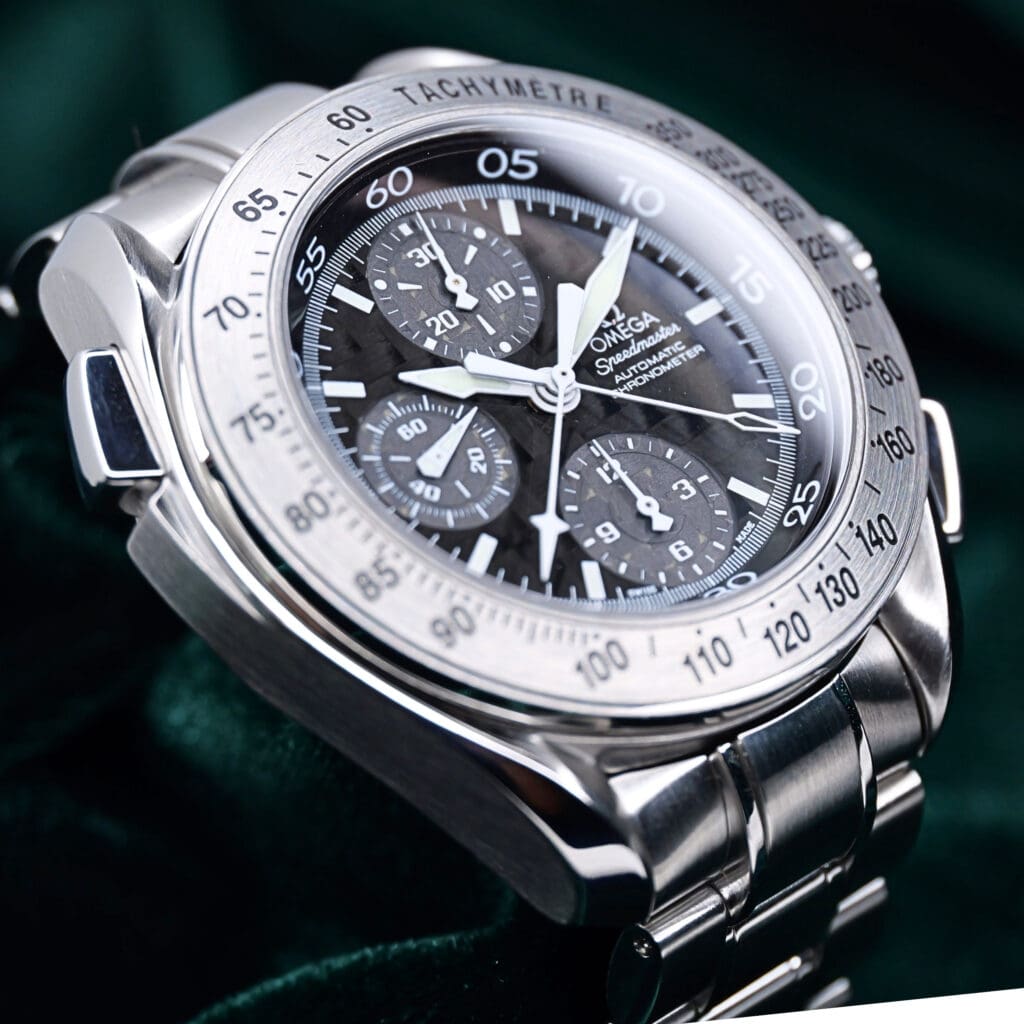
Omega Speedmaster Split-Seconds "Rattrapante" Black Carbon Fiber Dial Stainless Steel 42mm MINT CONDITION 3540.50
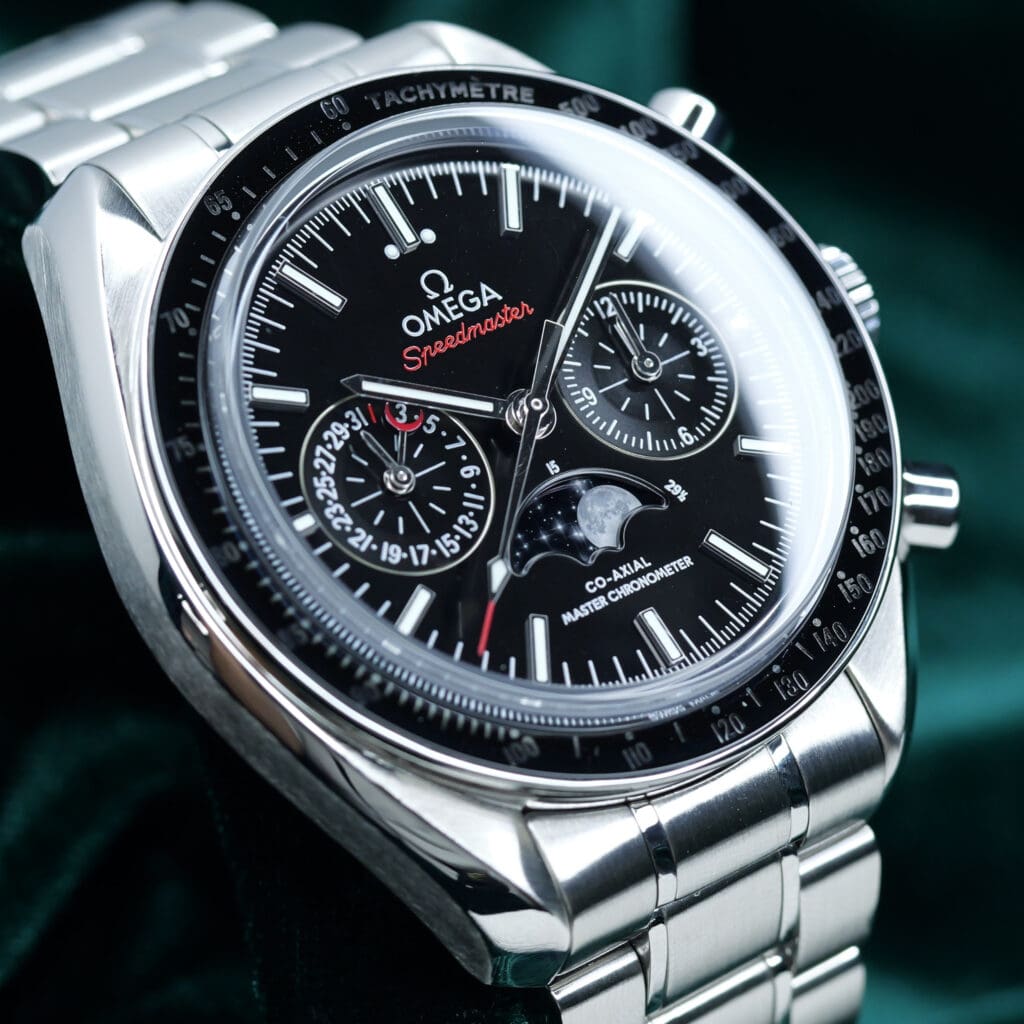
Omega Speedmaster Moonphase Co-Axial Master Chronometer Chronograph Black Dial Stainless Steel 44.25mm MINT CONDITION COMPLETE SET 304.30.44.52.01.001
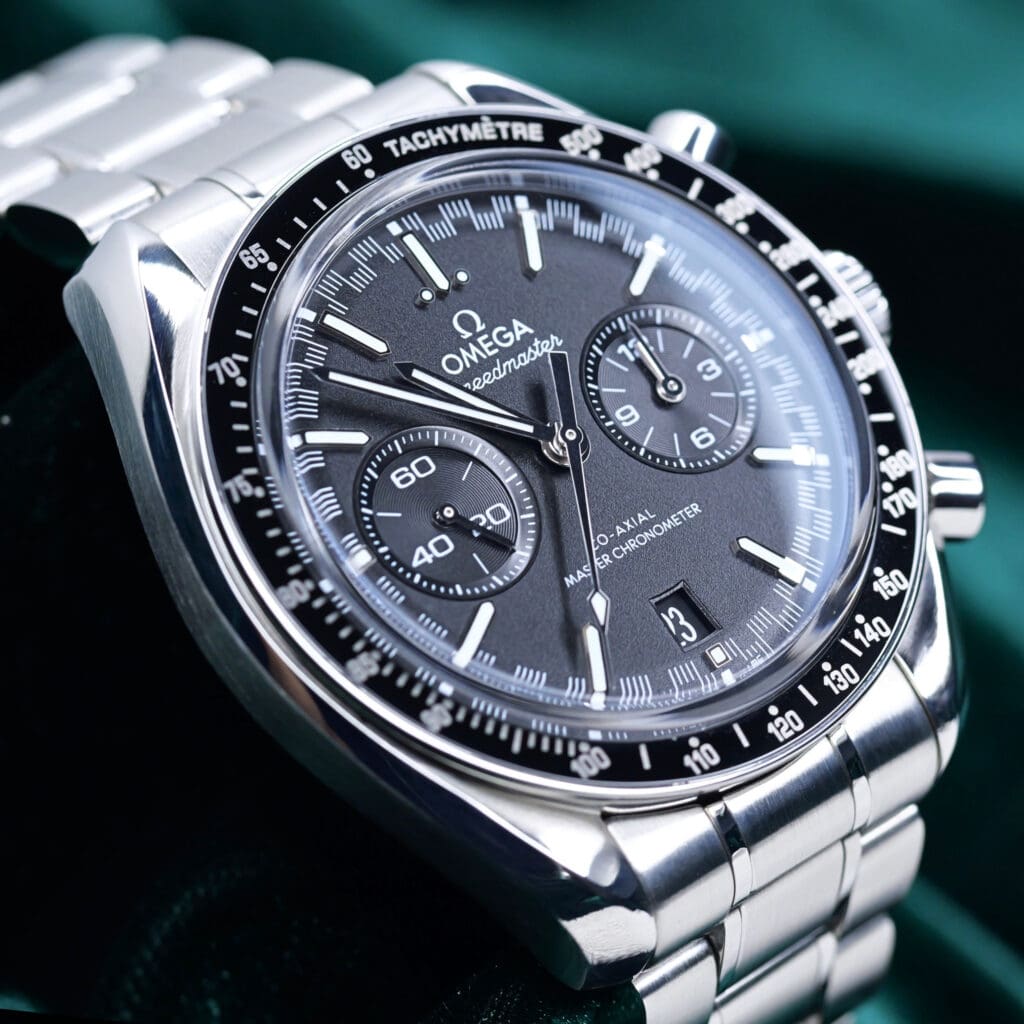
Omega Speedmaster Racing Co-Axial Master Chronometer Black Dial Stainless Steel 44.25mm MINT CONDITION COMPLETE SET 329.30.44.51.01.001
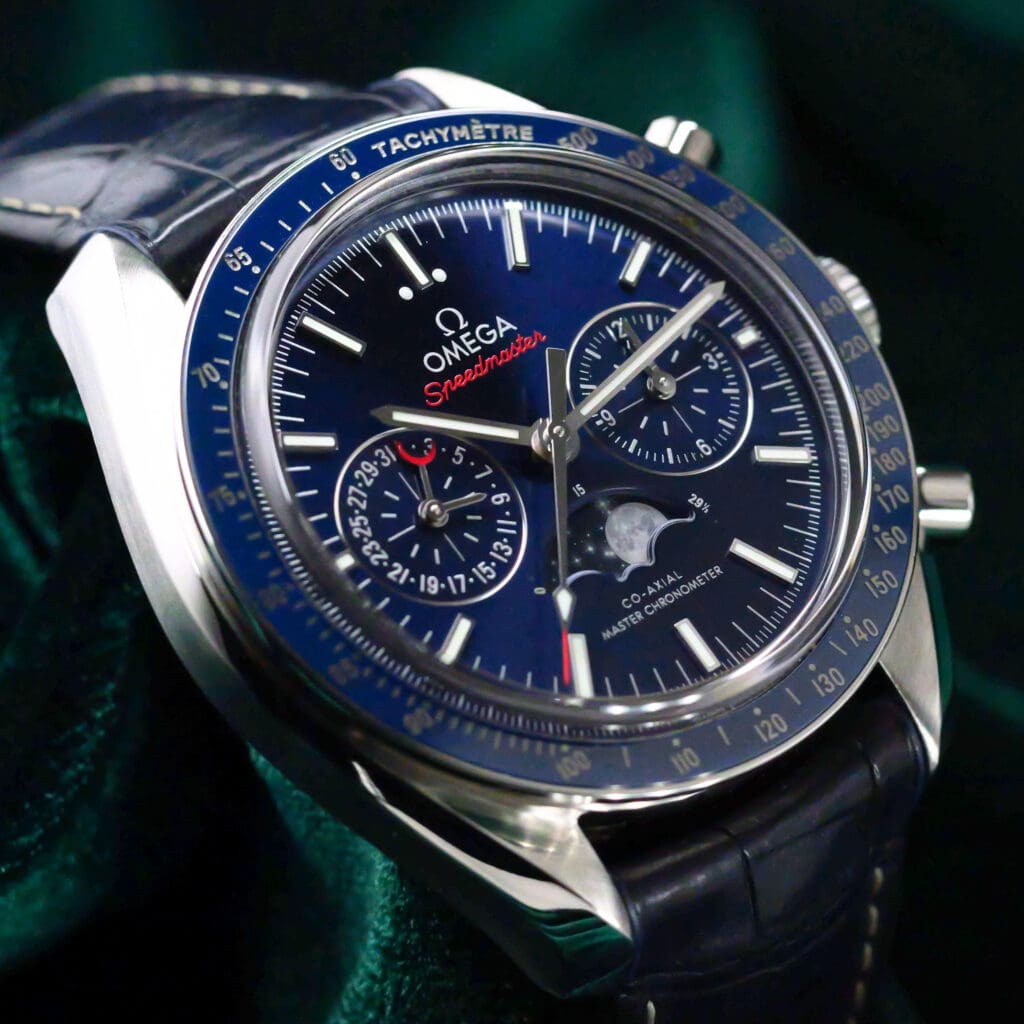
Omega Speedmaster Moonphase Blue Dial Blue Ceramic Bezel Blue Leather Strap Stainless Steel 44.25mm MINT CONDITION COMPLETE SET 304.33.44.52.03.001
Carrera Glassbox measures 39mm with a 46mm lug-to-lug, which fits a wider range of wrists comfortably. A domed crystal keeps it looking substantial on larger wrists too, while the slim case underneath sits flat without adding bulk.
Price and Market Demand
Start with what the core models cost, because that grounds every other number. As of 2026, a current Moonwatch retails around $6,400 for the Hesalite version and roughly $7,000 for the sapphire, with clean pre-owned examples trading near $4,500 to $6,500 with box and papers (Chrono24, eBay listings).
A current Carrera Glassbox steel chronograph retails around $6,450. On the secondary market, clean examples trade roughly $4,650 to $6,200 as of 2026 (Chrono24). So the two land within a few hundred dollars of each other at retail, which is why so many buyers cross-shop them.
Where they split is value retention. Speedmaster pricing covers both niche and collector pieces. At the entry end, a quartz LCD reference like the 186.009 trades around $650, a low figure that reflects a much smaller buyer pool than the core mechanical models (WatchCharts data).
At the top end, a limited steel reference such as the 311.32.42.30.04.003 has traded near $40,000 against a retail of about $7,350 (WatchCharts data). That gap shows how strongly the market rewards limited Speedmasters with a recognizable dial and a direct link to the Moonwatch story.
Carrera pricing tells a different story. A smaller quartz reference like the WBG1313 trades around $600, well below its roughly $2,300 retail (WatchCharts data). That drop signals weak secondary pressure on smaller steel quartz Carreras. A watch like that still makes sense as a personal buy, just not as a collector piece.
Higher up, a tourbillon reference such as the CAR5A8Z has traded around $14,800 against a retail near $21,400 to $22,600 (WatchCharts data). Even with titanium, ceramic, and limited production, it sits well below list. Complexity alone does not guarantee strong resale.
Put side by side, Speedmaster prices climb when a reference carries collector status, historical weight, or a dial people instantly tie to the model’s identity. Carrera pricing behaves more like a standard luxury market, where many references trade below retail unless the configuration hits the right mix of heritage, design, and demand.
Notable Speedmaster References

Some Speedmaster references matter more than others because each marks a clear point in the model’s development. One shows where the line started, one shaped the Moonwatch form people know best, and one brings a modern take to the same idea. Side by side, they show what changed, what stayed, and why certain references pull more buyer attention. Our full Speedmaster buying guide walks through the lineup in more depth.
Ref. CK2915-1 — Original Speedmaster
Ref. CK2915-1 shows the Speedmaster in its earliest form. A steel tachymeter bezel, Broad Arrow hands, and Caliber 321 give it a cleaner, more open look than later Moonwatch references. At 38.6mm it sounds small on paper, but straight lugs and a wide bezel give it real wrist presence.
Key Specs:
- Case Size: 38.6mm
- Material: Stainless steel with steel bezel
- Movement: Omega Caliber 321, manual wind
- Power Reserve: About 44 hours
- Crystal: Hesalite
- Water Resistance: 30m
- Market Range: About $53,000 to $97,000
Ref. ST 105.012 — First Moonwatch
Ref. ST 105.012 introduced the 42mm asymmetrical case that shaped the Moonwatch. Lyre lugs and added crown protection gave it a stronger case profile, while Caliber 321 kept the manual-wind chronograph layout.
Key Specs:
- Case Size: 42mm
- Material: Stainless steel
- Movement: Omega Caliber 321, manual wind
- Power Reserve: About 44 hours
- Crystal: Hesalite
- Water Resistance: 30m
- Market Range: About $8,300 to $17,200
Ref. 310.32.42.50.02.001 — Silver Snoopy Award 50th Anniversary


This reference mixes a playful design with a serious movement update. A silver dial and blue bezel make it easy to spot, while the animated Snoopy caseback gives it its own personality. Inside, Caliber 3861 brings better accuracy and stronger magnetic resistance than older Moonwatch movements.
Key Specs:
- Case Size: 42mm
- Material: Stainless steel with blue ceramic bezel
- Movement: Omega Caliber 3861, manual wind
- Power Reserve: 50 hours
- Crystal: Sapphire
- Water Resistance: 50m
- Market Range: About $14,000 to $17,000
Notable Carrera References
Certain Carrera references stand out because they mark key stages in the model’s development. Early versions set the racing chronograph layout, while newer ones keep that design and add modern movements and case updates. A few references show that progression clearly. Our Carrera buying guide maps out the full lineup if you are still deciding between references.
CBK221H.FC8317 — 60th Anniversary Panda
Ref. CBK221H.FC8317 brings the classic panda Carrera into a modern format. A 39mm case, silver dial with black subdials, and Heuer 02 automatic movement keep the design familiar. A domed crystal and updated finishing give it a sharper feel. Limited production adds interest, and the modern build makes it easier to wear than a vintage Carrera.
Key Specs:
- Case Size: 39mm
- Material: Stainless steel
- Movement: Calibre Heuer 02, automatic
- Power Reserve: 80 hours
- Crystal: Sapphire
- Water Resistance: 100m
- Market Range: About $6,500 to $8,500
Related Models from Majestix
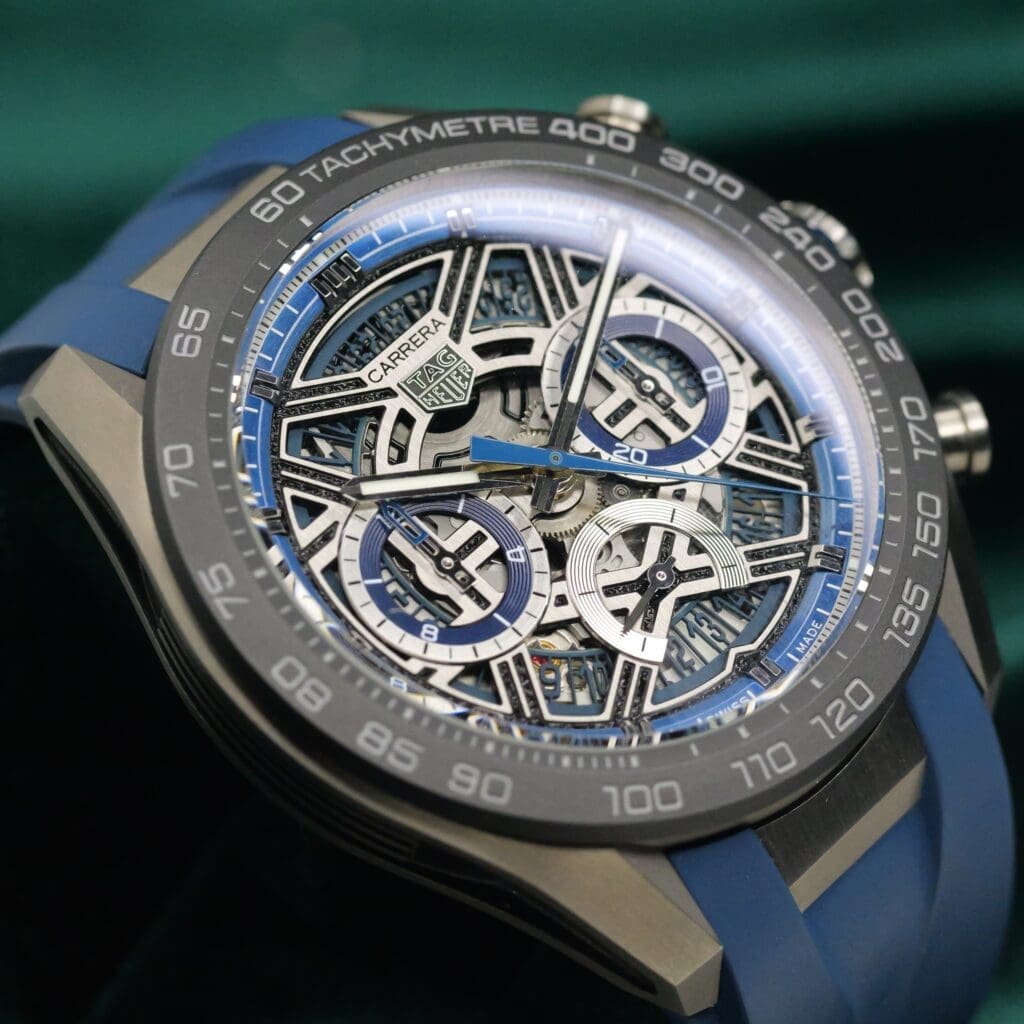
TAG Heuer Carrera Chronograph Extreme Sport Skeleton Black Dial Blue Rubber Strap Titanium 44mm MINT CONDITION COMPLETE SET CBU2081.FT6274

Tag Heuer Monaco Gulf Special Edition Blue Dial Blue Leather Bracelet Stainless Steel 39mm MINT CONDITION COMPLETE SET CBL2115.FC6494
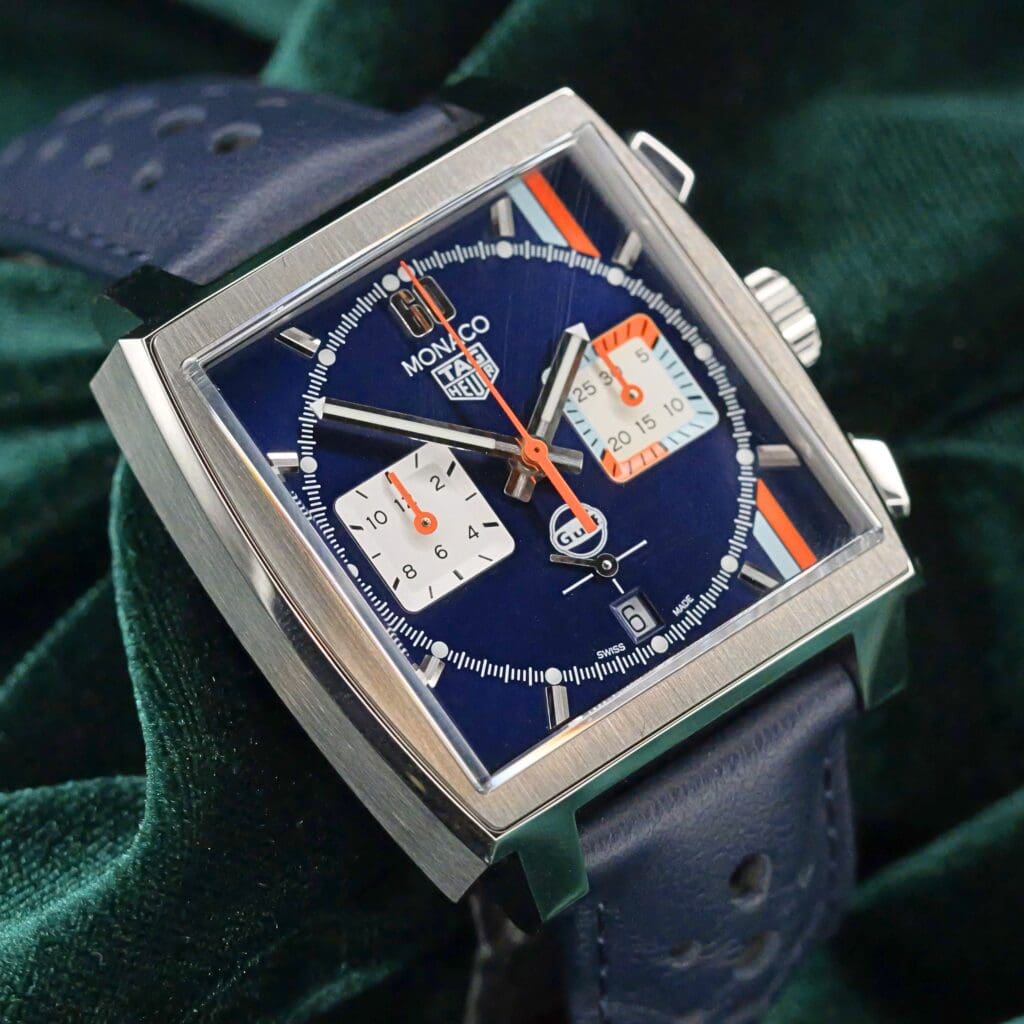
Tag Heuer Monaco Chronograph Gulf Blue Dial Blue Leather Strap Stainless Steel 39mm MINT CONDITION FULL SET CBL2115.FC6494
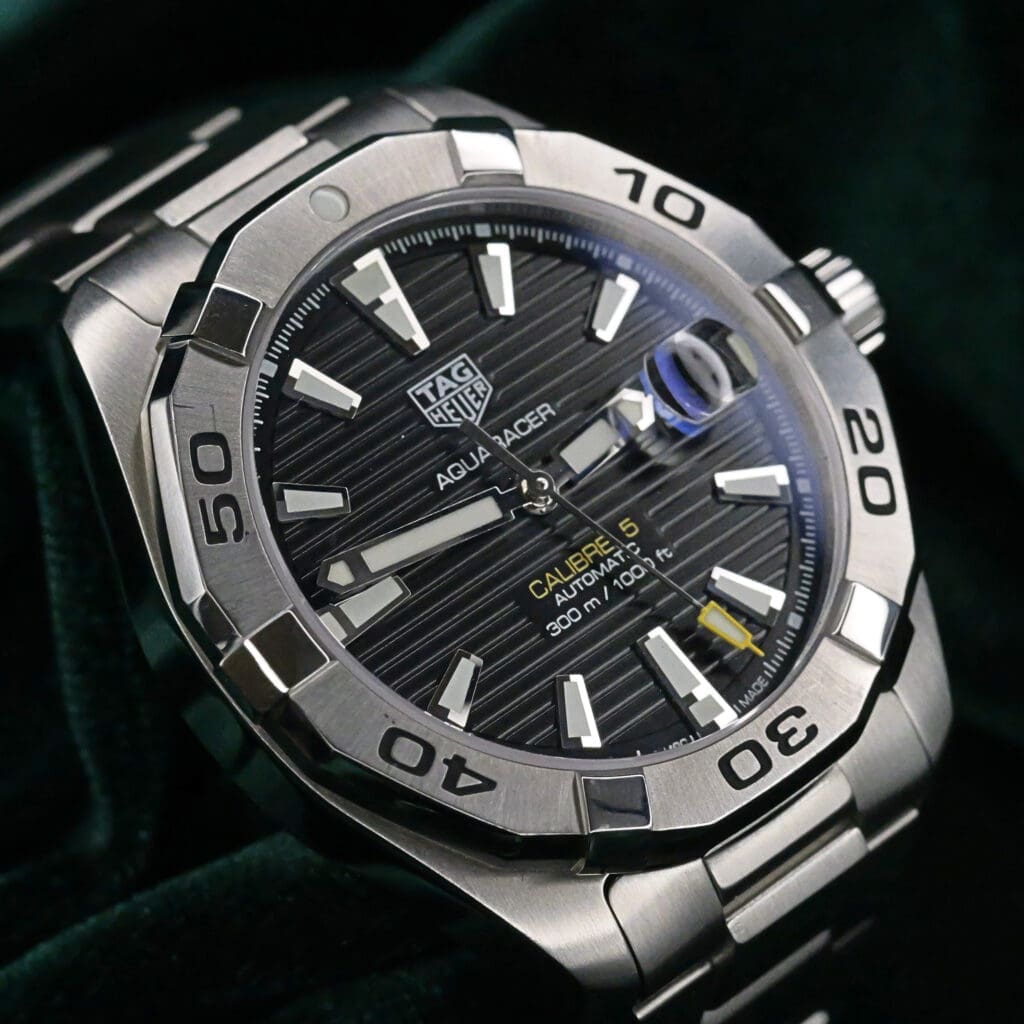
Tag Heuer Aquaracer 41MM Black Dial Stainless Steel NEAR MINT CONDITION COMPLETE SET WBD2110.BA0928

Tag Heuer Monaco Calibre 11 39MM Blue Dial Stainless Steel COMPLETE SET MINT CONDITION CAW211P.FC6356

NEW UNWORN 2026 Tag Heuer Monaco Chronograph Gulf 39MM Blue Dial Stainless Steel COMPLETE SET CBL2115.FC6494
Ref. 2447 SN — Reverse Panda
Ref. 2447 SN is one of the most important early Carreras because it introduced the reverse panda dial, a black dial with contrasting white subdials. A 36 to 38mm steel case and manual-wind Valjoux 72 keep it balanced and easy to read. Wide subdial spacing and an open dial make it look thinner and cleaner than many later chronographs.
Key Specs:
- Case Size: 36 to 38mm
- Material: Stainless steel
- Movement: Valjoux 72, manual wind
- Power Reserve: About 45 hours
- Crystal: Plexiglass
- Water Resistance: Not water resistant
- Market Range: About $11,500 to $25,000
CBS2210.FC6534 — Reverse Panda Glassbox
Ref. CBS2210.FC6534 nudges the Carrera toward a more modern look while the core design stays familiar. A black dial, reverse panda subdials, and a curved Glassbox sapphire crystal add depth a flat crystal case cannot. Inside, the TH20-00 movement delivers an 80-hour reserve, so it keeps running longer off the wrist.
Key Specs:
- Case Size: 39mm
- Material: Stainless steel
- Movement: TH20-00, automatic
- Power Reserve: 80 hours
- Crystal: Domed sapphire
- Water Resistance: 100m
- Market Range: About $6,000 to $7,250
Speedmaster vs Carrera: Which Chronograph Should You Choose?
Choosing between the two gets easier once you focus on how each watch fits your priorities. Read these points as preference and use, not specs you already covered above.
Choose the Speedmaster if:
- You want the strongest historical link a production chronograph carries
- Daily manual winding feels like a ritual rather than a chore
- You like the softer, warmer look of a Hesalite crystal
- Resale liquidity and long-term value stability matter to you
- A wrist around 6.5 inches or larger fits the case well
- Getting the full bracelet set at retail matters to you
Choose the Carrera if:
- You prefer the ease of an automatic with no winding routine
- An 80-hour reserve fits how you rotate watches
- A 39mm case suits a smaller wrist or a lower profile
- Extra everyday water resistance is useful to you
- You like the depth of a domed sapphire crystal
- Buying pre-owned below retail is part of your plan
- A modern motorsport identity appeals more than a space story
If you are torn between the two and want a side-by-side look at the actual watches in hand, message us with your wrist size and budget. We can send tour videos and honest condition notes on the Speedmaster and Carrera references we currently have, so you can compare them on the wrist before deciding. If your shortlist also includes the Daytona, our Speedmaster vs Daytona breakdown covers another classic chronograph matchup.
Frequently Asked Questions
Is it annoying to wind a speedmaster every day?
For most owners it becomes a 10-second morning habit, not a chore. The Cal. 3861 holds roughly 50 hours, so a daily wind keeps it running with margin to spare. Plenty of buyers say the ritual is part of why they bought a manual watch. If you rotate several watches and dislike resetting time and winding each time, the automatic Carrera is the easier daily companion.
Does the Speedmaster or Carrera hold value better?
The Speedmaster holds value noticeably better, and a few limited references appreciate. Its Moonwatch heritage and largely unchanged design keep demand steady on the used market. Most core Carreras depreciate from retail like the broader luxury market, though vintage and limited Carreras can be exceptions. If resale matters to you, the Speedmaster is the safer bet.
Is the Carrera Glassbox Crystal durable enough for daily wear?
Yes. A domed sapphire is hard and scratch-resistant, well suited to daily use. Its biggest exposure is a hard knock on the high dome rather than everyday scuffing. You get mild edge distortion at shallow angles in exchange for the layered vintage look. A Speedmaster with sapphire offers similar scratch resistance in a flatter profile.
Which watch fits a smaller wrist better?
The 39mm Carrera Glassbox is the better fit for smaller wrists. Its 46mm lug-to-lug sits more contained than the Speedmaster’s 47 to 48mm span, which can overhang wrists under 6.5 inches. If you have a larger wrist, both wear well, and the Speedmaster’s longer lugs fill the space nicely. For options beyond these two, our guide to the best luxury watches for small wrists is worth a look.
Can you swim with either watch?
A Carrera handles incidental water better at 100m, while the current Moonwatch is rated to 50m. Neither is a dive watch. A Carrera is fine for a pool or rain, and the Speedmaster shrugs off splashes and handwashing but is happier kept dry. For real swimming on a regular basis, a dedicated dive watch beats both.
999+ Timepieces Available
Explore Our Timepieces
Authenticated, unworn, and ready to ship worldwide.
Rolex · Audemars Piguet · Patek Philippe · Omega · Cartier · Richard Mille · Hublot · Tudor
Newly Listed
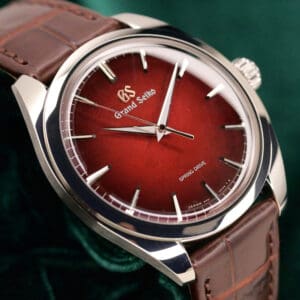
2026 NEW UNWORN Grand Seiko Elegance "Morning Glow" Limited Edition Red Dial Crocodile Strap 38.5mm COMPLETE SET SBGY035G
$9,816.00
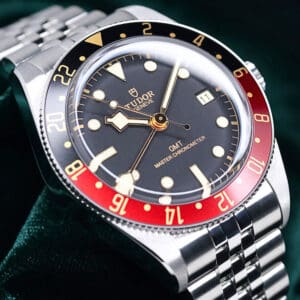
2026 NEW UNWORN Tudor Black Bay 58 GMT "Coke" Black Dial Black Burgundy Red Bezel Five-Link Stainless Steel Bracelet 39mm COMPLETE SET 7939G1A0NRU-0003
$7,385.00
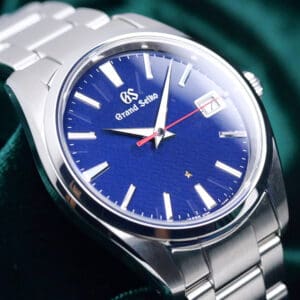
Grand Seiko Heritage 60th Anniversary Limited Edition Blue Dial Stainless Steel 40mm MINT CONDITION COMPLETE SET SBGP007G
$4,268.00
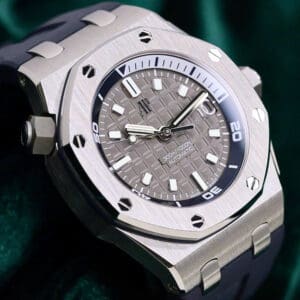
Audemars Piguet Royal Oak Offshore Diver Grey Dial Blue Rubber Strap Stainless Steel 42mm MINT CONDITION COMPLETE SET 15720ST.OO.A009CA.01
$27,788.00
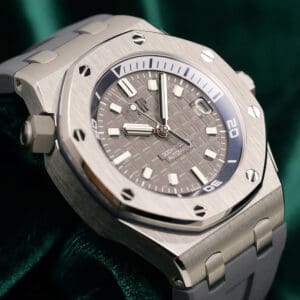
Audemars Piguet Royal Oak Offshore Diver Grey Dial Blue Inner Bezel Grey Rubber Strap Stainless Steel 42mm MINT CONDITION COMPLETE SET 15720ST.OO.A009CA.01
$27,788.00
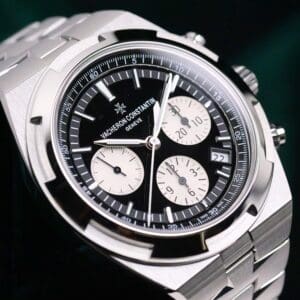
Vacheron Constantin Overseas Chronograph "Reverse Panda" Black Dial Silver Subdials Stainless Steel 42.5mm MINT CONDITION COMPLETE SET 5500V/110A-B481
$34,095.00

Rolex Sky-Dweller Black Dial 18K White Gold Fluted Bezel Oyster Bracelet Stainless Steel 42mm MINT CONDITION COMPLETE SET 336934-0007
$21,945.00

2026 Rolex Datejust Green Ombre Dial Smooth Bezel Jubilee Bracelet Stainless Steel 41mm MINT CONDITION COMPLETE SET 126300
$16,480.00

2026 NEW UNWORN Cartier Santos-Dumont Silver Dial Platinum Mesh Bracelet Platinum 31mm COMPLETE SET WGSA0124
$64,790.00

2026 Tudor Black Bay 58 Black Dial Jubilee Bracelet Stainless Steel 39mm MINT CONDITION COMPLETE SET 7939A1A0NU
$5,717.00

NEW UNWORN Rolex Submariner Date “Sub Date” Black Dial Black Ceramic Bezel Oyster Bracelet Stainless Steel 41mm COMPLETE SET 126610LN
$15,595.00
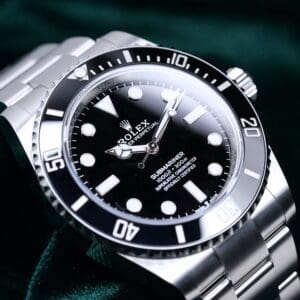
2026 NEW UNWORN Rolex Submariner No Date Black Dial Black Ceramic Bezel Oyster Bracelet Stainless Steel 41mm COMPLETE SET 124060
$15,219.00
Where to Buy Authentic Watches Online
A handful of legitimate online channels cover both of these chronographs. Chrono24 aggregates listings from dealers and private sellers worldwide with buyer protection on escrow orders, and our guide to buying on Chrono24 covers what to check first. eBay runs an Authenticity Guarantee program that inspects qualifying watches before they reach you. Grailzee handles enthusiast consignment and auctions.
Independent grey-market sellers and watch forums round out the landscape, and prices there vary widely with condition and completeness.
We also buy, sell, and trade luxury watches, and the reason clients work with us over a big marketplace is the conversation before the purchase. We send tour videos of the actual watch, not stock photos, plus detailed condition notes and a real person who has handled the piece. You can browse our current collection or just tell us what you are after, and you are not buying blind off a listing.
That shows up in our 4.9-star Google rating, which comes from buyers who wanted a straight answer before committing.
If you want that kind of walkthrough on a specific Speedmaster or Carrera, reach out and we will line up options that match your wrist size and budget.
Final Thoughts on Speedmaster vs Carrera
Choosing between the Speedmaster and Carrera comes down to the kind of ownership you want. A Speedmaster rewards buyers who value heritage, the daily winding ritual, and stronger resale. A Carrera suits buyers who want an easy automatic, a 39mm fit, and a modern motorsport feel below retail.
Two quick tips before you buy. Try both lug-to-lug on your own wrist, since the numbers hide how differently they sit. And on the Speedmaster, decide between Hesalite and sapphire early, because that one choice shapes the look, the price, and how it ages.