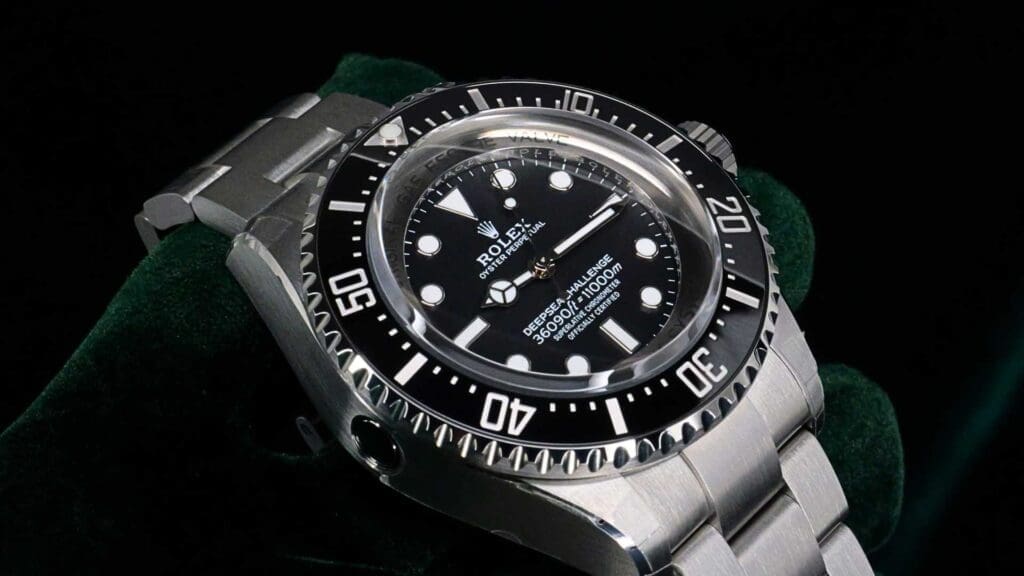
The Rolex Deepsea service cost reflects the level of engineering that allows the watch to withstand extreme pressure and saturation-diving environments. Servicing this model involves far more than a standard overhaul; it requires verifying the integrity of the Ringlock case, inspecting the Helium Escape Valve, and confirming that the watch still meets its 3,900-meter depth rating.
Understanding these requirements makes it easier to evaluate pricing differences between Rolex service centers (RSCs), authorized partners, and skilled independent specialists. This guide provides a clear breakdown of every cost factor so you can make informed decisions and maintain Deepsea’s performance for years to come.
What Does a Rolex Deepsea Service Include?
A Rolex Deepsea service includes a full overhaul of the movement, complete disassembly of the case, replacement of all gaskets, lubrication of key components, and restoration of water-resistance to its extreme depth rating.
The watch is pressure-tested using specialized equipment that can simulate the Deepsea’s 3,900-meter capability, and the Helium Escape Valve is inspected or replaced if needed. The case and bracelet receive refinishing to restore the original Oystersteel finish, and the watch undergoes final accuracy testing to ensure it meets Rolex chronometer standards before being returned to you.
Why Rolex Deepsea Service Cost Higher Than Other Rolex Dive Watches
The Rolex Deepsea costs more to service because its construction is significantly more complex than the Submariner or standard Sea-Dweller. The Ringlock case architecture, designed to withstand 3,900 meters of pressure, requires specialized tools and testing equipment that only select service centers have.
The Helium Escape Valve must be inspected, calibrated, or replaced with precision to maintain saturation-diving reliability. The Deepsea’s extra-thick sapphire crystal and reinforced caseback also demand additional labor during disassembly and resealing.
Combined with the need for extreme pressure-testing to verify its ultra-deep water resistance, these features make servicing a Deepsea more time-intensive, specialized, and ultimately more expensive than other Rolex dive watches.
Key Factors Affecting Rolex Deepsea Service Cost
Several Deepsea-specific elements influence how much your service will cost, especially because the model is engineered for extreme depth and uses components that are more complex than standard Rolex dive watches. Here are the main factors that can raise or lower the overall price:
- Service type: A basic maintenance service costs less, while a full overhaul involves movement disassembly, parts replacement, refinishing, and waterproofing.
- Reference and generation (116660, 126660, 136660): Newer models may have different parts availability and pricing, while older references may need more component replacements.
- Depth-rating requirements and extreme pressure-testing needs: The Deepsea’s 3,900-meter capability requires advanced pressure-testing equipment, increasing labor and service fees.
- Condition of the Helium Escape Valve and internal case seals: Worn HEV components or compromised seals raise the overall service cost due to replacement and calibration needs.
- Wear or damage from diving or saltwater exposure: Frequent submersion exposes the watch to stress, debris, and corrosion, often leading to higher parts and labor charges.
- Condition of the case and bracelet finish: Deep scratches, dents, or heavy wear increase refinishing time and may require component replacements.
- Evidence of moisture, rust, or saltwater corrosion: Any signs of internal moisture or oxidation can significantly increase repair costs due to affected movement parts.
- Presence of aftermarket or non-genuine parts: Unauthorized components must be replaced with authentic Rolex parts, adding to both parts cost and total service time.
What Pressure Testing Does a Rolex Deepsea Require?
A Rolex Deepsea requires ultra-high-pressure testing that simulates its 3,900-meter depth rating, which is far beyond the capabilities of standard watch-testing machines used for models like the Submariner or Sea-Dweller.
Deepsea testing is performed using specialized hyperbaric chambers that replicate extreme ocean pressure to verify the integrity of the Ringlock system, crystal, caseback, and gaskets. Only select RSCs and a small number of independent dive-watch specialists have equipment strong enough to conduct these tests safely and accurately.
Because of the advanced machinery, longer test cycles, and higher safety standards involved, Deepsea pressure verification costs more and adds extra labor time compared with typical Rolex dive-watch water-resistance testing.

Rolex Deepsea Service Cost by Service Channel
The cost of servicing a Rolex Deepsea varies significantly depending on where you bring the watch. Because the Deepsea requires ultra-high-pressure testing, Helium Escape Valve checks, and Ringlock-case resealing, prices tend to be higher than standard Rolex dive models across all service providers. Below is a breakdown of typical costs by service channel.
Rolex Service Center
At an official RSC, your Deepsea receives the most comprehensive standard overhaul using genuine Rolex parts and full pressure certification.
- Typical cost: $1,100 – $1,600+
This range reflects the complexity of the Deepsea’s design, with pressure testing to its 3,900 m rating and replacement of seals, gaskets, and critical components. It includes a two-year service warranty. Prices are the highest in the market but also the most consistent and guaranteed.
Authorized Rolex Service Partners
Authorized partners follow Rolex procedures and use genuine parts, though some may subcontract final pressure testing to an RSC.
- Typical cost: $950 – $1,450+
Slightly below RSC pricing, this option still ensures high-quality service and genuine components, but turnaround times can be longer if Deepsea pressure certification is done off-site.
Independent Rolex Dive-Watch Specialists
Experienced dive-watch specialists with proper hyperbaric testing gear can service the Deepsea at a competitive price point.
- Typical cost: $700 – $1,200+
This option is often more affordable than official channels while still delivering knowledgeable handling of the Ringlock case, HEV, and pressure testing. Costs vary with condition, needed parts, and specialist expertise.
Budget-Level Independent Watchmakers
Lower-cost independent watchmakers may offer Deepsea servicing without specialized pressure testing equipment. While the initial quote may be attractive, water-resistance cannot be guaranteed unless proper testing is available.
- Typical cost: $400 – $800+
This range can be misleading; without extreme pressure testing, you risk compromised waterproofing. Suitable only for non-diving use or cosmetic service, not for restoring certified 3,900 m resistance.
Rolex Deepsea Service Cost by Model and Configuration
Service pricing can shift slightly depending on the exact Deepsea variant and how the watch has been used, so here’s a quick comparison to show how each configuration typically affects the overall cost.
| Model / Configuration | Typical Impact on Service Cost |
| Standard Deepsea in Oystersteel (Black Dial) | Falls within the standard Deepsea service range; no added cost unless parts or seals need replacement. |
| Deepsea James Cameron D-Blue Dial | Similar base cost as the standard model; dial- or bezel-related part replacements may be slightly higher. |
| Deepsea With Heavy Dive Use | Increased wear on seals, HEV, and gaskets may add $100–$300+ for additional parts or corrosion treatment. |
| Deepsea With Mostly Desk Diving | Typically remains within the base service price; minimal additional wear or sealing issues. |
| Deepsea Challenge | Higher service cost due to thicker crystal, reinforced case, and more extreme pressure-testing, often adding $200–$400+ above standard Deepsea pricing. |
Extra Deepsea Service Costs
Some issues fall outside a standard overhaul and can increase the total price, especially on a dive watch built for extreme depths. These are the most common add-on costs:
- Helium Escape Valve replacement: For worn, sticking, or leaking HEV components.
- New sapphire crystal: Required for cracks, chips, or edge fractures.
- Bezel or ceramic insert replacement: Needed after impact or heavy wear.
- Caseback gasket and Ringlock seals: Replaced when degraded or no longer water-tight.
- Bracelet or clasp repairs: Fixes Glidelock/Fliplock issues or stretched links.
- Corrosion removal: Addresses rust, pitting, or saltwater damage.
- Replacing non-genuine parts: Restores original specs by removing aftermarket components.
Signs Your Rolex Deepsea Needs Servicing
Because the Deepsea is built for extreme depth and pressure, any change in performance or sealing should be taken seriously. Here are the key signs that your watch may need professional service:
- Fogging or moisture under the crystal: Indicates a compromised seal or water intrusion.
- Crown tube stiffness or rough threading: Suggests worn threads or dried lubrication.
- Reduced power reserve: A common sign that movement components or oils need attention.
- Noticeable timing deviation: Inconsistent accuracy points to regulation or mechanical issues.
- HEV issues:Sticking, leaking, or unusual resistance can mean the Helium Escape Valve needs service or replacement.
- Unusual rattling or rotor noise: May signal wear in the rotor assembly or internal components.

How Often Should You Service a Rolex Deepsea?
Rolex generally recommends servicing a Deepsea every 7–10 years, but actual intervals depend on how the watch is used and the conditions it’s exposed to. A Deepsea worn for regular diving, saltwater use, or frequent pressure changes may need attention sooner, especially if any signs of moisture, HEV issues, or timing irregularities appear.
For mostly desk-diving wear, the watch can usually reach the longer end of the service window without issues, as long as the seals remain intact and performance stays stable. Regular water-resistance checks (ideally every 1–2 years) help ensure the Deepsea maintains its extreme depth rating between full services.
Final Thoughts on Rolex Deepsea Service Cost
The Rolex Deepsea service cost ultimately reflects the precision and durability required for a watch engineered to survive extreme depths. Maintaining the Deepsea’s performance means paying attention to seal condition, movement stability, and any early signs that point to moisture or pressure-related stress.
Choosing a service provider equipped for full Deepsea-level pressure testing is essential, as only proper verification can confirm the Ringlock system’s integrity. With the right approach to maintenance and timely servicing, a Deepsea continues to deliver the reliability and strength that justify its unique engineering and the investment behind its service cost.
FAQs About Rolex Deepsea Service Cost
Is servicing a Rolex Deepsea more expensive than servicing a Submariner or Sea-Dweller?
Yes. The Deepsea typically costs more because it requires extreme pressure testing, Ringlock-case resealing, and Helium Escape Valve checks (procedures that demand specialized equipment and additional labor). These added steps make Deepsea servicing noticeably higher than Submariner or Sea-Dweller service costs.
How much does a typical Rolex Deepsea overhaul cost?
A full Deepsea overhaul usually ranges from $1,100 to $1,600+ at an RSC. Authorized partners and independent specialists may charge less, but the price increases if the HEV, crystal, gaskets, or corrosion-related parts need replacement during the inspection.
Does frequent diving make Rolex Deepsea service more expensive or more frequent?
Yes. Regular diving, especially in saltwater, puts more strain on the gaskets, Helium Escape Valve, and Ringlock system. This can lead to earlier gasket replacements, moisture checks, and corrosion treatment, making services both more frequent and sometimes more costly than for primarily desk-diving wear.
Is it worth paying extra to service a Rolex Deepsea at an official RSC?
Often, yes. An RSC offers the most accurate pressure testing, guaranteed genuine parts, and a two-year service warranty, which matters for a watch built for extreme depth. While independents can be skilled, RSC servicing provides maximum assurance of waterproof integrity and long-term reliability.