First introduced in 1945, the Rolex Air-King has become a symbol of the Rolex long-standing connection to the aviation world, revered for its clean, easy-to-read dial and build. With its distinctive 3, 6, and 9 numerals, the Air-King mirrors the design of cockpit instruments, making it an essential tool for pilots. In this Rolex Air-King guide, we’ll explore its history, models, and features, highlighting why this watch remains a favorite among aviation enthusiasts.
The Early Years: The Birth of the Air-King (1945 – 1950s)
The Rolex Air-King was introduced as part of the brand’s “Air” series, a range of watches designed specifically to honor pilots and their critical role during World War II. This early iteration of the Air-King featured a 34mm stainless steel case, making it one of the larger models of its time, and it was powered by a manual-winding movement.
The Rolex connection to aviation began with British RAF pilots, who famously wore Rolex Oyster models during the war. These pilots chose Rolex for their reliability and water resistance which were essential for the harsh conditions of aerial combat. Following this, Rolex introduced the Air-Lion, Air-Tiger, and Air-Giant, but it was the Air-King that endured and became the most recognized of these models.
The early Air-King was characterized by its clean design, with no additional complications, such as a date window, allowing the focus to be on precision and legibility. The Air-King’s distinctive logo was also designed in a special italicized font, marking it as a unique timepiece in the Rolex catalog.
The 1950s and 1960s: The Expansion of the Air-King
By 1957, the Air-King was updated to include a new automatic movement, marking a significant step in the evolution of the model. Rolex introduced the Reference 5500, which became a mainstay in the Air-King collection for many years. This model featured a 34mm case and was powered by the automatic Caliber 1520 movement. The Air-King continued to reflect the timeless aesthetic Rolex is known for – minimalist, with large Arabic numerals at 3, 6, and 9, complemented by simple stick markers.
In the 1960s, further refinements included the use of Acrylic crystals, giving the Air-King a more modern look. This was also a period of production expansion, as Rolex started offering various dial configurations to appeal to different markets.
The 1980s to 1990s: Transition and Changes
In 1989, the Reference 14000 was introduced, marking a significant update to the Air-King. The 14000 featured a sapphire crystal and used the Caliber 3000 movement, which improved accuracy and longevity. The introduction of sapphire crystals meant that the Air-King was now more resistant to scratches, making it more durable and easier to maintain.
The 14000 series models remained in production until the early 2000s. These watches were simple, reliable, and well-suited for those who wanted an entry-level Rolex with a no-nonsense design.
The 2000s: The Evolution Continues
In 2007, Rolex introduced the Reference 114200, which came with new enhancements such as a COSC chronometer-certified movement and the introduction of the Superluminova lume on the dial for better visibility in low-light conditions. This was a turning point for the Air-King, as it transitioned from being a purely functional watch to a more precise and technologically advanced piece.
2016 to 2022: The Return of the Iconic Design
In 2016, the Rolex Air-King 116900 made a major return to the market. The watch received significant design updates, including a 40mm case size, a modernized dial with Arabic numerals at 3, 6, and 9, and the iconic green seconds hand and yellow Rolex crown, drawing inspiration from Rolex’s partnership with the Bloodhound SSC project. The new design gave the Air-King a more robust, sporty look while retaining its aviation heritage.
In 2022, the Rolex Air-King 126900 was introduced, featuring a new movement, Caliber 3230, offering a 70-hour power reserve, enhanced anti-magnetic properties, and improved chronometric performance. The latest version continued the legacy of the Air-King while refining its design to meet modern needs and standards.
Key Functions and Features of the Rolex Air-King
The Rolex Air-King stands out for its efficiency, legibility, and robustness, offering a range of essential features that emphasize reliability and functionality.
Timekeeping
The Air-King is a time-only watch, featuring hours, minutes, and seconds, with a focus on legibility.
Movement
The watch is powered by the Caliber 3230, a self-winding mechanical movement with a 70-hour power reserve. The movement is COSC-certified, meaning it has passed stringent tests for accuracy.
Date
The Air-King does not feature a date window, preserving its clean dial design.
Water Resistance
The Air-King has a water resistance of 100 meters (330 feet), making it suitable for daily wear and light water activities but not for professional diving.
Magnetic Resistance
The Caliber 3230 movement is equipped with the Rolex Parachrom hairspring, which enhances the Air-King’s resistance to magnetic fields, an important feature for those working in environments with strong magnetic interference.
40mm Oyster Case
Made from Oystersteel, a high-resistance stainless steel developed by Rolex, the case is robust and corrosion-resistant.
Chromalight Display
The watch features Chromalight lume, providing a blue glow in low-light conditions for superior legibility.
Distinctive Dial
The dial features large 3, 6, and 9 hour markers, along with a prominent minute scale for optimal readability.
Crown Guard
Introduced in 2022, the Air-King features a crown guard for added durability, protecting the Twinlock winding crown.
Oyster Bracelet
The Air-King is equipped with an Oyster bracelet that includes the Easylink extension system, allowing for quick adjustment of the bracelet length for added comfort.
Popular Rolex Air-King Variations
The Rolex Air-King has evolved significantly since its debut in 1945. Over the years, several iterations have been introduced, each featuring unique design elements and technological improvements that cater to different preferences, from vintage enthusiasts to modern-day watch collectors. Here’s a look at some of the most notable Air-King models:
1. Rolex Air-King 5500 (1957 – 1989)
The Air-King 5500, produced from 1957 to 1989, is widely considered the quintessential vintage Air-King. Known for its clean and simple design, it features a 34mm stainless steel case, a manual winding movement, and a variety of dial variations. The 5500 was Rolex’s entry-level model and became a staple of the brand, maintaining its popularity among collectors.
Key Features:
- Movement: Powered by the Caliber 1520 or 1530 automatic movement
- Dial: Simple, with Arabic numerals and a minimalistic design
- Case: 34mm stainless steel case
- Luminous Markers: Radium or later, tritium lume
2. Rolex Air-King 14000 (1989 – 2007)
The Air-King 14000 was introduced in 1989 and marked a significant step forward with the inclusion of a sapphire crystal and the new Caliber 3000 movement. This model maintained the clean aesthetic of its predecessor but was updated for modern standards of reliability and durability. Its understated elegance and affordability within the Rolex range helped it become a popular choice among those looking to enter the world of luxury watches.
Key Features:
- Movement: Caliber 3000, a reliable automatic movement
- Dial: Simple with stick markers and a date window at 3 o’clock
- Case: 34mm stainless steel case with a sapphire crystal
- Luminous Markers: Tritium lume
3. Rolex Air-King 116900 (2016 – 2022)
The Air-King 116900, introduced in 2016, brought a major redesign to the Air-King lineup. Featuring a larger 40mm case, the model introduced a modern dial with bold Arabic numerals at 3, 6, and 9, complemented by a prominent minute scale. The green second hand and the signature yellow Rolex crown added unique touches that tied the model to the brand’s aviation roots. This iteration was also equipped with a more advanced movement, making it a true modern classic.
Key Features:
- Movement: Caliber 3131, featuring anti-magnetic technology
- Dial: Bold Arabic numerals at 3, 6, and 9 with the iconic green second hand
- Case: 40mm stainless steel case
- Luminous Markers: Chromalight lume for improved legibility
4. Rolex Air-King 126900 (2022 – Present)
The Air-King 126900 is the latest iteration of the model, launched in 2022. It builds on the legacy of the 116900 with a more refined and balanced dial, improved movement (Caliber 3230), and enhanced anti-magnetic resistance. The 126900 also continues the use of the bold Arabic numerals at 3, 6, and 9, but with added clarity.
Key Features:
- Movement: Caliber 3230, offering 70 hours of power reserve and enhanced magnetic resistance
- Dial: Updated Arabic numerals, cleaner design with improved readability
- Case: 40mm Oystersteel case with a polished and brushed finish
- Luminous Markers: Chromalight for improved visibility in low light
Rolex Air-King vs. Other Rolex Models
Here’s a comparison of the Rolex Air-King with other Rolex models that offer similar functions. The models most comparable to the Air-King in the Rolex lineup include the Rolex Oyster Perpetual, Rolex Explorer, and Rolex Datejust. Let’s break down how the Air-King compares to these other models:
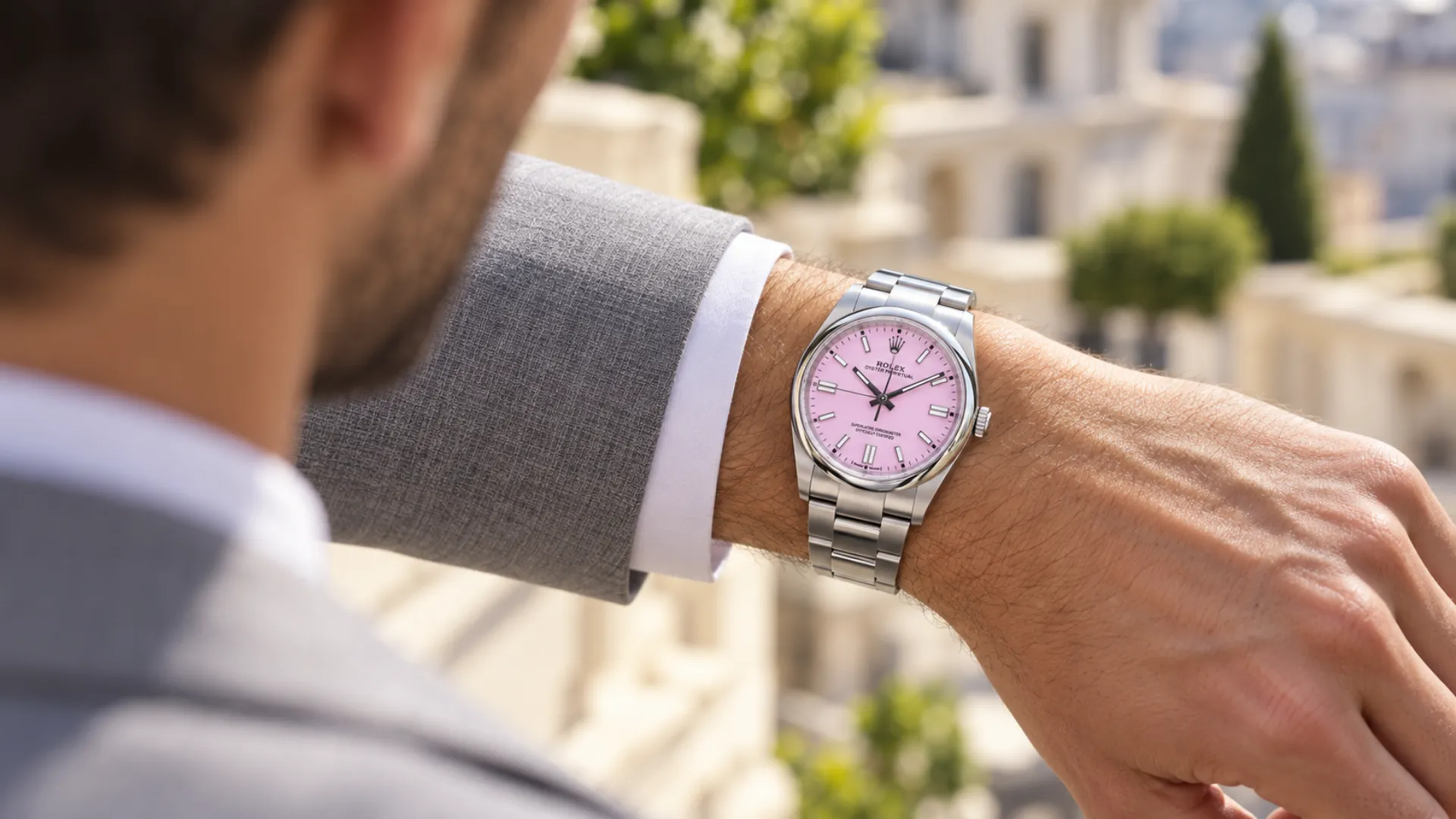
Versus Rolex Oyster Perpetual
While both share similar timekeeping functionality, they differ in their design philosophy and intended audience.
Key Differences:
- Case Size: The Oyster Perpetual is available in multiple sizes ranging from 36mm to 41mm, offering more options for various wrist sizes. The Air-King has a 40mm case, making it a slightly more robust option in the lineup.
- Dial Design: The Air-King features a distinctive aviation-inspired dial with large 3, 6, and 9 hour markers and a prominent minute scale. The Oyster Perpetual features a simpler, more traditional dial design with hour markers and a clean layout.
- Target Audience: The Oyster Perpetual is a great entry-level Rolex for anyone seeking a versatile and elegant timepiece, while the Air-King appeals to those with a particular interest in aviation and a more unique, sporty design.
- Design & Build: Both models are robust, with the Air-King featuring a larger, more distinctive design, and the Oyster Perpetual being more understated and versatile for everyday wear.
Versus Rolex Explorer (36mm version)
The Rolex Explorer and Rolex Air-King share similar time-only functionality and legibility, making them both ideal for those seeking a reliable watch for outdoor use. However, their design and intended use differ, with the Explorer being more rugged and adventure-focused.
Key Differences:
- Case Size: The Explorer typically has a 36mm case (with some newer models offering larger sizes), while the Air-King has a 40mm case, giving it a slightly larger and more modern feel.
- Design: The Explorer has a more straightforward design with legible numerals at 3, 6, and 9, ideal for mountaineers and climbers. The Air-King, influenced by aviation, features a more unique dial with large numerals and minute markers, designed to be legible for aviators and explorers.
- Target Audience: The Explorer is perfect for those looking for a durable and legible watch for high-altitude expeditions or general outdoor activities, while the Air-King caters to aviation enthusiasts and those who appreciate a clean but distinctive design.
- Design & Build: The Explorer offers a more rugged, tool-watch design, while the Air-King provides a more modern and distinct look with its aviation heritage, making it stand out in the Rolex lineup.
Versus Rolex Datejust
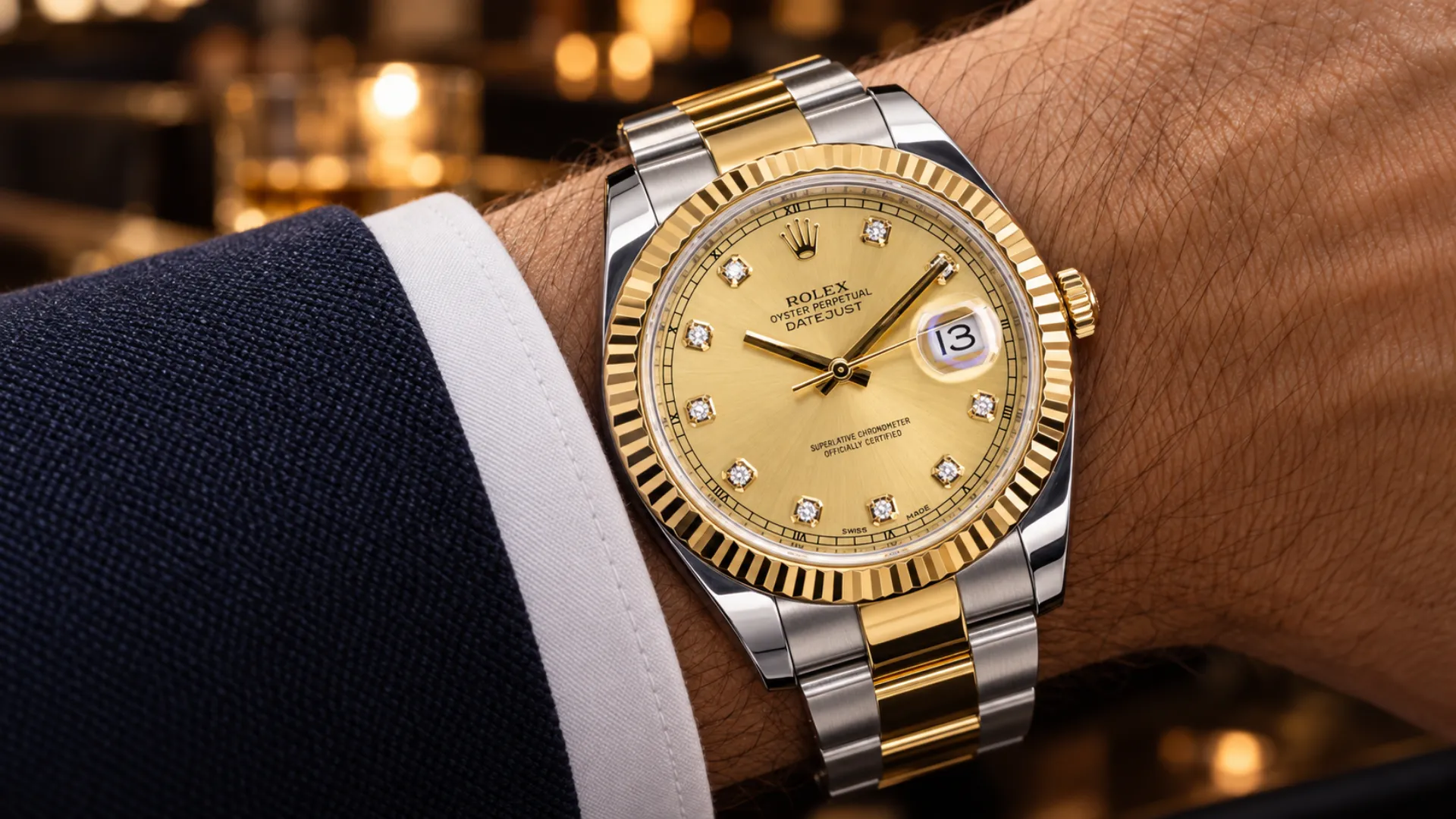
The Rolex Datejust features a date complication at the 3 o’clock position, while the Air-King is a time-only watch with no date function, focusing on a clean and simple dial.
Key Differences:
- Date Function: The Datejust includes a date window, which is a key feature for those who prefer to track the date along with the time. The Air-King maintains a minimalist design without a date function, appealing to those who want a simpler watch.
- Design & Style: The Datejust is more refined and often seen as a luxury dress watch, with options for fluted bezels, diamond markers, and various dial colors. The Air-King has a more utilitarian and sporty look, making it suitable for more casual or adventurous settings.
- Target Audience: The Datejust is ideal for those seeking an elegant, versatile Rolex with a date function for everyday use, while the Air-King is better suited for those who want a functional, legible timepiece with a unique aviation-inspired design.
- Design & Build: The Datejust is more refined and dressy, while the Air-King focuses on legibility and simplicity with a sporty, aviation-inspired design.
Rolex Air-King vs. Other Luxury Brands
When comparing the Air-King to other luxury watches with similar functionalities, several models from renowned brands stand out.
1. Versus Omega Seamaster Aqua Terra
The Omega Seamaster Aqua Terra offers a versatile and elegant design that combines both sporty and refined elements, making it a competitor to the Rolex Air-King. While both watches share similar time-only functionality, they differ in design, movement, and price, making them appealing to different types of watch enthusiasts.
Key Features:
- Design: The Omega Seamaster Aqua Terra offers a more refined and versatile design, blending a sporty look with elegant features. The Air-King, however, carries a more distinct and bold design with aviation-inspired elements like the large 3, 6, and 9 numerals.
- Movement: The Omega Seamaster Aqua Terra is powered by the Omega Co-Axial Master Chronometer Caliber 8900, which is known for its resistance to magnetic fields. The Rolex Air-King uses the Caliber 3230 movement, offering a longer power reserve of 70 hours and COSC certification for enhanced accuracy.
- Water Resistance: The Seamaster Aqua Terra has a water resistance of 150 meters (500 feet), making it suitable for water-related activities, while the Air-King’s water resistance is rated at 100 meters (330 feet), which is sufficient for light water activities.
- Price: The Omega Seamaster Aqua Terra is typically more affordable, offering good value for the price, whereas the Rolex Air-King commands a premium due to its brand prestige and resale value.
The Rolex Air-King stands out with its aviation-inspired design and longer power reserve, while the Omega Seamaster Aqua Terra excels in water resistance and offers a more versatile style suitable for both casual and formal settings.
2. Versus IWC Pilot’s Watch Mark XVIII
The IWC Pilot’s Watch Mark XVIII is a classic pilot’s watch that prioritizes legibility and durability, similar to the Rolex Air-King. Both watches are designed for those who appreciate simplicity and functionality, but the Rolex Air-King offers a more unique design with its aviation heritage.
Key Features:
- Design: The IWC Pilot’s Watch Mark XVIII offers a clean, simple dial design with large Arabic numerals, reminiscent of classic military-style pilot watches. In contrast, the Rolex Air-King features a distinctive dial with large 3, 6, and 9 numerals and a prominent minute scale, which emphasizes legibility in low-light conditions.
- Movement: Both watches are powered by reliable automatic movements. The IWC Pilot’s Watch Mark XVIII is powered by the Caliber 35111, while the Rolex Air-King uses the Caliber 3230, offering a longer power reserve of 70 hours and COSC certification.
- Price: The IWC Pilot’s Watch Mark XVIII is generally more affordable than the Rolex Air-King, making it a good option for those looking for a high-quality timepiece at a lower price point.
- Water Resistance: The IWC Pilot’s Watch Mark XVIII offers a water resistance of 60 meters (200 feet), while the Rolex Air-King offers 100 meters (330 feet), making the Air-King more suitable for light water activities.
The Rolex Air-King outshines the IWC Pilot’s Watch Mark XVIII with its higher water resistance and longer power reserve, while the IWC offers a more traditional pilot’s watch aesthetic at a more affordable price.
3. Versus Tudor Black Bay Fifty-Eight
The Tudor Black Bay Fifty-Eight is a vintage-inspired diver’s watch that rivals the Rolex Air-King in terms of both design and functionality. While the Black Bay Fifty-Eight is geared towards dive enthusiasts, the Air-King is more focused on aviation and legibility.
Key Features:
- Design: The Tudor Black Bay Fifty-Eight features a 39mm case and a classic diver’s look with a rotating bezel and a clean, minimalist dial. The Rolex Air-King, with its aviation-inspired design, is larger at 40mm and features a bold dial with distinctive 3, 6, and 9 hour markers.
- Movement: The Tudor Black Bay Fifty-Eight uses the Tudor Caliber MT5402, offering a power reserve of 70 hours. The Rolex Air-King is powered by the Caliber 3230, offering the same 70-hour power reserve and COSC certification for enhanced accuracy.
- Water Resistance: The Tudor Black Bay Fifty-Eight is water-resistant to 200 meters (660 feet), making it more suitable for diving activities than the Air-King, which has a water resistance of 100 meters (330 feet).
- Price: The Tudor Black Bay Fifty-Eight is more affordable compared to the Rolex Air-King, providing a great value for those who want a reliable and stylish diver’s watch.
While the Tudor Black Bay Fifty-Eight is more focused on diving functionality, the Rolex Air-King is ideal for those who appreciate aviation-inspired design and enhanced legibility. The Air-King offers superior brand prestige and better accuracy, whereas the Black Bay Fifty-Eight stands out for its superior water resistance and more affordable price.
Rolex Air-King Pricing Guide: What You Can Expect to Spend
The Rolex Air-King is a versatile and functional timepiece that offers a unique design and impressive performance, all while remaining more accessible compared to other Rolex models. The Air-King is available in several variations, and its price range varies based on factors like model reference, condition, and market demand. Here’s a breakdown of the current pricing for the Rolex Air-King:
Standard Rolex Air-King Models
The current model, the Rolex Air-King Reference 126900, features the new Caliber 3230 movement, ensuring high performance and accuracy. The 40mm Oystersteel case, combined with the unique aviation-inspired design, makes it a standout piece in the Rolex lineup.
Rolex Air-King 126900
- Material: Oystersteel (904L stainless steel)
- Case Diameter: 40mm
- Movement: Caliber 3230 (COSC-certified, 70-hour power reserve)
- Water Resistance: 100 meters (330 feet)
- Price Range:
- New Models: $6,500 – $7,500
- Pre-owned Models: $5,000 – $6,000 (depending on age and condition)
The price for the Rolex Air-King 126900 starts at around $6,500 for new models, with pre-owned versions generally available for $5,000 to $6,000, depending on their condition and age. Compared to other Rolex models, the Air-King is one of the more affordable options, offering a compelling entry point into the Rolex family while retaining the brand’s renowned quality and craftsmanship.
Vintage and Discontinued Rolex Air-King Models
Over the years, Rolex has released several variations of the Air-King, with some vintage models now commanding higher prices due to their rarity and historical significance. Here are a few notable examples:
Rolex Air-King 5500 (1957 – 1989)
- Material: Stainless Steel
- Case Diameter: 34mm
- Movement: Caliber 1520 or 1530
- Price Range: $2,500 – $5,000 (depending on condition and age)
- Vintage models of the Air-King 5500, particularly those with rare dial variations (such as the double red dial), are highly sought after by collectors. Their price range varies depending on the condition, with rarer variations fetching higher prices.
Rolex Air-King 14000 (1989 – 2007)
- Material: Stainless Steel
- Case Diameter: 34mm
- Movement: Caliber 3000
- Price Range: $3,500 – $5,500 (depending on condition and age)
- The Air-King 14000 models, especially those from the late 1990s and early 2000s, are becoming increasingly popular among collectors. They offer a more traditional look, with sapphire crystals and updated movements, and are generally priced between $3,500 and $5,500 on the pre-owned market.
Precision and Simplicity for the Skies
The Air-King’s design – particularly its dial with the 3, 6, and 9 numerals – reflects a nod to aviation instrumentation, making it a fitting choice for those in the aviation industry. Its functional, easy-to-read dial mirrors the aesthetic of cockpit instruments, making it a reliable companion for pilots who need to track time accurately while on the move.
The Air-King also provides a relatively affordable option for those looking to enter the world of Rolex. It’s a perfect entry-level model for new Rolex collectors who want to own a piece of the brand’s rich history.