
Narrowing your search to a clean, versatile steel watch often brings you to the Omega Aqua Terra vs Rolex Oyster Perpetual debate. It is one of the most common comparisons in the everyday luxury space, and for good reason. Both sit in a similar price range, come in multiple sizes, and are built to be worn anywhere.
What complicates the choice is that these are very different watches. One is a modern dress-sport piece loaded with technical certifications. Its rival is a stripped-down, classically styled Rolex. What looks like a simple pick of color or brand is really a decision about what you want a watch to do.
The year 2026 sharpened the contrast. Rolex rebuilt the Oyster Perpetual around the 100th anniversary of the Oyster case, while Omega kept refreshing the Aqua Terra with new dials. This guide lays out a clear framework, updated for those changes, to help you decide which fits your wrist, lifestyle, and budget.

Omega Seamaster Aqua Terra Overview
Omega introduced the Seamaster Aqua Terra in 2002 as its answer to a watch that could go from the office to the water without skipping a beat. Omega had built a strong reputation with its dive-oriented Seamaster line but wanted something cleaner and dressier that still carried serious water resistance.
Omega described the result as a “surf and turf” watch, built for land and sea without looking like either. It sits within the broader Seamaster family but takes a noticeably different design direction, which we cover in our Aqua Terra vs Seamaster comparison. Its most recognizable detail is the horizontal teak pattern on the dial, inspired by the wooden deck planks of a sailing yacht.
That dial texture, along with the twisted lugs and polished bezel, gives the Aqua Terra a more layered, design-forward look than most tool watches.

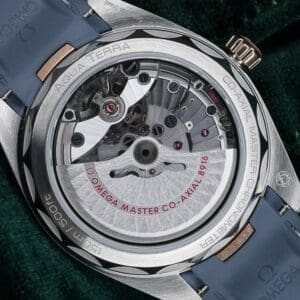

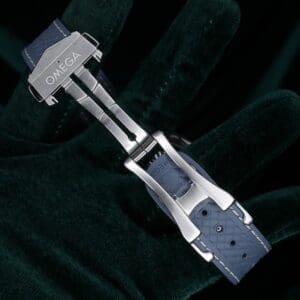
From a technical standpoint, the Aqua Terra is one of Omega’s most certified references. Current production models carry both COSC chronometer certification and METAS Master Chronometer certification.
METAS testing adds magnetic resistance up to 15,000 gauss, water resistance verification under magnetic fields, and a stricter accuracy window of 0 to +5 seconds per day. It has been featured in multiple James Bond films, which built strong cultural visibility for the line through the 2000s and 2010s.

Most Popular Omega Seamaster Aqua Terra:
- Omega Seamaster Aqua Terra Ref. 220.10.38.20.03.001
- Omega Seamaster Aqua Terra Ref. 220.10.41.21.03.002
- Omega Seamaster Aqua Terra Ref. 220.10.38.20.10.002
- Omega Seamaster Aqua Terra Ref. 220.10.38.20.01.004
- Omega Seamaster Aqua Terra Ref. 220.10.41.21.01.001
Rolex Oyster Perpetual Overview

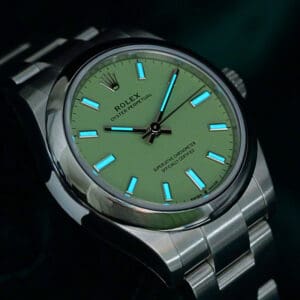

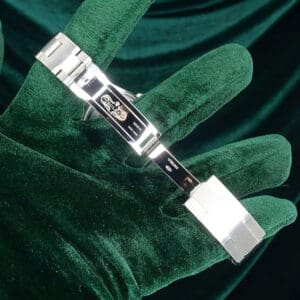

Rolex built much of its identity on the Oyster Perpetual. Rolex introduced the original Oyster case in 1926 as the world’s first water-resistant watch case, then added the self-winding “Perpetual” rotor in 1931. Pairing those two technologies in one watch gave birth to the Oyster Perpetual name, and that combination still defines the line today.
That 1926 case turns 100 in 2026, an anniversary Rolex leaned into heavily at Watches and Wonders 2026.
Today the collection is Rolex’s most accessible and least complicated offering. There are no complications, no date, no extra subdials. It is a time-only watch with a seconds hand, an Oyster case, and a bracelet.
Rolex designed it as the purest expression of its watchmaking core, and collectors often call it the watch that lets the bracelet, dial color, and proportions do all the talking. If you want the technical side, our explainer on how Rolex movements work goes under the hood.
What makes the Oyster Perpetual particularly interesting is how Rolex has used it as a color canvas. Its 2020 generation launched with bold pop-color dials, including yellow, coral red, and a turquoise collectors nicknamed “Tiffany,” and those releases set off heavy secondary market activity.
Rolex refreshed the line at Watches and Wonders 2025 with pistachio, lavender, and beige dials, then delivered a larger overhaul in 2026 that gets its own section below. For collectors, the Oyster Perpetual has proven that simple does not mean ordinary.

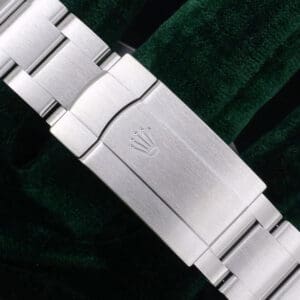
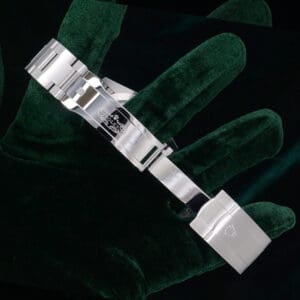
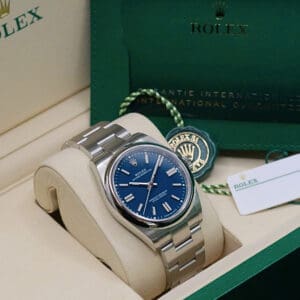
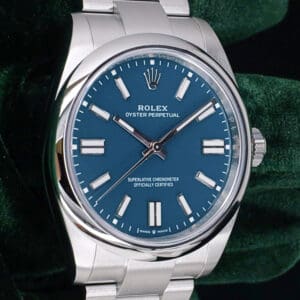
Most Popular Rolex Oyster Perpetual:
- Rolex Oyster Perpetual Ref. 134300, 41mm
- Rolex Oyster Perpetual Ref. 126000, 36mm
- Rolex Oyster Perpetual Ref. 134303, 41mm “Oyster 100”
Omega Aqua Terra vs Rolex Oyster Perpetual: Most Notable Differences
These two watches differ across several measurable areas, including movement certification, power reserve, water resistance, and case construction. Each comparison below highlights the specs and design choices that separate them.
1. Movement Certification
Rolex runs the Caliber 3230 in the Oyster Perpetual, certified by COSC and regulated to roughly −2 to +2 seconds per day. It uses a Parachrom hairspring and Paraflex shock absorber to improve magnetic resistance, durability, and long-term reliability. Every 2026 release also meets Rolex’s strengthened Superlative Chronometer standard.
Omega uses the Co-Axial Caliber 8800 in 38mm models and the Caliber 8900 in 41mm versions, both certified as Master Chronometers through METAS. That testing evaluates accuracy in multiple positions and verifies performance under strong magnetic fields.
2. Power Reserve

Rolex’s Caliber 3230 provides a 70-hour power reserve, nearly three days without winding. That extra reserve is especially convenient for anyone who does not wear the same watch every day, since it minimizes the need to reset the time.
Omega’s Caliber 8800 (38mm) holds 55 hours, while the Caliber 8900 (41mm) extends to 60. Both are solid for typical weekend wear, but neither matches the Rolex, which can matter for collectors who rotate multiple watches.
3. Water Resistance
Omega rates the Aqua Terra to 150 meters (15 bar), which suits swimming, snorkeling, and most water sports. That higher rating gives extra confidence to anyone who spends a lot of time in or around water.
Rolex rates the Oyster Perpetual to 100 meters (10 bar), covering swimming and light water exposure comfortably. It is not as deep as the Aqua Terra, but it is still plenty for everyday water activities and casual use.
4. Case Steel Grade
Rolex builds the Oyster Perpetual from 904L stainless steel, branded Oystersteel. That alloy is highly corrosion-resistant and holds its polish exceptionally well, giving the case a distinctive luster and a long-lasting finish.
Omega uses 316L stainless steel, the standard across most luxury Swiss watches. It offers strong durability and resistance to everyday corrosion, which is more than adequate for typical wear.
5. Case Back Design
Omega gives the Aqua Terra a sapphire exhibition case back, showing off the Caliber 8800 or 8900. That decorated movement stays fully visible, offering a tangible connection to the craftsmanship inside.
Rolex seals the Oyster Perpetual with a solid, screw-down steel case back and no view of the movement. Rolex argues the sealed design adds rigidity and water resistance, even if the practical difference at everyday depths is minimal.
More Oyster Perpetual
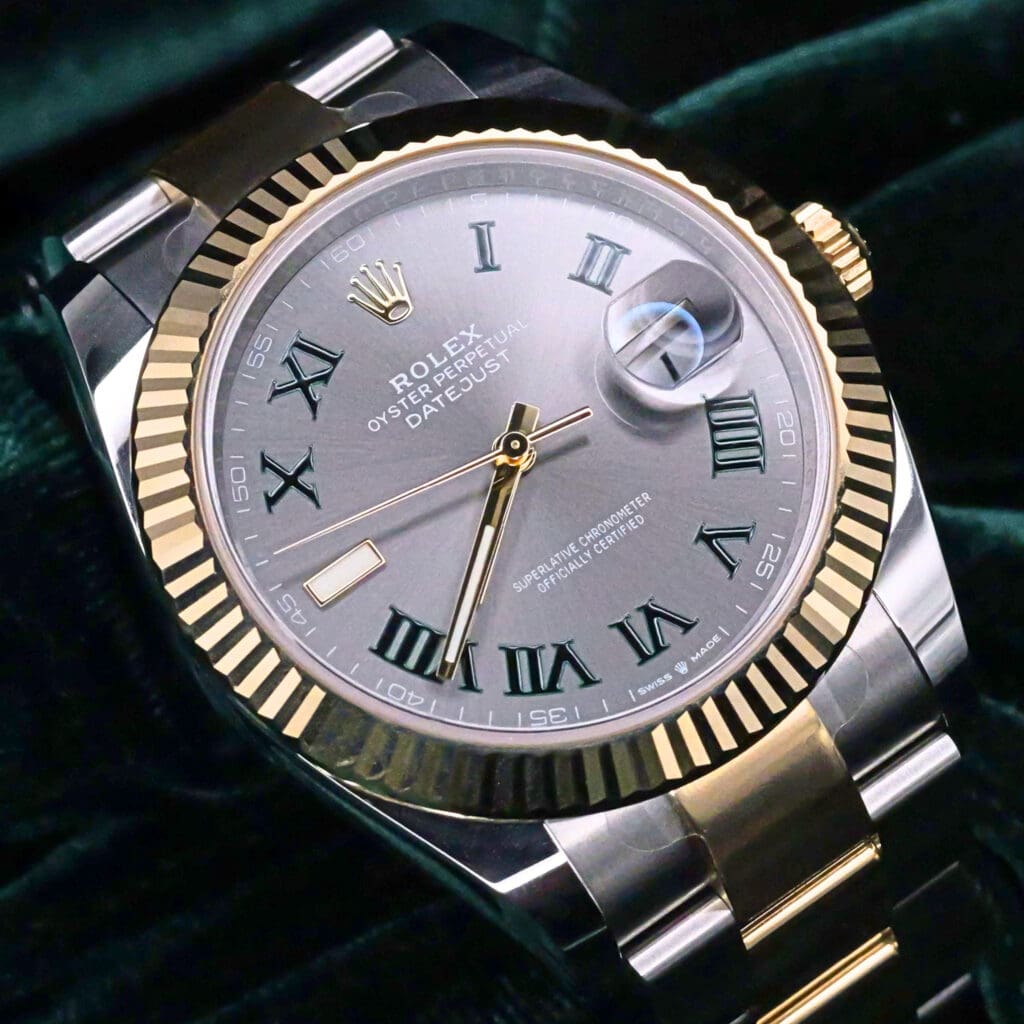
Rolex Oyster Perpetual Datejust 41 "Wimbledon" Slate Dial Fluted Bezel Two-Tone 18K Yellow Gold Oyster Bracelet Stainless Steel MINT CONDITION COMPLETE SET 126333-0019
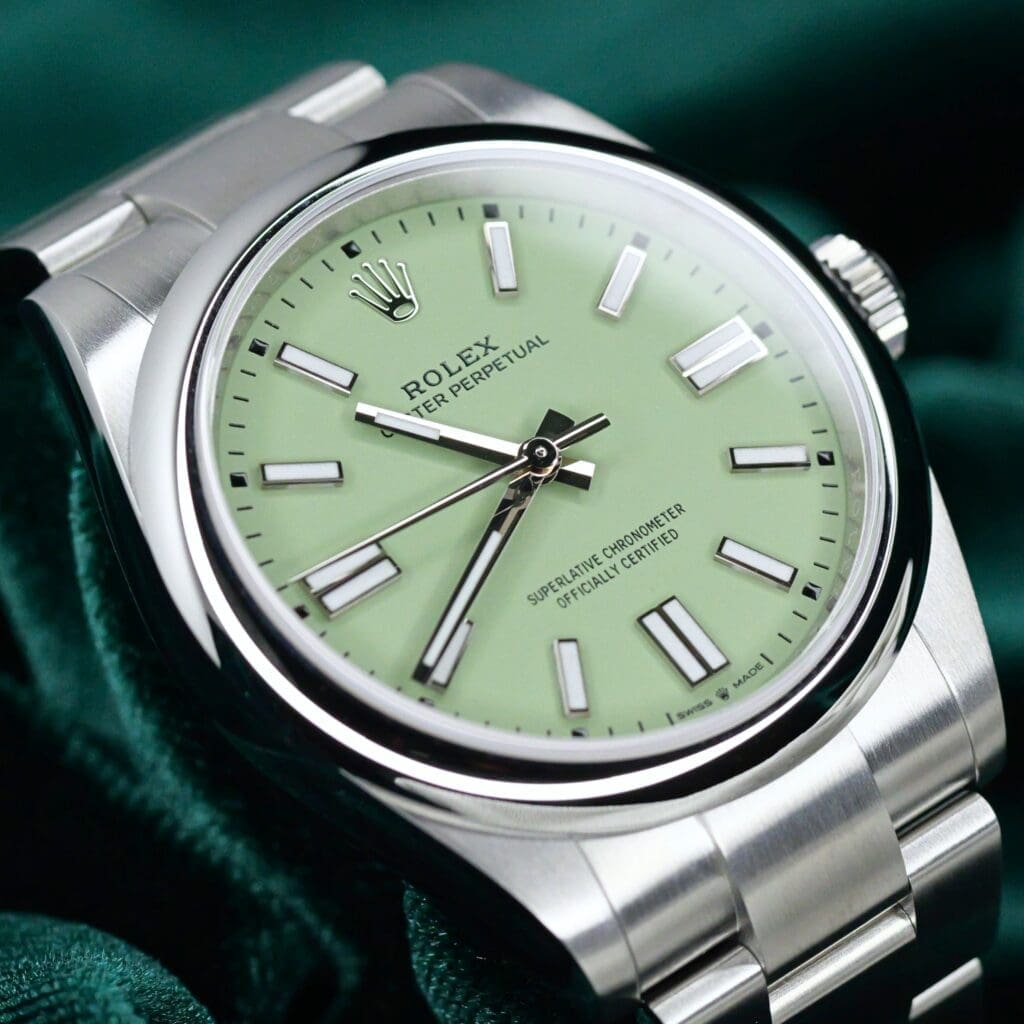
2026 NEW UNWORN Rolex Oyster Perpetual Pistacho Green Dial Stainless Steel 41mm COMPLETE SET 134300-0006
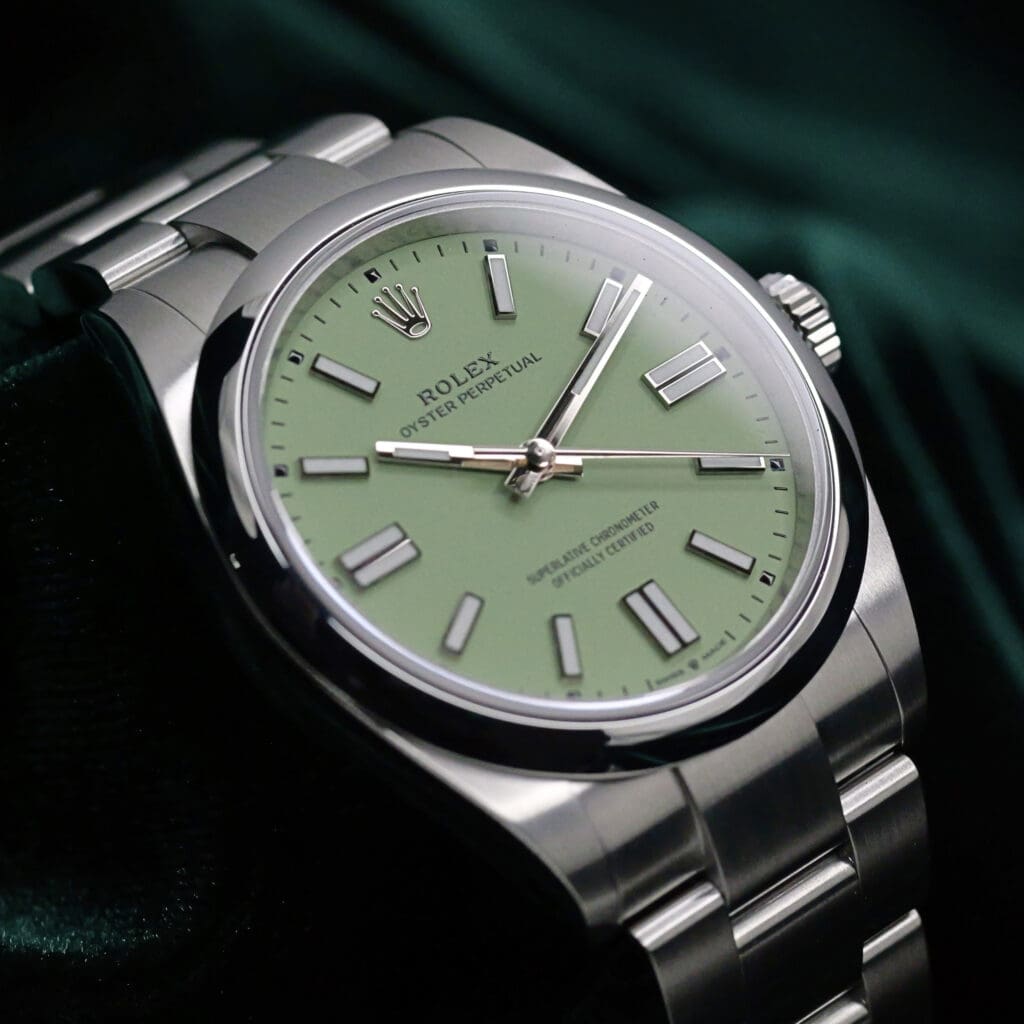
2026 Rolex Oyster Perpetual Pistachio Green Dial Stainless Steel 41mm MINT CONDITION COMPLETE SET 134300

2026 NEW UNWORN Rolex Oyster Perpetual 41 Pink Dial Oyster Bracelet Stainless Steel COMPLETE SET 134300
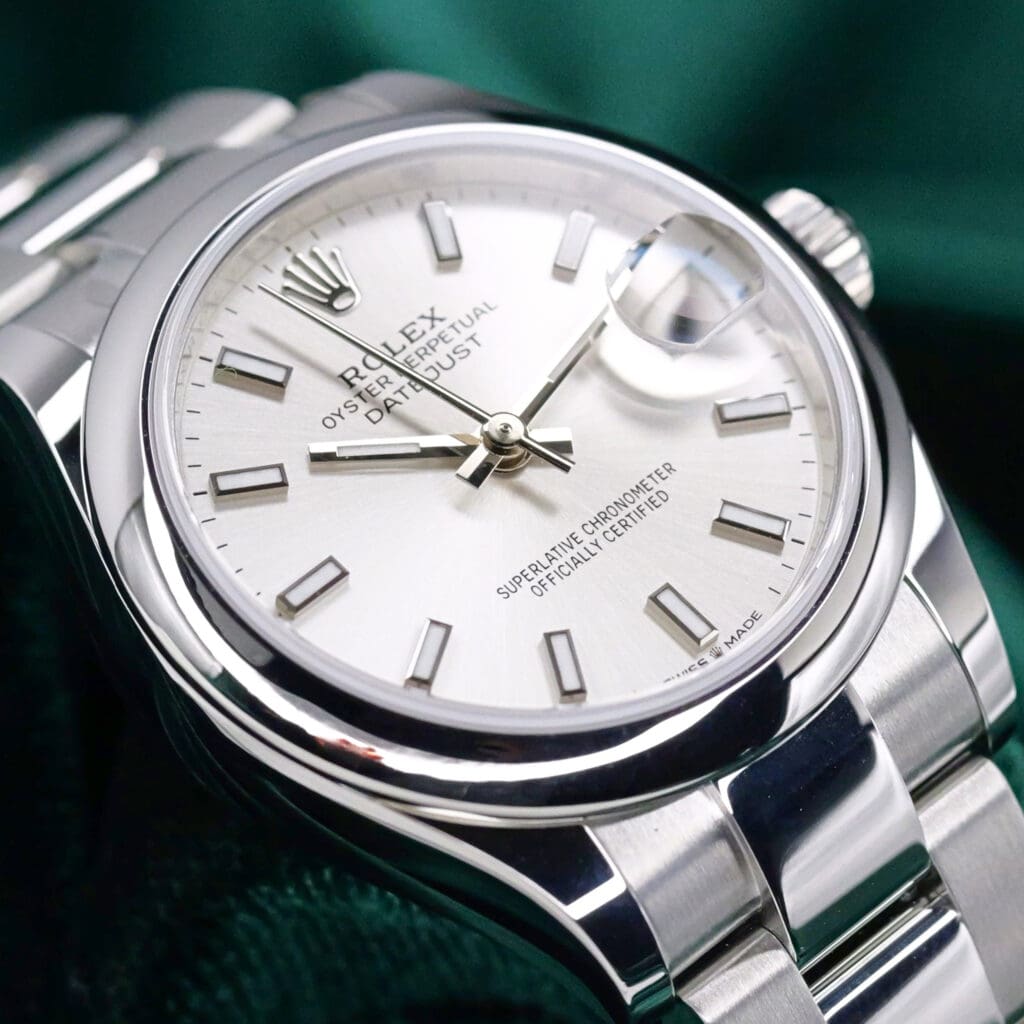
2026 NEW UNWORN Rolex Oyster Perpetual Datejust 31 Silver Dial Oyster Bracelet Stainless Steel Complete Set 278240
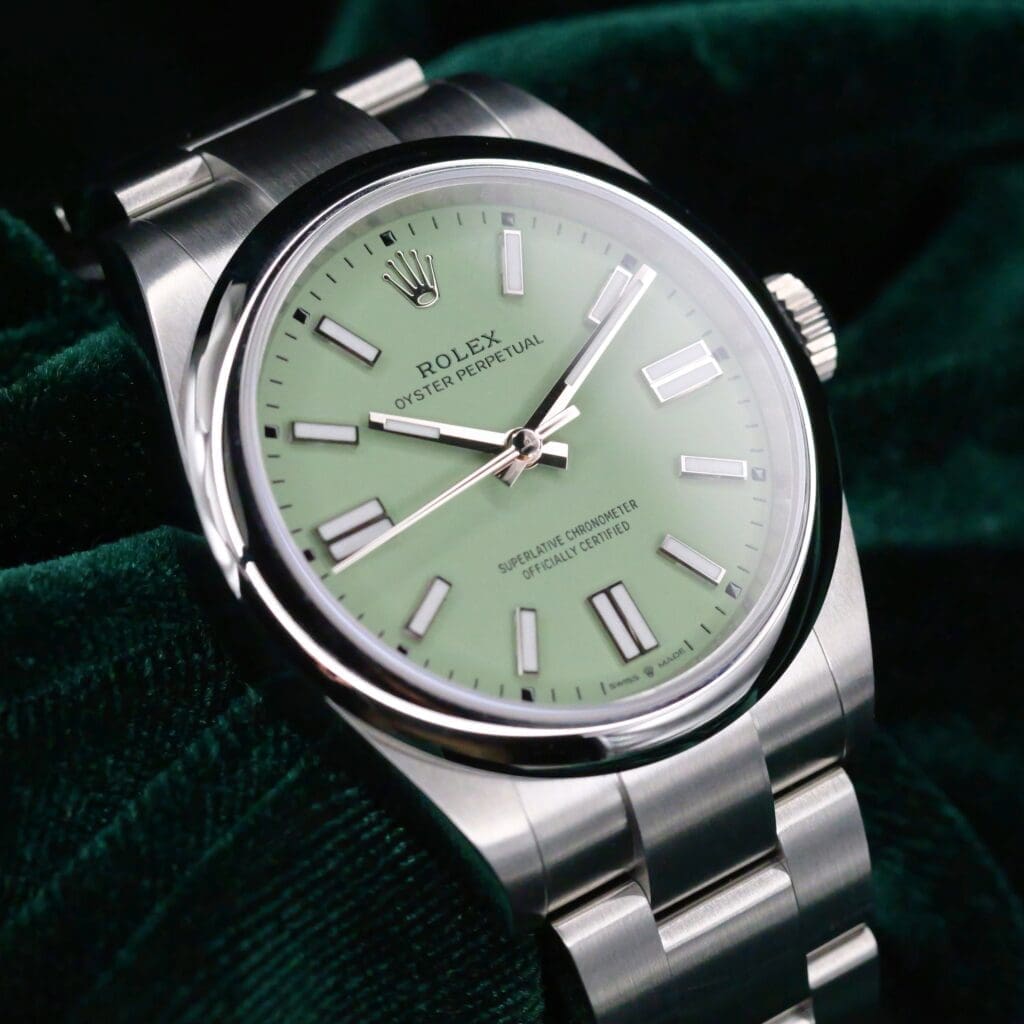
2025 NEW UNWORN Rolex Oyster Perpetual 41 Pistachio Green Dial Stainless Steel COMPLETE SET 134300-0006
6. Date Complication
Omega includes a date window at 6 o’clock on current Aqua Terra models. Its trapezoidal aperture complements the dial design and adds daily practicality, though placement is a matter of personal taste.
Rolex leaves the Oyster Perpetual date-free. That time-only display emphasizes simplicity and symmetry, giving the dial a cleaner, uncluttered look.
7. Size Options
Omega offers the Aqua Terra in 30mm, 34mm, 38mm, 41mm, and 43mm (Worldtimer), with the 38mm and 41mm most relevant here. That 38mm fills a mid-size gap Rolex does not offer, appealing to buyers who want a slightly smaller but still substantial wrist presence. We put the two head-to-head in our Aqua Terra 38 vs 41 breakdown.
Rolex offers the Oyster Perpetual in 28mm, 31mm, 34mm, 36mm, and 41mm, with the 36mm and 41mm as the main comparison points. At 36mm it sits slightly smaller than the 38mm Aqua Terra, with a lug-to-lug around 44mm versus roughly 45mm for the Omega, making it the closest mid-size alternative.
What Rolex Changed for the Oyster Perpetual in 2026
Watches and Wonders 2026 turned into an Oyster Perpetual showcase, built around the 100th anniversary of the Oyster case Rolex patented in 1926. Rather than a quiet dial refresh, Rolex updated the line across 41mm, 36mm, 34mm, and 28mm, with centenary cues built into the details.
Headlining the update is the “Oyster 100” reference 134303, a 41mm two-tone Rolesor with a yellow-gold bezel, gold crown, and an all-steel bracelet. That two-tone-with-steel-bracelet layout is new for the modern Oyster Perpetual and reads as a nod to early Oyster watches.
Centenary cues sit right on the dial. A slate sunray dial carries 18k gold markers and hands, “100 Years” replaces “Swiss Made” at six o’clock, and the winding crown is engraved with a “100.” US retail lands near $9,650 for the 41mm, with 36mm and 31mm versions following.
Related Models from Majestix
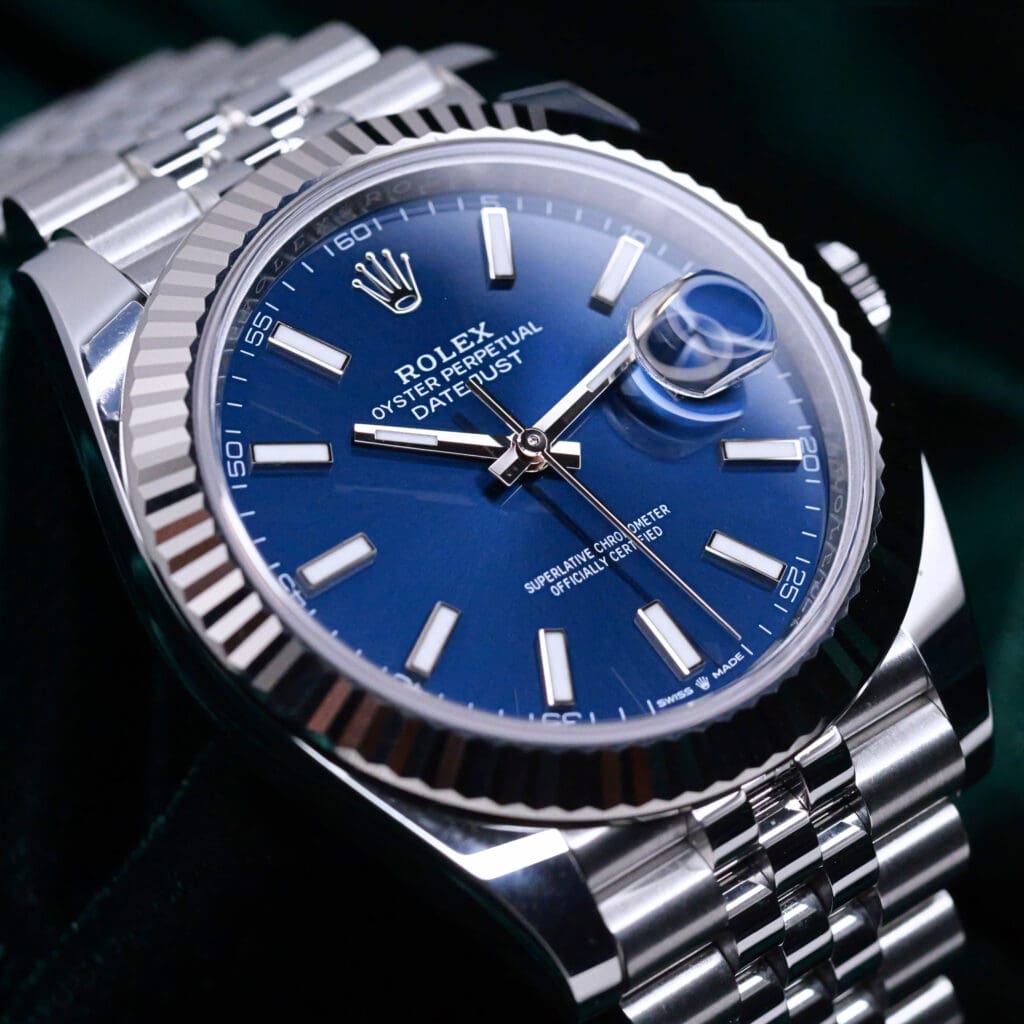
2026 NEW UNWORN Rolex Datejust 41 Blue Dial Fluted Bezel Jubilee Bracelet Stainless Steel 41mm . COMPLETE SET 126334-0002
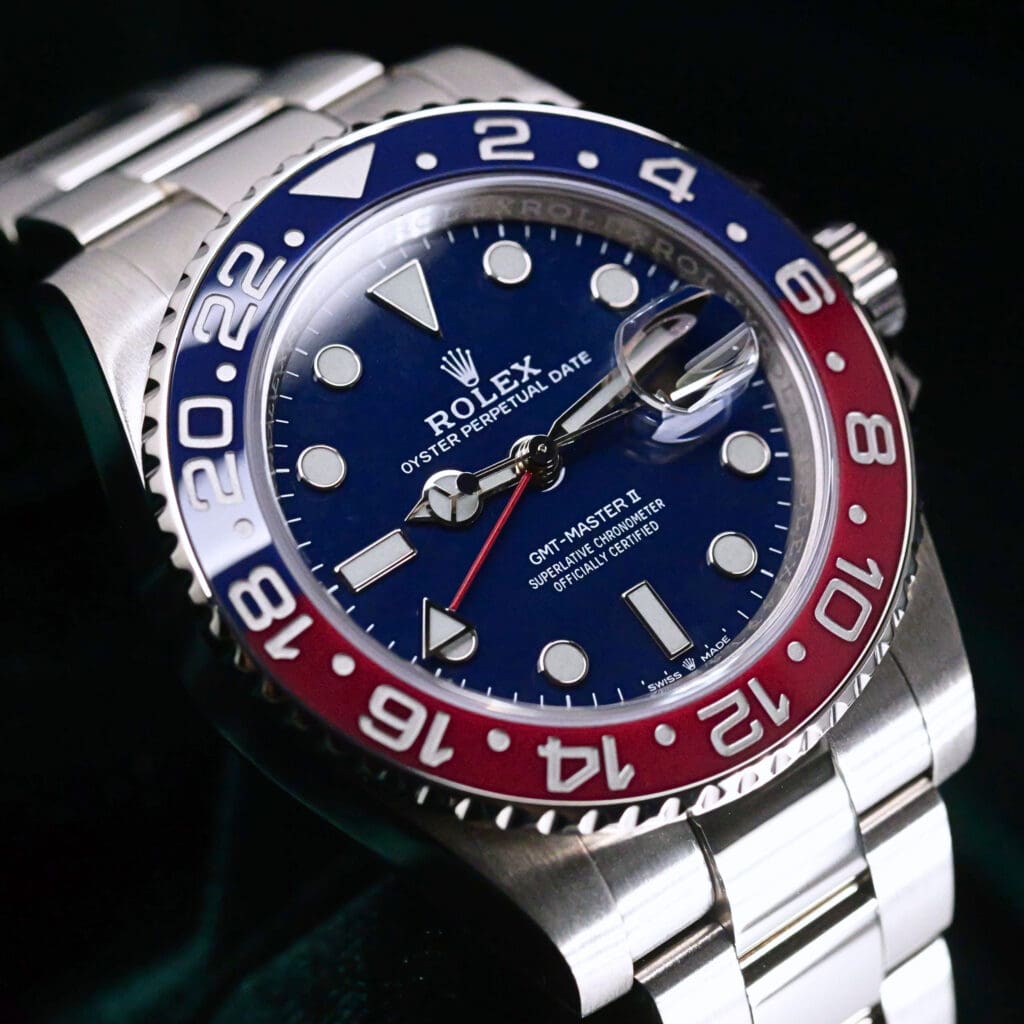
Rolex GMT-Master II "Pepsi" Blue Dial Red Blue Bezel 18K White Gold Oyster Bracelet 40mm MINT CONDITION COMPLETE SET 126719BLRO
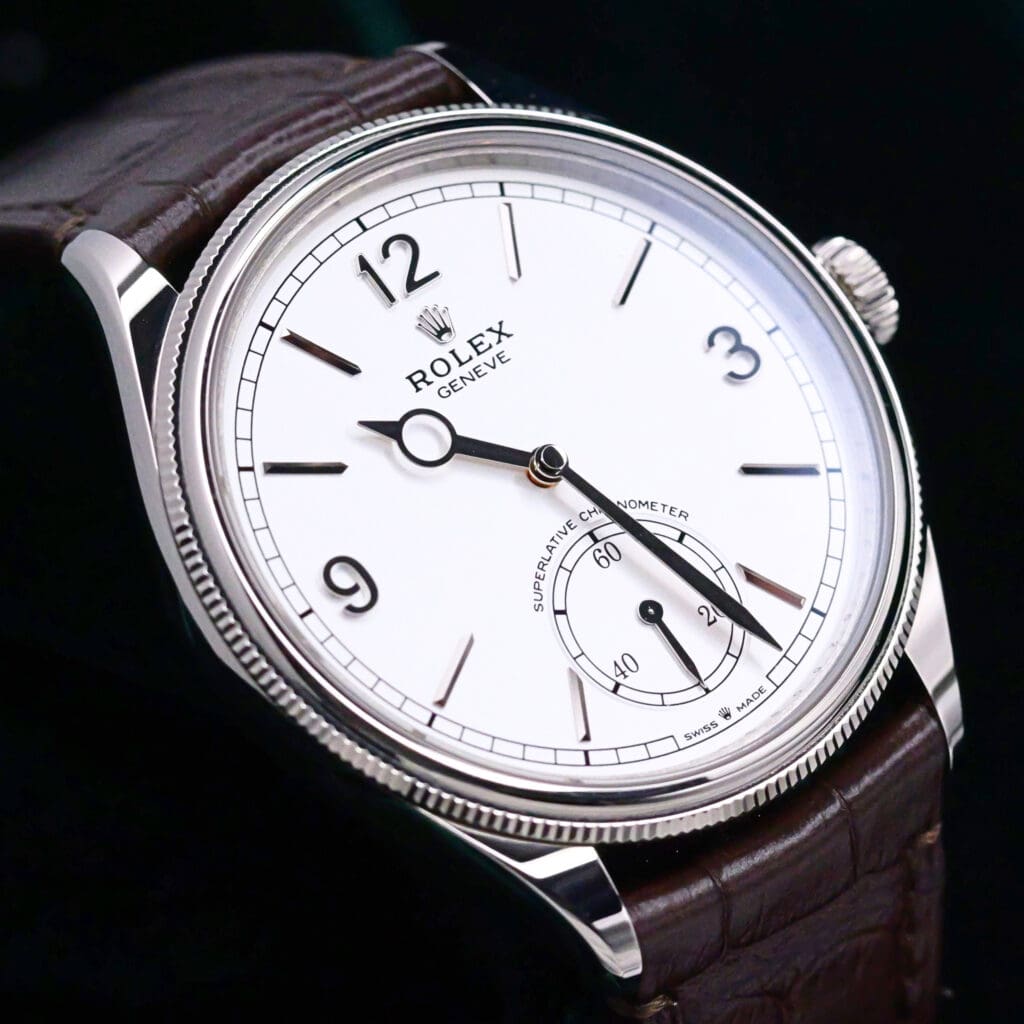
2025 Rolex 1908 White Dial 18K White Gold Brown Alligator Leather Strap 39mm MINT CONDITION COMPLETE SET 52509
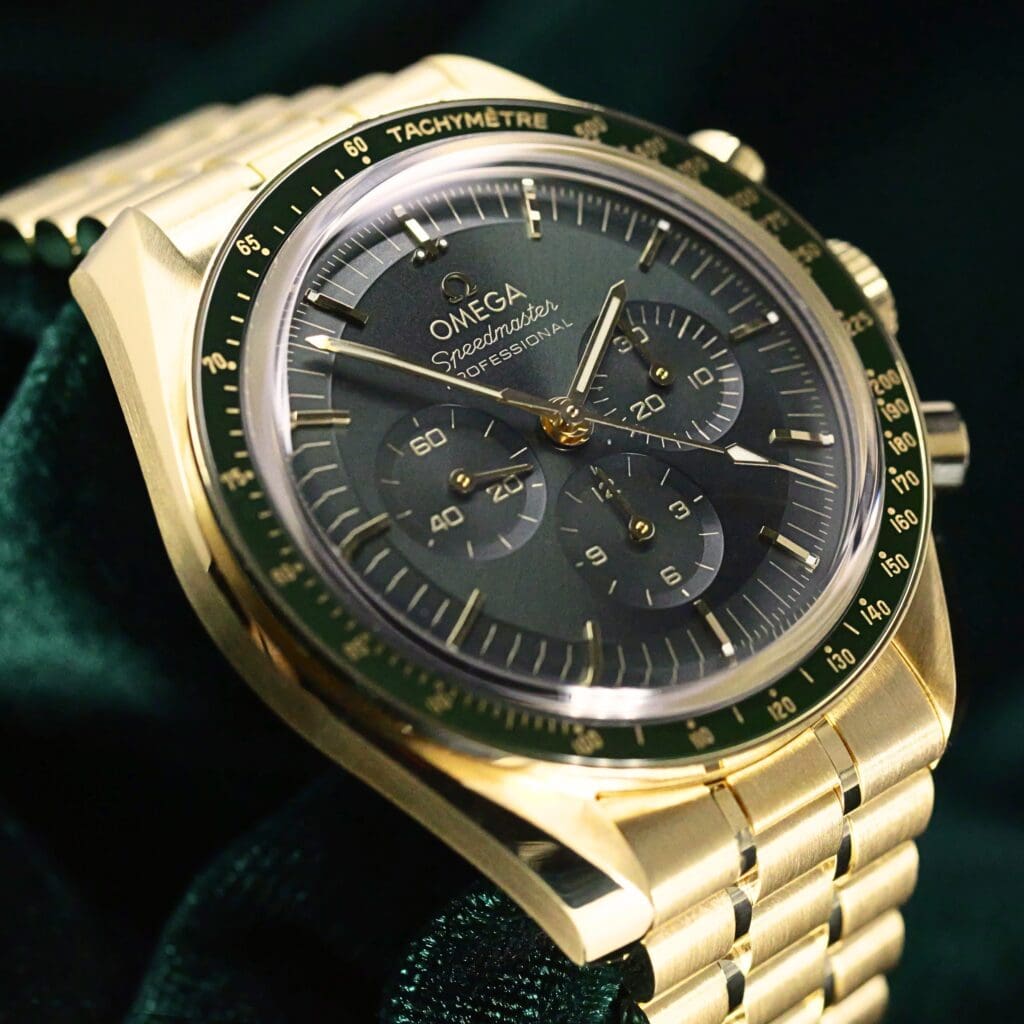
Omega Speedmaster Professional Moonwatch "Moonshine" Green Dial 18K Yellow Gold 42mm MINT CONDITION COMPLETE SET 310.60.42.50.10.001
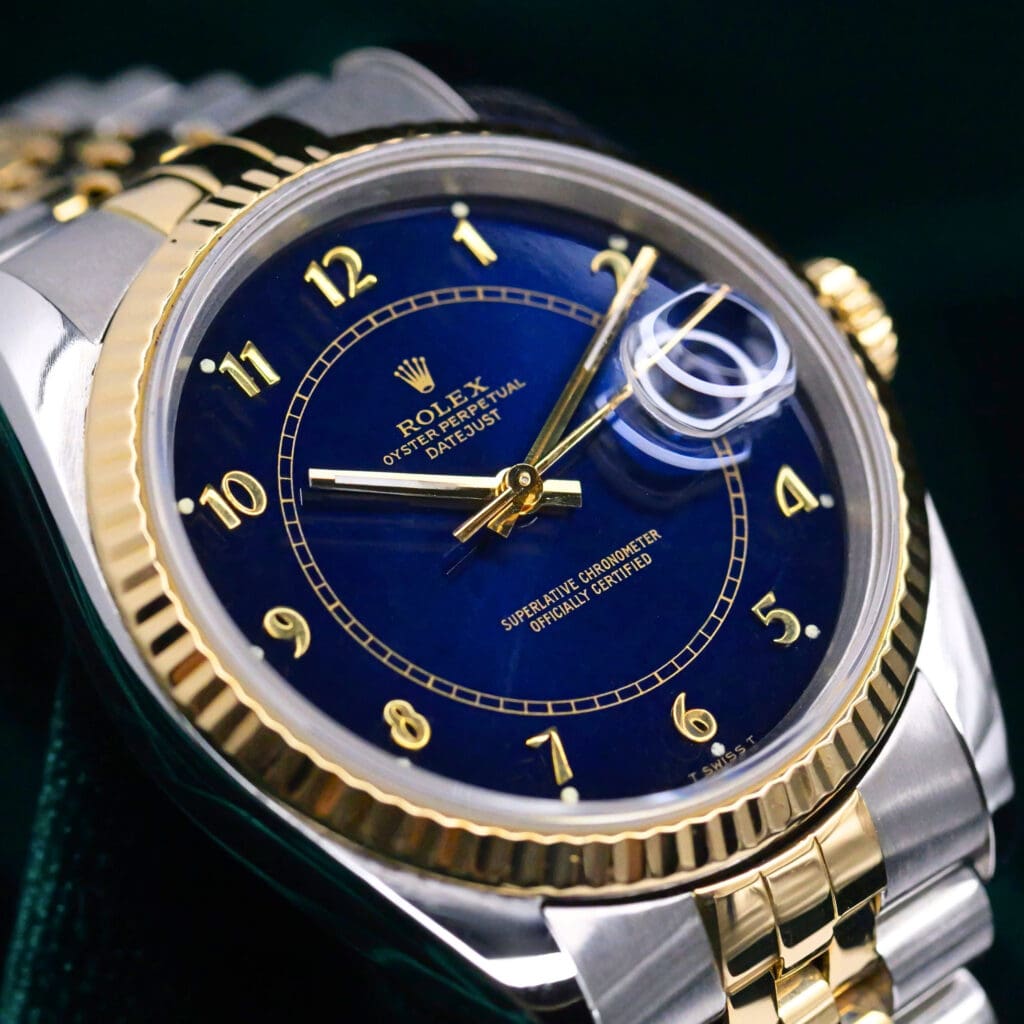
Rolex Datejust Blue Arabic Numeral Refinished Dial Fluted Bezel Jubilee Bracelet 18k Yellow Gold Stainless Steel 36mm MINT CONDITION 16233
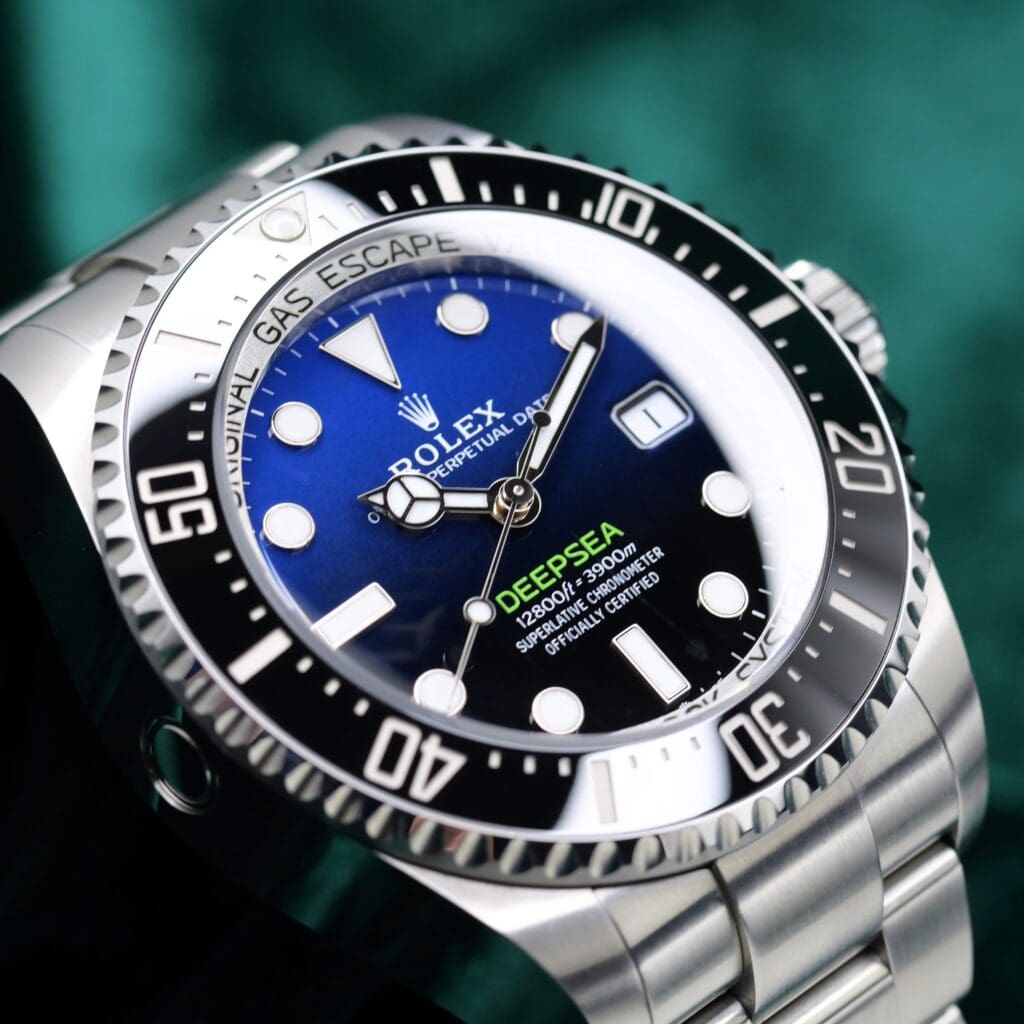
2025 MINT Rolex 136660-0005 Deepsea James Cameron Blue Black Dial Black Ceramic Bezel Stainless Steel 44MM Complete Set 136660
A multicolor “Jubilee” dial joined the 36mm too, spelling out the Rolex name in ten colors across the dial. Standard steel Oyster Perpetual 36 retail now sits at $6,750, per Watches and Wonders 2026 pricing.
For an everyday-steel buyer cross-shopping the Aqua Terra, the practical takeaway is simple. Your value pick is still the standard 134300 in 41mm or the 126000 in 36mm. Those Oyster 100 and gold variants are anniversary and collector plays, priced and allocated accordingly, not the watch you weigh dollar-for-dollar against an Aqua Terra.
Price and Market Demand
Omega Aqua Terra models typically trade below original retail on the secondary market, a reflection of broader availability and lighter collector demand. WatchCharts puts the catalog average near $4,000, while popular in-production 38mm and 41mm pieces trade roughly $4,500 to $5,500 on Chrono24, often under U.S. retail.
That makes the Aqua Terra easy to acquire without paying a premium, but it also means buyers should temper expectations about value retention if they resell later.
Rolex Oyster Perpetual prices generally sit above retail, a signal of strong demand and brand premium, and part of why Rolex tends to hold its value better than most steel watches at this tier. As of 2026, WatchCharts lists the 41mm reference 134300 near $10,320 against roughly $7,050 retail, about 47 percent over sticker, with in-production Oyster Perpetuals averaging around 43 percent above retail.
That premium is not uniform. Classic silver, black, and blue dials trade closest to retail, while hype colors like turquoise and the now-discontinued Celebration dial carry the steepest markups. Hype dials have been softening, so check comps for the exact dial rather than the model average.
Related Models from Majestix
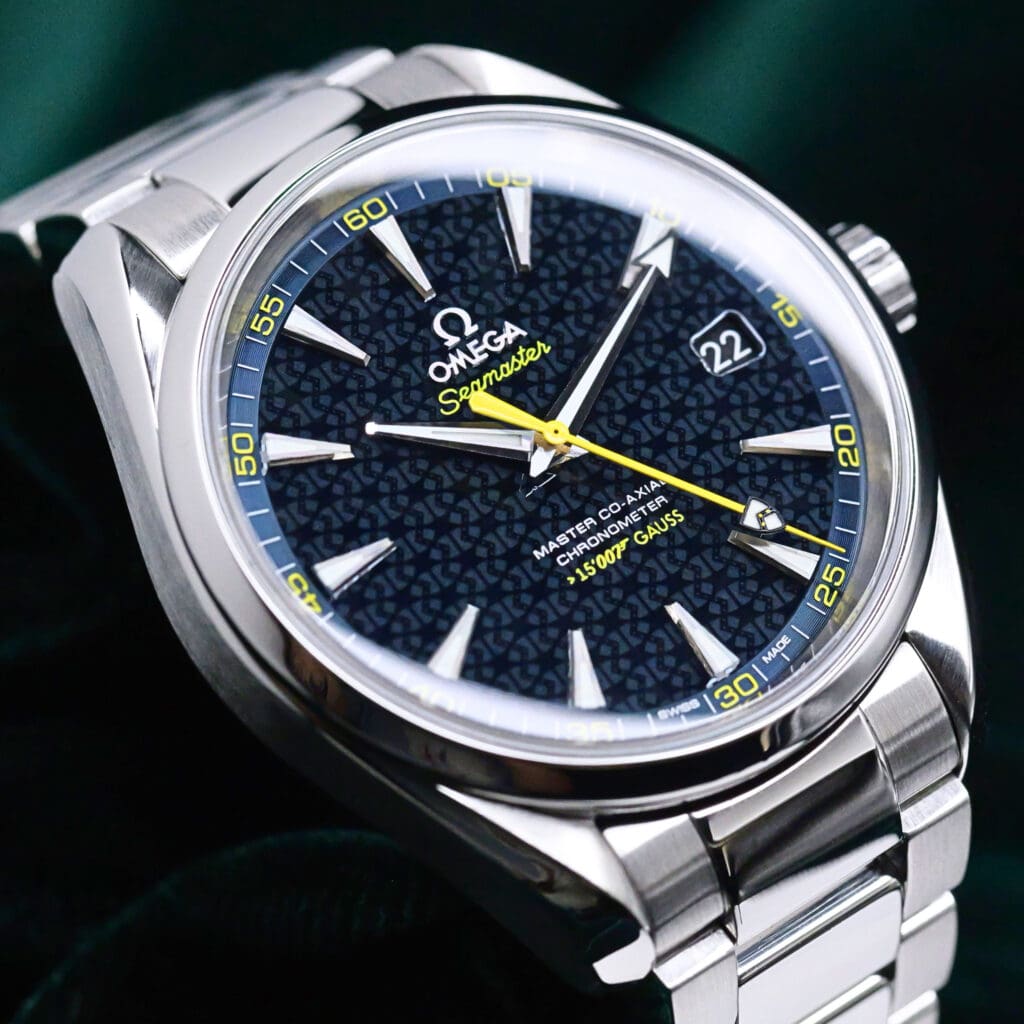
Omega Seamaster Aqua Terra 150M "James Bond Spectre" Blue Dial Yellow Accents Stainless Steel 41.5mm MINT CONDITION COMPLETE SET 231.10.42.21.03.004
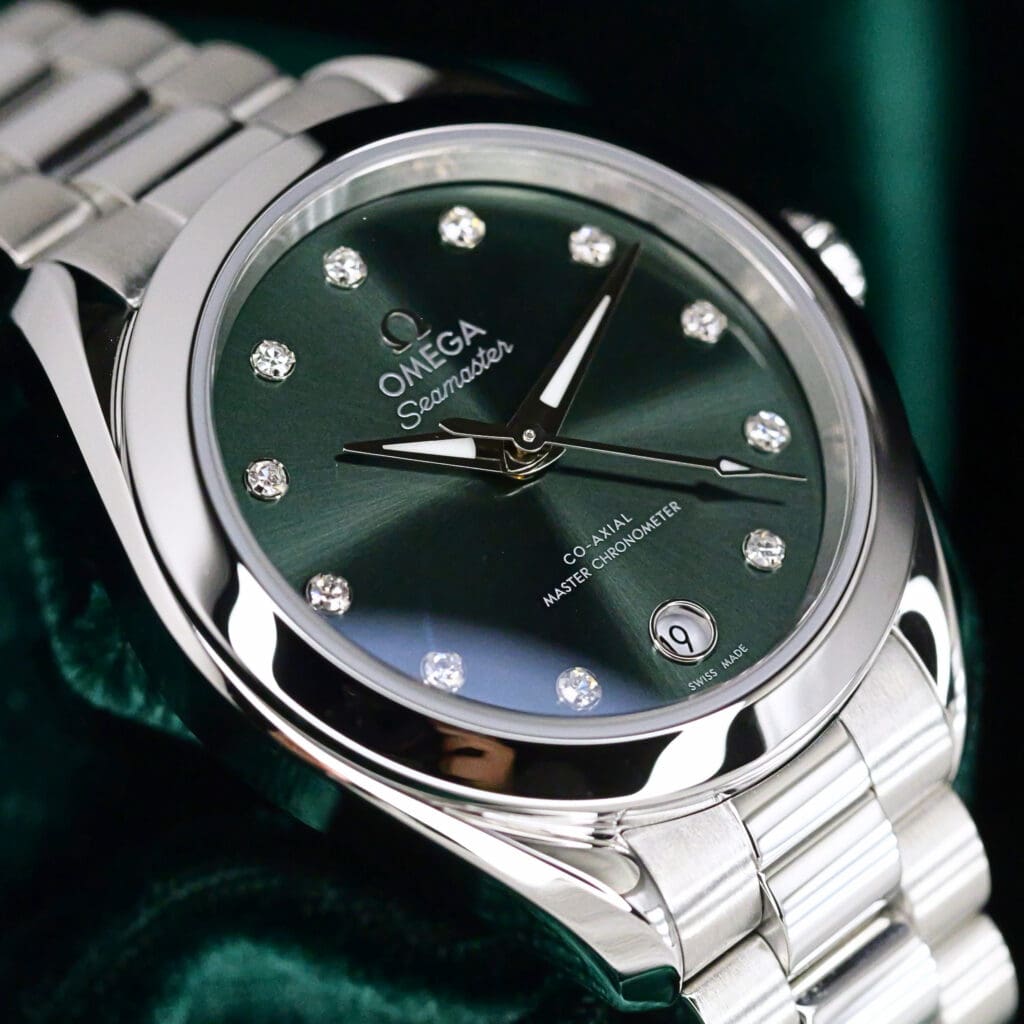
2026 NEW UNWORN Omega Seamaster Aqua Terra Green Sunburst Dial Diamond Markers Stainless Steel 30mm . COMPLETE SET 220.10.30.20.60.001

Omega Seamaster Aqua Terra Worldtimer Blue Dial Blue Rubber Strap Stainless Steel 43mm MINT CONDITION COMPLETE SET 220.12.43.22.03.001

Omega Seamaster Aqua Terra Co-Axial White Dial Blue Accents Stainless Steel MINT CONDITION 2503.33.00

Omega Seamaster Aqua Terra 150M 41MM Blue Grey Dial Sedna Gold Rubber Strap COMPLETE SET EXCELLENT CONDITION 220.22.41.21.03.001

Omega Seamaster Aqua Terra 150m Black Dial 41mm Stainless Steel EXCELLENT CONDITION 220.10.41.21.01.001
On liquidity, the Oyster Perpetual tends to sell faster because broader name recognition keeps more buyers active. Aqua Terra finds buyers reliably too, but its resale window runs slower and price outcomes tend to be tighter. Our Omega vs Rolex resale value comparison digs into how the two brands hold up over time.
For anyone who plans to resell, that contrast between easy access and value retention is the practical distinction between the two.
If you want help reading the comps on a specific dial or reference before you buy, send us the shortlist you are weighing and we will walk you through where each one really trades.
Notable Omega Aqua Terra References
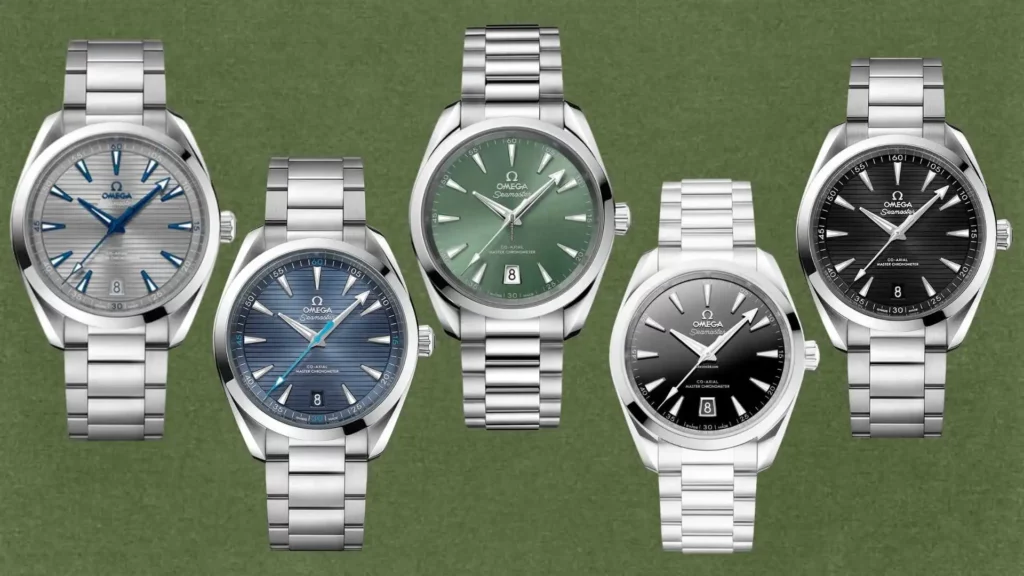
Omega’s Aqua Terra lineup pairs elegant dials with robust performance. From classic blue to earth-toned shades and dress-forward black lacquer, each reference suits a different taste while keeping the collection’s Master Chronometer standard. Omega has also kept the line fresh in 2026 with a smoked turquoise dial on a black ceramic bezel and new olive green options. For the full range, our Aqua Terra buying guide walks through every current reference.
1. Omega Seamaster Aqua Terra Ref. 220.10.38.20.03.001
This 38mm blue is the reference that best positions the Aqua Terra as a direct answer to the Oyster Perpetual. It sits at a size Rolex does not offer, with a sun-brushed blue dial and the full Master Chronometer spec. Its teak horizontal pattern reads differently in different lighting.
Key Specs
- Case size: 38mm
- Material: Stainless steel (316L)
- Movement: Caliber 8800, COSC and METAS certified
- Power reserve: 55 hours
- Water resistance: 150m
- Case back: Sapphire exhibition
- Date: Yes, at 6 o’clock
2. Omega Seamaster Aqua Terra Ref. 220.10.41.21.03.002
This 41mm is the flagship size of the current line. It runs the Caliber 8900 with a 60-hour reserve instead of the 55-hour 8800, and the larger case fills out a bigger wrist with better proportion. Its dial keeps the same teak pattern with the date at 6 o’clock.
Key Specs
- Case size: 41mm
- Material: Stainless steel (316L)
- Movement: Caliber 8900, COSC and METAS certified
- Power reserve: 60 hours
- Water resistance: 150m
- Case back: Sapphire exhibition
- Date: Yes, at 6 o’clock
- Retail price range: ~$6,400 to $6,800 USD
- Secondary market range: ~$4,700 to $5,600 USD



3. Omega Seamaster Aqua Terra Ref. 220.10.38.20.10.002
Omega’s Shades collection introduced more saturated, earth-tone dials to the Aqua Terra lineup. Its bay green version has a textured, sun-brushed dial in a slightly desaturated green that reads differently from the bolder colors Rolex used for the OP. It runs the same Caliber 8800 as the standard 38mm.
Key Specs
- Case size: 38mm
- Material: Stainless steel (316L)
- Movement: Caliber 8800, COSC and METAS certified
- Power reserve: 55 hours
- Water resistance: 150m
- Date: Yes, at 6 o’clock
- Retail price range: ~$6,600 USD
- Secondary market range: ~$4,700 to $5,500 USD
4. Omega Seamaster Aqua Terra Ref. 220.10.38.20.01.004
This black lacquer model from 2024 drops the teak pattern entirely for a glossy black dial with applied white gold markers. It is the most dress-forward reference in the current 38mm lineup and the least recognizable as an Aqua Terra at a glance.
For buyers who like the movement and specs but find the teak dial too casual, this reference changes the equation.
Key Specs
- Case size: 38mm
- Material: Stainless steel (316L)
- Movement: Caliber 8800, COSC and METAS certified
- Power reserve: 55 hours
- Water resistance: 150m
- Date: Yes, at 6 o’clock
- Retail price range: ~$6,600 USD
- Secondary market range: Still developing (relatively new reference)
5. Omega Seamaster Aqua Terra Ref. 220.10.41.21.01.001
This 41mm black lacquer runs Caliber 8900 and presents the same smooth, high-polish dial in a larger case. For a formal-leaning everyday watch at 41mm with a Master Chronometer movement, it is the most direct version of that combination in the current lineup.
Key Specs
- Case size: 41mm
- Material: Stainless steel (316L)
- Movement: Caliber 8900, COSC and METAS certified
- Power reserve: 60 hours
- Water resistance: 150m
- Date: Yes, at 6 o’clock
Notable Rolex Oyster Perpetual References

Rolex’s Oyster Perpetual line is the brand’s purest expression of style, precision, and everyday wearability. Across sizes and dial colors, each reference balances wrist presence, technical performance, and collector appeal differently. Our Oyster Perpetual buying guide covers the full range in more depth.
1. Rolex Oyster Perpetual Ref. 134300, 41mm
Reference 134300 is the current production Oyster Perpetual 41 and the most-traded model in the line. Introduced in 2025, it replaced the 124300 and now anchors the 41mm size with dial options including matte black, blue, green, and the 2025 pistachio, lavender, and beige.
Its Caliber 3230 carries a 70-hour reserve and runs to −2/+2 seconds per day. As covered in the pricing section, it carries one of the strongest secondary-market premiums in the line, which is part of why it stays the most-traded Oyster Perpetual.
That earlier 124300, the first 41mm OP when it arrived in 2020, is now discontinued. Clean examples still trade on the secondary market, but Rolex’s catalog has moved on to the 134300.
Key Specs
- Case size: 41mm
- Material: Oystersteel (904L)
- Movement: Caliber 3230, COSC certified
- Power reserve: 70 hours
- Water resistance: 100m
- Case back: Solid stainless steel
2. Rolex Oyster Perpetual Ref. 126000, 36mm
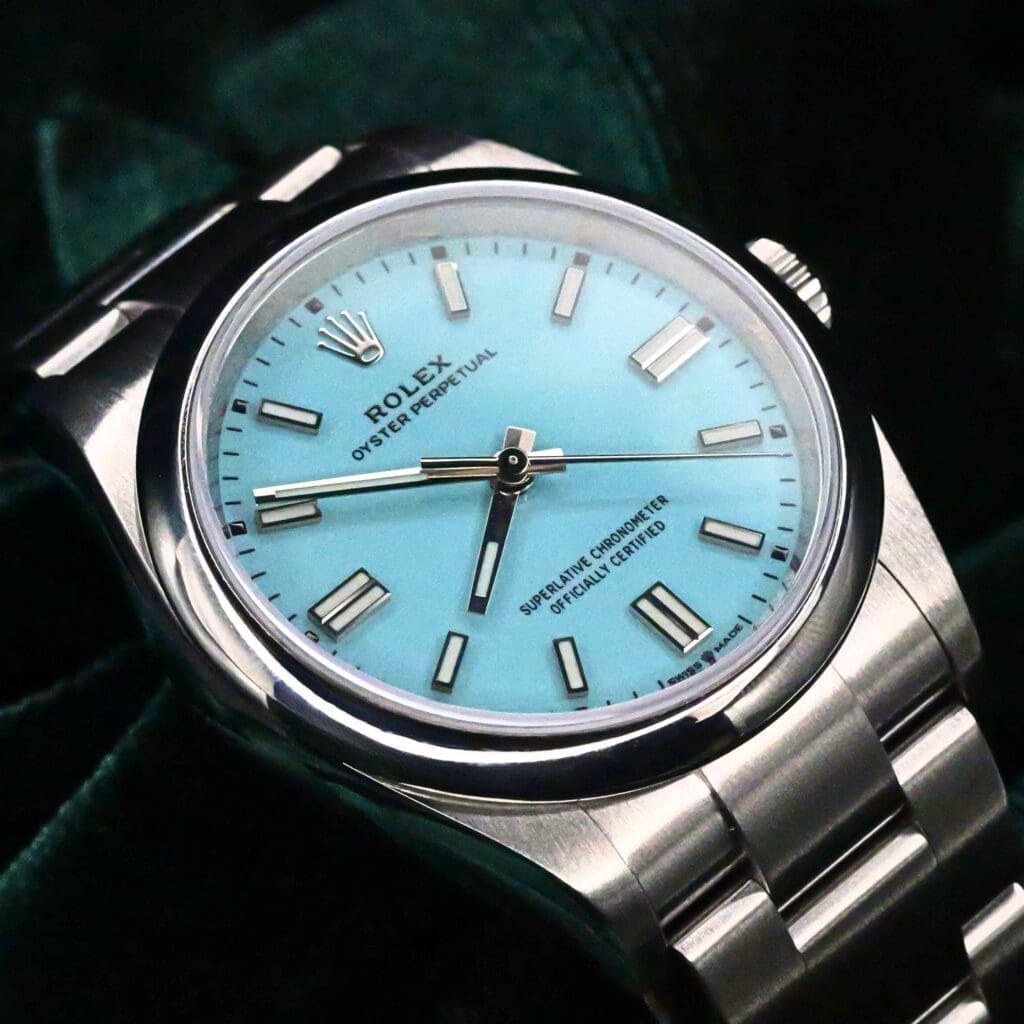

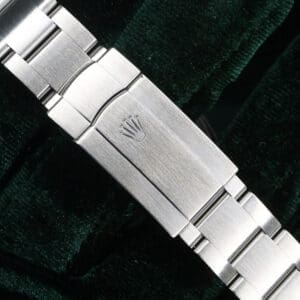
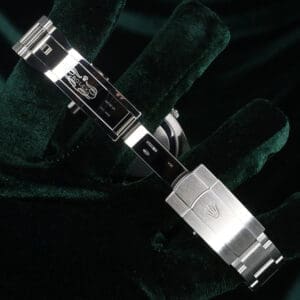

Reference 126000 covers the most historically significant size in the line, a clean, well-proportioned take on the classic 36mm format. At 36mm it sits closer to a dress watch than the 41mm, with a lug-to-lug around 44mm, and it runs the same Caliber 3230, so the movement specs match the 41mm exactly.
It attracts a wide buyer range, working as a first serious watch, a dress watch for smaller wrists, and a daily wearer for anyone who finds 41mm oversized. The 2025 pistachio, lavender, and beige dials generated their own secondary market attention quickly, and standard steel retail now sits at $6,750.
Key Specs
- Case size: 36mm
- Material: Oystersteel (904L)
- Movement: Caliber 3230, COSC certified
- Power reserve: 70 hours
- Water resistance: 100m
- Case back: Solid stainless steel
3. Rolex Oyster Perpetual Ref. 134303, 41mm “Oyster 100”
Reference 134303 is the centenary piece from Watches and Wonders 2026, a 41mm two-tone Rolesor marking 100 years of the Oyster case. It pairs a yellow-gold bezel and crown with an all-steel bracelet, a slate sunray dial with gold markers, and “100 Years” printed at six o’clock.
It runs the same Caliber 3230 as the rest of the 41mm line, so the wearing experience mirrors the standard model. US retail lands near $9,650. As an anniversary release, it reads more as a collector piece than a value-versus-Aqua-Terra pick.
Key Specs
- Case size: 41mm
- Material: Oystersteel with 18k yellow gold bezel and crown
- Movement: Caliber 3230, COSC certified
- Power reserve: 70 hours
- Water resistance: 100m
- Case back: Solid stainless steel
Which Watch Should You Choose?
Choose the Aqua Terra if you want technical specs, a visible movement, and a watch you can buy under retail; choose the Oyster Perpetual if you want a time-only Rolex with the strongest resale. Your priorities, wrist size, and feelings about specific features decide the rest. If you are still mapping the wider Rolex range first, our Rolex buying guide shows where the Oyster Perpetual sits.
Choose the Omega Seamaster Aqua Terra if:
- You want a date function built into the dial
- METAS Master Chronometer certification and 15,000 gauss magnetic resistance matter for your lifestyle or profession
- You prefer a watch available at retail without a long waitlist
- A sapphire exhibition case back matters to you and you enjoy seeing the movement
- You want higher water resistance (150m vs 100m) for water activities
- You value strong technical specs at a price below the secondary market
Choose the Rolex Oyster Perpetual if:
- You want a clean, time-only dial with no date complication
- The Rolex name, resale value, and secondary market premium matter to you
- You prefer 904L Oystersteel and the refined Oyster bracelet finish
- A 70-hour power reserve is important for a watch you rotate with others
- You want one of the most recognized names in watches on your wrist
Where to Buy Authentic Watches Online
A handful of legitimate online channels exist for both watches. Chrono24 aggregates listings from dealers and private sellers worldwide with an escrow option, and our guide to buying safely on Chrono24 covers the checks worth doing. eBay runs an Authenticity Guarantee program that inspects luxury watches before they reach the buyer.
Grailzee runs enthusiast-focused watch auctions, and independent grey-market sellers and watch forums round out the picture. For the bigger picture, our guide on where to buy a pre-owned watch weighs each channel.
We also buy, sell, and trade luxury watches, and the reason clients choose us over a large marketplace is the conversation before the purchase. You get layered communication, tour videos of the actual watch rather than stock photos, and detailed condition notes from someone who has handled the piece.
That shows up in our 4.9-star Google rating, which comes from clients who wanted a real walkthrough before committing.
If you are weighing a specific Aqua Terra or Oyster Perpetual and want tour videos and condition notes on what we currently have, browse our current collection or reach out and we will line up a few options that fit what you are after.
999+ Timepieces Available
Explore Our Timepieces
Authenticated, unworn, and ready to ship worldwide.
Rolex · Audemars Piguet · Patek Philippe · Omega · Cartier · Richard Mille · Hublot · Tudor
Newly Listed
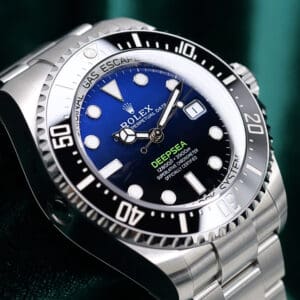
2026 NEW UNWORN Rolex Deepsea "James Cameron" D-Blue Black and Blue Dial Black Ceramic Bezel Stainless Steel 44mm COMPLETE SET 136660-0005
$20,208.00
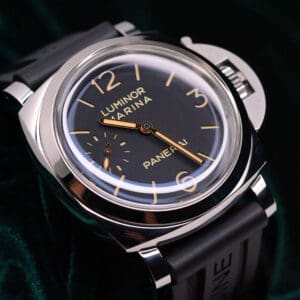
Panerai Luminor Marina 1950 3 Days Limited Edition Black Sandwich Dial Stainless Steel Black Rubber Strap 47mm MINT COMPLETE SET PAM00422
$7,503.00
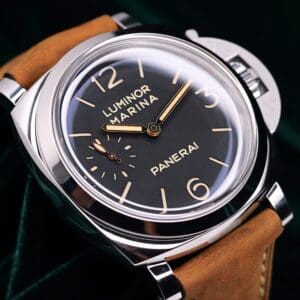
Panerai Luminor Marina 1950 3 Days Black Dial Stainless Steel Brown Leather Strap 47mm LIMITED EDITION MINT CONDITION COMPLETE SET PAM00422
$7,503.00
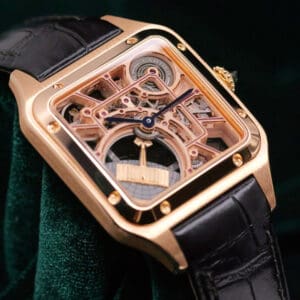
Cartier Santos-Dumont Micro-Rotor Skeleton Dial Black Alligator Strap 18k Rose Gold 43.5 x 31mm MINT CONDITION COMPLETE SET WHSA0030
$40,425.00
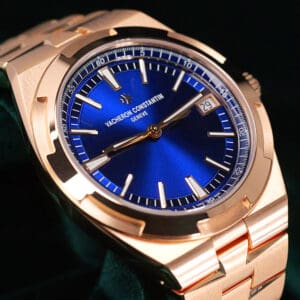
2026 Vacheron Constantin Overseas Blue Dial 18k Rose Gold 41mm MINT CONDITION COMPLETE SET 4520V/210R-B705
$72,764.00
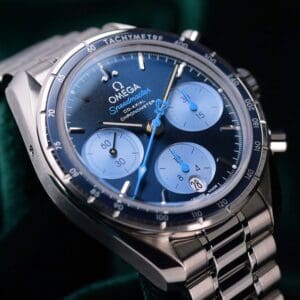
Omega Speedmaster 38 Orbis Edition Blue Dial Stainless Steel 38mm MINT CONDITION COMPLETE SET 324.30.38.50.03.002
$6,599.00
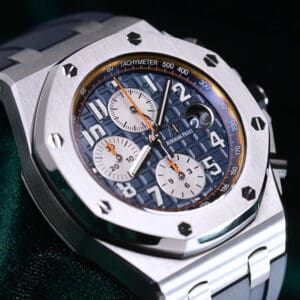
Audemars Piguet Royal Oak Offshore Chronograph “Navy” Blue Dial Orange Accents Blue Rubber Strap Stainless Steel 42mm MINT CONDITION COMPLETE SET 26470ST.OO.A027CA.01
$22,245.00
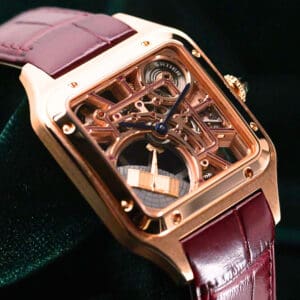
Cartier Santos-Dumont Micro-Rotor Skeleton Dial 18K Rose Gold Burgundy Alligator Strap 31mm MINT CONDITION COMPLETE SET WHSA0030
$40,425.00
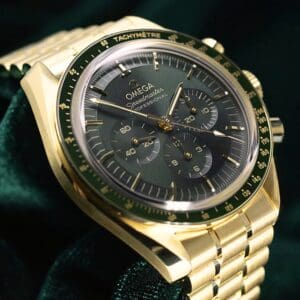
Omega Speedmaster Professional Moonwatch "Moonshine" Green Dial 18K Yellow Gold 42mm MINT CONDITION COMPLETE SET 310.60.42.50.10.001
$35,695.00
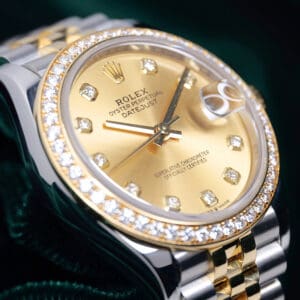
Rolex Datejust 31 Champagne Diamond Dial Diamond Bezel Jubilee Yellow Gold & Stainless Steel 31mm MINT CONDITION COMPLETE SET 278383RBR
$31,990.00
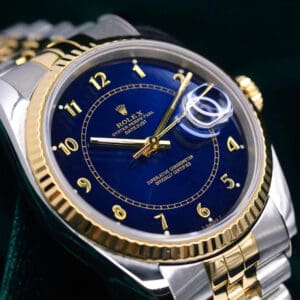
Rolex Datejust Blue Arabic Numeral Refinished Dial Fluted Bezel Jubilee Bracelet 18k Yellow Gold Stainless Steel 36mm MINT CONDITION 16233
$7,975.00
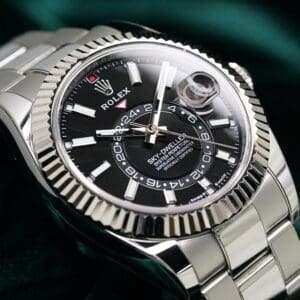
2025 Rolex Sky-Dweller Bright Black Dial 18k White Gold Fluted Bezel Stainless Steel Oyster Bracelet 42mm MINT CONDITION COMPLETE SET 336934
$22,895.00
Final Thoughts on Omega Aqua Terra vs Rolex Oyster Perpetual
Omega Aqua Terra vs Rolex Oyster Perpetual comes down to two buyers with different priorities. Aqua Terra rewards someone who values technical certification, a visible movement, and a modern dial, usually at a price under retail. Oyster Perpetual rewards someone who wants an understated, iconic Rolex with the strongest resale in this segment.
Two quick tips before you commit. Try both the 36mm and 38mm in person, since the gap reads larger on the wrist than on paper. And on the Rolex side, price the exact dial you want rather than the model average, because the premium swings hard between classic and hype colors.