
If you’re hunting for one watch to wear every day, the Omega Aqua Terra and the Rolex Datejust both land on the shortlist fast. They cover the same ground: the office, dinner, travel, and weekends. At a glance, they look close enough to stall the decision.
Spend real time with them and the gap shows. The Aqua Terra feels more modern, cleaner, and sportier on the wrist. The Datejust feels classic and familiar, the kind of watch people recognize across a room.
That gap matters more in 2026 than it used to. Rolex raised prices again in January, which shifted how each watch sits on value and how easy it is to buy one. Here’s how they compare on design, wear, movement, price, and long-term ownership before you spend serious money.
Omega Aqua Terra Overview


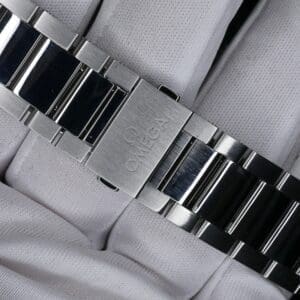

Omega launched the Seamaster Aqua Terra in 2002 as a more versatile part of the Seamaster family. Omega wanted a watch that could handle daily wear, travel, and water use without looking like a full dive watch. Early pieces had a cleaner dial, and the teak pattern came later as the line settled into its own identity.
This watch is made for someone who wants a luxury watch for daily use. You can wear it with almost any outfit, and even around water, because current versions feature 150 meters of water resistance and modern anti-magnetic movements.
The Aqua Terra gained attention in 2013 when Omega released the 15,000 Gauss version. That watch carried the first fully anti-magnetic mechanical movement, a major step for everyday watches. Later Aqua Terra models continued to build on Omega’s movement technology.
Collectors tend to like the Aqua Terra because it feels complete and versatile. It does not lean on a single famous mission or a single loud visual cue to stay relevant. People like the solid case work, the strong movement tech, the useful water resistance, and the fact that it wears well in normal life.

The look holds up because it stays clean without going plain. The teak dial, added in 2008, gave the model a signature texture, and Omega later shifted those lines from vertical to horizontal. Pair that with the smooth bezel, sharp hands, and tidy case profile, and you get a watch that reads simple at first and more considered the longer you wear it.
If you want the full range of sizes and dials, our Omega Aqua Terra buying guide covers the current lineup.
Rolex Datejust Overview
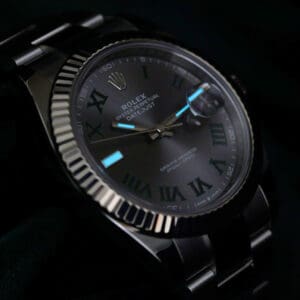
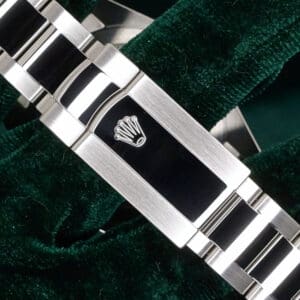
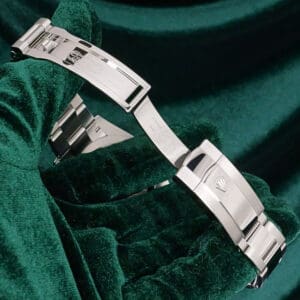
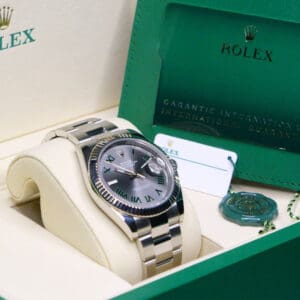
Rolex launched the Datejust in 1945 as an all-purpose daily watch. It marked the brand’s 40th anniversary, but the bigger point was function. Rolex introduced it as the first self-winding, waterproof, chronometer wristwatch with a date window. When the Cyclops lens arrived in 1953, the basic Datejust formula was already set.
The Datejust fits the buyer who wants one watch that works in almost every setting without much effort. It wears well with formal or casual clothes, which is why so many people start here. Current models still play that role, with 100 meters of water resistance and a wide range of sizes, materials, bezels, bracelets, and dials.
Its biggest accomplishment was solving a problem early that later became the industry standard. In 1945, Rolex put an automatically changing date display inside a waterproof, self-winding, chronometer-rated case. That package set the template the brand still uses.

Collectors prefer the Datejust because the line has depth without becoming complex. You can go vintage with pie pan dials and older four-digit references, or stay modern with cleaner cases and updated movements. What holds the Datejust line together is consistency.
A few details make the watch instantly recognizable. The Cyclops magnifier, fluted bezel, and Jubilee bracelet stand out most, though not every Datejust uses all three at once. Then there is the case shape itself, which stays clean and familiar even when the dial or bracelet changes.
We break down the full range in our Rolex Datejust buying guide, from vintage references to the current 41 mm.
Omega Aqua Terra vs Rolex Datejust: Most Notable Differences

Before choosing between these two models, it helps to focus on the areas where they differ most in daily use. Both work as luxury everyday pieces, but they approach engineering, sizing, value, and availability in different ways. A few categories make the contrast clearer.
Below are the most notable differences between the Omega Aqua Terra and the Rolex Datejust.
1. Water Resistance
The Omega Aqua Terra offers 150 meters of water resistance, higher than the Datejust’s 100 meters. That extra margin matters if you want one watch for daily wear, travel, and swimming. Omega also uses a screw-down crown, so the watch feels closer to a sports watch in real use.
The Rolex Datejust offers 100 meters of water resistance, which is still strong for an everyday luxury watch. It handles rain, hand washing, and normal swimming without issue, so this is not a weak point. Rolex keeps the Datejust more conservative here because the watch is meant to read dressier.
2. Movement Design
Omega uses Master Chronometer movements, such as the caliber 8800 and 8900. These resist magnetic fields up to 15,000 gauss, which helps protect the watch from phones, laptops, and other common devices. Omega also tests them through METAS, so the focus stays on accuracy, magnetic resistance, and full-watch performance.
Inside the Rolex Datejust, the caliber 3235 focuses on stability and long-term reliability. You get a Parachrom hairspring, Paraflex shock protection, and Rolex’s Superlative Chronometer standard rated to within +2/-2 seconds a day.
Related Models from Majestix
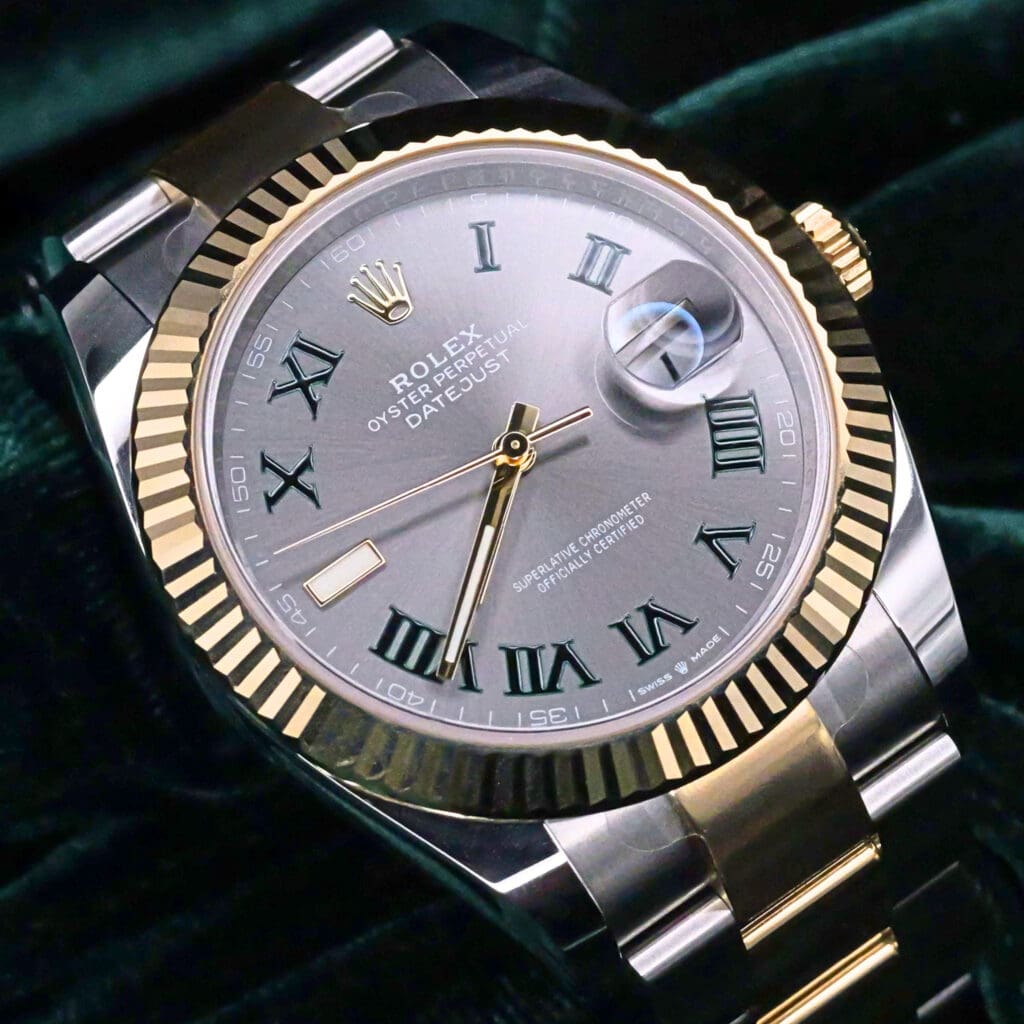
Rolex Oyster Perpetual Datejust 41 "Wimbledon" Slate Dial Fluted Bezel Two-Tone 18K Yellow Gold Oyster Bracelet Stainless Steel MINT CONDITION COMPLETE SET 126333-0019
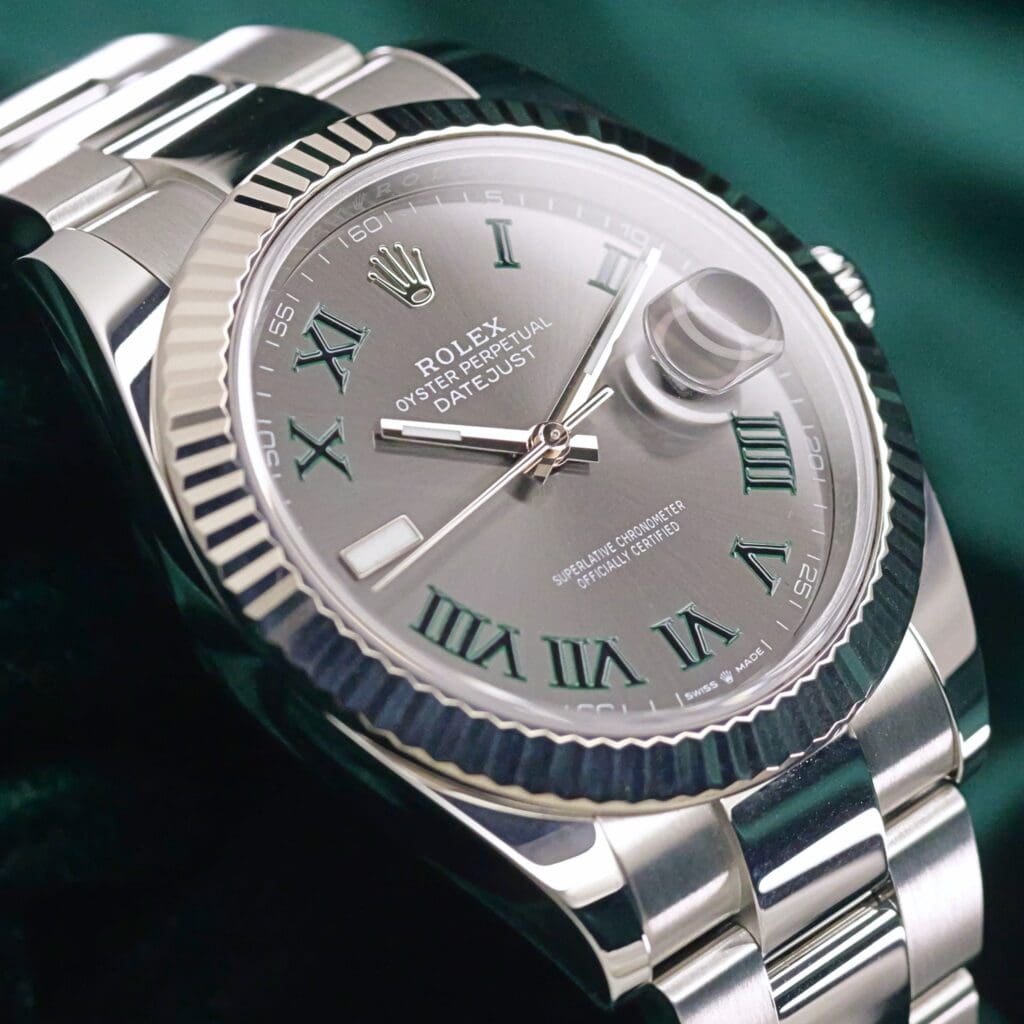
2025 Rolex Datejust 41 Wimbledon Slate Gray Dial Fluted 18K White Gold Bezel Oyster Bracelet Stainless Steel MINT CONDITION COMPLETE SET 126334
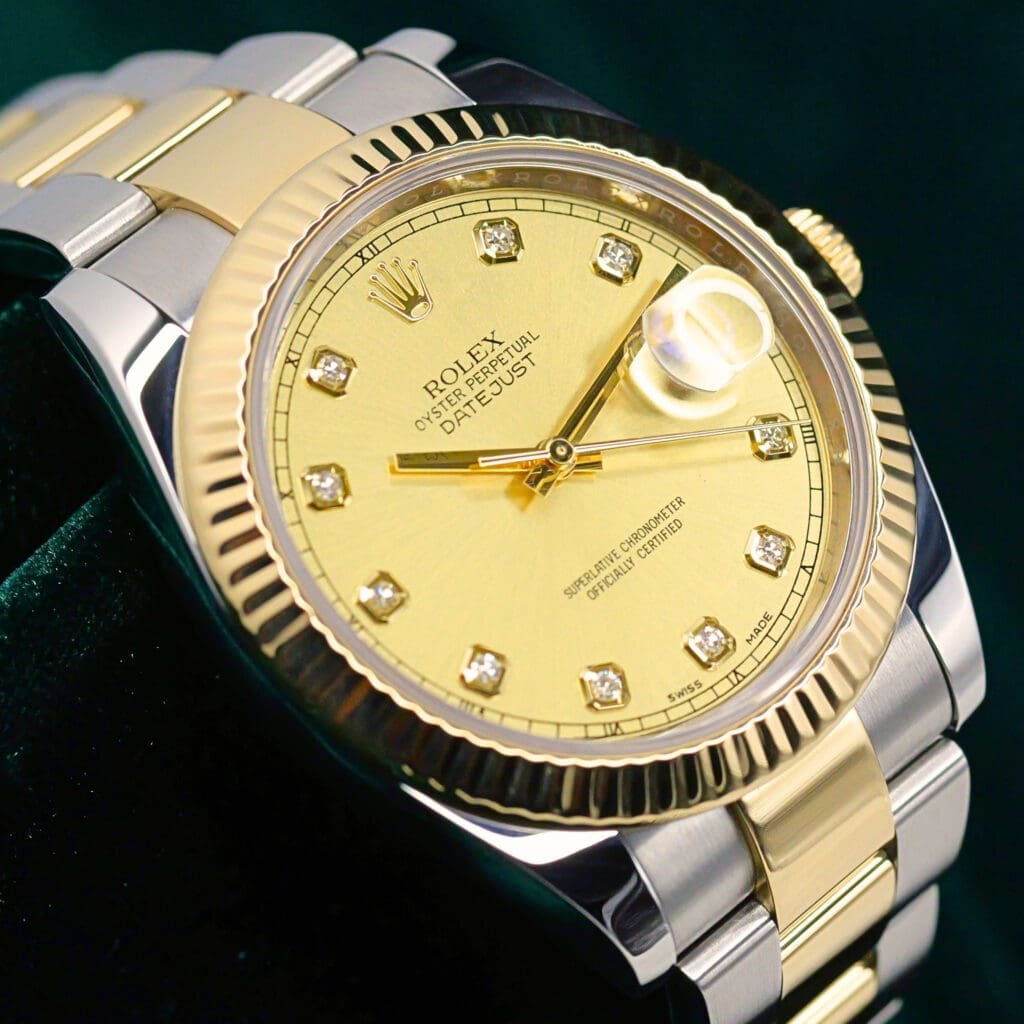
Rolex Datejust 41 Champagne Dial Diamond Markers Fluted Bezel Oyster Bracelet Two-Tone 18K Yellow Gold Stainless Steel MINT CONDITION COMPLETE SET 126333

2026 NEW UNWORN Rolex Datejust White Dial 18K White Gold Fluted Bezel Jubilee Bracelet Stainless Steel 41mm COMPLETE SET 126334-0010
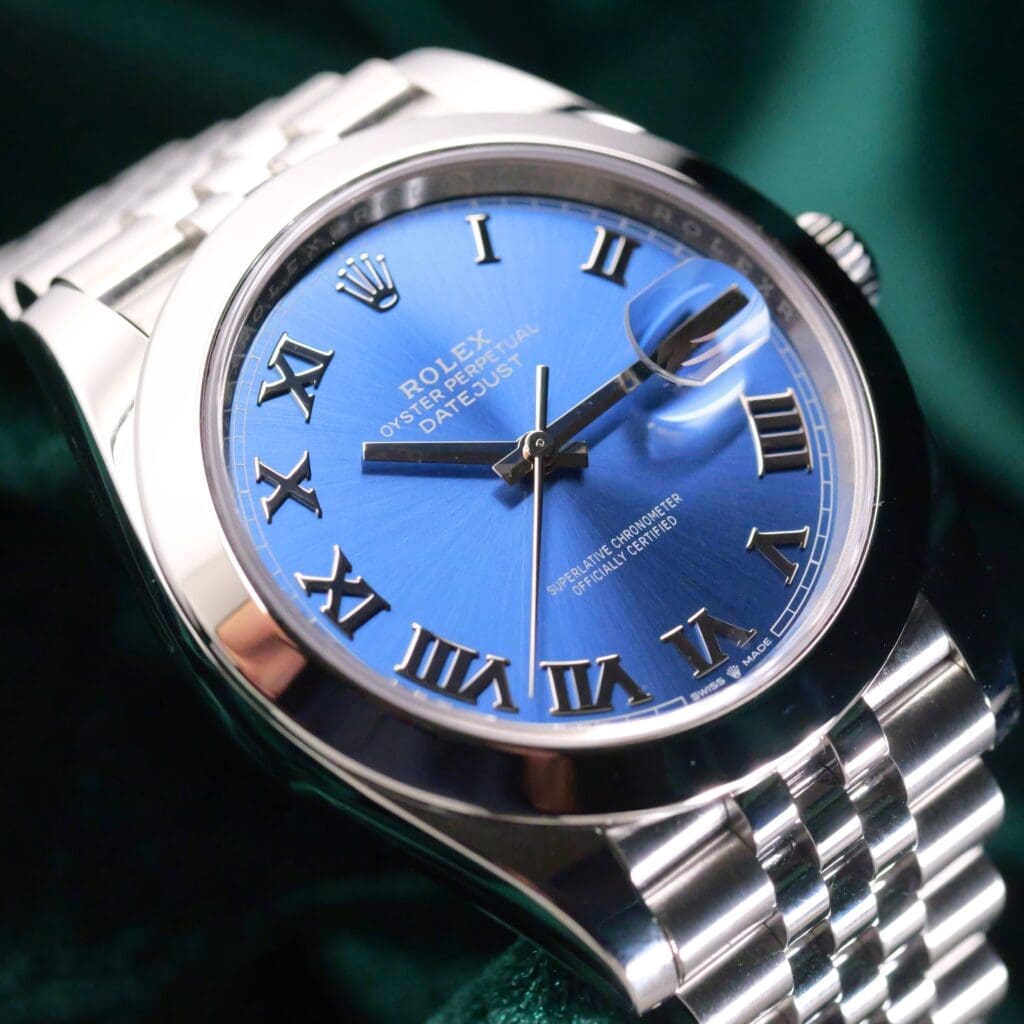
2025 Rolex Datejust 41 Blue Azzuro Dial Roman Markers Smooth Bezel Jubilee Bracelet Stainless Steel 41mm MINT CONDITION COMPLETE SET 126300
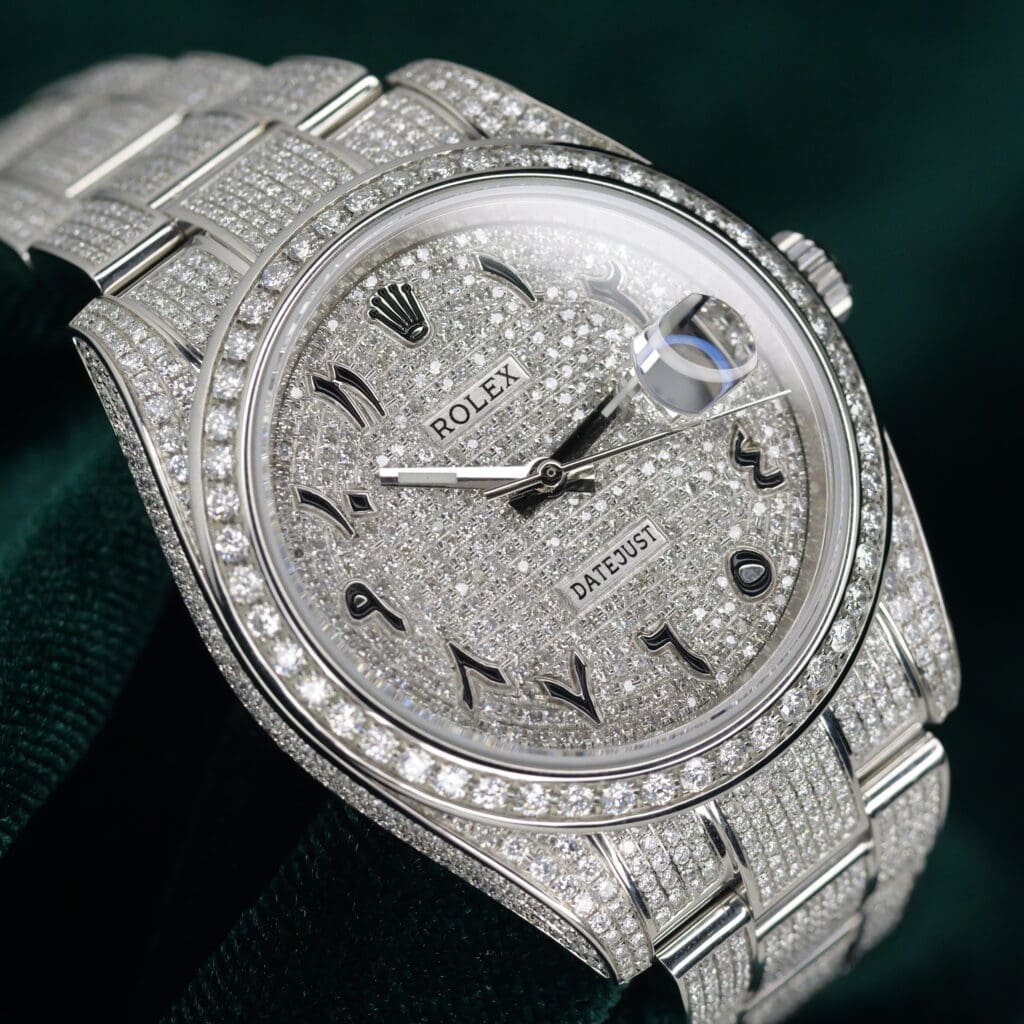
Rolex Datejust 41 Full Diamond Dial Arabic Numerals Stainless Steel Bussdown MINT CONDITION COMPLETE SET 126300
3. Case Size
With the Omega Aqua Terra, case size also changes the movement inside. Current models commonly come in 38 mm and 41 mm, and each size uses a different caliber. The 38 mm version uses caliber 8800, while the 41 mm version uses caliber 8900. If you’re stuck between the two, our 38 mm vs 41 mm Aqua Terra comparison goes deeper.
For the Rolex Datejust, the lineup mainly comes in 36 mm and 41 mm, but both use the same caliber 3235. Case size changes the look and wrist presence, not the mechanics. A 36 mm Datejust keeps the classic proportions, while the 41 mm version offers a larger, modern fit. We lay out the Datejust 36 vs 41 trade-offs in a separate guide.
4. Price and Resale Value
The Aqua Terra costs less and trades well below retail, while the Datejust holds its value and often sells at or above retail. That single difference shapes how each watch feels as a purchase.
A steel Aqua Terra 41 mm retails around $7,100 to $7,400. On the secondary market, most trade between roughly $3,900 and $5,300, about 28% to 45% below retail, based on WatchCharts data. That makes a pre-owned Aqua Terra a strong value if you don’t mind buying second-hand.
The Datejust moves the other way. A steel Datejust 36 (ref. 126200) sits around $7,500 to $11,500 on the secondary market against a 2026 retail near $8,150, and the fluted-bezel and Jubilee configurations often trade above retail outright.
Rolex raised retail prices about 7% in January 2026, its third increase in a year, which pushed many popular Datejust configurations to trade at or above sticker. The Aqua Terra rewards buyers who want mechanical value for less, and the Datejust rewards buyers who treat resale and liquidity as part of the deal.
We go deeper on how Omega and Rolex hold value over time in a separate breakdown.
Related Models from Majestix

Omega Seamaster Aqua Terra Worldtimer Blue Dial Blue Rubber Strap Stainless Steel 43mm MINT CONDITION COMPLETE SET 220.12.43.22.03.001

Omega Seamaster Aqua Terra Co-Axial White Dial Blue Accents Stainless Steel MINT CONDITION 2503.33.00

Omega Seamaster Aqua Terra 150M 41MM Blue Grey Dial Sedna Gold Rubber Strap COMPLETE SET EXCELLENT CONDITION 220.22.41.21.03.001

Omega Seamaster Aqua Terra 150m Black Dial 41mm Stainless Steel EXCELLENT CONDITION 220.10.41.21.01.001

Omega Seamaster Aqua Terra Black Dial 41.5mm Stainless Steel Bracelet COMPLETE SET EXCELLENT CONDITION 231.10.42.21.01.003

Omega Seamaster Aqua Terra Black Dial Yellow Accents 231104222101002
5. Retail Availability and Buying Experience
You can usually buy an Aqua Terra at retail the same day, while the most wanted Datejust configurations can mean waitlists or a premium. For a one-watch buyer, this is often the deciding factor.
Walk into an Omega boutique and a steel Aqua Terra is typically in stock at sticker price. There’s no game to play and no list to join.
The Datejust depends on the configuration. Plain steel models on an Oyster bracelet are usually gettable, but the popular combinations, like the fluted bezel, the Jubilee bracelet, and the Wimbledon dial, can carry authorized-dealer waitlists and trade above retail pre-owned. If you want a specific Datejust, plan for either patience or a premium.
Notable Omega Aqua Terra References

A few references show how the Omega Aqua Terra evolved across generations. The examples below give a clearer picture of how the watch changed over time. Looking at them side by side helps you understand what defines the Aqua Terra today, from the early in-house calibers to the newer turquoise ceramic-bezel models Omega added most recently.
Omega Seamaster Aqua Terra Ref. 231.10.39.21.02.001
A key feature of this reference is the Omega Caliber 8500. It is an in-house automatic movement with two barrels and a 60-hour power reserve. This was one of the first Aqua Terra models to use Omega’s own movement design, which gave the watch a stronger mechanical identity. A 38.5 mm steel case and silver teak dial keep it balanced and easy to wear.
- Case Size: 38.5 mm
- Case Material: Stainless steel
- Movement: Omega Caliber 8500 automatic
- Power Reserve: 60 hours
- Water Resistance: 150 meters
- Crystal: Sapphire front and exhibition caseback
- Dial: Silver teak pattern with applied indices and date at 3
- Bracelet: Stainless steel bracelet with folding clasp
- Price Range: roughly $2,800 to $4,000
Omega Seamaster Aqua Terra Ref. 220.10.41.21.03.002
Strong magnetic resistance defines this reference through the Caliber 8900 Master Chronometer. The movement withstands magnetic fields up to 15,000 gauss, which helps protect it from common electronic interference. That improvement made this generation feel more advanced than earlier Aqua Terra models.

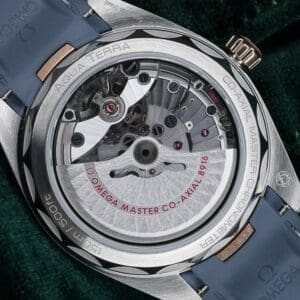

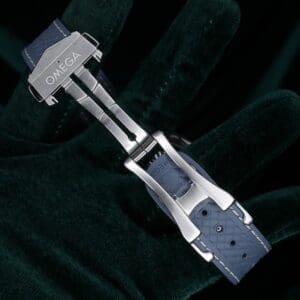
- Case Size: 41 mm
- Case Material: Stainless steel
- Movement: Omega Caliber 8900 Master Chronometer
- Power Reserve: 60 hours
- Magnetic Resistance: 15,000 gauss
- Water Resistance: 150 meters
- Crystal: Sapphire front and exhibition caseback
- Dial: Blue horizontal teak pattern with date at 6
- Bracelet: Stainless steel bracelet
- Price Range: approximately $4,000 to $5,500
Omega Seamaster Aqua Terra Worldtimer Ref. 220.10.43.22.03.001
A full worldtimer display makes this reference stand apart. The Caliber 8938 Master Chronometer tracks global time zones with a city ring and 24-hour disc, plus a detailed world map at the center of the dial. This adds real function while keeping the layout readable. A 43 mm steel case gives the display the room it needs.
- Case Size: 43 mm
- Case Material: Stainless steel
- Movement: Omega Caliber 8938 Master Chronometer
- Power Reserve: 60 hours
- Functions: Worldtimer, date, 24-hour day/night indication
- Magnetic Resistance: 15,000 gauss
- Water Resistance: 150 meters
- Crystal: Sapphire front and exhibition caseback
- Dial: Blue dial with world map center and global city ring
- Bracelet: Stainless steel bracelet
- Price Range: around $6,000 to $8,500
Notable Rolex Datejust References

A few Rolex Datejust references show how the model developed across generations. Each one reflects a stage in the watch’s design and movement updates. For 2026, Rolex also added a green ombré lacquer dial to the Datejust 41 and marked the 100th anniversary of the Oyster case, so the line keeps moving even as the core stays the same.
Rolex Datejust Ref. 1601
A sloped pie pan dial gives this reference its classic vintage look. That small step near the edge of the dial adds depth and pairs well with the acrylic crystal and fluted bezel. This layout shaped the early Datejust identity, so many collectors still tie this look to the original model.
- Case Size: 36 mm
- Case Material: Stainless steel, two-tone, or gold, depending on configuration
- Movement: Rolex Caliber 1575 automatic
- Crystal: Acrylic with Cyclops lens
- Water Resistance: 100 meters
- Dial: Pie pan and standard dial options with date at 3
- Bezel: Fluted bezel, often in gold
- Bracelet: Jubilee or Oyster bracelet
- Price Range: about $4,000 to $7,500
Rolex Datejust Ref. 16234
Durability improves here with the move to a sapphire crystal. That single change made the watch more scratch-resistant and better suited to everyday wear. Rolex kept the familiar 36 mm case and added a white gold fluted bezel, so the design stayed recognizably Datejust.
- Case Size: 36 mm
- Case Material: Stainless steel with white gold fluted bezel
- Movement: Rolex Caliber 3135 automatic
- Crystal: Sapphire with Cyclops lens
- Water Resistance: 100 meters
- Dial: Multiple dial options with date at 3
- Bezel: 18k white gold fluted bezel
- Bracelet: Jubilee or Oyster bracelet
- Price Range: about $5,000 to $8,500
Rolex Datejust 41 Ref. 126334
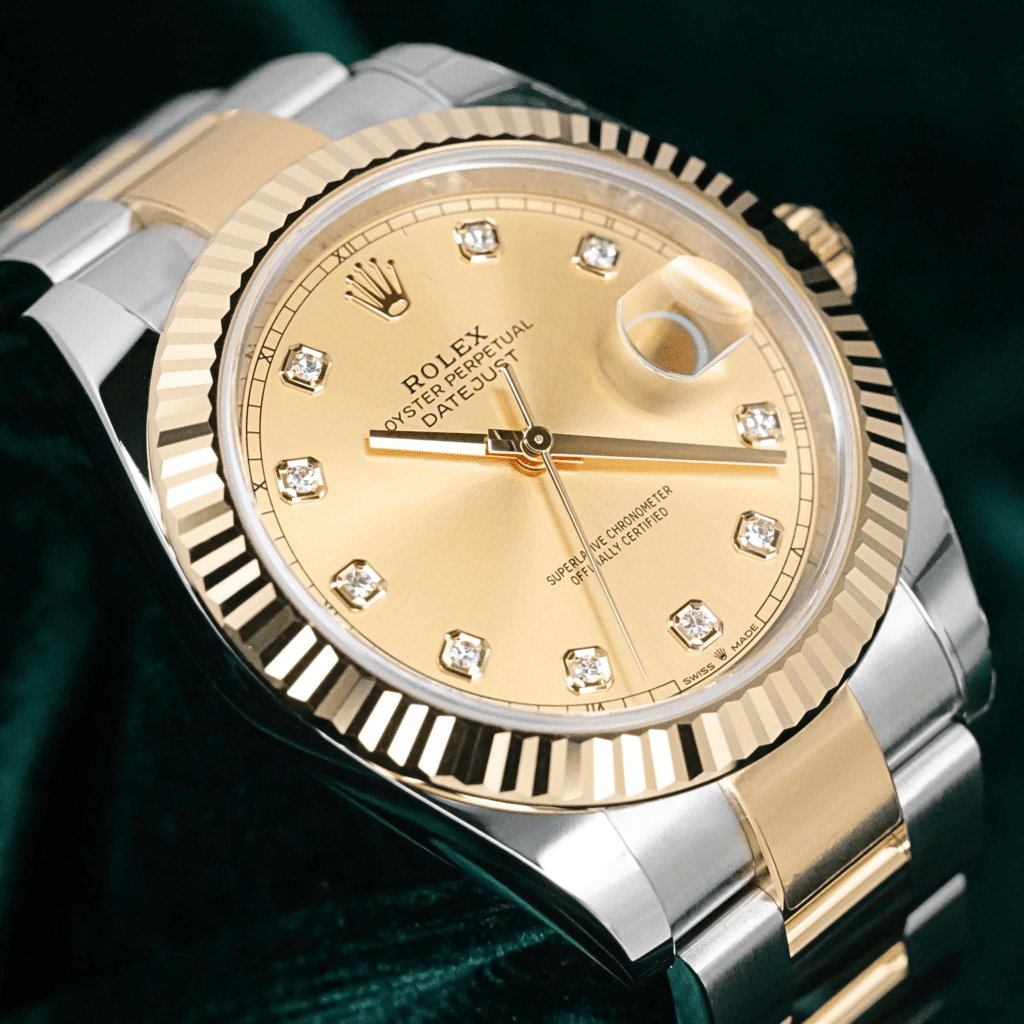
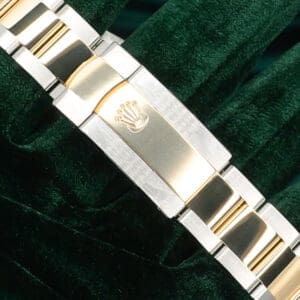
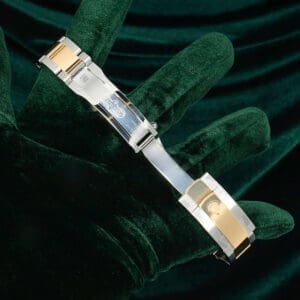
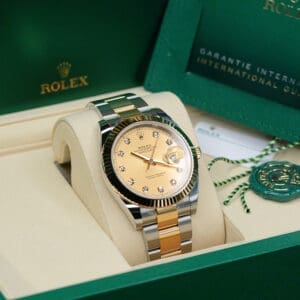
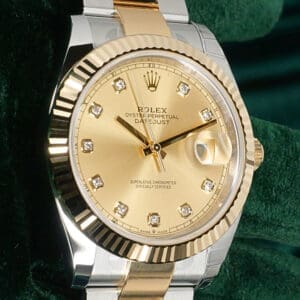
A 41 mm case gives this reference a larger, more modern presence on the wrist. Inside, the Caliber 3235 movement provides a 70-hour power reserve and an updated design. Rolex kept the white gold fluted bezel and the Cyclops date window, so it still reads as a Datejust at a glance.
- Case Size: 41 mm
- Case Material: Oystersteel and white gold
- Movement: Rolex Caliber 3235 automatic
- Power Reserve: 70 hours
- Crystal: Sapphire with Cyclops lens
- Water Resistance: 100 meters
- Dial: Multiple dial options with date at 3
- Bezel: White gold fluted bezel
- Bracelet: Jubilee or Oyster bracelet
- Price Range: about $14,000 to $18,000
Omega Aqua Terra vs Rolex Datejust: Which Watch Should You Choose?
Choosing between the Omega Aqua Terra and the Rolex Datejust gets clearer when you think about how each fits into daily use. Both work as luxury everyday watches, yet they approach the role from different directions. One leans toward modern engineering and quiet design. The other builds on decades of recognition and familiar watchmaking cues.
Choose the Omega Aqua Terra if:
- You want a more modern design and a quieter public image.
- Movement engineering and anti-magnetic protection matter more to you.
- 150 meters of water resistance fits your everyday use better.
- You’re buying pre-owned and want stronger value after early depreciation.
- A cleaner dial and simpler case design suit your taste.
- You’d rather walk in and buy at retail without a waitlist.
Choose the Rolex Datejust if:
- Strong resale support and easier market liquidity matter to you.
- You prefer a classic design with clear public recognition.
- Bracelet and bezel variety matter more than movement specs.
- You want one of the most established everyday watch formats.
- A dressier tone fits your wardrobe, especially with a fluted bezel and Jubilee bracelet.
- You’re fine waiting or paying a premium for a specific configuration.
Where to Buy Authentic Watches Online
999+ Timepieces Available
Explore Our Timepieces
Authenticated, unworn, and ready to ship worldwide.
Rolex · Audemars Piguet · Patek Philippe · Omega · Cartier · Richard Mille · Hublot · Tudor
Newly Listed
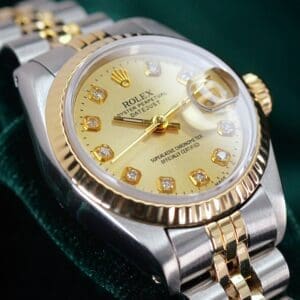
Rolex Lady-Datejust Champagne Gold Dial Diamond Markers Fluted Bezel Jubilee Bracelet Two Tone 18k Yellow Gold Stainless Steel 26mm MINT CONDITION 69173
$7,788.00
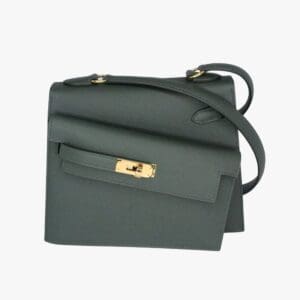
2025 NEW Hermes Kelly Sellier en Desordre 20 Vert Mangrove Epsom Leather Permabrass Hardware
$38,900.00
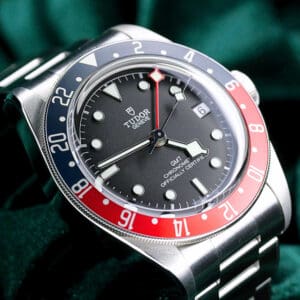
Tudor Black Bay GMT “Pepsi” Black Dial Red and Blue Bezel Stainless Steel 41mm MINT CONDITION COMPLETE SET 79830RB
$4,294.00
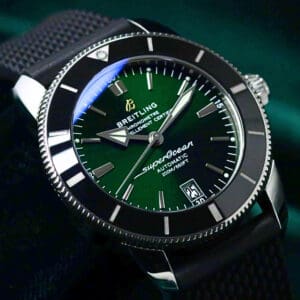
Breitling Superocean Heritage II Green Dial Black Ceramic Bezel Black Rubber Strap Stainless Steel 42mm MINT CONDITION COMPLETE SET AB2010121L1S1
$5,372.00
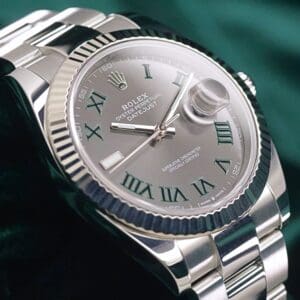
2025 Rolex Datejust 41 Wimbledon Slate Gray Dial Fluted 18K White Gold Bezel Oyster Bracelet Stainless Steel MINT CONDITION COMPLETE SET 126334
$15,920.00
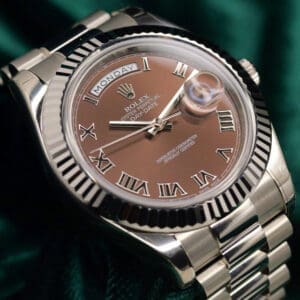
Rolex Day-Date II Brown Chocolate Dial Roman Numerals Fluted Bezel President Bracelet 18K White Gold 41mm MINT CONDITION COMPLETE SET 218239
$49,390.00
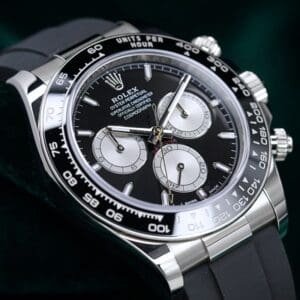
2026 NEW UNWORN Rolex Cosmograph Daytona "Baby Le Mans" Black Dial Silver Subdials Black Ceramic Bezel Black Oysterflex Strap 18K White Gold 40mm COMPLETE SET 126519LN-0002
$62,618.00
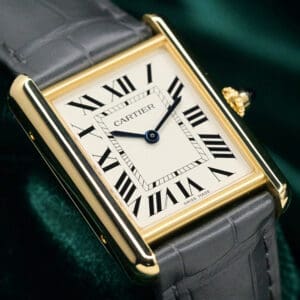
2025 Cartier Tank Louis Cartier Silver Dial Gray Alligator Strap 18K Yellow Gold 25.5mm MINT CONDITION COMPLETE SET WGTA0343
$13,189.00
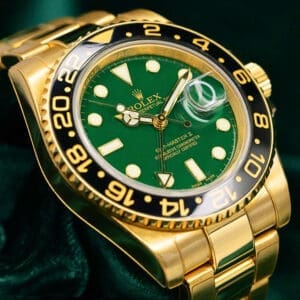
Rolex GMT-Master II Green Dial Black Ceramic Bezel Oyster Bracelet 18K Yellow Gold 40mm MINT CONDITION COMPLETE SET 116718LN
$46,994.00
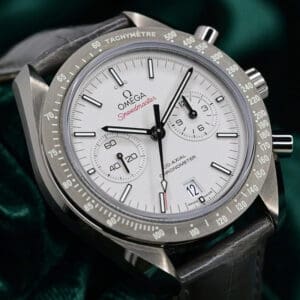
Omega Speedmaster Grey Side of the Moon Grey Dial Alligator Leather Strap Grey Ceramic 44.25mm MINT CONDITION 311.93.44.51.99.001
$9,185.00
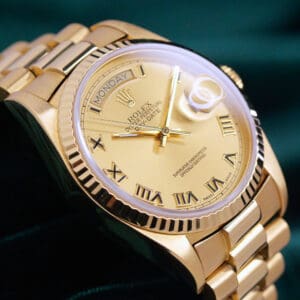
Rolex Day-Date 36 Champagne Gold Dial Roman Numeral Markers Fluted Bezel Presidential Bracelet 18K Yellow Gold NEAR MINT CONDITION 18038
$20,345.00
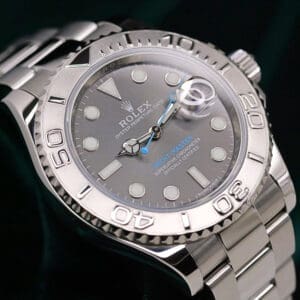
Rolex Yacht-Master Rhodium Grey Dial Platinum Bezel Oyster Bracelet Stainless Steel 40mm MINT CONDITION COMPLETE SET 116622
$14,300.00
There are a few legitimate online channels for buying an Aqua Terra or a Datejust. Chrono24 aggregates dealer and private listings worldwide, with buyer protection on eligible orders, and our guide covers how to buy safely on Chrono24. eBay covers a similar range and runs an Authenticity Guarantee that inspects qualifying watches before they reach you.
Grailzee runs enthusiast-focused watch auctions if you’d rather bid than buy outright. Independent grey-market dealers and watch forums are options too, though they put more of the vetting on you — our guide to where to buy a pre-owned watch walks through each channel.
We also buy, sell, and trade luxury watches, and the reason clients choose us over a big marketplace is the conversation before the sale. Instead of a listing and stock photos, we send tour videos of the exact watch, walk you through honest condition notes, and you talk to someone who has inspected the piece in person. You’re not buying blind off a thumbnail.
That shows up in our 4.9-star Google rating, which comes from buyers who wanted a real read on the watch before committing. You can browse our current collection anytime, and if you want that kind of walkthrough on an Aqua Terra or a Datejust, reach out and we’ll line up options that match what you’re after.
Frequently Asked Questions
Is the Omega Aqua Terra Better Than the Rolex Datejust?
Neither wins outright, it depends on what you weigh most. On pure watchmaking, Omega’s Master Chronometer movement leads on accuracy and magnetic resistance. On resale value, recognition, and liquidity down the road, the Datejust leads. Pick the trait that matters to you.
Does the Omega Aqua Terra Hold Its Value?
It keeps a stable floor but loses ground against retail, mostly in the first owner’s hands. Buying pre-owned lets that first owner absorb the drop, so you pay closer to the watch’s real market level. Limited editions and precious-metal models behave differently and can hold more.
Is the Aqua Terra or Datejust Cheaper to Service?
Both have strong service networks, and Omega service usually costs a bit less than Rolex. Parts availability is excellent for both since these are current-production lines. Expect a full service every five to seven years if you wear the watch regularly, and here’s what a Rolex Datejust service costs.
Is the Aqua Terra a Dress Watch or a Sports Watch?
It sits between the two, dressier than a dive watch but sportier than the Datejust. The teak-textured dial, screw-down crown, and 150 meters of water resistance make it more casual than the Datejust’s fluted-bezel formality. It handles a suit and a t-shirt equally well.
Final Thoughts on Omega Aqua Terra vs Rolex Datejust
Once the comparison fades, the right pick comes down to how the watch fits an ordinary day. The Aqua Terra is the value-and-engineering choice: more water resistance, a stronger movement, and easy retail availability. The Datejust is the heritage-and-resale choice: instant recognition, broad configuration variety, and a market that holds.
Buy pre-owned and the Aqua Terra saves you real money. Buy a Datejust and you’re buying liquidity along with the watch. Two quick checks before you commit: on a used Datejust, look for Jubilee bracelet stretch, and on an Aqua Terra, confirm it’s the Master Chronometer generation if anti-magnetism matters to you. Then pick the one that still feels right at a glance.