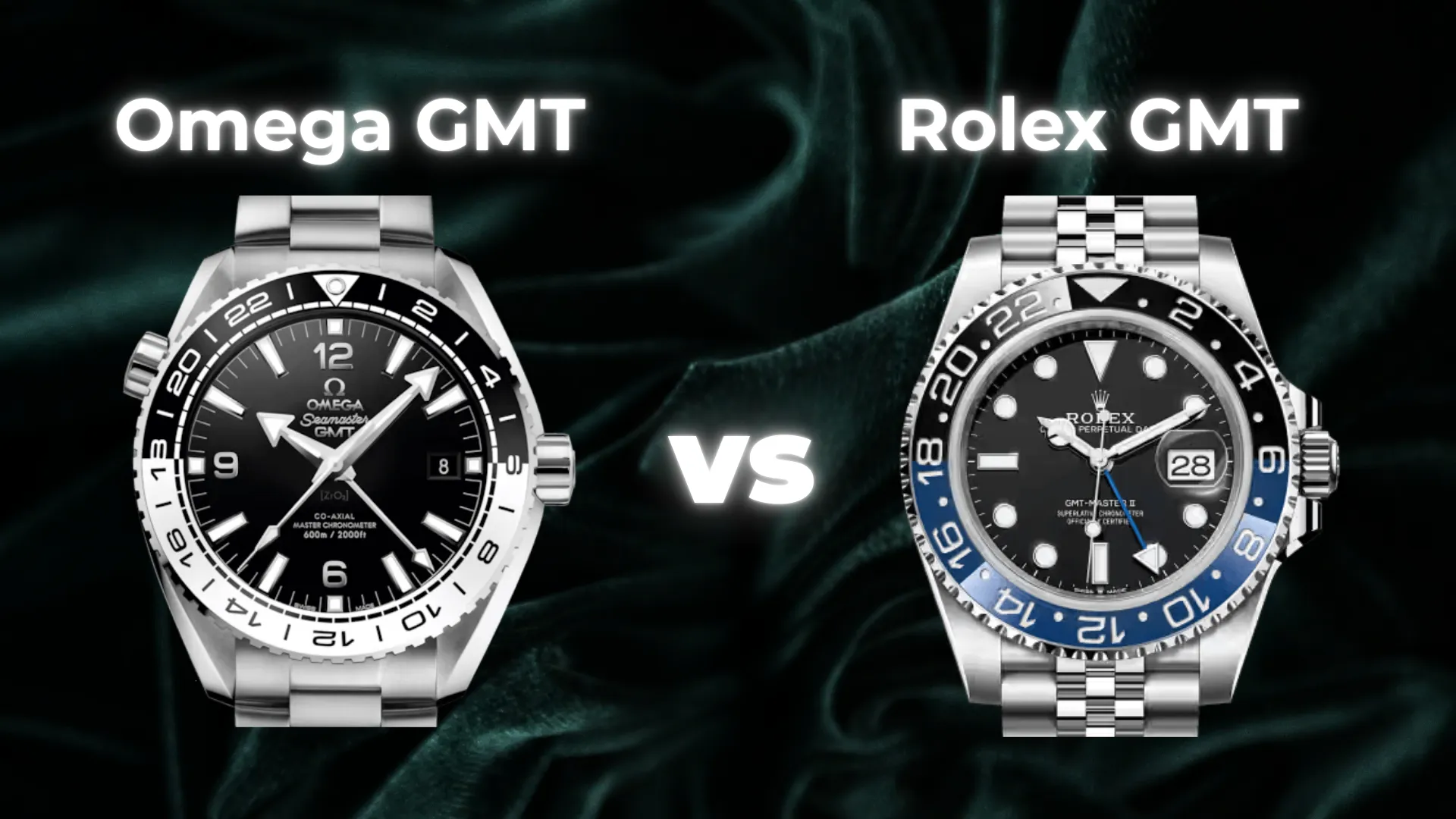
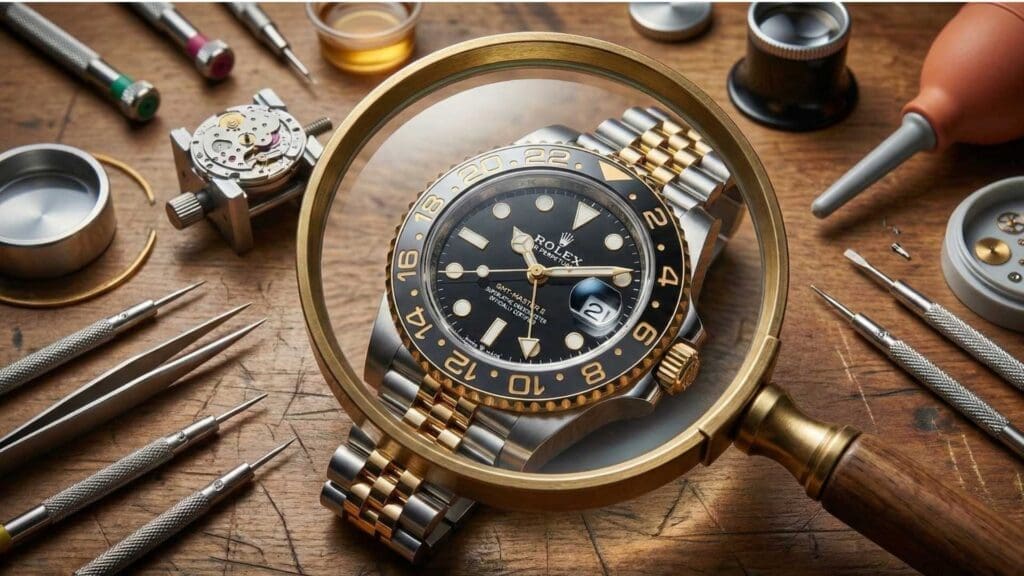
Learning how to spot a fake Rolex GMT Master II can feel overwhelming because replicas have become far more convincing in both appearance and weight. Many counterfeit models look right at a glance but fall apart the moment you check the bezel action, dial printing, or date magnification.
This guide breaks down the exact steps you need to evaluate a GMT-Master II accurately, from generations and nicknames to physical checks, bezel issues, movement behavior, and bracelet differences. You’ll also get a complete authenticity checklist and simple red-flag cues that reveal fakes quickly.
If you want to feel confident identifying a genuine GMT-Master II, before spending a dollar, follow each section and keep this guide handy whenever you review a watch.
Overview of the Rolex GMT-Master II
The Rolex GMT-Master II is one of the brand’s most recognizable travel watches, known for its dual-time functionality, rotating 24-hour bezel, and bold color combinations. Understanding the variations across generations makes authentication easier because each era has distinct traits that counterfeiters often get wrong.
Here are the key details to know before evaluating a watch:
Key GMT-Master II Generations
The GMT-Master II has evolved through distinct eras, each introducing changes in bezels, cases, and movements. Here are the main generations you should know before authenticating any reference:
- Classic Aluminum Bezel Era (16710, 16760): Thinner cases, aluminum inserts, and older bracelets with hollow links.
- Transitional Models (116710LN): First ceramic bezel, upgraded case construction, and improved bracelet with solid links.
- Modern Ceramic Era (126710, 126711, 126715): Updated movement (Caliber 3285), Jubilee and Oyster options, refined case shape, and richer bezel colors.
Popular GMT-Master II Nicknames & Color Configurations
Collectors often identify GMT-Master II models by their nickname, which usually comes from the bezel colors. Below are the most well-known color configurations and what defines each one:
- Batman (BLNR): Black/blue ceramic bezel, found on Oyster and Jubilee bracelets depending on the reference.
- Pepsi (BLRO): Red/blue bezel; modern ceramic versions show deeper, richer tones.
- Root Beer (CHNR): Black/brown ceramic bezel available in two-tone and solid Everose gold.
- Sprite (Green/Black): Left-hand crown (destro) model with unique color configuration.
- Coke (Black/Red): Aluminum bezel only; no ceramic version exists.
Aluminum vs. Cerachrom GMT Bezels
The bezel material changed dramatically from aluminum to ceramic, creating clear differences in durability, color, and engraving quality. This shift makes it much easier to spot inconsistencies on replicas when comparing older and newer GMT references.
Here are the key comparisons that help you distinguish authentic bezels from replicas:
| Feature | Aluminum Insert | Cerachrom Insert |
| Material | Lightweight aluminum | Scratch-resistant ceramic |
| Colors | Matte, vibrant, can fade | Deep, glossy, stable tones |
| Engraving Depth | Shallow, painted numerals | Deep laser-engraved numerals |
| Fade Behavior | Often fades or scratches | Color stays consistent long term |
| Finish Differences | Softer sheen | High-polish gloss or satin look |
GMT-Master II Case Sizes and Bracelet Options
Different generations feature changes in case dimensions, lug shaping, and bracelet availability. Here are the variations to understand before authenticating a specific model:
- Case size: Most references remain 40mm, though modern models wear slightly larger due to broader lugs.
- Lug shape: Classic models have slimmer lugs; Super Case models (1167xx) have thicker, squared lugs.
- Bracelet choices: Older models use Oyster only; modern references offer both Oyster and Jubilee, depending on configuration.
Oyster and Jubilee Bracelet Generations
Bracelet generations can reveal authenticity because Rolex made major changes to links, clasps, and end-links over time. Below are the main differences between Oyster and Jubilee bracelets:
| Feature | Oyster Bracelet | Jubilee Bracelet |
| Link Style | Three-link design, sportier look | Five-link design, more flexible |
| Clasp Evolution | From stamped clasps to Oysterlock with Easylink | From older folded clasps to modern concealed Crownclasp |
| End-Link Changes | Transition from hollow to solid end links | Modern versions feature solid end links for a better fit |
How to Spot a Fake Rolex GMT-Master II
Learning how to evaluate a GMT-Master II becomes much easier once you break the watch down into its physical details, bezel characteristics, dial features, and overall feel. Below are the key checks that help you separate a genuine GMT from even the better replicas.
Physical Checks
Authenticating a GMT-Master II often starts with its external features, since counterfeiters struggle to match Rolex’s case finishing and bracelet fit. Here are the physical traits worth examining closely:
1. Case Finishing and Shape – A genuine GMT-Master II features crisp brushing on the lugs and clean polishing on the case sides. Replicas usually appear softer because of cheaper metal and poor finishing. Any uneven edges or inconsistent case shape is a strong red flag.
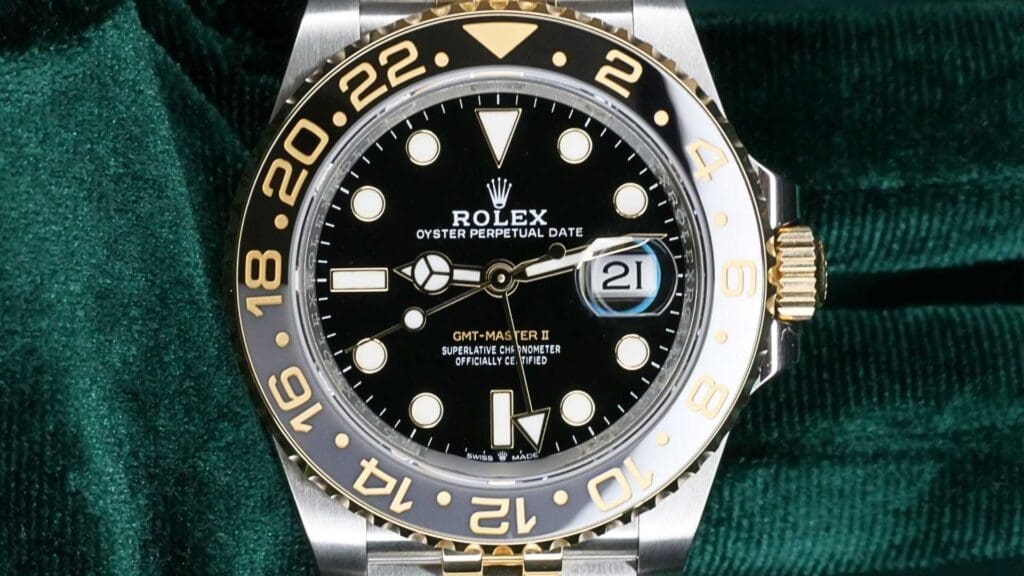
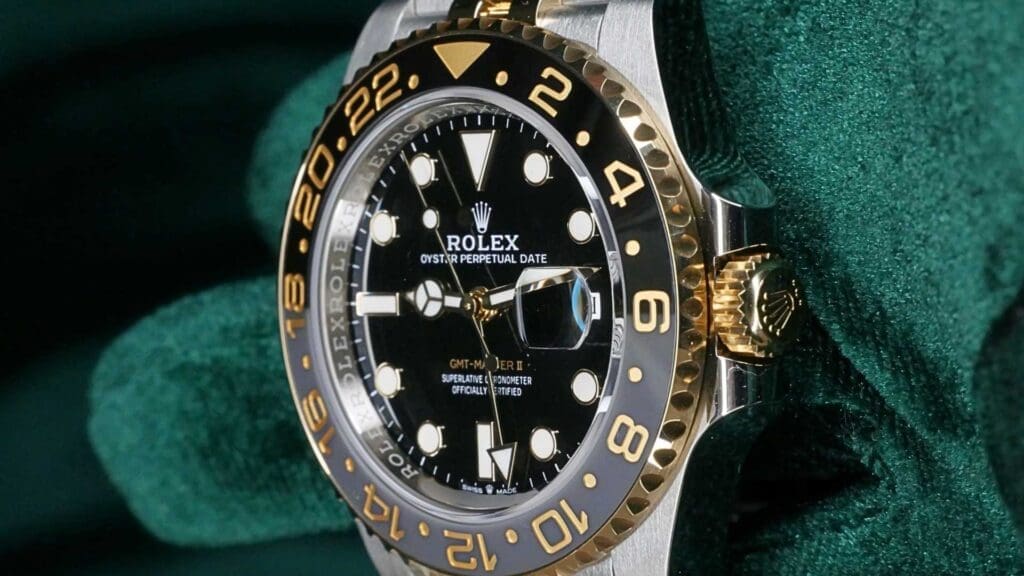
2. Rehaut Engraving – The ROLEX engraving should align perfectly with each minute marker on modern references. Counterfeits often show shallow, messy, or misaligned text. A coronet that isn’t perfectly centered at 12 o’clock is another warning sign.
3. Bracelet Fit and End Links – Solid end links should sit tightly against the case with no gaps. Replicas often leave spacing or feel loose because of low-quality machining. Sharp edges or rattling links also suggest a fake bracelet.
Bezel Red Flags
The bezel is one of the most revealing components because counterfeit inserts rarely match Rolex’s colors, engraving depth, or rotation feel. Here are the bezel details that help identify fakes quickly:
1. Color Accuracy- Cerachrom bezels should have deep, saturated colors with consistent tone under different lighting. Fakes often choose colors that are too bright or muted. Any uneven shade is an easy bezel giveaway.
2. Engraving Depth – Authentic ceramic bezels have deep, laser-cut numerals filled with platinum or gold. Many replicas print numbers on the surface or cut them too shallow. If the engraving lacks sharpness, the bezel is not genuine.
3. Bezel Action – A real GMT bezel rotates with 24 firm, precise clicks. Replicas often feel gritty, loose, or uneven. If the bezel wobbles or clicks inconsistently, it’s a clear counterfeit sign.
4. Insert Alignment – The 12 o’clock triangle must line up perfectly with the dial and rehaut. Misalignment is extremely rare on genuine Rolex bezels. Even a slight offset is a common replica flaw.
Dial and Hands Red Flags
The dial reveals many flaws because Rolex’s printing, lume, and hand finishing are extremely precise. Here are the dial-related details that expose counterfeits:
1. Printing Sharpness – The coronet, text, and minute markers should look crisp under magnification. Replicas often show fuzzy edges or irregular spacing. Any distortion in the printing is an immediate red flag.
2. Lume Color and Brightness – Modern GMT models use Chromalight, which glows bright blue. Replicas often glow green or dim quickly. Patchy lume is another sign the watch isn’t genuine.
3. Hand Shapes and Finish – Rolex hands have clean edges, smooth finishing, and correct proportions. Replicas frequently use hands that are too short or poorly polished. Any rough edges suggest counterfeit parts.
4. Date Font – The date should appear bold, centered, and consistent with Rolex’s typeface. Many fakes use thin or off-center numerals. Misalignment inside the window is a strong warning sign.
Cyclops and Date Window Issues
Cyclops magnification is one of the fastest authenticity checks because counterfeit crystals rarely achieve Rolex’s clarity and 2.5× magnification. Below are the date-related red flags to look for:
1. True 2.5× Magnification – A real Rolex magnifies the date to a full, clear 2.5× size. Most replicas fall short and look closer to 1.5×. Weak or small magnification is one of the easiest signs of a fake.
2. Cyclops Centering – The cyclops must sit perfectly over the date window. Replicas often show slight horizontal or vertical shifts. Any misalignment is instantly noticeable and very uncommon in genuine models.
3. Date Window Finish – The window should have smooth, sharp edges with a clean bevel. Replicas often have rough or uneven cutouts. Imperfections around the window signal low-quality casework.
4. Anti-Reflective Coating – The cyclops should reduce glare effectively because of Rolex’s anti-reflective coating. Many fakes skip this, causing harsh reflections. Poor clarity through the magnifier is a major giveaway.
Case, Crown, and Bracelet “Feel Test”
How the watch feels often exposes issues that visuals alone might miss. Here are the tactile details that help confirm authenticity:
1. Crown Operation – A real Rolex crown unscrews smoothly and winds with consistent resistance. Replicas often feel gritty or loose. Any grinding sensation indicates poor machining.
2. Bracelet Weight – Genuine Rolex bracelets use solid links that create a dense, balanced feel. Replicas often feel lighter due to hollow links or cheaper metal. A hollow or tinny sensation is a replica indicator.
3. Clasp Quality – The clasp should close with a secure, confident snap. Replicas often feel mushy or unstable. Shallow engraving or weak spring action is another red flag.
4. Overall Balance – A real GMT-Master II feels balanced from case to bracelet. Replicas often feel top-heavy or uneven. Poor weight distribution typically signals a counterfeit.
Complete Rolex GMT-Master II Authenticity Checklist
Use this table to quickly compare the most important authenticity factors. Each item shows what a genuine GMT-Master II should display and the red flags commonly found in replicas.
| Item to Check | What to Look For | Red Flags |
| Case Finishing | Even brushing, sharp edges, and clean transitions between polished and brushed areas. Everything should feel crisp and consistent. | Rounded edges, uneven texture, or messy brushing. Polishing bleeding into brushed areas is a strong sign of a replica. |
| Dial Printing | Sharp coronet, clean lettering, and perfectly spaced markers. Printing should stay crisp under magnification with no bleed. | Fuzzy text, smudging, or misaligned markers. Thick or uneven printing almost always indicates a fake. |
| Bezel Color & Engraving | Rich Cerachrom color with sharp, deep engravings or a clean matte finish on aluminum. Color should look uniform in all lighting. | Wrong shades, shallow cuts, printed numbers, or overly glossy “aluminum.” Uneven color separation is common in replicas. |
| Bezel Action | Smooth, firm rotation with 24 solid clicks. No wobble, looseness, or misalignment during use. | Gritty or loose rotation, wobbly movement, or inconsistent clicks. Poor tension suggests cheap components. |
| Cyclops Magnification | True 2.5× magnification with clear, sharp visibility. The cyclops should sit perfectly centered over the date. | Weak 1.5× magnification, distortion, glare, or off-center placement. Many replicas fail this instantly. |
| Date Font | Bold, centered numerals with consistent shape and thickness. The date should align cleanly inside the window. | Thin, faint, or uneven numbers. Off-center placement or mismatched font shapes signal a fake. |
| Rehaut Engraving | Deep, sharp ROLEX engraving with perfect alignment and a centered coronet at 12 o’clock. Spacing must be even. | Shallow cuts, crooked text, incorrect fonts, or misaligned coronet. Inconsistent spacing is a clear replica marker. |
| Bracelet Fit & Finish | Solid end links that hug the case with no gaps. Smooth link movement and clean, even brushing across the bracelet. | Gaps, rattling, or sharp edges. Hollow links on modern models or uneven brushing are major red flags. |
| Clasp Quality | Firm, secure closure with clean engravings and smooth folding action. Alignment should remain perfect when closed. | Weak closure, rattling, shallow engraving, or clasp misalignment. Rough folding usually indicates a fake. |
| Movement Behavior | Smooth seconds sweep, consistent winding feel, and accurate timekeeping. Hacking should stop the seconds instantly. | Jerky sweep, grinding, bad accuracy, or delayed/no hacking. These issues point to a replica movement. |
| Serial & Reference Numbers | Sharp, deep engravings with clean spacing. The serial must match the model year and appear on the rehaut for newer references. | Shallow, uneven, or laser-burned text. Mismatched serial years or inconsistent spacing reveal counterfeit work. |
| Warranty Card | Correct font, spacing, chip placement, and high-quality material. Check Serial number and reference, they must match the watch exactly. | Wrong layout, cheap plastic, missing chip, or mismatched details. Faded printing is another giveaway. |
| Box, Tags & Accessories | Correct-era box with accurate hangtag references and sharp printing quality on booklets. Everything should feel consistent. | Incorrect box style, fake tags, wrong reference numbers, or poor-quality printing. Accessories often expose replicas first. |
| Seller Transparency | Clear photos, consistent details, verifiable history, and willingness to provide more images. A trustworthy seller offers full clarity. | Blurry photos, vague responses, refusal to verify details, unusually low prices, or conflicting information. |
Final Thoughts on How to Spot a Fake Rolex GMT Master II
Learning how to spot a fake Rolex GMT Master II puts you in control, especially when the market is filled with replicas that look convincing at first glance. Once you understand the bezel colors, engraving quality, date magnification, and bracelet differences, you’ll start noticing details most people overlook.
You’re doing the right thing by learning these signs now, and a little extra caution will save you from expensive mistakes later. Keep this guide close anytime you inspect a GMT-Master II, and give yourself time to rethink things if something doesn’t feel right. You’re building real confidence with every watch you evaluate.
FAQs About Spotting a Fake Rolex GMT-Master II
What is the quickest way to spot a fake Rolex GMT-Master II?
The fastest check is the bezel and dial printing, since most replicas struggle with correct colors, engraving depth, and sharp text. Look closely at the bezel’s color transitions and the crispness of the coronet. If either looks soft or slightly off, the watch usually isn’t genuine.
Are ceramic GMT bezels harder to authenticate?
Cerachrom bezels are more challenging to evaluate because the colors are richer and harder for counterfeiters to match. Still, the engraving depth, platinum or gold-filled numerals, and precise color transitions give away fakes. Even small inconsistencies in gloss or shading can signal a replica.
Can I authenticate a GMT-Master II without opening the caseback?
Yes, most authenticity checks can be done externally using the dial printing, bezel action, rehaut engraving, and cyclops magnification. These areas reveal issues long before you ever need to see the movement. Opening the caseback is only necessary for final confirmation by a professional.
Should I buy a GMT-Master II without papers if all visual checks look good?
You can, but you should be cautious and verify the serial number, bezel quality, and dial details carefully. A trustworthy seller should provide clear photos and a consistent story. If the price seems unusually low or the seller avoids simple questions, walk away and wait for a safer opportunity.