The first thing you notice when you look at your watch is the crystal, and even the smallest smudge or scratch can spoil its appearance. Because the crystal takes the most contact in daily wear, it often shows marks before any other part of the watch. Cleaning it the right way is simple, but only if you know the safe techniques. Want to make sure you’re not accidentally damaging your watch every time you wipe it? Let’s break down the best way to keep your crystal clear without risk.
Understand Your Watch Crystal Material
The crystal is the shield that protects the dial and hands from dust, water, and everyday bumps. Different materials react in their own way to pressure, temperature changes, and even cleaning products. Watchmakers choose crystal types based on what they want the watch to offer—strength, clarity, or tradition. A vintage model may use acrylic to stay true to history, while a modern sports watch often uses sapphire for toughness.
Comparison of Watch Crystal Materials
Crystal Type | Common in | Strengths | Weaknesses | Cleaning/Polishing Notes |
Sapphire Crystal | Luxury brands (Rolex, Omega, Patek Philippe) | Extremely scratch-resistant, clear, premium look | Can shatter on strong impact, higher cost | Smudge cleaning only; cannot polish scratches |
Mineral Crystal | Mid-range Swiss/Japanese watches | Good scratch resistance, affordable, tougher than acrylic | Scratches more easily than sapphire, difficult to polish | Clean with care; scratches usually require replacement |
Acrylic Crystal | Vintage watches, some modern reissues | Lightweight, impact-resistant, low cost, easy to polish | Scratches very easily, not as clear as sapphire | Can be polished with compounds like PolyWatch to remove light scratches |
How to Quickly Identify Your Watch Crystal Type

- Sapphire Crystal: Feels colder to the touch, very hard, and almost impossible to scratch with everyday items like keys or coins. Often has a subtle blue hue under light due to anti-reflective coating.
- Mineral Crystal: Feels like standard glass, tougher than acrylic but scratches with enough wear. If it looks glassy and doesn’t polish out easily, it’s likely mineral.
- Acrylic Crystal: Warm to the touch, light, and easily scratched with a fingernail or key. It has a softer, slightly “plastic” feel compared to glass or sapphire.
Tools and Materials You Need
- Lint-free microfiber cloth (ultra-soft, non-abrasive)
- Distilled water (avoid tap water with minerals or chlorine)
- Mild, fragrance-free liquid soap (pH neutral, no harsh chemicals)
- Watch cleaning solution (formulated for luxury watches)
- Watchmaker’s dust blower (rubber bulb type, not canned air)
- Cotton swabs with tightly wound tips (non-shedding)
- PolyWatch scratch remover (for acrylic crystals only)
- Soft, clean cotton pads
- A padded watch mat or microfiber towel
- Nitrile gloves (optional)
Avoid using: paper towels, tissues, household glass cleaner, or anything abrasive – these can scratch the crystal or damage coatings.
Step-by-Step Cleaning Guide
- Prepare Your Workspace
Place your watch on a padded watch mat or a clean microfiber towel to avoid scratches. Wash and dry your hands thoroughly, or wear nitrile gloves to keep fingerprints and oils off the watch while you work. - Secure the Watch
If your watch has a removable strap or bracelet, take it off to make cleaning easier and safer. Check that the crown is fully screwed down or pressed in so water cannot leak into the movement. Never clean the crystal with the crown pulled out. - Remove Loose Dust and Particles
Use a rubber dust blower to push away loose particles from the crystal surface. Hold the watch at an angle so the dust falls off instead of settling back. Avoid using canned air or blowing with your mouth, since both can leave condensation or force dirt deeper into the case. - Dry Wipe for Smudges and Fingerprints
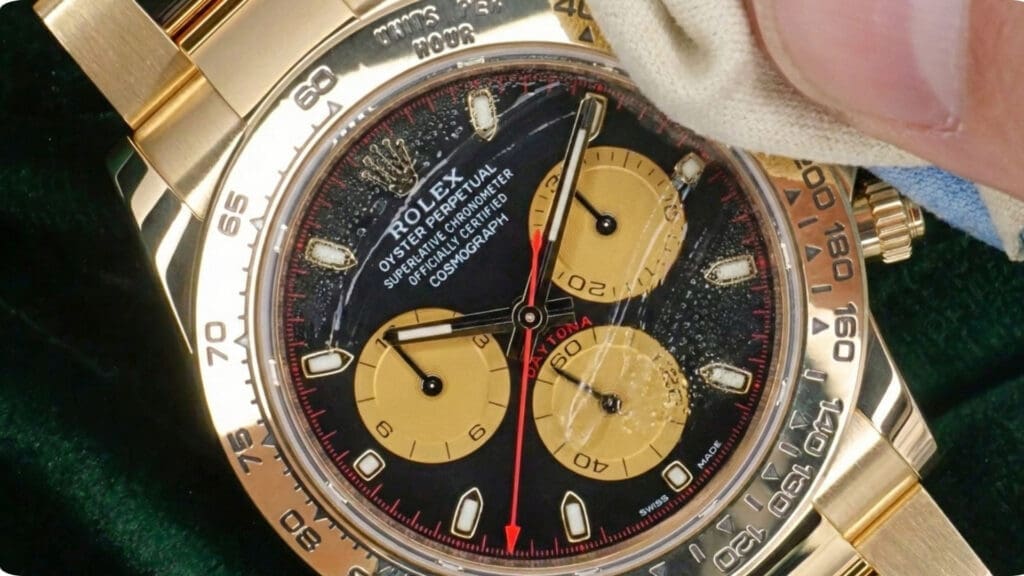
Fold a clean, lint-free microfiber cloth into a small square and gently wipe the crystal in light circular motions. Always use a fresh section of the cloth to avoid rubbing dirt back onto the surface. Apply only light pressure—pushing down too hard can grind particles into the crystal. - Wet Cleaning for Stubborn Marks
Mix one drop of pH-neutral liquid soap with a small cup of distilled water. Lightly dampen a corner of your microfiber cloth, making sure it is not dripping wet, and wipe the crystal in gentle strokes. Immediately follow with a dry, clean part of the cloth to remove any soap or water residue before it dries. - Detail Cleaning Around the Edges
Dip a tightly wound cotton swab in distilled water and squeeze out all excess so it is just barely damp. Roll the swab slowly along the edge where the crystal meets the bezel, lifting away trapped dirt and oils. Replace the swab once it picks up visible debris to avoid spreading grime. - Optional: Polishing Acrylic Crystals
For acrylic crystals, place a pea-sized amount of PolyWatch polish directly onto the surface. Using a soft cotton pad, rub the polish firmly in small circles for two to three minutes, focusing on scratches. Wipe away the residue with a microfiber cloth and repeat if needed until the crystal looks clear. - Final Inspection
Hold the watch under a bright light and tilt it to check for streaks, water spots, or leftover residue. Inspect the edges carefully to make sure no moisture is trapped around the bezel. Once the crystal is spotless, reattach the strap or bracelet and store the watch safely until your next wear.
Special Care for Different Watch Crystals
Sapphire Crystal
Be careful when setting your watch down—place it on a soft surface or use a watch stand to avoid accidental knocks. Also, avoid sudden extreme temperature changes, like moving from a hot sauna to cold water, as this can put stress on the crystal and its seals.
Mineral Crystal
Avoid hitting the crystal against walls, desks, or metal objects, since sharp impacts can leave marks or even cause cracks. Many brands apply a hardening treatment to improve durability, but it’s still best to be careful when wearing your watch during sports or heavy work. Consider using a watch protector film for extra shielding if you want to keep a mineral crystal looking clear for longe.
Acrylic Crystal
Avoid resting your watch face down on hard surfaces and consider using a watch with a protective bezel if you wear it daily. Acrylic also tends to yellow slightly over time when exposed to sunlight, so storing the watch in a cool, shaded place helps keep the crystal clear longer.
Common Mistakes to Avoid When Cleaning a Watch Crystal
- Using the wrong cleaning products
Household cleaners like window spray, bleach, or alcohol-based solutions can damage anti-reflective coatings or leave streaks that never come off. - Scrubbing instead of wiping
Pressing too hard or rubbing in circles can grind tiny particles into the surface and create scratches. Always wipe gently in straight lines. - Forgetting the edges
Dirt and oils build up around the bezel edge, which can weaken seals over time. Clean carefully here without digging into the gap. - Skipping pre-check
Trying to clean a crystal with loose dirt or sand particles still on the surface risks scratching it right away. Always check and lightly blow off dust before wiping. - Cleaning in the wrong place
Humid rooms or steamy bathrooms increase the risk of moisture entering the case. Clean your watch in a cool, dry spot with good lighting.
When to Seek Professional Help
A quick clean at home works for everyday smudges and dust, but some problems need expert hands. If your crystal has deep scratches, chips, or cloudy spots that don’t clear no matter how carefully you wipe, don’t push it further. Trying to fix those issues yourself can make the damage worse or compromise your watch’s water resistance.
The safest move is to bring your watch to a trusted service center or authorized dealer. They have the right tools to polish, replace, or reseal the crystal without risking the movement inside. Spending a little now on professional care saves you from a much bigger repair bill later.
Final Takeaways on How to Clean a Watch Crystal
Keeping your watch crystal clear and scratch-free comes down to regular care, the right tools, and knowing when to stop and let a professional step in. A clean crystal not only makes your watch look sharp but also protects the dial and movement beneath it.
Treat your watch with the same attention you give to any fine piece of craftsmanship. Stay gentle, avoid shortcuts, and make cleaning part of your routine. When in doubt, let an expert handle the tougher jobs—your watch will reward you with lasting clarity and elegance.