
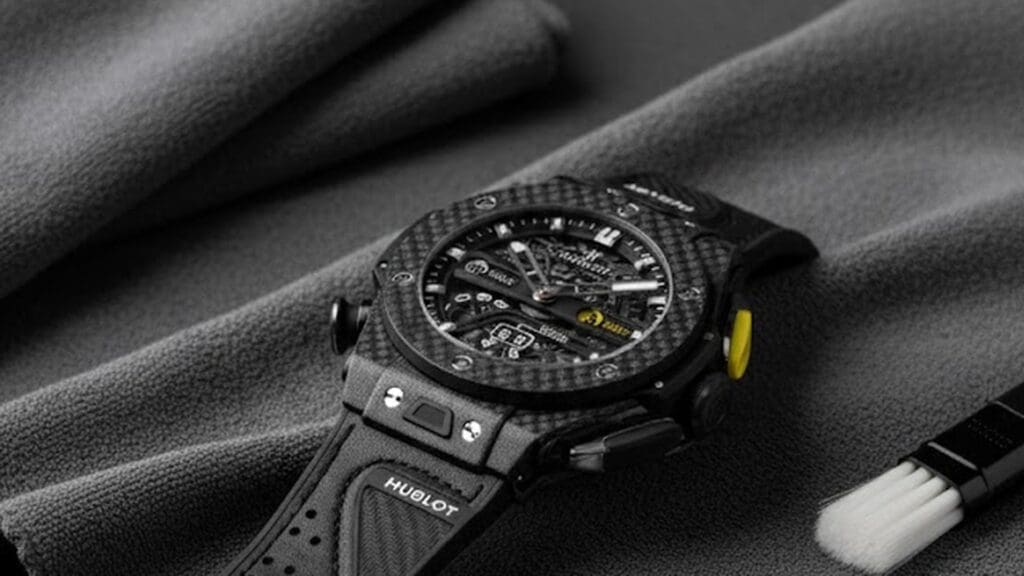
Ever wipe your carbon watch case like you always do, then notice a weird, shiny patch or streak that wasn’t there yesterday? That “shine” is often skin oil, silicone residue, or the resin getting lightly burnished by grit you did not even feel.
This guide shows you how to clean a carbon watch safely without flattening the texture, hazing the resin, or grinding grit into the case with grit. Keep reading to learn a simple 5-minute cleaning routine. Next, we introduce a “deep clean” method for special occasions. You’ll also discover early warning signs of over-cleaning to help preserve the matte carbon look.
Know the Type of Carbon Your Watch Has
Your cleaning method should match the kind of carbon your case uses. There are types like forged carbon, layered carbon, and mixes that appear similar in photos but react differently to pressure, water, and repeated cleaning.
If you clean the wrong way, you can leave marks, streaks, or shiny areas that make the case look uneven. Most carbon watch cases are made with carbon fibers in a clear plastic, and when you clean, you’re actually touching that plastic.
The table below breaks down the most common carbon types used in watch cases, how to recognize them, their typical finishes, and the specific risks to watch for during cleaning.
| Carbon Type | Visual Cues | Typical Finishes | Risk Notes |
| Forged carbon | Cloudy, marbled “swirls” with a random pattern. | Matte, satin, semi-gloss | Can show shiny spots from over-wiping or pressure. |
| Layered carbon fiber | Visible “weave” pattern with more uniform lines. | Matte to semi-gloss | The resin top layer may exhibit streaks if rubbed too hard. |
| Brand composites (carbon + resin blends) | Often uniform texture, sometimes “sand-like” or a proprietary grain. | Matte or satin | Some blends are resin-sensitive and can haze when exposed to harsh cleaners or solvents. |
Finish behavior explains why your cloth and wiping style matter more than most people think. Carbon cases do not respond like steel, and the surface you see is often resin that reacts to pressure and friction, not dirt alone.
With matte carbon, shiny patches develop if you wipe too hard. Glossy carbon reveals swirl marks instantly under bright light.
Material-Mapping Checklist

Carbon cases are rarely damaged on a flat surface. Most mistakes happen at transitions, where different materials meet, and tiny bits of grit get trapped without you noticing.
Before you start cleaning, take a moment to spot these areas so you clean carefully and avoid letting dirt scratch the case.
- Identify non-carbon parts, such as the caseback, bezel edge, crystal, crown, pushers, and strap hardware.
- Watch the edges, especially lug tips, strap channels, and the caseback lip, where dirt tends to collect.
- Treat transitions gently because debris wedges into these gaps and acts like sandpaper when wiped across the resin.
Gather Safe Tools and Products Before Touching Your Watch
You do not need fancy cleaners to maintain a forged carbon watch or a carbon fiber watch. You need the right soft tools, a clean cloth, and a light touch.
Most damage to carbon watch cases comes from using the wrong tools or cleaning too roughly, not from the dirt itself. Use gentle cleaners and skip anything that ‘polishes’ or ‘scrubs’, because the surface can turn cloudy or scratch very easily.
This short list covers the only tools worth using and what to avoid for your watch.
Use:
- Microfiber cloth (clean, soft, lint-free, no grit embedded)
- Soft detailing brush (very soft bristles, similar to a camera gear brush)
- Mild soap diluted in water (a few drops)
- Cotton swabs (for corners, crown edges, and tight seams)
- Wooden toothpick (for lifting debris carefully, not scraping)
Avoid:
- Polishing compounds, also known as “watch polish” creams
- Any abrasives (magic erasers, gritty pastes, scouring pads)
- Solvent wipes (acetone, heavy degreasers, strong alcohol wipes)
- Paper towels (with rough fibers) can drag trapped grit across the surface.
Remember: Carbon hates aggressive cleaning. A gentle routine helps keep streaks, shiny patches, and resin haze at bay.
How to Clean a Carbon Watch
The safest way to clean is to gently lift dirt without rubbing it in. The aim is to remove dirt carefully, rather than just scrubbing it away. To avoid pressing too hard, use only a light touch—about as much as a credit card weighs. This gives you a clear idea of how gentle you need to be.
Each section below builds on the one before it, so you remove grit safely, clean with control, and finish without leaving streaks, moisture, or trapped debris.
Dry Prep
Before you start, do this quick dry prep to clear loose grit from the carbon watch case and strap area. The checklist below targets debris traps first, so you don’t drag particles across the matte finish once the cloth gets damp.
- Remove the strap if possible to expose the lugs, case edges, and strap channels.
- Use a dry microfiber cloth to wipe away loose dust first, so you don’t turn grit into an abrasive paste once moisture is added.
- If you see particles near seams, use the cloth edge or a soft brush to lift them.
- Do not press harder, thinking it will “grab more,” because pressure is what creates marks.
Core Cleaning Method
After the dry pass, use this core cleaning method to safely lift oils and grime from a carbon watch without streaks or shine marks. Follow the steps below in order to keep moisture controlled and clean tight areas like the crown, strap channels, and case contours.
- Prepare a small amount of mild soap diluted in water.
- Your cloth should be lightly damp, never dripping.
- Gently wipe the case using minimal pressure, especially on the matte carbon finish.
- Use a soft detailing brush for textured areas and recessed surfaces with light strokes only.
- Brush first, then wipe, so you don’t smear oils across the resin.
- Clean tight spaces, such as the crown area, strap channels, and case contours, using cotton swabs.
- Roll the swab as you move, so you lift grime instead of pushing it deeper into the surface.
- Dislodge trapped debris carefully with a wooden toothpick, angled low with tiny movements. You’re teasing dirt out, not carving at the case.
Wet Method for Water-Resistant Watches Only
You can use water if your watch is truly water-resistant and properly sealed, but you still need control.
- Rinse first to remove grit, then use a mild soap with minimal pressure. Do not “scrub clean” like you would with steel.
- Brush only seams, crown guards, creases, and the caseback lip. For matte finishes, use consistent strokes to prevent uneven sheen.
- Rinse thoroughly, then blot dry immediately. Never operate the crown or chronograph pushers underwater, because that is a classic way to invite moisture past seals.
Drying and Final Checks

Drying is where most people accidentally undo a careful cleaning. A few seconds of trapped moisture around tight gaps can leave odor, residue, or watermarks that make the case look uneven later.
This step involves completely removing moisture, without rushing the process or applying pressure.
- Pat the watch dry with a microfiber cloth. Then air dry in a shaded, well-ventilated area.
- Ensure no moisture remains around the crown, lug gaps, or under the strap before reassembling. Carbon rewards restraint and can permanently show aggressive cleaning.
Clean the Strap Properly to Remove Hidden Grime
Your strap sits against sweat all day, so it is often the real source of odor, grime transfer, and that “mystery haze” you notice on the case sides. Cleaning the case without cleaning the strap is basically doing laundry, then putting on the same dirty shirt.
Treat the strap as its own job, then reattach it only when everything is dehydrated. Use the quick guide below to match your strap material to the safest method.
| Strap Type | What to Do | What to Watch For |
| Rubber | Mild soap and water, then dry thoroughly. | Dry the buckle and keeper areas carefully. |
| Fabric | Controlled wash only if removable, then dry flat. | Avoid soaking attached straps or leaving damp folds. |
| Leather | Dry wipe only. | Prevent odor, warping, and stiffness caused by moisture. |
Rotating straps helps more than people expect. It allows each strap time to dry thoroughly between uses, which helps prevent grime buildup and extends the strap’s life.
Is a Quick Post-Wear Wipe Enough to Prevent Stains?
Yes, for most owners, a quick post-wear wipe prevents carbon watch stains when done gently and after lifting grit. It stops skin oils, salt, and dust from bonding to the resin over time.
But if you wore sunscreen, hit the beach, or sweated hard, a wipe alone may not entirely remove oils that cling fast to composite resin. The fix is a tiny routine that takes under a minute and avoids the “shiny patch” problem.
1. Lift loose grit first using a soft brush or the edge of a microfiber cloth.
2. Wipe lightly on case flanks, the caseback edge, and strap contact points.
3. Focus on sweat-prone areas, such as the underside, lug gaps, and near the crown.
Sunscreen, salt, and skin oils quickly adhere to resin, so early removal is preferable to deep cleaning later. Your goal: stop build-up early, before it creates haze or uneven sheen.
Dry Method
Use this dry method when your watch just has light dust, everyday skin oils, or mild post-wear grime. It keeps friction low while still removing the stuff that causes dullness and stains.
- Remove dust with a blower or soft brush.
- Do a gentle microfiber wipe with minimal pressure.
- Use a barely damp cloth for sticky residue, followed by immediate drying.
- Use cotton swabs for corners without pushing debris inward.
Should You Clean a Carbon Watch With Water or Keep It Dry?
Keep it dry unless you are confident the watch is water-resistant and properly sealed. Water mistakes are more complicated to undo than a bit of dust.
Most carbon watch cases use carbon fibers in a transparent layer. This transparent layer can become cloudy, develop streaks, or appear shiny if you use harsh cleaners or rub too hard.
Water is fine when your seals are healthy, the crown is fully secured, and you rinse gently to dislodge any grit. Never adjust the crown or press chronograph pushers while the watch is wet or underwater.
Water-based cleaning is excellent for removing salt and sweat, but it penalizes sloppy habits, such as using hot water, heavy scrubbing, or leaving moisture trapped near the crown. Dry cleaning is slower for oily grime, but it is the lowest risk default for most owners.
If you are unsure, stop early and keep it dry. A slightly dusty carbon case looks better than a case with a permanent sheen patch. Be mindful of early damage signs that indicate you should halt cleaning efforts, such as dullness, uneven sheen, or a sticky feel. These can signal that you are approaching the threshold beyond which permanent damage may occur.
How Do You Remove Stains Without Creating a Shiny Patch?

Shiny patches alter the watch’s appearance. On matte forged carbon, one area appears rubbed smooth and cannot be restored by polishing. Pressure changes the sheen. Go slowly, use light passes, and stop at the first sign of shift.
Use the stain type below to pick the safest approach:
- Sunscreen and skin oil haze: Use mild soap on a barely damp microfiber cloth, then wipe with almost no pressure. Repeat light passes instead of pressing harder.
- Light dye transfer (jeans, gloves, rubber dye): Try a gentle lift with a clean microfiber, then stop immediately if you see the surface sheen changing.
- Warning: Avoid acetone and aggressive solvents, as they can degrade resin systems, soften finishes, or create haze over time.
If the stain does not budge after a few gentle attempts, the safest course of action is to stop. At that point, you are risking a permanent finish change, not “just cleaning more.”
What to Avoid When Cleaning a Carbon Watch?
Avoid anything that adds heat, abrasion, or harsh chemistry. Carbon is strong, but the resin layer and clear coat can scar, haze, or shift sheen fast when you get “enthusiastic.”
Use the checklist below as a guide to ensure you clean safely and stop before causing a permanent finish change.
Do this iInstead:
- Pat dry first, then air dry in a shaded, well-ventilated area.
- Thoroughly dry hidden zones, including lug gaps, strap channels, and the crown perimeter.
- Check for fogging under the crystal, as this can indicate trapped moisture.
Common damage triggers:
- Never use heat guns, hair dryers, or any artificial heat source.
- Never use toothpaste, baking soda, or scratch-removal pastes.
- Avoid ultrasonic cleaners and steam exposure. Avoid using bleach, ammonia, alcohol-based cleaners, and harsh disinfectants.
- Never polish carbon the way you would metal.
The safest approach to carbon watch cleaning is to use minimum force and maximum control. If you feel the urge to scrub, you are already in the danger zone.
How Often Should You Clean a Carbon Watch in Real Life?
Clean your carbon watch gently and frequently, then deep clean it only rarely. That routine prevents stains and haze without overworking the finish.
Over-cleaning can create more visible wear than daily use, especially on matte resin surfaces, where friction can slowly change the sheen.
Here’s a simple, real-world cleaning schedule you can use as a baseline. Treat it as a guide, not a rulebook, and adjust it based on how often you wear the watch, how much you sweat, and your environment.
| Frequency | What to Do | Best For |
| Weekly | Light wipe after daily wear, or after sweat, beach days, or sunscreen. | Most owners are daily wearers. |
| Monthly | Deeper clean only if water-safe and visibly dirty. | Active use, humid climates. |
| Storage Habits | Store only when fully dry, and let the watch air out before boxing. | Collectors, rotation wear. |
If your watch is frequently exposed to sunscreen and salt, the weekly wipe does more than a monthly “deep clean.” If it is mostly desk wear, a gentle wipe, along with good strap hygiene, is usually enough.
Final Thoughts: Less Intervention, Better Carbon
How to clean a carbon watch is really about doing less, not more. A clean microfiber cloth, mild soap only when needed, and very light pressure will take you further than any aggressive scrubbing ever will.
Carbon finishes reward restraint, and most shiny patches and streaks come from over-cleaning. A slightly dusty carbon watch always looks better than one with a permanent change in sheen.