
You set your gold watch down for five minutes and pick it up to find new hairline scratches. Gold is softer than steel and shows small scratches easily, especially on the clasp and case sides.
This is your practical guide on how to avoid scratches on a gold watch without treating it like a fragile display piece. You’ll learn what causes most marks, the small daily habits that prevent them, and the collector’s choices that keep your watch looking sharp and easier to sell later.
Know What Is Actually Scratching Your Gold
Gold alloys resist dents but invite hairlines, especially on polished links, bezels, and clasps. Here are the most common scratch traps for gold watches, along with tips on how to avoid them.
- Desk grit: Dust and micro-grit act like sandpaper if your clasp rubs against your desk. Wipe your desk area, use a sleeve or mat, and rinse your watch if you suspect grit before dry-wiping. Watch out for jewelry and accessories. Remove rings or bracelets when working close to your watch.
- Jacket zippers and metal buttons: These create long, straight scratches on case flanks and lug sides. Move your watch wrist back when zipping, and avoid brushing your wrist past the hardware.
- Bag hardware and straps: Buckles and strap rings love hitting bezel edges and case sides. Keep your watch hand away from the side of the bag when walking, especially in tight spaces.
- Rings and bracelets: Point contact is brutal on clasp faces and caseback rims. Consider using more protective strap materials and removing jewelry from your watch hand or wearing it on the opposite side during activities that involve frequent contact with rough surfaces or hardware.
- Sand and dust: Sand works into bracelet gaps like a fine-grained paste. Avoid wearing beachwear whenever possible, and rinse it immediately if you are exposed. Then, pat it dry before applying a final microfiber wipe.

Use a Simple Daily Routine That Prevents Most Marks
Most ‘mystery scratches’ happen at regular times: putting the watch on, typing, brushing past door frames, or tossing a bag over your shoulder. Address these moments to keep your watch crisp without being obsessive.
This routine takes less than a minute and prevents most marks people call bad luck.
- Pre-wear scan: Before putting on your gold watch, quickly check for potential hazards. Look at rings, metal cuffs, zippers, buttons, desk edges, and the side of your bag. Remove or adjust anything that could come into contact with the watch. Only after checking, put the watch on.
- Strap and clasp rule: Use both hands to close the clasp. Keep all metal parts apart, aligning them before locking. Do not let any metal slide or scrape against each other. This avoids deep swirls and visible marks on the clasp.
- Wrist placement rule: Place the watch just above your wrist bone, not resting on it. Adjust the strap for a snug fit that doesn’t leave marks or restrict circulation. Ensure the watch stays above the wrist bone and does not bang against the desk when typing or writing.
- High-friction rule: Remove your gold watch before tasks that involve repeated wrist contact or potential impacts. This includes gym activities, lifting boxes, cooking near counters, working under desks, or carrying groceries. Only put the watch back on when finished.
- Post-wear wipe: After removing the watch, gently wipe away sweat, salt, and grit using a clean microfiber cloth before anything dries. For extra cleaning, use a soft, damp cloth with mild soap—not abrasives. Focus on the clasp and underside, where sweat and dust tend to collect the most.
Keep Your Bracelet Sharp Without Looking Overprotective
Most bracelet damage results from small daily habits, such as typing, resting your wrist, and allowing grit to build up in the links. Use the quick fixes below to protect the areas that take the most abuse.
| Area | What to Do |
| Clasp Swirls Prevention | Open and close the clasp carefully so the metal parts never scrape each other. Avoid placing the clasp face down on hard surfaces, such as desks or tables. |
| Desk-Diving Prevention | Adjust your wrist angle so the clasp doesn’t drag on the desk edge while typing. Use a soft desk mat where your wrist rests, and rotate your forearm instead of sliding your wrist back and forth. |
| Stretch Prevention | Keep grit out of bracelet links by rinsing after dusty or sweaty days. Avoid wearing your watch around sand, beaches, or construction dust, and never rub dirt into the links with a cloth. |
Bracelet fit affects comfort and wear more than most realize. Even minor adjustments can prevent desk hits, reduce scratches, and boost comfort. Here’s how to tell if your fit helps or harms.
- Too loose: Slides onto the wrist bone, clasp hits the desk often, shifts while typing
- Too tight: Pinching at the edges, red marks after wear, forced or awkward clasp closure
- Target fit: Stable on the wrist, minimal sliding, comfortable circulation without pressure
When the fit is right, your watch moves less and takes fewer daily hits. Adjust your bracelet to maintain the appearance of your watch and boost your confidence.
Protect the Case and Bezel Where Damage Shows Fastest
Visible damage hits case edges and bezels first—those parts contact your environment first. Think in two ways: impacts (dents, chips) and abrasion (hairline scratches).
Your aim is to prevent repeated contact, not treat your watch like it belongs in a glass box. Watch for the hazards below, grouped by damage type.
- Impact hazards (dent creators): Door frames, countertop edges, car door jambs, metal railings
- Abrasion hazards (scratch creators): Desk edges, jacket zippers/buttons, bag buckles, metal watch stands
Crisp geometry matters. Polishing lowers resale because it softens sharp lines that define a case’s clean, “factory” look. Typically, an over-polished case can result in a 10-20% decrease in resale value, due to the loss of the watch’s original sharpness and finish.
Below is a quick guide to the common bezel types and their corresponding wear patterns, along with key considerations for daily use.
| Bezel Type | What To Watch For |
| Smooth Bezel | Shows hairlines easily, so avoid rubbing against surfaces and never wipe gritty dust across it. |
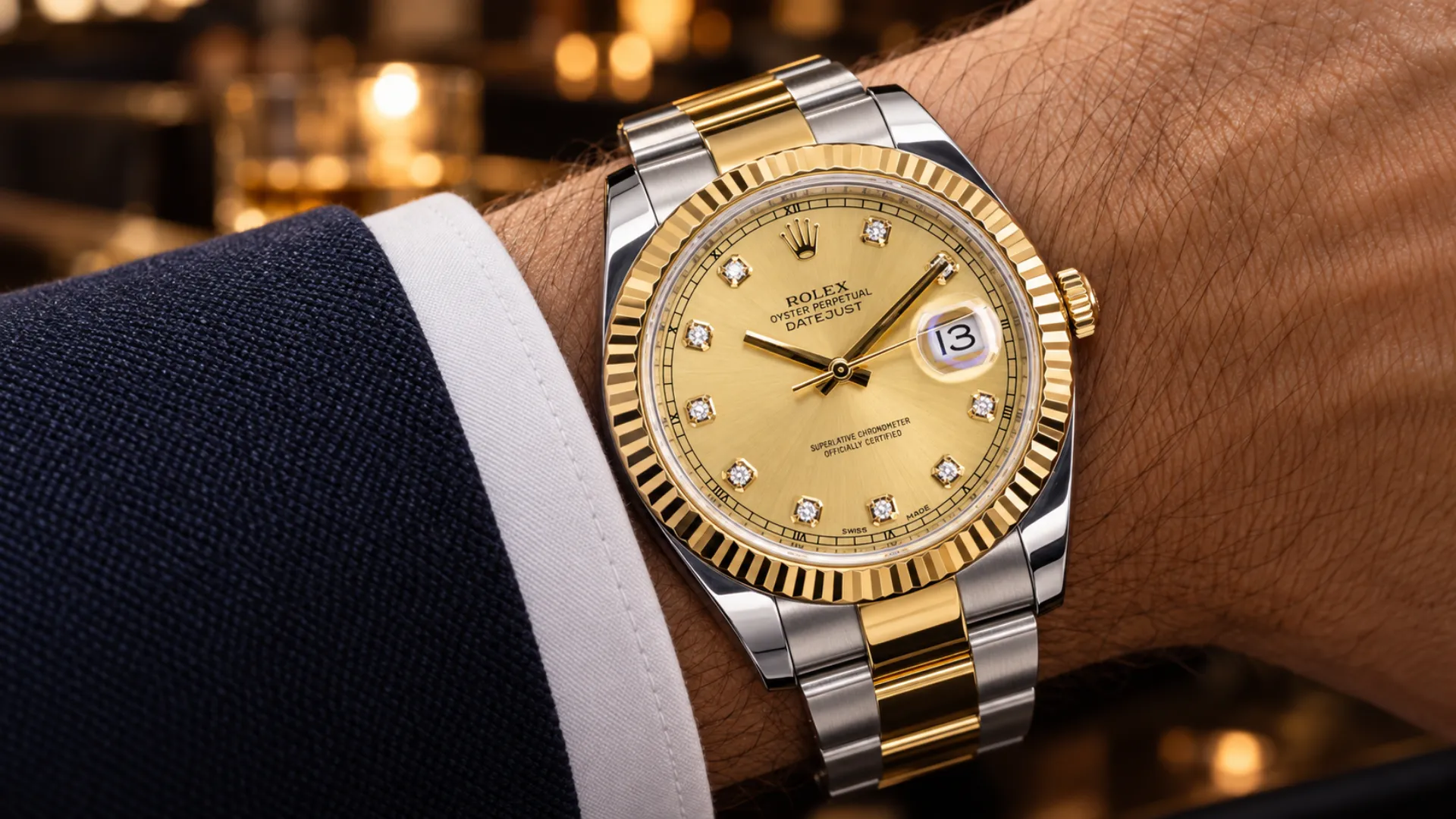
| Fluted Bezel | Hides some fine scratches, but dents and chips stand out, so avoid knocks and door-frame hits. |
| Ceramic Insert With Metal Surround | The insert resists scratches better, but the metal rim still marks, mainly when used on desks and metal clasps. |
Store It Like a Collector, Not Like a Normal Person
Storage damage is avoidable, but it remains a top cause of scratches. Where and how you store your watch affects its condition and resale value.
Most storage scratches come from metal-on-metal contact and loose clasps. Set a simple home base to prevent both.
Below is a quick guide to protect your case, clasp, and bracelet when the watch is off your wrist.
| Collector Habits | Newbie Mistakes |
| Store your watch solo in a separate compartment with a soft, clean lining. | Use jewelry bowls to prevent metal items from colliding. |
| Close the clasp so it doesn’t flop and rub against the case or bracelet. | Stack watches directly on top of each other. |
| Keep it away from dust and humidity to protect the finish and internals. | Leave it on desks near keys or coins. |
| Use a soft pouch or dedicated slot so nothing touches the watch. | Use shared slots with bracelets or rings that cause metal-to-metal contact. |
How to Clean Gold Without Adding Scratches
Cleaning should lift grit, not grind it in. Rinse first, wipe last. Dry-wiping traps sand like sandpaper. This prevents most accidental cleaning scratches.
Remember: gold is softer than steel, so using the wrong cloth or a quick-dry wipe can leave marks. Follow this simple Do/Don’t list to avoid mistakes.
Do
- Rinse the watch first to lift grit and dust before touching the surface.
- Gently pat dry, rather than applying pressure.
- Use a clean microfiber cloth made for delicate finishes.
- Use mild soap only when you need to remove oils, sunscreen, or sweat.
Don’t
- Dry-wipe dirt off the watch because you can grind grit into the gold.
- Rub hard or scrub polished surfaces.
- Use paper towels or rough cloths that cause micro-scratches.
- Use harsh cleaners, chemicals, or abrasive “shine” products.
Warning: Avoid ‘shine booster’ cloths unless you’re sure they’re non-abrasive. Many quick-shine hacks (like toothpaste) are mildly abrasive and can scratch gold.
Decide If You Will Use Protective Films and Accessories
If you want a mint look and clasp swirls bother you, use protective film. If light hairlines don’t bother you or you dislike lifted edges, bubbles, or trapped dust, skip it. Film only works if you’re willing to maintain and replace it.
Protect areas that wear out first—not the whole watch. The best zones are the clasp top, caseback rim, and outer bracelet edges near the clasp, where friction is common.
Avoid thick cases and cheap sleeves that trap grit or rub the finish. Remove the film if the edges lift, as damaged film can scratch instead of protecting.
Make Polishing Decisions That Do Not Destroy Resale Value
Polishing freshens a watch but isn’t a free reset. Each polish removes metal and can round edges or blur the transitions between brushed and polished parts.
If you’re unsure, don’t make a decision based on how it looks in harsh light today. Use this checklist to see if polishing helps or erodes value.
Pass If
- It’s mostly hairlines.
- The edges are still sharp, and the watch photographs clean.
- You value originality over shine.
Consider a Light Refinish If
- Deep scratches are noticeable in photos.
- The finish mismatch looks messy and distracts from the watch.
If you refinish, the shop matters more than the decision. Pick a specialist who preserves case lines and matches the finish. Ensure they disassemble the watch for proper work.
To find a reputable specialist, look for brand-authorized service centers or read reviews from collectors. Doing this builds confidence in your preservation decisions.
If You Plan to Sell, Define “Good Condition” the Way Buyers Do
Buyers judge condition in predictable places, under harsh light, and often with a zoomed-in photo. You can’t really hide a swirled clasp, softened lugs, or a case flank that looks like it’s been scraping a desk every day.
Here’s what those standard condition labels usually mean to buyers when they’re deciding whether to pay full price, negotiate, or walk away.
- Mint-like: This is the “collector clean” standard, characterized by minimal hairlines, sharp edges, a clean clasp, and the highest level of buyer confidence.
- Excellent: This is what most careful owners aim for—light hairlines, no dents, consistent finish, broad appeal.
- Very good: This is wearable, but it shows visible use—visible scratches, minor dings, and a slower sale, resulting in a value hit.
- Over-polished: This is the red-flag category, characterized by rounded lugs and softened edges, which carries a significant resale penalty.
Notably, timepieces in ‘Excellent’ condition tend to sell approximately 30% faster than those rated as ‘Very Good.’ This correlation suggests that adopting preventive habits early can be beneficial, encouraging sellers to maintain their watches in better condition and improve their market timing.
Condition Checklist Photo-Critical Areas
These are the areas buyers focus on first, so check them before listing and photograph them clearly.
- Clasp top and sides: This is where swirls and desk marks show fastest.
- Lugs close-ups for edge sharpness: This is how buyers spot softened geometry.
- Case flanks under angled light: This reveals rubbing and uneven polishing.
- Bezel edge and crown guards: This area exhibits signs of knocks, chips, and hard impacts.
- Bracelet stretch and link gaps: This signals long-term wear and looseness.
Final Thoughts: Keep the Gold, Skip the Damage
A gold watch will never be scratch-proof, and that’s normal. The real win is learning how to avoid scratches on a gold watch by controlling where marks happen, so your clasp and case flanks don’t take daily punishment.
Focus on desk habits, grit management, careful storage, and rinse-first cleaning, and you’ll prevent most damage without turning ownership into a chore. If resale matters, protect sharp case lines and be conservative with polishing, because crisp geometry photographs like money.